

P0206 on 2009-2014 GMC Acadia: Cylinder 6 Injector Circuit Fault Causes and Fixes
P0206 on a 2009-2014 GMC Acadia indicates an electrical fault in the cylinder 6 fuel injector circuit. The most common causes are a failed fuel injector or a wiring issue. Expect to pay $40-$120 for a new injector, but professional replacement can cost between $890 and $1,215 due to the labor-intensive process of removing the intake manifold. DIY repair is moderately difficult.
- P0206 on a GMC Acadia points to an electrical problem with the cylinder 6 fuel injector or its wiring.
- This code is almost always accompanied by a P0306 misfire code and will cause noticeable drivability problems.
- The most likely fixes are a new fuel injector or a repair to the wiring harness.
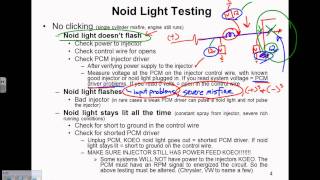
- Diagnosing the issue involves testing the circuit with a noid light and testing the injector with a multimeter or by swapping it with another cylinder.
- Due to the engine design, the intake manifold must be removed to access the injectors, so intake gaskets should be replaced as part of the job.
What's Unique About the 2009-2014 Gmc ACADIA
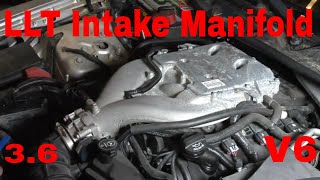
The 2009-2014 Acadia uses the 3.6L V6 (LLT) direct-injected engine, where the fuel injectors are located underneath the upper intake manifold. 🎬 Watch this walkthrough on removing the LLT intake manifold This makes accessing them more labor-intensive than on engines with an exposed fuel rail. Furthermore, GM has issued Technical Service Bulletin #PIP4924D 🎬 Watch: Real-world diagnosis of an Acadia P0206 open circuit, which specifically includes the P0206 code and directs technicians to inspect the fuel injector wiring harness for chafing and open circuits. The bulletin notes common chafe points are against the intake plenum, valve cover bolts, and fuel lines, indicating that wiring faults are a known issue on these vehicles and their platform mates.
Diagnostic Flowchart
Tap your situation to follow the diagnostic path that matches what you're seeing on this vehicle.
Symptoms You May Notice
- Check Engine Light is on
- Engine runs rough or idles poorly
- Noticeable engine misfire, sometimes felt as shaking or jerking
- Hesitation or loss of power during acceleration
- Reduced fuel economy
- Black smoke from the exhaust
- Hard starting
- Stalling or dying at idle
- Replacing the spark plug or ignition coil for cylinder 6. While these can cause a misfire (P0306), they will not cause a P0206 injector circuit code. However, if work was recently done on plugs or coils, it's possible the injector connector was disturbed, creating the P0206 fault.
Most Likely Causes
- Failed Fuel Injector (Cylinder 6) 🔴 High Probability → Shop Fuel Injector The 3.6L LLT engine uses direct injectors which operate under high pressure and can fail electrically (internal coil opens or shorts) or become clogged over time.
How to confirm: Check the injector's resistance with a multimeter; it should be around 12-16 ohms for a conventional injector, though direct injector values may differ—compare to a known-good cylinder. The most definitive test is to swap the cylinder 6 injector with an adjacent one (e.g., cylinder 4). Clear the codes and run the engine. If the code changes to P0204, the injector is faulty.
Typical fix: Replace the failed fuel injector. Due to the labor involved in accessing the injectors, it is strongly recommended to replace all six, especially if they are original and high-mileage, to prevent future failures.
Est. part cost: $40 - $120 - Wiring Harness or Connector Issue 🟡 Medium Probability TSB #PIP4924D specifically advises technicians to inspect the fuel injector wiring harness for rubbing or open circuits, indicating a known potential failure point. Common chafe spots are against the intake plenum, valve cover bolts, and fuel lines. Engine vibrations and heat cycles can cause wires to break or connectors to become loose.
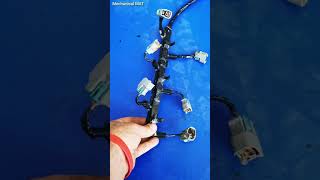
How to confirm: Visually inspect the wiring harness leading to the cylinder 6 injector for any signs of melting, chafing, or breaks, paying close attention to the areas mentioned in the TSB. Check the connector for corrosion or loose pins. Use a noid light to confirm if the ECM is sending a pulse signal to the connector. A 'wiggle test' on the harness while the engine is running can sometimes trigger the fault.
Typical fix: Repair the damaged section of wire using solder and heat-shrink tubing or replace the connector pigtail. If chafing is found, re-route or protect the harness with anti-abrasion tape or loom.
Est. part cost: $10 - $30
Rare But Worth Checking
- Faulty Powertrain Control Module (PCM): → Shop Engine Control Module (ECM) This is the least likely cause and should only be considered after all other possibilities have been exhaustively ruled out. The internal driver circuit for the injector can fail, but this is rare. A forum thread on a 2008 Acadia with codes for the entire bank (P0202, P0204, P0206) discussed the possibility of a PCM failure but the final resolution was not confirmed.
Diagnosis Steps
- Verify the code with an OBD-II scanner. Note if any other codes, especially P0306, are present.
- Locate cylinder 6. On the transversely mounted 3.6L V6, the cylinder bank closer to the radiator (front of the vehicle) is Bank 2, containing cylinders 2, 4, and 6 (from driver's to passenger's side). Cylinder 6 is on the passenger side, closest to the front.
- Visually inspect the wiring harness and connector for cylinder 6. Look for obvious damage, corrosion, or loose connections. Pay special attention to areas where the harness might rub against the intake, fuel lines, or valve cover bolts as noted in TSB PIP4924D.
- Test the circuit signal using a noid light. Disconnect the injector and plug in the noid light. Start the engine; a flashing light indicates the ECM is sending the control signal correctly. If it's off or stays on solid, the problem is in the wiring or ECM.
- If the noid light flashes, test the injector. Disconnect the battery. Unplug the injector and measure its resistance with a multimeter set to ohms. Compare the reading to the manufacturer's specification or to a known-good injector on another cylinder. A reading that is infinite (open) or zero (short) indicates a bad injector.
- If the injector resistance is good but it's still suspected, perform an injector swap. This is labor-intensive on the 3.6L V6. Move the cylinder 6 injector to cylinder 4's position and vice-versa. Clear the codes and drive the vehicle. If the code returns as P0204, the injector is confirmed to be faulty.
- If the code remains P0206 after the swap, the problem lies in the wiring harness or the ECM. Perform a continuity test on the power and signal wires between the ECM connector and the injector connector to find any open or short circuits.
- If wiring is confirmed to be good and the injector swap did not move the fault, the final, rare possibility is a faulty PCM injector driver.
Parts You'll Likely Need
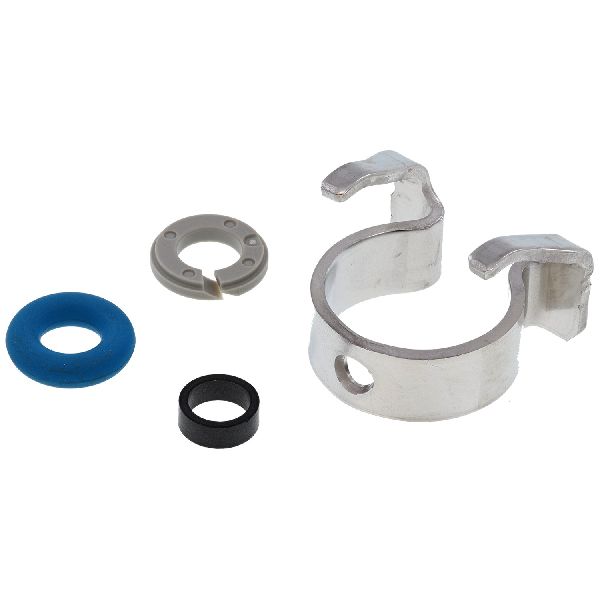
- Fuel Injector
(OEM #12669384 (supersedes 12638530))— This is the most common component to fail electrically, causing a P0206 code. The original part number 12638530 has been superseded by 12669384.
Trusted brands: ACDelco, Bosch, Standard Motor Products
OEM price range: $80-$150
Aftermarket price range: $40-$90 - Upper and Lower Intake Manifold Gaskets
(OEM #Fel-Pro MS 96916 (Aftermarket example))— These must be replaced whenever the intake manifold is removed to access the fuel injectors to prevent vacuum leaks.
Trusted brands: Fel-Pro, ACDelco, Mahle
OEM price range: $40-$70
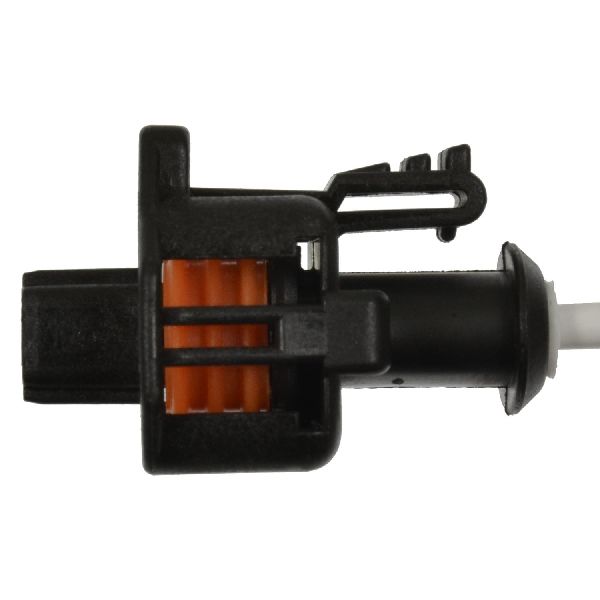
Aftermarket price range: $20-$40 - Fuel Injector Connector Pigtail — If the connector itself is damaged or corroded, or if the wiring is broken close to the connector, replacing the pigtail is the standard repair.
Trusted brands: ACDelco, Dorman
OEM price range: $20-$40
Aftermarket price range: $10-$25
Related Codes That Often Appear With This One
- P0306 — This code means 'Cylinder 6 Misfire Detected.' It is almost always present with P0206 because the injector circuit fault prevents proper fueling, which directly causes the cylinder to misfire.
- P0201, P0202, P0203, P0204, P0205 — If there is a widespread issue with the wiring harness, a shared power/ground circuit, or a faulty PCM driver for one bank, multiple injector circuit codes may appear simultaneously. TSB #PIP4924D lists all injector codes as potentially being caused by a single harness issue.
- P2149 — This code stands for "Fuel Injector Group 'B' Supply Voltage Circuit/Open". Bank 'B' (or Bank 2) on the 3.6L V6 includes cylinders 2, 4, and 6. This code appearing with P0206 strongly points to a wiring or power supply issue common to the entire bank, rather than a single injector failure.
Technical Service Bulletins (TSBs) & Recalls
- PIP4924D: Addresses engine misfires and a list of DTCs including P0206. It recommends carefully inspecting the fuel injector wiring harness for rub-through or internal wire opens at common spots like against the intake plenum, valve cover bolts, and fuel lines.
Platform-Specific Known Issues
- Accessing the fuel injectors on the 3.6L V6 requires removing the upper intake manifold, which adds significant time and complexity to the repair.
- GM Technical Service Bulletin #PIP4924D covers a range of injector codes, including P0206, and points to potential issues with the fuel injector wiring harness rubbing through against components like the intake plenum, valve cover bolts, or fuel lines.
Mechanic-Grade Diagnostic Values
- Fuel Injector Coil Resistance (2012-2014 LFX Engine) — expected: 1.5 - 2.5 ohms. Failure: A reading near 0 ohms indicates a shorted injector; an infinite or 'OL' reading indicates an open injector coil.
- Fuel Injector Coil Resistance (2009-2011 LLT Engine) — expected: 11 - 14 ohms. Failure: A reading significantly outside this range indicates a faulty injector coil.
- Injector Connector Voltage (Key On, Engine Off) — expected: ~12.0 V (Battery Voltage). Failure: Voltage significantly lower than battery voltage points to a problem in the power supply wire to the injector bank.
- High-Pressure Fuel Rail Pressure (at idle) — expected: Desired and Actual pressure should match at approx. 4 MPa (580 PSI).. Failure: While not a direct cause of P0206, if the actual pressure is significantly lower than desired, it indicates a high-pressure fuel pump or sensor issue, which can cause other driveability problems.
- Voltage Drop on Main Engine Ground — expected: Less than 0.1 Volts. Failure: A reading higher than 0.1V between the engine block and the negative battery terminal while running indicates a poor ground connection (e.g., at G104), which can cause erratic injector driver performance.
Scan Tool Commands That Help
- GDS2 / Tech2: Fuel Injector Balance Test — This bidirectional command allows a technician to individually disable each fuel injector while the engine is running and monitor the RPM drop for each cylinder. If disabling cylinder 6 causes no change in RPM, while disabling other cylinders does, it confirms cylinder 6 is not contributing. A more advanced version of this test monitors the fuel rail pressure drop as each injector is pulsed, with a faulty injector showing a significantly different pressure drop than the others. This can confirm a bad injector without physically swapping it.
Wiring & Ground Locations
- G104 — Bolted to the rear of the driver's side cylinder head (Bank 2, the bank closer to the radiator).. This is a primary ground for the Engine Control Module (ECM) and the Bank 2 ignition coils and injectors. A loose or corroded connection at G104 can cause erratic voltage and intermittent circuit faults for the entire bank, including P0206 for cylinder 6.
- ECM Connector X1, Pin 49 (2011 LLT example) — At the Engine Control Module (ECM), which is located on the front of the engine. X1 is the 73-pin connector.. This is the specific control (ground pulse) circuit pin for the cylinder 6 fuel injector. A technician can perform a continuity test from this pin directly to the injector connector pin to definitively rule out a broken wire in the harness. The exact pin number may vary by model year.
- Injector Harness Chafe Point — The section of the Bank 2 (front) wiring harness that routes over the valve cover and near the intake plenum and fuel lines.. This is the most common location for wiring damage as noted in TSB PIP4924D. A wire rubbing through and shorting to ground or breaking (open) will directly cause P0206, often along with codes for other cylinders on the same bank (P0202, P0204).
Real Owner Repair Stories
- acadiaforum.net user report (2011 GMC Acadia) — Engine misfiring, Check Engine Light on.
❌ Tried (didn't work) Diagnosis went straight to wiring based on the codes present.
✅ What actually fixed it Found a broken wire inside the main engine harness that runs across the front of the engine, affecting all of Bank 2 (cylinders 2, 4, 6) and triggering codes P0202, P0204, P0206, and P2149. The wire was repaired, which resolved all codes. This is a real-world example of the fault described in TSB PIP4924D.
OEM Part Supersession History
12611545, 12632255, 12638530→12669384— Internal design and material improvements for reliability and performance.
Heads up: This part number sequence is for the 2009-2011 LLT engine. It is NOT compatible with the 2012-2014 LFX engine, which uses a different injector design.
Model Year Variations Within This Range
- 2009-2011: These years use the 3.6L LLT V6 engine. It features an aluminum intake manifold and a Bosch ECM. The correct fuel injector is part number 12638530 (or its supersession 12669384), which has a coil resistance of approximately 11-14 ohms.
- 2012-2014: These years use the updated 3.6L LFX V6 engine. This engine has a composite intake manifold, integrated exhaust manifolds, and a Delphi ECM. The fuel injectors are a different design, are not cross-compatible with the LLT, and have a much lower coil resistance of approximately 1.5-2.5 ohms. Using the wrong injector will cause immediate issues.
Helpful Videos
We Have This Part in Stock



The information in this article is provided for general reference and educational purposes only. Vehicle specifications, procedures, and part compatibility can vary by production date, trim level, and region. Always consult your vehicle's factory service manual and verify part numbers before purchasing or performing repairs. Safety-critical components such as airbags, seat belts, and braking systems should be installed by a qualified professional.
- Gmc ACADIA:
- 🧭 Diagnostic Flowchart
- 🎬 Helpful Videos
- 🛍️ Shop This Part
- What's Unique About the 2009-2014 Gmc ACADIA
- Symptoms You May Notice
- Most Likely Causes
- Rare But Worth Checking
- Diagnosis Steps
- Parts You'll Likely Need
- Related Codes That Often Appear With This One
- Technical Service Bulletins (TSBs) & Recalls
- Platform-Specific Known Issues
- Mechanic-Grade Diagnostic Values
- Scan Tool Commands That Help
- Wiring & Ground Locations
- Real Owner Repair Stories
- OEM Part Supersession History
- Model Year Variations Within This Range
- 🎟️ Get 5% Off