

P0206 on 2006-2010 Jeep Commander 3.7L: Injector Circuit Malfunction Causes and Fixes
On a 2006-2010 Jeep Commander with the 3.7L V6, code P0206 is most often caused by a failed fuel injector on cylinder #6 or a wiring issue. Expect to pay $40-$90 for a replacement injector and consider replacing the spark plug and ignition coil at the same time. Before replacing parts, check the ignition coil ground and wiggle the wiring harness to rule out simple electrical faults.
- P0206 on a Jeep Commander 3.7L means there's an electrical fault in the cylinder 6 fuel injector circuit.
- The most likely causes are a bad fuel injector or a damaged wire/connector.
- Before replacing the injector, use a 'noid' light to confirm it's not receiving a signal or swap it with another cylinder to see if the code follows.
- Don't overlook the ignition system; a bad coil or even a poor ground for the coil can sometimes trigger this injector code.
- Driving with this code can damage your catalytic converter, so address it promptly.
What's Unique About the 2006-2010 Jeep Commander
The Jeep Commander's sole generation (XK) used the 3.7L PowerTech V6, an engine shared with the Liberty, Grand Cherokee, Dodge Ram, and Dakota. While generally reliable, this engine's layout places cylinder #6 on the passenger side, closest to the firewall, making access slightly more challenging than for front cylinders. Owners often report this code in conjunction with a P0306 misfire code. A notable quirk, seen across the 3.7L platform, is that a failing ignition coil or even a poor ground for the coil can sometimes be misinterpreted by the PCM, triggering a P0206 injector code when the injector itself is fine. Furthermore, intermittent open circuits in the wiring harness are a common point of failure to check before replacing the injector.
🎬 Watch: Why you shouldn't replace injectors without testing firstSymptoms You May Notice
- Check Engine Light is on (may be flashing)
- Rough, shaking, or vibrating idle
- Noticeable loss of power and poor acceleration
- Engine hesitation or stumbling
- Reduced fuel economy
- Engine misfire, which may or may not trigger a P0306 code
- Strong smell of unburnt gasoline from the exhaust, especially on cold starts
- Immediately replacing the fuel injector without testing the circuit. A 'noid' light test or swapping injectors is crucial to confirm the injector is the true point of failure.
- Ignoring the ignition system. As noted by owners, a bad ignition coil or even just a poor ground for the coil can trigger an injector circuit code. This should be checked before performing more invasive repairs.
- Overlooking a simple wiring issue. A chafed wire or corroded connector pin is a common cause and is much cheaper to fix than replacing a good injector or PCM.
Most Likely Causes
- Failed Fuel Injector (Cylinder 6) 🔴 High Probability → Shop Fuel Injector Injectors are wear-and-tear components that can fail electrically (internal coil short/open) or become clogged over time. This is the most common direct component failure for this code.
How to confirm: Swap the cylinder 6 injector with an adjacent one (e.g., cylinder 4). Clear codes and drive. If the code changes to P0204, the injector is bad. Alternatively, test the injector's resistance with a multimeter; it should be between 11-18 ohms. A reading far outside this range confirms a bad injector.
Typical fix: Replace the faulty fuel injector. It is often recommended to replace all six injectors as a set 🎬 Watch: Step-by-step guide to replacing your Jeep's fuel injectors if they are original and have high mileage.
Est. part cost: $40 - $90 for a single quality aftermarket injector (e.g., Bosch, Standard Motor Products). - Wiring Harness or Connector Issue 🟡 Medium Probability The engine bay's high heat can make wiring insulation brittle and connectors fragile over time. Wires can chafe against the engine or other components, causing an open or short circuit. This is a known issue on the 3.7L PowerTech engine family.
How to confirm: Visually inspect the wiring harness leading to the cylinder 6 injector for any signs of melting, chafing, or breaks. Check the connector for corrosion, bent pins, or a loose fit. Use a 'noid' light to confirm if an electrical pulse is reaching the connector. With the engine idling, carefully perform a 'wiggle test' by moving the harness; if the idle stumbles or changes, an intermittent open in the wiring is likely.
Typical fix: Repair the damaged section of wire or replace the injector pigtail connector.
Est. part cost: $10 - $25 for a new connector pigtail. - Faulty Ignition Coil or Poor Coil Ground ⚪ Low Probability While not a direct cause, a severe ignition issue can be misinterpreted by the PCM. A YouTube user with a 2008 Commander 3.7L found a bad coil ground caused a P0206. The coil grounds through its mounting bolt, and corrosion here can create electrical noise that interferes with the PCM's monitoring of the injector circuit.
How to confirm: Swap the ignition coil from cylinder 6 with an adjacent one (e.g., cylinder 4). If the misfire code moves to P0304 and the P0206 code disappears or becomes intermittent, the coil is the culprit. Crucially, remove the coil bolt and thoroughly clean the mounting point on the engine and the bolt threads to ensure a good ground before condemning the coil.
Typical fix: Replace the faulty ignition coil. Clean the coil's ground connection point on the engine block.
Est. part cost: $30 - $60 for one ignition coil.
Rare But Worth Checking
- Faulty Powertrain Control Module (PCM): → Shop Engine Control Module (ECM) This is the least likely cause. The PCM's internal driver for the injector circuit can fail. This should only be considered after all other possibilities (injector, wiring, connectors) have been exhaustively ruled out. Sometimes a PCM reflash with updated software from the dealer can resolve intermittent electronic issues, as indicated by TSBs like 18-031-05 for related platforms.
Diagnosis Steps
- Verify the code with an OBD-II scanner. Note if any other codes, especially P0306, are present.
- Locate Cylinder 6. On the 3.7L V6, this is the rearmost cylinder on the passenger side (closest to the firewall).
- Inspect the Wiring. Carefully check the wiring harness and connector going to the cylinder 6 injector. Look for any obvious signs of damage, melting, or corrosion. Perform a 'wiggle test' on the harness with the engine running to check for intermittent faults.
- Check the Ignition Coil Ground. Before testing the fuel system, perform this simple check. Remove the ignition coil from cylinder 6. Clean the metal contact point where the coil bolts to the engine and clean the bolt itself. Reinstall and see if the code clears. This is a known fix. 🎬 See two simple DIY methods to fix a P0306 code
- Perform a 'Noid' Light Test. Disconnect the injector and plug a 'noid' light into the connector. Start the engine. A rhythmic flashing light indicates the PCM is sending a signal, suggesting the wiring is likely okay and the injector is the problem. No light or a steady light points to a wiring or PCM issue.
- Check Injector Resistance. If the noid light flashes, turn off the engine and use a multimeter to measure the resistance across the two pins of the fuel injector. A good injector should read between 11 and 18 ohms. A reading of infinity (open) or near zero (short) confirms a bad injector.
- Swap Components. If you don't have a multimeter or noid light, a 'swap test' is effective. Swap the fuel injector from cylinder 6 with the one from cylinder 4 (middle cylinder, passenger side). Clear the codes and drive. If the code returns as P0204, the injector is confirmed bad. If P0206 returns, the problem is in the wiring or PCM.
- If all else fails and wiring is confirmed to be good via continuity tests, the issue may be a rare failure of the PCM's injector driver.
Parts You'll Likely Need
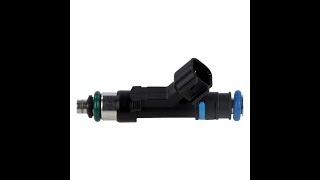
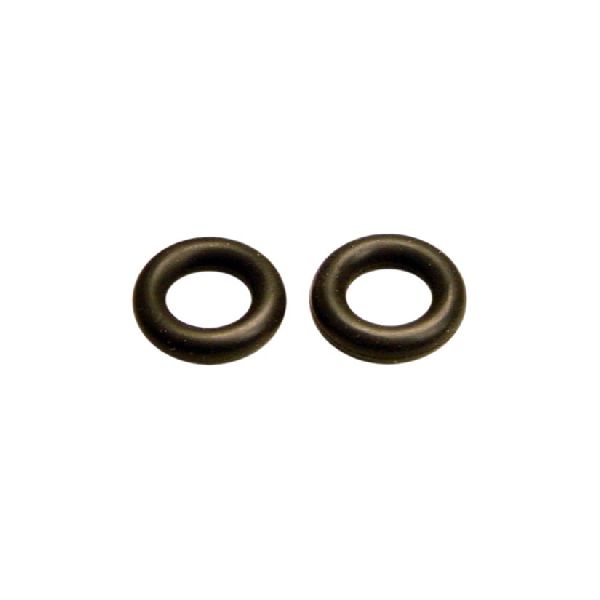
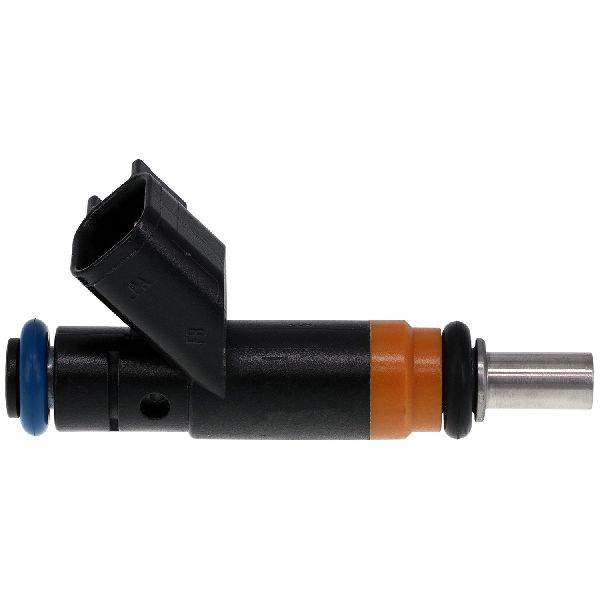
- Fuel Injector
(OEM #53032701AA)— This is the most common failure point for a P0206 code. The internal electronics fail or the injector becomes clogged.
Trusted brands: Mopar (OEM P/N: 53032701AA, supersedes RL032701AA), Bosch (P/N: 0280158020), Standard Motor Products
OEM price range: $90-$130
Aftermarket price range: $40-$90 - Fuel Injector Connector — The locking tab on the connector can become brittle and break, or the terminals can corrode, leading to a poor connection that triggers the code.
Trusted brands: Dorman, Standard Motor Products
Aftermarket price range: $10-$25
Related Codes That Often Appear With This One
- P0306 — P0306 means 'Cylinder 6 Misfire Detected'. Since P0206 indicates a problem with fuel delivery to cylinder 6, a misfire is the direct and immediate result. A P0206 will almost always cause a P0306.
Technical Service Bulletins (TSBs) & Recalls
- TSB 18-031-05: While not directly for P0206, this TSB involves a PCM reflash for various powertrain enhancements and fixes on related Chrysler platforms, indicating software updates can sometimes resolve complex electrical issues.
Platform-Specific Known Issues
- While no TSBs specifically target P0206 on the Commander, related TSBs like 18-031-05 exist for other Chrysler products, involving a PCM software reflash to fix various powertrain diagnostic issues. This points to the possibility of a software glitch, although it's a rare cause.
- There was a significant recall (NHTSA 14V-438 / Chrysler P41) for the ignition switch on 2006-2007 Commanders. A faulty switch could cause the engine to stall unexpectedly. While this doesn't directly cause a P0206, it's a known electrical issue with the platform worth being aware of.
Mechanic-Grade Diagnostic Values
- Fuel Injector Coil Resistance — expected: 12 - 16 Ohms. Failure: A reading of infinity (OL) indicates an open circuit, while a reading near zero indicates a short. Any reading significantly outside the expected range points to a faulty injector.
- Injector Power Supply Voltage (Key On, Engine Off) — expected: ~12 Volts (Battery Voltage). Failure: Low or no voltage on the power supply wire (typically Pink/Gray) indicates a problem upstream, likely with the ASD (Auto Shutdown) relay, its fuse, or the wiring from the relay.
- Injector Pulse Width at Idle (Scan Tool) — expected: ~4.5 milliseconds (ms) on a healthy cylinder. Failure: This value is a baseline from a good cylinder. While not a direct test for P0206, observing the pulse width on cylinder 6 (if the scanner shows it) being zero or erratic can confirm a control issue.
Scan Tool Commands That Help
- wiTECH or equivalent professional scanner: Injector Kill / Actuator Test — This bidirectional control allows a technician to manually command each fuel injector off, one by one, while the engine is running. If disabling cylinder 6 has no effect on the engine's idle, it confirms that cylinder is not contributing. This helps verify if the PCM is capable of controlling the circuit and isolates the non-performing cylinder electronically.
Wiring & Ground Locations
- Cylinder #6 Injector Connector — On the fuel rail, at the rearmost cylinder on the passenger side of the engine, near the firewall.. This is the primary connection point to test for power, ground signal, and injector resistance. The power wire is typically Pink/Gray, receiving +12V from the ASD relay.
- G102 Ground — Located on the left side of the engine compartment.. This is a major engine compartment ground point. While not exclusively for the injector, a poor connection here can introduce electrical noise and intermittent issues to various engine sensors and actuators.
- G104 Ground — Located at the rear of the engine.. This ground point serves multiple components, including O2 sensor heaters and the EGR valve. A failure here can cause multiple, seemingly unrelated codes and demonstrates the importance of checking major grounds when diagnosing electrical faults.
- Ignition Coil Ground — The ignition coil for each cylinder grounds through its mounting bolt to the engine block/cylinder head.. As documented by owners, corrosion at this specific ground point for the cylinder 6 coil can create electrical interference that the PCM misinterprets as an injector circuit fault, setting a P0206 when the injector is fine.
Real Owner Repair Stories
- YouTube channel 'Hewn from the Mountain' (2008 Jeep Commander 3.7L V6) — Blinking check engine light, rough running, P0206 code.
❌ Tried (didn't work) Initially suspected the fuel injector based on the code.
✅ What actually fixed it The owner swapped the #6 ignition coil with the #2 coil, and the misfire code moved to cylinder 2. However, instead of replacing the coil, he cleaned the corroded mounting point where the coil bolts to the engine (its ground path) and reinstalled the original coils in their proper places. This cleaning of the ground connection resolved the P0206 code completely. - Jeep KJ and KK Liberty Forum (2007 Jeep Liberty 3.7L V6 (same engine and similar wiring)) — Intermittent cylinder 5 misfire (P0305) and injector circuit code (P0205).
❌ Tried (didn't work) Replacing the coil and spark plug only provided a temporary fix., Swapping the ASD relay with another one seemed to help but didn't fully resolve the issue.
✅ What actually fixed it The issue was traced to the power supply from the ASD (Auto Shutdown) relay. The forum advice was to check for +12V on the injector power feed wire (Pink/Gray) at connector C104, which is a common point of failure. The problem was located within the power feed circuit from the ASD relay, not the injector or PCM driver itself.
OEM Part Supersession History
RL032701AA→53032701AA— Standard part number update and replacement for remanufactured or previous versions.
Diagnostic Flowchart
Other Known Issues on This Vehicle
Issues unrelated to this code that are worth knowing about as an owner of this generation:
- Broken Exhaust Manifold Bolts 🟠 Medium — Common on both 3.7L and 4.7L engines. Often presents as a 'ticking' noise from the engine bay that is loudest on a cold start and may quiet down as the engine warms up.
- Sunroof Leaks 🔴 High — Extremely common issue. The front sunroof drain tubes become clogged, causing water to overflow and leak into the cabin, often dripping from the A-pillar handles or overhead console. Can cause electrical problems if water reaches sensitive modules.
- Electronic Throttle Control (ETC) Faults 🟠 Medium — Fairly common. The electronic throttle warning light (red lightning bolt) illuminates, often causing the vehicle to enter limp mode. Causes range from a dirty throttle body needing cleaning to a poor connection at the PCM, or a failed throttle body unit itself.
- Dropped Valve Seats 🔴 High — A known, catastrophic failure for Chrysler's PowerTech engines of this era, including the 3.7L V6, though more notorious on the 4.7L V8. The valve seat insert in the cylinder head can dislodge, causing a complete loss of compression in that cylinder and severe engine damage.
- PCV System Failure 🟡 Low — The PCV valve can clog or the connecting hose can become brittle and crack due to engine heat, leading to vacuum leaks. Symptoms include a rough idle, unexplained oil consumption, or lean codes (P0171/P0174).
Used vs. New Parts: Buying Guide for This Vehicle
When a used part is the smart pick: A used part is a smart choice for replacing a damaged fuel injector wiring connector (pigtail) or a section of the engine wiring harness. These parts have no mechanical wear and can be sourced cheaply from a junkyard.
Donor-vehicle mileage cap: roughly under 150000 miles for the part to have meaningful remaining life.
What to inspect on the donor part:
- For wiring, inspect for any signs of brittleness, cracking, or melting insulation.
- Check connectors for intact locking tabs and ensure there is no green or white corrosion on the pins.
- If possible, source from a vehicle that appears to have been well-maintained and is free of engine bay fluid leaks.
OEM-only on this vehicle (don't cheap out):
- Powertrain Control Module (PCM) - Aftermarket or used PCMs often have programming and vehicle security (SKIM) key incompatibility issues that are very difficult to resolve.
Aftermarket brands forum-validated for this vehicle:
- Bosch (often considered an upgrade with a 4-hole spray pattern)
- Standard Motor Products (SMP)
- Denso
Brands owners have reported issues with on this vehicle:
- Unnamed, no-brand injectors from online marketplaces like Amazon or eBay are frequently reported to fail prematurely or be dead-on-arrival.
Real Owner Stories
Aggregated from forums and TSBs cited above. Mileages and costs reflect what owners reported in those sources.
2008 Jeep Commander 3.7L
Symptoms: Owner was troubleshooting a P0206 code.
What fixed it: The problem was a poor ignition coil ground. The fix was cleaning the coil's mounting bolt and its contact surface on the engine.
Source hint: YouTube/Hewn from the Mountain: A 2008 Jeep Commander 3.7L owner documented troubleshooting a P0206...
Jeep Commander 3.7L
Symptoms: Owner reported a P0206 code, a strong smell of gasoline, and an intermittent misfire on cylinder 6.
What fixed it: The community diagnosed the issue as a likely faulty fuel injector and advised performing a swap test with an adjacent cylinder's injector to confirm before replacing the part.
Source hint: Jeeps.net Forum ('P0206 - Get this code, gas smell, cylinder 6 misfire from time to time')
Related OBD-II Codes
Frequently Asked Questions
Where is cylinder 6 located on my 2006-2010 Commander's 3.7L V6 engine?
What is the correct resistance for a fuel injector on my 3.7L Commander?
I heard a bad ignition coil ground can cause a P0206 code on these Jeeps. Is that true?
My mechanic wants to replace all six injectors for just one P0206 code. Is this necessary?
Is there a specific recall or TSB for the P0206 code on the Jeep Commander?
What other vehicles share this same P0206 problem with my Commander?
Helpful Videos
![How to Fix JEEP P0306 Engine Code in 3 Minutes [2 DIY Methods / Only $4.76]](https://img.youtube.com/vi/oKHnsU4KYiE/mqdefault.jpg)
We Have This Part in Stock


The information in this article is provided for general reference and educational purposes only. Vehicle specifications, procedures, and part compatibility can vary by production date, trim level, and region. Always consult your vehicle's factory service manual and verify part numbers before purchasing or performing repairs. Safety-critical components such as airbags, seat belts, and braking systems should be installed by a qualified professional.
- Jeep Commander:
- 🧭 Diagnostic Flowchart
- 🎬 Helpful Videos
- 🛍️ Shop This Part
- What's Unique About the 2006-2010 Jeep Commander
- Symptoms You May Notice
- Most Likely Causes
- Rare But Worth Checking
- Diagnosis Steps
- Parts You'll Likely Need
- Related Codes That Often Appear With This One
- Technical Service Bulletins (TSBs) & Recalls
- Platform-Specific Known Issues
- Mechanic-Grade Diagnostic Values
- Scan Tool Commands That Help
- Wiring & Ground Locations
- Real Owner Repair Stories
- OEM Part Supersession History
- Other Known Issues on This Vehicle
- Used vs. New Parts: Buying Guide for This Vehicle
- Real Owner Stories
- 2008 Jeep Commander 3.7L
- Jeep Commander 3.7L
- Related OBD-II Codes
- Frequently Asked Questions
- 🎟️ Get 5% Off