

P0206 on 2006-2011 Saab 9-3 2.8T V6: Injector Circuit Fixes and Causes
Code P0206 on a Saab 9-3 2.8T V6 means there's an electrical fault with the fuel injector circuit for cylinder 6. The most common causes are a failed fuel injector or a wiring issue. Since cylinder 6 is on the easily accessible front bank, diagnosis is straightforward and often a DIY-friendly fix. In rarer cases, the fault can be traced to the Engine Control Module (ECM).
- P0206 on a Saab 9-3 2.8T V6 points to an electrical fault in the cylinder 6 injector circuit, not a fuel mixture or combustion issue.
- Cylinder 6 is located on the easily accessible front bank, making diagnosis much simpler than for rear-bank cylinders.
- The most common causes are a failed fuel injector or a wiring/connector problem.
- A simple 'injector swap' with another cylinder on the same bank is the most effective DIY diagnostic test to confirm a bad injector.
- While rare, a failed ECM injector driver can cause this code and should be considered after the injector and wiring have been ruled out.
What's Unique About the 2006-2011 Saab 9-3
On the Saab 9-3 with the transverse 2.8T V6 (engine code LP9, also known as B284 in Saab terminology), the cylinders are numbered with the rear bank (against the firewall) being 1, 3, and 5, and the front bank (near the radiator) being 2, 4, and 6. This is great news for a P0206 code, as cylinder 6 is on the easily accessible front bank. While these engines are known for high under-hood heat that can degrade wiring and components over time, the location of cylinder 6 makes diagnosis and repair much simpler than if the fault were on the rear bank, which requires removing the ECM for access.
🎬 Watch this walkthrough for accessing the difficult rear engine bank.Symptoms You May Notice
- Check Engine Light (Malfunction Indicator Lamp) is on.
- Rough or shaky engine idle.
- Noticeable loss of engine power and sluggish acceleration.
- Engine misfires, which may feel like sputtering or jerking.
- Reduced fuel economy.
- In some cases, the engine may be difficult to start.
- A gasoline smell from the exhaust due to unburned fuel.
- Replacing the spark plug or ignition coil. While these can cause a misfire (P0306), they will not cause an injector circuit code (P0206). The P0206 code is specifically for an electrical fault in the injector circuit, not a combustion problem. Always diagnose the circuit code first.
Most Likely Causes
- Faulty Fuel Injector (Cylinder 6) 🔴 High Probability → Shop Fuel Injector Heat cycles in the compact engine bay can contribute to the eventual failure of the internal electrical coil windings within the injector, causing an open circuit.
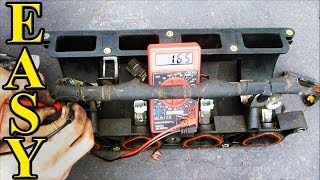
How to confirm: Measure the resistance of the injector with a multimeter; it should be between 13.5-16.0 ohms. 🎬 Watch: How to check fuel injector resistance with a multimeter. The easiest test is to swap the cylinder 6 injector with the cylinder 4 injector (also on the front bank). Clear the codes. If the fault code changes to P0204, the injector is bad. This is a definitive test.
Typical fix: Replace the failed fuel injector. It is recommended to replace the O-rings on adjacent injectors if the fuel rail is removed.
Est. part cost: $50-$120 - Wiring Harness or Connector Issue 🟡 Medium Probability Engine vibration and high under-hood heat can cause wires to become brittle, break, or chafe against other components, leading to an open or short circuit. The injector connector itself can also become corroded or have a loose pin. A GM TSB for other vehicles mentions harness chafing as a cause for a wide range of codes, including P0201-P0206.
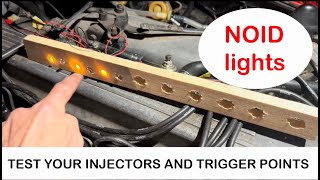
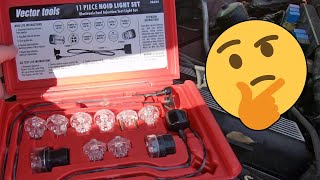
How to confirm: Visually inspect the wiring going to the cylinder 6 injector for any signs of damage, melting, or corrosion. Wiggle the harness and connector with the engine running to see if it affects the idle. Use a noid light at the connector to verify a pulse signal from the ECM. 🎬 See how to use a noid light to test for pulse. If the light flashes, the wiring and ECM are likely good.
Typical fix: Repair the damaged section of wire or replace the injector pigtail connector. Clean corroded terminals with electrical contact cleaner.
Est. part cost: $10-$30
Rare But Worth Checking
- Failed Engine Control Module (ECM): → Shop Engine Control Module (ECM) While rare for a specific injector, ECM failure is a known issue on Saabs. The internal driver circuit that fires the injector can fail, often due to heat soak over many years from its location on top of the engine. If the injector and wiring are confirmed to be good but a noid light shows no pulse, the ECM is the likely culprit. This was reported by an owner of a 2008 SportCombi with an identical engine who, after replacing the #2 injector for a P0202 code, found the ECM was the true cause. Repair services exist that can fix these specific internal faults by reballing the BGA processor.
Diagnosis Steps
- Read the trouble codes with an OBD-II scanner to confirm P0206 is present. Note any other codes, like P0306, but focus on P0206 first.
- Locate cylinder 6. On the 2.8T V6, it is the cylinder on the front bank (closest to the radiator) on the passenger side (right side of the engine bay).
- Inspect the wiring harness and connector for injector #6. Look for any obvious signs of heat damage, chafing, corrosion, or loose connections. Pay close attention to where the harness may rub against brackets or the cylinder head.
- Test the injector. Disconnect the connector and measure the resistance across the two pins of the injector using a multimeter. It should read between 13.5-16.0 ohms. If it's an open circuit (infinite resistance) or shorted (near zero resistance), the injector has failed.
- Perform an 'Injector Swap Test'. Since cylinder 4 is also on the accessible front bank, swap the injectors between cylinder 4 and cylinder 6. This is the most definitive DIY test. Clear the codes and drive the vehicle. If the code returns as P0204, the injector you moved is faulty. If the code remains P0206, the problem is in the wiring or ECM.
- Test the circuit. If the injector is good, use a 'noid light' on the cylinder 6 connector. Start the engine. The light should flash steadily, indicating the ECM is sending a pulse signal. If it does not light or stays on constantly, there is a problem with the wiring or the ECM.
- If the noid light does not flash, check for power. Use a multimeter to check for Battery Voltage (~12V) at Pin 1 of the connector with the ignition on (engine off). If power is present, the issue is likely on the ground signal wire back to the ECM or the ECM itself. If no power is present, check the fuse for the fuel injectors (consult your owner's manual for location).
- If all wiring and the injector are confirmed good, the fault likely lies with the ECM's injector driver. This was the case for a Saab owner with a P0201 code where both the injector and wiring were fine. This requires sending the ECM for testing and repair or professional diagnosis.
Parts You'll Likely Need
- Fuel Injector
(OEM #12581682)— This is the most common component to fail internally, causing an open circuit and triggering the P0206 code.
Trusted brands: Bosch, ACDelco, GB Remanufacturing
OEM price range: $80-$120
Aftermarket price range: $40-$70 - Fuel Injector Connector Pigtail — The plastic connector or its terminals can become brittle and fail from heat and vibration, requiring replacement. This is a common failure point on harnesses exposed to high heat.
Trusted brands: Dorman, Standard Motor Products (SMP)
OEM price range: $25-$40
Aftermarket price range: $10-$20
Related Codes That Often Appear With This One
- P0306 — Stands for 'Cylinder 6 Misfire Detected'. If the injector circuit is open, no fuel is delivered to cylinder 6, causing it to misfire. P0206 is the cause, and P0306 is the effect.
- P0300 — Stands for 'Random/Multiple Cylinder Misfire'. Sometimes, a severe misfire on one cylinder can be misinterpreted by the ECM as a random misfire, especially at idle.
- P0089 — Stands for 'Fuel Pressure Regulator Performance'. In some instances, an injector circuit fault can accompany other fuel system codes as the ECM struggles to maintain system stability. One owner reported a P0202 accompanied by a P0089.
Technical Service Bulletins (TSBs) & Recalls
- GM TSB 12-06-01-009: While this TSB is for timing chain codes (P0016, P0017, etc.), it is a key document acknowledging a major systemic issue with the LP9 engine family, highlighting that these engines have known, documented problems.
- GM Service Information #PIT5570B: This document, for other GM vehicles, details how engine wiring harness chafing can cause a multitude of injector circuit codes, including P0206, providing a precedent for this type of failure.
Platform-Specific Known Issues
- Heat Degradation of Wiring: The wiring harness in the hot, tightly packed V6 engine bay is known to become brittle and chafe over time. A Saab specialist specifically cited this as a cause for losing connection between sensors and the ECU. While P0206 is on the cooler front bank, the overall engine bay environment contributes to component aging.
Mechanic-Grade Diagnostic Values
- Fuel Injector Coil Resistance — expected: 13.5 - 16.0 ohms. Failure: A reading of OL (infinite resistance) for an open circuit or near zero for a shorted coil.
- Injector Pulse Width at Idle (Scan Tool) — expected: ~1.0 - 1.5 ms. Failure: A value of 0 ms for the affected cylinder indicates the ECM is not commanding the injector to fire.
- Injector Power Supply Voltage (at Connector Pin 1, Key On) — expected: ~12V (Battery Voltage). Failure: 0V or significantly low voltage indicates a problem with the power supply from the main relay or a blown fuse.
- Injector Control Circuit Voltage (at Connector, Key On, Injector Unplugged) — expected: 5.8 - 7.8 Volts. Failure: Voltage outside this range suggests a short to ground, short to voltage, or an open in the control wire to the ECM.
- Fuel Pressure (Key On, Engine Off) — expected: 50-60 psi (345-414 kPa). Failure: Low pressure indicates a fuel delivery issue (pump, filter, regulator) upstream of the injector, which would typically cause other codes alongside P0206.
Scan Tool Commands That Help
- Saab Tech2 / High-End Bidirectional Scanner: Injector Activation / Active Test — With the engine off, this command individually 'clicks' each injector. Listening with a mechanic's stethoscope confirms if the ECM driver and wiring are capable of firing the injector. A click from injector #6 rules out a complete electrical open circuit.
- Saab Tech2: Fuel Injector Balance Test — This test pulses each injector for a set time while monitoring the fuel pressure drop. A cylinder with a significantly different pressure drop indicates a mechanically faulty (clogged or weak) injector, helping to diagnose performance issues without physically swapping injectors.
Wiring & Ground Locations
- ECM Ground Connection — On the engine block, via one of the 10mm bolts that secures the ECM itself.. The ECM is mounted directly to the engine. A loose or corroded ground at this mounting point can cause erratic behavior and intermittent faults for all engine controls, including injector circuits.
- Injector #6 Connector — On the front bank (near radiator), passenger side of the engine.. This is the primary connection point to test. Pin 1 is the ~12V power supply from the main relay. The other pin is the ground-side control wire pulsed by the ECM.
- Engine Control Module (ECM/ECU) — Mounted directly on the front of the engine block, under a plastic shield.. This location subjects the module to extreme heat and vibration, which is the primary cause of internal solder joint failure for the injector driver circuits, a known weakness on this platform.
Real Owner Repair Stories
- Reddit user AstronautForsaken727 (2007 Saab 9-3 Aero V6) — Persistent misfire with P0201 (Injector Circuit Open Cylinder 1).
❌ Tried (didn't work) Replaced two fuel injectors that were found to be leaking.
✅ What actually fixed it The misfire persisted after replacing the injectors. A Saab mechanic provided a known-good ECU for testing, and swapping the ECU completely resolved the misfire and the code, confirming the original ECU had failed internally. - Reddit user post in r/MechanicAdvice (2006 Saab 9-3 Aero 2.8T) — Intermittent P0204 (Injector Circuit Open #4) and other misfire codes, but ONLY on startup. Dome lights and screen would also flicker.
❌ Tried (didn't work) Replacing spark plugs., Swapping ignition coils., Swapping fuel injectors.
✅ What actually fixed it The owner discovered the battery voltage was very low (11.77V at rest) and would not charge past 12.2V. The hypothesis was that the weak, sulfated battery was causing voltage drops during cranking, leading to transient, false injector circuit codes. Replacing the battery was the intended final fix.
"I Checked Everything" — The Actual Cause
- On this platform, it is common for the injector to pass a resistance test and for the wiring to show good continuity, yet the P0206 code persists. The actual cause is often an internal failure of the Engine Control Module (ECM). Heat and vibration cause micro-fractures in the solder joints of the main processor chip inside the ECM, creating an open circuit for the injector driver that only becomes apparent under specific temperature or load conditions. This is a well-documented failure requiring ECM repair or replacement.
When the Usual Fixes Don't Work
- While a faulty fuel injector is a common cause for a P0206 code on many vehicles, on the 2006-2011 Saab 9-3 2.8T, it should not be the default assumption. There is significant evidence from owner forums and specialist repair shops that the Engine Control Module (ECM) is a frequent point of failure. Owners often replace the injector only to find the code returns. The definitive diagnostic step of swapping the injector to another cylinder is critical. If the code does NOT move with the injector, the ECM becomes the primary suspect due to its known vulnerability to heat-induced internal circuit failure.
OEM Part Supersession History
12581682→12581682 remains the primary GM part number.— N/A
Heads up: No significant supersession issues are noted for this part. It is a standard GM port fuel injector. Aftermarket cross-references like Standard Motor Products FJ1114 are available.
Model Year Variations Within This Range
- 2006-2011: There are no significant variations within this year range for the LP9/B284 engine concerning the P0206 fault. The engine, Bosch ME9.6 engine management system, fuel injectors, and known failure modes (injector, wiring, ECM heat soak) are consistent across the entire 2006-2011 production for the V6 model.
Diagnostic Flowchart
Other Known Issues on This Vehicle
Issues unrelated to this code that are worth knowing about as an owner of this generation:
- Premature Timing Chain Stretch 🔴 High — Very common, especially on vehicles with extended oil change intervals. Can occur as early as 60,000-80,000 miles. Triggers codes like P0016, P0017, P0018. (Ref: GM TSB 12-06-01-009)
- Ignition Coil Failure 🟠 Medium — High failure rate due to intense under-hood heat, particularly for the rear bank (cylinders 1, 3, 5) which is harder to access. Many owners replace all six preventatively.
- Cracked Coolant Expansion Tank 🟠 Medium — The stock plastic tank is positioned near the hot turbo and exhaust, causing it to become brittle and crack over time, leading to coolant leaks.
- ECM (ECU) Failure 🟡 Low — The engine control module can fail due to heat soak, causing various issues from injector circuit faults to stalling when hot and non-start conditions.
Used vs. New Parts: Buying Guide for This Vehicle
When a used part is the smart pick: A used fuel injector from a reputable salvage yard can be a cost-effective option. It is a mechanical and electrical part that can be easily tested before installation.
Donor-vehicle mileage cap: roughly under 100000 miles for the part to have meaningful remaining life.
What to inspect on the donor part:
- Check for physical damage to the injector body or connector.
- Ensure the electrical pins are clean and free of corrosion.
- MUST test the resistance with a multimeter before purchase. It should be within the 13.5-16.0 ohm range.
- Inspect the nozzle for heavy carbon buildup and the O-rings for cracking (though O-rings should always be replaced anyway).
OEM-only on this vehicle (don't cheap out):
- Engine Control Module (ECM). Do not buy a used ECM from a junkyard, as it likely suffers from the same potential heat-soak defect. The best options are having your original unit professionally repaired and re-balled by a specialist, or buying a new, pre-programmed unit.
Aftermarket brands forum-validated for this vehicle:
- Bosch (OEM supplier)
- ACDelco
- GB Remanufacturing
- Standard Motor Products (SMP)
Real Owner Stories
Aggregated from forums and TSBs cited above. Mileages and costs reflect what owners reported in those sources.
2006-2011 Saab 9-3 LP9 2.8T V6
Symptoms: The vehicle had a P020x fault code, and replacing the corresponding fuel injector did not fix the issue.
What fixed it: The problem was ultimately traced to a faulty Engine Control Module (ECM) which required repair or replacement.
Source hint: reddit.com/r/saab
Related OBD-II Codes
Frequently Asked Questions
Where is cylinder 6 located on my 2008 Saab 9-3 2.8T V6?
What is the correct resistance for a fuel injector on the LP9 V6 engine?
I swapped the injectors between cylinders 4 and 6, and now my Check Engine Light is on for code P0204. What does this mean?
My injector tests good and the wiring seems okay. Could the engine computer (ECM) be the cause of my P0206 code?
Is wiring harness damage a known issue that could cause a P0206 on this Saab?
I have a P0206 code, but I've also heard about timing chain issues on this engine. Are they related?
Helpful Videos
We Have This Part in Stock



The information in this article is provided for general reference and educational purposes only. Vehicle specifications, procedures, and part compatibility can vary by production date, trim level, and region. Always consult your vehicle's factory service manual and verify part numbers before purchasing or performing repairs. Safety-critical components such as airbags, seat belts, and braking systems should be installed by a qualified professional.
- Saab 9-3:
- 🧭 Diagnostic Flowchart
- 🎬 Helpful Videos
- 🛍️ Shop This Part
- What's Unique About the 2006-2011 Saab 9-3
- Symptoms You May Notice
- Most Likely Causes
- Rare But Worth Checking
- Diagnosis Steps
- Parts You'll Likely Need
- Related Codes That Often Appear With This One
- Technical Service Bulletins (TSBs) & Recalls
- Platform-Specific Known Issues
- Mechanic-Grade Diagnostic Values
- Scan Tool Commands That Help
- Wiring & Ground Locations
- Real Owner Repair Stories
- "I Checked Everything" — The Actual Cause
- When the Usual Fixes Don't Work
- OEM Part Supersession History
- Model Year Variations Within This Range
- Other Known Issues on This Vehicle
- Used vs. New Parts: Buying Guide for This Vehicle
- Real Owner Stories
- 2006-2011 Saab 9-3 LP9 2.8T V6
- Related OBD-II Codes
- Frequently Asked Questions
- 🎟️ Get 5% Off