

OBD-II Code P0207: Injector Circuit/Open Cylinder 7
The Ultimate 2026 Guide to Diagnosing and Fixing P0207
- Code P0207 indicates a strict electrical failure—such as an open or shorted circuit—in the cylinder 7 fuel injector, not a physical clog.
- Always visually inspect the cylinder 7 wiring harness first, as pinched wires or unplugged connectors from recent engine repairs cause over 30% of these faults.
- Stop driving the vehicle immediately; raw fuel dumping into the exhaust destroys a catalytic converter in under 100 miles, adding $1,500+ to your repair bill.
- Test before replacing parts by verifying 12V power at the connector, checking for a PCM ground pulse with a noid light, and measuring injector resistance (typically 11-18 ohms).
What Does P0207 Mean?
Code P0207 means the Powertrain Control Module (PCM) detects an electrical fault in the cylinder 7 fuel injector circuit. This prevents the injector from spraying fuel. The PCM sets this code when it reads voltage or resistance outside the normal range—expecting near 12V when off and near 0V when activated.
Technical definition: SAE/OBD-II defines P0207 as "Injector Circuit/Open - Cylinder 7". The PCM continuously monitors the injector's driver circuit and triggers this code upon detecting out-of-range voltage, resistance, or current draw, indicating an open or shorted circuit.
🎬 Watch: A quick breakdown of what causes the P0207 code.Can I Drive With P0207?
Yes, But With Caution. You can drive for short, essential trips, but doing so risks severe damage. Continuing to drive with a dead cylinder sends unburned fuel into the exhaust, which destroys your catalytic converter in 50-100 miles. This turns a moderate repair into a catastrophic one, adding $800 to $2,500+ to the final bill. Avoid highways, heavy acceleration, and tow the vehicle if possible.
Common Causes
- Faulty Cylinder 7 Fuel Injector (Very Common) — The fuel injector's internal coil winding breaks (creating an open circuit) or shorts out, causing incorrect resistance readings.
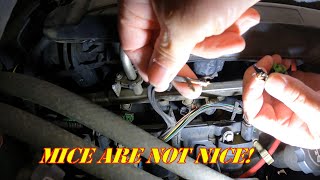
- Damaged Wiring Harness or Connector (Common) — Frayed wires from engine vibration, melted insulation, rodent damage, or broken/corroded connector pins disrupt the electrical connection. 🎬 See how to repair a fuel injector harness damaged by rodents.
- Incorrect Reassembly (Common) — This code frequently appears after replacing valve cover gaskets or spark plugs because the cylinder 7 injector wiring was pinched, damaged, or left unplugged.
- Blown Fuel Injector Fuse (Less Common) — A short circuit blows the fuse protecting the injector bank, cutting off 12V power to multiple injectors simultaneously.
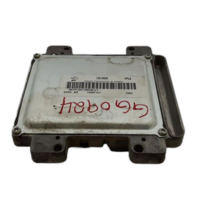
- Faulty Powertrain Control Module (PCM) (Rare) — The internal driver circuit within the engine computer fails. Consider this only after exhaustively testing the injector and all wiring.
Symptoms
- Engine Misfires and Shakes — Cylinder 7 contributes no power, causing severe engine vibration, stumbling at idle, and a flashing Check Engine Light.
- Strong Raw Fuel Smell — Unburned gasoline passes through the dead cylinder directly into the exhaust system.
- Drastically Reduced Power — The vehicle accelerates sluggishly, and the PCM often activates a 'limp mode' to protect the engine.
- Engine Stalling — The engine stalls unexpectedly at low speeds or when idling at intersections.
Common Fixes & Costs
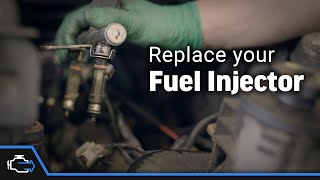
- Replace Cylinder 7 Fuel Injector — Parts: $50-$250, Labor: $200-$600, ~2.5 hr book time (Intermediate)
- Replace Fuel Injector Connector Pigtail — Parts: $15-$40, Labor: $100-$250, ~1 hr book time (DIY)
- Repair Wiring Harness — Parts: $20-$50, Labor: $150-$400, ~2 hr book time (Advanced)
- Replace Blown Fuse — Parts: $1-$5, Labor: $50-$100, ~0.5 hr book time (Beginner)
- Replace Powertrain Control Module (PCM) — Parts: $500-$1,200, Labor: $700-$1,500, ~1.5 hr book time (Professional)
DIY vs Professional
- Replace Blown Fuse 🟢 Beginner
Tools: Fuse puller or needle-nose pliers. - Replace Fuel Injector Connector Pigtail 🟢 Beginner
Tools: Wire cutters/strippers, butt connectors, crimping tool, heat gun. - Replace Cylinder 7 Fuel Injector 🟢 Beginner
Tools: Socket set, wrenches, fuel line disconnect tools, torque wrench, new O-rings. - Repair Wiring Harness 🟢 Beginner
Tools: Multimeter, wiring diagrams, soldering iron, wire, heat shrink. - Replace Powertrain Control Module (PCM) 🟢 Beginner
Tools: Socket set, advanced scan tool for programming.
Used vs. New Parts: Buying Guide
When a used part is worth it: Used (or 'refurbished') injectors are a budget option for older, high-mileage vehicles where the cost of new parts is prohibitive. A 'remanufactured' injector, which is fully disassembled and rebuilt with new internal components, is a more reliable choice.
Donor-vehicle mileage cap: roughly under 100000 miles for the part to have meaningful remaining life.
Donor quality checklist:
- Buy from a reputable seller with good reviews and a warranty.
- Avoid injectors from engines with known sludge or internal damage.
- Ensure the part number matches exactly; even small variations cause issues.
- Ask if the injectors have been flow-tested and matched as a set.
Decision logic:
- If Vehicle is newer or has low mileage (<100K miles) → Buy new OEM or high-quality aftermarket to ensure longevity and performance.
- If Budget is the primary concern on an older vehicle (>150K miles) → A professionally remanufactured injector with a warranty offers a good balance of cost and reliability. A used injector is a gamble.
- If The vehicle is a high-performance or direct-injection model → Always buy new. The precision required for these systems makes used parts too risky.
Warranty tradeoff: Used parts often have a 30-90 day warranty at best. Remanufactured parts typically come with a 1-year warranty. New OEM or premium aftermarket parts have warranties ranging from 1 year to limited lifetime.
Worst-case if a used part fails: $300-800 if a used or faulty injector fails after installation, requiring repeat labor costs plus the price of another part.
Cost of Not Fixing It
- Immediate (0-100 miles): Significant drop in fuel economy (10-25%), rough engine performance, and potential stalling. (Added cost: Negligible)
- Short-Term (100-500 miles): Raw fuel overheats and melts the internal structure of the catalytic converter, causing permanent failure and exhaust blockage. (Added cost: $1000-$3000)
- Long-Term (6+ months): Oxygen sensor damage from fuel contamination and internal engine wear from severe imbalance. (Added cost: $200-$600)
Diagnosis Steps
- Visual Inspection
Inspect the cylinder 7 injector wiring and connector for burnt wires, rodent damage, or corrosion. Ensure the connector clicks securely into place.
Tools: Flashlight, Inspection Mirror (Beginner) - Check Injector Resistance
Disconnect the injector and measure resistance across its two terminals. Standard injectors read 11-18 Ohms. 'OL' means an open coil; near zero means shorted.
Tools: Multimeter (Intermediate) - Check for Power at Connector
With the key 'On' (engine off), probe the power supply wire on the injector connector. You must see battery voltage (12.0-12.6V). No voltage indicates a blown fuse or broken wire.
Tools: Multimeter or 12V Test Light (Intermediate) - Check for Injector Pulse
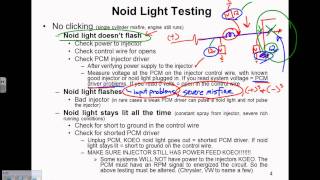
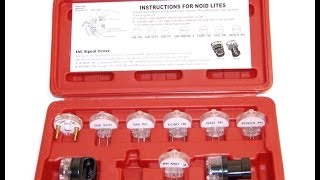
Plug a noid light into the injector connector and start the engine. A steady, rhythmic flash confirms the PCM is sending the ground pulse. No flash points to a wiring or PCM fault. 🎬 Watch: This tutorial shows you how to use noid lights.
Tools: Noid Light Set (Intermediate) - Swap the Fuel Injector
Swap the cylinder 7 injector with cylinder 5. Clear codes and drive. If the code moves to P0205, the injector is definitively faulty.
Tools: Basic hand tools (sockets, wrenches) (Advanced) - Check Wiring Continuity
Disconnect the battery and PCM. Measure resistance on the control wire between the injector connector and the PCM pin (should be <5 Ohms). Test for shorts to ground or power.
Tools: Multimeter, Vehicle-specific wiring diagram (Advanced) - Voltage Drop Test
Connect the positive multimeter lead to the battery positive and negative lead to the injector power pin. With the key on, reading must be <0.5V. Repeat for the ground side while cranking.
Tools: Multimeter with long leads (Professional) - Lab Scope Analysis
Connect an oscilloscope to the control wire. Look for a sharp drop to ground, a flat line during the pulse, and a 35V+ inductive kick when turned off.
Tools: Automotive Oscilloscope (Professional) - Scan Tool Live Data
Monitor short-term (STFT) and long-term (LTFT) fuel trims. High positive numbers (> +15%) indicate the PCM is compensating for the dead injector's lean condition.
Tools: Advanced OBD-II Scan Tool (Advanced)
When This Code Triggers (Freeze-Frame Conditions)
- Engine Coolant Temp: 180-210°F (82-99°C) (Fully warmed up)
- Engine RPM: 650-1200 RPM (Idle or low-speed driving)
- Engine Load: 20-40% (Light throttle application or steady cruise)
- Vehicle Speed: 0-30 mph (At idle or during city driving)
Related Codes
- P0307 — Cylinder 7 Misfire. P0207 is the electrical cause; P0307 is the resulting misfire effect. Fixing P0207 resolves P0307.
- P0200 — Injector Circuit Malfunction. Indicates a system-wide failure (like a blown main fuse or bad PCM ground) rather than a single cylinder issue.
- P0300 — Random Misfire. Suggests the wiring harness damage is shorting multiple wires or the PCM is failing.
- P0201-P0208 — Multiple specific injector codes point to a shared power/ground wire failure on one engine bank, not simultaneous injector failures.
Climate & Environmental Factors
- Extreme Cold: Makes plastic wiring insulation brittle, causing cracks and open circuits in the injector harness.
- High Humidity / Moisture: Penetrates weathered connector seals, corroding pins and increasing electrical resistance.
- Rodent Intrusion: Rodents seeking warmth chew through soy-based wire insulation, severing the injector circuit.
How to Clear the Code After You Fix It
- Reconnect battery if disconnected for repair
- Use an OBD-II scan tool to clear the diagnostic trouble codes (DTCs).
- Perform a complete drive cycle to allow the vehicle's readiness monitors to run.
Drive cycle (~30 minutes): Start with a cold engine (rested 8+ hours). Idle for 2-3 minutes with loads on (A/C, defroster). Drive in stop-and-go city traffic for 10-15 minutes. Accelerate to a steady highway speed (55-60 mph) and maintain for 5-10 minutes. Decelerate without braking. Repeat a mix of city and highway driving.
Readiness monitors affected: Catalyst Monitor, Oxygen (O2) Sensor Monitor, Misfire Monitor, EVAP System Monitor
Before emissions retest: drive at least 50 miles to fully set monitors.
Watch out for:
- Simply disconnecting the battery clears the code but resets all readiness monitors, causing an automatic emissions test failure.
- The code returns immediately upon startup if the underlying electrical open or short remains unfixed.
- Not meeting the specific conditions for a drive cycle (e.g., fuel level between 15-85%) prevents monitors from setting.
Will This Fail Emissions / State Inspection?
Yes — this code typically fails an OBD-II emissions inspection.
- California: An illuminated Check Engine Light results in an automatic smog check failure. A full drive cycle must be completed after repair.
- New York: An active P0207 is an automatic failure. The vehicle cannot be registered or renewed until repaired.
- Texas: Vehicles will fail the OBD portion of the state inspection with an active P0207.
Most Commonly Affected Vehicles
- Ford F-150 (2004-2010) — The 5.4L 3V Triton V8 harness routes tightly over the hot intake manifold, causing severe heat degradation and chafing.
- Dodge / Ram Ram 1500, Durango, Charger (2003-2013) — On 5.7L HEMI engines, the plastic locking tabs on injector connectors become extremely brittle and break, causing loose connections.
- Chevrolet / GMC Silverado, Sierra, Tahoe (1999-2013) — Vortec V8 models suffer from injector coil degradation over time, often requiring replacement.
- Jeep Grand Cherokee (1999-2010) — The 4.7L and 5.7L V8 harness rubs near the intake manifold, creating shorts to ground.
- BMW 335i, 535i, X5 (2007-2013) — N54 and N63 engines experience piezoelectric fuel injector circuit failures requiring specialized coding after replacement.
- Ford Mustang GT (1999-2004) — The 4.6L 2V V8 engine develops injector circuit faults from heat and vibration damaging the wiring harness.
- Honda Odyssey, Pilot (2005-2010) — V6 models frequently suffer rodent damage to the wires leading to the rear cylinder bank.
- Jaguar XK8, XJ8 (2003-2006) — The 4.2L V8 experiences intermittent P0207 codes traced to heat-sensitive wiring or poor connector pin tension.
Manufacturer-Specific Notes
- Ford: 5.4L 3V Triton harnesses route tightly over the intake manifold, causing severe heat damage and chafing.
- Dodge/Chrysler/Jeep: 5.7L HEMI injector connector locking tabs become extremely brittle and break during routine service, causing loose connections.
- General Motors (Chevy/GMC): L5P Duramax (2017-2023) engine vibration causes fretting corrosion at the connector. TSB 21-NA-259 requires replacing the pigtail and applying dielectric grease.
- BMW: N54/N63 piezoelectric injectors must be digitally coded to the DME (PCM) using diagnostic software after replacement.
Frequently Asked Questions
Can I drive my car with a P0207 code?
Limit driving to emergency trips only. Unburned fuel from the dead cylinder dumps into the exhaust and destroys the catalytic converter in under 100 miles. This turns a $300 repair into a $2,000+ catastrophe.
What is the difference between P0207 and P0307?
P0207 is an electrical circuit failure for injector 7, while P0307 is a misfire code for cylinder 7. The P0207 electrical fault causes the P0307 misfire. Fixing the circuit resolves both codes.
What are the most common misdiagnosis mistakes for P0207?
The biggest mistake is replacing the fuel injector without testing the wiring first. Pinched wires or broken connectors cause this code just as often as a bad injector. Always test for 12V power and a PCM ground pulse before buying parts.
My P0207 code appeared right after another repair. What should I check first?
Meticulously re-inspect the area around cylinder 7. The injector's wiring harness was likely left unplugged, the connector lock broke, or a wire was pinched during reassembly.
Where is cylinder 7 located?
On most V8 engines (Ford, GM, Dodge), cylinder 7 is the third cylinder back on the driver's side. Always consult your specific vehicle's repair manual to confirm the firing order.
Can a vacuum leak cause a P0207 code?
No. P0207 is strictly an electrical circuit code. A vacuum leak causes lean codes (P0171) or random misfires (P0300), but never an injector circuit fault.
How much does it cost to fix a P0207 code?
A connector pigtail repair costs $150-$300. Replacing the fuel injector at a shop ranges from $250 to $850 depending on labor times. PCM replacement exceeds $1,200.
I replaced the fuel injector, but the code came back. What now?
The original injector was not the problem; the fault lies in the wiring harness or the PCM. Perform a voltage drop test on the harness and verify the PCM is sending a valid signal.
Key Takeaways
- Code P0207 indicates a strict electrical failure—such as an open or shorted circuit—in the cylinder 7 fuel injector, not a physical clog.
- Always visually inspect the cylinder 7 wiring harness first, as pinched wires or unplugged connectors from recent engine repairs cause over 30% of these faults.
- Stop driving the vehicle immediately; raw fuel dumping into the exhaust destroys a catalytic converter in under 100 miles, adding $1,500+ to your repair bill.
- Test before replacing parts by verifying 12V power at the connector, checking for a PCM ground pulse with a noid light, and measuring injector resistance (typically 11-18 ohms).
Helpful Videos

Shop the Parts Behind P0207
Below are the parts most often responsible for code P0207, ranked by how frequently each one is the actual culprit (per the diagnosis above). Tap any to see what we have for your vehicle.




The information in this article is provided for general reference and educational purposes only. Vehicle specifications, procedures, and part compatibility can vary by production date, trim level, and region. Always consult your vehicle's factory service manual and verify part numbers before purchasing or performing repairs. Safety-critical components such as airbags, seat belts, and braking systems should be installed by a qualified professional.
- 🎬 Helpful Videos
- 🛍️ Shop This Part
- What Does P0207 Mean?
- Can I Drive With P0207?
- Common Causes
- Symptoms
- Common Fixes & Costs
- DIY vs Professional
- Used vs. New Parts: Buying Guide
- Cost of Not Fixing It
- Diagnosis Steps
- When This Code Triggers (Freeze-Frame Conditions)
- Related Codes
- Climate & Environmental Factors
- How to Clear the Code After You Fix It
- Will This Fail Emissions / State Inspection?
- Most Commonly Affected Vehicles
- Manufacturer-Specific Notes
- Frequently Asked Questions
- Can I drive my car with a P0207 code?
- What is the difference between P0207 and P0307?
- What are the most common misdiagnosis mistakes for P0207?
- My P0207 code appeared right after another repair. What should I check first?
- Where is cylinder 7 located?
- Can a vacuum leak cause a P0207 code?
- How much does it cost to fix a P0207 code?
- I replaced the fuel injector, but the code came back. What now?
- Key Takeaways
- 🎟️ Get 5% Off