

P0217 on 2017-2024 Audi A4: Engine Overheat Causes and Fixes
P0217 means your Audi A4's engine is overheating. The most common cause on the EA888 engine is a leaking water pump and thermostat assembly, a known issue for this platform. Expect to replace the entire assembly, which costs between $600 and $1400 at a shop. Ignoring this can lead to catastrophic engine damage.
- P0217 is a critical code indicating your engine is overheating. Stop driving immediately to prevent severe damage.
- On a 2017-2024 Audi A4, the most probable cause is a leaking water pump and thermostat housing assembly, a known weak point.
- Look for early warning signs like a sweet coolant smell, the need to add coolant, or pink crusty residue near the engine.
- The correct fix is to replace the entire water pump/thermostat assembly and refill with the proper Audi-specified coolant.
- Due to the risk of severe engine damage and the complexity of the repair, professional diagnosis and service are strongly recommended.
What's Unique About the 2017-2024 Audi A4
On the 2017-2024 Audi A4 with the 2.0T EA888 Gen 3 engine, the P0217 code is very frequently linked to a specific, well-documented failure point: the integrated water pump and thermostat housing assembly. This component is made of plastic that can warp and crack over many heat cycles, causing slow coolant leaks that eventually lead to an overheating event. While any car can overheat, on this specific platform, the water pump/thermostat assembly is the prime suspect and should be the first place to investigate for leaks, even if no puddle is visible on the ground.
Symptoms You May Notice
- Temperature gauge reading in the red or 'HOT'
- Check Engine Light and/or a dedicated coolant temperature warning light is on
- Steam or smoke coming from the engine bay
- Noticeable loss of engine power as the car enters a protective 'limp mode'
- A sweet smell of coolant from the engine area, especially after driving or when the car is parked in a garage.
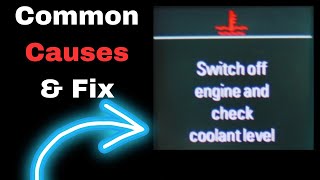
- Low coolant warning light on the dashboard, possibly intermittently. 🎬 See this breakdown of common causes for coolant warnings.
- Visible pink/white crusty residue near the front-passenger side of the engine, indicating a dried coolant leak.
- Poor or no heat from the cabin heater, especially at idle, as air enters the system.
- Simply refilling the coolant without finding the source of the leak. The problem will quickly return.
- Replacing only the thermostat when the plastic housing itself is the source of the leak. On the EA888, these are typically replaced as one unit.
- Replacing the coolant temperature sensor without verifying if the engine is actually overheating. Use an infrared thermometer on the cylinder head or upper radiator hose to confirm the temperature reading.
Most Likely Causes
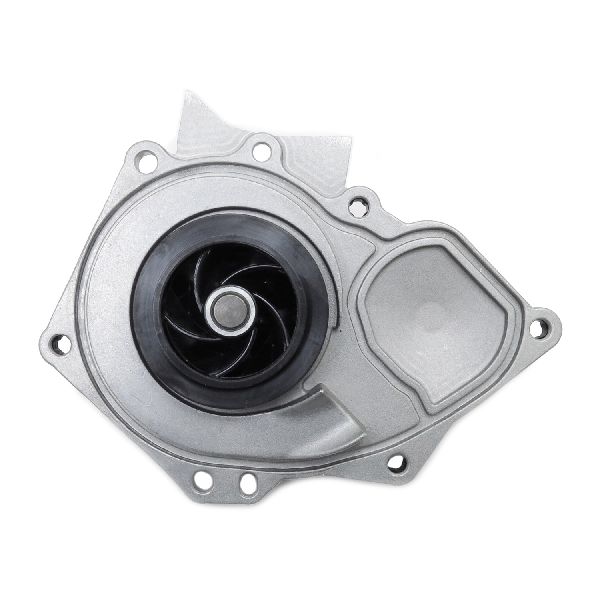
- Leaking Water Pump / Thermostat Housing Assembly 🔴 High Probability → Shop Integrated Thermostat Housing Assembly The EA888 engine's water pump and thermostat are an integrated plastic housing. This plastic is known to degrade, warp, and crack from repeated heat cycles, causing coolant leaks at its seals and seams. This is a widely recognized issue on this engine platform, with multiple part revisions made by VW/Audi to address it.
How to confirm: Perform a cooling system pressure test to see if it holds pressure. Visually inspect the area around the water pump (front-passenger side of the engine, below the intake manifold) for signs of pink coolant residue or active dripping. The leak may be slow and only appear as evaporated residue, as the coolant drips onto hot engine components and burns off before it can form a puddle.
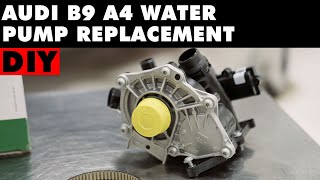
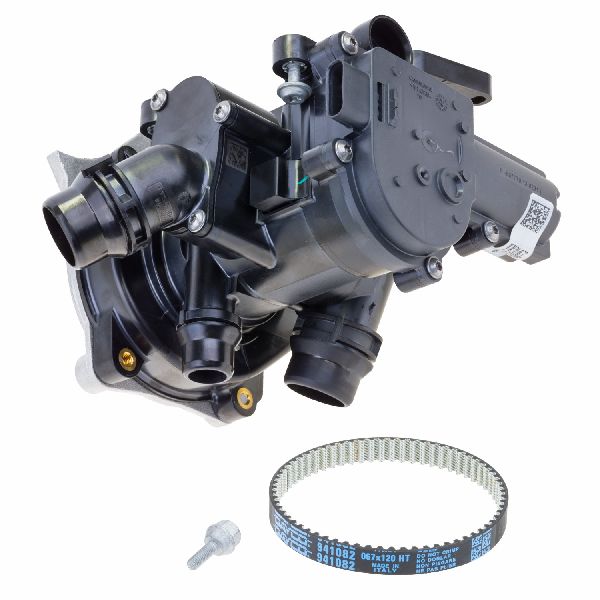
Typical fix: Replace the entire water pump and thermostat housing assembly. It is highly recommended to use an OEM part with the latest revision number or a high-quality OEM-manufacturer replacement (e.g., INA). The small toothed belt that drives the water pump should also be replaced at the same time.
Est. part cost: $250-$550 - Low Coolant Level 🟡 Medium Probability This is typically a symptom of the leaking water pump, not a root cause itself. However, if the system is low on coolant for any reason, it cannot effectively cool the engine. Owners often first notice the need to top up coolant every few weeks before a major overheat occurs.
How to confirm: Check the coolant level in the expansion tank when the engine is cold. If it is below the 'MIN' line, the system is low. The presence of a leak must then be investigated.
Typical fix: Top up the system with the correct G13/G12evo/G12++ coolant. If the level drops again, you must find and fix the leak, which is likely the water pump assembly.
Est. part cost: $25-$40 for coolant - Malfunctioning Radiator Cooling Fans ⚪ Low Probability → Shop Engine Cooling Fan Blade
How to confirm: With the engine at operating temperature (or by turning the A/C on), check if the cooling fans behind the radiator are spinning. If they are not, the fan motor, control module, or associated wiring and fuses could be faulty.
Typical fix: Diagnose the fan electrical circuit. This may involve replacing a fuse, relay, the fan control module, or the entire fan assembly.
Est. part cost: $200-$600 for a fan assembly
Rare But Worth Checking
- Faulty Coolant Temperature Sensor (CTS): → Shop Engine Coolant Temperature Sensor It's possible for the sensor to fail and send an incorrect high-temperature reading to the ECU, triggering a P0217 code even if the engine isn't actually overheating. This is less common than a real overheat condition. A technician can verify this by comparing the sensor's reading on a scan tool to the actual temperature measured with an infrared thermometer.
- Clogged Radiator: → Shop Radiator Internal blockages from corrosion or external blockages from debris can reduce the radiator's efficiency, but this is less common than component failure on a modern vehicle. On the B9 platform, debris can accumulate between the A/C condenser and the radiator, which requires separating them to clean properly.
- Blown Head Gasket: A failed head gasket can allow hot combustion gases to enter the cooling system, overwhelming it and causing a rapid overheat. This is a severe failure, often accompanied by other symptoms like white exhaust smoke, milky-looking oil, or constant bubbling in the coolant expansion tank.
Diagnosis Steps
- SAFETY FIRST: Do not open the coolant expansion tank cap when the engine is hot. The system is under pressure and can cause severe burns.
- Verify the code with an OBD-II scanner. Note any other codes present and review freeze-frame data to see the conditions when the code was set.
- Check the coolant level in the expansion tank (when the engine is cold). If low, this is a strong clue of a leak.
- Visually inspect the engine bay for obvious signs of coolant leaks. On the EA888, pay close attention to the water pump/thermostat area on the front-passenger side of the engine. Look for pink, crusty residue. A small mirror and flashlight are essential.
- If no obvious leak is found, perform a cooling system pressure test. A pressure of 1.5-2.0 bar held for an extended period can reveal slow leaks that are otherwise invisible.
- While the engine is running and warming up, verify the operation of the radiator cooling fans. They should turn on as the engine reaches operating temperature or when the A/C is activated.
- If the system holds pressure and no leaks are found, suspect a faulty thermostat (stuck closed) or a failing water pump impeller. On the EA888, these are part of the same assembly and are replaced together.
- As a final check, use an infrared thermometer to measure the temperature of the upper radiator hose and cylinder head to confirm the vehicle is actually overheating and not just reporting a false reading from a bad sensor.
Parts You'll Likely Need
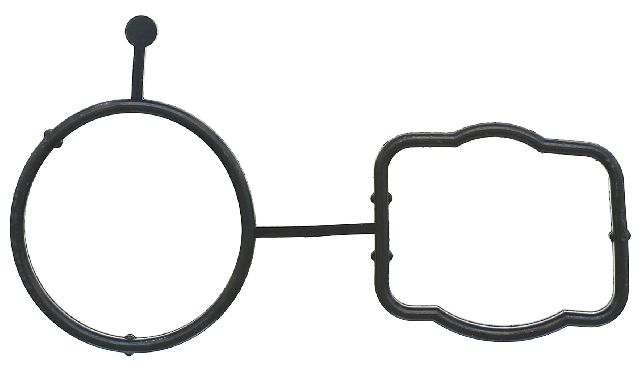
- Water Pump and Thermostat Housing Assembly
(OEM #06L121111H (or newer revisions like J, K, L, M, P))— This is the most common failure point on the EA888 Gen 3 engine leading to coolant loss and overheating. The plastic housing warps or cracks over time.
Trusted brands: Audi (Genuine OEM), INA (often the OEM manufacturer), Pierburg, Continental
OEM price range: $350-$590
Aftermarket price range: $220-$350 - Engine Coolant / Antifreeze (G13, G12evo, or G12++)
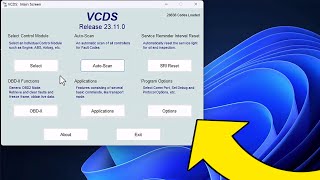
(OEM #G013A8J1G (G13), G12E050A2 (G12evo))— The cooling system must be drained to replace the water pump and refilled with the correct type of coolant to prevent corrosion and ensure proper operation. 🎬 Watch: How to properly bleed the cooling system using VCDS.
Trusted brands: Audi (Genuine OEM), Pentosin, Febi
OEM price range: $30-$40 per gallon
Aftermarket price range: $25-$35 per gallon - Water Pump Drive Belt
(OEM #06K121605)— This belt should always be replaced when the water pump is replaced as a matter of preventative maintenance. It is inexpensive and accessible during the job.
Trusted brands: Continental, Gates
OEM price range: $20-$30
Aftermarket price range: $10-$20
Technical Service Bulletins (TSBs) & Recalls
- TSB 2071515/1 (September 20, 2023): Addresses customer complaints of coolant loss or warning lamps on 2020-2024 A4, A5, Q5 and other models with the 2.0T engine. It instructs technicians to precisely locate the leak and take a photo before repair to avoid incorrect diagnosis or repeat repairs, acknowledging the commonality of the issue.
Platform-Specific Known Issues
- Audi has issued multiple Technical Service Bulletins (TSBs) related to coolant leaks from the water pump and thermostat housing on vehicles with the 2.0T engine, including the A4. TSB 2071515/1 specifically addresses coolant leaks from the pump on 2020-2024 models, instructing technicians on proper diagnosis to avoid repeat repairs.
- There was a class-action lawsuit settlement in the US and Canada covering the water pump/thermostat assembly, which extended the warranty on this specific component. Owners of affected vehicles may have been eligible for reimbursement or free repair, though claim deadlines may have passed.
Mechanic-Grade Diagnostic Values
- Engine Coolant Temperature Sensor (G62) Resistance — expected: Approximately 3750 ohms at 12°C (54°F). Resistance is temperature-dependent and decreases as temperature increases.. Failure: A reading that is wildly out of spec for a given temperature, or an open/short circuit reading.
Scan Tool Commands That Help
- VCDS (VAG-COM): Basic Settings - "Control – cooling circuit air purge" (IDE08087) — This function is critical after replacing the water pump or draining the coolant. It runs the engine and various pumps to purge air from the main cooling circuit. Failure to do this can lead to air pockets and immediate overheating.
- VCDS (VAG-COM): Basic Settings - "Control – low-temperature circuit air purge" (IDE04795) — Used after the main circuit is bled, this function purges air from the low-temperature side of the cooling system. It should be run multiple times (typically 3) with the engine off to ensure all air is evacuated.
- VCDS (VAG-COM): Adaptation - "Cooling circuit air purge control" (IDE08287) — This adaptation must be set to 'Active' or 'Enabled' before starting the basic settings bleed procedures. It tells the ECU to open the necessary valves for the bleeding process to work correctly.
Wiring & Ground Locations
- G62 Coolant Temperature Sender — The G62 sensor is a 2-pin connector located on the water pump/thermostat housing assembly on the front, passenger side of the engine.. A bad connection or damaged wiring at this sensor can send false high temperature signals to the ECU, triggering a P0217 code even if the engine is not actually overheating.
- Ground Point 602 — Located in the front left footwell, under the door sill area.. This is a major chassis ground point. While not directly tied to the engine sensors in all diagrams, poor grounding in this area can cause a variety of unpredictable electrical issues for control modules, potentially affecting sensor readings.
- Ground Point 685 — Located on the front of the right longitudinal member in the engine bay.. This is a key engine bay ground point. Corrosion or a loose connection here could affect the grounding of various engine components and sensors, including those related to the cooling system.
- Positive Jumper Point — Under a red plastic cover on the right side of the engine bay (near the firewall). The negative jumper point is a nearby metal post.. When performing diagnostics or using scan tool functions that require the engine to be off but ignition on (like bleeding procedures), connecting a battery maintainer to these points is critical to avoid draining the battery and causing control module errors.
Real Owner Repair Stories
- Reddit user on r/Audi (2017 Audi A4 with 34,000 KMs) — A small coolant drip was found forming under the thermostat and water pump during a vehicle inspection.
✅ What actually fixed it The user was advised by a mechanic that the thermostat and water pump needed to be removed and inspected, with the likely fix being a replacement of the gasket, housing, or the entire water pump assembly. This aligns with the known common failure of this component. - AudiWorld Forums user (2017 Audi A4 with 140,000 kms) — Cooling fan running constantly, temperature gauge spiking to max, then dropping back to normal quickly. Gradual coolant loss over time (topping up every 1000kms).
❌ Tried (didn't work) Topping up coolant.
✅ What actually fixed it The user diagnosed the issue as a classic slow leak from the plastic water pump, leading to air in the system and erratic temperature readings, even though no major fault codes were present initially. The consensus points towards replacing the water pump assembly.
OEM Part Supersession History
06L121111H→06L121111J, 06L121111K, 06L121111L, 06L121111M, 06L121111P— Multiple revisions were released by VW/Audi to address the high failure rate of the plastic housing, which is prone to cracking and leaking.
Heads up: It is critical to use the latest available revision (e.g., 'P' or newer) when replacing the part to ensure the most robust design. While older revisions will physically fit, they are more likely to fail prematurely.
Diagnostic Flowchart
Other Known Issues on This Vehicle
Issues unrelated to this code that are worth knowing about as an owner of this generation:
- Rocker Arm Failure (EA839 V6, but also noted on EA888) 🔴 High — More prevalent on early B9 S4/S5 models (2018-2019) with the V6 engine, but some reports exist for the 2.0T. Failure can be catastrophic, leading to engine replacement.
- PCV Valve / Oil Separator Failure 🟠 Medium — Common across many VW/Audi engines, including the EA888 Gen 3. Failure leads to incorrect crankcase pressure, causing oil leaks, high oil consumption, rough idle, and a whistling noise.
- Carbon Buildup on Intake Valves 🟠 Medium — A characteristic of direct-injection engines like the EA888. Over 50,000-80,000 miles, buildup can cause misfires, hesitation, and reduced fuel economy. Requires manual cleaning (walnut blasting).
Used vs. New Parts: Buying Guide for This Vehicle
When a used part is the smart pick: For this specific P0217 repair, sourcing used parts is generally not recommended for the primary failure component (the water pump). However, used parts like a radiator cooling fan assembly or coolant expansion tank could be a cost-effective option if they are confirmed to be the cause of the problem.
Donor-vehicle mileage cap: roughly under 40000 miles for the part to have meaningful remaining life.
What to inspect on the donor part:
- For a cooling fan assembly, check for cracks in the shroud and ensure the fan blades spin freely without excessive noise or wobble.
- For a coolant tank, inspect carefully for any hairline cracks, especially around the hose nipples and cap threads. Avoid any parts that show signs of coolant residue or staining.
OEM-only on this vehicle (don't cheap out):
- Water Pump / Thermostat Assembly: Due to the extremely high failure rate and multiple revisions, only a new, latest-revision OEM or high-quality OEM-supplier part should be used. A used part is highly likely to fail again in a short time.
Aftermarket brands forum-validated for this vehicle:
- INA (often the original equipment manufacturer for VAG)
- Pierburg (a reputable OE supplier)
- Continental (VDO)
Brands owners have reported issues with on this vehicle:
- Unbranded, low-cost water pump assemblies from online marketplaces. User reviews frequently cite premature failure, poor fitment, and material quality issues with these parts.
Real Owner Stories
Aggregated from forums and TSBs cited above. Mileages and costs reflect what owners reported in those sources.
2018 Audi A4 2.0T — 70000 miles
Symptoms: Frequent loss of coolant, poor cabin heat, and visible fluid buildup near the water pump.
What fixed it: Replacement of the water pump and thermostat; the owner also recommended replacing the oil cooler union piece at the same time.
Source hint: AudiWorld Forums: Water Pump/Thermostat??
2017 Audi A4 2.0T — 81000 miles
Symptoms: Coolant level started dropping after other coolant hoses had previously failed.
What fixed it: Preventative replacement of the water pump assembly.
Source hint: Reddit r/Audi: Replace waterpump on B9 A4 early?
2017 Audi A4 B9 2.0T — ~21126 miles
Symptoms: A small drip forming under the thermostat/water pump gasket discovered during an inspection.
What fixed it: Replacement of the thermostat/water pump gasket/assembly.
Source hint: Reddit r/AudiA4: 2017 Audi A4 B9 - Water Pump Replacement?
Related OBD-II Codes
Frequently Asked Questions
Is there a Technical Service Bulletin for coolant leaks on my 2022 Audi A4?
Was there a class-action lawsuit regarding the water pump on the Audi A4 EA888 Gen 3?
Why is my 2017 A4 losing coolant even though I don't see a puddle on my driveway?
What specific part should I use to fix the P0217 overheating issue on my Audi?
Can a failing water pump cause my cabin heater to stop working at idle?
Helpful Videos

We Have This Part in Stock

The information in this article is provided for general reference and educational purposes only. Vehicle specifications, procedures, and part compatibility can vary by production date, trim level, and region. Always consult your vehicle's factory service manual and verify part numbers before purchasing or performing repairs. Safety-critical components such as airbags, seat belts, and braking systems should be installed by a qualified professional.
- Audi A4:
- 🧭 Diagnostic Flowchart
- 🎬 Helpful Videos
- 🛍️ Shop This Part
- What's Unique About the 2017-2024 Audi A4
- Symptoms You May Notice
- Most Likely Causes
- Rare But Worth Checking
- Diagnosis Steps
- Parts You'll Likely Need
- Technical Service Bulletins (TSBs) & Recalls
- Platform-Specific Known Issues
- Mechanic-Grade Diagnostic Values
- Scan Tool Commands That Help
- Wiring & Ground Locations
- Real Owner Repair Stories
- OEM Part Supersession History
- Other Known Issues on This Vehicle
- Used vs. New Parts: Buying Guide for This Vehicle
- Real Owner Stories
- 2018 Audi A4 2.0T — 70000 miles
- 2017 Audi A4 2.0T — 81000 miles
- 2017 Audi A4 B9 2.0T — ~21126 miles
- Related OBD-II Codes
- Frequently Asked Questions
- 🎟️ Get 5% Off