

P0217 on 2007-2014 Chevrolet Suburban: Engine Overheat Causes and Fixes
P0217 means your Suburban's engine is critically overheating. The most common causes are a low coolant level from a leak (often from the radiator end tanks or water pump), a faulty thermostat stuck closed, or a failing fan clutch. Stop driving immediately to prevent severe engine damage like warped heads or a blown head gasket.
- P0217 is a critical code. Stop the vehicle immediately to prevent expensive engine damage.
- The most likely cause is a simple mechanical issue: a coolant leak, a bad thermostat, or a failed fan clutch.
- Always check the coolant level first when the engine is cold. A low level indicates a leak that must be found.
- Do not replace the coolant temperature sensor unless you have verified with an external tool that the engine is not actually overheating.
- After any repair, ensure the cooling system is properly filled and 'burped' to remove air pockets, which can cause overheating on their own.
What's Unique About the 2007-2014 Chevrolet Suburban
The 2007-2014 (GMT900) Suburban is a robust platform, but its cooling system has several common failure points. These trucks are susceptible to leaks from aging plastic radiator end tanks, water pump failures, and especially failure of the mechanical fan clutch, which is critical for cooling at low speeds and while towing. Because these large SUVs are often used for heavy hauling, any weakness in the cooling system can be quickly exposed, leading to an overheat condition and a P0217 code, particularly in hot weather or under load.
Symptoms You May Notice
- Check Engine Light is on
- Temperature gauge reading in the red or very high (e.g., 240°F+)
- "Engine Hot, A/C Off" message on the driver information center
- Reduced engine power (limp mode).
- Steam or smoke coming from the engine bay.
- Audible boiling or gurgling sounds from the engine or radiator
- A sweet smell of coolant (ethylene glycol) from outside the vehicle
- Replacing the Engine Coolant Temperature (ECT) sensor first. While possible, it's much more likely that a genuine overheat condition exists due to a mechanical fault in the cooling system. Always confirm the engine is not actually hot before suspecting the sensor.
Most Likely Causes
- Low Engine Coolant Level 🔴 High Probability Leaks can develop over time from radiator hoses, the water pump seal, or the plastic end tanks on the stock radiator which are known to crack. A faulty or loose coolant reservoir cap can also fail to hold pressure, causing coolant to boil off and escape. The small heater core hoses and their quick-connect fittings are another common leak point.
How to confirm: Visually inspect the coolant level in the overflow reservoir when the engine is cold. Look for puddles under the truck or white/colored crusty residue around hoses, the radiator, and the water pump. A cooling system pressure test is the most effective way to pinpoint hard-to-find leaks.
Typical fix: Top off the coolant with a 50/50 mix of DEX-COOL and distilled water, then locate and repair the source of the leak. This may involve replacing a hose, the radiator cap, the water pump, or the entire radiator.
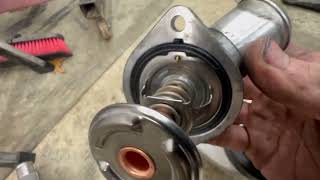
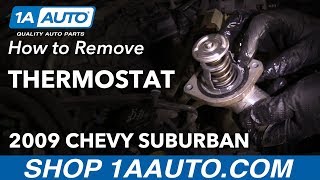
Est. part cost: $15-$400 - Faulty Thermostat 🔴 High Probability → Shop Integrated Thermostat Housing Assembly Thermostats are a common wear item. If it fails in the closed position, it blocks coolant from circulating to the radiator, causing a rapid overheat.
How to confirm: After starting a cold engine, feel the upper radiator hose. It should remain cool for a few minutes and then become hot suddenly as the thermostat opens (around 195-205°F). If it stays cool while the engine temperature gauge climbs into the red, the thermostat is likely stuck closed.
Typical fix: Replace the thermostat and gasket/seal. It is recommended to also replace the coolant at the same time. The thermostat is located inside a housing where the upper radiator hose connects to the engine. 🎬 Watch this step-by-step thermostat replacement guide.
Est. part cost: $20-$70 - Failing Fan Clutch 🟡 Medium Probability The mechanical fan clutch on these V8 engines is a known failure point. When it fails, it doesn't engage the cooling fan properly, leading to insufficient airflow across the radiator, especially in stop-and-go traffic, while towing, or when idling.
How to confirm: When the engine is hot and running, you should hear the fan roaring loudly, especially on acceleration. If the fan is quiet or spins with very little resistance when the engine is off and hot, the clutch has likely failed. An OBD-II scanner with live data can also show fan speed vs. desired fan speed.
Typical fix: Replace the fan clutch assembly. This often requires a special fan clutch wrench set to remove. 🎬 See how to remove the fan clutch without special tools.
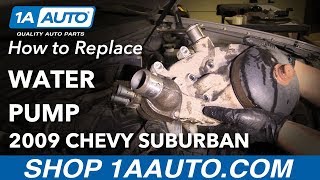
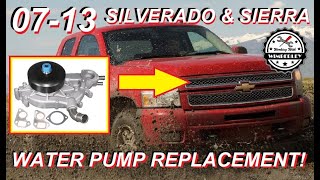
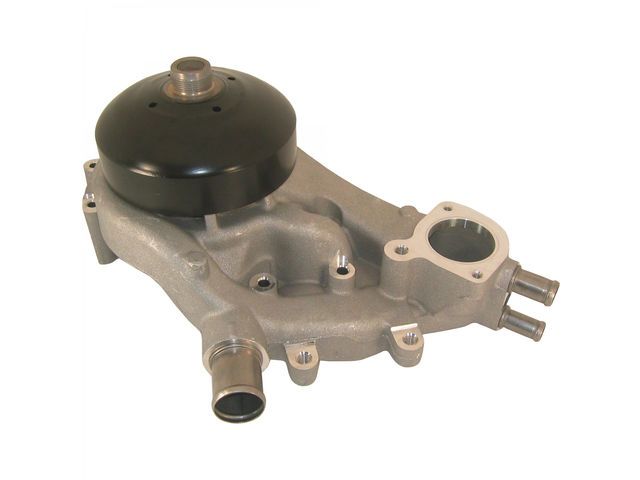
Est. part cost: $60-$200 - Failing Water Pump 🟡 Medium Probability → Shop Engine Water Pump The water pump impeller can wear out or the shaft seal can fail, causing a significant coolant leak and/or preventing proper coolant circulation. They are a common replacement item on high-mileage GMT900s.
How to confirm: Look for coolant leaks from the water pump's 'weep hole' on the underside of the pump body. A grinding or whining noise from the front of the engine or wobble in the water pump pulley are also definitive signs of bearing failure.
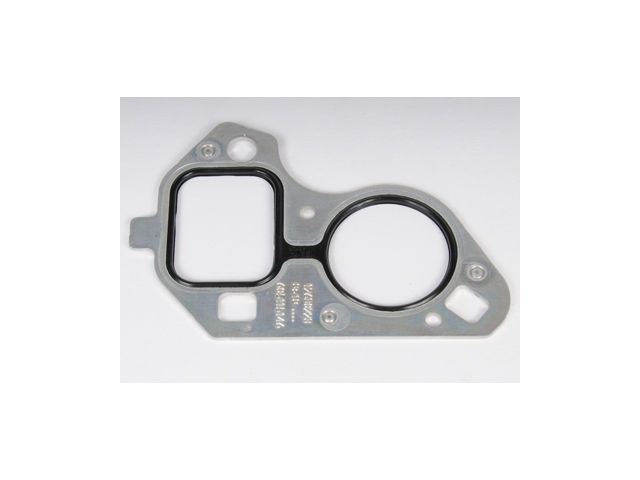
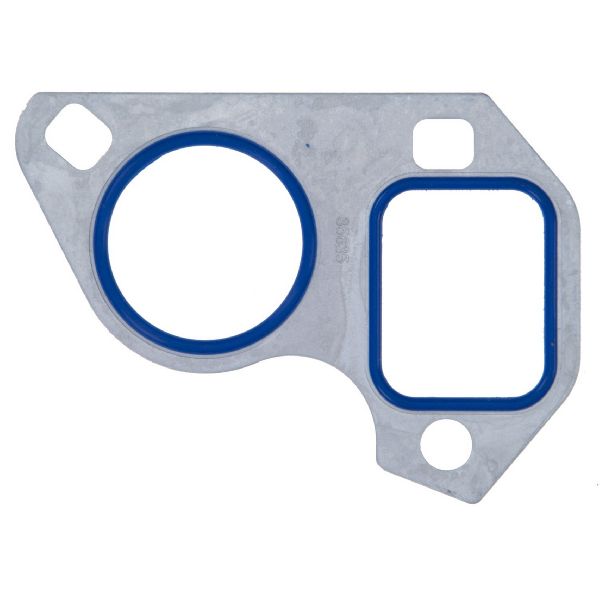
Typical fix: Replace the water pump and its gaskets. 🎬 Watch: How to replace the water pump on a 5.3L engine. It's good practice to replace the thermostat at the same time.
Est. part cost: $80-$250 - Clogged or Restricted Radiator ⚪ Low Probability → Shop Radiator External fins can get clogged with dirt, bugs, and debris, reducing airflow. Internal passages can become blocked from corrosion or using incorrect coolant types, which can gel and restrict flow.
How to confirm: Visually inspect the front of the radiator for debris between the fins of the A/C condenser and the radiator itself. Use an infrared thermometer to check for significant cold spots on the radiator surface (when hot), which indicates an internal blockage.
Typical fix: Clean the external fins with a soft brush and low-pressure water. If internally clogged, the radiator usually requires replacement.
Est. part cost: $200-$500
Rare But Worth Checking
- Blown Head Gasket: This is a major engine repair but can be the root cause of persistent, unexplained overheating. It allows hot combustion gases to enter the cooling system, overwhelming it. A chemical 'block test' can be used to check for combustion gases in the coolant. This is a worst-case scenario.
- Faulty Engine Coolant Temperature (ECT) Sensor: → Shop Engine Coolant Temperature Sensor Rarely, the sensor itself can fail and send an incorrect high-temperature signal, triggering the P0217 code even if the engine isn't actually overheating. This should only be considered after verifying the engine is not actually running hot with an infrared thermometer aimed at the thermostat housing.
Diagnosis Steps
- SAFETY FIRST: Do not open the radiator or coolant reservoir cap when the engine is hot. The system is under pressure and can cause severe burns.
- Check Coolant Level: Once the engine is completely cool, check the level in the coolant reservoir. If it is low, top it off with the correct type of coolant (DEX-COOL 50/50 premix) and inspect for visible leaks.
- Scan for Codes: Use an OBD-II scanner to confirm P0217 and check for any other related codes. Note any freeze-frame data.
- Inspect Fan Operation: Start the engine and turn the A/C on high. The engine cooling fan should engage and run loudly. If it does not, investigate the fan clutch.
- Check Thermostat: Feel the upper radiator hose as the engine warms up. It should get hot after several minutes. If the temperature gauge is high but the hose remains cool, the thermostat is likely stuck closed.
- Pressure Test System: Use a cooling system pressure tester to check for leaks that may not be obvious. The system should hold its rated pressure (usually printed on the cap) for at least 15 minutes.
- Inspect Water Pump: With the engine off and cool, check for any wobble in the water pump pulley. Look for any signs of leakage from the water pump weep hole, which is a small hole on the bottom of the pump housing.
- Check for Head Gasket Failure: If no other cause is found, perform a combustion leak test (block test) to check for exhaust gases in the cooling system.
Parts You'll Likely Need
- Thermostat
(OEM #ACDelco 131-158 (192°F), ACDelco 131-160 (187°F))— A thermostat stuck closed is a very frequent cause of rapid overheating and is a common wear item.
Trusted brands: ACDelco, Motorad
OEM price range: $30-$60
Aftermarket price range: $15-$40 - Fan Clutch
(OEM #ACDelco 15-40133)— The mechanical fan clutch is a common failure point on GMT900 trucks and is essential for low-speed cooling and towing.
Trusted brands: ACDelco, Hayden, GMB
OEM price range: $100-$200
Aftermarket price range: $60-$150 - Water Pump
(OEM #ACDelco 251-744 (GM Part #12681417))— Water pumps are a wear-and-tear item that can leak or stop circulating coolant effectively. The shaft seal is a common failure point.
Trusted brands: ACDelco, Gates, Bosch, Duralast
OEM price range: $150-$250
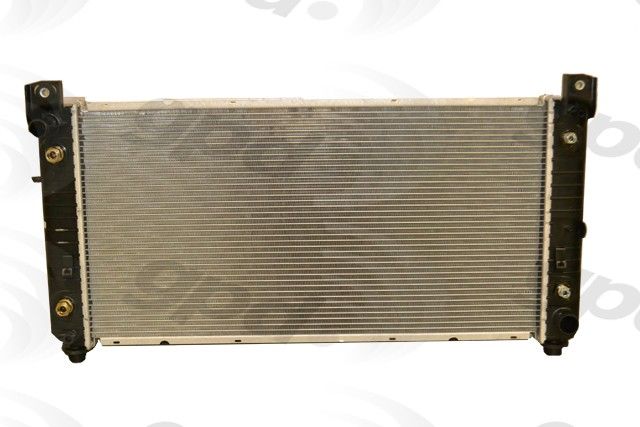
Aftermarket price range: $80-$170 - Radiator
(OEM #GM Genuine 23464612)— The original radiators are known for developing cracks in the plastic side tanks, causing coolant leaks.
Trusted brands: GM Genuine, Spectra Premium, Denso
OEM price range: $400-$600
Aftermarket price range: $150-$350
Technical Service Bulletins (TSBs) & Recalls
- 10-06-01-
Mechanic-Grade Diagnostic Values
- Engine Coolant Temperature (ECT) Sensor Resistance — expected: Approximately 2,200-3,000 Ω at 20°C (68°F) and 250-350 Ω at 80°C (176°F).. Failure: Readings that are infinite (open circuit), near zero (short circuit), or do not decrease smoothly as the engine warms indicate a faulty sensor.
- ECT Sensor Voltage (Key On, Engine Off) — expected: Approximately 2.0V - 3.0V on a cold engine, dropping to around 0.5V when the engine is at full operating temperature.. Failure: Voltage that is stuck high (near 5V) or low (near 0V) regardless of temperature suggests a wiring or sensor issue.
- Live Data Temperature Sensor Comparison (Cold Soak) — expected: On a fully cooled engine (cold-soaked overnight), the Engine Coolant Temp (ECT), Intake Air Temp (IAT), and Ambient Air Temp sensor readings should all be within a few degrees of each other.. Failure: If the ECT sensor reads significantly higher or lower than the other two temperature sensors, it is likely faulty or has a wiring issue.
Scan Tool Commands That Help
- GDS2 / Tech2Win: Coolant Pump Bleed Procedure / Cooling System Bleed — After replacing any major cooling system component like the water pump, radiator, or thermostat, to ensure all air is purged from the system. Trapped air can cause erratic overheating and prevent proper coolant circulation.
- GDS2 / Tech2Win: Cooling Fan Output Control — This is more for vehicles with electric fans, but on a vehicle with a mechanical clutch, it can be used to verify that the ECM is *requesting* fan engagement based on temperature data, helping to isolate a mechanical clutch failure from a sensor/logic failure.
Wiring & Ground Locations
- G103 — On the left rear of the engine compartment, located on the cowl above the brake booster.. This ground serves the Body Control Module (BCM) and Instrument Panel Cluster (IPC). While not directly for the ECT, a poor connection here can cause erratic gauge behavior and false warnings on the driver information center.
- G105 / G106 — Located at the left front of the engine block, often as part of the main negative battery cable harness.. This is a primary engine block ground. The Engine Control Module (ECM) and its sensors, including the ECT sensor, rely on a clean engine ground reference. A corroded or loose G105/G106 can cause incorrect ECT sensor readings, leading the ECM to believe the engine is overheating when it is not, or vice-versa.
- ECT Sensor Connector — On the driver's side cylinder head, typically below the front-most ignition coil.. This is the direct connection point for testing. It has two pins: a 5-volt reference from the ECM and a signal return wire. Checking for voltage and ground here is a primary step in diagnosing a suspected bad sensor or wiring fault.
Real Owner Repair Stories
- Reddit user in r/MechanicAdvice (2004 Suburban (GMT800, similar cooling design)) — Immediate overheating after a cold snap. Upper radiator hose was hot and pressurized, lower hose was cool and limp.
❌ Tried (didn't work) Initially suspected the thermostat was stuck closed due to the temperature difference between the hoses.
✅ What actually fixed it The radiator was internally clogged. Replacing the radiator and flushing the system resolved the overheating. - GMTNation forum user (GMC Envoy (similar platform)) — Upper radiator hose was found collapsed flat ('like a black pancake') after the engine cooled down overnight.
❌ Tried (didn't work) The owner initially thought the hose itself was old and weak.
✅ What actually fixed it Replacing the radiator cap solved the problem. The old cap's vacuum relief valve was stuck, preventing air from being drawn back into the system as the coolant cooled and contracted, creating a vacuum that collapsed the hose.
"I Checked Everything" — The Actual Cause
- In the context of a cooling system, the equivalent is 'pressure test holds steady, but the engine still overheats'. In one documented case, a vehicle passed both a cooling system pressure test and a chemical 'block test' for combustion gases, yet it continued to overheat and push coolant into the overflow tank. The root cause in such scenarios is often either a hairline crack in the head gasket that only opens and leaks combustion pressure into the coolant under the higher temperatures and pressures of a running engine, or an internal radiator blockage that restricts flow without causing an external leak.
OEM Part Supersession History
GM 25790869→ACDelco 15-40133— Part consolidation and design update.
Heads up: While Pass 2 listed 15-40133, multiple parts catalogs show this fan clutch primarily fits the smaller GMT360 platform (Trailblazer/Envoy) and not the full-size GMT900 Suburban. Always verify the correct part number for your specific Suburban VIN, as several different fan clutches were used depending on engine and cooling package (e.g., standard vs. heavy-duty cooling).GM 89018053 (example older style)→ACDelco 251-744 (GM 12681417)— Design update for water pump and thermostat housing.
Heads up: When replacing some older style water pumps with the newer 251-744 design, the thermostat inlet/housing assembly must also be replaced with the newer style (e.g., GM P/N 12600172) along with different length bolts.
Model Year Variations Within This Range
- 2009-2014: Around 2009, the 6-speed 6L80 automatic transmission became standard with the V8 engines, replacing the 4-speed 4L60-E. Radiators for 6L80-equipped trucks have different integrated transmission cooler fittings and potentially a different core design than the earlier 2007-2008 models. While both can fail, it's critical to order the radiator that matches your vehicle's specific transmission to ensure the cooler lines connect correctly.
Diagnostic Flowchart
Other Known Issues on This Vehicle
Issues unrelated to this code that are worth knowing about as an owner of this generation:
- Active Fuel Management (AFM) Lifter Failure 🔴 High — Very common, especially on 5.3L engines (LC9, LY5, LMG) over 100,000 miles. Can cause misfires (P0300) and engine damage. (Ref: Multiple TSBs, including PIP4568P and 15-06-01-002K, address diagnosis and repair.)
- Cracked Dashboard 🟡 Low — Extremely common across all GMT900 trucks, often starting near the passenger airbag and instrument cluster surround. (Ref: No recall was ever issued; GM considered it a cosmetic issue. Class action lawsuits were largely unsuccessful.)
- Excessive Oil Consumption 🔴 High — Widespread on 5.3L engines, often consuming more than 1 quart per 2,000 miles. Caused by piston ring design and PCV system issues related to AFM. (Ref: TSB 10-06-01-008J (and subsequent revisions) outlines diagnostic and repair procedures, which can include piston/ring replacement.)
- Door Lock Actuator Failure 🟡 Low — Common for power door locks to become inoperative on one or more doors due to actuator failure.
- Transmission Failure / Torque Converter Issues 🟠 Medium — The 4L60E transmission used in earlier models and the 6L80 in later models can experience issues, including torque converter failure, leading to shuddering or complete failure.
Used vs. New Parts: Buying Guide for This Vehicle
When a used part is the smart pick: For this repair, used parts are generally not recommended due to the critical nature of the cooling system. The only potential exception is a complete fan blade and clutch assembly from a low-mileage, verified-running donor vehicle. Avoid all other used cooling components.
Donor-vehicle mileage cap: roughly under 50000 miles for the part to have meaningful remaining life.
What to inspect on the donor part:
- For a fan clutch, check for minimal resistance when cold and significant resistance when hot on the donor vehicle before removal.
- Inspect radiator fins on any potential donor; if they are bent, corroded, or clogged with oily residue, do not purchase.
- Avoid any parts from a vehicle that shows signs of coolant neglect, such as rusty or sludgy coolant in the reservoir.
OEM-only on this vehicle (don't cheap out):
- While not strictly 'OEM-only', using a high-quality ACDelco thermostat is strongly advised. Cheap aftermarket thermostats have a high failure rate and can cause repeat overheating issues.
Aftermarket brands forum-validated for this vehicle:
- Radiator: Denso, Spectra Premium, Cold Case (performance upgrade, may need modification), Alloyworks (performance upgrade, may need modification).
- Water Pump: Gates, Bosch, ACDelco (Professional/Gold line).
- Fan Clutch: Hayden, GMB.
Brands owners have reported issues with on this vehicle:
- Avoid 'white-box' or no-name brand thermostats, water pumps, and radiator caps from online marketplaces. The low cost is not worth the risk of catastrophic engine failure.
Real Owner Stories
Aggregated from forums and TSBs cited above. Mileages and costs reflect what owners reported in those sources.
2007-2014 Chevrolet Suburban V8
Symptoms: Owner noticed a coolant leak and sought diagnosis for the source.
What fixed it: Diagnosis of the coolant leak source, which can commonly be the radiator, water pump, or heater core hose quick-connect fittings.
Source hint: chevroletforum.com thread discussing coolant leak diagnosis
2007-2010 Chevrolet Suburban
Symptoms: Dashboard cracks appearing near the passenger airbag and instrument cluster.
What fixed it: Discussion of dashboard crack repair options; however, this is a cosmetic issue and not a fix for P0217.
Source hint: tahoeyukonforum.com thread titled '2007-2010-tahoe-yukon-denali-suburban-dashboard-crack-repair'
2012 Chevrolet Suburban 5.3L — ~100000 miles
Symptoms: Engine misfires and potential for internal damage.
What fixed it: Addressing Active Fuel Management (AFM) lifter failure, a common high-mileage issue on the 5.3L LC9, LY5, and LMG engines.
Source hint: TSB 15-06-01-002K regarding AFM lifter failure
Related OBD-II Codes
Frequently Asked Questions
My 2007-2014 Suburban is showing 'Engine Hot, A/C Off' on the dash. Is this related to P0217?
I have a high-mileage GMT900 Suburban; are there specific leak points I should check first?
Does TSB 10-06-01- apply to my overheating issue?
Can I use any coolant to top off my Suburban's reservoir?
Why does my Suburban only seem to overheat in stop-and-go traffic or while towing?
Is the cracked dashboard in my 2011 Suburban related to the engine overheating?
Helpful Videos
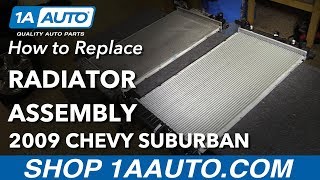
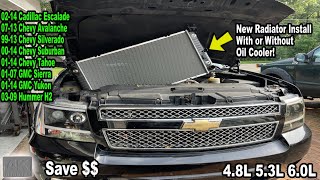
Used OEM Parts in Stock
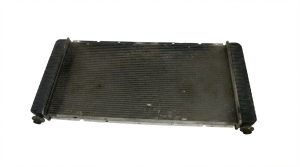
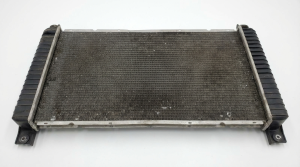
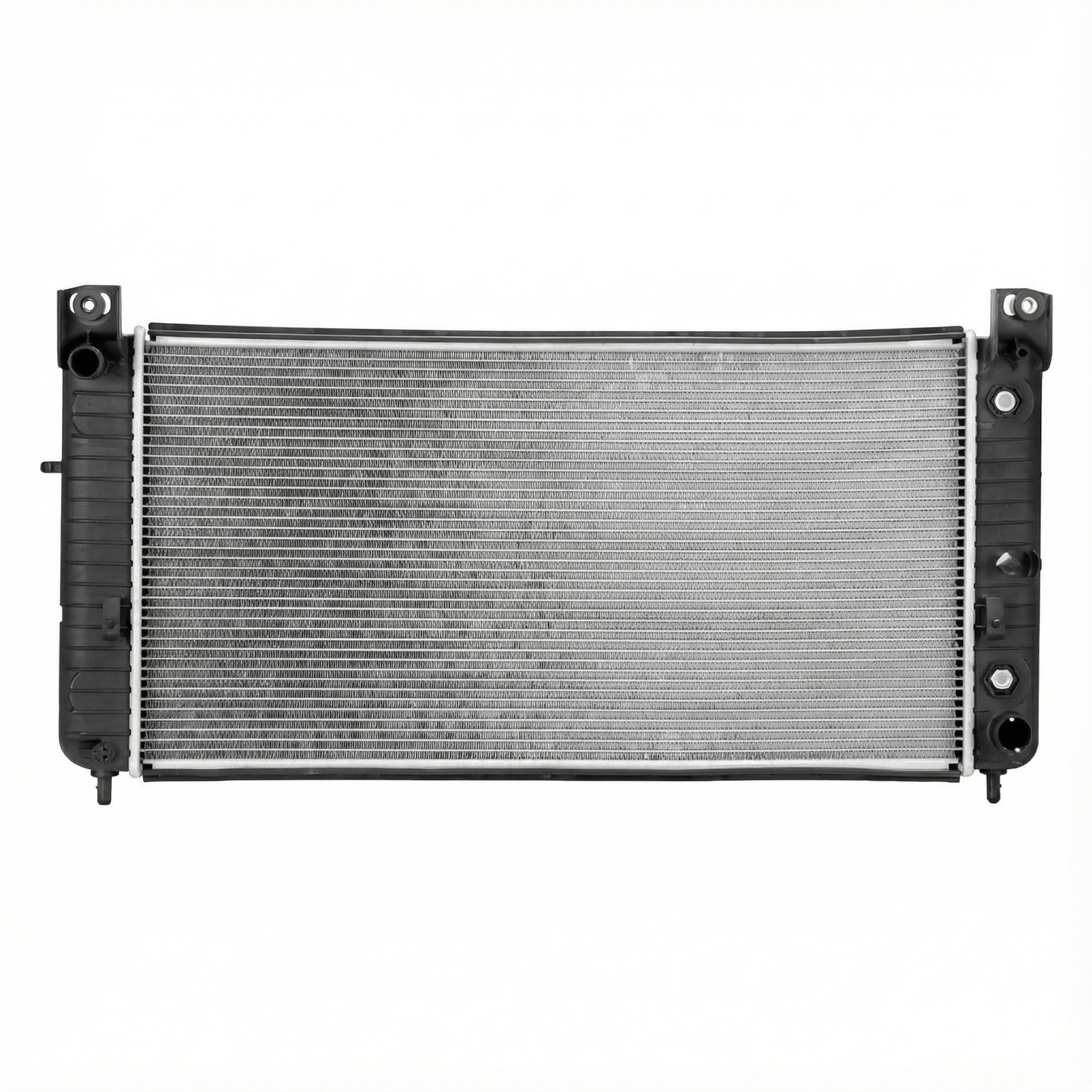
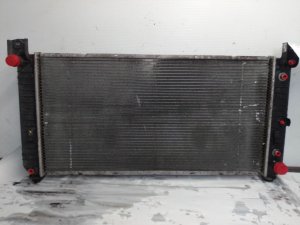
New Aftermarket Parts Available
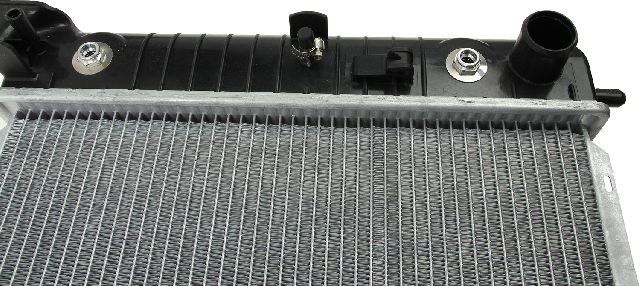


The information in this article is provided for general reference and educational purposes only. Vehicle specifications, procedures, and part compatibility can vary by production date, trim level, and region. Always consult your vehicle's factory service manual and verify part numbers before purchasing or performing repairs. Safety-critical components such as airbags, seat belts, and braking systems should be installed by a qualified professional.
- Chevrolet Suburban:
- 🧭 Diagnostic Flowchart
- 🎬 Helpful Videos
- 🛍️ Shop This Part
- What's Unique About the 2007-2014 Chevrolet Suburban
- Symptoms You May Notice
- Most Likely Causes
- Rare But Worth Checking
- Diagnosis Steps
- Parts You'll Likely Need
- Technical Service Bulletins (TSBs) & Recalls
- Mechanic-Grade Diagnostic Values
- Scan Tool Commands That Help
- Wiring & Ground Locations
- Real Owner Repair Stories
- "I Checked Everything" — The Actual Cause
- OEM Part Supersession History
- Model Year Variations Within This Range
- Other Known Issues on This Vehicle
- Used vs. New Parts: Buying Guide for This Vehicle
- Real Owner Stories
- 2007-2014 Chevrolet Suburban V8
- 2007-2010 Chevrolet Suburban
- 2012 Chevrolet Suburban 5.3L — ~100000 miles
- Related OBD-II Codes
- Frequently Asked Questions
- 🎟️ Get 5% Off