

P0217 on 2015-2020 Ford Edge 2.7L EcoBoost: Engine Overheating Causes and Fixes
On the 2.7L V6, P0217 is often a *false* overheat warning caused by a faulty Engine Coolant Temperature (ECT) sensor wiring harness under the intake manifold. Before replacing the thermostat or water pump, investigate this electrical issue, especially if codes like P0330 are also present. Ford TSB SSM 48991 directly addresses this, recommending replacement of the ECT sensor and the knock sensor harness.
- P0217 is a critical code on the 2015-2020 Ford Edge 2.7L. Stop driving immediately.
- The most likely cause is a faulty ECT sensor wiring harness causing a *false* overheat signal, a known issue covered by Ford TSB SSM 48991.
- Check for related codes like P0330 (Knock Sensor) or P1299 (Overtemperature Protection) to help confirm an electrical fault.
- Do not confuse this engine's issues with the 2.0L EcoBoost's coolant intrusion problem; they are different failures.
- Diagnosis should start with checking for an electrical fault before replacing mechanical parts like the thermostat or water pump.
What's Unique About the 2015-2020 Ford Edge
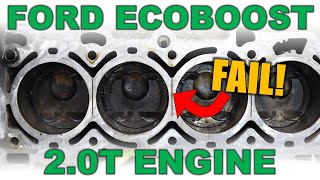
It is crucial to distinguish this engine from the 2.0L EcoBoost also available in the Ford Edge. The 2.0L engine is notorious for a coolant intrusion defect where the engine block cracks, causing overheating. The 2.7L EcoBoost does not share this specific block flaw. Instead, for the 2.7L engine, P0217 is frequently a *false* alarm caused by a well-documented electrical issue. Ford Technical Service Bulletin (TSB) SSM 48991 specifically identifies a faulty Cylinder Head Temperature (CHT) sensor connector or its shared wiring harness with the knock sensor as a primary cause of false overheating warnings on the Edge and its platform mates. Other related TSBs like SSM 47791 also point to a poorly seated CHT/ECT connector or damaged wiring. The physical sensor measures cylinder head temperature, but the resulting codes (P0217, P0117, etc.) use the generic 'Engine Coolant Temperature' terminology.
Symptoms You May Notice
- Temperature gauge reading high or in the red zone, often jumping to HOT instantly after a cold start
- Engine temperature warning light illuminated
- Check Engine Light on
- Reduced engine power as the vehicle enters 'limp mode' or fail-safe cooling mode, which may be accompanied by code P1299
- Cooling fans running constantly at high speed, even on a cold engine
- Steam or a sweet smell of coolant from the engine bay (in a true overheat scenario)
- Audible alarms or messages in the instrument cluster like 'Engine Coolant Over Temperature ERROR'
- A/C compressor may disengage
- Manufacturer service bulletin SSM 48345 notes that an over temperature warning and P0217 may be accompanied by smoke from the tailpipe.
- Replacing the thermostat or water pump when the root cause is the CHT sensor wiring harness. This is a common mistake if a technician does not check for related electrical codes (like P0330) or observe the 'instant hot' symptom on a cold start.
- Assuming the vehicle has the 2.0L EcoBoost's coolant intrusion/cracked block issue. While P0217 is a symptom of that failure, it is not a common problem on the 2.7L V6 and would lead to a completely incorrect and costly diagnostic path.
- Replacing only the CHT/ECT sensor without replacing the harness. TSB SSM 48991 recommends replacing both components together, as the harness is the most likely point of failure.
Most Likely Causes
- Faulty CHT/ECT Sensor Wiring Harness or Connector 🔴 High Probability → Shop Engine Coolant Temperature Sensor Per Ford TSBs SSM 48991 and SSM 47791, the wiring harness for the CHT and knock sensors is routed in the hot engine valley under the intake manifold. Heat and vibration can degrade the wiring, cause poor pin tension, or cause the connector to become loose, leading to an incorrect high-temperature signal (a short to ground).
How to confirm: Check for accompanying codes like P0330 (Knock Sensor), P0117, P0118, or P1299. A key symptom is the temperature gauge shooting to HOT instantly after a cold start, which is physically impossible and points to an electrical fault. A technician can test the circuit for proper voltage and continuity or find damaged wiring between connectors C1016 (at the sensor) and C1168 (inline harness connector) per TSB SSM 47791.
Typical fix: Replace the CHT sensor and the associated knock sensor wiring harness as a unit, per TSB SSM 48991. This requires removing the upper intake manifold to gain access. The causal part is the harness, base part number 12A699. A more specific part number for the harness on an Edge is FT4Z-12A699-F.
Est. part cost: $75-$150 - Stuck-Closed Engine Thermostat 🟡 Medium Probability → Shop Integrated Thermostat Housing Assembly Thermostats are a common wear item that can fail and stick in the closed position, blocking coolant flow to the radiator and causing a rapid, genuine overheat.
How to confirm: After the engine has warmed up, feel the upper and lower radiator hoses. If the thermostat is working, both should be hot. If the upper hose is hot and the lower hose is cool, the thermostat is likely stuck closed and not allowing coolant to circulate.
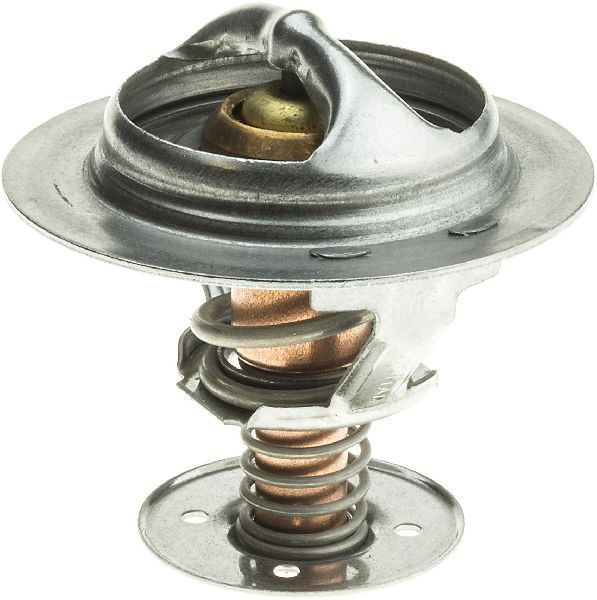
Typical fix: Replace the engine thermostat and gasket. It is recommended to use a high-quality OEM part like the Motorcraft RT-1251. The coolant should be drained and refilled with Ford-specified Motorcraft VC-13-G Orange coolant.
Est. part cost: $70-$120 - Low Engine Coolant 🟡 Medium Probability Coolant can be lost through leaks in hoses, the radiator, the water pump seal, or the thermostat housing. The 2.7L EcoBoost has numerous coolant hoses, including lines to the twin turbochargers, creating multiple potential leak points. Forum users have reported leaks from heater hose connections and even the coolant reservoir itself.
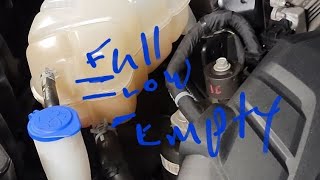
How to confirm: Visually inspect the coolant reservoir; if it is low or empty, a leak is present. A cooling system pressure test can be performed to locate the source of the leak. Look for white or colored crusty residue left behind by dried coolant.
Typical fix: Identify the source of the leak and replace the failed component (e.g., hose, radiator, gasket). Refill the system with the correct Ford-specified coolant.
Est. part cost: $20-$500+ - Failing Water Pump ⚪ Low Probability → Shop Engine Water Pump The 2.7L EcoBoost uses an external, belt-driven water pump. While more reliable and easier to service than the internal pumps on some other Ford engines, the seals can still fail, causing leaks, or the impeller can degrade, causing poor circulation.
How to confirm: Look for coolant leaks from the 'weep hole' on the bottom of the water pump. A whining or grinding noise from the front of the engine can also indicate a failing water pump bearing.
Typical fix: Replace the water pump and its associated gaskets. A forum member on a platform-mate F-150 confirmed the fix was a new water pump (Part No. FT4Z-8501-D) and associated gaskets.
Est. part cost: $150-$300 - Leaking EGR Cooler ⚪ Low Probability → Shop Exhaust Gas Recirculation (EGR) Valve Manufacturer bulletin SSM 48345 notes that an EGR cooler leaking coolant into the engine intake and exhaust can trigger P0217 alongside external coolant leaks.
Rare But Worth Checking
- Cooling Fan Assembly Failure: → Shop Engine Cooling Fan Blade If the engine overheats primarily in stop-and-go traffic or at idle but is fine at highway speeds, the cooling fan assembly may not be activating. This could be due to a failed fan motor, relay, or control module.
- Radiator Blockage: → Shop Radiator Debris like leaves or plastic bags can block airflow through the front of the radiator. Less commonly, internal passages can become clogged from using incorrect coolant or from system contamination.
Diagnosis Steps
- DO NOT DRIVE. Immediately shut off the engine to prevent damage.
- Check Coolant Level: Once the engine is completely cool, check the coolant level in the overflow reservoir. If it is low, you have a leak that must be found. TSB 20-2234 notes that vehicles with P0217 may exhibit low coolant levels and white smoke.
- Scan for Codes: Use an OBD-II scanner to confirm P0217 and check for any other codes. The presence of P0330, P1299, P0117, P0118, or P1026 strongly suggests the common wiring harness fault.
- Evaluate the Symptom: Note how the overheating occurred. Did the gauge climb slowly (suggesting a real overheat) or did it jump to HOT instantly, even on a cold start (suggesting an electrical fault)?
- Verify Temperature: Use an infrared thermometer to measure the temperature of the cylinder head or upper radiator hose. If the actual temperature is normal while the gauge reads HOT, this confirms a sensor/circuit fault.
- Inspect Cooling Fans: With the engine running and A/C on, verify that the cooling fans are spinning.
- Pressure Test System: If the coolant was low, perform a cooling system pressure test to find the source of the external leak (hoses, radiator, water pump, etc.).
- Test Thermostat: If no leaks are found and the overheat seems genuine, test for a stuck thermostat by checking radiator hose temperatures.
- Inspect CHT Harness: If an electrical fault is suspected, the vehicle should be taken to a professional to have the intake manifold removed and the CHT sensor and wiring harness inspected and replaced per TSB SSM 48991.
Parts You'll Likely Need
- Engine Coolant Temperature (ECT) and Knock Sensor Wiring Harness
(OEM #FT4Z-12A699-F (replaces FT4Z-12A699-B, C, D))— This is the most common cause of a false P0217 code on this specific engine, as identified in TSB SSM 48991. - Cylinder Head Temperature Sensor
(OEM #Motorcraft DY-1309 (Sensor base part FT4Z-12A648-B))— Often replaced along with the harness as a preventative measure and as recommended by TSB SSM 48991. Note: Ford calls this an ECT sensor in some literature but it functions as a CHT sensor. - Engine Thermostat
(OEM #Motorcraft RT-1251)— A potential cause of a genuine overheating condition if it fails in the closed position. - Upper and Lower Intake Manifold Gaskets — These must be replaced when the intake manifold is removed to access the CHT/Knock sensor harness.
Related Codes That Often Appear With This One
- P0330 — Stands for 'Knock Sensor 2 Circuit'. According to TSB SSM 48991, this code is a strong indicator of the common wiring harness failure, as the knock sensor and CHT sensor share the same harness and are often replaced together to resolve the issue.
- P1299 — This is a Ford-specific code for 'Cylinder Head Overtemperature Protection Active'. It is set as a consequence of P0217, indicating the PCM has entered a fail-safe mode to reduce engine power and prevent damage.
- P0117 / P0118 — These codes indicate a short ('Circuit Low') or open ('Circuit High') in the CHT/ECT sensor circuit. Their presence confirms an electrical fault rather than a mechanical overheating problem and are explicitly mentioned in TSBs SSM 48991 and SSM 47791.
- P1026 — A Ford-specific code for a discrepancy between temperature sensors. It is also listed in TSBs SSM 48991 and SSM 47791 as a possible companion code related to the CHT harness issue.
- P0300-P0304 — These misfire codes may appear with P0217 if coolant intrusion into the cylinder is occurring, as noted in TSB 22-2229.
Technical Service Bulletins (TSBs) & Recalls
- SSM 48991: Recommends replacing the ECT sensor and knock sensor harness for P0217 and related codes.
- SSM 47791: Points to a poorly seated ECT sensor connector or damaged wiring as a cause for P0217.
- SSM 46906: Similar to 47791, highlighting ECT connector and wiring issues.
- TSB 21-2168: (Applies to F-150 but relevant) Describes a fix for false overheat codes by relocating the ECT sensor.
- TSB 20-2234: Notes that vehicles with the 2.0L EcoBoost may exhibit P0217 along with low coolant and white smoke.
- SSM 48345: Identifies a leaking EGR cooler as a potential cause for P0217 and over temperature warnings.
- TSB 22-2229: Describes P0217 occurring alongside misfire codes (P0300-P0304) due to coolant intrusion into the cylinder.
Platform-Specific Known Issues
- False Overheating Signal: The most significant issue for the 2.7L EcoBoost is the tendency to set a P0217 code due to an electrical fault in the ECT sensor circuit, not an actual overheat. This is documented in Ford TSB SSM 48991 and corroborated by TSB 21-2168 for the F-150 with the same engine.
Mechanic-Grade Diagnostic Values
- Cylinder Head Temperature (CHT) Sensor Resistance — expected: Approx. 37,000 Ω at 70°F (21°C) and 2,100 Ω at 212°F (100°C).. Failure: A very low resistance (<200 Ω) indicates a short, causing a false overheat signal. An open circuit (infinite resistance) would cause a 'circuit high' code like P0118.
- CHT Sensor Signal Voltage (at PCM) — expected: Voltage decreases as temperature increases. Approx. 2.0V at normal operating temp (~194°F / 90°C).. Failure: A voltage near 0V indicates a short to ground in the circuit, which the PCM interprets as extreme heat, triggering P0217 and P1299.
- CHT Sensor Connector Jumper Test — expected: With the sensor unplugged and the two terminals in the harness-side connector jumped with a fused wire, the scan tool's temperature reading should go to its maximum value (e.g., >250°F).. Failure: If the temperature reading does not change when jumpered, it indicates an open circuit (break) in the wiring between the connector and the PCM.
Scan Tool Commands That Help
- FORScan / Ford IDS: Live Data PID Monitoring (CHT, CHT_V) — To observe the raw voltage (CHT_V) and calculated temperature (CHT) from the sensor in real-time. On a cold start, an instant jump to maximum temperature confirms an electrical fault, not a real overheat.
- FORScan / Ford IDS: Instrument Panel Cluster (IPC) Self-Test — To rule out a faulty temperature gauge. This command sweeps all gauges through their full range of motion, confirming the gauge itself is mechanically and electrically functional.
- FORScan / Ford IDS: Cooling Fan Control (%) — To manually command the cooling fans to run at various speeds. This bidirectional control helps verify the functionality of the fan motors, relays, and control module, which is useful when diagnosing a true overheating condition.
Wiring & Ground Locations
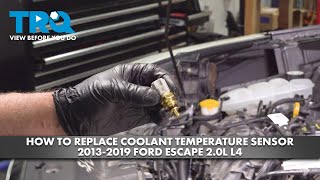
- CHT/ECT Sensor — In the engine valley, between the cylinder heads, underneath the upper and lower intake manifolds.. This is the sensor providing the temperature reading. Its difficult-to-access location makes diagnosis and replacement labor-intensive.
- C1016 — The 2-pin electrical connector that plugs directly into the CHT/ECT sensor under the intake manifold.. TSB SSM 47791 identifies this connector as a common point of failure due to being improperly seated or having poor pin tension, causing intermittent or false signals.
- C1168 — An inline harness-to-harness connector between the CHT sensor sub-harness (C1016) and the main engine harness that goes to the PCM.. TSB SSM 47791 specifically notes that the wiring *between* C1016 and C1168 is prone to chafing and damage, which can cause a short to ground and trigger a false overheat code.
- G104 — A primary engine compartment ground point, typically located on the left (driver's side) front of the engine compartment or on the engine block itself.. The CHT sensor circuit relies on a clean ground reference to the PCM. A loose or corroded main engine ground at G104 can cause erratic voltage readings for multiple sensors, including the CHT.
Real Owner Repair Stories
- F-150 Forum User (2016 Ford F-150 2.7L EcoBoost (platform mate)) — On a cold start after sitting overnight, the truck immediately displayed 'Engine Coolant Overtemperature' and the gauge was pegged in the red. The cooling fan ran at full speed.
❌ Tried (didn't work) Letting the vehicle cool down completely had no effect; the error persisted on the next key-on cycle.
✅ What actually fixed it The owner located and replaced the Cylinder Head Temperature (CHT) sensor. On their specific 2.7L, it was on the driver's side of the engine. After replacing the sensor ($32) and clearing the codes with a scanner, the problem was resolved. - NHTSA ODI #11422123 — An owner reported an illuminated malfunction indicator lamp with codes including P0217 and P1299, which was attributed to coolant intrusion into the cylinder.
OEM Part Supersession History
FT4Z-12A699-B, FT4Z-12A699-C, FT4Z-12A699-D→FT4Z-12A699-F— The original CHT/Knock sensor harnesses were prone to heat degradation and electrical faults. The newer revisions are likely manufactured with improved heat shielding, higher quality wiring insulation, or connectors with better pin tension to prevent failures.
Diagnostic Flowchart
Other Known Issues on This Vehicle
Issues unrelated to this code that are worth knowing about as an owner of this generation:
- Leaking Plastic Oil Pan 🟠 Medium — Common on earlier models (2015-2017). The RTV sealant fails or the plastic pan warps, causing oil leaks. Often requires multiple repair attempts. (Ref: TSB 23-2338 (supersedes 22-2181), TSB 19-2219)
- Excessive White/Blue Smoke on Startup 🟡 Low — Some vehicles may exhibit a puff of smoke after a cold soak due to oil seeping into the turbocharger. (Ref: TSB 19-2188)
- Faulty Intake Valves (2021-2022 models) 🔴 High — A recall affected 2021-2022 models where brittle intake valves could fracture, potentially causing total engine failure. (Ref: Recall mentioned, but specific number not cited in search.)
- Timing Chain Rattle (2015-2017 models) 🟠 Medium — Primarily on earlier 2.7L engines, a rattle may be heard on startup due to timing chain tensioner issues.
- Turbo Coolant Line Leaks 🟡 Low — Small leaks can develop at the coolant line fittings for the turbochargers, often presenting as a slow coolant loss or a faint coolant smell.
Used vs. New Parts: Buying Guide for This Vehicle
When a used part is the smart pick: For this specific P0217 fault, sourcing used parts is not recommended. The primary failure components are electronic sensors and wiring harnesses known to degrade with heat and time. A used harness or sensor from a salvage yard will have experienced the same wear and is likely to fail prematurely, offering poor value and high risk of repeat labor.
What to inspect on the donor part:
- Not applicable as used parts are not advised for the common electrical causes of this code.
OEM-only on this vehicle (don't cheap out):
- CHT/Knock Sensor Wiring Harness (FT4Z-12A699-F): This is a known failure point addressed by multiple TSBs. An OEM part ensures you get the latest, most durable revision. Aftermarket versions may lack the necessary heat shielding or connector quality.
- Cylinder Head Temperature (CHT) Sensor (Motorcraft DY-1309): The PCM's inferred coolant temperature calculation is calibrated to the specific resistance curve of the OEM sensor. An aftermarket sensor could provide inaccurate readings, leading to persistent issues.
- Engine Thermostat (Motorcraft RT-1251): Thermostats are critical wear items. Cheap aftermarket units have a high failure rate and are not worth the risk of engine damage.
Aftermarket brands forum-validated for this vehicle:
- For related cooling system components like a radiator or cooling fan assembly (if those are the cause), brands like Spectra Premium, Denso, or TYC are generally considered reliable aftermarket options.
Brands owners have reported issues with on this vehicle:
- Avoid unbranded, 'white-box' electrical sensors and wiring harnesses from online marketplaces. The quality control is often non-existent, and they are a common source of repeat failures for this type of repair.
Real Owner Stories
Aggregated from forums and TSBs cited above. Mileages and costs reflect what owners reported in those sources.
2016 Ford Edge Sport 2.7L V6
Symptoms: The instrument cluster displayed an 'Engine Coolant Over Temperature ERROR' and the temperature gauge instantly moved to the HOT zone immediately after a cold start.
What fixed it: Replacement of the CHT sensor and the associated wiring harness (Part No. 12A699) located under the intake manifold as described in TSB SSM 48991.
Source hint: Ford Edge Forum - 'Engine Coolant Over Tempreture ERROR'
2016 Ford Edge Sport 2.7L V6
Symptoms: Mysterious coolant loss and leaks; owner was concerned about coolant intrusion common in other engines.
What fixed it: Identification of external leak points such as heater hose connections, turbocharger coolant lines, or the coolant reservoir itself.
Source hint: Reddit r/FordEdge - '2016 Sport 2.7L v6 Engine Coolant Leak'
2015-2020 Ford F-150 2.7L EcoBoost
Symptoms: Vehicle set a P0217 code due to a false overheating signal from the ECT sensor circuit.
What fixed it: Installation of a specific kit (Part No. ML3Z-14A411-H) to relocate the ECT sensor, as per TSB 21-2168.
Source hint: TSB 21-2168
Related OBD-II Codes
Frequently Asked Questions
My 2016 Ford Edge Sport temperature gauge jumped to HOT immediately after a cold start. Is my engine actually overheating?
Does TSB SSM 48991 apply to my 2.7L EcoBoost Edge?
What is the specific replacement harness part number for a Ford Edge with this issue?
Why are my cooling fans running at high speed even though I just started the car?
Is the P0217 code on my Edge related to the coolant intrusion issues found in the 2.0L engines?
Can a faulty knock sensor cause a P0217 overheat code?
Helpful Videos

We Have This Part in Stock


The information in this article is provided for general reference and educational purposes only. Vehicle specifications, procedures, and part compatibility can vary by production date, trim level, and region. Always consult your vehicle's factory service manual and verify part numbers before purchasing or performing repairs. Safety-critical components such as airbags, seat belts, and braking systems should be installed by a qualified professional.
- Ford Edge:
- 🧭 Diagnostic Flowchart
- 🎬 Helpful Videos
- 🛍️ Shop This Part
- What's Unique About the 2015-2020 Ford Edge
- Symptoms You May Notice
- Most Likely Causes
- Rare But Worth Checking
- Diagnosis Steps
- Parts You'll Likely Need
- Related Codes That Often Appear With This One
- Technical Service Bulletins (TSBs) & Recalls
- Platform-Specific Known Issues
- Mechanic-Grade Diagnostic Values
- Scan Tool Commands That Help
- Wiring & Ground Locations
- Real Owner Repair Stories
- OEM Part Supersession History
- Other Known Issues on This Vehicle
- Used vs. New Parts: Buying Guide for This Vehicle
- Real Owner Stories
- 2016 Ford Edge Sport 2.7L V6
- 2016 Ford Edge Sport 2.7L V6
- 2015-2020 Ford F-150 2.7L EcoBoost
- Related OBD-II Codes
- Frequently Asked Questions
- 🎟️ Get 5% Off