

P0217 on 2020-2022 Ford Escape 2.0L EcoBoost: Engine Overheat Causes and Fixes
P0217 means your engine is overheating, a critical issue requiring you to stop driving immediately. On 2020-2022 2.0L EcoBoost engines, this code is frequently linked to a leaking EGR cooler or a cracked cylinder head, both serious issues that allow coolant into the engine. These failures supersede the well-known 'coolant intrusion' block flaw from pre-2020 models. Do not assume it's a simple thermostat; professional diagnosis is crucial to prevent catastrophic engine damage.
- P0217 is a critical code that means your engine is overheating. Stop driving immediately to prevent catastrophic engine failure.
- On the 2.0L EcoBoost, this code is strongly associated with a known engine defect causing coolant to leak into the cylinders. This must be the first thing a professional rules out.
- Symptoms like white exhaust smoke, unexplained coolant loss, and engine misfires are major red flags for the coolant intrusion issue.
- Do not replace the thermostat, water pump, or other cooling parts until a borescope inspection has confirmed the cylinders are free of coolant.
- Due to the severity and complexity of the most likely cause, this is not a DIY-friendly repair. Professional diagnosis is essential.
What's Unique About the 2020-2022 Ford Escape
While any car can overheat, the 2.0L EcoBoost engine family has a complex history. Pre-2020 models were known for a block design flaw causing 'coolant intrusion'. Your 2020-2022 Escape has the updated engine design which mitigated that specific problem. However, this newer generation is now known for two different, but equally severe, failure modes that also cause coolant to enter the engine: a leaking EGR cooler (documented in Ford SSM 48345) and cracked cylinder heads (seen in platform mates under TSB 23-2092). Therefore, a P0217 code on this engine must be treated with extreme caution, and these known failure points must be investigated before considering more common cooling system parts.
Symptoms You May Notice
- Temperature gauge reading high or in the red zone
- "Engine Temperature High - Stop Safely" message on the instrument panel
- Reduced engine power or the vehicle entering 'limp mode'
- Steam or smoke coming from the engine bay
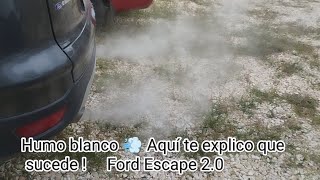
- Thick white smoke from the exhaust pipe, especially on startup (a key sign of coolant being burned in the engine).
- A sweet smell from the exhaust, which is the odor of burning antifreeze. 🎬 Watch: Identifying white smoke from a 2.0L EcoBoost exhaust.
- Noticeable loss of engine coolant with no visible external leaks.
- Rough running engine, misfires, or a flashing check engine light, especially on a cold start.
- Coolant reservoir is empty or very low.
- Replacing the thermostat or water pump without first ruling out an internal coolant leak from the EGR cooler or cylinder head. If the root cause is an internal leak, these repairs will be a waste of money and will not solve the overheating problem.
Most Likely Causes
- Leaking EGR Cooler 🔴 High Probability → Shop Exhaust Gas Recirculation (EGR) Valve This is a primary suspect for the 2020+ 2.0L EcoBoost. Ford issued Special Service Message (SSM) 48345 and TSB 20-2234 for 2019-2020 models (including the Escape) where the EGR cooler fails internally, leaking coolant into the intake and exhaust. This causes overheating, white smoke, and coolant loss. Manufacturer bulletin SSM 48345 notes that this failure can cause smoke from the tailpipe and an over-temperature warning alongside DTC P0217.
How to confirm: A technician must isolate and pressure test the EGR cooler according to the procedure in the Workshop Manual to check for internal leaks. Visual inspection may show coolant residue in the EGR system.
Typical fix: Replace the faulty EGR cooler assembly and associated gaskets. 🎬 Watch: Step-by-step guide to replacing the EGR cooler assembly. The PCM may also require an update per the TSB.
Est. part cost: $250-$700 - Internal Coolant Leak (Cracked Cylinder Head) 🟡 Medium Probability While the older block flaw was addressed, the cylinder head on the 2020-2023 2.0L EcoBoost is now a known failure point. It can crack and leak coolant directly into the cylinders. This is documented for its platform-mate, the Lincoln Corsair, in TSB 23-2092. TSB 22-2322 also confirms that coolant intrusion into the cylinder can trigger P0217 and misfire codes.
How to confirm: The definitive diagnosis involves a cooling system pressure test that shows pressure loss with no external leaks. This is followed by removing spark plugs and using a borescope to visually inspect for coolant inside the cylinders. A 'steam-cleaned' piston or visible liquid is a tell-tale sign.
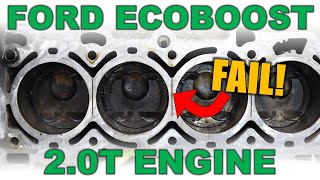
Typical fix: If a cracked head is confirmed, the repair involves replacing the cylinder head assembly. In severe cases or depending on dealer policy, a full long block engine replacement 🎬 See this teardown to understand why these engines fail. may be recommended.
Est. part cost: $1500-$6000 (Head vs. Long Block) - Failed Thermostat ⚪ Low Probability → Shop Integrated Thermostat Housing Assembly
How to confirm: Monitor coolant hose temperatures. If the engine is overheating but the radiator and its outlet hose remain cool, the thermostat is likely stuck closed, preventing coolant from circulating. This should only be considered after ruling out internal leaks.
Typical fix: Replace the thermostat and housing. It is often recommended to replace the entire housing assembly on these engines.
Est. part cost: $50-$150 - Cooling Fan Malfunction ⚪ Low Probability → Shop Engine Cooling Fan Blade
How to confirm: With the engine at operating temperature (or when the A/C is on), the cooling fan(s) should be running. If they are not, check the fan fuse, relay, and wiring for power and ground.
Typical fix: Replace the faulty cooling fan motor, relay, or fuse.
Est. part cost: $20-$400
Rare But Worth Checking
- Failing Water Pump: → Shop Engine Water Pump While possible on any vehicle, the water pump on the 2.0L EcoBoost is not a primary suspect for P0217 compared to the more common platform-specific EGR and cylinder head issues.
- Faulty Cylinder Head Temperature (CHT) Sensor: This engine uses a CHT sensor that measures metal temperature, not coolant temperature. A faulty sensor or wiring could send an incorrect high-temperature signal, triggering P0217 and limp mode even if the engine isn't actually overheating. This is less common than an actual overheat condition.
- Leaking Radiator Cap: → Shop Radiator A faulty radiator cap that can no longer hold pressure will lower the boiling point of the coolant, which can lead to an overheat condition. This is a simple and inexpensive part to check and replace.
Diagnosis Steps
- STOP DRIVING. Do not attempt to 'make it home'. Let the engine cool completely.
- Check the coolant level in the reservoir. If it is low, this confirms a leak.
- Scan the PCM for all stored trouble codes. The presence of misfire codes (P03xx) alongside P0217 is a strong indicator of an internal leak.
- Perform a cooling system pressure test. Pressurize the system to the level specified on the cap (usually ~15 PSI) and monitor for 15-30 minutes.
- If the system cannot hold pressure but no external leaks are visible, an internal leak is highly likely.
- CRITICAL NEXT STEP: Following Ford's service messages (SSM 48345), the EGR cooler should be inspected and tested first for internal leaks.
- If the EGR cooler passes the test, the next step is to check for a cracked cylinder head. Remove all spark plugs.
- Use a borescope to inspect the inside of each cylinder. Look for shiny, steam-cleaned piston tops or the visible presence of liquid coolant. Coolant may make the spark plugs appear unusually clean or have a white/greenish residue.
- If coolant is found in the cylinders and the EGR cooler is good, the cylinder head is the likely cause and requires replacement.
- If no internal leaks are found, proceed with standard overheating diagnostics: test thermostat operation, water pump function, and cooling fan operation.
Parts You'll Likely Need
- Engine Long Block Assembly
(OEM #6006 (base part number))— This is the official Ford-recommended repair for the older, pre-2020 coolant intrusion issue and may still be recommended by dealers for severe cases of cylinder head/wall damage on newer models.
Trusted brands: Motorcraft
OEM price range: $4000-$6000
Aftermarket price range: $3500-$5500 - EGR Cooler
(OEM #K2GZ-9F464-A (for Edge/Nautilus, verify for Escape))— A primary cause of overheating on 2020+ models if it leaks internally, as documented in Ford SSM 48345.
Trusted brands: Motorcraft, Standard Motor Products
OEM price range: $400-$700
Aftermarket price range: $250-$500 - Cylinder Head Assembly — The necessary repair if a borescope inspection confirms coolant in the cylinders and the EGR cooler is not at fault, indicating a crack in the head.
Trusted brands: Motorcraft
OEM price range: $1500-$2500
Aftermarket price range: $1000-$1800 - Thermostat Housing Assembly — A classic cause of overheating if it sticks closed. Should only be replaced after ruling out the more severe, platform-specific internal leaks.
Trusted brands: Motorcraft
OEM price range: $50-$150
Aftermarket price range: $40-$120
Related Codes That Often Appear With This One
- P0300, P0301-P0304 — These are random and cylinder-specific misfire codes. They are very common companions to P0217 when coolant is leaking into the cylinders, as it fouls the spark plug and prevents proper combustion.
- P0316 — Misfire Detected on Startup (First 1000 Revolutions). This often occurs when coolant has leaked into a cylinder and pooled overnight, causing a misfire immediately upon starting the engine.
- P1299 — Cylinder Head Overtemperature Protection Active. This is a Ford-specific code triggered when the CHT sensor detects extreme heat, confirming the engine's protection mode has been activated due to the overheat condition.
- P0401 — Exhaust Gas Recirculation (EGR) Flow Insufficient Detected. This can appear alongside P0217 when the EGR cooler is the root cause of the failure.
Technical Service Bulletins (TSBs) & Recalls
- TSB 19-2346 / 22-2229: Details the coolant intrusion issue for the 2.0L EcoBoost, lists P0217 as a potential DTC, and confirms the repair is to replace the long block engine assembly.
- TSB 19-2208: An earlier version of the bulletin specifying build dates (on or before May 16, 2019 for the Escape) and listing associated DTCs.
- SSM 48345: Identifies that an EGR cooler leaking coolant into the intake and exhaust may cause an over-temperature warning and DTC P0217.
- TSB 22-2322: Notes that coolant intrusion into the cylinder can cause a rough running condition with DTCs P0217, P0300, P0301-P0304, P0316, P1285, and/or P1299.
Platform-Specific Known Issues
- The 2.0L EcoBoost engine used in 2017-2019 Escapes built on or before May 16, 2019, is subject to multiple Ford TSBs (19-2346, 22-2229) for coolant leaking into the cylinders due to a flaw in the engine block design.
- The 2020-2022 models with the updated engine are NOT covered by the old TSBs but have their own distinct issues. Ford SSM 48345 specifically calls out a leaking EGR cooler as a cause for P0217 and related symptoms on 2019-2020 Escapes.
- Platform mates like the Lincoln Corsair (2020-2023) with the same engine are subject to TSB 23-2092 for cracked cylinder heads, indicating this is a potential failure point for the Escape as well.
Mechanic-Grade Diagnostic Values
- Cylinder Head Temperature (CHT) Sensor Reference Voltage — expected: ~5.0V (with sensor unplugged, testing the harness connector). Failure: No voltage or significantly lower voltage points to a wiring issue or a problem with the PCM's 5V reference circuit.
- Cylinder Head Temperature (CHT) Sensor Signal Voltage (Key On, Engine Off, Cold) — expected: 2.0V - 3.0V on a cold engine. Another source specifies ~4.29V at 86°F (30°C).. Failure: Voltage stuck near 5V (open circuit) or near 0V (short to ground) indicates a sensor or wiring fault.
- Cylinder Head Temperature (CHT) Sensor Signal Voltage (Engine at Operating Temp) — expected: Voltage should drop to around 0.5V - 2.03V as the engine warms to ~194°F (90°C).. Failure: Voltage that does not decrease as the engine warms up indicates a faulty sensor.
- Cylinder Head Temperature (CHT) Sensor Resistance — expected: Resistance decreases as temperature increases (Negative Temperature Coefficient). At 20°C (68°F), resistance is high (2000-3000 Ω). At 90°C (194°F), resistance is low (200-300 Ω).. Failure: Resistance that is out of specification for a given temperature, or shows an open/shorted condition, indicates a failed sensor.
Scan Tool Commands That Help
- Ford IDS (or equivalent): PCM Reprogram — TSB 20-2234, which addresses the leaking EGR cooler, specifies that the PCM may need to be reprogrammed to the latest software level as part of the repair procedure. This is done after the mechanical repair is complete.
Wiring & Ground Locations
- CHT Sensor — On the cylinder head, often on the rear (firewall side) or driver's side of the head, making it difficult to access.. This sensor provides the direct metal temperature reading that triggers P1299 and contributes to P0217. Its location makes its wiring susceptible to heat damage.
- CHT Sensor Wiring Harness — Runs from the CHT sensor to the Powertrain Control Module (PCM), routed through hot areas of the engine bay.. Ford SSM 48991 identifies a damaged CHT wiring harness as a potential cause of false overheating warnings (P0217, P1299). A short or open in this harness can mimic a sensor failure, leading to misdiagnosis.
- Engine Ground Point — A primary engine compartment ground connection point is often located to the right of the battery, near the engine compartment fuse box (Battery Junction Box).. A poor ground connection for the PCM or its sensors can cause erratic voltage readings, potentially leading to false sensor data and incorrect trouble codes.
Real Owner Repair Stories
- Reddit user 'k0uch', identified as a Ford tech (Ford 2.0L EcoBoost engines, 2019 and newer) — Coolant consumption and overheating.
✅ What actually fixed it The user notes that for 2019+ 2.0L EcoBoost engines, EGR cooler failures are a more common cause of coolant consumption and overheating than the block/head gasket intrusion issues that plagued pre-2019 models. This confirms the diagnostic priority should be on the EGR cooler for this vehicle range. - NHTSA ODI #11537612 — An owner reported an over-temperature condition with codes P1299 and P0217. Upon removing the spark plugs, a technician found coolant intrusion into all the cylinders.
- NHTSA ODI #11611342 — An owner was informed by a mechanic that a new engine was required due to a series of codes including P0300, P0316, P0217, and P1299.
"I Checked Everything" — The Actual Cause
- A false P0217 code can be triggered even if the cooling system is mechanically sound and passes a pressure test. A faulty Cylinder Head Temperature (CHT) sensor or a short in its wiring harness can send an erroneous high-temperature signal to the PCM, causing it to trigger limp mode and the P0217 code, even on a cold engine.
OEM Part Supersession History
K2GZ-9F464-A→K2GZ-9F464-B— This is the EGR Cooler. Part supersessions often indicate a revision to improve reliability or fix a known flaw. Given that the original part is a common failure point, using the 'B' revision is critical.K2GZ-6049-A→K2GZ-6049-B— This is the Cylinder Head Assembly for the platform-mate Lincoln Corsair. The original head design was prone to cracking. The 'B' revision is the updated, redesigned part intended to fix the flaw per TSB 23-2092.
Heads up: Using an old stock 'A' revision or a used head from a salvage yard risks a repeat failure of the original design flaw.
Model Year Variations Within This Range
- 2020-2022: The primary failure points for the 2.0L EcoBoost shifted for the 2020 model year. While pre-2020 models were notorious for coolant intrusion due to a flaw in the engine block design, the 2020-2022 models are more commonly affected by internally leaking EGR coolers (TSB 20-2234) and cracked cylinder heads (TSB 23-2092).
Diagnostic Flowchart
Other Known Issues on This Vehicle
Issues unrelated to this code that are worth knowing about as an owner of this generation:
- 8F35 Transmission Harsh Shifting/Failure 🟠 Medium — Reported in a notable number of vehicles, particularly in early model years. Can manifest as harsh engagement into Drive or jerky downshifts. (Ref: TSB 20-2366 addresses harsh shifting in some 2020 models. Recall 20S49 was issued for missing/loose start/stop accumulator bolts that could cause a fluid leak and loss of function.)
- Cracked Fuel Injector (1.5L Engine Primarily) 🔴 High — While this article is for the 2.0L, many Escapes have the 1.5L engine, which is subject to a major recall for cracked fuel injectors that can leak fuel and cause a fire. (Ref: Ford Recalls 22V-859, 24V-187, and 25S21.)
- Rearview Camera Failure 🟡 Low — A very common complaint across many Ford/Lincoln models of this era, including the Escape and its platform-mate, the Corsair. The screen goes blue or black when in reverse. (Ref: Multiple recalls and customer satisfaction programs exist, such as 21N08.)
- Engine Block Heater Leaks 🔴 High → Shop Engine Block — Affects vehicles equipped with an optional engine block heater, which can leak coolant and short circuit, creating a fire risk when plugged in. (Ref: Transport Canada recall 2026-005.)
Used vs. New Parts: Buying Guide for This Vehicle
When a used part is the smart pick: For this specific P0217 issue on this vehicle, used parts are generally not recommended for the primary causes. However, a used part from a low-mileage donor could be a cost-effective option for secondary cooling system components like the radiator cooling fan assembly, coolant reservoir, or undamaged hoses.
Donor-vehicle mileage cap: roughly under 50000 miles for the part to have meaningful remaining life.
What to inspect on the donor part:
- Verify the donor vehicle was not involved in a front-end collision that could have damaged cooling components.
- Check for a clear, non-cloudy coolant in the donor vehicle's reservoir if possible, indicating it wasn't contaminated.
- For electrical parts like fan motors, ensure connectors are free of corrosion and wiring is intact.
OEM-only on this vehicle (don't cheap out):
- Engine Long Block
- Cylinder Head Assembly
- EGR Cooler
Aftermarket brands forum-validated for this vehicle:
- For sensors like the CHT, brands like NTK and Standard Motor Products (SMP) are generally considered reliable alternatives to OEM.
Brands owners have reported issues with on this vehicle:
- Avoid unbranded, 'white-box' engine components like cylinder heads, EGR coolers, or water pumps from online marketplaces, as their quality control and material specifications are unknown and the risk of premature failure is extremely high.
Real Owner Stories
Aggregated from forums and TSBs cited above. Mileages and costs reflect what owners reported in those sources.
2020 Ford Escape 2.0L EcoBoost
Symptoms: Engine temperature high warning and P0217 code. Discussion regarding the EGR cooler failing internally and leaking coolant into the intake and exhaust.
What fixed it: Replacement of the EGR cooler assembly and associated gaskets, along with a PCM update.
Source hint: Ford Edge Forum - '2020 Engine Temperature' regarding SSM 48345
2020-2023 Lincoln Corsair 2.0L EcoBoost
Symptoms: Coolant loss with no external leaks, overheating, and potential for coolant entering the cylinders.
What fixed it: Replacement of the cylinder head assembly or, in severe cases, a full long block engine replacement.
Source hint: TSB 23-2092
2020+ Ford Escape 2.0L EcoBoost
Symptoms: Misfires on cold start and a technician using a borescope to inspect for coolant intrusion.
What fixed it: Borescope inspection to confirm internal leaks followed by engine component replacement.
Source hint: Reddit r/fordescape - 'Used Escape buyers: are you worried about the 2.0 EcoBoost coolant issue?'
Related OBD-II Codes
Frequently Asked Questions
Does TSB 19-2346 for coolant intrusion apply to my 2020-2022 Ford Escape 2.0L?
What does Ford SSM 48345 say about my 2020 Escape's overheating issue?
If my 2021 Escape 2.0L has P0217 and white smoke, is it the engine block flaw?
How can a technician confirm if my 2020-2022 Escape has a cracked cylinder head?
Is the P0217 code on my 2020 Ford Escape related to the transmission recall?
Helpful Videos

Used OEM Parts in Stock
New Aftermarket Parts Available


The information in this article is provided for general reference and educational purposes only. Vehicle specifications, procedures, and part compatibility can vary by production date, trim level, and region. Always consult your vehicle's factory service manual and verify part numbers before purchasing or performing repairs. Safety-critical components such as airbags, seat belts, and braking systems should be installed by a qualified professional.
- Ford Escape:
- 🧭 Diagnostic Flowchart
- 🎬 Helpful Videos
- 🛍️ Shop This Part
- What's Unique About the 2020-2022 Ford Escape
- Symptoms You May Notice
- Most Likely Causes
- Rare But Worth Checking
- Diagnosis Steps
- Parts You'll Likely Need
- Related Codes That Often Appear With This One
- Technical Service Bulletins (TSBs) & Recalls
- Platform-Specific Known Issues
- Mechanic-Grade Diagnostic Values
- Scan Tool Commands That Help
- Wiring & Ground Locations
- Real Owner Repair Stories
- "I Checked Everything" — The Actual Cause
- OEM Part Supersession History
- Model Year Variations Within This Range
- Other Known Issues on This Vehicle
- Used vs. New Parts: Buying Guide for This Vehicle
- Real Owner Stories
- 2020 Ford Escape 2.0L EcoBoost
- 2020-2023 Lincoln Corsair 2.0L EcoBoost
- 2020+ Ford Escape 2.0L EcoBoost
- Related OBD-II Codes
- Frequently Asked Questions
- 🎟️ Get 5% Off