

P0217 on 2011-2019 Ford Explorer 3.5L V6: Engine Overheat and Water Pump Failure Guide
P0217 means your engine is overheating. On the 3.5L V6 Explorer, this is most often caused by a failing internal water pump, a major repair costing $2,000-$4,000+. Look for a coolant leak dripping from the passenger side of the engine as the primary symptom. If ignored, the pump can fail internally, mixing coolant with oil and destroying the engine.
- P0217 is a critical code indicating your engine is overheating. Stop driving immediately to prevent catastrophic engine failure.
- The most likely cause on a 3.5L V6 Explorer is a failed internal water pump, which is a very expensive repair.
- Check for a coolant leak on the passenger side of the engine and check the engine oil for a milky appearance.
- If the oil is contaminated, the engine has suffered a major failure and should not be run.
- While other causes like a stuck thermostat or bad fan are possible, the water pump should be the primary suspect.
What's Unique About the 2011-2019 Ford Explorer
The 2011-2019 Explorer with the transverse-mounted 3.5L V6 engine has a critical design characteristic that makes P0217 a potentially severe code: the water pump is located inside the engine and is driven by the timing chain. When the pump's internal seal fails, it is designed to leak coolant out of a special 'weep hole' on the passenger side of the engine block. If this external leak is ignored or the failure is more severe (i.e., the bearing fails), coolant can be dumped directly into the crankcase and contaminate the engine oil, leading to rapid timing chain wear, bearing damage, and catastrophic engine failure.
Symptoms You May Notice
- Temperature gauge reading hot or in the red zone
- Check Engine Light and/or a dedicated engine temperature warning light is on
- Reduced engine power as the vehicle enters 'limp mode'
- A 'wrench' icon may appear on the dashboard
- Steam or smoke coming from the engine bay
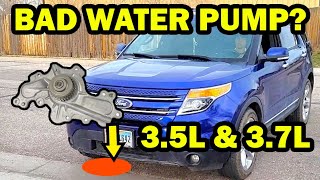
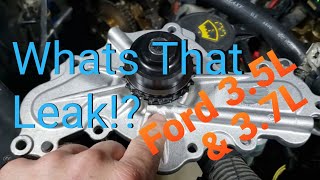
- Visible coolant leak on the ground, typically on the passenger side, below the alternator/AC compressor area. 🎬 Watch: How to spot a water pump leak on this engine.
- Low coolant level in the reservoir
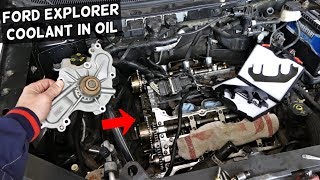
- Milky, 'chocolate-milk' appearance of the engine oil on the dipstick or oil cap, indicating a catastrophic 🎬 See why coolant mixes with oil during a pump failure. internal water pump failure and coolant contamination.
- Replacing the coolant temperature sensor without first thoroughly inspecting for leaks. A P0217 code is almost always indicative of a real mechanical overheating problem, not a sensor error.
- Assuming a coolant leak is from a simple hose when the true source is the water pump weep hole, which is difficult to see without removing other components.
- Mistaking the water pump weep hole for a freeze plug. Technicians unfamiliar with this engine design may misdiagnose the source of the leak.
Most Likely Causes
- Failing Internal Water Pump 🔴 High Probability → Shop Engine Water Pump The 3.5L V6 engine family uses an internal, timing-chain-driven water pump that is a known common failure item, often between 80,000 and 150,000 miles. A class-action lawsuit was filed over this design, though it was dismissed.
How to confirm: With the engine cool, use a flashlight to inspect the passenger side of the engine block, just below the alternator. Look for a small hole (the 'weep hole') with signs of dried orange/pink or yellow coolant crust or active dripping. Also, check the engine oil for a milky consistency, which indicates a severe internal failure where coolant has mixed with oil.
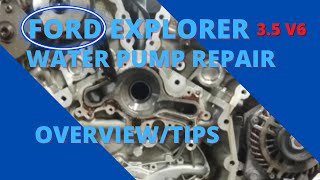
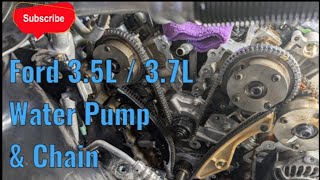
Typical fix: This requires a complete teardown of the front of the engine, including the timing cover, to replace the water pump. It is highly recommended to replace the timing chain, tensioners, and guides at the same time. This is a 10-12+ hour labor job. 🎬 Watch this step-by-step internal water pump and timing chain replacement.
Est. part cost: $300-$800 for a water pump and timing kit - Low Coolant Level from External Leak 🟡 Medium Probability The plastic coolant reservoir (de-gas bottle) can become brittle and crack with age, and rubber hoses can degrade over time. These are common failure points on many vehicles.
How to confirm: Visually inspect the coolant reservoir, radiator, and all coolant hoses for visible cracks, wetness, or drips. A cooling system pressure test is the definitive way to locate hard-to-find leaks.
Typical fix: Replace the cracked or leaking component, such as the coolant reservoir or a specific hose.
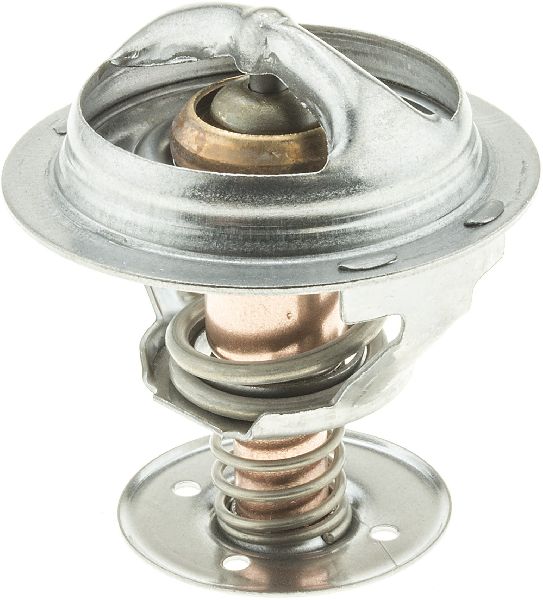
Est. part cost: $50-$150 - Stuck-Closed Thermostat ⚪ Low Probability → Shop Integrated Thermostat Housing Assembly
How to confirm: After starting a cold engine, the upper radiator hose will remain cool to the touch even as the temperature gauge climbs into the hot range. This indicates hot coolant is not being allowed to circulate to the radiator.
Typical fix: Replace the thermostat and gasket. It is recommended to use an OEM Motorcraft part and this is often done preventatively during a water pump replacement.
Est. part cost: $30-$70 - Cooling Fan Assembly Failure ⚪ Low Probability → Shop Engine Cooling Fan Blade
How to confirm: With the engine at operating temperature or the A/C turned on, the electric cooling fans should be running. If they are not, the issue could be the fan motor, relay, or the fan control module.
Typical fix: Diagnose and replace the failed component, which is often the entire fan assembly.
Est. part cost: $200-$450
Rare But Worth Checking
- Faulty Cylinder Head Temperature (CHT) Sensor: This engine uses a CHT sensor to infer coolant temperature. While a faulty sensor can trigger a false P0217 and P1299 code, it is far less common than an actual overheat condition from the water pump. This should only be considered after all other mechanical causes are ruled out. Diagnosis involves checking the live sensor data on a cold engine; an immediate high-temperature reading points to a failed sensor.
Diagnosis Steps
- SAFETY FIRST: If the engine is actively overheating, pull over and shut it off immediately. Do not open the coolant cap until the engine has cooled completely for several hours.
- Check Engine Oil: Pull the dipstick and check the oil filler cap. If the oil is milky, has the consistency of a milkshake, or is over-full, the internal water pump has likely failed and filled the crankcase with coolant. Do not start the engine again. The vehicle must be towed for repair.
- Check Coolant Level: Once cool, check the level in the coolant reservoir. If it is low or empty, you have a significant leak.
- Inspect for Water Pump Leak: This is the most crucial step. With a good flashlight and possibly a mirror, carefully inspect the area on the passenger side of the engine, below and behind the alternator. Look for a small, quarter-inch hole in the block. Signs of pink, orange, or yellow dried coolant residue or an active drip from this weep hole is a definitive sign of water pump failure.
- Check Cooling Fan Operation: Start the engine and turn the A/C to its coldest setting. Both cooling fans should activate. If they do not, investigate the fan circuit.
- Check for Other Leaks: Visually inspect the radiator, all coolant hoses, and the plastic reservoir for any other obvious leaks.
- Test Thermostat: If no leaks are found, monitor the upper radiator hose as the engine warms up. If it never gets hot while the gauge climbs, the thermostat is likely stuck closed.
Parts You'll Likely Need
- Engine Water Pump & Timing Chain Kit
(OEM #PW-515 (For models up to 01/02/2012), PW-657 (For models from 01/02/2012))— This is the most common cause of overheating on the 3.5L V6. Due to the labor involved, it is critical to replace the timing chain, guides, and tensioners at the same time as the pump.
Trusted brands: Motorcraft, Gates, Cloyes
OEM price range: $400-$600
Aftermarket price range: $250-$450 - Engine Coolant Thermostat
(OEM #RT-1234 (Motorcraft))— A stuck thermostat is a possible, though less common, cause of overheating. It's always replaced as a preventative measure during a water pump job.
Trusted brands: Motorcraft
OEM price range: $40-$60
Aftermarket price range: $20-$40 - Engine Coolant Reservoir
(OEM #AG1Z8A080S)— The factory plastic tank can become brittle and crack over time, causing a coolant leak that can lead to overheating.
Trusted brands: Motorcraft, Dorman
OEM price range: $60-$90
Aftermarket price range: $40-$70
Related Codes That Often Appear With This One
- P1299 — This is a Ford-specific code for 'Cylinder Head Over Temperature Protection Active,' which confirms the PCM has detected a severe overheat and has entered fail-safe mode to protect the engine. P0217 and P1299 almost always appear together in a genuine overheat event.
- P0016, P0017, P0018, P0019 — These camshaft/crankshaft correlation codes can appear if the internal water pump has failed and contaminated the engine oil with coolant. The contaminated oil degrades the timing chain and damages the hydraulic variable cam timing (VCT) phasers and solenoids, causing timing errors.
Technical Service Bulletins (TSBs) & Recalls
- TSB 14-0130: Addresses exhaust/sulfur odor in the cabin, a common complaint on this platform.
- TSB 17-0044: A later TSB also addressing exhaust odor in the cabin under various conditions.
Platform-Specific Known Issues
- The internal, timing-chain-driven water pump is a significant and widely documented point of failure on the 3.5L Ti-VCT engine, leading to expensive and labor-intensive repairs.
- A Reddit user on r/FordExplorer noted, '2011-2019 have water pump problems around the 100k miles marker. It's a big job due to the engine design... a $2-3k job.'
- A user on a Ford Flex forum with the same engine had the original pump last 11 years and 167,000 km (about 104k miles), confirming the high mileage failure pattern.
Mechanic-Grade Diagnostic Values
- Cylinder Head Temperature (CHT) Sensor Resistance — expected: High resistance when cold (~100,000 Ohms at -40°F/-40°C), low resistance when hot (~70 Ohms at 266°F/130°C).. Failure: Readings that are wildly out of this range, or an open/short circuit reading. A sensor that reads low resistance (hot) when the engine is cold is faulty.
- Cylinder Head Temperature (CHT) Sensor Voltage — expected: Approximately 4.8-4.9V on a very cold engine (-40°F) down to approximately 0.15-0.25V at maximum operating temperature (257-293°F).. Failure: Voltage that is stuck high or low, or that jumps erratically. A very low voltage reading on a cold engine indicates a shorted sensor or wiring.
- Overheat Protection Activation Temperature — expected: Normal operating temperature is below 230°F.. Failure: The PCM will trigger P0217 and the P1299 fail-safe mode when the CHT sensor reports a temperature of approximately 260°F (127°C).
Scan Tool Commands That Help
- Ford IDS (or equivalent professional scanner): Cooling Fan Control — To command the electric cooling fans on and off to verify their operation, as well as the integrity of the control circuit (relays, wiring), independent of the PCM's automatic control.
- Ford IDS (or equivalent professional scanner): Cooling System Pressure Test — This is a guided function in the dealer tool that helps a technician methodically pressurize the cooling system to locate hard-to-find physical coolant leaks after a sensor fault has been ruled out.
Wiring & Ground Locations
- Cylinder Head Temperature (CHT) Sensor — On the 3.5L V6, the CHT sensor is located under the lower intake manifold, screwed into one of the cylinder heads.. This is the primary sensor the PCM uses to determine engine temperature and trigger a P0217 code. Its location makes it very labor-intensive to replace, so it should be tested thoroughly via scan tool data before condemning.
- G103 / G105 / G106 — These are primary ground points for the engine and PCM, typically located on the firewall or rear of the engine block.. A corroded or loose ground connection at these points can cause erratic voltage in sensor circuits, potentially leading to a false CHT sensor reading and an incorrect P0217 code.
- Water Pump Weep Hole — On the passenger side of the engine block, behind and below the alternator. It looks like a small hole or notch above a freeze plug.. This is the single most important physical location to inspect. Coolant leaking from this specific hole is a definitive sign that the internal water pump seal has failed and replacement is necessary.
Real Owner Repair Stories
- Reddit user DLaForce on r/FordExplorer (2011 Ford Explorer XLT, 170,000 miles) — Vehicle was running fine one day, then the next it was rumbling, shaking, the check engine light came on, and it stalled in an intersection.
✅ What actually fixed it The water pump had catastrophically failed, dumping about a gallon of coolant directly into the engine oil. The vehicle required a major engine repair or replacement. - Reddit user MikeLaaawry on r/FordExplorer (Ford Explorer with 3.5L V6 Turbo, 78,000 miles) — Started with a coolant leak that became more obvious when the engine began overheating.
✅ What actually fixed it Diagnosis confirmed a failed water pump. A local mechanic quoted $4200 to replace the water pump and timing components. - Technician tip from YouTube channel 'Ford Tech Makuloco' (Ford 3.5L V6 (transverse)) — N/A - Pro-tip for repair
❌ Tried (didn't work) Following the official Ford procedure which requires removing the camshaft phasers.
✅ What actually fixed it A shortcut exists to avoid removing the camshaft phasers. The bolt for the rear timing chain guide can be backed out 5-6 turns with a wrench, providing just enough clearance to slide the guide out and remove the water pump. This saves significant time and aggravation compared to re-timing the cams.
"I Checked Everything" — The Actual Cause
- A rare but catastrophic failure mode for the internal water pump does not involve a coolant leak at all. The pump's bearing can fail in such a way that the sprocket tilts on its shaft, causing the primary timing chain to jump teeth. This will not be detected by a cooling system pressure test and may not even show coolant in the oil initially. The symptoms will be a sudden no-start or rough running, accompanied by camshaft/crankshaft correlation codes (P0016, etc.) and eventually P0217 if the engine runs long enough to overheat due to the non-functioning pump. The engine may be seized from valve-to-piston contact.
OEM Part Supersession History
PW-515 (Motorcraft)→PW-657 (Motorcraft)— The water pump design was updated. The PW-657 is the part for later models and may feature a different impeller design (number of fins).
Heads up: While they may physically appear similar, using the wrong pump for your specific build date is not recommended. Always verify the part number with the vehicle's VIN.Motorcraft Orange Coolant (VC-3-B)→Motorcraft Yellow Coolant (VC-13-G)— Ford issued a new coolant specification. The newer yellow formula is reported to be less corrosive and offers better protection for cooling system components, including water pump seals.
Heads up: The coolants should not be mixed. If converting from orange to yellow, a complete system flush is required.
Model Year Variations Within This Range
- 2011 - early 2012: These models use the earlier water pump, OEM part number PW-515. The changeover date is specified as January 2, 2012.
- Late 2012 - 2019: These models use the later water pump, OEM part number PW-657.
- 2011 - 2015: These models were equipped with the MyFord Touch infotainment system, which was known to be buggy and is a common source of owner frustration but is unrelated to this trouble code.
- 2016 - 2019: These models received a mid-cycle refresh which included a redesigned exterior and the much-improved SYNC 3 infotainment system. The 3.5L Ti-VCT engine and its internal water pump design were carried over without significant changes.
Diagnostic Flowchart
Other Known Issues on This Vehicle
Issues unrelated to this code that are worth knowing about as an owner of this generation:
- Power Transfer Unit (PTU) Failure 🔴 High — Common, especially on vehicles over 60,000 miles where the 'lifetime' fluid has not been changed. The unit is located near the hot exhaust, cooking the fluid and causing breakdown. (Ref: TSB 19-2017 for fluid leaks from the intermediate shaft seal.)
- Exhaust Odor / Carbon Monoxide In Cabin 🔴 High — Widespread issue, particularly on 2011-2017 models, often noticed during hard acceleration or when using recirculated air. (Ref: Multiple TSBs issued, including TSB 14-0130 and TSB 17-0044, to address sealing the cabin and reprogramming HVAC.)
- Electronic Throttle Body Failure 🟠 Medium — A common cause for the vehicle entering 'limp mode' with a wrench light, often setting codes P2111 and P2112.
- Cracked/Bubbling Aluminum Hood 🟡 Low — Cosmetic issue common on earlier models (2011-2014) where corrosion forms under the paint on the leading edge of the aluminum hood.
- Rear Suspension Toe Link Fracture 🔴 High — Subject of a recall (NHTSA Campaign Number: 19V435000) for 2011-2017 models. Frequent articulation can cause the toe link to fracture, leading to a loss of steering control. (Ref: Safety Recall 19S17)
Used vs. New Parts: Buying Guide for This Vehicle
When a used part is the smart pick: For this specific P0217 repair, obtaining used parts is generally a poor choice for the core components. However, used parts like a coolant reservoir, cooling fan assembly, or undamaged hoses from a low-mileage donor vehicle can be a cost-effective option if the original part has failed from a simple crack or electrical issue.
Donor-vehicle mileage cap: roughly under 70000 miles for the part to have meaningful remaining life.
What to inspect on the donor part:
- For a coolant reservoir: Check for any hairline cracks, especially around the hose nipples and cap threads. Ensure the plastic is not overly yellowed or brittle.
- For a cooling fan assembly: Spin the fan blades by hand to check for any bearing noise or resistance. Inspect the electrical connector for corrosion or damage.
- For any part: Verify the donor vehicle's mileage and check for signs of front-end collision damage, which could have stressed the components.
OEM-only on this vehicle (don't cheap out):
- Engine Water Pump: NEVER install a used water pump. The labor cost for this job is extremely high, and the risk of a premature failure of a used part makes it a terrible economic decision.
- Timing Components (Chain, Guides, Tensioners): These are wear items that should always be replaced with new parts during a water pump service.
- Thermostat: This is an inexpensive but critical part. Always install a new OEM Motorcraft thermostat during a water pump or major cooling system service.
Aftermarket brands forum-validated for this vehicle:
- Gates: Often cited in forums as a reliable choice for a complete water pump and timing kit.
- Cloyes: Another well-regarded brand for timing system components.
Brands owners have reported issues with on this vehicle:
- Dorman: Some forum users have specifically advised against using Dorman water pumps for this application, citing quality concerns.
- Unbranded/White-Box Parts: Given the catastrophic consequences of a failure, avoid generic, no-name parts from online marketplaces for the water pump and timing components.
Real Owner Stories
Aggregated from forums and TSBs cited above. Mileages and costs reflect what owners reported in those sources.
2011-2019 Ford Explorer 3.5L V6 — ~100000 miles
Symptoms: Water pump problems occurring around the 100k miles marker; described as a big job due to the engine design.
What fixed it: Replacement of the internal water pump and timing components.
Cost: $2,000-$3,000
Source hint: r/FordExplorer - 'Any years to avoid when buying a used 100k Explorer?'
2009-2019 Ford Flex 3.5L V6 — 104000 miles
Symptoms: Original water pump failed after 11 years of service.
What fixed it: Water pump replacement.
Source hint: Ford Flex forum user cited in vehicle_specific_issues
Related OBD-II Codes
Frequently Asked Questions
I smell exhaust or sulfur inside my 2011-2019 Ford Explorer; is this related to the P0217 overheating code?
My 3.5L Explorer has a 'wrench' icon and reduced power. Could this be the water pump?
Is there a specific part of the engine I should check for leaks on my 2011-2019 Explorer 3.5L?
Why is the water pump repair so expensive on the 3.5L Ti-VCT V6?
What does it mean if my oil looks like chocolate milk while I have a P0217 code?
Is there a TSB for the PTU failure mentioned in my Explorer's common issues?
Helpful Videos
We Have This Part in Stock


The information in this article is provided for general reference and educational purposes only. Vehicle specifications, procedures, and part compatibility can vary by production date, trim level, and region. Always consult your vehicle's factory service manual and verify part numbers before purchasing or performing repairs. Safety-critical components such as airbags, seat belts, and braking systems should be installed by a qualified professional.
- Ford Explorer:
- 🧭 Diagnostic Flowchart
- 🎬 Helpful Videos
- 🛍️ Shop This Part
- What's Unique About the 2011-2019 Ford Explorer
- Symptoms You May Notice
- Most Likely Causes
- Rare But Worth Checking
- Diagnosis Steps
- Parts You'll Likely Need
- Related Codes That Often Appear With This One
- Technical Service Bulletins (TSBs) & Recalls
- Platform-Specific Known Issues
- Mechanic-Grade Diagnostic Values
- Scan Tool Commands That Help
- Wiring & Ground Locations
- Real Owner Repair Stories
- "I Checked Everything" — The Actual Cause
- OEM Part Supersession History
- Model Year Variations Within This Range
- Other Known Issues on This Vehicle
- Used vs. New Parts: Buying Guide for This Vehicle
- Real Owner Stories
- 2011-2019 Ford Explorer 3.5L V6 — ~100000 miles
- 2009-2019 Ford Flex 3.5L V6 — 104000 miles
- Related OBD-II Codes
- Frequently Asked Questions
- 🎟️ Get 5% Off