

P0217 on 2012-2018 Ford Focus: Engine Overtemperature Causes and Fixes
P0217 means your Focus engine is overheating. The most common causes are coolant leaks from a cracked plastic thermostat housing or a faulty coolant expansion tank. Check your coolant level immediately and look for signs of leaks around these components, as coolant loss is the primary trigger for this code.
- P0217 is a critical code indicating your engine is overheating. Stop driving immediately to prevent severe damage.
- The most likely cause on a 2012-2018 Focus is a coolant leak from a failed plastic part, either the thermostat housing or the coolant reservoir.
- Always check the simple things first: coolant level, visible leaks, and cooling fan operation.
- If you are losing coolant but can find no visible leaks, you must consider the possibility of a more serious internal engine leak.
- When replacing the thermostat, it is best practice to replace the entire housing assembly due to the high frequency of gasket leaks.
What's Unique About the 2012-2018 Ford Focus
On the third-generation Ford Focus, the 2.0L GDI engine's cooling system is known for failures of its plastic components. The thermostat housing is a very frequent source of leaks, often leaving a tell-tale crusty residue; this is considered one of the most common coolant leak sources on this engine. Similarly, the coolant expansion tank (reservoir) is prone to developing hairline cracks from heat cycles that cause slow, persistent coolant loss and eventual overheating. Unlike many vehicles that use an Engine Coolant Temperature (ECT) sensor submerged in coolant, this Focus uses a Cylinder Head Temperature (CHT) sensor that measures the metal temperature of the head. This allows it to detect an overheat even if all coolant is lost. An often-overlooked cause of overheating at idle on this platform is the Active Grille Shutter system getting stuck in the closed position, blocking airflow to the radiator. Manufacturer documentation, such as TSB Bulletin #ASI-44736, specifically notes that this code appears on these Gas Direct Injection (GDI) models and has led to updated pinpoint testing procedures in the official workshop manuals.
Symptoms You May Notice
- Temperature gauge reading in the red or 'Hot' zone
- Warning message on the dashboard like 'High Engine Temperature, Stop Safely'
- Steam coming from the engine bay
- Smell of sweet-smelling coolant
- Reduced engine power as the vehicle enters 'limp mode' to protect itself
- Coolant puddles under the vehicle
- Wrench light illuminated on the dashboard.
- Replacing the coolant temperature sensor first. While the Cylinder Head Temperature (CHT) sensor can fail, it's much more likely that a physical leak or mechanical part (thermostat, fan) is the true cause of a real overheating event. Always confirm a physical cause before replacing sensors.
Most Likely Causes
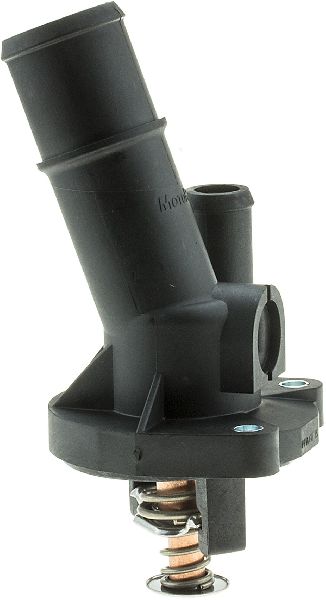
- Leaking Thermostat Housing 🔴 High Probability → Shop Integrated Thermostat Housing Assembly The seal on the plastic thermostat housing is a very common failure point on the 2.0L engine. Over time, the gasket degrades and allows coolant to seep out, especially when the system is hot and pressurized.
How to confirm: Visually inspect the thermostat housing, located above the alternator. Look for a pink, red, or white crusty residue, which is dried coolant. The leak may be most apparent after the car has been sitting overnight. A cooling system pressure test will confirm the leak.
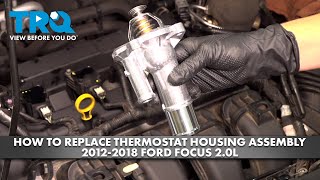
Typical fix: Replace the entire thermostat housing assembly. 🎬 Watch this step-by-step guide to replacing the thermostat housing assembly. It is recommended to replace the whole unit, which includes a new thermostat and gasket, rather than just the seal.
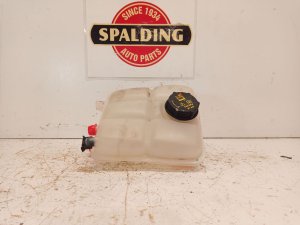
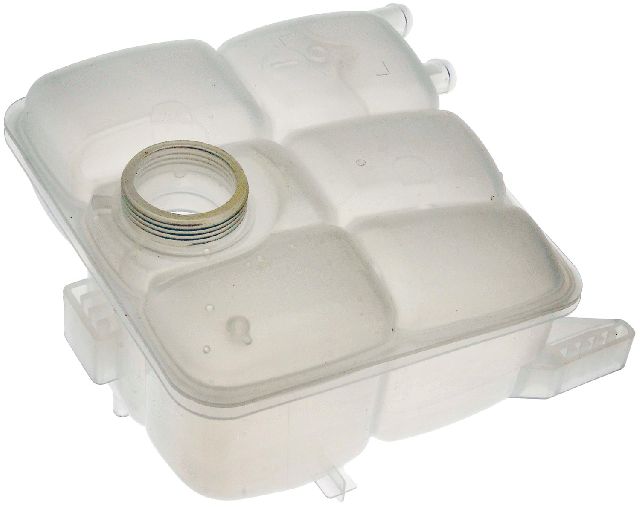
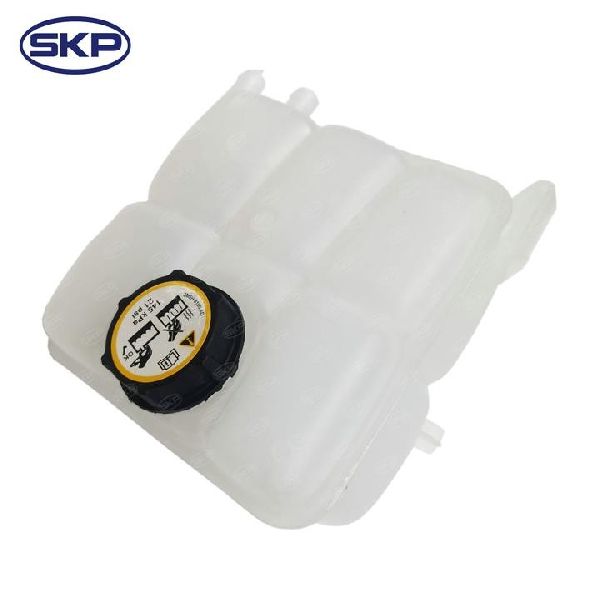
Est. part cost: $40-$60 - Cracked Coolant Expansion Tank (Reservoir) 🔴 High Probability → Shop Engine Coolant Reservoir The plastic coolant reservoir can develop hairline cracks from heat cycles, leading to slow coolant loss that may not be immediately obvious. These cracks often form on the bottom of the tank or along the seams.
How to confirm: Carefully inspect the coolant tank for fine cracks, especially on the seams and around the hose connections. You can often feel for wetness by wiping your hand underneath the bottle. The leak may only be apparent when the system is hot and under pressure. A pressure test will often reveal these small leaks.
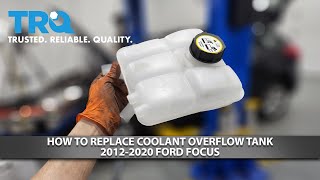
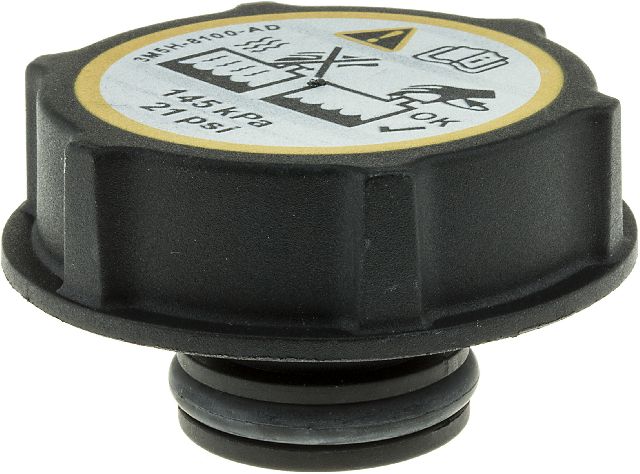
Typical fix: Replace the coolant expansion tank and cap. 🎬 See how to easily swap out a cracked overflow tank. It is also wise to inspect the small hoses connected to it, as they can also become brittle and crack.
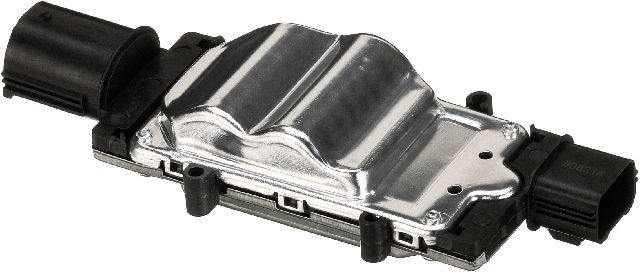
Est. part cost: $20-$50 - Cooling Fan Assembly Failure 🟡 Medium Probability → Shop Engine Cooling Fan Blade The cooling fan system has multiple components that can fail: the fan relay, the fan control module, or the fan motor itself. A failure of any of these will prevent the fan from turning on at low speeds or in traffic, causing an overheat.
How to confirm: With the engine warm and the temperature gauge climbing past the halfway mark (or with the A/C turned on), the cooling fan should be running. If it is not, the system is faulty. Check the fan relay and associated fuses first (Fuse F32 10A, Mega Fuse 8 50A). A P0480 code often accompanies a fan circuit failure.
Typical fix: Replacement of the failed component, starting with the cheapest and easiest (fuse/relay), then the control module, and finally the entire fan assembly.
Est. part cost: $10 (Relay) to $150 (Fan Assembly) - Stuck-Closed Thermostat 🟡 Medium Probability → Shop Integrated Thermostat Housing Assembly The thermostat can fail and get stuck in the closed position, which prevents coolant from circulating to the radiator to be cooled.
How to confirm: After the engine has warmed up, the upper radiator hose will be extremely hot while the lower radiator hose remains cool. This indicates coolant is not circulating through the radiator.
Typical fix: Replace the thermostat and housing assembly. Given the common leaks from the housing, this is almost always done as a single job.
Est. part cost: $40-$60
Rare But Worth Checking
- Internal Coolant Leak (Cracked Block/Head Gasket): While not as common on this specific GDI engine as on its 2.0L EcoBoost cousins, unexplained coolant loss can be a sign of a catastrophic internal engine failure. Ford has TSBs (e.g., 19-2346, superseded by 22-2133) for other 2.0L engines that list P0217 as a related code for coolant intrusion into the cylinders. Symptoms include persistent coolant loss with no visible external leaks, white exhaust smoke, and a misfire upon cold start. This requires a new long block engine assembly.
- Leaking Heater Core O-Rings: If you notice a coolant smell inside the car and the passenger-side footwell is damp, the O-rings on the heater core pipes may have failed. This is an interior leak that can lead to significant coolant loss. A known O-ring size that fits is 2.4mm x 18.6mm.
- Clogged Radiator: → Shop Radiator Internal or external blockages (e.g., from debris) in the radiator can prevent it from dissipating heat effectively. This is less common than leaks or fan failures but can cause overheating, especially at higher speeds.
- Failing Water Pump: → Shop Engine Water Pump Though not a top-tier common failure on this platform, a water pump with a corroded impeller or a leaking seal will fail to circulate coolant, leading to a rapid overheat condition.
Diagnosis Steps
- SAFETY FIRST: Do not open the coolant cap when the engine is hot. Allow it to cool completely for several hours.
- Check the coolant level in the expansion tank. If it is low, you have a leak.
- Visually inspect the most common leak points: the thermostat housing (below the intake snorkel, above the alternator) and the coolant expansion tank. Look for white or pink/orange crusty residue or wetness.
- Check for leaks elsewhere, including all radiator hoses, the radiator itself, and the heater core connections at the firewall.
- Start the engine and turn the A/C to its coldest setting. The radiator fan should turn on. If it doesn't, inspect the fan fuse (in the engine bay fuse box, check F32 10A and Mega Fuse 8 50A 🎬 Watch how to fix a cooling fan by replacing the fuse.) and the fan relay.
- If no leaks are visible and the fan works, the thermostat may be stuck closed. Feel the upper and lower radiator hoses once the engine is at operating temperature. If the upper is hot and the lower is cool, the thermostat is likely the culprit.
- If you are losing coolant but see no external leaks, perform a cooling system pressure test to reveal hard-to-see leaks from components like the expansion tank or hose connections.
- If the pressure test holds but you are still losing coolant, suspect a head gasket or internal engine issue. Check for white smoke from the exhaust or use a block tester kit to check for combustion gases in the coolant. This is especially relevant if you also have misfire codes (P0300-P0304).
Parts You'll Likely Need
- Thermostat Housing Assembly
(OEM #CM5Z-8K556-B (Motorcraft RH164))— This is the most common source of coolant leaks on the 2.0L GDI engine due to a failing gasket seal.
Trusted brands: Motorcraft, Dorman
OEM price range: $45-$60
Aftermarket price range: $30-$50 - Coolant Expansion Tank / Reservoir
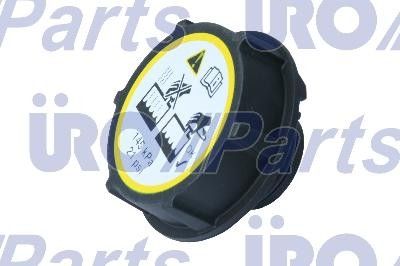
(OEM #CV6Z-8A080-A (Motorcraft RR-39))— The plastic material is prone to developing hairline cracks over time, causing slow but steady coolant loss.
Trusted brands: Motorcraft, Dorman, URO Parts
OEM price range: $30-$50
Aftermarket price range: $20-$40 - Cooling Fan Control Relay — A common and inexpensive first part to replace when diagnosing a non-functional cooling fan.
Trusted brands: Motorcraft, Standard Motor Products
OEM price range: $10-$20
Aftermarket price range: $5-$15
Related Codes That Often Appear With This One
- P0480 — This code indicates a 'Cooling Fan 1 Control Circuit Malfunction' and is a strong clue that the overheating is caused by a problem in the electric fan system (relay, module, or motor).
- P1299 — This Ford-specific code means 'Cylinder Head Over-Temperature Protection Active'. The PCM sets this when it detects severe overheating and may cut fuel to some cylinders to try and cool the engine down, causing a rough run condition. It confirms a genuine and severe overheat event occurred.
- P1285 — This code for 'Cylinder Head Overtemperature Sensed' is often seen alongside P0217 and P1299, particularly in cases of severe overheating or internal coolant leaks as noted in TSBs for similar Ford engines.
Technical Service Bulletins (TSBs) & Recalls
- TSB Bulletin #ASI-44736: Specifically addresses DTC P0217 appearing on Focus models with Gas Direct Injection, noting that pinpoint testing for this code has been updated in the Workshop Manual.
- TSB 19-2346 / 22-2133: Addresses coolant intrusion on 2.0L EcoBoost engines (related platform), listing P0217 as a potential DTC.
- Recall 18V735000: Relates to a malfunctioning Canister Purge Valve (CPV) on 2012-2018 Focus 2.0L GDI engines, which can cause stalling but is unrelated to overheating.
Mechanic-Grade Diagnostic Values
- Cylinder Head Temperature (CHT) Sensor Voltage — expected: Approx. 4.29V at 86°F (30°C), 2.42V at 176°F (80°C), 2.03V at 194°F (90°C), and 1.68V at 212°F (100°C). The sensor operates on a 5V reference.. Failure: Voltage that is stuck high (e.g., >4.6V) or low, or does not correlate with the engine's actual temperature. Unplugging the sensor should cause the voltage to read the full 5V reference and the temperature to display a default low value (e.g., -40°F).
Scan Tool Commands That Help
- Ford IDS / FORScan: Cooling Fan Control (or Fan Speed Control) — Use this bidirectional control to command the cooling fan on at various speeds (e.g., 25%, 50%, 100%). This directly tests the fan motor, control module, and wiring, bypassing the PCM's automatic control. If the fan responds to the command, the fan assembly is likely good and the issue may be with the CHT sensor or PCM logic.
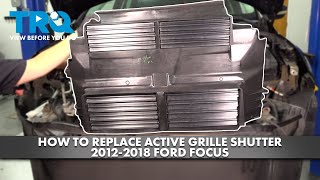
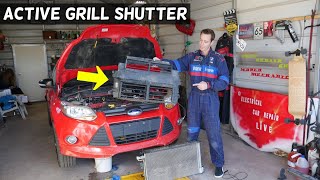
- Ford IDS / FORScan: Active Grille Shutter (AGS) Self-Test / Calibration — To verify the operation of the active grille shutters. The command initiates a cycle where the shutters move from fully open to fully closed. This is crucial for diagnosing an overheat that only occurs at idle or in slow traffic, as shutters stuck closed will block airflow.
Wiring & Ground Locations
- G104 / G105 — Main engine compartment grounds located on the left and right sides of the engine bay, respectively. The primary ground point is often found under the airbox.. The CHT sensor, cooling fan module, and PCM all rely on clean ground connections. A corroded or loose ground at these points can introduce voltage drops, causing incorrect temperature readings and potentially triggering a false P0217 code or preventing the cooling fan from activating correctly.
- Cooling Fan Module Connector — The fan control module is typically mounted directly on the radiator fan shroud.. This is a key point for testing. You can check for power, ground, and the PWM signal from the PCM at this connector to determine if a fan failure is due to the module, the motor, or a lack of signal from the PCM.
- Active Grille Shutter Fuse (F35) — Located in the under-hood fuse box. It is typically a 5-amp mini fuse.. Before replacing a faulty Active Grille Shutter assembly, checking this fuse is the first step. A simple blown fuse can disable the system, potentially causing it to remain in the closed position and lead to an overheat condition at low speeds.
Real Owner Repair Stories
- Reddit user on r/FordFocus (Ford Focus (Mk3), post-collision) — Engine overheating alarm would go off only when idling in a parking lot or in traffic after a front-end collision repair.
❌ Tried (didn't work) Initially just turning the car off to let it cool down.
✅ What actually fixed it A Ford dealership diagnosed that the Active Grille Shutters were stuck in the closed position as a result of the earlier collision. The owner was quoted for replacement, with another user suggesting that simply removing the shutter assembly is a common fix for this issue in warmer climates.
OEM Part Supersession History
Motorcraft Orange Coolant (VC-3-B)→Motorcraft Yellow Coolant (VC-13-G)— Ford transitioned to a new P-OAT (Phosphate Organic Acid Technology) coolant formulation.
Heads up: The new Motorcraft Yellow coolant is fully backward-compatible and can be mixed with or used to replace the older Motorcraft Orange coolant without issue.
Model Year Variations Within This Range
- 2016-2018: Some 2016-2018 models may have been equipped with the 1.0L EcoBoost engine, which has a different cooling system design (e.g., timing belt runs in oil and is cooled by engine oil, different water pump and thermostat setup). The common failure points discussed here are specific to the 2.0L GDI engine. The part number for the coolant reservoir (CV6Z-8A080-A) is shared with some 1.0L models, but other components are different.
Diagnostic Flowchart
Other Known Issues on This Vehicle
Issues unrelated to this code that are worth knowing about as an owner of this generation:
- DPS6 'PowerShift' Dual-Clutch Transmission Failure 🔴 High — Extremely common across 2012-2018 models with automatic transmission. Issues include shuddering, hesitation, slipping, and complete failure, often starting at low mileage (e.g., 30k miles). (Ref: Multiple lawsuits, settlements, and warranty extensions (e.g., to 7 years/100,000 miles) have been issued.)
- Faulty Passenger-Side Engine Mount 🟠 Medium — Very common failure. The hydraulic mount collapses, causing excessive engine vibration to be felt in the cabin, especially at idle or in gear. (Ref: No specific recall, but it is a widely recognized service item.)
- Electric Power Steering (EPAS) Failure 🔴 High — Affects some model years, leading to a sudden loss of power steering assist, making the vehicle very difficult to steer at low speeds. (Ref: Ford has issued recalls (e.g., 14S18) and software updates for the power steering control module to address this.)
- Canister Purge Valve (CPV) Malfunction 🟠 Medium — Common issue causing excessive vacuum in the fuel system, which can lead to engine stalling, difficulty starting after refueling, and a deformed fuel tank. (Ref: Ford Recall 18V735000.)
Used vs. New Parts: Buying Guide for This Vehicle
When a used part is the smart pick: A used cooling fan assembly from a low-mileage donor vehicle can be a cost-effective choice, as they are generally durable. A used Active Grille Shutter assembly is also a viable option, provided it is inspected for physical damage and smooth operation before purchase.
Donor-vehicle mileage cap: roughly under 80000 miles for the part to have meaningful remaining life.
What to inspect on the donor part:
- For a cooling fan, spin the blades by hand to ensure the motor is not seized and check for cracks in the shroud.
- For an Active Grille Shutter, manually move the vanes to ensure they all move together smoothly without binding. Check the plastic frame for cracks from collision damage.
- Verify the donor vehicle was not in a front-end collision, which could have caused unseen damage to these components.
OEM-only on this vehicle (don't cheap out):
- Coolant Expansion Tank (Reservoir): Aftermarket tanks for this model have a reputation for having incorrectly machined hose ports, leading to poor seals, leaks, and repeat overheating. It is strongly recommended to use a genuine Ford (Motorcraft) part.
Aftermarket brands forum-validated for this vehicle:
- Gates (Water Pump, Hoses)
- Motorcraft (OEM for all components)
Brands owners have reported issues with on this vehicle:
- Unbranded/generic coolant expansion tanks: Many forum and video reports cite fitment issues with non-OEM tanks, specifically with the hose connections not sealing properly, leading to persistent leaks.
Real Owner Stories
Aggregated from forums and TSBs cited above. Mileages and costs reflect what owners reported in those sources.
2012 Ford Focus 2.0L GDI
Symptoms: Owner reported codes P0217 and P0480 occurring together.
What fixed it: Inspection of the cooling fan circuit, specifically checking the fan relay and associated fuses (F32 and Mega Fuse 8).
Source hint: https://www.2carpros.com/questions/2012-ford-focus-codes-p0217-and-p4800
2012-2018 Ford Focus 2.0L
Symptoms: Coolant level going down with a visible leak in the thermostat area.
What fixed it: Replacement of the plastic thermostat housing assembly located above the alternator.
Source hint: https://www.fordownersclub.com/forums/topic/40376-coolant-going-down-leak-in-thermostat-area/
Related OBD-II Codes
Frequently Asked Questions
Does TSB 19-2346 apply to my 2012-2018 Ford Focus 2.0L regarding the P0217 code?
I see a pink crusty residue near my alternator; is this related to the P0217 overheat?
My Focus is overheating in traffic but fine on the highway. Could it be a fuse?
Is the 2012-2018 Focus recall for the Canister Purge Valve (CPV) the reason for my P0217 code?
Should I just replace the gasket if my thermostat housing is leaking?
Can a cracked coolant expansion tank cause a P0217 code even if I don't see a puddle?
Helpful Videos

Used OEM Parts in Stock
New Aftermarket Parts Available

The information in this article is provided for general reference and educational purposes only. Vehicle specifications, procedures, and part compatibility can vary by production date, trim level, and region. Always consult your vehicle's factory service manual and verify part numbers before purchasing or performing repairs. Safety-critical components such as airbags, seat belts, and braking systems should be installed by a qualified professional.
- Ford Focus:
- 🧭 Diagnostic Flowchart
- 🎬 Helpful Videos
- 🛍️ Shop This Part
- What's Unique About the 2012-2018 Ford Focus
- Symptoms You May Notice
- Most Likely Causes
- Rare But Worth Checking
- Diagnosis Steps
- Parts You'll Likely Need
- Related Codes That Often Appear With This One
- Technical Service Bulletins (TSBs) & Recalls
- Mechanic-Grade Diagnostic Values
- Scan Tool Commands That Help
- Wiring & Ground Locations
- Real Owner Repair Stories
- OEM Part Supersession History
- Model Year Variations Within This Range
- Other Known Issues on This Vehicle
- Used vs. New Parts: Buying Guide for This Vehicle
- Real Owner Stories
- 2012 Ford Focus 2.0L GDI
- 2012-2018 Ford Focus 2.0L
- Related OBD-II Codes
- Frequently Asked Questions
- 🎟️ Get 5% Off