

P0217 on 2015-2018 Ford Focus 1.0L EcoBoost: Engine Overheat Causes and Fixes
P0217 means your engine is overheating. On the 1.0L EcoBoost, this is extremely serious. The most likely cause is a coolant leak from a cracked plastic thermostat housing or a failed 'degas' coolant hose. Stop driving immediately and expect a repair cost of $200-$500 for the leaking part before it causes catastrophic engine damage.
- P0217 on a 1.0L EcoBoost is a critical warning. Stop the car immediately to prevent engine destruction.
- The most likely cause is a coolant leak from a known weak part: the plastic thermostat housing or the thin 'degas' hose.
- Do not just refill the coolant. The leak MUST be found and repaired.
- Due to the high risk of severe engine damage, professional diagnosis is strongly recommended if the leak source is not immediately obvious.
What's Unique About the 2015-2018 Ford Focus
The 1.0L EcoBoost engine is notoriously intolerant of overheating. While P0217 is a generic code, its appearance on this specific engine is a critical warning. The cooling system is known for having several weak points, including a plastic thermostat housing and a specific coolant return hose ('degas hose') that are prone to cracking and leaking. Due to the engine's aluminum construction, even a single, brief overheating event caused by a minor leak can quickly lead to a warped cylinder head, a blown head gasket, and complete engine failure—a very common and expensive fate for these engines. Some owners report that if a significant leak occurs, the coolant level can drop so fast that the temperature sensor, located in the thermostat housing, is left reading air temperature and fails to provide an overheating warning before damage is done. For the 2015-2018 models, Ford added a Cylinder Head Temperature (CHT) sensor as a redundant measure to detect overheating even if the primary coolant sensor is no longer submerged in fluid.
Symptoms You May Notice
- Temperature gauge reading hot or in the red zone
- Engine temperature warning light on dashboard
- Check engine light illuminated
- Message on the display like 'Engine Power Reduced to Lower Temp'
- Noticeable loss of engine power (limp mode)
- Steam or smoke coming from the engine bay
- A sweet smell of coolant around the vehicle
- Loud boiling or gurgling sounds from the engine
- Visible coolant leaks or puddles under the car
- Replacing only the coolant temperature sensor. The sensor is usually reporting the overheat correctly; it is rarely the cause of the problem.
- Simply refilling the coolant without finding the leak. This will lead to another overheating event and increases the risk of catastrophic engine damage.
- Attributing the overheat to a faulty water pump. While possible, water pump failure is much less common on this engine than leaks from the thermostat housing or degas hose.
Most Likely Causes
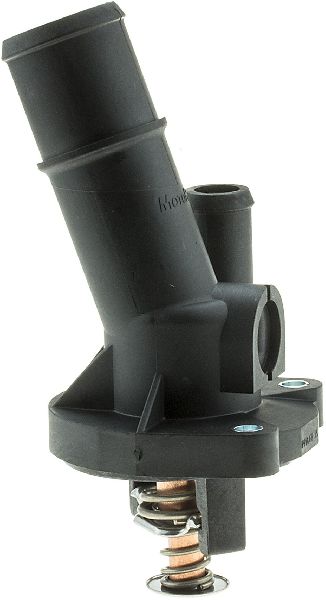
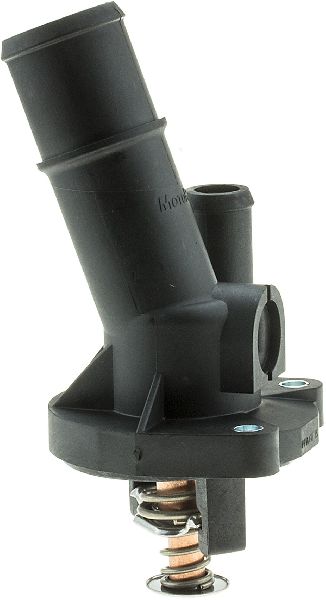
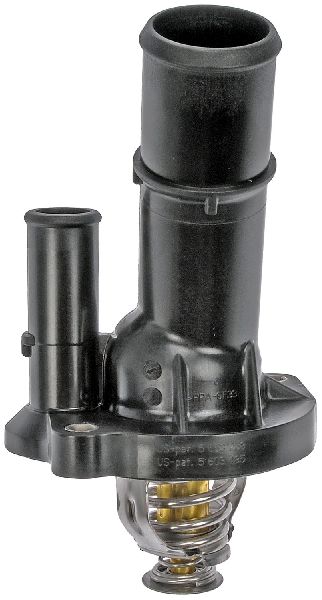
- Leaking Plastic Thermostat Housing 🔴 High Probability → Shop Integrated Thermostat Housing Assembly The thermostat housing on the 1.0L EcoBoost is made of plastic and is a well-documented, common failure point. The plastic can become brittle from heat cycles and crack, or the gasket seal between the housing and the engine block can fail, causing a coolant leak.
How to confirm: Visually inspect the thermostat housing, located on the driver's side of the cylinder head above the transmission. Look for white or pink coolant residue, active drips, or cracks. A cooling system pressure test will make the leak obvious, even if it's a slow one from the gasket.
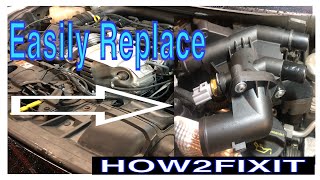
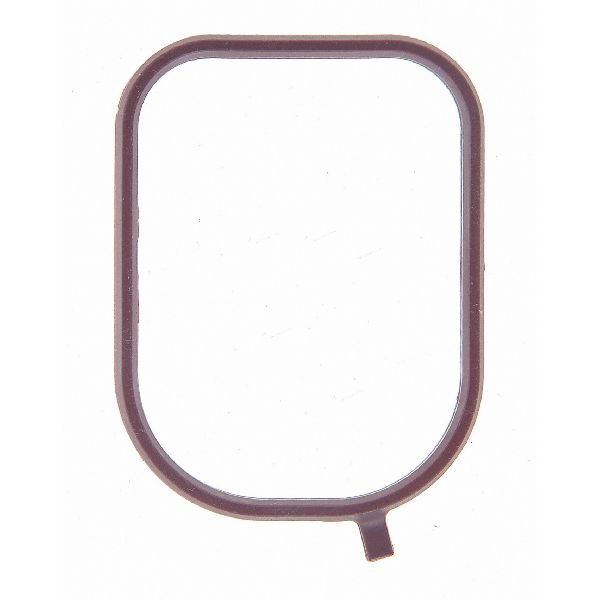
Typical fix: Replace the entire thermostat housing assembly. 🎬 Watch: Step-by-step guide to replacing the thermostat housing. It is recommended to use an OEM or high-quality aftermarket part. The system must be refilled with the correct Ford-specific coolant and properly bled of air. Some owners have fixed slow leaks by just replacing the gasket.
Est. part cost: $50-$150 - Failed 'Degas' Coolant Hose 🔴 High Probability The small coolant hose running from the top of the engine to the coolant expansion tank (degas bottle) is another notorious weak point. It was subject to a Field Service Action (FSA) on earlier models (2012-2014) and remains a common failure item, becoming brittle and cracking. The heat from the nearby turbocharger accelerates its degradation.
How to confirm: Inspect the thin plastic/rubber hose that connects to the top of the coolant reservoir. Look for cracks, swelling, or signs of leaking, especially under the protective mesh sleeve if present. The leak may appear as steam when the engine is hot.
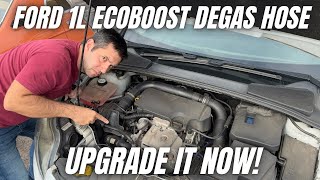
Typical fix: Replace the failed hose. Ford has updated this part multiple times; ensure you are using the latest revision. A popular DIY upgrade is to replace the Mk3 hose setup with the two-hose design from the facelifted Mk3.5 model, which is considered more reliable and is often cheaper.
Est. part cost: $30-$70 - Low Engine Coolant Level 🟡 Medium Probability This is a symptom of a leak, but it is the direct cause of the overheat. The common leaks from the thermostat housing, degas hose, or a cracked expansion tank lead to insufficient coolant to cool the engine. Owners report that even a slow, unnoticed leak can eventually trigger an overheat event.
How to confirm: Check the coolant level in the expansion tank (degas bottle) when the engine is cold. If it is below the 'MIN' line, you have a leak somewhere in the system.
Typical fix: Find and repair the source of the leak. Do not simply top off the coolant, as the engine will just overheat again. Once the leak is fixed, refill with Ford-specific WSS-M97B44-D coolant and vacuum bleed the system to prevent airlocks.
Est. part cost: $20-$40 for coolant - Stuck Thermostat ⚪ Low Probability → Shop Integrated Thermostat Housing Assembly While the housing is more likely to fail by leaking, the thermostat itself can fail in the closed position, blocking coolant flow to the radiator. The 1.0L EcoBoost has a complex system with two thermostats, increasing potential failure points.
How to confirm: After the engine warms up, feel the upper and lower radiator hoses. If the upper hose is hot and the lower hose is cold, coolant is not circulating, indicating a likely stuck thermostat. This is a classic diagnostic test for this condition.
Typical fix: Replace the thermostat. On this engine, the thermostat is typically replaced as part of the entire housing assembly.
Est. part cost: $50-$150 (part of housing)
Rare But Worth Checking
- Blown Head Gasket / Warped Cylinder Head: This is often the *result* of driving with one of the common causes above, but it is the ultimate failure. If you see white smoke from the exhaust, find milky/contaminated oil, or see bubbles in the coolant reservoir, the head gasket has likely failed. This is a catastrophic and very expensive repair, often costing £1,200-£2,000 or more.
- Cooling Fan Failure: → Shop Engine Cooling Fan Blade If the vehicle overheats primarily in stop-and-go traffic but is fine at highway speeds, the electric cooling fan or its control module may have failed. This is less common than leaks on this platform but still possible.
- Cracked Coolant Expansion Tank: → Shop Engine Coolant Reservoir The plastic coolant reservoir (degas bottle) itself can develop micro-cracks from heat and pressure cycles, leading to a slow, hard-to-diagnose coolant loss.
Diagnosis Steps
- DO NOT open the coolant cap when the engine is hot. Wait for it to cool completely.
- Visually check the coolant level in the expansion tank. If low, you have a leak.
- Carefully inspect the top and sides of the engine for signs of coolant leaks (pink/white residue). Pay extremely close attention to the plastic thermostat housing on the driver's side of the engine and the small 'degas' hose running to the coolant tank.
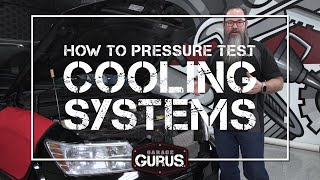
- If no obvious leaks are found, a certified technician should perform a cooling system pressure test. This will force coolant out of small cracks or bad seals, making them easy to spot. 🎬 Watch: How to use a pressure test to find leaks.
- If no external leaks are found, check for a stuck thermostat by observing hose temperatures.
- If no external leaks are found and the thermostat is working, a technician must test for a blown head gasket using a chemical 'block tester' or by checking for combustion gases (bubbles) in the coolant reservoir.
Parts You'll Likely Need
- Thermostat Housing Assembly
(OEM #CM5Z-8K556-A (superseded by BM5Z-8K556-B, F1GZ-8575-D - verify by VIN))— This is the most common point of failure leading to coolant loss and overheating on this engine. The plastic cracks from heat and age.
Trusted brands: Motorcraft, Gates
OEM price range: $100-$180
Aftermarket price range: $50-$120 - Coolant Reservoir to Engine Hose (Degas Hose)
(OEM #C1BG-8A582-KA (or KB, verify by VIN). Upgrade to Mk3.5 hoses: 1855418 and 2122838.)— This specific hose is a known weak point that becomes brittle and cracks, causing a rapid or slow loss of coolant.
Trusted brands: Motorcraft
OEM price range: $40-$70
Aftermarket price range: $
Related Codes That Often Appear With This One
- P1299 — 'Cylinder Head Overtemperature Protection Active' is a Ford-specific code that is often triggered alongside P0217 as the PCM takes drastic measures to protect the engine.
- P0300, P0301, etc. — Random or specific cylinder misfire codes can appear if a severe overheat has caused the head gasket to fail and coolant is leaking into the cylinders.
Technical Service Bulletins (TSBs) & Recalls
- Ford Field Service Action (FSA) - April 2015: A voluntary recall was issued for the degas hose on 2012-2014 Focus 1.0L models due to the risk of cracking and coolant loss.
Platform-Specific Known Issues
- Owner Experience: Degas Hose Failure: An owner on the Overclockers UK Forums shared an experience of their 2012 Focus 1.0L degas hose splitting during a long drive in hot weather, spraying coolant. Other users immediately identified it as a common fault and noted it was a recalled part.
- Owner Experience: Post-Recall Failure: On the Ford Owners Club forum, a user reported their degas hose failed despite a recall having been performed, indicating that even the replacement parts can be problematic. Another user suggested upgrading the entire hose configuration to the later, more robust Mk3.5 design as a permanent fix.
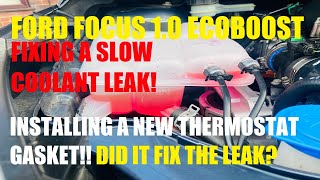
- Owner Experience: Slow Leak from Thermostat Gasket: → Shop Integrated Thermostat Housing Assembly A YouTuber, 'Ecoboost Owen', documented chasing a slow coolant leak. After replacing the expansion tank with no success, a pressure test revealed a very slow weep from the thermostat housing gasket where it meets the engine block. Replacing just the gasket (£11.32) solved the leak.
Documented NHTSA Reports
- An owner report in NHTSA ODI #11639979 notes that a vehicle was diagnosed with DTC P0217 and P1285, which a dealer determined was caused by a coolant leak at the water pump weep hole.
- NHTSA ODI #11578312 states that an EcoBoost engine may exhibit low coolant levels, white exhaust smoke, and rough running, with codes P0217, P1285, and P1299 stored in the control module.
Mechanic-Grade Diagnostic Values
- Engine Coolant Temperature (ECT) PID via Scan Tool (e.g., FORScan) — expected: Should stabilize around 90-98°C (194-208°F) during normal operation.. Failure: Readings climbing to 110°C (230°F) or higher indicate an active overheating condition. If the reading is erratic or maxes out on a cold engine, the sensor or wiring is faulty.
- Cylinder Head Temperature (CHT), ECT, and Oil Temperature PID Correlation — expected: On a cold engine (after sitting overnight), all three temperature readings should be nearly identical and match the ambient air temperature.. Failure: If one sensor reads significantly different from the others on a cold start, that sensor or its circuit is faulty. This is a key test to perform before suspecting a genuine overheat.
- Cylinder Head Temperature (CHT) Sensor Resistance — expected: The CHT is a thermistor; its resistance decreases as temperature increases. Specific values are not readily published, but it can be tested for a smooth change in resistance as the engine warms up.. Failure: An open circuit (infinite resistance) or short circuit (zero resistance) indicates a failed sensor.
Hidden / Shadow Codes Worth Checking
- P1299: 'Cylinder Head Overtemperature Protection Active'. This Ford-specific code indicates the PCM has detected a critical temperature from the Cylinder Head Temperature (CHT) sensor (typically >260°F / 127°C) and has entered fail-safe mode, often by cutting fuel to alternating cylinders to use them as air pumps for cooling. (see via Ford IDS (dealer tool) or advanced aftermarket scan tools like FORScan. A basic generic OBD-II reader may only show P0217.)
Scan Tool Commands That Help
- FORScan / Ford IDS: Datalogger / Live Data Monitoring — This is the most critical diagnostic step for P0217. Monitor the PIDs for Engine Coolant Temperature (ECT), Cylinder Head Temperature (CHT), and Engine Oil Temperature. Comparing these values helps determine if an actual overheat is occurring or if a sensor has failed.
- FORScan / Ford IDS: Active Commands - Cooling Fan Control — To test the functionality of the cooling fan and its relay. If the engine overheats in traffic but is fine at speed, you can use this command to manually turn the fan on and verify it operates, ruling out a bad fan motor.
Wiring & Ground Locations
- Engine Ground Connection — A primary engine ground connection point is located on the rear, right corner of the cylinder head (when viewed from the front of the vehicle).. A poor ground connection for the engine block can cause erratic readings from sensors that rely on the block for their ground path, including the Cylinder Head Temperature (CHT) sensor.
- Main Chassis Ground — A primary ground connection point for the chassis is located to the right of the battery, near the engine compartment fuse box.. This ground is essential for the overall electrical system. While less likely to cause a specific P0217, poor grounding here can cause a host of module communication and sensor issues.
- Cylinder Head Temperature (CHT) Sensor — The CHT sensor is a dry sensor threaded into the cylinder head itself, often between the spark plugs, under the plastic engine cover. It does not directly contact coolant.. This is the key sensor that triggers the P1299 fail-safe mode. Knowing its location is crucial for inspection and replacement. Unlike a traditional ECT sensor, you do not need to drain coolant to replace it.
Real Owner Repair Stories
- Ford Focus Club user 'Smilerbatten' (2016 Ford Focus Mk3.5) — Engine warning 'engine power reduced due to over heating', limp mode activated on the motorway. Codes P0217 and P2600 were stored.
❌ Tried (didn't work) Initial visual inspection showed no obvious leaks.
✅ What actually fixed it The owner monitored live coolant temperature with a code reader and saw it reach 110°C. They removed the thermostat housing and found the gasket had failed. Replacing the complete thermostat housing assembly resolved the overheating issue. - NHTSA ODI #11520798 — An owner reported codes P0217, P0302, P0316, and P1285; a technician pulled the coil and plug for Cylinder 2 and found coolant inside the cylinder.
- NHTSA ODI #11566450 — After finding fault codes P0302 and P0217, a technician pressurized the cooling system overnight and found a loss of pressure; a borescope inspection of Cylinder 2 revealed evidence of minor coolant intrusion and a clean piston.
- NHTSA ODI #11569516 — An owner reported the vehicle was very low on coolant; a dealership retrieved codes P0217, P0303, P0316, P1285, and P1299.
"I Checked Everything" — The Actual Cause
- The cooling system equivalent is a 'pressure test clean'. On the 1.0L EcoBoost, a common failure scenario is an internal coolant leak that does not show up during a standard cooling system pressure test, or only shows a very slow pressure drop. The actual cause is a micro-crack in the cylinder head, within the integrated exhaust manifold. Coolant leaks directly into the exhaust port, creating white smoke and causing coolant loss without an external trace. This is often misdiagnosed as a head gasket failure, but the fault is in the head itself. The definitive diagnosis requires using a borescope to inspect inside the exhaust ports (with the turbo removed) to visually identify the crack.
OEM Part Supersession History
Various (pre-2014 material)→C1BG-8A582-KA/KB and others— The original degas pipe material was found to degrade over time from engine heat, leading to cracks and coolant loss. Ford issued a Field Service Action (FSA 4S615) to replace it with a part made of a material with improved high-temperature performance.
Heads up: The most reliable fix is to upgrade to the two-piece hose design from the 2015+ Mk3.5 models (Part numbers 1855418 and 2122838), which is considered a more robust solution.CM5Z-8K556-A→BM5Z-8K556-B, F1GZ-8575-D, and others— Revisions to the plastic thermostat housing assembly to improve durability and prevent cracking and gasket leaks. Part numbers vary by specific application and year.
Heads up: It is critical to verify the correct part number by VIN, as there are variations in the number of ports and sensor provisions on the housing.
Model Year Variations Within This Range
- 2015-2018: Ford introduced a Cylinder Head Temperature (CHT) sensor on the Mk3.5 models in addition to the standard coolant temperature sensor. This was a direct response to catastrophic failures on earlier models where rapid coolant loss would leave the coolant sensor dry and unable to detect an overheat. The CHT provides a redundant safety measure to trigger limp mode (P1299) based on actual metal temperature.
- 2015-2018: The problematic single-piece 'degas hose' with a T-junction from the pre-facelift models was replaced with a more reliable two-piece hose design. This is a key reliability improvement for the 2015+ models.
Diagnostic Flowchart
Other Known Issues on This Vehicle
Issues unrelated to this code that are worth knowing about as an owner of this generation:
- Timing Belt in Oil (Wet Belt) Degradation 🔴 High — Common after 60,000-100,000 miles, especially with missed or incorrect oil changes. The belt degrades, particles clog the oil pump pickup, leading to oil starvation and catastrophic engine failure. (Ref: NHTSA investigation and various lawsuits are active. Ford has revised service intervals but no universal recall for all affected models.)
- Powershift Automatic Transmission Failure (On non-1.0L models, but a major Focus issue) 🔴 High — Extremely common on 2012-2016 Focus models with the 2.0L engine. The 1.0L EcoBoost typically used a different, more reliable automatic or a manual transmission. The Powershift (DPS6) transmission suffers from shuddering, hesitation, and complete failure. (Ref: Multiple recalls, warranty extensions, and a major class-action lawsuit. Not directly applicable to most 1.0L models but a huge issue for the Focus platform.)
- Intake Valve Carbon Buildup 🟠 Medium — Becomes noticeable around 60,000-100,000 miles. As a direct-injection engine, fuel doesn't wash over the intake valves, allowing carbon deposits to build up, causing rough idling, hesitation, and reduced performance.
- Turbocharger Failure 🟠 Medium — Can occur at various mileages, often linked to oiling issues (blockages from wet belt debris) or overheating events. Symptoms include whining noises, blue smoke, and loss of power.
- Canister Purge Valve Failure 🟡 Low — Common across many Focus models. A faulty purge valve can cause rough idle after refueling, difficulty starting, and may trigger EVAP system codes. A recall was issued for some model years. (Ref: Recall 18S32 for certain 2012-2018 Focus models.)
Used vs. New Parts: Buying Guide for This Vehicle
When a used part is the smart pick: For repairing a P0217 on this specific engine, using used parts from a junkyard is NOT recommended for any core cooling system component. The primary failure parts (thermostat housing, degas hose, expansion tank) are made of plastic that degrades with heat cycles. A used part has already been subjected to these cycles and is likely near the end of its service life. The cost of these new parts is low, while the cost of engine damage from a repeat failure is catastrophic.
What to inspect on the donor part:
- Not applicable. Avoid used cooling system plastics and hoses for this engine.
OEM-only on this vehicle (don't cheap out):
- Cylinder Head Temperature (CHT) Sensor: While aftermarket is available, the OEM sensor is critical for engine protection and is the safest choice.
- Degas Hose Assembly: Given the history of recalls and revisions, using the latest OEM Ford part is the most reliable option to prevent a repeat failure.
Aftermarket brands forum-validated for this vehicle:
- Gates: Often cited as a reliable aftermarket manufacturer for thermostat housing assemblies.
Brands owners have reported issues with on this vehicle:
- Unbranded, low-cost thermostat housings from online marketplaces are a significant risk. Forum members often report these failing quickly or having poor fitment.
Real Owner Stories
Aggregated from forums and TSBs cited above. Mileages and costs reflect what owners reported in those sources.
2012 Ford Focus 1.0L EcoBoost
Symptoms: The degas hose split during a long drive in hot weather, spraying coolant throughout the engine bay.
What fixed it: Replacement of the failed degas hose; other owners noted this was a known fault and a recalled part.
Source hint: Overclockers UK Forums thread titled 'ID this leaking hose'
2015 Ford Focus 1.0L EcoBoost
Symptoms: The degas hose failed even though a recall had previously been performed on the vehicle.
What fixed it: Upgrading the entire hose configuration to the later, more robust Mk3.5 design.
Source hint: Ford Owners Club forum thread titled 'Ford Focus Ecoboost 2012 Degas Hose Recall'
2014 Ford Focus 1.0L EcoBoost
Symptoms: A persistent slow coolant leak that was difficult to locate after replacing the expansion tank.
What fixed it: Replacing the thermostat housing gasket after a pressure test revealed a weep where the housing meets the engine block.
Cost: $14-$15
Source hint: YouTuber 'Ecoboost Owen' video documentation
Related OBD-II Codes
Frequently Asked Questions
Does the April 2015 Field Service Action (FSA) for the degas hose apply to my 2015-2018 Ford Focus 1.0L?
I have a slow coolant leak but can't find it. Where is the most likely spot on the 1.0L EcoBoost?
Can I just replace the thermostat if my Focus is overheating?
What specific coolant should I use to refill my 2015-2018 Focus after a repair?
My dashboard says 'Engine Power Reduced to Lower Temp'. Is this related to P0217?
Helpful Videos
We Have This Part in Stock


The information in this article is provided for general reference and educational purposes only. Vehicle specifications, procedures, and part compatibility can vary by production date, trim level, and region. Always consult your vehicle's factory service manual and verify part numbers before purchasing or performing repairs. Safety-critical components such as airbags, seat belts, and braking systems should be installed by a qualified professional.
- Ford Focus:
- 🧭 Diagnostic Flowchart
- 🎬 Helpful Videos
- 🛍️ Shop This Part
- What's Unique About the 2015-2018 Ford Focus
- Symptoms You May Notice
- Most Likely Causes
- Rare But Worth Checking
- Diagnosis Steps
- Parts You'll Likely Need
- Related Codes That Often Appear With This One
- Technical Service Bulletins (TSBs) & Recalls
- Platform-Specific Known Issues
- Documented NHTSA Reports
- Mechanic-Grade Diagnostic Values
- Hidden / Shadow Codes Worth Checking
- Scan Tool Commands That Help
- Wiring & Ground Locations
- Real Owner Repair Stories
- "I Checked Everything" — The Actual Cause
- OEM Part Supersession History
- Model Year Variations Within This Range
- Other Known Issues on This Vehicle
- Used vs. New Parts: Buying Guide for This Vehicle
- Real Owner Stories
- 2012 Ford Focus 1.0L EcoBoost
- 2015 Ford Focus 1.0L EcoBoost
- 2014 Ford Focus 1.0L EcoBoost
- Related OBD-II Codes
- Frequently Asked Questions
- 🎟️ Get 5% Off