

P0217 on 2017-2019 Ford Fusion 2.0L EcoBoost: Engine Overheating Causes and Fixes
This code indicates a critical engine overheat. On the 2.0L EcoBoost, this is frequently caused by a known engine design flaw where coolant leaks into the cylinders ('coolant intrusion'), a very expensive repair often requiring engine replacement. Stop driving immediately and have the vehicle professionally diagnosed. This issue is the subject of multiple TSBs and class-action lawsuits.
- P0217 on a 2017-2019 Fusion 2.0L EcoBoost is a critical warning that requires you to stop driving immediately.
- The most likely cause is a major, known engine defect called 'coolant intrusion' which is very expensive to repair and often requires engine replacement.
- Diagnosis MUST begin with tests to confirm or rule out an internal coolant leak before replacing any other parts.
- Check with a Ford dealer using your VIN to see if any warranty extensions or customer satisfaction programs (like 21N12) apply to your vehicle.
- Do not simply clear the code and continue driving; the underlying problem is severe and will lead to catastrophic engine failure.
What's Unique About the 2017-2019 Ford Fusion
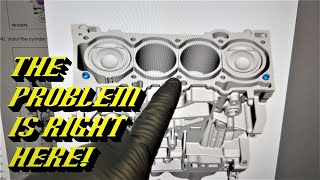
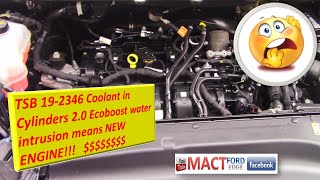
For the 2017-2019 Ford Fusion with the 2.0L EcoBoost engine, P0217 is not just a generic overheat code. It is strongly associated with a well-documented, serious design flaw in the engine block. The second-generation 2.0L EcoBoost, introduced in 2017, features an open-deck block with a slot cast between the cylinders for coolant flow. This design provides inadequate surface area for the head gasket to seal properly, allowing coolant to seep into cylinders 2 and 3. This 'coolant intrusion' causes overheating, misfires, and eventual catastrophic engine failure. While standard cooling system parts can still fail, the high probability of this internal engine defect, acknowledged by Ford in TSB 19-2346 and the subject 🎬 Watch: A detailed breakdown of TSB 19-2346 and coolant intrusion. of class-action lawsuits, makes diagnosis of P0217 on this platform particularly urgent and complex.
Symptoms You May Notice
- Temperature gauge reading hot or in the red zone
- Engine temperature warning light illuminated
- Check Engine Light on
- Vehicle enters 'limp mode' with reduced engine power
- White smoke from the exhaust pipe, especially on startup (indicating coolant is being burned)
- Steam or smoke from the engine bay
- Loud boiling or gurgling sounds from the engine
- Noticeable loss of coolant with no visible external leak
- Rough idle or misfiring, which may feel like a hesitation or stumble
- Replacing the thermostat, water pump, or radiator without first definitively ruling out the common 'coolant intrusion' issue. If the engine has an internal leak, replacing external parts is a waste of money and will not fix the problem.
- Mistaking a leaking EGR cooler (on 2019+ models) for the engine block coolant intrusion flaw, or vice-versa.
Most Likely Causes
- Internal Coolant Leak (Coolant Intrusion) 🔴 High Probability The 2017-2019 2.0L EcoBoost engine has a known design flaw in its open-deck block that allows coolant to leak into the cylinders. Ford acknowledged this with TSB 19-2346, which recommends a complete long block engine replacement.
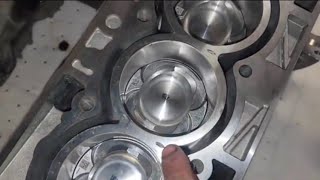
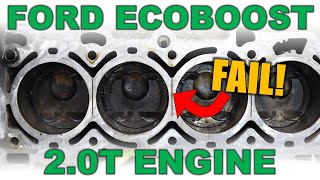
How to confirm: Perform a cooling system pressure test; it may fail to hold pressure with no external leaks. Use a borescope to visually inspect inside the cylinders (especially 2 and 3) for coolant or unusually clean, steam-cleaned pistons. 🎬 See this engine teardown to understand why these blocks fail. A chemical test can also detect combustion gases in the coolant, confirming a breach.
Typical fix: This is a catastrophic failure. The official fix per Ford TSB 19-2346 is the replacement of the engine long block assembly with an updated design.
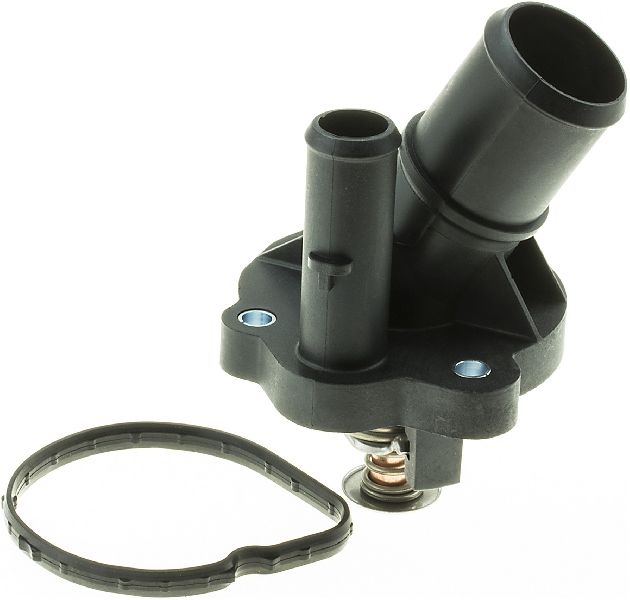
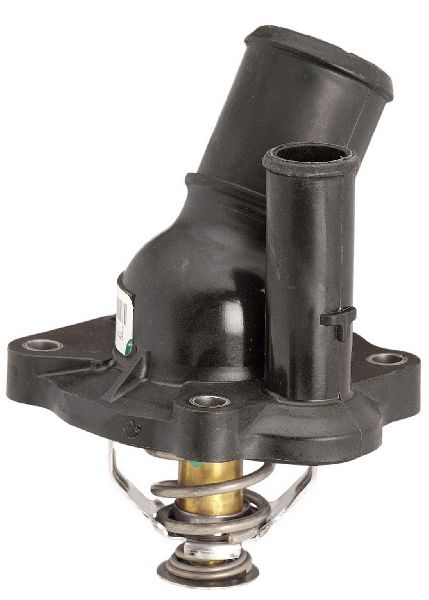
Est. part cost: $4000-$7000+ - Failed Thermostat 🟡 Medium Probability → Shop Integrated Thermostat Housing Assembly
How to confirm: Monitor coolant temperature data with a scan tool. Feel the upper radiator hose; if it doesn't get hot as the engine warms up, the thermostat is likely stuck closed.
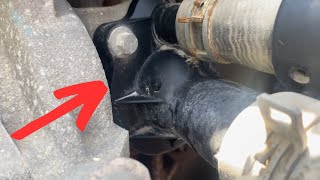
Typical fix: Replace the thermostat and housing assembly. 🎬 Watch: How to locate and replace the thermostat on your Fusion. The Motorcraft part is an integrated unit.
Est. part cost: $50-$150 - Low Coolant Level 🟡 Medium Probability Can be a symptom of coolant intrusion, but also caused by common external leaks.
How to confirm: Visually inspect the coolant reservoir and radiator (when the engine is cold). If low, a pressure test should be performed to find the source of the leak (e.g., cracked hose, loose clamp, leaking water pump, radiator, or an internal leak).
Typical fix: Find and repair the source of the leak and refill the system with the correct Motorcraft Orange Coolant.
Est. part cost: $10-$800 - Cooling Fan Malfunction ⚪ Low Probability → Shop Engine Cooling Fan Blade
How to confirm: With the engine at operating temperature and the A/C on, verify that the cooling fans are running. If not, check fuses, relays, wiring, and the fan motor itself.
Typical fix: Replace the faulty cooling fan relay, fuse, or the entire fan assembly.
Est. part cost: $20-$400 - Failing Water Pump ⚪ Low Probability → Shop Engine Water Pump
How to confirm: Look for coolant leaks or weeping from the water pump area (driven by the serpentine belt). Listen for grinding or whining noises from the pump. A complete failure will stop coolant circulation.
Typical fix: Replace the water pump and serpentine belt.
Est. part cost: $100-$300
Rare But Worth Checking
- Faulty Exhaust Gas Recirculation (EGR) Cooler: For 2019 models specifically, Ford issued TSB 20-2234 for the 2.0L EcoBoost in other models (Edge/Nautilus), linking P0217 to a leaking EGR cooler. This can allow coolant to be consumed by the engine, causing overheating and symptoms similar to coolant intrusion, creating a diagnostic trap.
- Faulty Engine Coolant Temperature (ECT) Sensor: → Shop Engine Coolant Temperature Sensor The sensor itself can fail and send an incorrect high-temperature signal to the PCM, triggering the code even if the engine isn't actually overheating. This is a misdiagnosis risk if the actual temperature isn't verified with an infrared thermometer. Manufacturer bulletin SSM 47791 notes that for vehicles with the 2.7L engine, P0217 can be caused by an ECT sensor connector that is not fully seated or damaged wiring.
- Clogged Radiator: → Shop Radiator Internal restrictions from corrosion or external blockage from debris can reduce the radiator's ability to dissipate heat, leading to overheating under load.
Diagnosis Steps
- STOP DRIVING IMMEDIATELY. Let the engine cool completely before proceeding.
- Check with a Ford dealer using your VIN for any open Customer Satisfaction Programs or warranty extensions. Specifically mention TSB 19-2346 for the 2.0L engine.
- Visually inspect the coolant level in the reservoir. If it is low, this is a key symptom of either an external leak or internal consumption.
- Scan for other DTCs. Misfire codes (P030x, especially P0302/P0303) or Cylinder Head Overtemperature (P1299) strongly suggest internal engine issues. TSB 22-2322 notes that P0217 may appear alongside P0300-P0304, P0316, P1285, and P1299 due to coolant intrusion.
- Perform a cooling system pressure test. If the system cannot hold pressure and there are no visible external leaks, an internal leak is highly likely.
- Perform a chemical block test (combustion leak test) to check for exhaust gases in the coolant. A positive result confirms a breach between the combustion chamber and cooling passages.
- Use a borescope to inspect the inside of the cylinders for any signs of coolant (liquid, green/orange residue, or steam-cleaned pistons). This is the definitive confirmation of coolant intrusion.
- If all internal leak tests are negative, proceed with standard cooling system diagnostics: test the cooling fans, check for a stuck thermostat, and inspect the water pump and hoses for leaks or failure.
Parts You'll Likely Need
- Engine Long Block Assembly
(OEM #J2GZ-6006-E (or newer supersession))— This is the official Ford-recommended fix for the coolant intrusion problem that frequently causes P0217 on this engine, as outlined in TSB 19-2346.
Trusted brands: Motorcraft
OEM price range: $4000-$7000
Aftermarket price range: $3500-$5500 - Thermostat Assembly
(OEM #RT-1248 (replaces DS7Z-8575-A, DS7Z-8575-C))— If coolant intrusion is ruled out, a thermostat stuck closed is a common cause of overheating.
Trusted brands: Motorcraft, Mahle, Gates
OEM price range: $80-$150
Aftermarket price range: $40-$90
Related Codes That Often Appear With This One
- P0300, P0301, P0302, P0303, P0304 — Random or specific cylinder misfire codes. If coolant is leaking into the cylinders, it will foul the spark plug and cause misfires, often in cylinders 2 or 3.
- P1299 — Cylinder Head Overtemperature Protection Active. This is a companion code set by the PCM when it detects excessive head temperatures, confirming a severe overheat event and often entering a limp mode.
- P0316 — Misfire Detected on Startup (First 1000 Revolutions). This code is often seen with the coolant intrusion issue as pooled coolant in the cylinder from sitting overnight causes an immediate misfire upon starting.
Technical Service Bulletins (TSBs) & Recalls
- TSB 19-2346: This is the key document for the 2.0L EcoBoost. It explicitly addresses coolant intrusion, lists P0217 as a possible DTC, and instructs dealers to replace the long block assembly.
- TSB 22-2229: Supersedes earlier TSBs, reinforcing the long block replacement as the official repair for coolant intrusion on 2.0L EcoBoost engines, noting symptoms of rough running with or without a MIL.
- TSB 22-2322: Addresses a rough running condition with DTCs including P0217, P0316, and P1299, confirming these may be due to coolant intrusion into the cylinder.
- Customer Satisfaction Program 21N12: While primarily for the 1.5L engine, this program demonstrates Ford's official acknowledgment and remedy process for the coolant intrusion issue, which also affects the 2.0L. It covers a one-time short block replacement for eligible vehicles.
- SSM 48991: A Special Service Message noting that false overheating warnings and codes P0217/P1299 can be caused by a faulty ECT sensor or its wiring harness, creating a potential misdiagnosis.
- SSM 47791: Notes that on 2.7L engines, P0217 and related codes may be due to an engine coolant temperature (ECT) sensor connector which is not fully seated or damaged wiring.
Platform-Specific Known Issues
- The 2.0L EcoBoost engine used from 2017-2019 is widely known for a design flaw leading to 'coolant intrusion' into the cylinders, which is a primary cause for code P0217. The flaw is a slot in the open-deck engine block between cylinders that compromises the head gasket seal over time.
- This issue has led to multiple class-action lawsuits against Ford, alleging the company knowingly sold vehicles with a defective engine.
Mechanic-Grade Diagnostic Values
- Cylinder Head Temperature (CHT) Sensor Wiring Continuity — expected: Continuity (less than 5 ohms) between the sensor connector and the PCM connector pins.. Failure: High resistance or an open circuit (OL) indicates a broken wire.
- Engine Temperature Verification — expected: An infrared thermometer aimed at the thermostat housing should read a temperature that closely matches the live data from the ECT/CHT sensor on a scan tool (typically under 220°F for normal operation).. Failure: A significant discrepancy (e.g., scan tool shows 250°F but infrared shows 200°F) points to a faulty sensor or wiring, not a true overheat condition.
Hidden / Shadow Codes Worth Checking
- P1299: Cylinder Head Overtemperature Protection Active. This Ford-specific code is set when the CHT sensor detects critical temperatures, forcing the engine into a protection mode with reduced power. It is a strong confirmation of a severe overheat event and is frequently listed alongside P0217 in Ford's technical service bulletins for coolant intrusion. (see via Standard OBD-II scanner.)
- P1026: Indicates a mismatch between the Engine Coolant Temperature (ECT) and Cylinder Head Temperature (CHT) sensor readings. This can point to a failing sensor, wiring issue, or a leaking EGR cooler introducing coolant and causing localized temperature fluctuations. (see via Standard OBD-II scanner.)
Scan Tool Commands That Help
- Ford IDS / FORScan: Cooling Fan Control Duty Cycle — To manually command the cooling fans on at various speeds. This is used to verify if the fan motors, relays, and wiring are functioning correctly, ruling them out as the cause of an overheat condition.
- Ford IDS / FORScan: Live Data Monitoring (PIDs: CHT, ECT, CHT_V) — To monitor the Cylinder Head Temperature (CHT) and Engine Coolant Temperature (ECT) readings in real-time, along with the CHT sensor voltage (CHT_V). This is critical for diagnosing if the sensor is providing a rational signal or if a wiring issue is present. A voltage reading that is erratic or at its limit (0v or 5v) suggests a sensor or wiring fault.
Wiring & Ground Locations
- CHT Sensor PCM Pins — At the main Powertrain Control Module (PCM) connector. CHT Signal: Pin 41 (Yellow/Green wire). Signal Return: Pin 58 (Gray/Red wire).. Knowing these specific pins allows a technician to test the CHT sensor circuit for continuity from end to end, definitively ruling out a wiring break as the cause of a false overheat signal.
- G104 — Located on the right side of the engine compartment.. This is a primary engine compartment ground. Corrosion or looseness here can cause erratic sensor readings and incorrect data to be sent to the PCM, potentially triggering false P0217 codes.
- Engine Harness Chafe Point — The engine wiring harness may chafe against the ECM/TCM mounting bracket, the driver's side upper control arm, and the shock tower bolt.. A production issue left this part of the harness unsecured. Vibration can cause wires, including those for the CHT/ECT sensors, to short to ground, leading to false overheat codes and other electrical issues. Inspecting these specific points is a critical step if a sensor fault is suspected.
Real Owner Repair Stories
- NHTSA ODI Complaint #11520798 (2018 Ford Fusion) — Overheating with codes P0217, P0302, P0316, P1285.
❌ Tried (didn't work) Initial diagnosis at an independent shop was inconclusive.
✅ What actually fixed it A Ford dealership diagnosed a misfire in Cylinder 2 (P0302) and confirmed the coolant intrusion issue by finding coolant in the cylinder after removing the spark plug and coil. The required fix was engine replacement. - NHTSA ODI #11625213 — An owner reported an illuminated malfunction indicator lamp (MIL) with diagnostic trouble codes P0300, P0301-P0304, P0316, P0217, P1285 and/or P1299 stored in the PCM, which may be due to coolant intrusion into the cylinder.
- Ford Fusion Forum user 'PA-Fatboy' (2018 Ford Fusion SE 1.5L EcoBoost (similar issue) with 69,800 miles) — Rough running, white smoke from exhaust, low coolant, and DTCs P0217, P0302, and P0316.
❌ Tried (didn't work) Replaced ignition coil and all spark plugs., Replaced battery.
✅ What actually fixed it An independent mechanic identified Customer Satisfaction Program 21N12 for coolant intrusion. The Ford dealership confirmed the diagnosis and replaced the engine short block free of charge under the program.
"I Checked Everything" — The Actual Cause
- In the context of P0217 on this vehicle, the equivalent scenario is a cooling system pressure test that holds pressure or drops very slowly with no visible external leaks. Technicians may incorrectly assume the cooling system is sealed. The actual cause is a small, internal leak into a cylinder (coolant intrusion), which often only becomes significant under combustion pressure. The definitive tests that reveal this are using a borescope to visually inspect for coolant inside the cylinders or using a chemical tester to detect combustion gases in the coolant reservoir.
OEM Part Supersession History
JS7Z-6006-A, JS7Z-6006-C, JJ7Z-6006-B→J2GZ-6006-E— The original long block engine assemblies were of the flawed design prone to coolant intrusion. J2GZ-6006-E is the updated replacement part with the revised block deck design intended to fix the issue.
Heads up: These are direct replacements, but using an old stock part number risks re-installing the original flawed design. Ensure the replacement is the latest supersession.
Model Year Variations Within This Range
- 2017-Mid 2019: These model years are equipped with the 2.0L EcoBoost engine that has the open-deck design with a slot between cylinders, making them highly prone to the coolant intrusion failure.
- Late 2019-2020: The engine block design was reportedly revised mid-2019 to a cross-drilled pinhole design, making coolant intrusion less likely. For these later models, other causes like a leaking EGR cooler should be more strongly considered if P0217 appears.
Diagnostic Flowchart
Used vs. New Parts: Buying Guide for This Vehicle
When a used part is the smart pick: For secondary cooling system parts like the radiator, cooling fans, hoses, or thermostat housing, a used part from a low-mileage donor is a reasonable cost-saving measure. However, for the engine itself, a used part is extremely high-risk.
Donor-vehicle mileage cap: roughly under 70000 miles for the part to have meaningful remaining life.
What to inspect on the donor part:
- For an engine: AVOID any engine from a 2017-2019 Fusion, Edge, Escape, or MKC/MKZ unless there is verifiable documentation it is a recently replaced Ford dealer long block (Part No. J2GZ-6006-E or newer).
- A 'safe' donor engine would come from a 2020 or newer model year, which should have the revised block design.
- Check the block casting number if possible. The revised block has a different coolant passage design (drilled holes vs. a long slot) between the cylinders.
- For any used part, check for cracks, corrosion, and signs of excessive wear or previous leaks.
OEM-only on this vehicle (don't cheap out):
- Engine Long Block: Due to the specific design flaw, only a new or remanufactured OEM long block with the latest part number (J2GZ-6006-E) should be used to guarantee the fix.
- Engine Sensors (CHT/ECT): While some aftermarket sensors work, OEM Motorcraft sensors are recommended to avoid issues with incorrect resistance curves causing false codes or improper engine management.
Aftermarket brands forum-validated for this vehicle:
- Thermostat: Gates, Mahle, Stant
- Water Pump: Gates, Bosch
- Radiator: Denso, Spectra Premium
Brands owners have reported issues with on this vehicle:
- Unbranded 'white box' engine sensors from online marketplaces are a high risk for being out of calibration and causing persistent diagnostic problems.
Real Owner Stories
Aggregated from forums and TSBs cited above. Mileages and costs reflect what owners reported in those sources.
2018 Ford Fusion 2.0L EcoBoost I4 — ~89000 miles
Symptoms: Repeated engine failures due to cracked cylinders. Service technicians acknowledged 'it's just something wrong with these engines.'
What fixed it: The engine had to be replaced three times.
Source hint: Reddit r/fordfusion - Thread titled 'The Engine in My 2018 Fusion Had to be Replaced 3 Times. Less Than 90k Miles.'
2017 Ford Fusion 2.0L EcoBoost I4
Symptoms: Coolant loss, white smoke, and misfires.
What fixed it: The owner was facing a significant repair bill for the known coolant intrusion defect, which requires an engine replacement.
Cost: $4000-$8000
Source hint: Reddit r/fordfusion - Thread titled 'PSA: Ford 2.0 EcoBoost Coolant Intrusion — If This Happened to You, Please File an NHTSA Complaint'
Ford Fusion 1.5L EcoBoost I4 — ~69500 miles
Symptoms: Vehicle set codes including P0217 and produced white smoke from the exhaust.
What fixed it: The owner's mechanic found Customer Satisfaction Program 21N12, which resulted in a free engine replacement performed by the Ford dealer.
Source hint: Ford Fusion Forum - Thread: 'Customer Satisfaction Program 21N12 - 1.5L Coolant Intrusion'
Related OBD-II Codes
Frequently Asked Questions
I have a 2018 Fusion 2.0L with a P0217 code. Is this related to the 'coolant intrusion' issue I've heard about?
Does Ford have a TSB for the P0217 overheating code on my 2017 Fusion?
My mechanic says I need a new engine because of coolant intrusion. What is the typical cost for this repair?
My temperature gauge is high and I have a P0217, but my coolant level is fine. Could it be something other than the engine?
Besides the P0217 code, what other symptoms point towards the coolant intrusion engine failure?
Is there a recall or warranty extension for this engine problem?
My Fusion is showing P0217. What is the first thing I should do?
Helpful Videos

We Have This Part in Stock


The information in this article is provided for general reference and educational purposes only. Vehicle specifications, procedures, and part compatibility can vary by production date, trim level, and region. Always consult your vehicle's factory service manual and verify part numbers before purchasing or performing repairs. Safety-critical components such as airbags, seat belts, and braking systems should be installed by a qualified professional.
- Ford Fusion:
- 🧭 Diagnostic Flowchart
- 🎬 Helpful Videos
- 🛍️ Shop This Part
- What's Unique About the 2017-2019 Ford Fusion
- Symptoms You May Notice
- Most Likely Causes
- Rare But Worth Checking
- Diagnosis Steps
- Parts You'll Likely Need
- Related Codes That Often Appear With This One
- Technical Service Bulletins (TSBs) & Recalls
- Platform-Specific Known Issues
- Mechanic-Grade Diagnostic Values
- Hidden / Shadow Codes Worth Checking
- Scan Tool Commands That Help
- Wiring & Ground Locations
- Real Owner Repair Stories
- "I Checked Everything" — The Actual Cause
- OEM Part Supersession History
- Model Year Variations Within This Range
- Used vs. New Parts: Buying Guide for This Vehicle
- Real Owner Stories
- 2018 Ford Fusion 2.0L EcoBoost I4 — ~89000 miles
- 2017 Ford Fusion 2.0L EcoBoost I4
- Ford Fusion 1.5L EcoBoost I4 — ~69500 miles
- Related OBD-II Codes
- Frequently Asked Questions
- 🎟️ Get 5% Off