

P0217 on 2008-2019 Ford Taurus 3.5L: Engine Overheat Causes and Fixes
P0217 means your engine is overheating. On the 3.5L V6 Taurus, the most likely cause is a failing internal water pump, a major repair costing $1800-$3000+. Other possibilities include a stuck thermostat or bad cooling fan.
- P0217 is a critical code that means your engine is overheating. Stop driving immediately to prevent catastrophic damage.
- On the 2008-2019 Taurus 3.5L, the most likely cause is a failing internal water pump, a very expensive repair.
- Check for coolant leaks on the passenger side of the engine; this is the tell-tale sign of the water pump failing.
- Less severe causes include a stuck thermostat or a bad cooling fan, which should be ruled out before suspecting the water pump.
- Do not mistake a water pump leak for a simple thermostat issue; proper diagnosis is crucial to avoid wasting money on incorrect repairs.
What's Unique About the 2008-2019 Ford Taurus
The 3.5L Cyclone V6 engine used in the transverse-mounted (FWD/AWD) Taurus has a critical design flaw: the water pump is located inside the engine and is driven by the timing chain. When the pump's internal seal fails, it is designed to leak coolant out of a specific 'weep hole' on the side of the engine block. However, if the failure is more severe or goes unnoticed, coolant can leak directly into the engine crankcase, mixing with the oil. This contamination destroys the oil's lubricating properties, leading to catastrophic engine failure. This makes diagnosing a P0217 code on this specific vehicle more urgent and the potential repair significantly more complex and expensive than on engines with traditional external water pumps.
Generation note: This guide covers the fifth generation (2008-2009) and sixth generation (2010-2019) Ford Taurus, including the SHO model with the 3.5L EcoBoost, which shares the same internal water pump design. The 3.5L Cyclone V6 and its internal water pump design are present in both generations, making the primary causes and diagnostic concerns consistent across this entire year range.
Symptoms You May Notice
- Temperature gauge reading in the red or 'H' zone
- Check engine light and/or a specific engine overheat warning light on the dashboard
- Steam or smoke coming from the engine bay
- Noticeable loss of engine power as the vehicle enters 'limp mode' or 'fail-safe mode'
- A sweet smell of coolant from outside or inside the vehicle, often strongest near the passenger side front wheel well
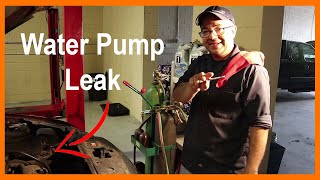
- Visible coolant leaks under the vehicle, especially a small drip from the weep hole located on the passenger side of the engine block, just above the A/C compressor. 🎬 Watch: How to find the water pump weep hole leak.
- Boiling or gurgling sounds from the engine or radiator
- No heat from the cabin vents if the coolant level is extremely low
- Milky, frothy, or 'milkshake' appearance on the oil dipstick or oil filler cap, indicating coolant has contaminated the engine oil.
- Replacing the thermostat when the water pump is the actual source of the leak and overheating. Because a thermostat is cheaper and easier to replace, it's often attempted first, but if the leak persists from the passenger side of the engine, the water pump is the likely culprit.
- Replacing radiator hoses for a coolant leak that is actually coming from the water pump weep hole and dripping down onto other components.
Most Likely Causes
- Failing Internal Water Pump 🔴 High Probability → Shop Engine Water Pump The 3.5L V6 uses a timing-chain-driven internal water pump. The seals are known to fail between 80,000 and 150,000 miles, causing leaks. Due to its location, replacement is extremely labor-intensive, often a 12-15 hour job.
How to confirm: Look for coolant leaking from a small weep hole in the engine block on the passenger side, above the alternator and A/C compressor. This is the primary diagnostic indicator. A cooling system pressure test will make this leak more obvious. In catastrophic failure cases, check the engine oil for a milky, frothy appearance, which indicates an internal leak and coolant contamination. NHTSA ODI #11639979 describes a case where a dealer retrieved codes P0217 and P1285 and confirmed a coolant leak at the water pump weep hole.
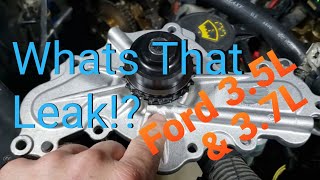
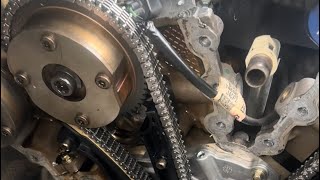
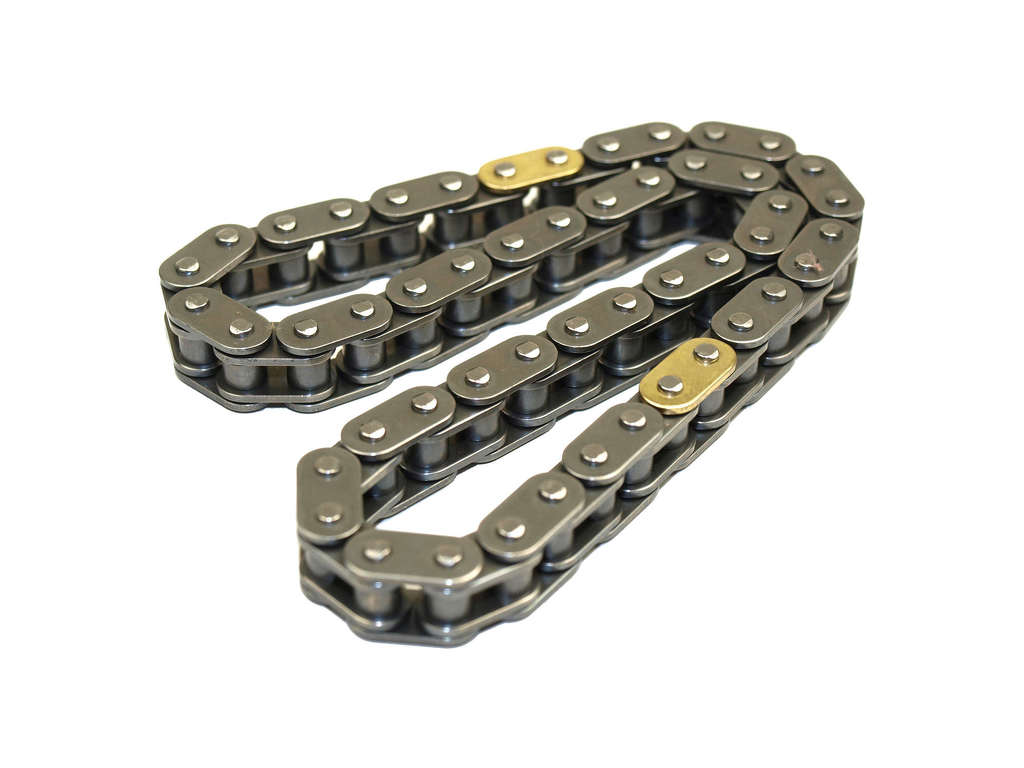
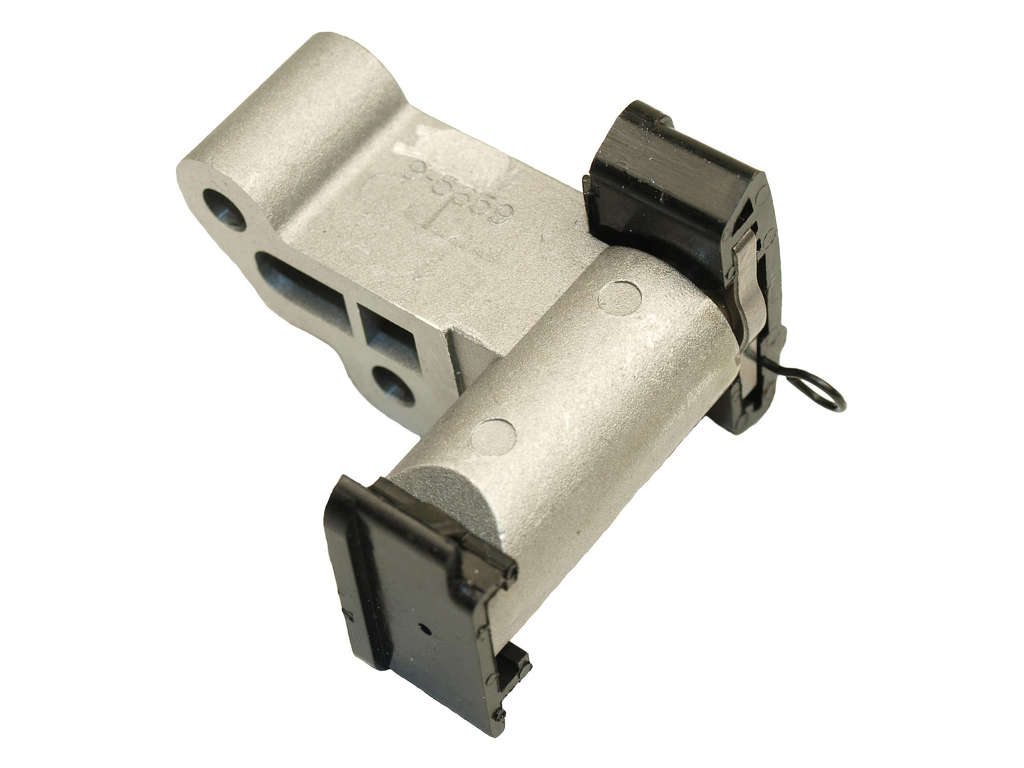
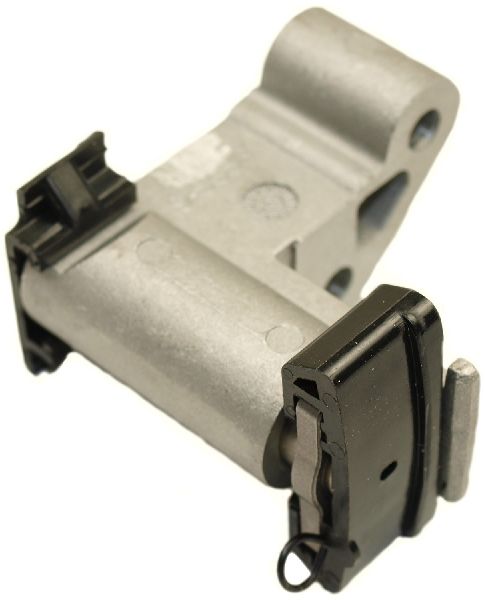
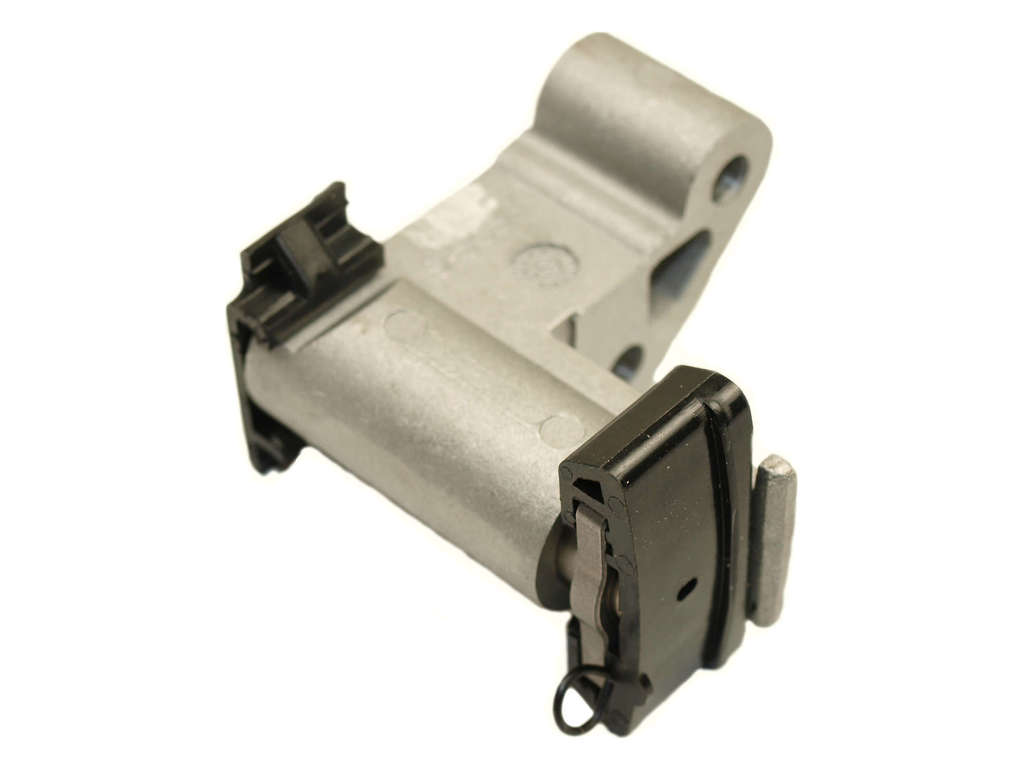
Typical fix: Replacement of the water pump, timing chains, tensioners, and guides is required. It is highly recommended to replace all timing components at the same time. This is a major service operation with shop costs often ranging from $2200 to $3500, with some dealership quotes approaching $4,800. 🎬 Watch: A full walkthrough of this complex water pump replacement.
Est. part cost: $300-$600 for an OEM pump and timing component kit - Stuck-Closed Thermostat 🟡 Medium Probability → Shop Integrated Thermostat Housing Assembly Thermostats are a common wear item on any vehicle. The plastic housing on the Taurus can also become brittle and leak over time.
How to confirm: After starting a cold engine, feel the upper radiator hose. It should remain cool for several minutes and then become hot suddenly as the thermostat opens (around 190-200°F). If the engine overheats and the hose remains cool or only lukewarm, the thermostat is likely stuck closed.
Typical fix: Replace the thermostat and its housing assembly. It is recommended to replace the entire assembly, not just the thermostat itself. Use of an OEM Motorcraft part is strongly advised. 🎬 See this step-by-step guide for replacing the thermostat.
Est. part cost: $50-$120 for a Motorcraft thermostat and housing assembly - Cooling Fan Assembly Failure 🟡 Medium Probability → Shop Engine Cooling Fan Blade The electric cooling fan motor or the integrated fan control module can fail, preventing the fan from activating when needed, especially in stop-and-go traffic.
How to confirm: With the engine at operating temperature (or when the A/C is turned on to MAX), the cooling fan(s) should be running. If the engine is overheating while stationary and the fans are not spinning, there is a fault in the fan circuit. A diagnostic scan tool can command the fan on to test its function. Check fuses and relays first.
Typical fix: Replacement of the cooling fan motor, control module, or the entire fan assembly.
Est. part cost: $200-$450 for a complete fan assembly - Low Coolant Level from External Leak ⚪ Low Probability Besides the water pump, radiator hoses, the radiator itself (especially the plastic end tanks), and the coolant reservoir can crack and leak over time.
How to confirm: Visually inspect all coolant hoses, the radiator, and the coolant reservoir for signs of leaks, cracks, or stains (often white or colored residue). A cooling system pressure tester is the most effective tool for finding small leaks.
Typical fix: Replace the specific leaking component (e.g., radiator hose, radiator).
Est. part cost: $20-$300 depending on the part
Rare But Worth Checking
- Clogged Radiator: → Shop Radiator Internal blockage from sediment or external blockage from road debris can impede airflow and coolant flow, reducing cooling efficiency.
- Blown Head Gasket: Though less common than a water pump failure on this engine, a failed head gasket can force combustion gases into the cooling system, causing rapid overheating. This is a major engine repair. NHTSA ODI #11578312 notes that an engine may exhibit low coolant, white exhaust smoke, and rough running with codes P0217, P1285, or P1299, sometimes requiring a long block replacement.
- Faulty Cylinder Head Temperature (CHT) Sensor: Rarely, the sensor itself can fail and send an incorrect high-temperature reading to the PCM, triggering the P0217 code even if the engine is not actually overheating. Unlike a typical ECT, this sensor reads metal temperature, not coolant temperature.
Diagnosis Steps
- SAFETY FIRST: Do not open the coolant reservoir cap when the engine is hot. Allow the engine to cool completely for several hours.
- Check Coolant Level and Condition: Ensure the coolant reservoir is filled to the proper level. Check the oil dipstick and oil cap for a milky, white, or frothy residue, which indicates coolant has mixed with the oil (a sign of internal water pump failure or a blown head gasket).
- Scan for Codes: Use an OBD-II scanner to confirm P0217 and check for any other related codes like P1299 or P1285. In some instances, as seen in NHTSA ODI #11593017, P0217 may appear alongside transmission or fuel system codes like P0732 or P0087.
- Inspect for Leaks: Visually inspect the engine bay for obvious coolant leaks. Pay extremely close attention to the passenger side of the engine, near the A/C compressor and alternator. Use a flashlight and mirror to locate the water pump weep hole and check for any signs of coolant residue.
- Perform a Cooling System Pressure Test: With the engine cool, use a pressure tester to pressurize the system to the specification on the cap (usually 15-16 PSI). Watch for a drop in pressure. This will make a leak at the weep hole, hoses, or radiator much easier to spot. NHTSA ODI #11566450 describes a diagnostic where a system was pressurized overnight, revealing a loss of pressure and coolant intrusion found via borescope.
- Test Cooling Fan Operation: Start the engine and turn the A/C to MAX. Both cooling fans should turn on. If the car only overheats in traffic but is fine on the highway, the fans are a primary suspect.
- Test Thermostat Operation: Start the engine from cold. Feel the upper radiator hose. It should stay relatively cool. As the engine warms up (after 5-10 minutes), the hose should suddenly become hot as the thermostat opens. If it stays cool while the temperature gauge climbs into the red, the thermostat is likely stuck closed.
Parts You'll Likely Need
- Water Pump & Timing Chain Kit
(OEM #Motorcraft PW-538 (2008-2011), PW-515 (2011-2016), check VIN for exact fitment.)— This is the most probable, though most expensive, cause of a P0217 code on the 3.5L V6 due to the internal pump's known failure rate.
Trusted brands: Motorcraft, Gates, Cloyes
Related Codes That Often Appear With This One
- P1299 — This Ford-specific code for 'Cylinder Head Overtemperature Protection Active' is often triggered alongside P0217. It confirms the PCM has entered a fail-safe mode, cutting fuel to some cylinders to try and cool the engine down.
- P1285 — Another Ford code for 'Cylinder Head Over Temperature Sensed'. It serves a similar purpose to P1299 in flagging an overheat condition detected at the cylinder head level.
- P0128 — While P0217 means too hot, P0128 means 'Coolant Temperature Below Thermostat Regulating Temperature.' You would not see them at the same time, but it's a related cooling system code often caused by a thermostat stuck open, a different failure mode of a common part.
- P0302 / P0316 — As noted in NHTSA ODI #11520798, P0217 can be accompanied by misfire codes if coolant enters the cylinders, such as finding coolant in the cylinder after pulling a coil and plug.
Technical Service Bulletins (TSBs) & Recalls
- TSB 15-0003: While related to the 3.5L GTDI (EcoBoost) F-150 and fuel-in-oil issues, it highlights Ford's diagnostic process for fluid contamination in the crankcase.
- TSB 16-0139: Addresses electronic throttle body failures on many Ford vehicles, a known issue for the Taurus platform.
Platform-Specific Known Issues
- Water Pump Failure Owner Experience: → Shop Engine Water Pump On SHOForum.com, a user with a 2010 Taurus SHO with 85k miles opted for a preventative water pump replacement. Members strongly advised using only OEM Ford parts for the repair, noting that while the part itself isn't expensive, the labor is what drives the high cost. Another user's 2014 Mazda CX-9 (with a similar engine) had its pump fail at 100,000 miles, costing $3000 to repair.
- Repair Cost Reality Check: In a Reddit thread, a user was quoted $2700 for a water pump and timing job. Other owners and mechanics chimed in, calling the price fair for a 20-hour job and noting that dealer quotes can exceed $4000. One DIY-er spent $1200 on parts alone to replace everything (pump, chains, phasers, solenoids, etc.) over a 3-day weekend.
Mechanic-Grade Diagnostic Values
- Cylinder Head Temperature (CHT) Sensor Resistance — expected: High resistance when cold (e.g., ~100,000 ohms at -40°F/-40°C), low resistance when hot (e.g., ~70 ohms at 266°F/130°C).. Failure: Resistance readings that are infinite (open circuit), near zero (short circuit), or do not change smoothly with temperature indicate a faulty sensor.
- Scan Tool CHT PID vs. Infrared Thermometer — expected: The temperature reported by the scan tool's CHT PID should be within 10°F of the actual cylinder head temperature measured with an infrared thermometer near the sensor's location.. Failure: A significant discrepancy between the scan tool reading and the physical measurement points to a faulty CHT sensor or wiring, not necessarily an actual overheat condition.
Scan Tool Commands That Help
- Ford IDS / FORScan: Cooling Fan Control (On/Off/Variable Speed) — To directly test the functionality of the cooling fan motors and their control module, bypassing the PCM's automatic commands. This is crucial for diagnosing overheating in traffic when the fans fail to activate on their own.
- Ford IDS / FORScan: PID Monitoring: CHT_V (Cylinder Head Temperature Voltage) — To monitor the raw voltage signal from the CHT sensor. This helps differentiate between a sensor that is reading incorrectly high (faulty sensor) versus a sensor that is accurately reporting a true overheat condition.
Wiring & Ground Locations
- G104 — On the left front of the engine compartment (for non-turbo 3.5L).. This is a primary engine ground point. A corroded or loose G104 can cause erratic readings from engine sensors, including the CHT sensor, potentially leading to a false P0217 code.
- G103 / G105 — Located on the rear of the engine or engine compartment.. These grounds serve the Powertrain Control Module (PCM) and various engine sensors. Poor connections here can disrupt the CHT sensor circuit and other critical engine management functions.
- Cylinder Head Temperature (CHT) Sensor — On the front of the right cylinder head for the naturally aspirated 3.5L engine.. This is the sensor that directly triggers the P0217 code. Knowing its location is essential for testing the sensor itself and its connector for corrosion or damage.
Real Owner Repair Stories
- Reddit user in r/MechanicAdvice (2013 Ford Taurus 3.5L V6 FWD, 48k miles) — External coolant leak from the water pump.
✅ What actually fixed it The user proactively replaced the water pump (part number PW515) after it started leaking externally from the weep hole, preventing an internal failure. They also replaced the serpentine belt, tensioner, valve cover gaskets, and intake gasket at the same time. - BobIsTheOilGuy forum user (2009 Ford Flex 3.5L V6 (same engine/platform), 125,000 miles) — No symptoms reported; this was a preventative repair.
✅ What actually fixed it User performed a proactive replacement of the internal water pump to prevent catastrophic failure. The job included replacing the Motorcraft water pump, main timing chain, guides, tensioner, crank sprocket, and all associated gaskets and seals. This highlights the community awareness of the part's high failure rate.
OEM Part Supersession History
Motorcraft PW-495→Motorcraft PW-538— PW-538 is an updated part number for the earlier model years (approx. 2008-2011).
Heads up: The pumps are physically interchangeable, but PW-538 is the correct revision for earlier models.Motorcraft PW-515 (Single Gasket Design)→Aftermarket Double Gasket Designs (e.g., some Gates/Dayco models)— The original OEM pump design sometimes used a single gasket. If this gasket failed anywhere other than the weep hole channel, coolant could go directly into the crankcase without warning. Aftermarket companies and some later OEM revisions introduced a double-gasket design to provide redundancy and better ensure any leak is directed out the external weep hole.
Model Year Variations Within This Range
- 2010-2012 vs 2013-2019: The standard 3.5L Cyclone V6 received a power increase in 2013 from 263 hp to 288 hp, along with the introduction of Ti-VCT. While the core internal water pump design flaw remains the same, some ancillary parts and engine tuning differ.
- 2010-2019 (SHO Models): The 3.5L EcoBoost V6 in the SHO model also uses the problematic internal water pump design. While the base engine architecture is similar, the turbochargers, fuel system, and cooling demands are different. Short blocks are generally interchangeable between SHO and non-SHO models of the same era, but cylinder heads and other components are not.
- 2008-2011 vs 2011-2016+: The water pump part number changes. Early models typically use PW-538, while later models (approx. 2011+) use PW-515. Always verify the correct part with the vehicle's VIN.
Diagnostic Flowchart
Other Known Issues on This Vehicle
Issues unrelated to this code that are worth knowing about as an owner of this generation:
- Power Transfer Unit (PTU) Failure (AWD Models) 🔴 High — Common, especially on vehicles over 60,000 miles. The factory-filled fluid overheats due to proximity to the exhaust, breaks down, and leads to bearing/gear failure.
- Electronic Throttle Body (ETB) Failure 🟠 Medium — Very common across many Ford models of this era. Failure can occur suddenly at any mileage. (Ref: Ford Customer Satisfaction Program 13N03 (expired) and TSB 10-21-6 acknowledged the issue.)
- Cracked/Leaking Plastic Coolant Reservoir 🟡 Low → Shop Engine Coolant Reservoir — Common as the vehicle ages. The plastic becomes brittle from heat cycles.
Used vs. New Parts: Buying Guide for This Vehicle
When a used part is the smart pick: A used cooling fan assembly from a low-mileage donor vehicle is a reasonable choice, as they are durable and failure is often electronic. A used radiator can also be considered if it passes a pressure test and shows no signs of corrosion or damage. Avoid used electronic modules like the fan controller unless you can test them on the donor car.
Donor-vehicle mileage cap: roughly under 75000 miles for the part to have meaningful remaining life.
What to inspect on the donor part:
- For radiators: Check for bent fins, signs of past leaks (white or green crust), and integrity of the plastic end tanks (no hairline cracks).
- For cooling fans: Spin the fan blades by hand to ensure the motor bearings are smooth and quiet. Inspect the electrical connector for corrosion or melted pins.
- Check the VIN of the donor vehicle to ensure it's from a similar year range and didn't have a front-end collision.
OEM-only on this vehicle (don't cheap out):
- Water Pump & Timing Components: Given the catastrophic failure mode and extreme labor cost, using a new, high-quality OEM (Motorcraft) or top-tier aftermarket kit is non-negotiable. The risk of a used part failing is too high.
- Thermostat: This is an inexpensive but critical part. An OEM Motorcraft thermostat is strongly recommended to ensure correct opening temperature and lifespan.
Aftermarket brands forum-validated for this vehicle:
- Water Pump/Timing Kits: Gates, Cloyes, Dayco are widely accepted as high-quality alternatives to Motorcraft.
- Radiators/Cooling Fans: TYC, Spectra Premium, Four Seasons.
Brands owners have reported issues with on this vehicle:
- Avoid unbranded, 'white-box' water pumps and timing kits from online marketplaces. The quality of the seals and bearings is paramount, and failure of a cheap part can destroy the engine.
Real Owner Stories
Aggregated from forums and TSBs cited above. Mileages and costs reflect what owners reported in those sources.
2010 Ford Taurus SHO 3.5L — 85000 miles
Symptoms: Owner opted for preventative replacement to avoid catastrophic failure; forum members noted the high labor cost despite the part itself being inexpensive.
What fixed it: Preventative replacement of the water pump using OEM Ford parts.
Cost: $3000-$3000
Source hint: SHOForum.com - 'Replacing water pump before it fails' (2022-03-29)
2014 Mazda CX-9 3.7L (Cyclone V6) — 100000 miles
Symptoms: Internal water pump failure on the shared Cyclone engine platform.
What fixed it: Water pump replacement.
Cost: $3000-$3000
Source hint: SHOForum.com - 'Replacing water pump before it fails' (2022-03-29)
Ford Taurus 3.5L
Symptoms: Owner faced a major timing and water pump service; other users confirmed dealer quotes can exceed $4000.
What fixed it: Water pump and timing job.
Cost: $2700-$2700
Source hint: r/TaurusSHO on Reddit - 'For those who've done a water pump change/timing chain job..'
Ford Taurus 3.5L
Symptoms: DIY repair involving replacement of the pump, chains, phasers, and solenoids.
What fixed it: Full replacement of water pump, timing chains, phasers, and solenoids over a 3-day weekend.
Cost: $1200-$1200
Source hint: r/TaurusSHO on Reddit - 'For those who've done a water pump change/timing chain job..'
Related OBD-II Codes
Frequently Asked Questions
Why is the repair cost for a water pump on my 2008-2019 Ford Taurus 3.5L so high?
Where is the weep hole located on the 3.5L Cyclone V6 to check for P0217 leaks?
Should I replace the timing chain when fixing a P0217 caused by the water pump?
Does TSB 16-0139 apply to my Ford Taurus?
What does it mean if my oil dipstick looks like a 'milkshake' along with the P0217 code?
Can I just replace the thermostat to fix P0217?
Helpful Videos

We Have This Part in Stock


The information in this article is provided for general reference and educational purposes only. Vehicle specifications, procedures, and part compatibility can vary by production date, trim level, and region. Always consult your vehicle's factory service manual and verify part numbers before purchasing or performing repairs. Safety-critical components such as airbags, seat belts, and braking systems should be installed by a qualified professional.
- Ford Taurus:
- 🧭 Diagnostic Flowchart
- 🎬 Helpful Videos
- 🛍️ Shop This Part
- What's Unique About the 2008-2019 Ford Taurus
- Symptoms You May Notice
- Most Likely Causes
- Rare But Worth Checking
- Diagnosis Steps
- Parts You'll Likely Need
- Related Codes That Often Appear With This One
- Technical Service Bulletins (TSBs) & Recalls
- Platform-Specific Known Issues
- Mechanic-Grade Diagnostic Values
- Scan Tool Commands That Help
- Wiring & Ground Locations
- Real Owner Repair Stories
- OEM Part Supersession History
- Model Year Variations Within This Range
- Other Known Issues on This Vehicle
- Used vs. New Parts: Buying Guide for This Vehicle
- Real Owner Stories
- 2010 Ford Taurus SHO 3.5L — 85000 miles
- 2014 Mazda CX-9 3.7L (Cyclone V6) — 100000 miles
- Ford Taurus 3.5L
- Ford Taurus 3.5L
- Related OBD-II Codes
- Frequently Asked Questions
- 🎟️ Get 5% Off