

P0217 on 2015-2019 Ford Transit 3.7L: Engine Overheat Causes and Fixes
P0217 means your engine is overheating. On Transits built before 2019, this is almost always caused by a clogged radiator from degraded orange coolant, per Ford TSB 21-2038. The fix is to replace the radiator and switch to yellow coolant, costing $600-$1500 at a shop.
- P0217 is a critical overheating code. Stop driving immediately.
- For 2015-2018 Transits, the cause is almost certainly a clogged radiator from old orange coolant, as per Ford TSB 21-2038.
- The correct fix is not just a coolant flush; you must replace the radiator and refill with Motorcraft Yellow coolant.
- Before committing to a radiator replacement, check the cooling fan fuses (especially on 2015-2017 models) as it's a cheap and easy potential fix.
What's Unique About the 2015-2019 Ford Transit
For this specific generation of Ford Transit (built on or before Dec 31, 2018), the P0217 code is strongly linked to a known issue with the factory-installed Motorcraft Orange coolant. Over time, this coolant can degrade and form gel-like silicate deposits that clog the fine passages of the radiator, severely restricting coolant flow and causing an overheat condition. Ford acknowledged this with Technical Service Bulletin (TSB) 21-2038, which explicitly states the remedy is to flush the system, replace the radiator, and refill 🎬 Watch this step-by-step guide on Ford Transit radiator replacement. with the newer Motorcraft Yellow coolant. Additionally, 2015-2017 models are known to have issues with an undersized cooling fan fuse (F8), as noted in SSM 46923. While diagnosing this generation, it is also worth noting that related Ford platforms have seen similar codes; for instance, manufacturer bulletin TSB Bulletin #SSM 52786 describes how electrical interference from the generator can sometimes trigger a false overheat condition and DTC P0217.
Symptoms You May Notice
- Temperature gauge reading in the red or 'H' zone
- Engine temperature warning light or 'Engine Over Temperature' message on the dashboard
- Reduced engine power or 'limp mode' activation
- Steam or smoke coming from the engine bay
- Boiling or gurgling sounds from the engine or coolant reservoir
- A/C blowing warm air
- A sweet smell of antifreeze from outside or inside the vehicle
- Replacing the Engine Coolant Temperature (ECT) sensor. While a faulty sensor can theoretically cause a false code, it's far more likely that P0217 is reporting a genuine overheat condition on this vehicle. Always verify the engine is actually overheating before replacing sensors.
- Only flushing the coolant. On vehicles affected by TSB 21-2038, a simple coolant flush is not sufficient. The deposits are often so severe that the radiator must be replaced to restore proper flow.
Most Likely Causes
- Clogged Radiator due to Degraded Coolant (per TSB 21-2038) 🔴 High Probability → Shop Radiator Vehicles built on or before 12/31/2018 were factory-filled with Motorcraft Orange coolant (an OAT type), which was found to break down and form silicate deposits, creating a sludge that clogs the radiator.
How to confirm: Visually inspect the coolant in the degas bottle for a sludgy, gel-like consistency or discoloration. A technician can use an infrared thermometer to check for significant temperature differences across the radiator core; a hot upper section and a cool lower section indicate a blockage. The definitive diagnosis is often made after other causes are ruled out and the TSB is consulted.
Typical fix: Follow the procedure in TSB 21-2038: Flush the entire cooling system with a specified cleaner, replace the radiator (Part No. CK4Z-8005-B), and refill with Motorcraft Yellow coolant (a P-OAT type). A simple coolant flush without replacing the radiator will not solve the problem as the deposits cannot be fully removed.
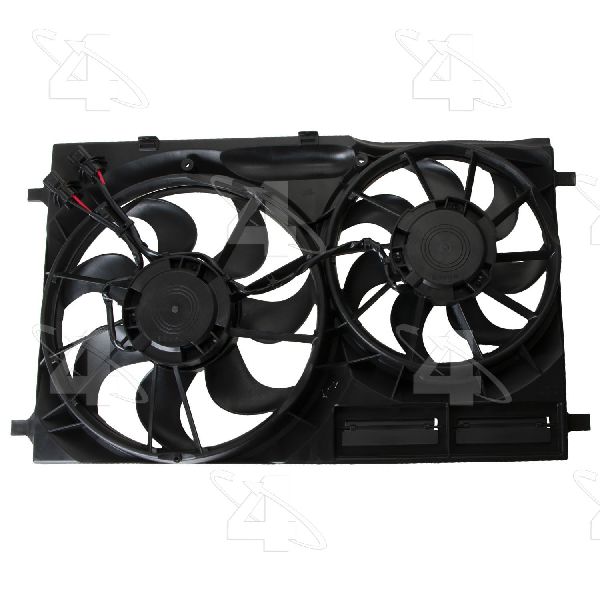
Est. part cost: $250-$550 - Blown Cooling Fan Fuse (per SSM 46923) 🟡 Medium Probability → Shop Engine Cooling Fan Blade On 2015-2017 models, the original 20A fuse for the cooling fans was found to be undersized and prone to blowing, causing the fans to fail and the engine to overheat, especially in stop-and-go traffic.
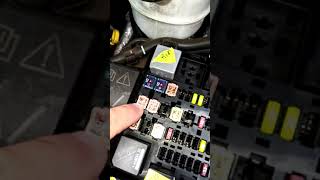
How to confirm: Check the fuse box for a blown fuse, specifically the F8 fuse in the under-hood fuse box. Confirm the cooling fans are not turning on when the engine gets hot or when the A/C is commanded on.
Typical fix: Replace the blown 20A fuse with the updated, higher-rated 30A FMX LP fuse. It is also wise to check related 40A fuses at positions F30 and F31.
Est. part cost: $1-$10 - Failed Thermostat ⚪ Low Probability → Shop Integrated Thermostat Housing Assembly
How to confirm: With the engine cool, start the engine. The upper radiator hose should remain cool until the engine reaches operating temp (around 190-200°F), then become hot as coolant flows. If the engine overheats and the hose stays cool or only gets lukewarm, the thermostat is likely stuck closed.
Typical fix: Replace the thermostat and housing assembly. It is recommended to use an OEM part (e.g., BL3Z-8575-B) and replace the coolant at the same time.
Est. part cost: $30-$60
Rare But Worth Checking
- Failing Water Pump: → Shop Engine Water Pump While not as common as the radiator issue, a water pump with a failed bearing or a corroded impeller can cause a lack of coolant circulation and lead to overheating. This is more likely on higher mileage vehicles (>100k miles). NHTSA ODI #11639979 notes a case where P0217 was retrieved alongside a diagnosis of a coolant leak at the water pump weep hole.
- Coolant Leak: A significant coolant leak from a hose, the radiator, or the thermostat housing will cause the coolant level to drop and lead to overheating. TSB 21-2409 (superseded by TSB 22-2022) notes a potential leak at the thermostat housing O-ring on 3.7L engines equipped with a block heater.
- Internal Coolant Intrusion: In rare instances, P0217 may appear with misfire codes. NHTSA ODI #11520798 describes a scenario where P0217 and P0302 were present after coolant was found in a cylinder, while NHTSA ODI #11566450 reports a similar case where a borescope inspection revealed coolant intrusion on the piston.
Diagnosis Steps
- SAFETY FIRST: Do not open the cooling system when the engine is hot. Allow it to cool completely for several hours.
- Verify the Overheat: Confirm if the engine is actually overheating using an infrared thermometer on the cylinder head or upper radiator hose, or by observing other symptoms like steam. Do not rely solely on the gauge.
- Check Coolant Level and Condition: Inspect the coolant level in the degas bottle. Note the color and consistency. If it is the original orange coolant and appears sludgy, gel-like, or rusty, suspect the TSB 21-2038 issue.
- Check Cooling Fans: Start the engine and turn on the A/C to its coldest setting. Both cooling fans should turn on. If they do not, inspect the fuses first (especially F8 on 2015-2017 models per SSM 46923).
- Inspect for Leaks: Visually inspect the radiator, all hoses, water pump weep hole, and thermostat housing for any signs of external coolant leaks. Pay attention to the thermostat housing area on block-heater-equipped models.
- Check Thermostat Operation: Feel the upper radiator hose. It should remain relatively cool until the engine reaches operating temperature, at which point it should become hot as the thermostat opens and allows coolant to flow. If the engine overheats and the hose stays cool, the thermostat is likely stuck closed.
- Perform Radiator Flow Test: If all other components check out, the most likely cause is a clogged radiator per TSB 21-2038. An infrared thermometer can be used to find cool spots on the radiator core, indicating a blockage.
Parts You'll Likely Need
- Radiator
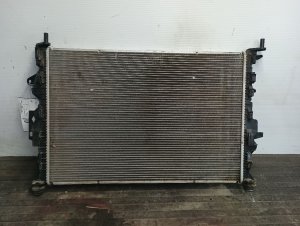
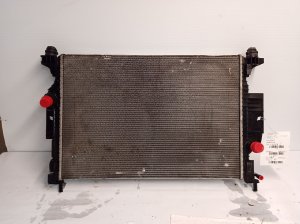
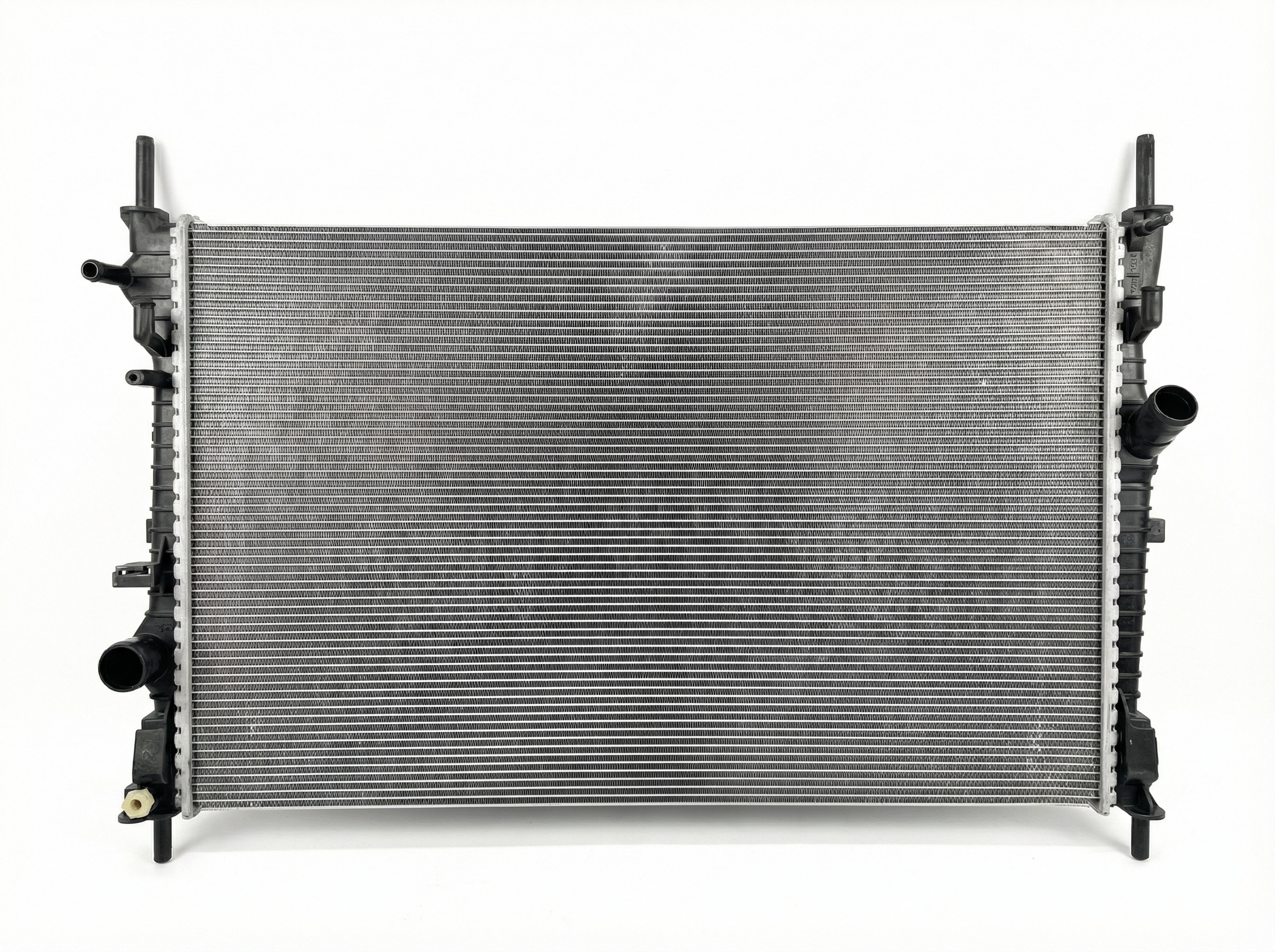
(OEM #CK4Z-8005-B)— This is the primary fix for the common issue of coolant passage blockage described in TSB 21-2038.
Trusted brands: Motorcraft, Denso, Spectra Premium
OEM price range: $300-$400
Aftermarket price range: $150-$250 - Engine Coolant / Antifreeze
(OEM #VC-13-G (Concentrate) / VC-13DL-G (50/50))— Ford specifies replacing the problematic Motorcraft Orange coolant with the new Motorcraft Yellow coolant as part of the TSB 21-2038 repair.
Trusted brands: Motorcraft
OEM price range: $25-$35 per gallon - Thermostat Assembly
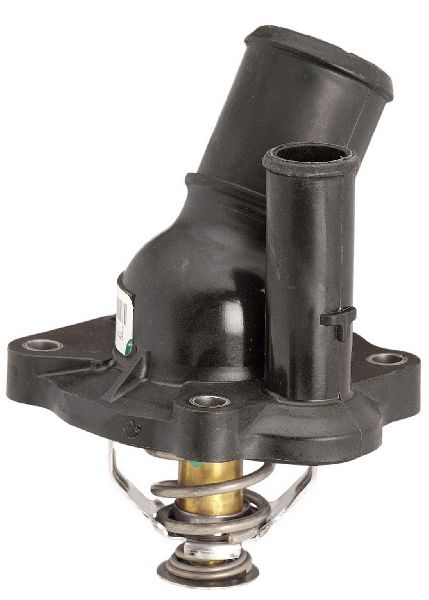
(OEM #BL3Z-8575-B)— While not the most common cause, a failed thermostat can cause this code. It is often replaced as a preventative measure during a major cooling system repair like a radiator replacement.
Trusted brands: Motorcraft
OEM price range: $25-$45
Aftermarket price range: $20-$40
Related Codes That Often Appear With This One
- P1299 - Cylinder Head Over Temperature Protection Active: This code is often set concurrently with P0217, indicating the PCM has actively entered 'limp mode' to reduce engine power and prevent damage.
- P0480 - Cooling Fan 1 Control Circuit Malfunction: This code points directly to a problem with the cooling fan circuit, often the blown F8 fuse on 2015-2017 models.
- P0128 - Coolant Thermostat (Coolant Temperature Below Thermostat Regulating Temperature): This can indicate a thermostat that is stuck open, which would not cause overheating, but a faulty thermostat mechanism can also fail in the closed position, leading to P0217.
- P0300-P0304 - Misfire Detected: As noted in NHTSA ODI #11578312, these codes may accompany P0217 if the engine is exhibiting low coolant levels and rough running due to internal issues.
Technical Service Bulletins (TSBs) & Recalls
- TSB 21-2038: 3.7L/3.5L/3.2L/6.8L - Engine Or Transmission Overheating - Built On Or Before 31-Dec-2018.
- SSM 46923: Cooling fan inoperative due to blown fuse on 2015-2017 models.
- TSB Bulletin #SSM 52786: Describes false overheat conditions and DTC P0217 related to generator electrical connections.
Platform-Specific Known Issues
- TSB 21-2038: Addresses engine overheating on vehicles built before Dec 31, 2018, due to deposits from Motorcraft Orange coolant clogging the radiator.
- SSM 46923: Notes that 2015-2017 models may experience cooling fan inoperation due to a blown, undersized 20A fuse (F8) from the factory.
- TSB 22-2022: Notes a potential coolant leak from a deteriorated O-ring at the thermostat housing on 3.7L engines equipped with a block heater.
Mechanic-Grade Diagnostic Values
- Cylinder Head Temperature (CHT) Sensor Resistance — expected: Approximately 100,000 ohms at -40°F (-40°C) and 70 ohms at 266°F (130°C). The resistance is inversely proportional to the temperature.. Failure: A scan tool reading a fixed -40°F when the engine is warm indicates an open circuit or failed sensor. A gauge that spikes to hot and drops to normal in seconds suggests an electrical fault in the sensor or wiring, not a true overheat.
Scan Tool Commands That Help
- Ford IDS (Integrated Diagnostic System) or equivalent professional scan tool: Cooling Fan Control (Variable) — Use this bidirectional control when diagnosing inoperative cooling fans. It allows the technician to command the fans on at various speeds, bypassing the PCM's logic. If the fans activate with the scan tool, the fan motors, relays, and wiring are likely good, pointing the diagnosis towards the PCM, CHT sensor, or A/C pressure sensor inputs.
Wiring & Ground Locations
- F8, F30, F31 Fuses — In the under-hood fuse box (Battery Junction Box).. On 2015-2017 models, F8 is an undersized 20A fuse for the fan control circuit that often blows. Per SSM 46923, it should be upgraded to a 30A fuse. F30 and F31 are the main 40A fuses for the fan motors themselves and may blow as a result of the F8 issue or a seized fan motor.
- G104 / G105 — Typically located on the left side of the engine compartment, bolted to the chassis frame rail or inner fender.. These are primary engine compartment ground points. A corroded or loose ground at these locations can cause erratic behavior from sensors and modules, including the PCM and fan control module, potentially leading to false overheat readings or fan failure.
- CHT Sensor Connector — On the 3.7L, the CHT sensor is located on the rear of the driver's side cylinder head, underneath the intake manifold. Access is difficult.. Wiring to the CHT sensor can become brittle from heat. Intermittent shorts or opens in the harness can cause the temperature gauge to spike erratically, falsely triggering a P0217 and P1299, even when the engine temperature is stable.
Real Owner Repair Stories
- YouTube user video (2017 Ford Transit 3.7L V6) — Driving down the road, the engine started overheating and the air conditioning began blowing warm air. The cooling fans were not running.
❌ Tried (didn't work) The user immediately identified the fans were not working, leading directly to the fuse box.
✅ What actually fixed it The user found the F8 20A fuse in the under-hood fuse box was blown, along with the F30 and F31 40A fuses. Following SSM 46923, he replaced the 20A fuse with an upgraded 30A FMX LP fuse and replaced the two 40A fuses, which restored cooling fan operation and resolved the overheating. - Ford Transit Forum discussion (Ford Transit (Mk7/later model)) — Temperature gauge soars from normal to the red zone in seconds, and then back to normal just as quickly, often after cresting a hill. The A/C was turned off and heater turned on to manage the condition.
❌ Tried (didn't work) Replaced thermostat, water pump, radiator, engine oil cooler, and cylinder head sensor.
✅ What actually fixed it The final fix was not posted, but a responding user provided a critical insight: It is physically impossible for the bulk coolant temperature to rise and fall that quickly. The issue is almost certainly electrical, pointing to a faulty CHT sensor (even a new one can be bad), a poor connection at the sensor, or damaged wiring between the sensor and the PCM. This story highlights a common misdiagnosis where mechanics chase a thermal problem when the root cause is electrical.
"I Checked Everything" — The Actual Cause
- The cooling system equivalent is a 'Pressure Test Holds, But Still Overheats' scenario. On a pre-2019 Transit, if the system holds pressure (no external leaks), the fans work, and the thermostat has been replaced, the root cause is very likely an internally clogged radiator per TSB 21-2038. The gel-like deposits from the old orange coolant restrict flow without causing an external leak, fooling technicians who rely solely on a pressure test to diagnose the radiator.
OEM Part Supersession History
CK4Z-8005-A→CK4Z-8005-B— Revision and potential improvement to address clogging issues, though not officially stated. CK4Z-8005-B is the current recommended replacement radiator for the TSB fix.Motorcraft Orange Antifreeze/Coolant (VC-3-B / WSS-M97B44-D)→Motorcraft Yellow Antifreeze/Coolant (VC-13-G / WSS-M97B57-A1)— The original orange coolant was found to degrade and cause silicate deposits, leading to radiator and heater core clogging. The new yellow P-OAT (Phosphated Organic Acid Technology) coolant is more stable and provides better corrosion protection.
Heads up: The new Yellow coolant IS backward compatible. It can be used to top-off or completely replace the old Orange coolant. Per Ford, a full system flush is not required when switching from Orange to Yellow unless the system is already contaminated with sludge/deposits.
Model Year Variations Within This Range
- 2015-2017: These models were equipped with an undersized 20A fuse at position F8 for the cooling fan control circuit. Per SSM 46923, this is a common failure point and should be upgraded to a 30A fuse during diagnosis.
- 2015 - 2018 (and early 2019 builds before Jan 2, 2019): These vehicles were factory-filled with Motorcraft Orange coolant and are highly susceptible to the radiator clogging issue described in TSB 21-2038. Later 2019+ models were filled with the more stable Motorcraft Yellow coolant from the factory, making this specific failure mode much less common.
Diagnostic Flowchart
Other Known Issues on This Vehicle
Issues unrelated to this code that are worth knowing about as an owner of this generation:
- Driveshaft Flexible Coupling (Guibo) Failure 🔴 High — Common on 2015-2017 models, often noticeable after 40,000 miles. Can lead to driveline vibration and eventual driveshaft separation. (Ref: Safety Recall 19S38 (supersedes 17S15). The fix involves replacing the rubber coupling with a more durable universal joint.)
- Electronic Throttle Body (ETB) Failure 🟠 Medium — Common across all 2015-2019 engines. Failure is sudden, causing the vehicle to enter 'limp mode' with a wrench light on the dash. Often occurs without warning. (Ref: Customer Satisfaction Program 16B32 (for some 2015-2016 models).)
- Sliding Door Wiring Harness/Mechanism Faults 🟡 Low — Widespread issue causing problems with door locks and sensors. TSBs exist for adjustments and recalls for specific wiring issues. (Ref: Recall 17S34 (trailer tow module wiring); TSB SSM 49665 (door adjustment).)
- Driveline Boom/Hum at Highway Speeds 🟡 Low — Affects single rear wheel (SRW) models, causing a distinct humming noise at specific highway speeds depending on the axle ratio. (Ref: TSB 22-2271 details installing a driveshaft torsional damper to resolve the noise.)
Used vs. New Parts: Buying Guide for This Vehicle
When a used part is the smart pick: For this specific repair, using used parts is generally not recommended for the core failure items. However, a used coolant reservoir (degas bottle), fan shroud, or undamaged wiring connectors can be a cost-effective choice if the original is physically broken.
Donor-vehicle mileage cap: roughly under 80000 miles for the part to have meaningful remaining life.
What to inspect on the donor part:
- For a radiator: Inspect for heavy corrosion, bent fins, or signs of previous epoxy repairs. However, the primary failure mode (internal clogging) is not visible, making used radiators a significant gamble.
- For electrical components: Check for melted plastic, corroded pins, or brittle wiring.
OEM-only on this vehicle (don't cheap out):
- Engine Coolant: Use only the specified Motorcraft Yellow Antifreeze/Coolant (VC-13-G). Using a generic 'all makes, all models' coolant can lead to incompatible chemistry and future problems.
- Cylinder Head Temperature (CHT) Sensor: Due to its critical function and difficult access, using a genuine Motorcraft sensor is strongly advised to avoid premature failure or inaccurate readings that can mimic other problems.
Aftermarket brands forum-validated for this vehicle:
- Radiator: Denso, Spectra Premium, TYC are generally considered reliable OEM-quality alternatives to Motorcraft.
Brands owners have reported issues with on this vehicle:
- No-name, white-box radiators from online marketplaces often have poor fin density, incorrect fitment, and use lower-grade materials, leading to poor cooling performance and short service life.
Real Owner Stories
Aggregated from forums and TSBs cited above. Mileages and costs reflect what owners reported in those sources.
2017 Ford Transit 3.7L
Symptoms: Engine started overheating, no air conditioning (blowing warm air), and cooling fans were not working.
What fixed it: Replaced the blown 20A F8 fuse with an upgraded 30A FMX LP fuse, and replaced the two blown 40A FMX LP fuses at F30 and F31, as per Ford Service Bulletin 46923.
Source hint: YouTube comment from 'Fix It All' regarding SSM 46923
2015-2018 Ford Transit 3.7L
Symptoms: The dealer initially suspected a water pump for the overheating, but the owner noted the radiator was actually clogged with sludge.
What fixed it: The fix was a new radiator and a switch to Motorcraft Yellow coolant.
Source hint: Ford Transit Forum (fordtransitusaforum.com)
Documented NHTSA Reports
Engine Overheat and Misfire
Symptoms: An owner reported the engine may exhibit low coolant levels, white exhaust smoke, and rough running. Stored DTCs included P0217, P0300-P0304, P0316, P1285, and P1299.
What fixed it: To correct the condition, the service procedure required replacing the long block engine.
Source hint: NHTSA ODI #11578312
Related OBD-II Codes
Frequently Asked Questions
My 2017 Transit is overheating and the A/C stopped working; could this be a simple fuse issue?
Does TSB 21-2038 apply to my 2019 Ford Transit 3.7L?
Can I just flush the orange coolant to fix the P0217 overheating issue?
I have a 3.7L Transit with a block heater and I see a leak near the thermostat; is there a known issue?
What specific coolant should I use to prevent the radiator from clogging again?
Are there any other major mechanical issues I should watch for on my 2015-2017 Transit while fixing the cooling system?
Helpful Videos
Used OEM Parts in Stock
New Aftermarket Parts Available


The information in this article is provided for general reference and educational purposes only. Vehicle specifications, procedures, and part compatibility can vary by production date, trim level, and region. Always consult your vehicle's factory service manual and verify part numbers before purchasing or performing repairs. Safety-critical components such as airbags, seat belts, and braking systems should be installed by a qualified professional.
- Ford Transit:
- 🧭 Diagnostic Flowchart
- 🎬 Helpful Videos
- 🛍️ Shop This Part
- What's Unique About the 2015-2019 Ford Transit
- Symptoms You May Notice
- Most Likely Causes
- Rare But Worth Checking
- Diagnosis Steps
- Parts You'll Likely Need
- Related Codes That Often Appear With This One
- Technical Service Bulletins (TSBs) & Recalls
- Platform-Specific Known Issues
- Mechanic-Grade Diagnostic Values
- Scan Tool Commands That Help
- Wiring & Ground Locations
- Real Owner Repair Stories
- "I Checked Everything" — The Actual Cause
- OEM Part Supersession History
- Model Year Variations Within This Range
- Other Known Issues on This Vehicle
- Used vs. New Parts: Buying Guide for This Vehicle
- Real Owner Stories
- 2017 Ford Transit 3.7L
- 2015-2018 Ford Transit 3.7L
- Documented NHTSA Reports
- Engine Overheat and Misfire
- Related OBD-II Codes
- Frequently Asked Questions
- 🎟️ Get 5% Off