

P0217 on 2006-2011 Honda Civic: Engine Overheating Causes and Fixes
P0217 means your Civic's engine is overheating. Common causes include a bad thermostat or low coolant. However, on this specific Civic (8th generation with the R18A1 engine), it is a major warning sign of a cracked engine block, a known manufacturing defect. Stop driving immediately to prevent catastrophic engine damage.
- P0217 is a critical code indicating your engine is overheating. Stop driving immediately.
- On a 2006-2011 Civic, this code could signal a cracked engine block, a known and very expensive factory defect.
- Before replacing any parts, a thorough diagnosis is essential to rule out the cracked block, especially on 2006-2009 models.
- Always check for coolant loss first. If the system is low on coolant, you must find and fix the leak.
- Always use Honda Type 2 (blue) coolant when refilling the system.
What's Unique About the 2006-2011 Honda Civic
For the 2006-2011 Honda Civic with the R18A1 engine, particularly models from 2006-2009, a P0217 code is extremely serious due to a known manufacturing defect that can cause the engine block to crack. This casting flaw allows coolant to leak directly from the block, leading to persistent overheating and coolant loss. While the code can still be triggered by common issues like a bad thermostat, the high probability of a cracked block on this specific vehicle makes immediate and proper diagnosis absolutely critical.
Symptoms You May Notice
- Check Engine Light is on
- Temperature gauge in the red or reading 'HOT'
- Steam or smoke coming from under the hood
- Reduced engine power or engine shutting off automatically
- A sweet smell of burning coolant
- Heater blowing cold air even when the engine is hot (due to air in the system or low coolant)
- Coolant reservoir boiling or overflowing.
- Unexplained loss of coolant in the radiator, while the overflow tank level remains full.
- Replacing the thermostat, radiator cap, or water pump when the underlying issue is a slow coolant leak from a cracked engine block. The new parts will not solve the overheating, and the problem will return.
- Assuming a blown head gasket without first thoroughly inspecting for an engine block crack, as the symptoms can be similar.
Most Likely Causes
- Cracked Engine Block 🔴 High Probability → Shop Engine Block A known casting defect affects 2006-2008 and some early 2009 models with the R18A1 engine, causing cracks to form and leak coolant. Honda issued TSB 10-048, extending the warranty to 10 years with no mileage limit, but this has now expired for all affected vehicles. The cracks can appear on the front or, more commonly, the back of the engine block.
How to confirm: Visually inspect the front and back of the engine block for coolant leaks, which may look like white or blue/green crusty residue. TSB 10-048 specifically points to the area beneath the oil/air separator on the back of the engine. A cooling system pressure test will often reveal a slow drop in pressure with no visible external leak, or a drip from the block itself. Some owners have had to use UV dye in the coolant to prove the leak to a dealer.
Typical fix: The only correct fix is to replace the engine short block. Some owners out of warranty have attempted using high-strength epoxy as a temporary measure, but this is not a reliable long-term repair. A used JDM engine from a non-affected year is another option some owners have pursued.
Est. part cost: $2000-$4000+ - Low Engine Coolant 🔴 High Probability This is often a symptom of the cracked block but can also be caused by more common leaks from aging radiator hoses, a faulty radiator cap, a leaking water pump, or a cracked radiator.
How to confirm: Check the coolant level in the reservoir and radiator (only when the engine is completely cool). If low, a cooling system pressure test is needed to find the source of the leak.
Typical fix: Top off the coolant with Honda Type 2 (blue) coolant and repair the source of the leak (e.g., replace hose, cap, or water pump).
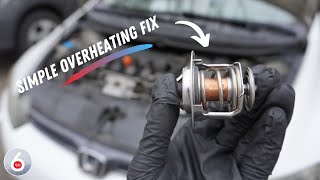
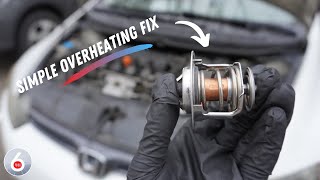
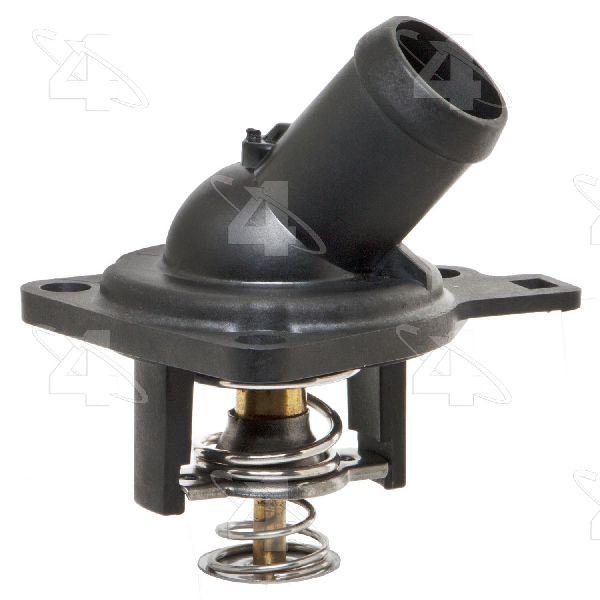
Est. part cost: $15-$300 - Faulty Thermostat 🟡 Medium Probability → Shop Integrated Thermostat Housing Assembly The thermostat can fail by getting stuck in the closed position, which prevents coolant from circulating to the radiator. This is a common failure on many high-mileage vehicles and a frequent topic in owner forums.
How to confirm: After starting a cold engine, feel the upper radiator hose. It should remain cool for several minutes and then become hot suddenly as the thermostat opens. If it stays cool or the lower radiator hose remains cool while the engine is overheating, the thermostat is likely stuck closed. The part can also be tested by placing it in boiling water to see if it opens.
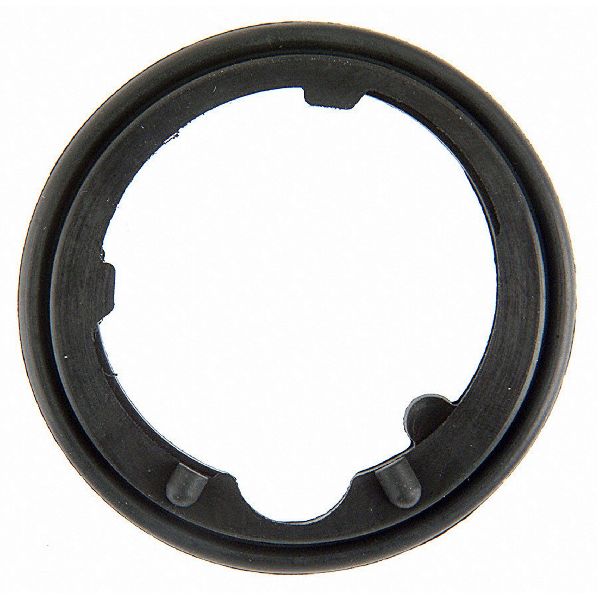
Typical fix: Replace the thermostat and gasket. This is a common DIY job.
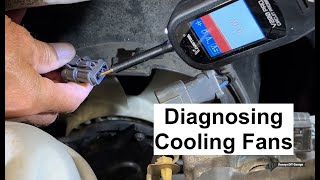
Est. part cost: $20-$60 - Malfunctioning Cooling Fan(s) 🟡 Medium Probability → Shop Engine Cooling Fan Blade The electric cooling fan motor, relay, or coolant temperature switch can fail, preventing the fan from turning on. This typically causes overheating in stop-and-go traffic or when idling.
How to confirm: With the engine at operating temperature, the cooling fan(s) should turn on. If they don't, turn on the A/C, which should force them to engage. If they still don't run, check the fan fuses and relays in the under-hood fuse box. A simple test is to swap the fan relay with an identical one (like the A/C clutch relay) to see if the problem moves. You can also test the fan motor directly by applying 12V power.
Typical fix: Replace the faulty component, which could be the fan motor assembly, relay, or coolant temperature switch.
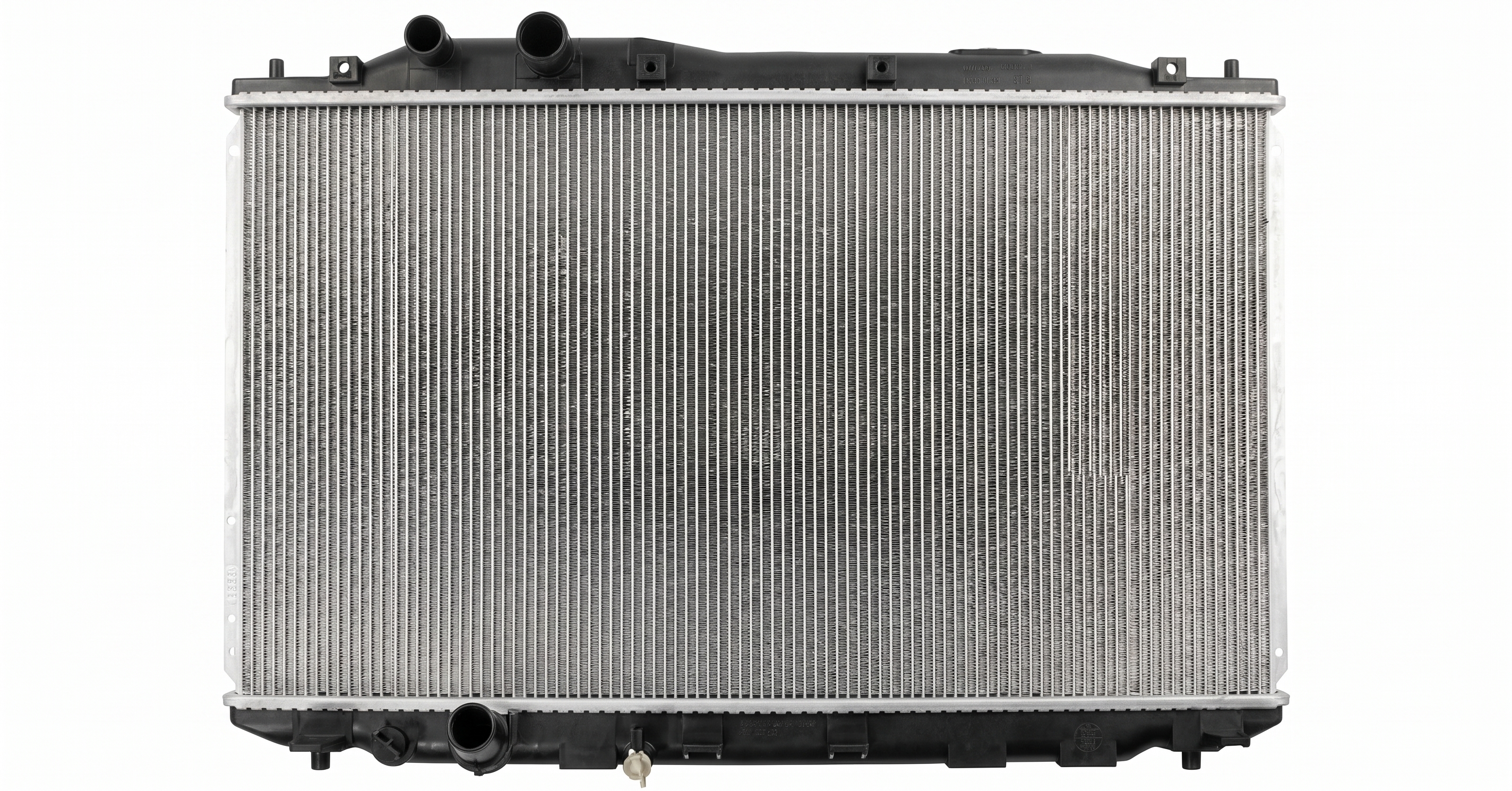
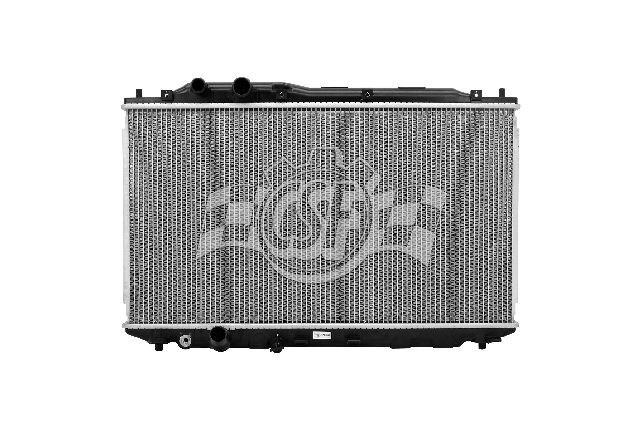
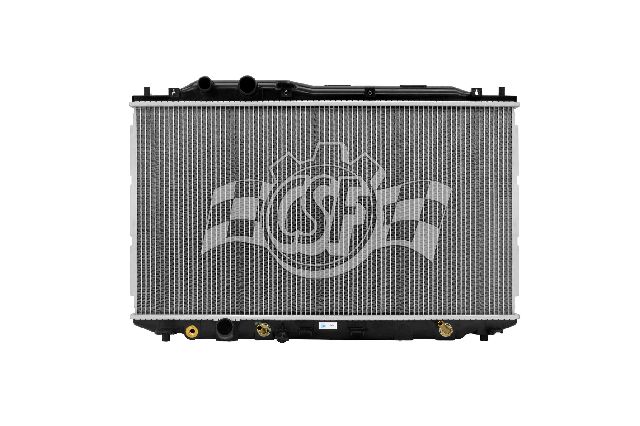
Est. part cost: $50-$250 - Clogged Radiator ⚪ Low Probability → Shop Radiator Internal passages can become clogged from sediment or use of incorrect coolant types. External fins can be blocked by road debris, reducing airflow.
How to confirm: Use an infrared thermometer to check for significant cold spots on the radiator surface with the engine hot, indicating an internal blockage. Visually inspect the front of the radiator for debris blocking the fins.
Typical fix: Attempt a radiator flush. If severely clogged internally, the radiator must be replaced.
Est. part cost: $150-$300
Rare But Worth Checking
- Failed Water Pump: → Shop Engine Water Pump While a water pump can leak externally (covered under 'Low Coolant'), the internal impeller can also fail to circulate coolant effectively, sometimes without an obvious external leak.
- Blown Head Gasket: Often a consequence of prolonged overheating rather than an initial cause. However, a pre-existing failure can allow hot combustion gases into the cooling system, causing it to over-pressurize and overheat. A 'block tester' kit uses a blue chemical that turns yellow/green in the presence of combustion gases in the coolant.
Diagnosis Steps
- DO NOT open the radiator cap when the engine is hot. Allow the vehicle to cool completely for several hours.
- Check the coolant level in the plastic overflow reservoir. If it is empty, check the level in the radiator itself. A common symptom of a cracked block is an empty radiator but a full reservoir.
- If coolant is low, carefully inspect the engine bay for signs of leaks. Pay extremely close attention to the front and rear of the engine block for blue/green or white crusty residue. The rear of the block, below the oil separator, is a common crack location per TSB 10-048.
- Refill the cooling system with Honda Long Life Antifreeze/Coolant Type 2 (blue).
- Start the engine and monitor the temperature gauge. Turn on the A/C to verify the cooling fans engage. The fans should also cycle on their own as the engine warms up.
- If the car overheats in traffic but is fine on the highway, suspect a cooling fan issue. Test the fan relays by swapping them with known good ones.
- If the car overheats again, perform a cooling system pressure test. Pressurize the system to ~18-20 PSI when cold and watch for a pressure drop over 5-10 minutes. If pressure drops but no leak is visible, the block crack is the primary suspect.
- If no external leaks are found, use a chemical block tester ('blue fluid test') to check for combustion gases in the coolant, which would indicate a blown head gasket or, more likely on this car, a crack in the block communicating with a water jacket.
- To test the thermostat, check if the lower radiator hose gets hot. If it stays cool while the engine overheats, the thermostat is likely stuck closed.
Parts You'll Likely Need
- Engine Block (Short Block)
(OEM #10002-RNA-A50)— This is the definitive fix for the most serious and platform-specific cause of P0217 on 2006-2009 Civics: a cracked block due to a manufacturing defect.
Trusted brands: Honda (OEM)
OEM price range: $2000-$4000
Aftermarket price range: N/A (Used/JDM engines are an alternative) - Thermostat
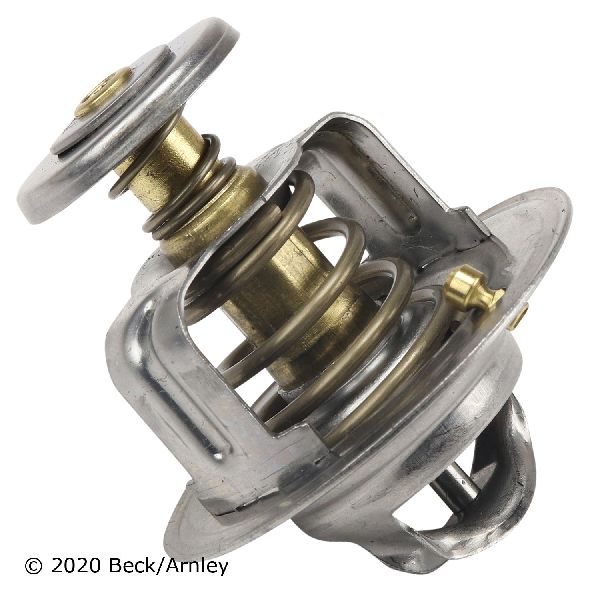
(OEM #19301-RAF-004)— A common failure point that causes overheating by sticking closed and preventing coolant circulation. It's a relatively inexpensive and easy part to replace as a first step in diagnosis.
Trusted brands: Honda (OEM), Stant, Motorad
OEM price range: $40-$60
Aftermarket price range: $20-$40 - Radiator Fan Assembly — The fan motor can burn out, preventing airflow through the radiator at low speeds or idle, leading to overheating in traffic.
Trusted brands: TYC, Denso, Four Seasons
OEM price range: $250-$400
Aftermarket price range: $70-$150 - Honda Long Life Antifreeze/Coolant Type 2
(OEM #OL999-9011)— Required for refilling the system after repairs to prevent corrosion and ensure compatibility.
Trusted brands: Honda (OEM)
OEM price range: $25-$35
Aftermarket price range: N/A
Technical Service Bulletins (TSBs) & Recalls
- TSB 10-048: 'Warranty Extension: Engine Block' - Details the casting defect in 2006-2009 Civics (non-Si/Hybrid) that causes coolant leaks from a cracked block. Extended the warranty to 10 years/unlimited miles.
- TSB 13-047: Recommends replacing rear upper control arms to fix abnormal rear tire wear, an unrelated but common issue on this platform.
Platform-Specific Known Issues
- Owner Experience: Sudden Failure: An owner on a Honda Civic Forum reported their 2006 Civic experienced a sudden engine shutdown on the road with no prior warning lights. The temperature gauge only showed 'HOT' after the car had already stopped. The cause was a cracked block and empty coolant system. This highlights that the P0217 code may appear very late in the failure process.
- Repair Story: Out of Warranty Engine Swap: A user on Reddit reported their 2009 Civic's engine failed due to the casting flaw just outside the warranty extension period. They opted to replace the engine with a used JDM (Japanese Domestic Market) R18A engine for approximately $1200-$2000 including labor.
Mechanic-Grade Diagnostic Values
- Engine Coolant Temperature (ECT) Sensor Resistance — expected: Approximately 2000-3000Ω at 20°C (68°F) and 200-400Ω at normal operating temperature (80-90°C or 176-194°F).. Failure: Readings significantly outside this range, or an open/short circuit. Resistance should decrease smoothly as the engine warms.
- Engine Coolant Temperature (ECT) Sensor Voltage — expected: Approximately 2.0V-3.0V on a cold engine, dropping to around 0.5V when the engine is at full operating temperature.. Failure: Voltage that is stuck high (near 5V) indicates an open circuit or disconnected sensor. Voltage that is stuck low (near 0V) indicates a short circuit. A skewed sensor might provide a plausible but incorrect voltage (e.g., 1.25V on a warm engine), leading to poor performance without a specific code.
Scan Tool Commands That Help
- Honda HDS (or equivalent professional scanner): Cooling Fan Test — To verify the functionality of the cooling fan relays and motors independently of the ECT sensor. This command allows the technician to turn the fans on and off directly, confirming the integrity of the fan circuit.
- Honda HDS (or equivalent professional scanner): Live Data List (ECT1, ECT2) — To monitor the real-time temperature readings from the engine coolant temperature sensors. For P0217, you would watch the ECT value climb. If it exceeds ~230-240°F without the fans activating, it points towards a fan control issue. If it rises uncontrollably even with fans on, it points to a circulation issue (thermostat, water pump, blockage).
Wiring & Ground Locations
- G101 — On the right rear of the engine for non-Si models, typically bolted to the thermostat housing/water passage area.. This is a primary power and logic ground for the ECU. If this ground is loose or corroded, often after an engine replacement, it can cause a host of bizarre, intermittent issues, including incorrect sensor readings and no-start conditions that can be misdiagnosed. A faulty ground can disrupt the ECT sensor's signal to the ECU, potentially contributing to an overheating event if fan control is affected.
- Under-hood Fuse/Relay Box — Left side of the engine compartment.. This box contains the critical relays and fuses for the cooling system. Key components include the Radiator Fan Relay, A/C Condenser Fan Relay, and Fan Control Relay, along with their associated power fuses (typically 20A or 30A). Failure of any of these can disable one or both cooling fans, leading directly to overheating in traffic.
- ECT Sensor Connector — On the engine block, near the thermostat housing.. The terminals within the plastic connector can become loose over time, causing an intermittent or high-resistance connection. This can lead to erratic temperature readings on a scan tool (spiking values) that look like a sensor failure but is actually a simple connection issue.
Real Owner Repair Stories
- Reddit user GDE1990 (2007 Honda Civic LX) — Sudden white smoke and engine shutdown on the highway, resulting in a giant hole in the engine block.
❌ Tried (didn't work) N/A - catastrophic failure
✅ What actually fixed it The issue was a cracked block as described in TSB 10-048, which led to catastrophic failure. The owner was a few weeks outside the 10-year warranty extension and Honda corporate denied the claim. The resolution was likely a new engine at the owner's expense. - BobIsTheOilGuy forum user jeepman3071 (2006 Civic and 2008 Civic) — Coolant loss, overheating.
❌ Tried (didn't work) N/A
✅ What actually fixed it In two separate cases, the engine blocks were found to be cracked. One failed at 205k miles (2006 model) and the other at 127k miles (2008 model). Both were confirmed to be the known block cracking issue, and one car went through coolant very quickly and overheated badly. This shows the failure is not strictly related to low mileage. - YouTube video by 'Pine Hollow Auto Diagnostics' (2008 Honda Civic) — Crank no-start condition *after* an engine replacement. The car would only start when a scan tool was connected.
❌ Tried (didn't work) Initial diagnosis was confusing due to the weird symptom.
✅ What actually fixed it The G101 engine ground bolt was left loose after the engine was replaced. The scan tool completed the ground circuit through the data link connector, allowing the car to start. Securing the G101 ground bolt to the engine block permanently fixed the issue. This is a critical check after replacing the block for the P0217 issue.
"I Checked Everything" — The Actual Cause
- A cooling system pressure test is the equivalent of a smoke test for this system. A slow leak from a hairline crack in the engine block may not be immediately obvious. One owner reported that their local dealer could not diagnose the coolant loss initially. The owner had to add UV dye to the coolant and run the car; the dye then became visible around the oil cap area, proving an internal leak from the block into the PCV system, which finally convinced the dealer to perform the warranty repair.
- An erratic, spiking coolant temperature reading on a scan tool can be caused by a loose female pin inside the ECT sensor connector, not a faulty sensor. The sensor itself would test good for resistance, and the wiring would show continuity, but the poor pin fitment creates intermittent high resistance in the live circuit. The fix is to tighten the pin terminal, not replace the sensor.
When the Usual Fixes Don't Work
- While the cracked block is a significant and well-documented risk for 2006-early 2009 models, it is not a 100% failure rate. There are many instances of these vehicles reaching very high mileage (200,000+ miles) on the original engine without issue. One forum discussion noted that if a block has survived for over a decade and high mileage without cracking, the probability of it failing now is likely much lower, suggesting not all blocks from that period were equally defective. However, the risk, however small, always remains for an un-replaced original block.
OEM Part Supersession History
10002-RNA-A00→10002-RNA-A50— The original engine short block (10002-RNA-A00) was prone to cracking due to a casting defect. The superseding part (10002-RNA-A50) is the revised block with the manufacturing issue corrected.N/A→37870-RTA-005— 37870-RTA-005 is the genuine Honda ECT sensor commonly used for replacement on this platform. While other part numbers may have existed, this is the standard replacement.
Heads up: Using non-OEM ECT sensors can sometimes lead to inaccurate temperature readings, causing persistent drivability or cooling fan control issues even after replacement.
Model Year Variations Within This Range
- 2006 - early 2009: These model years are equipped with the R18A1 engine block that is prone to the casting defect which can lead to cracking and coolant leaks, as detailed in Honda TSB 10-048.
- Late 2009 - 2011: These models were built with the revised engine block (part # 10002-RNA-A50) and are not affected by the cracking block issue. Overheating on these models is due to more traditional causes (thermostat, fans, leaks, etc.).
- 2009: The 2009 model year was a facelift year, featuring a redesigned front bumper, grille, and new wheel options. More importantly, this was the transition year for the engine block. An 'early' 2009 model may still have the defective block, while a 'late' 2009 model will have the corrected version. Verification via VIN with a Honda dealer may be necessary to confirm which block a specific 2009 vehicle has.
Diagnostic Flowchart
Other Known Issues on This Vehicle
Issues unrelated to this code that are worth knowing about as an owner of this generation:
- Cracked / Peeling Paint 🟠 Medium — Widespread, particularly on dark-colored vehicles. Often starts on the roof, hood, and trunk. (Ref: Honda addressed this with a warranty extension, but it has since expired.)
- Failing Rear Upper Control Arms 🟠 Medium — Common issue causing premature and uneven rear tire wear, specifically on the inside edge (cupping). (Ref: TSB 13-047)
- Broken Sun Visors 🟡 Low — Extremely common; the plastic cracks where the visor pivots, causing it to droop or fall off completely.
- Failing A/C Compressor Clutch 🟠 Medium — A frequent failure point, leading to the A/C blowing warm air.
- Bad Passenger-Side Engine Mount 🟠 Medium — The hydraulic passenger-side engine mount is prone to leaking and collapsing, causing excessive engine vibration at idle and while driving.
Used vs. New Parts: Buying Guide for This Vehicle
When a used part is the smart pick: For a cracked engine block, sourcing a used JDM R18A engine is a very smart and common choice. These engines, sourced from the Japanese market, are not known to have the casting defect and often have lower mileage. For other components like radiator fan assemblies, radiators, and alternators, good quality used parts from a reputable salvage yard are a cost-effective option.
Donor-vehicle mileage cap: roughly under 70000 miles for the part to have meaningful remaining life.
What to inspect on the donor part:
- For JDM engines, verify the seller's reputation and inquire about compression test numbers if available.
- Be aware that some sensors and components (like the VTEC pressure switch and thermostat housing) may need to be swapped from your original US-market engine onto the JDM block for full compatibility.
- For any used part, check for physical damage, corrosion, or signs of extreme wear before purchasing.
OEM-only on this vehicle (don't cheap out):
- Engine Coolant Temperature (ECT) Sensor: It is strongly recommended to use a genuine Honda sensor (Part # 37870-RTA-005) to ensure accurate readings for the ECU, preventing potential issues with fuel economy, performance, and fan control.
Aftermarket brands forum-validated for this vehicle:
- Radiators: Mishimoto, Koyo, and Skunk2 offer high-quality, all-aluminum radiators that are considered upgrades over the OEM plastic/aluminum unit.
- Radiator Fans: Denso and TYC are well-regarded OEM-quality replacement options.
Brands owners have reported issues with on this vehicle:
- Avoid generic, no-name electronic sensors (like the ECT sensor) as they are a frequent source of inaccurate readings and repeat failures.
Real Owner Stories
Aggregated from forums and TSBs cited above. Mileages and costs reflect what owners reported in those sources.
2006 Honda Civic R18A1 — 37000 miles
Symptoms: Owner detailed their experience with a cracked engine block early in the vehicle's life.
What fixed it: Engine block replacement under warranty (at the time).
Source hint: 8thcivic.com: '2006 Civic, Cracked Engine Block'
2006 Honda Civic
Symptoms: Sudden engine shutdown on the road with no prior warning lights; temperature gauge only showed 'HOT' after the car had already stopped.
What fixed it: The engine had a cracked block and empty coolant system.
Source hint: vehicle_specific_issues: 'Owner Experience: Sudden Failure'
2009 Honda Civic R18
Symptoms: Engine failure due to the casting flaw just outside the warranty extension period.
What fixed it: Replaced the engine with a used JDM (Japanese Domestic Market) R18A engine.
Cost: $1200-$2000
Source hint: vehicle_specific_issues: 'Repair Story: Out of Warranty Engine Swap'
Related OBD-II Codes
Frequently Asked Questions
Does TSB 10-048 apply to my 2006-2011 Honda Civic with the P0217 code?
Why is my radiator empty while the overflow tank is full?
Can I use any coolant to top off my Civic after an overheat?
Is there a way to test if my cooling fans are causing the P0217 code?
My 2009 Civic is overheating but it's outside the TSB 10-048 window. What are my repair options?
Helpful Videos
Used OEM Parts in Stock
New Aftermarket Parts Available


The information in this article is provided for general reference and educational purposes only. Vehicle specifications, procedures, and part compatibility can vary by production date, trim level, and region. Always consult your vehicle's factory service manual and verify part numbers before purchasing or performing repairs. Safety-critical components such as airbags, seat belts, and braking systems should be installed by a qualified professional.
- Honda Civic:
- 🧭 Diagnostic Flowchart
- 🎬 Helpful Videos
- 🛍️ Shop This Part
- What's Unique About the 2006-2011 Honda Civic
- Symptoms You May Notice
- Most Likely Causes
- Rare But Worth Checking
- Diagnosis Steps
- Parts You'll Likely Need
- Technical Service Bulletins (TSBs) & Recalls
- Platform-Specific Known Issues
- Mechanic-Grade Diagnostic Values
- Scan Tool Commands That Help
- Wiring & Ground Locations
- Real Owner Repair Stories
- "I Checked Everything" — The Actual Cause
- When the Usual Fixes Don't Work
- OEM Part Supersession History
- Model Year Variations Within This Range
- Other Known Issues on This Vehicle
- Used vs. New Parts: Buying Guide for This Vehicle
- Real Owner Stories
- 2006 Honda Civic R18A1 — 37000 miles
- 2006 Honda Civic
- 2009 Honda Civic R18
- Related OBD-II Codes
- Frequently Asked Questions
- 🎟️ Get 5% Off