

P0217 on 2020-2024 Kia Telluride 3.8L V6: Engine Overheat Causes and Fixes
P0217 indicates a critical engine overheat condition on your Kia Telluride. Common causes are low coolant from leaks, a stuck-closed thermostat, or cooling fan failure. Stop driving immediately to prevent catastrophic engine damage like warped heads. A fix can range from a simple hose replacement to a new water pump or radiator.
- P0217 is a critical code indicating your engine is overheating. Stop the vehicle immediately to prevent severe damage.
- The most likely causes are simple: a coolant leak or a stuck thermostat.
- Begin your diagnosis by checking the coolant level (when the engine is cold) and looking for obvious leaks.
- Do not drive the vehicle until the cause of the overheating has been identified and repaired.
- If you are not comfortable working on cooling systems, seek professional help to avoid injury or further vehicle damage.
What's Unique About the 2020-2024 Kia Telluride
For the 2020-2024 Kia Telluride, the P0217 code does not point to a widely known, unique design flaw specific to the Lambda II 3.8L GDI V6 engine causing overheating. Instead, the causes are typically the same as those found in most modern vehicles. Diagnosis should follow a standard, logical path, starting with the most common and simplest failures like coolant leaks and thermostat issues. While the Lambda II engine is generally considered reliable, it is a Gasoline Direct Injection (GDI) engine, which has no bearing on the cooling system itself but is a key characteristic of the platform.
Symptoms You May Notice
- Temperature gauge reading in the red or 'H' zone
- Illuminated engine temperature warning light on the dashboard
- Check Engine Light is on
- Noticeable loss of engine power as the vehicle enters 'limp mode'
- Steam or smoke coming from under the hood
- A sweet smell of burning coolant
- Loud boiling or gurgling sounds from the engine bay or radiator
- Immediately replacing the Engine Coolant Temperature (ECT) sensor without confirming the engine is not actually overheating. A simple infrared thermometer aimed at the thermostat housing can verify the actual engine temperature against the sensor's reading on a scan tool.
Most Likely Causes
- Low Engine Coolant 🔴 High Probability Leaks can develop in any vehicle from aging hoses, a faulty radiator cap, a cracked radiator tank, or a water pump seal failure. There are no reports of systemic, premature hose or radiator failures on the Telluride, but these are common wear items.
How to confirm: Visually inspect the coolant reservoir level (when the engine is cold). Use a cooling system pressure tester to find leaks that are not obvious.
Typical fix: Identify the source of the leak (e.g., cracked hose, loose clamp, failing radiator) and replace the faulty component. Refill with Kia-specified pink/red long-life coolant.
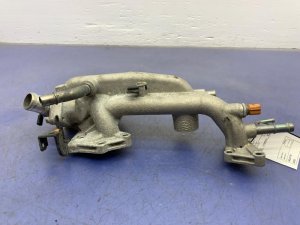
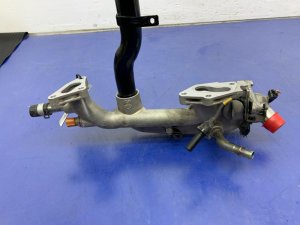
Est. part cost: $15-$400 - Stuck-Closed Thermostat 🔴 High Probability → Shop Integrated Thermostat Housing Assembly Thermostats are a common wear item. The Telluride uses an electronically controlled thermostat, which adds a layer of complexity. A failure in the electronic control or the mechanical valve can cause it to stick closed.
How to confirm: After the engine has warmed up, carefully feel the upper and lower radiator hoses. If the upper hose is hot and the lower hose is cool, the thermostat is likely stuck closed, preventing circulation. A scan tool can also monitor commanded vs. actual thermostat position.
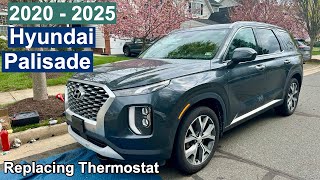
Typical fix: Replace the thermostat and gasket/housing. Refill and bleed the cooling system. Given its location, it is a moderately labor-intensive job. 🎬 Watch this step-by-step guide to replacing the thermostat yourself.
Est. part cost: $40-$180 - Cooling Fan Malfunction 🟡 Medium Probability → Shop Engine Cooling Fan Blade Electric fan motors, control modules, relays, or fuses can fail over time, preventing the fan from activating at low speeds or in traffic. This is a generic electrical failure, not specific to the Telluride.
How to confirm: With the engine at operating temperature (or by turning on the A/C), observe if the cooling fan(s) turn on. If not, check the fuses, relays, and wiring to the fan motor.
Typical fix: Replace the faulty component, which could be a fuse, relay, or the entire fan assembly.
Est. part cost: $10-$500 - Failing Water Pump ⚪ Low Probability → Shop Engine Water Pump The water pump impeller can corrode or break, or the seal can fail, leading to a leak and/or inability to circulate coolant. This is not a widely reported issue on the Telluride's Lambda II engine but is a possibility on any vehicle as it ages.
How to confirm: Look for coolant leaks from the 'weep hole' on the pump. A grinding or whining noise from the pump area (driven by the serpentine belt) or a wobbly pulley are also signs of failure. In some cases, poor cooling performance is the only symptom.
Typical fix: Replace the water pump and gasket. This is often a more labor-intensive job.
Est. part cost: $70-$250
Rare But Worth Checking
- Blown Head Gasket: This is a worst-case scenario. It allows high-pressure exhaust gases to enter the cooling system, causing rapid overheating. A chemical block test can detect exhaust gases in the coolant. This is not a common failure on this engine.
- Faulty Engine Coolant Temperature (ECT) Sensor: → Shop Engine Coolant Temperature Sensor The sensor itself can fail and send an incorrect high-temperature reading to the PCM, triggering the P0217 code even if the engine is not actually overheating. This is a classic misdiagnosis trap.
- Restricted Radiator: → Shop Radiator The radiator can become clogged internally with sludge or externally with road debris, preventing proper heat dissipation.
- Corrupted PCM Software: In very rare cases, the PCM's firmware may be corrupted, causing it to set the P0217 code based on incorrect temperature thresholds. A dealer would need to check for software updates.
Diagnosis Steps
- SAFETY FIRST: If the engine is hot, do not open the radiator cap. Allow the engine to cool completely for several hours.
- Check Coolant Level: Visually inspect the coolant level in the plastic overflow reservoir. If it is low or empty, you have a leak.
- Inspect for Leaks: Carefully look for signs of coolant leaks (typically bright pink or green residue) around hoses, the radiator, thermostat housing, and water pump.
- Scan for Codes: Use an OBD-II scanner to confirm P0217 is the primary code and check for any other related fault codes. Note the freeze frame data, which shows the conditions when the code was set.
- Check Cooling Fan Operation: Start the engine and turn the air conditioning on to its maximum setting. This should command the radiator fans to turn on. If they don't, investigate the fan fuses, relays, and motor.
- Perform a Cooling System Pressure Test: This tool pressurizes the system to reveal small leaks that may not be visible otherwise.
- Test the Thermostat: As the engine warms up, both the upper and lower radiator hoses should become hot. If the lower hose remains cool, the thermostat is likely not opening.
- Verify Temperature: If you suspect a faulty sensor, use an infrared thermometer to measure the temperature of the engine near the thermostat housing to verify if it matches the reading on your scan tool or dashboard gauge.
Parts You'll Likely Need
- Thermostat Assembly
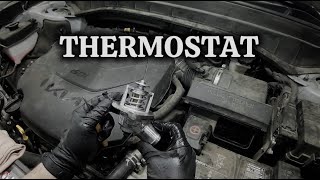
(OEM #25500-3L300)— A thermostat stuck in the closed position is a very common cause of overheating. The Telluride uses an integrated housing assembly. 🎬 See a professional walkthrough of the Telluride's electronic thermostat replacement.
Trusted brands: Kia Genuine, Mahle, Motorad
OEM price range: $120-$180
Aftermarket price range: $50-$100 - Engine Coolant Temperature Sensor — Can fail and send incorrect readings, or may be replaced during a thermostat service as a preventative measure. A faulty sensor can trigger a false P0217.
Trusted brands: Kia Genuine, Bosch, NTK
OEM price range: $30-$60
Aftermarket price range: $20-$40 - Radiator
(OEM #25310-S9000)— A radiator can be damaged by road debris or develop leaks from the plastic end tanks over time, leading to coolant loss and overheating.
Trusted brands: Kia Genuine, Spectra Premium, Denso
OEM price range: $350-$500
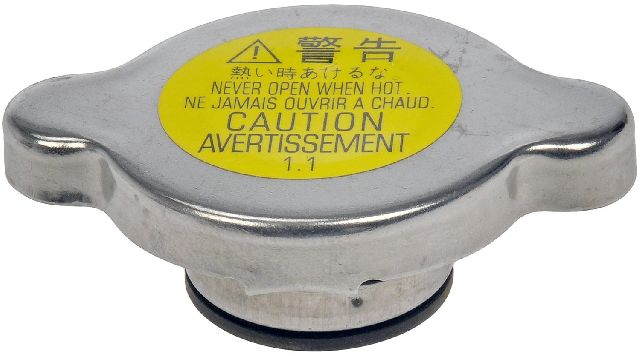
Aftermarket price range: $200-$350 - Radiator Cap — A faulty cap that cannot hold pressure will lower the boiling point of the coolant, causing it to boil over and leading to overheating. It's an inexpensive and easy part to replace during diagnosis.
Trusted brands: Kia Genuine, Stant
OEM price range: $15-$30
Aftermarket price range: $10-$20
Technical Service Bulletins (TSBs) & Recalls
- TSB CLI055: Addresses reduced heater performance in cold climates with a software update.
- TSB ELE242: Guides technicians to check for a poor internal connection in the headlamp assembly that causes DRL failure, potentially avoiding a full assembly replacement.
Mechanic-Grade Diagnostic Values
- Engine Coolant Temperature (ECT) Sensor Resistance — expected: Approximately 2000-3000 Ω at 20°C (68°F) and 200-300 Ω at 90°C (194°F).. Failure: Resistance is out of this range at a given temperature, or the reading is open/infinite.
- Engine Coolant Temperature (ECT) Sensor Signal Voltage — expected: Approximately 2.0V - 3.0V with a cold engine. Voltage should decrease to around 0.5V as the engine warms to operating temperature.. Failure: Voltage is stuck high or low, or does not change smoothly as the engine warms up. A reading of 5V or 0V indicates a circuit issue.
Scan Tool Commands That Help
- Kia GDS (Global Diagnostic System): Engine Coolant Filling Mode — After replacing a cooling system component like the thermostat or water pump, this function assists in properly bleeding air from the system by controlling engine speed and temperature to circulate coolant effectively.
- Kia GDS (Global Diagnostic System) or equivalent advanced scan tool: Cooling Fan Active Test — To manually command the cooling fan on at various speeds. This is used to verify the functionality of the fan motor, control module, and wiring, bypassing the temperature sensor inputs.
Wiring & Ground Locations
- Engine Compartment Fuse Box — Located in the engine bay, this box contains the primary fuse for the cooling fan controller.. A blown main fuse for the cooling fan will prevent it from operating, leading to overheating in traffic or at idle and triggering P0217.
- Main Engine Ground — Typically a large gauge wire connecting the engine block to the vehicle chassis. Specific locations can vary but are essential for all engine sensor and module operations.. A poor engine ground can cause floating or incorrect readings from sensors like the ECT, potentially leading to a false P0217 or improper cooling fan operation.
- Chassis Ground Bolt — There is often a primary grounding bolt near the interior fuse panel, to which multiple circuits are connected.. While not directly controlling the cooling fan, a loose or corroded main body ground can cause a variety of electrical issues, including problems with the PCM or instrument cluster that processes and displays temperature information.
Real Owner Repair Stories
- Reddit r/KiaTelluride (2023 Kia Telluride) — Car overheated one day in stop-and-go traffic.
❌ Tried (didn't work) The user took the vehicle to the dealer for recalls and mentioned the overheating incident.
✅ What actually fixed it The dealer diagnosed and replaced the thermostat, stating they found it was sticking.
OEM Part Supersession History
25380-S9000→N/A— This is the part number for the standard cooling fan assembly (without tow package).
Heads up: This part is NOT compatible with vehicles equipped with the factory tow package or X-Pro/X-Line trims.25380-S9300→N/A— This is the part number for the heavy-duty cooling fan assembly used on models with the factory tow package or X-Pro/X-Line trims.
Heads up: This heavy-duty fan is required for the enhanced cooling system on tow-package equipped vehicles and will not be found on standard models.
Model Year Variations Within This Range
- 2023-2024: The 2023 model year introduced a mid-cycle refresh with new exterior styling, a redesigned dashboard with larger screens, and new X-Line and X-Pro trims. While the core 3.8L V6 engine and transmission remained the same, the new X-Pro and other models with the factory tow package feature an enhanced cooling system with a heavy-duty fan (PN 25380-S9300) to support a higher towing capacity. This is a critical difference when ordering replacement cooling fan parts.
Diagnostic Flowchart
Other Known Issues on This Vehicle
Issues unrelated to this code that are worth knowing about as an owner of this generation:
- Spontaneously Cracking Windshields 🟠 Medium — Widespread complaints across 2020-2023 model years. Multiple class-action lawsuits have been filed alleging defective glass. (Ref: Kia issued a 'goodwill' replacement program for some early 2020 models but no official recall.)
- Tow Hitch Harness Fire Risk 🔴 High — Affects 2020-2022 models equipped with the genuine Kia 4-pin tow hitch harness. Moisture and debris can cause a short circuit in the harness module, leading to a fire even when parked. (Ref: NHTSA Recall 22V-626 (Kia Campaign SC247). Owners were advised to park outside until a remedy was performed.)
- Daytime Running Light (DRL) Failure 🟡 Low — Common reports of the LED DRLs failing on one side, particularly on 2020-2021 models. The light may still function as a turn signal but will not illuminate as a DRL. (Ref: TSB ELE242 was issued to guide dealers on inspecting for a poor internal connection before replacing the entire expensive headlamp assembly.)
- High Beam Failure (2020 Halogen Models) 🔴 High — Affects only 2020 models with base halogen headlights. Internal heat damage can cause the high beams to stop working permanently. (Ref: NHTSA Recall 24V-148 (Kia Campaign SC299).)
- Front Power Seat Motor Fire Risk 🔴 High — Affects 2020-2024 models. A stuck power seat slide knob can cause the motor to overheat, creating a fire risk while parked or driving. (Ref: NHTSA Recall (Kia Campaign SC316). Owners advised to park outside.)
- Driveshaft Disengagement / Rollaway Risk 🔴 High — Affects 2020-2024 models. Improperly assembled driveshafts could disengage, leading to a loss of power or a rollaway condition when in Park. (Ref: Recall issued for over 427,000 vehicles to update software and inspect/replace shafts if necessary.)
- Reduced Heater Performance in Cold 🟡 Low — Some owners of 2020-2023 models reported poor heater output, especially at idle or when coasting in very cold weather. (Ref: TSB CLI055 provides a software update for the climate control (AIRCON) logic to improve performance.)
Used vs. New Parts: Buying Guide for This Vehicle
When a used part is the smart pick: Used parts from a junkyard can be a cost-effective option for large, durable components like the radiator or the cooling fan assembly, provided they are from a low-mileage, collision-damaged vehicle rather than one scrapped for mechanical failure.
Donor-vehicle mileage cap: roughly under 50000 miles for the part to have meaningful remaining life.
What to inspect on the donor part:
- For radiators, inspect fins for excessive damage or corrosion and check plastic end tanks for hairline cracks or discoloration.
- For fan assemblies, spin the fan blade by hand to ensure the motor bearing is smooth and quiet. Check the electrical connector for corrosion or melted plastic.
- Verify the OEM part number on the donor part to ensure it matches your vehicle's requirements (e.g., standard vs. heavy-duty fan).
OEM-only on this vehicle (don't cheap out):
- Thermostat Assembly: The Telluride uses an electronically controlled thermostat. Given its critical role and the added complexity, using a genuine Kia OEM part (25500-3L300) is strongly recommended to ensure proper communication with the PCM and avoid repeat failures.
- Engine Coolant Temperature (ECT) Sensor: While some aftermarket sensors work well, a faulty one can cause a host of issues that are difficult to diagnose. The cost of an OEM sensor is low enough to be worth the peace of mind.
Aftermarket brands forum-validated for this vehicle:
- For radiators, brands like Denso and Spectra Premium are generally considered reliable OEM-equivalent alternatives.
- For thermostats, Mahle is a reputable OEM supplier for many manufacturers.
Brands owners have reported issues with on this vehicle:
- Avoid unbranded, 'white-box' electronic parts like thermostats and sensors from online marketplaces, as their quality control and adherence to OEM specifications can be highly inconsistent.
Real Owner Stories
Aggregated from forums and TSBs cited above. Mileages and costs reflect what owners reported in those sources.
2020 Kia Telluride
Symptoms: The daytime running light (DRL) was not working during normal operation, but the light would still flash correctly when the blinker was turned on.
What fixed it: Technicians followed TSB ELE242 to check for a poor internal connection in the headlamp assembly rather than replacing the entire unit.
Source hint: Reddit r/KiaTelluride - '2020 DRL not working but flash when blinker turned on'
Related OBD-II Codes
Frequently Asked Questions
My 2020 Telluride's daytime running lights are out; could this be related to the P0217 overheat code?
Is there a TSB for the heater not working well in my Telluride, which might be confused with a cooling issue?
Does the 3.8L GDI V6 in the Telluride have a specific thermostat issue?
What type of coolant should I use to top off my 2020-2024 Telluride?
Could a recall item cause my engine to overheat or throw a P0217?
If I have a P0217 on my Hyundai Palisade, is the fix the same as the Telluride?
Helpful Videos
Used OEM Parts in Stock
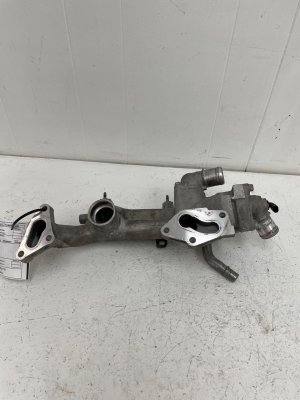
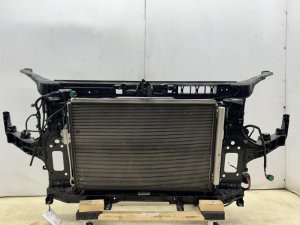
New Aftermarket Parts Available
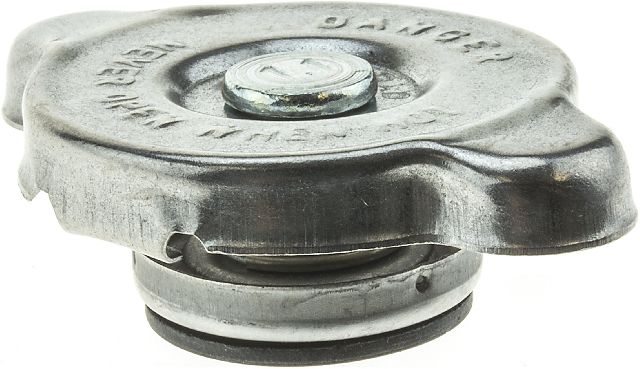
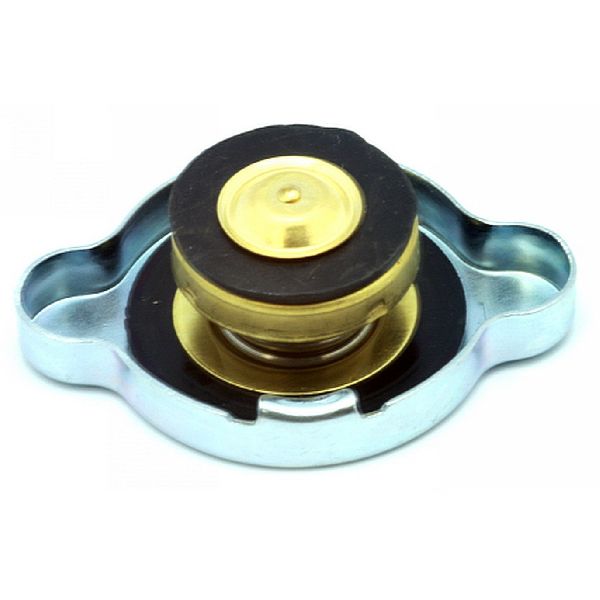

The information in this article is provided for general reference and educational purposes only. Vehicle specifications, procedures, and part compatibility can vary by production date, trim level, and region. Always consult your vehicle's factory service manual and verify part numbers before purchasing or performing repairs. Safety-critical components such as airbags, seat belts, and braking systems should be installed by a qualified professional.
- Kia Telluride:
- 🧭 Diagnostic Flowchart
- 🎬 Helpful Videos
- 🛍️ Shop This Part
- What's Unique About the 2020-2024 Kia Telluride
- Symptoms You May Notice
- Most Likely Causes
- Rare But Worth Checking
- Diagnosis Steps
- Parts You'll Likely Need
- Technical Service Bulletins (TSBs) & Recalls
- Mechanic-Grade Diagnostic Values
- Scan Tool Commands That Help
- Wiring & Ground Locations
- Real Owner Repair Stories
- OEM Part Supersession History
- Model Year Variations Within This Range
- Other Known Issues on This Vehicle
- Used vs. New Parts: Buying Guide for This Vehicle
- Real Owner Stories
- 2020 Kia Telluride
- Related OBD-II Codes
- Frequently Asked Questions
- 🎟️ Get 5% Off