

P0217 on 2016-2018 Lincoln MKX: Engine Overheat Causes and Fixes
On a 2016-2018 Lincoln MKX with the 2.7L engine, code P0217 is most often caused by a faulty Engine Coolant Temperature (ECT) sensor connector or the shared ECT/knock sensor wiring harness, not necessarily an actual overheating event. Inspecting the sensor connection and harness is the first step, as confirmed by multiple Ford/Lincoln TSBs.
- For a 2016-2018 Lincoln MKX 2.7L, P0217 is very frequently an electrical issue, not a mechanical failure.
- Before buying any parts, your first step should be to carefully inspect the ECT sensor connector and its wiring harness for damage or a loose connection.
- This code is critical and should be addressed immediately. Do not drive the vehicle, as you could cause severe engine damage if it is a true overheating condition.
- The code often appears with other codes (P0116-P0119, P0330), which strongly points to the wiring harness issue identified in manufacturer TSBs.
What's Unique About the 2016-2018 Lincoln MKX
For the 2016-2018 Lincoln MKX, especially those with the 2.7L V6 engine, the P0217 code is uniquely tied to known electrical issues. Ford/Lincoln issued multiple Technical Service Bulletins (TSBs) highlighting that a poorly seated Engine Coolant Temperature (ECT) sensor connector or a damaged wiring harness shared with the knock sensor is a common cause for this code, often appearing alongside other sensor-related codes. This issue is so prevalent that it affects numerous Ford and Lincoln models using the same engine, confirming the problem is with the component design and placement rather than a simple part failure.
Diagnostic Flowchart
Tap your situation to follow the diagnostic path that matches what you're seeing on this vehicle.
Symptoms You May Notice
- Engine temperature gauge reading hot or in the red zone
- Check Engine Light (Malfunction Indicator Lamp) is on
- Wrench light may be illuminated
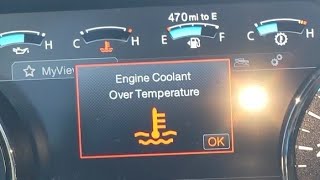
- Engine Coolant Over Temperature warning message on the instrument cluster
- Reduced engine power or 'limp mode' to prevent damage
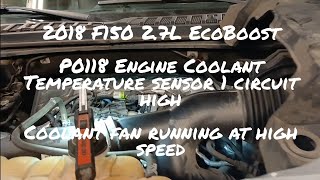
- Cooling fans running constantly on high speed
- Steam coming from the engine bay
- A sweet smell of coolant from the engine area
- Replacing the thermostat or water pump before checking the ECT sensor wiring and connector. Given the TSBs for this vehicle, the electrical system should be the first place to look.
- Assuming the engine is actually overheating without verifying with an infrared thermometer or checking live data for sudden, illogical temperature spikes.
Most Likely Causes
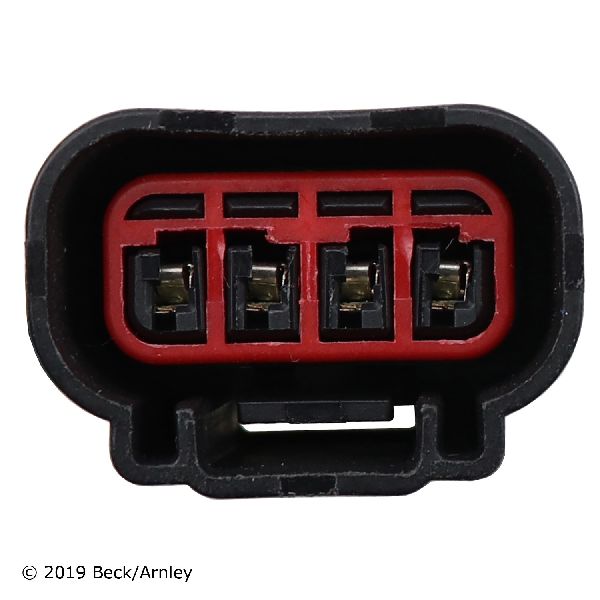
- ECT Sensor Connector Not Fully Seated or Damaged 🔴 High Probability → Shop Engine Coolant Temperature Sensor This is a documented issue in Lincoln TSBs #SSM 47791 and #SSM 46906 for the 2.7L engine. The connector can become loose or damaged due to heat and vibration, leading to an intermittent or faulty signal.
How to confirm: Visually inspect the ECT sensor connector, which is located under the intake manifold. Ensure it is fully seated, and check for any bent pins, corrosion, or damage to the locking tab. Wiggle the connector with the engine running (if safe to do so) while monitoring live data to see if the temperature reading spikes.
Typical fix: Reseat the connector securely. If the connector or pins are damaged, replace the connector pigtail (e.g., Motorcraft WPT-989).
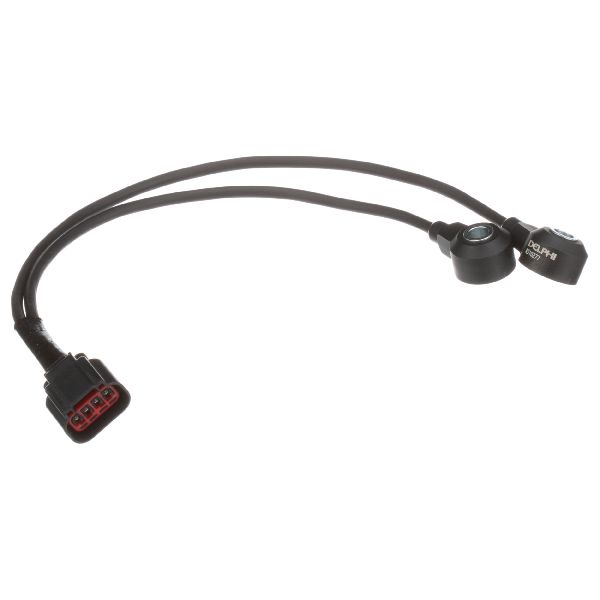
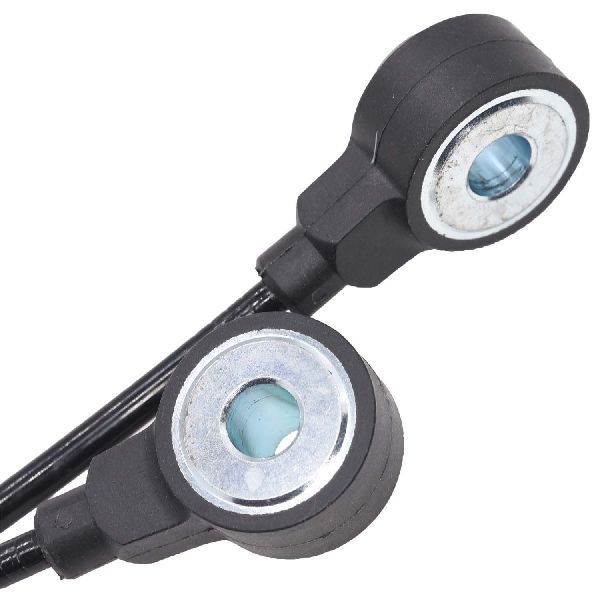
Est. part cost: $15-$40 - Damaged ECT and Knock Sensor Wiring Harness 🔴 High Probability → Shop Engine Wiring Harness Lincoln TSB #SSM 48991 points to issues 🎬 See this breakdown of TSB 21-2168 and related sensor codes with the wiring harness shared by the ECT and knock sensors. The harness is routed in a high-heat area under the intake manifold and is prone to chafing, melting, or internal breaks, causing erratic readings.
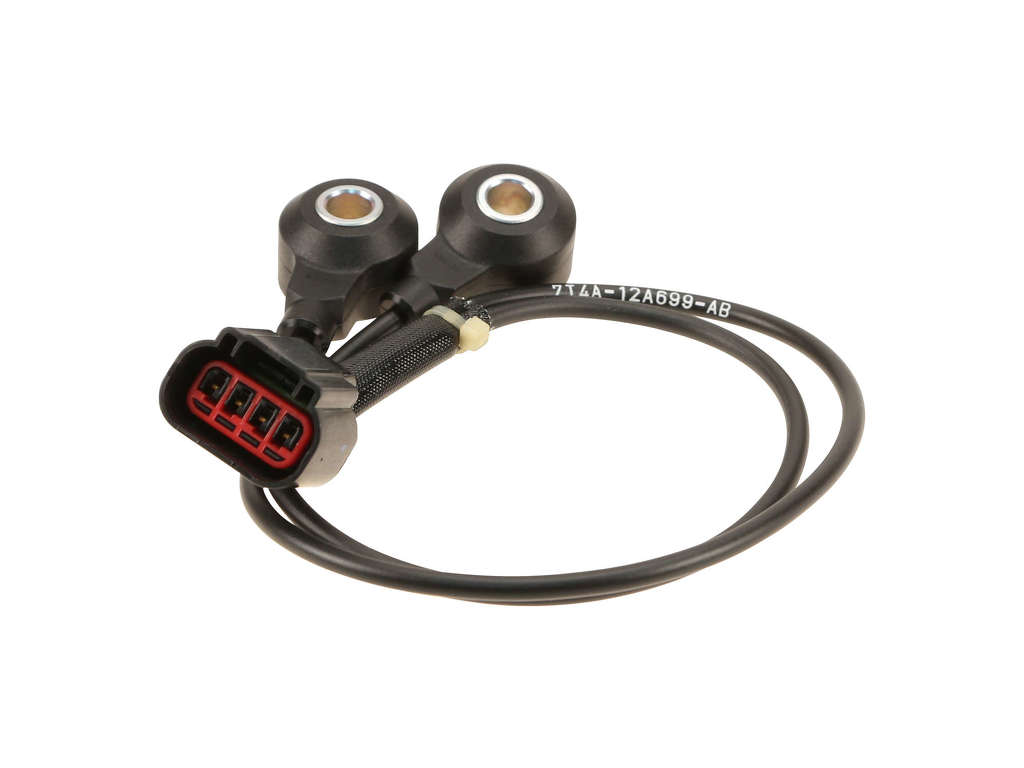
How to confirm: A full inspection requires removing the intake manifold. Inspect the wiring harness (Ford base part number 12A699) for any signs of chafing, melting, or breaks, especially where it runs near engine components.
Typical fix: TSB #SSM 48991 recommends replacing both the 12A648 ECT sensor and the 12A699 knock sensor harness together. Do not disconnect the old sensor from the old harness for analysis purposes. On some platforms like the F-150, a relocation kit is available as an alternative fix. 🎬 Watch: How to install the ECT sensor relocation kit
Est. part cost: $75-$300 - Faulty Engine Coolant Temperature (ECT) Sensor 🟡 Medium Probability → Shop Engine Coolant Temperature Sensor While the wiring is the most cited issue, the sensor itself can fail, sending incorrect high-temperature readings to the PCM. TSB #SSM 48991 recommends replacing it along with the harness as a set.
How to confirm: Use a scan tool to monitor the live ECT data. If the reading is erratic or jumps to maximum heat immediately on a cold start, the sensor is likely faulty. You can also test the sensor's resistance with a multimeter against a temperature chart.
Typical fix: Replace the ECT sensor (Motorcraft DY-1309). It is located under the intake manifold, making replacement labor-intensive.
Est. part cost: $25-$75 - Low Engine Coolant 🟡 Medium Probability
How to confirm: Check the coolant level in the expansion tank when the engine is cold. If it's low, there is a leak in the system that needs to be found.
Typical fix: Top off the coolant with the correct type (Motorcraft Orange or equivalent) and perform a cooling system pressure test to find and repair the leak.
Est. part cost: $20-$30 (for coolant) - Stuck Thermostat ⚪ Low Probability → Shop Integrated Thermostat Housing Assembly
How to confirm: Feel the upper radiator hose after the engine has warmed up. If it's not hot, the thermostat is likely stuck closed, preventing coolant from circulating to the radiator.
Typical fix: Replace the thermostat and gasket. It's often recommended to replace the entire thermostat housing assembly on these engines.
Est. part cost: $40-$150
Rare But Worth Checking
- Water Pump Failure: → Shop Engine Water Pump A failing water pump won't circulate coolant effectively, leading to a genuine overheat condition. Check for leaks from the pump's weep hole or a whining sound from the bearing.
- Cooling Fan Malfunction: → Shop Engine Cooling Fan Blade If the cooling fans don't turn on, the engine can overheat, especially in stop-and-go traffic. Check fuses, relays, and fan motor operation.
- Radiator Blockage: → Shop Radiator External debris (leaves, bugs) or internal sludge can restrict airflow or coolant flow through the radiator, reducing its efficiency.
- Leaking Coolant Tube Under Intake: In some 2.7L EcoBoost engines, a coolant tube under the intake manifold can leak, dripping coolant directly onto the knock sensors and their wiring, causing them to short out and trigger related codes.
Diagnosis Steps
- STOP DRIVING. Do not run the engine if you suspect a real overheating condition.
- When the engine is completely cool, check the coolant level in the overflow reservoir. If it is low, top it off with the correct coolant and look for obvious leaks.
- Use an OBD-II scanner to check for other codes, particularly P0116-P0119, P0330, and P1299, which strongly point to the known wiring issue.
- With the scanner, view live data for the ECT sensor. On a cold engine, the ECT reading should be close to the ambient air temperature. If it reads extremely high (-40°F or 280°F+) immediately, the sensor or its circuit is faulty.
- If the reading is plausible, start the engine and monitor the temperature rise. If it rises normally and then suddenly spikes to maximum, it confirms an electrical fault (sensor, connector, or harness) rather than a gradual mechanical overheat.
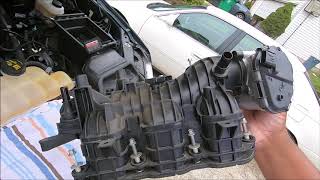
- Due to the location of the components under the intake manifold, further diagnosis is labor-intensive. If the above steps point to an electrical fault, the next step is to to remove the intake manifold for inspection.
- Once the intake is removed, visually inspect the ECT sensor connector. Ensure it is plugged in securely and the locking tab is engaged. Disconnect it and inspect for corrosion or bent pins.
- Carefully inspect the entire ECT/Knock sensor wiring harness (part 12A699) for signs of damage, chafing against the block, melting from heat, or coolant contamination from leaks.
- If a mechanical overheat is suspected (e.g., temperature rises steadily and doesn't spike), check for cooling fan operation and feel the radiator hoses to confirm coolant circulation through the thermostat.
Parts You'll Likely Need
- Engine Coolant Temperature (ECT) Sensor
(OEM #DY-1309)— This sensor is the primary input for the P0217 code. While often a wiring issue, the sensor can fail. TSBs recommend replacing it with the harness.
Trusted brands: Motorcraft
OEM price range: $25-$40
Aftermarket price range: $15-$30 - ECT and Knock Sensor Wiring Harness
(OEM #12A699 (Base Part #))— This harness is the most common failure point according to TSB #SSM 48991. It is susceptible to heat damage and chafing, causing false signals. The TSB recommends replacing the harness and sensor together.
Trusted brands: Motorcraft
OEM price range: $75-$150
Related Codes That Often Appear With This One
- P0116 — ECT Sensor Circuit Range/Performance
- P0117 — ECT Sensor Circuit Low Input
- P0118 — ECT Sensor Circuit High Input
- P0128 — Coolant Thermostat (Coolant Temperature Below Thermostat Regulating Temperature)
- P0330 — Knock Sensor 2 Circuit (Bank 2). This code is specifically mentioned in TSBs as the knock sensor wiring is part of the same harness as the ECT sensor.
- P1299 — Cylinder Head Overtemperature Protection Active. This is triggered by the PCM in response to the perceived high temperature from the faulty ECT circuit.
Technical Service Bulletins (TSBs) & Recalls
- SSM 48991: Addresses MIL illumination with multiple DTCs including P0217 due to ECT or knock sensor wiring harness issues.
- SSM 47791: Addresses MIL/wrench lamp with P0217 on 2.7L engines due to an unseated or damaged ECT sensor connector.
- SSM 46906: An earlier TSB also addressing P0217 on 2.7L engines due to ECT sensor connector or wiring problems.
Platform-Specific Known Issues
- TSB #SSM 48991: Affects multiple 2.7L EcoBoost vehicles including the 2016-2018 MKX. States that codes like P0217 can be caused by the engine coolant temperature (ECT) sensor or knock sensor wiring harness. The official fix is to replace both the ECT sensor (12A648) and knock sensor harness (12A699).
- TSB #SSM 47791 / #SSM 46906: Earlier bulletins that point to the ECT sensor connector not being fully seated or having damaged wiring as the cause for P0217 and a host of other codes on the 2.7L engine.
- Related F-150 TSB #21-2168: While for the F-150, this TSB is highly relevant as it addresses the same 2.7L engine issue. It details a fix that involves replacing a heater hose with a new version that has a relocated ECT sensor, plus a jumper harness. This indicates the original sensor location is problematic.
Mechanic-Grade Diagnostic Values
- ECT Sensor Resistance — expected: Resistance is inverse to temperature. Approx. 37,000 Ω at 50°F (10°C); 2,000-3,000 Ω at 68°F (20°C); 200-300 Ω at 194°F (90°C).. Failure: Near-zero resistance indicates a short (triggers P0117). Infinite resistance (open circuit) indicates a break (triggers P0118).
- ECT Sensor Signal Voltage (Key On, Engine Off) — expected: On a cold engine, voltage should be high, approx. 2.0V to 3.5V. As the engine warms to operating temperature, voltage should drop to approx. 0.28V to 0.5V.. Failure: A reading near 5.0V indicates an open circuit (P0118). A reading near 0V indicates a short to ground (P0117), which the PCM can interpret as an extreme overheat, triggering P0217 and P1299.
- PCM Reference Voltage (VREF) at ECT Connector — expected: Approx. 5.0 volts with the sensor disconnected.. Failure: No voltage or low voltage indicates a problem with the PCM or the wiring between the PCM and the sensor.
Scan Tool Commands That Help
- Ford IDS/FDRS: Live Data PID Monitoring (ECT, CHT) — Essential first step to observe sensor behavior. Watch for the ECT value to jump suddenly to its maximum reading (e.g., 284°F) on a cold start or while running, which confirms an electrical fault over a mechanical one.
- Ford IDS/FDRS: PCM Reprogramming — In some cases, particularly on newer models with the same engine family, erroneous P1299/over-temperature warnings can be caused by a software glitch, and a PCM reflash is the specified fix per a TSB.
Wiring & Ground Locations
- ECT Sensor — Under the intake manifold, in the valley of the V6 engine, near the thermostat housing.. This is the primary sensor for this code. Its location in a high-heat area makes its wiring harness prone to degradation, which is the root cause identified in the TSBs.
- Cylinder Head Temperature (CHT) Sensor — On the driver's side cylinder head (Bank 2). It is a separate sensor from the ECT.. A faulty CHT sensor is the primary trigger for code P1299, which is often seen with P0217. If P1299 is present, this sensor should be inspected as a potential cause, distinct from the ECT/knock sensor harness issue.
- PCM Grounds — On similar Ford models, key PCM grounds are located on the firewall in the engine bay.. A poor ground connection for the PCM can cause a variety of erratic sensor readings and codes, including those related to the ECT circuit. Verifying grounds is a fundamental step in any electrical diagnosis.
- Bank 1 vs Bank 2 — On the 2.7L EcoBoost, Bank 1 is the passenger side of the engine, and Bank 2 is the driver's side.. The associated code P0330 is for the Knock Sensor on Bank 2. This confirms the fault is related to wiring on the driver's side of the engine valley, as specified in the TSBs.
Real Owner Repair Stories
- Ford F150 Forum User (2018 Ford F-150 2.7L EcoBoost (same engine and issue)) — Check engine light, cooling fans running on high, engine running rough in limp mode, 'Engine Coolant Over Temperature' warning on a cold start.
❌ Tried (didn't work) Initial dealer diagnosis missed the TSB and investigated other unrelated issues.
✅ What actually fixed it The owner informed the dealer of the relevant Technical Service Bulletin (TSB 21-2168, a later version of the TSBs for the MKX). The dealer then followed the TSB procedure, which involves replacing the faulty ECT sensor and/or its wiring harness located under the intake manifold. - YouTube User 'F-150 2.7 EcoBoost P1299 fixed' (2016 Ford F-150 2.7L EcoBoost) — Check Engine Light with code P1299 (Cylinder Head Overtemperature Protection Active).
❌ Tried (didn't work) Initially thought the problem was the ECT sensor under the intake manifold based on other online videos.
✅ What actually fixed it The actual cause was a failed Cylinder Head Temperature (CHT) sensor, which is a different part located on the driver's side cylinder head. Replacing the CHT sensor and clearing the code with a scanner resolved the issue. The user highlights the visual difference between the ECT and CHT sensors.
OEM Part Supersession History
FT4Z-12A648-A (also DY-1298)→FT4Z-12A648-B (also sold as Motorcraft DY-1309)— Part revision/update by the manufacturer.
Heads up: The newer part number is the correct service replacement.7T4Z-12A699-AB (Knock/ECT Harness)→7T4Z-12A699-A— Part revision by the manufacturer.
Heads up: The base part number is 12A699, but multiple specific prefixes and suffixes exist depending on the exact application. It is critical to verify the correct harness part number by VIN.N/A→ML3Z-14A411-H (ECT Relocation Kit)— To address the root cause of heat-related harness failure.
Heads up: This kit was released for 2018-2020 F-150s with the 2.7L engine to move the ECT sensor to a new location on a heater hose, avoiding the labor of removing the intake. While not officially for the MKX, it represents Ford's ultimate fix for the design flaw and may be adaptable by a skilled technician.
Model Year Variations Within This Range
- 2016-2018: There are no significant changes to the 2.7L EcoBoost engine or its cooling/sensor systems within this model year range that would alter the diagnosis or common causes of code P0217. The issue and TSBs apply consistently across all three years.
Helpful Videos

We Have This Part in Stock


The information in this article is provided for general reference and educational purposes only. Vehicle specifications, procedures, and part compatibility can vary by production date, trim level, and region. Always consult your vehicle's factory service manual and verify part numbers before purchasing or performing repairs. Safety-critical components such as airbags, seat belts, and braking systems should be installed by a qualified professional.
- Lincoln MKX:
- 🧭 Diagnostic Flowchart
- 🎬 Helpful Videos
- 🛍️ Shop This Part
- What's Unique About the 2016-2018 Lincoln MKX
- Symptoms You May Notice
- Most Likely Causes
- Rare But Worth Checking
- Diagnosis Steps
- Parts You'll Likely Need
- Related Codes That Often Appear With This One
- Technical Service Bulletins (TSBs) & Recalls
- Platform-Specific Known Issues
- Mechanic-Grade Diagnostic Values
- Scan Tool Commands That Help
- Wiring & Ground Locations
- Real Owner Repair Stories
- OEM Part Supersession History
- Model Year Variations Within This Range
- 🎟️ Get 5% Off