

P0217 on 2019-2020 Lincoln Nautilus: Engine Overtemperature Causes and Fixes
P0217 indicates a critical engine overheat condition. On the 2019-2020 Lincoln Nautilus, especially with the 2.0L EcoBoost engine, this is often caused by a leaking EGR cooler or internal coolant intrusion. For the 2.7L EcoBoost, it can be a faulty sensor or wiring harness. Stop driving immediately and diagnose; repairs can range from a simple sensor replacement to a full engine replacement.
- P0217 is a critical engine overheat code. Stop driving immediately to prevent catastrophic engine damage.
- On a 2.0L EcoBoost Nautilus, the most likely cause is a leaking EGR cooler, which requires professional replacement.
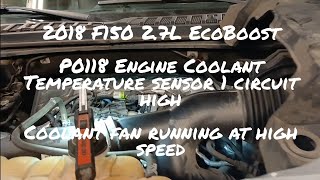
- On a 2.7L EcoBoost Nautilus, the problem is more likely an electrical fault with the ECT sensor's wiring harness.
- Be aware of the possibility of severe internal engine coolant leaks on the 2.0L engine, which would require a complete engine replacement.
- Always have the cooling system pressure-tested to find the true source of the problem before replacing parts like the thermostat.
What's Unique About the 2019-2020 Lincoln NAUTILUS
For the 2019-2020 Nautilus, the cause of P0217 is highly dependent on the engine. On models with the 2.0L EcoBoost, this code is strongly associated with known issues like leaking EGR coolers and, in severe cases, internal coolant intrusion into the cylinders, as documented in multiple Technical Service Bulletins (TSBs). For the 2.7L EcoBoost, the issue is more frequently electrical, pointing to a faulty Engine Coolant Temperature (ECT) sensor or its shared wiring harness with the knock sensor, which can give a false overheat signal, as noted in TSB SSM 48991.
Diagnostic Flowchart
Tap your situation to follow the diagnostic path that matches what you're seeing on this vehicle.
Symptoms You May Notice
- Engine temperature gauge reading in the red or 'HOT'
- Engine Coolant Over Temperature warning light on the dashboard.
- Reduced engine power or vehicle entering 'limp mode'.
- White smoke from the tailpipe (a sign of coolant burning in the engine).
- Noticeable loss of engine coolant with no visible external leak.
- Steam or smoke coming from the engine bay.
- Sweet smell of burning coolant
- Engine may shut itself off to prevent damage.
- Replacing the thermostat when the actual cause is a leaking EGR cooler or a faulty sensor harness.
- Replacing the radiator cap for coolant loss when a cooling system pressure test would have revealed a larger, more serious leak elsewhere.
- Assuming any overheat on a 2.7L is mechanical without first investigating the known electrical fault from TSB SSM 48991.
Most Likely Causes
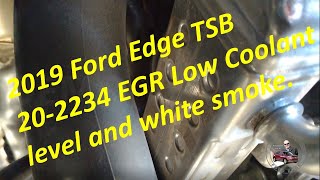
- Leaking EGR Cooler (2.0L EcoBoost) 🔴 High Probability → Shop Exhaust Gas Recirculation (EGR) Valve This is a documented issue in Lincoln TSBs SSM 48345 and TSB 20-2234. The EGR cooler can develop internal leaks, allowing coolant to enter the intake and exhaust systems, causing overheating, coolant loss, and white smoke. This issue is also seen on the platform-mate Ford Edge.
How to confirm: A technician will pressure test the cooling system and inspect the EGR system for evidence of coolant, as outlined in the TSBs. The presence of white smoke from the exhaust is a strong indicator.
Typical fix: Replace the EGR cooler and associated gaskets. 🎬 Watch this step-by-step walkthrough of an EGR cooler replacement. The PCM may also require a software update as part of the repair, per TSB 20-2234.
Est. part cost: $300-$500 - Faulty ECT Sensor or Wiring Harness (2.7L EcoBoost) 🔴 High Probability → Shop Engine Coolant Temperature Sensor TSB SSM 48991 specifically calls out the Engine Coolant Temperature (ECT) sensor and its shared wiring harness with the knock sensor as a common failure point on 2.7L engines, leading to false overheat signals. This issue is also documented in class action lawsuit filings.
How to confirm: Monitor the live ECT sensor data on a scan tool for erratic spikes (e.g., jumping from normal operating temp to max instantly). Wiggle the sensor connector and harness to see if the reading changes. Visually inspect the harness for chafing or heat damage.
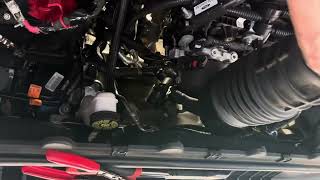
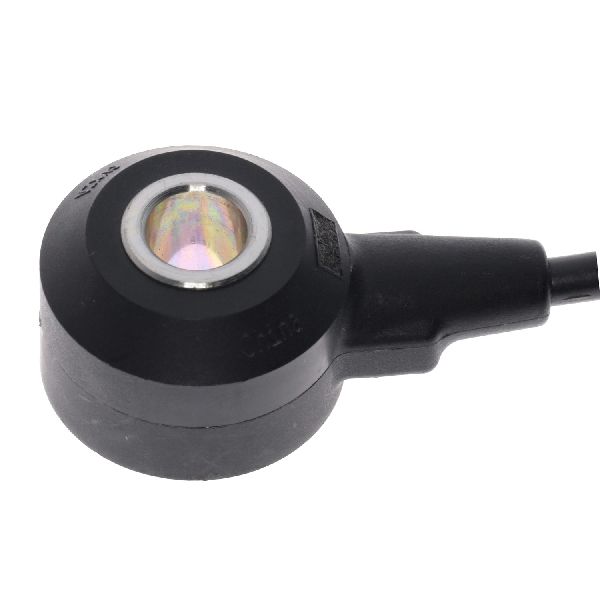
Typical fix: Replace the ECT sensor (part base 12A648) 🎬 See how to install the ECT relocation kit for 2.7L engines. and the knock sensor wiring harness (part base 12A699) together, as recommended by the TSB.
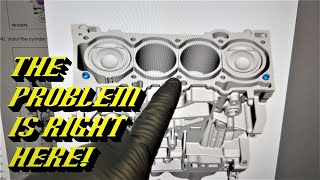
Est. part cost: $100-$190 - Internal Coolant Intrusion (2.0L EcoBoost) 🟡 Medium Probability A known design flaw in some 2.0L EcoBoost engine blocks can allow coolant to leak directly into the cylinders. This is a severe failure documented in TSBs like 19-2346. The flaw is a thin wall between coolant passages and the cylinders in the open-deck block design, which was later revised.
How to confirm: Perform a cooling system pressure test (expect a pressure drop of over 4 PSI in 5 hours) and use a borescope to look for coolant inside the cylinders. 🎬 Watch a dealer tech diagnose internal coolant intrusion and engine failure. A chemical test can also detect combustion gases in the coolant.
Typical fix: The only permanent fix is a complete long block engine replacement with an updated engine design. This is an extremely expensive repair if the vehicle is out of warranty.
Est. part cost: $4000-$8000 - Low Engine Coolant Level 🟡 Medium Probability While a universal issue, on this platform it's often a symptom of a more specific problem like a leaking EGR cooler or a failing water pump, rather than just a loose hose.
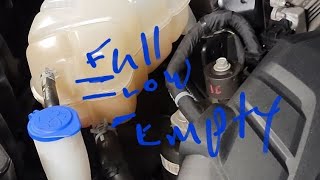
How to confirm: Visually check the coolant reservoir. If low, perform a cooling system pressure test to locate the source of the leak.
Typical fix: Top off the coolant with the correct type (Motorcraft Orange or Yellow) and repair the underlying leak (e.g., replace hose, radiator, water pump, or EGR cooler).
Est. part cost: $20-$1000+
Rare But Worth Checking
- Stuck Thermostat: → Shop Integrated Thermostat Housing Assembly While a common cause of overheating on many cars, on this specific platform it's less likely than the TSB-documented issues. It can fail by sticking closed, preventing coolant from circulating to the radiator.
- Failing Water Pump: → Shop Engine Water Pump The water pump impeller can fail, or the seals can leak, leading to a loss of coolant circulation or pressure.
- PCM Software Issue: TSB 19-2046 indicates that outdated PCM software can contribute to a group of DTCs that includes P0217. A dealer can check for and apply any available updates.
Diagnosis Steps
- DO NOT open the coolant cap when the engine is hot. Allow the vehicle to cool completely.
- Check the coolant level in the reservoir. If it is low, top it off with the correct Motorcraft coolant.
- Scan the PCM for all stored DTCs to see which other codes are present with P0217.
- With a scan tool, monitor live data from the ECT sensor. A healthy sensor shows a smooth, gradual temperature rise. A faulty sensor or harness (common on 2.7L) may show sudden, illogical jumps from normal to maximum temperature.
- If you have a 2.7L engine, inspect the ECT sensor connector for a secure fit and check the wiring harness for any signs of damage or melting, per TSB SSM 48991.
- Perform a cooling system pressure test to identify any external or internal leaks.
- If you have a 2.0L engine and suspect an EGR cooler leak (white smoke), have the cooler inspected and pressure tested as per TSB 20-2234.
- If no external leaks are found but coolant loss persists on a 2.0L, perform a borescope inspection of the cylinders and a combustion leak test (block test) to check for a failed head gasket or internal coolant intrusion, which is a known issue.
Parts You'll Likely Need
- EGR Cooler
(OEM #K2GZ-9F464-B (supersedes K2GZ-9F464-A))— A primary cause of P0217 on the 2.0L EcoBoost engine, as identified in TSB 20-2234. The original part K2GZ-9F464-A is often superseded by K2GZ-9F464-B.
Trusted brands: Motorcraft
OEM price range: $300-$450
Aftermarket price range: $200-$350 - ECT and Knock Sensor Wiring Harness
(OEM #12A699 (Base Part #))— The most common cause of false P0217 codes on the 2.7L EcoBoost engine, per TSB SSM 48991. This is a base part number; the full number (e.g., AL3Z-12A699-A) varies by specific application and is difficult to confirm without a VIN.
Trusted brands: Motorcraft
OEM price range: $75-$150
Aftermarket price range: $50-$100 - Engine Coolant Temperature (ECT) Sensor
(OEM #DY-1309 (Motorcraft #))— Often replaced along with the wiring harness on the 2.7L engine or if it has failed and is giving incorrect readings. TSB SSM 48991 recommends replacing it with the harness.
Trusted brands: Motorcraft, Bosch
OEM price range: $25-$40
Aftermarket price range: $15-$30 - Long Block Engine — The official fix for the internal coolant intrusion issue on the 2.0L EcoBoost engine, as specified in TSB 19-2346.
Trusted brands: Motorcraft
OEM price range: $4000-$8000
Related Codes That Often Appear With This One
- P1299 — This code indicates 'Cylinder Head Overtemperature Protection Active'. It is often set alongside P0217 as the PCM tries to protect the engine from damage.
- P0128 — 'Coolant Thermostat Rationality Check'. This code often appears with P0217, indicating a problem with the cooling system's ability to regulate temperature, and is mentioned in multiple TSBs for the Nautilus.
- P1026 — This Ford-specific code indicates a discrepancy between the ECT and Cylinder Head Temperature (CHT) sensors and is listed alongside P0217 in TSBs concerning the leaking EGR cooler.
- P0300-P0304 — These are misfire codes. They frequently accompany P0217 when coolant is leaking into the cylinders, causing poor combustion.
Technical Service Bulletins (TSBs) & Recalls
- SSM 48991: Notes that P0217 on 2.7L engines may be due to the ECT or knock sensor wiring harness.
- TSB 20-2234: Links P0217 on 2.0L engines to a faulty EGR cooler and/or PCM software, causing low coolant, white smoke, and overheating.
- SSM 48345: Also points to a leaking EGR cooler on 2.0L engines as a cause for P0217 and associated symptoms.
- TSB 19-2046: Suggests that various PCM settings could cause P0217 and other codes on 2.0L engines, and that a software update may be needed.
Platform-Specific Known Issues
- TSB SSM 48345 & TSB 20-2234: These bulletins specifically address the 2.0L EcoBoost engine and link P0217 to a leaking EGR cooler, which can cause coolant loss, white smoke, and overheating.
- TSB SSM 48991: This bulletin points to a faulty ECT sensor or knock sensor wiring harness as the cause for P0217 and other codes on vehicles with the 2.7L EcoBoost engine.
- TSB 19-2346: While for earlier models, this TSB details the severe coolant intrusion issue on 2.0L EcoBoost engines that can lead to P0217 and require engine replacement. The issue is known to affect this platform.
- Owner Complaint ODI #11716472: A 2019 Nautilus owner reported P0217 along with other codes, which was diagnosed as coolant intrusion into the cylinders, requiring a full engine and turbocharger replacement at significant out-of-pocket cost.
Mechanic-Grade Diagnostic Values
- ECT Sensor Resistance (Cold Engine) — expected: 2000 - 3000 Ohms at 68°F (20°C). Failure: A reading significantly outside this range, or an open/infinite reading, indicates a faulty sensor.
- ECT Sensor Resistance (Hot Engine) — expected: 200 - 300 Ohms at 194°F (90°C). Failure: Resistance that does not drop as the engine warms indicates a faulty sensor.
- ECT Sensor Signal Voltage (Key On, Engine Off, Cold) — expected: 2.0V - 3.0V. Failure: A voltage reading below 0.2V indicates a short to ground (which would set P0117), while a reading near 5V indicates an open circuit (which would set P0118).
- Cylinder Head Temperature (CHT) Sensor Voltage (KOEO) — expected: Around 4.29V at 86°F (30°C). Failure: A reading above 4.6V will set a circuit high code. The CHT is used by the PCM as a corroborating temperature source.
Scan Tool Commands That Help
- Ford IDS (Integrated Diagnostic System): Datalogger — To monitor and record live PID data for the ECT, CHT, and cooling fan command state to identify erratic sensor behavior or incorrect PCM commands.
- Ford IDS (Integrated Diagnostic System): Self-Test — To retrieve all continuous, on-demand, and KOER/KOEO DTCs from the PCM and other modules, which may include related codes not shown by generic scanners.
- Ford IDS (Integrated Diagnostic System): Power Balance Test — If coolant intrusion is suspected, this test can help identify which cylinder(s) are misfiring due to coolant contamination, helping to pinpoint the leak.
Wiring & Ground Locations
- ECT Sensor (2.0L EcoBoost) — On the driver's side of the cylinder head, near the thermostat housing. It is relatively accessible.. This is the primary sensor for measuring engine coolant temperature. Physical access allows for inspection of the sensor and its connector for damage.
- ECT Sensor (2.7L EcoBoost) — Located in the engine valley, underneath the intake manifold. Access requires significant disassembly.. The difficult access makes testing the sensor directly challenging. TSB SSM 48991 points to the wiring harness in this area as a common failure point, making visual inspection critical if the intake is removed.
- Engine Ground Points (e.g., G104, G105) — Primary grounds are typically on the engine block, cylinder head, and from the block to the chassis. A specific wiring diagram is needed for exact locations on the Nautilus.. The ECT sensor circuit relies on a clean ground reference. A corroded or loose ground can introduce electrical noise, causing the PCM to receive an inaccurate temperature signal and potentially trigger a false P0217.
OEM Part Supersession History
K2GZ-9F464-A→K2GZ-9F464-B— This is the EGR Cooler for the 2.0L EcoBoost. Part supersessions often indicate a design revision to improve reliability or address a known failure mode, which in this case is internal leaking.
Model Year Variations Within This Range
- 2019: The 2019 model year 2.0L EcoBoost engine may still have the older engine block design prone to coolant intrusion between cylinders. The block was redesigned mid-2019, making 2020 models less susceptible to this specific failure mode, though not immune. TSB 19-2346, which details the coolant intrusion issue, applies to some 2019 vehicles.
Helpful Videos

We Have This Part in Stock


The information in this article is provided for general reference and educational purposes only. Vehicle specifications, procedures, and part compatibility can vary by production date, trim level, and region. Always consult your vehicle's factory service manual and verify part numbers before purchasing or performing repairs. Safety-critical components such as airbags, seat belts, and braking systems should be installed by a qualified professional.
- Lincoln NAUTILUS:
- 🧭 Diagnostic Flowchart
- 🎬 Helpful Videos
- 🛍️ Shop This Part
- What's Unique About the 2019-2020 Lincoln NAUTILUS
- Symptoms You May Notice
- Most Likely Causes
- Rare But Worth Checking
- Diagnosis Steps
- Parts You'll Likely Need
- Related Codes That Often Appear With This One
- Technical Service Bulletins (TSBs) & Recalls
- Platform-Specific Known Issues
- Mechanic-Grade Diagnostic Values
- Scan Tool Commands That Help
- Wiring & Ground Locations
- OEM Part Supersession History
- Model Year Variations Within This Range
- 🎟️ Get 5% Off