

P0217 on 2008-2017 Mitsubishi Lancer: Engine Overtemperature Causes and Fixes
P0217 means your Lancer's engine is overheating. Stop driving immediately to prevent severe damage. The most common causes are a faulty cooling fan controller, a stuck thermostat, or a simple coolant leak. The cooling fan controller is a widely known issue on this platform and its relatives.
- P0217 is a critical code. Stop driving immediately to prevent engine damage.
- The most likely causes are a faulty cooling fan controller, low coolant from a leak, or a stuck thermostat.
- Check for cooling fan operation when the engine is hot or the A/C is on. If the fans don't work or run constantly, the fan controller is the prime suspect.
- Basic cooling system checks like inspecting the coolant level and looking for leaks are the essential first steps.
- While DIY-friendly for some fixes (thermostat, sensor), be extremely cautious working with a hot, pressurized cooling system.
What's Unique About the 2008-2017 Mitsubishi Lancer
On this generation of Mitsubishi Lancer, one of the most frequently cited culprits for overheating and cooling fan issues is the cooling fan control module. While all cars can suffer from thermostat or water pump failures, the fan controller is a known weak point on many Mitsubishis from this era, as well as its platform mates like the Dodge Caliber and Jeep Compass/Patriot which share the same 'World Engine' architecture. Owners often report fans that either fail to turn on when needed (especially in traffic or with A/C on) or, less commonly, run constantly even with the engine off, both of which can be traced back to this module.
Symptoms You May Notice
- Temperature gauge reading in the red or 'H' zone.
- Steam or smoke coming from under the hood.
- Check Engine Light and/or a dedicated engine temperature warning light is on.
- Reduced engine power as the vehicle enters 'limp mode' to protect the engine.
- Cooling fans not running when the engine is hot or when the A/C is on.
- Cooling fans running continuously, even after the car is turned off.
- Boiling or gurgling sounds from the engine bay.
- Visible coolant leaks (bright green, pink, or orange fluid) under the car.
- A 'sweet' smell of burning coolant from the engine bay.
- Replacing the Engine Coolant Temperature (ECT) sensor first. While it's part of the system, it's more likely to be accurately reporting a real problem than to have failed itself. Always diagnose the mechanical cooling system components (coolant level, fans, thermostat) first.
Most Likely Causes
- Faulty Cooling Fan Controller 🔴 High Probability → Shop Engine Cooling Fan Blade This is a widely documented failure item on Mitsubishis from this era, including the Lancer, Outlander, and their Chrysler/Jeep platform mates. The module's internal electronics, specifically capacitors and transistors, fail due to heat and vibration, causing it to either not send power to the fans or to short internally.
How to confirm: With the engine warm (or A/C on), check if the cooling fans are spinning. If they are not, the controller is a prime suspect. A definitive test involves checking for a command signal from the ECM and power output to the fans at the module's connector. If the fans run constantly, even with the key off, the controller is almost certainly shorted internally.
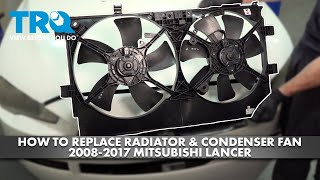
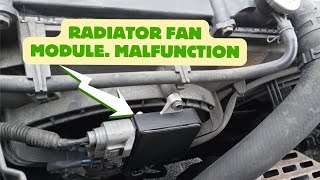
Typical fix: Replace the cooling fan control module. 🎬 Watch: Step-by-step fan control module replacement guide It is typically mounted on the radiator fan shroud. This is a common DIY repair.
Est. part cost: $40-$150 - Low Engine Coolant 🔴 High Probability Leaks can develop over time in hoses, the radiator, thermostat housing, or water pump, which is common for any vehicle as it ages. The plastic thermostat housing is a potential weak point.
How to confirm: Visually inspect the coolant reservoir. When the engine is completely cool, remove the radiator cap and check the level there as well. Look for puddles of coolant under the car or white/crusty residue on cooling system components. A cooling system pressure test is the most effective way to find a hidden leak.
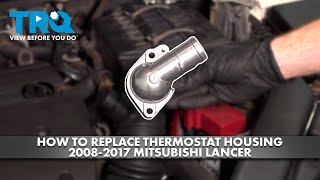
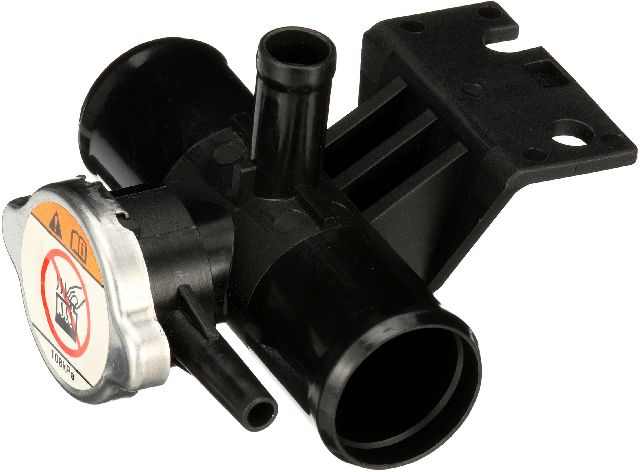
Typical fix: Identify the source of the leak and replace the failed component (e.g., hose, radiator, gasket). An aftermarket aluminum thermostat housing (e.g., Dorman 902-319) 🎬 See how to replace the thermostat housing is a common upgrade over the failure-prone OEM plastic part. Refill and bleed the cooling system.
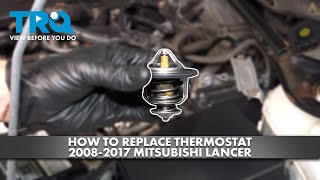
Est. part cost: $10 (hose) - $300 (radiator) - Stuck-Closed Thermostat 🟡 Medium Probability → Shop Integrated Thermostat Housing Assembly The thermostat is a standard wear item. It can fail and get stuck in the closed position, preventing coolant from circulating to the radiator.
How to confirm: After starting a cold engine, feel the upper radiator hose. It should remain cool for several minutes and then become hot suddenly as the thermostat opens (around 180-203°F). If the engine overheats but the hose remains cool or only lukewarm, the thermostat is likely stuck closed.
Typical fix: Replace the thermostat and its housing/gasket. It is often sold as an assembly. It is recommended to use an OEM or high-quality aftermarket part. Dorman offers a popular replacement housing, part number 902-319, which fits the platform mates and is a known solution.
Est. part cost: $20-$60 - Failing Water Pump ⚪ Low Probability → Shop Engine Water Pump
How to confirm: Check for coolant leaks from the 'weep hole' on the water pump body. With the engine off, check for any play or wobble in the water pump pulley. A grinding or whining noise from the pump area while the engine is running also indicates bearing failure.
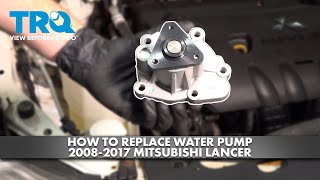
Typical fix: Replace the water pump. This is more labor-intensive as it is driven by the serpentine belt. 🎬 Watch: Lancer water pump replacement walkthrough
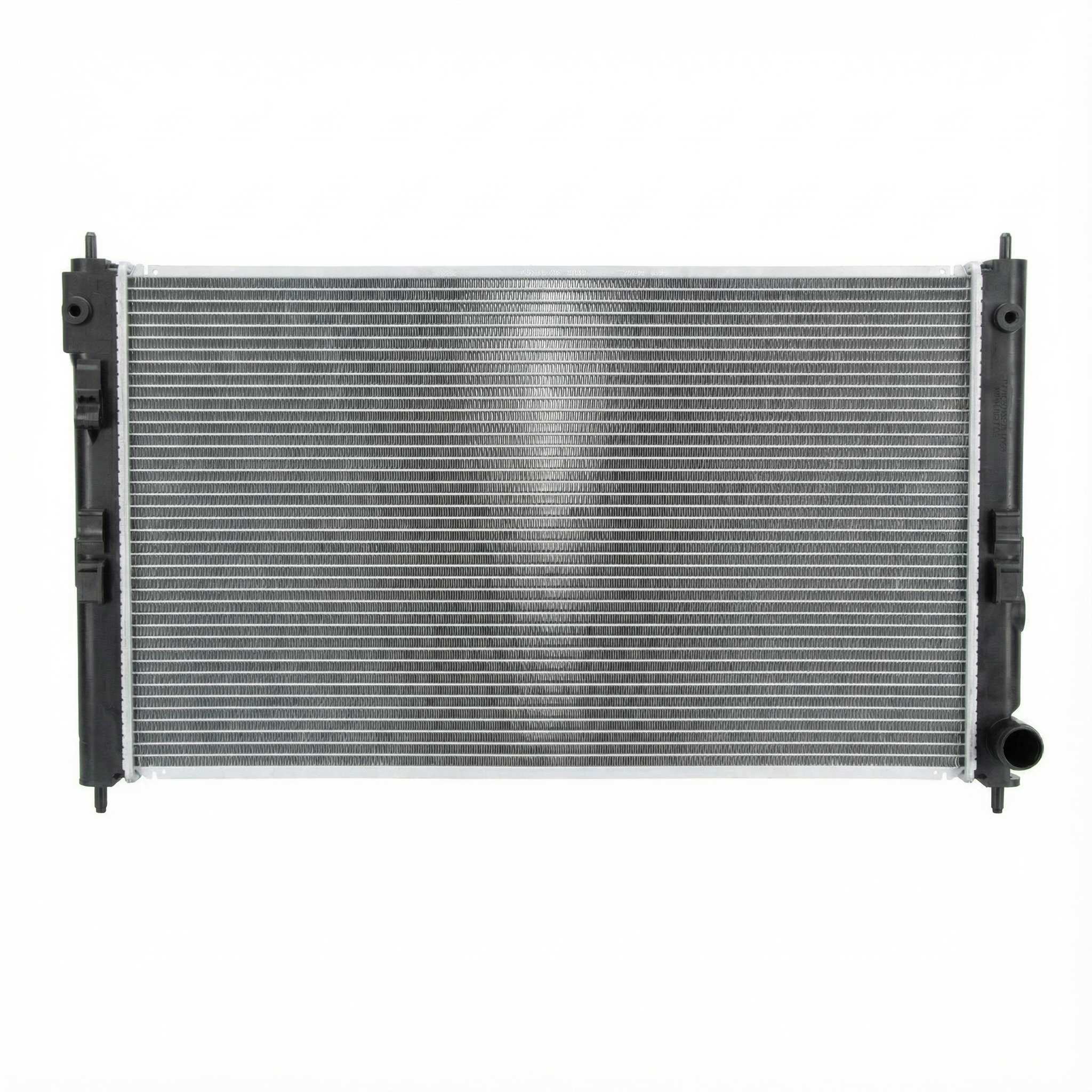
Est. part cost: $60-$150 - Clogged Radiator ⚪ Low Probability → Shop Radiator
How to confirm: Check for external obstructions like leaves or debris on the radiator fins. An internal clog can be suspected if other components check out, especially on a high-mileage vehicle or one where incorrect coolant types were mixed. A non-contact infrared thermometer can be used to find cool spots on the radiator surface while the engine is hot, indicating a blockage.
Typical fix: Attempt to flush the radiator. If the clog is severe, the radiator must be replaced.
Est. part cost: $120-$300
Rare But Worth Checking
- Faulty Engine Coolant Temperature (ECT) Sensor: → Shop Engine Coolant Temperature Sensor While a faulty ECT sensor can theoretically cause a P0217 code by sending an incorrect high-temperature reading, it's less common than an actual overheat condition. It should be suspected if the gauge spikes instantly on a cold engine or if the temperature reading on a scan tool seems implausible and doesn't match a physical temperature reading of the engine.
- Blown Head Gasket: This is a severe mechanical failure where combustion gases are forced into the cooling system, causing rapid overheating and over-pressurization. Look for milky, sludgy oil on the oil cap or dipstick, or constant, excessive bubbling in the radiator/coolant reservoir while the engine is running.
Diagnosis Steps
- SAFETY FIRST: Do not open the radiator cap when the engine is hot. Allow the vehicle to cool down completely for several hours.
- Check Coolant Level: Inspect the coolant level in the overflow reservoir. When cool, open the radiator cap and ensure it is full to the top.
- Inspect for Leaks: Visually inspect all hoses, the radiator, water pump, and thermostat housing for signs of leaks (puddles, drips, or white/colored crusty residue).
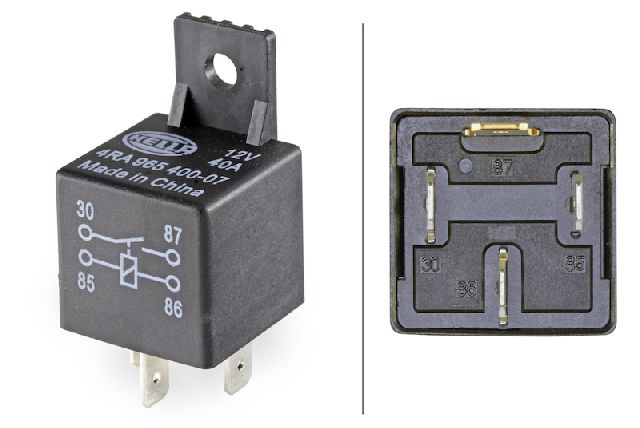
- Verify Cooling Fan Operation: Start the engine and turn on the air conditioning. Both cooling fans should turn on within a minute. If they do not, suspect the fan controller, relay, or fan motor.
- Check for Constant Fan Operation: If the fans run continuously even with the car off, the fan control module is the primary suspect and is likely shorted.
- Check Thermostat: Start the engine from cold. Feel the upper radiator hose. It should stay cool for a few minutes and then get hot quickly. If it never gets hot and the engine overheats, the thermostat is likely stuck closed.
- Scan Tool Data: Use an OBD-II scanner to monitor the live coolant temperature reading. Does it rise steadily and plausibly, or does it jump erratically? An erratic reading may suggest a faulty ECT sensor or wiring. Compare the reading to a physical temperature measurement at the thermostat housing.
- Pressure Test: If a leak is suspected but not visible, use a cooling system pressure tester to pressurize the system (when cold) and reveal the leak source.
- Check for Head Gasket Failure: If all else fails, use a block tester kit (chemical test) to check for combustion gases in the coolant.
Parts You'll Likely Need
- Cooling Fan Control Module
(OEM #1355A124, 1355A053, 1355A408)— This is a very common failure point on this platform. - Thermostat — A common wear item that can cause overheating if it fails in the closed position.
- Engine Coolant — Required for refilling the system after any repair.
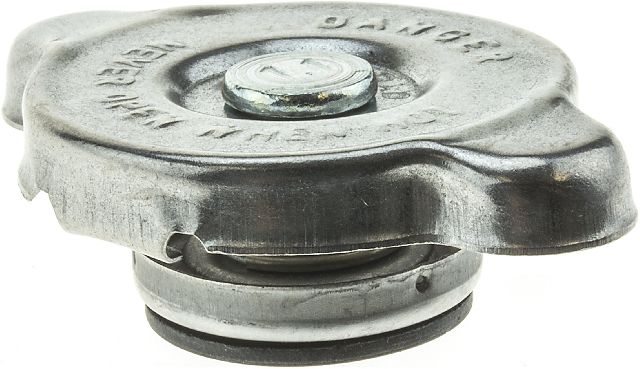
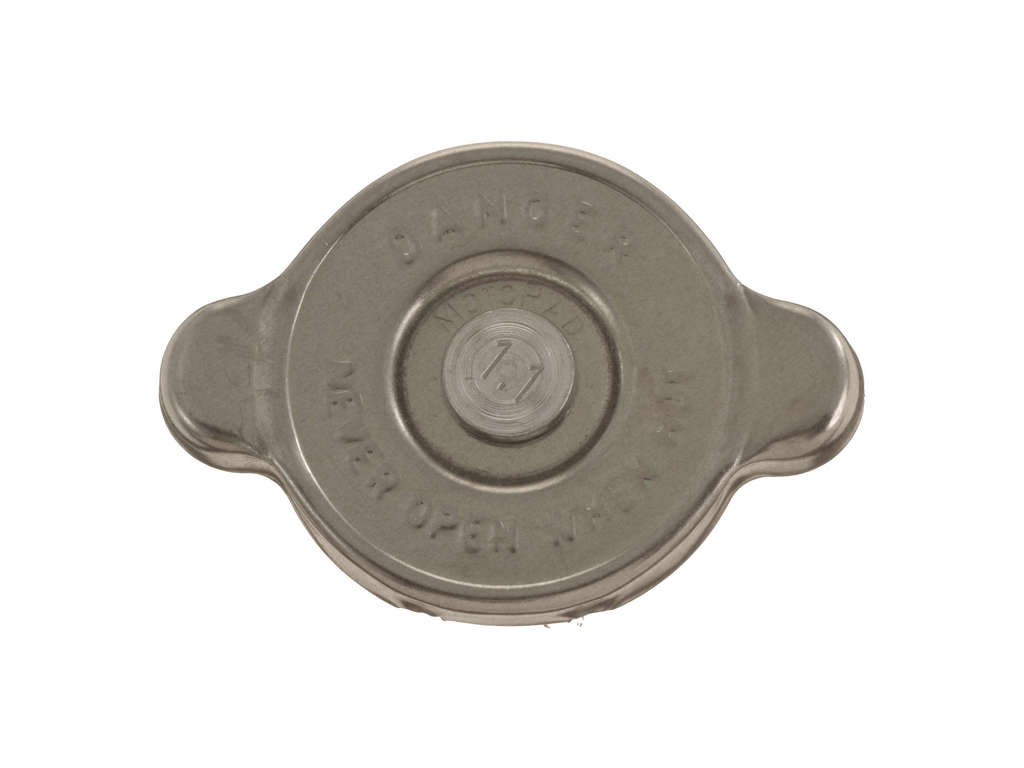
- Radiator Cap — A cheap but critical part that can cause overheating if it fails to hold pressure.
Related Codes That Often Appear With This One
- P0117 — Indicates 'ECT Sensor Circuit Low Input', which could point to a wiring or sensor issue causing an incorrect overheat calculation.
- P0118 — Indicates 'ECT Sensor Circuit High Input', which could also point to a sensor or wiring fault, or be set concurrently during a genuine overheat event.
- P0480 — Indicates a fault in the 'Cooling Fan 1 Control Circuit', which directly relates to the common failure of the cooling fan controller on this vehicle.
- P0128 — Indicates 'Coolant Thermostat (Coolant Temperature Below Thermostat Regulating Temperature)'. This code can sometimes appear if the thermostat is failing intermittently before it fails completely and causes an overheat.
Technical Service Bulletins (TSBs) & Recalls
- TSB-10-23-005: Addresses a CVT 'SLOW DOWN' warning on 2008-2009 models due to fluid temperature, requiring a fluid level adjustment and a new dipstick.
- TSB-20-23-001REV: Pertains to CVT shudder/surge conditions on 2016-2017 Lancers (among others) and may involve reprogramming or component replacement.
- TSB-13-35-003: Corrects wheel speed sensor diagnostic procedures in service manuals, which is relevant to the 'ASC Service Required' common issue.
Platform-Specific Known Issues
- A recall was issued for the fan controller on earlier Lancer models (2002-2003) that used a similar design, highlighting a history of issues with this component from the manufacturer.
Mechanic-Grade Diagnostic Values
- Cooling Fan Control Module Signal Voltage — expected: Approximately 0V with Key On, Engine Off (Fans Off). Approximately 5V when fans are commanded ON by the ECM.. Failure: If voltage is stuck at 0V when fans should be on, or stuck at 5V when they should be off, it indicates a problem with the ECM or the module itself. Wiggling the module and seeing the voltage change can indicate an internal short.
- Engine Coolant Temperature (ECT) Sensor Resistance — expected: Resistance decreases as temperature increases. Representative values are ~2.45 kΩ at 20°C (68°F) and ~296 Ω at 80°C (176°F).. Failure: A reading that is open (infinite resistance), shorted (zero resistance), or does not change smoothly with temperature indicates a faulty sensor.
- ECT Sensor Signal Voltage (at ECM) — expected: Voltage should be high when the engine is cold (e.g., ~2.0V) and decrease as the engine warms up, dropping to around 0.5V at full operating temperature.. Failure: Voltage that is stuck high or low, or that jumps erratically, points to a sensor or wiring issue.
Scan Tool Commands That Help
- Professional Scan Tool (e.g., MUT-III, Autel, Snap-on): Radiator Fan Low / Radiator Fan High (Active Test or Bidirectional Control) — This is a definitive test to isolate the fan control problem. Commanding the fan 'ON' should produce a ~5V signal on the control wire (Pin 2) at the fan module. If the voltage appears but the fans don't run, the module or fan motor is bad. If the voltage does not appear, the problem is with the ECM or wiring.
Wiring & Ground Locations
- Cooling Fan Control Module Connector — Mounted on the radiator fan shroud, typically near the driver's side fan.. This is the central point for testing power, ground, and the command signal for the cooling fans. Pin 2 (middle wire) is the control signal from the ECM.
- Ground Point G13 — Chassis ground point located near the fan control module in the engine bay.. This is the specific ground for the cooling fan control module. A corroded or loose connection at G13 can prevent the module from operating correctly, leading to fan failure and overheating.
- Main Engine/Chassis Grounds — Key locations include a strap from the engine block/intake manifold to the firewall, and from the negative battery terminal to the chassis.. Poor overall grounding can cause a variety of electrical issues, including erratic sensor readings and improper module function. Ensuring all main grounds are clean and tight is a crucial step in diagnosing any electrical fault.
Real Owner Repair Stories
- Reddit user in r/mitsubishi (2010 Mitsubishi Lancer ES, 160,000 miles) — Car overheated after a coolant flush. Noticed cooling fans never turned on, even with A/C active. Coolant was boiling in the reservoir at idle.
❌ Tried (didn't work) Bleeding the system for air bubbles, checking fuses.
✅ What actually fixed it The user discovered the plastic connector/plug for the fan motor itself had burned/melted wires inside. The final fix was to buy a new fan connector pigtail online and splice it in, which resolved the no-fan condition. - EvolutionM forum user (Mitsubishi Lancer Ralliart (similar cooling system architecture)) — Radiator fan would cycle on and off randomly, even with the car off, or would not turn on when needed.
❌ Tried (didn't work) Initial suspicion was a relay.
✅ What actually fixed it Replacing the fan control module (Part #1355A053) resolved the issue. The user warned that letting the issue persist can lead to the fans failing completely, causing the radiator to over-pressurize and pop.
OEM Part Supersession History
1355A053→1355A124, 1355A408— Part revision to improve reliability.
Heads up: The newer part numbers are generally direct replacements for the older one. Aftermarket options like the Dorman 601-025 are also available and widely used as an alternative to the OEM module.
Diagnostic Flowchart
Other Known Issues on This Vehicle
Issues unrelated to this code that are worth knowing about as an owner of this generation:
- CVT Transmission Overheating/Failure 🔴 High — Common, especially on earlier models (2008-2011) and in hot climates or under heavy load. Can manifest as a 'Slow Down' warning. (Ref: TSB-10-23-005, TSB-20-23-001REV)
- 'ASC Service Required' Warning 🟠 Medium — Frequently reported. Often caused by a failing ABS wheel speed sensor, a dying battery, or even non-standard brake light bulbs. (Ref: TSB-13-35-003 (related to diagnostics))
- Clear Coat / Paint Failure 🟡 Low — Very common across all years, especially on horizontal surfaces (roof, hood, trunk). The clear coat peels, flakes, or oxidizes prematurely.
- Crankshaft Position Sensor Failure 🟠 Medium — A known cause for a 'crank, no-start' condition where the engine turns over but will not fire up.
- Front Subframe Corrosion 🔴 High — Primarily affects earlier models (e.g., 2008) in regions that use road salt. The front subframe can rust severely, leading to a safety recall in some markets. (Ref: Recall SR-20-003)
Used vs. New Parts: Buying Guide for This Vehicle
When a used part is the smart pick: Used parts are a reasonable choice for non-wear, structural components. This includes the radiator fan shroud, coolant overflow reservoir, or the fan blades themselves. A complete fan assembly from a junkyard can be a good value if its operation is tested.
Donor-vehicle mileage cap: roughly under 80000 miles for the part to have meaningful remaining life.
What to inspect on the donor part:
- For a fan assembly, ask to test it by applying 12V power to the motor leads to ensure it spins freely and quietly.
- Inspect all plastic parts for brittleness, hairline cracks, or heat discoloration.
- Check electrical connectors for any signs of melting, corrosion, or burned pins, which is a known failure point.
OEM-only on this vehicle (don't cheap out):
- Radiator Cap: This is a critical, inexpensive part. An OEM or high-quality OE-equivalent (e.g., Stant) is strongly recommended to ensure correct pressure rating.
- Thermostat: Given its importance and relatively low cost, a new OEM or top-tier aftermarket thermostat is the safest choice to avoid repeat labor.
Aftermarket brands forum-validated for this vehicle:
- Dorman: Specifically mentioned for their replacement aluminum thermostat housing (902-319) and cooling fan control module (601-025).
Brands owners have reported issues with on this vehicle:
- No specific brands were consistently cited as problematic in owner forums, but caution is advised with unbranded, generic electronic modules like the fan controller from online marketplaces.
Real Owner Stories
Aggregated from forums and TSBs cited above. Mileages and costs reflect what owners reported in those sources.
2008 Mitsubishi Lancer 2.0L/2.4L
Symptoms: The car overheats only in stop-and-go traffic or when idling, but is fine on the highway.
What fixed it: Replacement of the cooling fan control module mounted on the radiator fan shroud.
Cost: $40-$150
Source hint: Multiple owners on forums describe a scenario where the car overheats only in stop-and-go traffic... pointing directly to the fan controller.
Mitsubishi Lancer (Generation Specific)
Symptoms: ASC Service Required light appeared on the dashboard.
What fixed it: Removing aftermarket LED tail lights which were interfering with the car's sensitive electrical systems.
Source hint: https://www.evolutionm.net/forums/lancer-engine-tech/713849-asc-service-required-solved.html
Related OBD-II Codes
Frequently Asked Questions
My 2008 Lancer is overheating in stop-and-go traffic but stays cool on the highway. What is the most likely cause?
Is there a recall for the fan control module on my 2008-2017 Lancer?
My 2016 Lancer is experiencing a shudder or surge along with the overheating code. Is there a known issue?
I have a 'SLOW DOWN' warning on my 2009 Lancer dashboard. Is this related to P0217?
Is there a more durable alternative to the OEM plastic thermostat housing?
Why do my cooling fans keep running even after I turn the car off?
Helpful Videos
Used OEM Parts in Stock
New Aftermarket Parts Available


The information in this article is provided for general reference and educational purposes only. Vehicle specifications, procedures, and part compatibility can vary by production date, trim level, and region. Always consult your vehicle's factory service manual and verify part numbers before purchasing or performing repairs. Safety-critical components such as airbags, seat belts, and braking systems should be installed by a qualified professional.
- Mitsubishi Lancer:
- 🧭 Diagnostic Flowchart
- 🎬 Helpful Videos
- 🛍️ Shop This Part
- What's Unique About the 2008-2017 Mitsubishi Lancer
- Symptoms You May Notice
- Most Likely Causes
- Rare But Worth Checking
- Diagnosis Steps
- Parts You'll Likely Need
- Related Codes That Often Appear With This One
- Technical Service Bulletins (TSBs) & Recalls
- Platform-Specific Known Issues
- Mechanic-Grade Diagnostic Values
- Scan Tool Commands That Help
- Wiring & Ground Locations
- Real Owner Repair Stories
- OEM Part Supersession History
- Other Known Issues on This Vehicle
- Used vs. New Parts: Buying Guide for This Vehicle
- Real Owner Stories
- 2008 Mitsubishi Lancer 2.0L/2.4L
- Mitsubishi Lancer (Generation Specific)
- Related OBD-II Codes
- Frequently Asked Questions
- 🎟️ Get 5% Off