

P0217 on 2007-2012 Nissan Altima: Engine Overheating Causes and Fixes
P0217 means your Altima's engine is overheating. The most common causes are a low coolant level due to a leak, a failed thermostat, or a bad water pump. Stop driving immediately to prevent severe engine damage.
- P0217 is a critical code indicating your engine is overheating. Stop driving immediately to prevent severe damage.
- The most likely causes on a 2007-2012 Altima are a coolant leak, a bad thermostat, or a failing water pump.
- Always check the simple things first: coolant level and for obvious leaks.
- Be aware that the 4-cylinder engine has two thermostats that can cause this issue.
- Due to the high risk of engine damage, if the problem isn't simple and obvious, seeking professional help is the safest option.
What's Unique About the 2007-2012 Nissan Altima
For the 2007-2012 Altima, P0217 often points to common wear-and-tear items in the cooling system. Coolant leaks from the radiator and water pump are frequently reported. Notably, the 4-cylinder QR25DE engine uses a two-thermostat system, which can complicate diagnosis if you are unaware of the second 'water control valve'. This secondary thermostat, located on the engine block behind the intake manifold, controls flow through the block itself and can cause overheating if it fails closed. An actual overheat condition is far more likely than a sensor error on this platform.
Symptoms You May Notice
- Temperature gauge in the red or reading 'H' (Hot)
- Engine temperature warning light illuminated on the dashboard
- Check Engine Light is on
- Reduced engine power or vehicle entering 'limp mode'
- Steam or smoke coming from under the hood
- A boiling or gurgling sound from the engine bay
- Puddles of green or blue coolant under the front of the car
- Sweet smell of burning coolant
- Replacing the coolant temperature sensor when the engine is actually overheating due to a mechanical fault like a stuck thermostat.
- Replacing only one of the two thermostats on the 2.5L engine, leaving the faulty one in place.
- Assuming a coolant leak is fixed after replacing a hose, without pressure testing the system to find other potential leaks (e.g., from the radiator or water pump).
- Replacing the radiator cap without checking for a more significant leak elsewhere in the system.
Most Likely Causes
- Low Coolant Level / Coolant Leak 🔴 High Probability As vehicles age, rubber hoses become brittle and plastic components like the radiator end tanks can crack. The water pump seal is also a common failure point.
How to confirm: Visually inspect the coolant reservoir and radiator (when the engine is cold). Look for puddles under the car or white/colored crusty residue on the engine, radiator, and hoses. A cooling system pressure test can pinpoint hard-to-find leaks.
Typical fix: Identify the source of the leak and replace the failed component. This could be a radiator hose, the radiator itself, or the water pump.
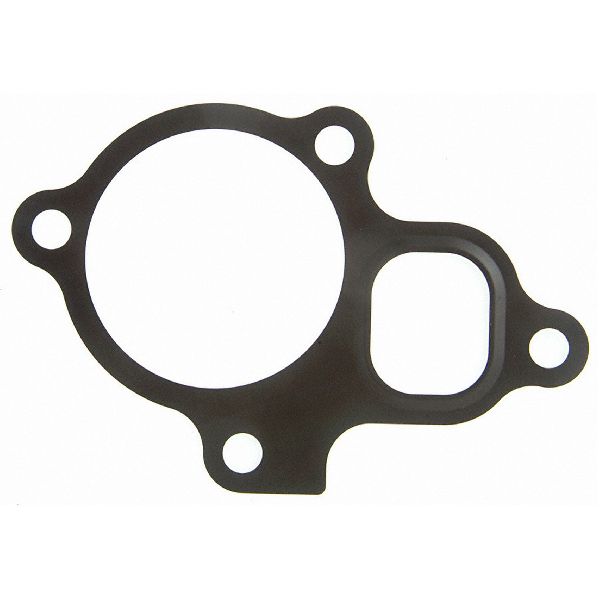
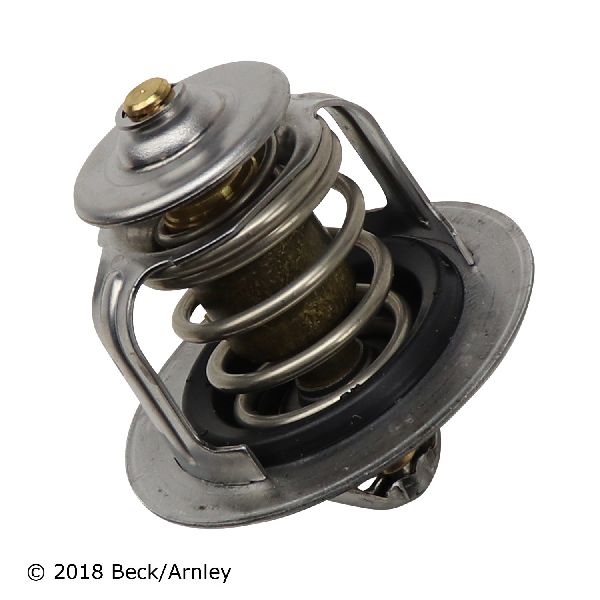
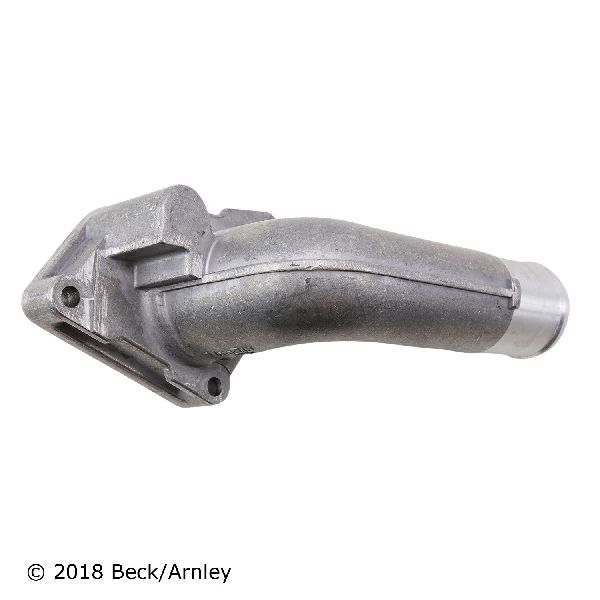
Est. part cost: $20-$60 for hoses, $100-$250 for a radiator. - Failed Thermostat(s) 🔴 High Probability → Shop Integrated Thermostat Housing Assembly Thermostats are a common wear item designed to fail. They can get stuck in the closed position, preventing coolant from circulating to the radiator and causing a rapid overheat. The 2.5L QR25DE engine has two thermostats (a main thermostat and a water control valve), increasing the potential points of failure and complicating diagnosis.
How to confirm: After starting a cold engine, feel the upper radiator hose. It should remain cool for several minutes and then become hot suddenly as the main thermostat opens. If the engine overheats but the hose stays cool or only gets warm, the main thermostat is likely stuck closed. Diagnosing the second thermostat (water control valve) is more complex and often done by exclusion after checking other components.
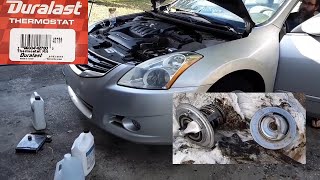
Typical fix: Replace the faulty thermostat(s). It is highly recommended to replace them as a set on the 2.5L engine, even if only one is confirmed bad. 🎬 Watch: Step-by-step dual thermostat replacement walkthrough
Est. part cost: $25-$75 per thermostat. - Failing Water Pump 🟡 Medium Probability → Shop Engine Water Pump The internal seals and bearings of the water pump wear out over time, typically after 100,000 miles. This can cause a coolant leak from the 'weep hole' or a failure of the impeller to circulate coolant.
How to confirm: Look for coolant leaking from the pump body, often on the passenger side of the engine. Listen for a grinding or whining noise from the front of the engine that changes with RPM. With the engine off, check for any wobble in the water pump pulley.
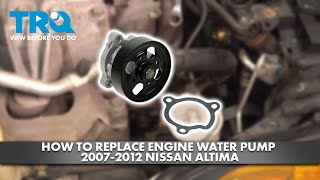
Typical fix: Replace the water pump and its gasket. It is often recommended to replace the serpentine belt at the same time. 🎬 See how to replace the water pump
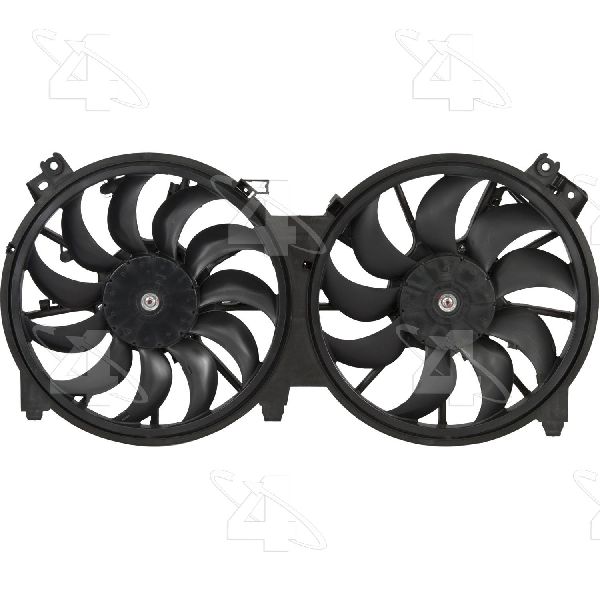
Est. part cost: $60-$150 - Inoperative Radiator Cooling Fan(s) 🟡 Medium Probability → Shop Engine Cooling Fan Blade The electric motors in the cooling fans can fail, or the relays and wiring that control them can go bad. This is a common issue on many vehicles as they age, leading to overheating primarily in stop-and-go traffic or at idle.
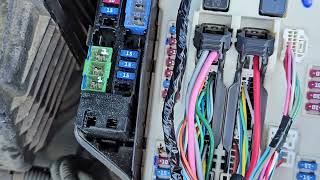
How to confirm: With the engine at operating temperature (or when the A/C is turned on), both cooling fans should be running. If the temperature gauge is climbing high while the car is stationary and the fans are not spinning, there is a problem in the fan circuit. Check fuses and relays first. 🎬 Watch: How to check cooling fan fuses and relays
Typical fix: Diagnose the fan circuit to determine if the failure is the fan motor, relay, or wiring. Replace the faulty component.
Est. part cost: $100-$300 for a fan assembly, $15-$40 for a relay.
Rare But Worth Checking
- Blown Head Gasket: This is the most severe and expensive possibility. A failed head gasket can allow hot combustion gases to enter the cooling system, overwhelming its capacity and causing overheating. Look for milky/creamy engine oil, excessive white exhaust smoke, or constant bubbling in the radiator/coolant reservoir. A combustion leak test ('block tester') provides definitive proof.
- Clogged Radiator: → Shop Radiator Internal passages can become blocked from sediment or using the wrong type of coolant, while external fins can get clogged with road debris. This restricts coolant flow or airflow, reducing the radiator's ability to cool.
- Faulty Engine Coolant Temperature (ECT) Sensor: → Shop Engine Coolant Temperature Sensor While it's possible for the sensor to send a false high-temperature reading to the ECM, it is much more likely that the engine is genuinely overheating. This should be considered only after all other mechanical causes are ruled out.
Diagnosis Steps
- DO NOT open the radiator cap when the engine is hot. Allow it to cool completely for several hours.
- Check the coolant level in the overflow reservoir and the radiator. If low, top it off with the correct Nissan blue long-life coolant (or equivalent).
- Visually inspect the engine bay for obvious signs of coolant leaks: check all hoses, the radiator (especially the plastic end tanks), thermostat housing, and water pump area for wetness or crusty residue.
- Start the engine and turn the A/C on high. Verify that both radiator fans turn on immediately.
- Monitor the temperature gauge. If it climbs, carefully feel the upper and lower radiator hoses. If one is hot and the other is cold, the main thermostat is likely stuck closed or there is a blockage.
- If leaks are suspected but not visible, perform a cooling system pressure test to reveal the source. This tool can be rented from most auto parts stores.
- If no leaks are found and the thermostat and fans are working, the water pump or a blockage (internal radiator or the secondary thermostat on QR25DE) are the next likely culprits.
- If the oil is milky or there is heavy white smoke from the exhaust, a head gasket test (combustion leak test) should be performed.
Parts You'll Likely Need
- Thermostat (Main)
(OEM #21200-EA000)— A stuck-closed thermostat is a primary cause of rapid overheating. This is the main thermostat located at the coolant outlet.
Trusted brands: Nissan OEM, Hitachi, Gates, Motorad
OEM price range: $40-$80
Aftermarket price range: $25-$50 - Water Control Valve (2nd Thermostat, QR25DE only)
(OEM #21230-6N20A)— This secondary thermostat on the 2.5L engine is a unique and often overlooked failure point that can cause overheating.
Trusted brands: Nissan OEM, Hitachi
OEM price range: $50-$90
Aftermarket price range: $30-$60 - Water Pump (QR25DE)
(OEM #B1010-JA00A (superceded by B1010-F461B))— The water pump is a known failure point that can cause leaks and overheating.
Trusted brands: Nissan OEM, Aisin, Gates, Hitachi
OEM price range: $120-$200
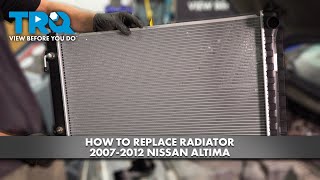
Aftermarket price range: $60-$150 - Radiator
(OEM #21460-JA00A (superceded by 21460-ZN50B for 2007-2010 models))— The plastic end tanks on the original radiators are prone to cracking and leaking over time.
Trusted brands: Denso, Spectra Premium, Koyo, Nissens
OEM price range: $250-$400
Aftermarket price range: $100-$200 - Radiator Cap
(OEM #21430-8999C)— A weak radiator cap that fails to hold pressure can lower the boiling point of the coolant, leading to an overheat condition. It's an inexpensive and easy part to replace as a first step or during other cooling system repairs.
Technical Service Bulletins (TSBs) & Recalls
- NTB17-018 / PC516: Voluntary service campaign to replace the Electronic Steering Column Lock (ESCL) on 2009-2010 models.
- NTB13-079e: Addresses reduced performance due to CVT fluid temperature protection logic on 2007-2010 models.
- NTB12-011C / PC125: Voluntary service campaign to inspect for and replace leaking brake master cylinders on 2007-2012 models.
- P5216: Service campaign for rear sub-frame corrosion on earlier 2002-2005 Altima models, relevant for context on platform corrosion issues.
Platform-Specific Known Issues
- The 2.5L QR25DE engine is equipped with two thermostats (one standard thermostat and one 'water control valve') which can complicate diagnosis. The water control valve (P/N 21230-6N20A) is a known failure point.
- Vehicles equipped with the CVT transmission are susceptible to overheating, which can sometimes be confused with or contribute to engine overheating. The stock CVT cooler is considered by many to be undersized for hot climates or strenuous driving. An overheating CVT can put additional load on the engine's cooling system.
Mechanic-Grade Diagnostic Values
- Engine Coolant Temperature (ECT) Sensor Resistance — expected: Approximately 2,200-3,000 Ohms (Ω) at 68°F (20°C) and 250-350 Ohms (Ω) at 176°F (80°C).. Failure: Readings that are significantly outside this range, or an open/short circuit, indicate a faulty sensor.
- Engine Coolant Temperature (ECT) Sensor Reference Voltage — expected: 4.9–5.1V with the sensor disconnected and ignition in the Key ON Engine OFF (KOEO) position.. Failure: Voltage outside this range indicates a problem with the wiring or the Engine Control Module (ECM).
- Engine Coolant Temperature (ECT) Sensor Torque Specification — expected: 24.5 ft-lbs. Failure: Over-torquing can damage the sensor or cylinder head threads; under-torquing can cause leaks.
Wiring & Ground Locations
- E15 / E204 — Lower left side of the engine compartment.. These are primary ground points for the ECM and various engine sensors. A corroded or loose ground at these locations can cause erratic sensor readings, including false high temperature readings from the ECT sensor or improper operation of the cooling fan relays.
- E9 / E209 — Lower right side of the engine compartment.. This ground point serves components such as the cooling fan motors. A poor ground here can result in fans that do not run, or run at a reduced speed, leading to overheating in traffic or at idle.
Real Owner Repair Stories
- Reddit user in r/Cartalk (2010 Nissan Altima 2.5S) — Temperature gauge fluctuated and read higher than normal, sometimes barely moving as if the thermostat was stuck open, and other times going near the 'H' mark.
❌ Tried (didn't work) Replacing the coolant temperature sensor., Replacing both OEM thermostats., Performing a coolant flush.
✅ What actually fixed it The user suspected an electrical issue after all mechanical cooling system parts were replaced or verified. The final update indicated they were seeking an 'electromechanic', implying the problem was likely a wiring or gauge cluster fault, not a true overheating condition. This highlights that if all mechanical causes are ruled out, the fault can lie in the sensing and reporting circuit itself.
OEM Part Supersession History
212306N200, 212308P300, 21230EL00A, 21230EL00B→21230-6N20A— Part consolidation and design updates over multiple vehicle platforms.
Heads up: The part 21230-6N20A is the current and correct 'Water Control Valve' (secondary thermostat) for the QR25DE engine in this generation. Using older stock or incorrect part numbers may lead to improper cooling.
Diagnostic Flowchart
Other Known Issues on This Vehicle
Issues unrelated to this code that are worth knowing about as an owner of this generation:
- Continuously Variable Transmission (CVT) Failure 🔴 High — Very common, especially in 2007-2010 models. Can occur at any mileage, often manifesting as shuddering, hesitation, or complete failure. (Ref: Nissan extended the warranty to 10 years/120,000 miles for some early models due to high failure rates. TSB NTB13-079e addresses reduced performance due to CVT temperature protection logic.)
- Electronic Steering Column Lock (ESCL) Failure 🔴 High — Common on 2009-2010 models. The failure prevents the car from starting, often without warning. (Ref: Nissan issued a voluntary service campaign (PC516 / NTB17-018) to replace the ESCL unit with a non-locking electronic steering column box.)
- Rear Subframe Corrosion 🔴 High — A significant issue in regions using road salt. While a recall (P5216) covered earlier 2002-2006 models, the 4th generation can still suffer from severe rust that can compromise the rear suspension mounting points. (Ref: While the primary recall was for the previous generation, owners of 4th gen Altimas in rust belt states report similar, though not officially covered, issues.)
- Leaking Brake Master Cylinder 🟠 Medium — Reported across the 2007-2012 model years, causing a gradual loss of brake fluid and illumination of the brake warning light. (Ref: Nissan Voluntary Service Campaign PC125 (TSB NTB12-011C) was issued to inspect the system and replace the master cylinder if a leak was found.)
Used vs. New Parts: Buying Guide for This Vehicle
When a used part is the smart pick: For this vehicle, used parts are generally not recommended for critical cooling system components like the radiator, water pump, or thermostats. The only exception might be a cooling fan assembly if the motor operation can be verified before purchase. The cost savings for other components are minimal compared to the risk of premature failure.
Donor-vehicle mileage cap: roughly under 80000 miles for the part to have meaningful remaining life.
What to inspect on the donor part:
- For a radiator, inspect for bent fins, signs of leaks (white or green crust), or cracked plastic end tanks.
- For a fan assembly, check for cracks in the shroud and ensure the fan blades spin freely without wobble or noise.
- Ask for the donor vehicle's VIN to check for accident history; avoid parts from front-end collisions.
OEM-only on this vehicle (don't cheap out):
- Water Control Valve (Secondary Thermostat for 2.5L): Due to its critical function and difficult access, using a Nissan OEM part (21230-6N20A) is highly recommended to avoid repeat labor costs.
Aftermarket brands forum-validated for this vehicle:
- Radiators: Denso, Koyo, and Spectra Premium are frequently cited as reliable OEM-quality replacements.
- Water Pumps: Aisin, Gates, and Hitachi are well-regarded brands.
- Thermostats: Hitachi and Gates are good alternatives to OEM.
Brands owners have reported issues with on this vehicle:
- Unbranded, 'white-box' radiators and water pumps from online marketplaces have a higher reported failure rate. While some Spectra radiators have been reported to fail prematurely by some users, they are generally considered a decent budget option.
Real Owner Stories
Aggregated from forums and TSBs cited above. Mileages and costs reflect what owners reported in those sources.
2009 Nissan Altima
Symptoms: Intermittent overheating about 20 minutes into the drive; the temperature gauge rises significantly but does not hit the absolute maximum. The shop was unable to replicate the issue during testing.
What fixed it: The forum discussion points toward a potential failing thermostat or water pump due to the intermittent nature of the failure.
Source hint: Nissan Forum (NICOclub) thread titled 'P0217-Engine Overheat Condition'
Nissan Altima (QR25DE engine)
Symptoms: Engine stuttering at 2000 RPM along with the P0217 code, indicating the ECM has triggered a limp mode response.
What fixed it: Owner seeking locations for the thermostat and ECT sensor to perform DIY repairs.
Source hint: Nissan Forum (NICOclub, Pathfinder) thread titled 'P0217 Engine Overtemp Condition'
Nissan Altima 2.5L QR25DE
Symptoms: Vehicle only overheats when climbing hills or under heavy load. Replacing the main thermostat did not resolve the issue.
What fixed it: Replacing the secondary thermostat (water control valve) which had failed in a partially closed position.
Source hint: Real Owner Story: Intermittent Overheating
Nissan Altima (QR25DE engine) — ~110000 miles
Symptoms: Coolant leaking from the 'weep hole' on the passenger side of the engine and a grinding or whining noise that changes with RPM.
What fixed it: Replacement of the water pump and its gasket, along with the serpentine belt.
Source hint: common_causes: Failing Water Pump
Related OBD-II Codes
Frequently Asked Questions
I replaced the main thermostat on my 2.5L Altima but it's still overheating. Is there another one?
My 2007-2010 Altima feels sluggish and won't accelerate properly while the temp is high. Is this normal?
Could my P0217 code be related to the CVT transmission instead of the engine?
Is there a TSB for the steering lock or brakes that I should know about while my car is in the shop for P0217?
Why does my Altima only overheat when I am sitting in traffic?
Helpful Videos
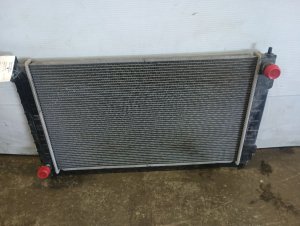
Used OEM Parts in Stock
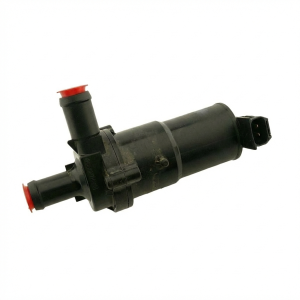
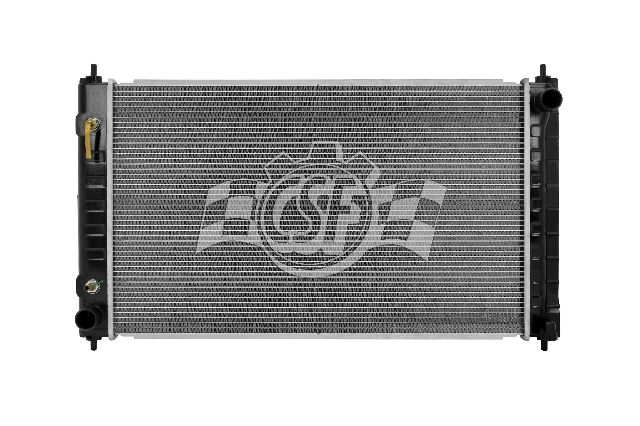
New Aftermarket Parts Available

The information in this article is provided for general reference and educational purposes only. Vehicle specifications, procedures, and part compatibility can vary by production date, trim level, and region. Always consult your vehicle's factory service manual and verify part numbers before purchasing or performing repairs. Safety-critical components such as airbags, seat belts, and braking systems should be installed by a qualified professional.
- Nissan Altima:
- 🧭 Diagnostic Flowchart
- 🎬 Helpful Videos
- 🛍️ Shop This Part
- What's Unique About the 2007-2012 Nissan Altima
- Symptoms You May Notice
- Most Likely Causes
- Rare But Worth Checking
- Diagnosis Steps
- Parts You'll Likely Need
- Technical Service Bulletins (TSBs) & Recalls
- Platform-Specific Known Issues
- Mechanic-Grade Diagnostic Values
- Wiring & Ground Locations
- Real Owner Repair Stories
- OEM Part Supersession History
- Other Known Issues on This Vehicle
- Used vs. New Parts: Buying Guide for This Vehicle
- Real Owner Stories
- 2009 Nissan Altima
- Nissan Altima (QR25DE engine)
- Nissan Altima 2.5L QR25DE
- Nissan Altima (QR25DE engine) — ~110000 miles
- Related OBD-II Codes
- Frequently Asked Questions
- 🎟️ Get 5% Off