

P0217 on 2008-2009 Pontiac G8: Engine Overheat Causes and Fixes
P0217 means your G8's engine is overheating. This is a critical warning requiring you to stop driving immediately. The most common causes are a coolant leak, a failed thermostat, or a malfunctioning radiator fan. A fix can be as simple as topping off coolant or as complex as replacing a water pump.
- P0217 is a critical code that means your engine is overheating. Stop the car immediately to prevent severe damage.
- The most likely causes are a coolant leak, a bad thermostat, or a failed radiator fan.
- Always start diagnosis by checking the coolant level and looking for obvious leaks.
- On V8 models, replacing the thermostat is a simple, low-cost DIY job.
- On the 3.6L V6, thermostat replacement is a very difficult and expensive repair due to its location at the rear of the engine.
What's Unique About the 2008-2009 Pontiac G8
The Pontiac G8, whether equipped with the V6 or V8 engine, has a robust cooling system, but it is not immune to common failures. The most significant platform-specific issue is the vast difference in repair complexity for a failed thermostat. On the V8 models (GT and GXP), the thermostat is easily accessible at the front of the engine, making it a simple DIY repair. However, on the 3.6L V6 (LLT) model, the thermostat is located at the rear of the engine against the firewall, and replacement is a labor-intensive job that requires removing the upper intake manifold for access. Another known issue is the potential for the plastic coolant reservoir (overflow tank) to develop cracks or leaks at the seams over time. A well-documented failure point on high-mileage G8s is the main cooling fan electrical connector, which can melt from high resistance and current draw from aging fan motors, causing intermittent or total fan failure.
Symptoms You May Notice
- Temperature gauge reading in the red or very high
- Check Engine Light and/or a dedicated engine temperature warning light is on
- Steam or smoke coming from the engine bay
- A sweet smell of coolant from outside or through the vents
- Reduced engine power as the ECM enters 'limp mode' to protect the engine
- Boiling or gurgling sounds from the engine or radiator
- Coolant visible on the ground under the vehicle
- Replacing the Engine Coolant Temperature (ECT) sensor first. While it can fail, it's much more likely that a mechanical issue like a leak, a stuck thermostat, or a fan failure is the true cause of the overheat condition. Always diagnose the physical cooling system components before replacing sensors.
Most Likely Causes
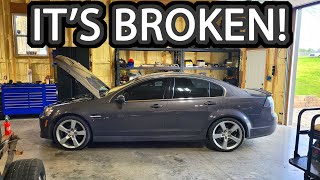
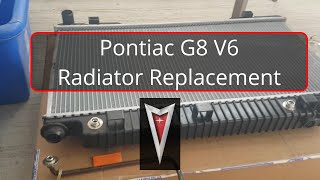
- Low Engine Coolant / Coolant Leak 🔴 High Probability As the G8 ages, leaks can develop from radiator hoses (especially at connections), the radiator end tanks, 🎬 Watch: A complete walkthrough on replacing a failed radiator. the water pump seal, or the plastic coolant reservoir. On the V6, a notable leak source is the coolant inlet pipe under the intake manifold.
How to confirm: Visually inspect the coolant reservoir and radiator (when cool). Look for puddles of orange (Dex-Cool) coolant under the car. Use a cooling system pressure tester to find the source of the leak. Check for white residue around hose connections and the water pump weep hole.
Typical fix: Identify the source of the leak and replace the failed component (e.g., hose, radiator, water pump, reservoir tank). Refill and bleed the cooling system.
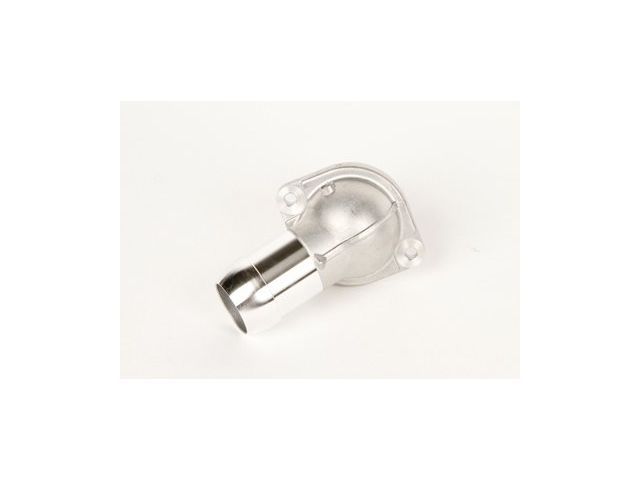
Est. part cost: $20-$400 - Failed Thermostat (Stuck Closed) 🟡 Medium Probability → Shop Integrated Thermostat Housing Assembly Thermostats are a common wear item. A thermostat stuck closed will prevent coolant from circulating to the radiator, causing a rapid overheat.
How to confirm: After starting the engine from cold, feel the upper radiator hose. If the engine gets very hot but the hose remains cool, the thermostat is likely stuck closed. A scan tool can also monitor ECT data to see if the temperature rises without the thermostat opening.
Typical fix: Replace the thermostat and gasket/seal. This is simple on V8 models but very labor-intensive on the V6, requiring intake manifold removal. 🎬 Watch: Step-by-step thermostat replacement for the 3.6L V6 engine.
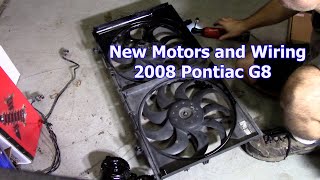
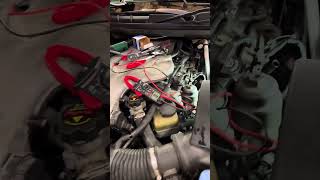
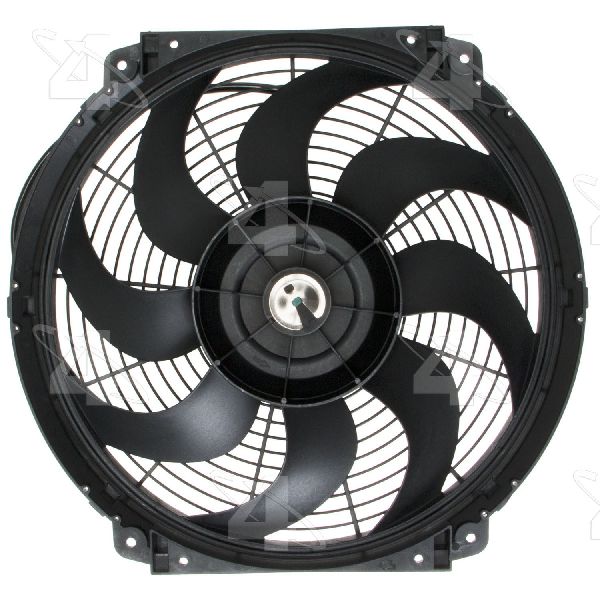
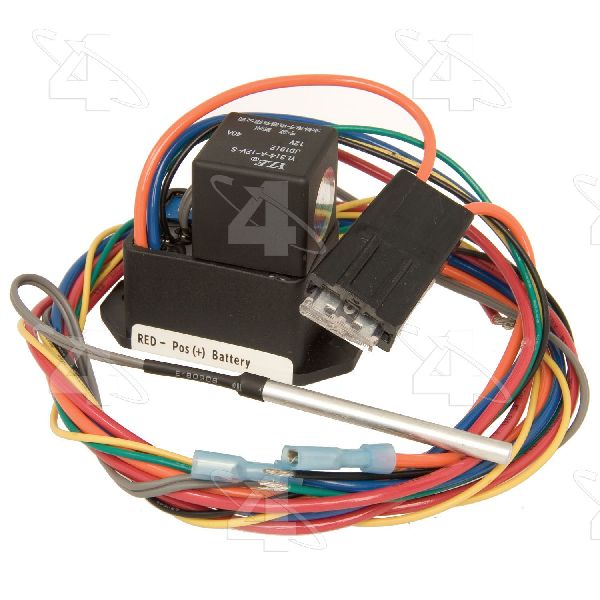
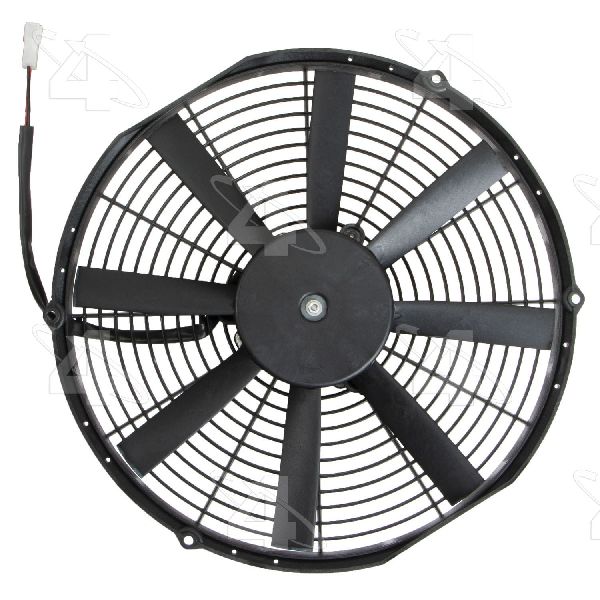
Est. part cost: $20-$70 (V8), $100-$250+ (V6 assembly) - Malfunctioning Radiator Fan(s) 🟡 Medium Probability → Shop Radiator Electric fan motors can wear out, and the relays or fuses that control them can fail. A known issue is the main fan connector melting, 🎬 See how to replace a melted fan connector and motor. causing a loss of power. This is most noticeable when idling or in stop-and-go traffic where there is no natural airflow through the radiator.
How to confirm: With the engine at operating temperature (or when the A/C is turned on), observe if the cooling fans are spinning. If not, check the fan fuses and relays in the under-hood fuse box first. Inspect the fan connector for signs of melting or corrosion.
Typical fix: Replace the faulty fuse, relay, or the entire cooling fan assembly. If the connector is melted, it will need to be replaced or repaired.
Est. part cost: $10 (relay) - $350 (fan assembly) - Failing Water Pump ⚪ Low Probability → Shop Engine Water Pump The water pump's internal impeller can erode or the shaft bearing can fail, preventing proper coolant circulation. Leaks from the weep hole are a common sign of a failing bearing/seal.
How to confirm: Listen for a grinding or whining noise from the front of the engine. Look for coolant leaking from the pump's 'weep hole'. If the engine overheats but the thermostat is confirmed to be working and fans are on, the water pump is a likely suspect.
Typical fix: Replace the water pump and its gasket. This is often done along with the thermostat and drive belts.
Est. part cost: $80-$250 - Air Pocket in Cooling System ⚪ Low Probability The G8 cooling system, like many modern cars, can be difficult to bleed properly after being serviced. An air pocket trapped in the system can act like a blockage and cause erratic temperature spikes and overheating.
How to confirm: This is often diagnosed after other cooling system work has been performed and overheating symptoms appear. Gurgling sounds from the heater core can be a clue. On forums, users stress the importance of running the heater on full blast while refilling to ensure the heater core is purged of air.
Typical fix: Properly bleed the cooling system. This involves running the engine with the radiator cap off (or using a vacuum-fill tool) with the heater on high to purge all air from the system. Topping off the system after a cool-down cycle may be necessary.
Est. part cost: $0 (if DIY), or minimal labor cost
Rare But Worth Checking
- Clogged Radiator: → Shop Radiator Internal passages can become blocked by sediment or external fins can be blocked by debris, reducing cooling efficiency. This is more common on high-mileage vehicles or if incorrect coolant has been used.
- Faulty Engine Coolant Temperature (ECT) Sensor: → Shop Engine Coolant Temperature Sensor While less common, the sensor itself can fail and send an inaccurate high-temperature reading to the ECM, triggering the P0217 code even if the engine isn't truly overheating.
- Blown Head Gasket: A failed head gasket can allow hot combustion gases to enter the cooling system, overwhelming its capacity and causing rapid overheating. This is a major engine repair and may be indicated by creamy-looking oil or gurgling in the coolant reservoir.
Diagnosis Steps
- SAFETY FIRST: Do not open the radiator cap when the engine is hot. Allow the engine to cool completely for several hours.
- Check Coolant Level: Inspect the coolant level in the overflow reservoir. When the engine is cool, remove the radiator cap and ensure the radiator is full.
- Visual Inspection for Leaks: Carefully inspect all radiator and heater hoses, the radiator, water pump, and thermostat housing for any signs of coolant leaks (look for orange/red residue or drips). Check the plastic reservoir tank for cracks.
- Scan for Other Codes: Use an OBD-II scanner to check for any other pending or active codes that could point to a specific system, like the cooling fans (P0480, P0481).
- Verify Cooling Fan Operation: Start the engine and turn the air conditioning on high. This should command both cooling fans to turn on at high speed. If they don't, investigate the fan fuses, relays, and the main fan electrical connector for signs of melting.
- Check Thermostat Operation: Start the engine from cold. Feel the upper radiator hose. It should stay relatively cool for several minutes and then get hot suddenly as the thermostat opens. If it never gets hot while the temperature gauge climbs, the thermostat is likely stuck closed.
- Pressure Test the System: Use a cooling system pressure tester to apply pressure to the system. This will help reveal any small leaks that aren't obvious during a visual inspection, such as from the V6 coolant inlet pipe or water pump seal.
- Confirm ECT Sensor Reading: Use a scan tool to monitor the live ECT data. Compare this reading to a temperature reading taken with an infrared thermometer at the thermostat housing to ensure the sensor is accurate.
Parts You'll Likely Need
- Engine Coolant Thermostat (V8)
(OEM #12622410)— A thermostat stuck closed is a very common cause of overheating on the V8 models and is an easy part to replace. - Engine Coolant Thermostat Housing (V6)
(OEM #92275941 (ACDelco #15-11105))— The V6 uses an integrated housing assembly. It's a common failure point but difficult to access. - Cooling Fan Assembly or Motor
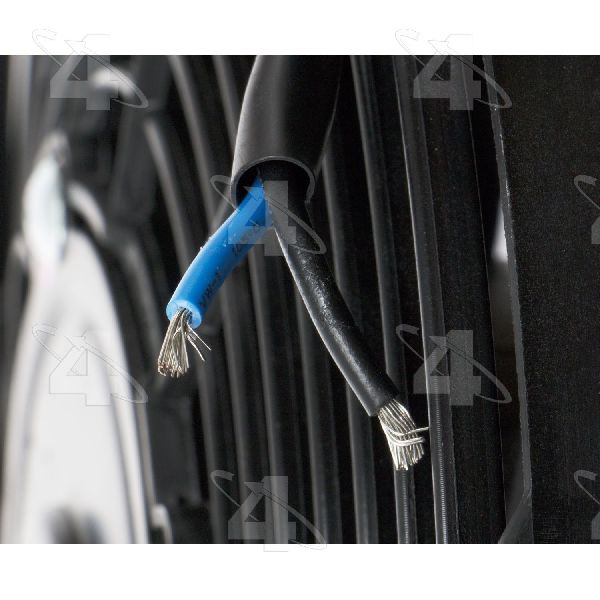
(OEM #92191945)— Fan motors wear out, leading to overheating in traffic. The main electrical connector is also a known failure point that can melt. - Cooling Fan Connector Pigtail — The main 4-wire fan connector is a common failure point that melts due to high current draw from aging fans, requiring the connector to be cut out and spliced with a new pigtail.
- Engine Coolant (Dex-Cool) — Any repair involving draining the cooling system will require replacement with GM-specified Dex-Cool coolant to prevent corrosion and system damage.
Related Codes That Often Appear With This One
- P0128 — Coolant Thermostat (Coolant Temperature Below Thermostat Regulating Temperature). This code indicates the engine is running too cool, usually from a thermostat stuck open. Seeing this intermittently before a P0217 could indicate an erratically failing thermostat.
- P0480, P0481 — These codes relate to Cooling Fan Control Circuit Malfunctions. If you see one of these with P0217, it strongly points to the cooling fan system as the root cause of the overheating.
Platform-Specific Known Issues
- V6 Coolant Inlet Pipe Leak: On the 3.6L V6, a common and significant coolant leak occurs from the gaskets of the coolant inlet pipe (also called a water neck) located underneath the intake manifold. This can be misdiagnosed as a water pump or thermostat issue. The repair requires removing the intake manifold to access and replace the pipe and its two gaskets. A YouTube video by 'ThatCarGuy's Garage' documents this exact repair, showing evidence of a previous failed repair using silicone.
- Cooling Fan Connector Melting: → Shop Engine Cooling Fan Blade A known failure point is the main electrical connector for the dual cooling fan assembly. It can overheat and melt, causing an intermittent or complete loss of fan operation. This leads to overheating, especially in traffic. Owners on forums report splicing in larger gauge wire as a more robust fix.
- Cracked Coolant Reservoir: → Shop Engine Coolant Reservoir With age, the plastic coolant overflow/pressurized reservoir tank can develop cracks, often at the molding seams, leading to a significant coolant leak and subsequent overheating. Multiple owners on forums have had to replace the entire tank.
Mechanic-Grade Diagnostic Values
- Cooling Fan Relay Coil Resistance — expected: 70-110 Ω between terminals 85 and 86.. Failure: A reading outside this range indicates a faulty relay coil, requiring replacement of the relay.
- Cooling Fan Relay Contact Resistance (Normally Closed) — expected: < 2 Ω between terminals 30 and 87A (on 5-pin relays).. Failure: Resistance higher than 2 Ω indicates pitted or corroded contacts, requiring relay replacement.
Scan Tool Commands That Help
- GM Tech2 / GDS2 or equivalent professional scan tool: Cooling Fan Control (Low & High Speed) — This is a critical bidirectional test to use when the cooling fans are not turning on. It allows the technician to command the fans on and off directly, bypassing the ECT sensor input. If the fans operate with the scan tool but not automatically, it points towards a sensor, wiring, or ECM logic issue. If they do not operate, it confirms a fault in the fan circuit itself (relay, wiring, or fan motor). The typical path is Engine > Engine Controls > Special Functions > Output Controls > Cooling Fan.
Wiring & Ground Locations
- G103 — V8 Models: From the right-hand (passenger side) cylinder head to the EBCM (ABS) bracket.. This is considered a primary engine block ground. A poor connection here can cause a host of electrical issues, including erratic sensor readings and improper module function.
- G104 — Located on the jump start post on the left (driver's side) of the engine compartment.. This is the primary ground path for the cooling fan system. Corrosion or a loose connection at this point can cause high resistance, leading to slow fan speeds, high current draw, melted relays, and eventual fan failure.
- ECT Sensor Location (V8) — Front of the driver's side cylinder head.. This is the physical location of the sensor that triggers the P0217 code. Knowing its location is necessary for inspection, testing, and replacement.
- ECT Sensor Location (V6) — Driver's side of the engine, near the oil dipstick.. This is the physical location of the sensor that triggers the P0217 code on V6 models. Knowing its location is necessary for inspection, testing, and replacement.
- Cooling Fan Connector — The main 4-wire electrical connector that plugs into the dual cooling fan shroud assembly.. This connector is a known weak point. High resistance from aging fan motors causes it to overheat and melt, creating an open circuit and disabling the fans, directly causing an overheat condition.
Real Owner Repair Stories
- Multiple owners on g8board.com / grrrr8.net and YouTube (2008-2009 Pontiac G8 GT (V8), typically over 80,000 miles) — Car begins to overheat in stop-and-go traffic or when idling, but the temperature returns to normal when driving at highway speeds. One or both cooling fans are inoperative.
❌ Tried (didn't work) Replacing the cooling fan relays, only to have the new relay melt again., Replacing fuses., Topping off coolant when no leak was present.
✅ What actually fixed it The root cause was a melted main cooling fan electrical connector and/or fuse block terminal. The high current draw from the aging original fan motors created high resistance at the connector, causing it to overheat and fail. The complete fix required replacing the melted connector with a new pigtail, and in many cases, replacing the cooling fan motors or the entire fan assembly to prevent the new connector from melting again.
OEM Part Supersession History
92275941 (for V6 Thermostat Housing)→ACDelco 15-11105 (GM 25193922)— Part consolidation and use across multiple newer GM platforms (e.g., Chevrolet Cruze, Sonic).
Model Year Variations Within This Range
- 2009 only: For the G8 GT (6.0L V8), the center stack oil pressure and voltage gauges were removed for the 2009 model year. This change has no impact on the diagnosis of P0217 but is a notable difference between the two years.
- 2009 only: The GXP trim with the 6.2L LS3 V8 and optional manual transmission was introduced. Its cooling system is dimensionally similar to the GT's but is designed for a higher-output engine.
Diagnostic Flowchart
Used vs. New Parts: Buying Guide for This Vehicle
When a used part is the smart pick: For this repair, a used cooling fan assembly from a verified low-mileage donor vehicle can be a cost-effective option. Other components like hoses, thermostats, sensors, and water pumps are wear items and should always be purchased new.
Donor-vehicle mileage cap: roughly under 60000 miles for the part to have meaningful remaining life.
What to inspect on the donor part:
- For a used fan assembly, inspect the main electrical connector for any signs of heat stress, discoloration, or melting.
- Check that the fan blades are free of cracks and spin smoothly by hand with no grinding or excessive wobble.
- For a used radiator, inspect the plastic end tanks for any chalky residue, discoloration, or fine cracks, especially around the hose necks.
OEM-only on this vehicle (don't cheap out):
- Engine Coolant Temperature (ECT) Sensor: Aftermarket sensors can have slightly different resistance curves, leading to inaccurate temperature readings by the ECM. Given the sensor's critical role and low cost, an OEM (ACDelco) or OE-supplier (Delphi) part is strongly recommended.
Aftermarket brands forum-validated for this vehicle:
- Radiator: Upgrading to a full-aluminum radiator from brands like Mishimoto or CSF is a popular modification for improved cooling performance and to eliminate the failure point of plastic end tanks.
- Transmission Cooler (V8): If transmission heat is contributing to high coolant temps, owners often add an auxiliary cooler from trusted brands like Derale or Hayden.
Brands owners have reported issues with on this vehicle:
- Avoid unbranded, generic 'white box' electronic parts like relays and sensors, as their quality control and material specifications are often poor and can lead to premature failure.
Real Owner Stories
Aggregated from forums and TSBs cited above. Mileages and costs reflect what owners reported in those sources.
2009 Pontiac G8
Symptoms: Overheating in traffic due to the cooling fans not working.
What fixed it: The main electrical connector for the dual cooling fan assembly had melted, causing a loss of power. The connector was replaced, and in some cases, owners splice in larger gauge wire for a more robust repair.
Source hint: g8board.com: Thread 'Fan not working on 2009 g8' - Owners discuss fan failures, checking fuses, and the potential for the fan motor connector to melt.
2008-2009 Pontiac G8
Symptoms: A significant coolant leak was causing the engine to overheat.
What fixed it: The plastic coolant reservoir tank had developed a crack at a molding seam and was leaking. The entire tank had to be replaced.
Source hint: g8board.com: Thread 'Coolant leak in my G8' - Owners report the plastic coolant reservoir tank cracking and leaking, requiring replacement.
2008-2009 Pontiac G8 (3.6L V6)
Symptoms: A persistent coolant leak that was difficult to locate and was initially misdiagnosed.
What fixed it: The leak was traced to the gaskets on the coolant inlet pipe located under the intake manifold. The repair required removing the intake manifold to replace the pipe and its gaskets.
Source hint: A YouTube video by 'ThatCarGuy's Garage' documents this exact repair...
2008-2009 Pontiac G8
Symptoms: The engine was overheating, particularly at idle, even after other cooling system parts were checked.
What fixed it: An air pocket was trapped in the system. Properly bleeding the cooling system by running the engine with the heater on full blast purged the air and resolved the overheating issue.
Source hint: g8board.com: Thread 'HELP Overheating issue' - Discussion on diagnosing overheating at idle, the importance of bleeding air pockets by running the heater, and confirming both fans are operational.
Related OBD-II Codes
Frequently Asked Questions
My G8 is overheating in traffic but seems fine on the highway. What's the most likely cause?
I have a V6 G8 and I'm losing coolant, but I can't see a leak from any hoses. Where else should I look?
Is replacing the thermostat a difficult job on my Pontiac G8?
My mechanic just replaced a hose, but my G8 is still overheating and I hear gurgling sounds. What's wrong?
How can I quickly check if my G8's cooling fans are working correctly?
I found a cracked plastic part that's leaking orange fluid. What is it?
Helpful Videos
We Have This Part in Stock

The information in this article is provided for general reference and educational purposes only. Vehicle specifications, procedures, and part compatibility can vary by production date, trim level, and region. Always consult your vehicle's factory service manual and verify part numbers before purchasing or performing repairs. Safety-critical components such as airbags, seat belts, and braking systems should be installed by a qualified professional.
- Pontiac G8:
- 🧭 Diagnostic Flowchart
- 🎬 Helpful Videos
- 🛍️ Shop This Part
- What's Unique About the 2008-2009 Pontiac G8
- Symptoms You May Notice
- Most Likely Causes
- Rare But Worth Checking
- Diagnosis Steps
- Parts You'll Likely Need
- Related Codes That Often Appear With This One
- Platform-Specific Known Issues
- Mechanic-Grade Diagnostic Values
- Scan Tool Commands That Help
- Wiring & Ground Locations
- Real Owner Repair Stories
- OEM Part Supersession History
- Model Year Variations Within This Range
- Used vs. New Parts: Buying Guide for This Vehicle
- Real Owner Stories
- 2009 Pontiac G8
- 2008-2009 Pontiac G8
- 2008-2009 Pontiac G8 (3.6L V6)
- 2008-2009 Pontiac G8
- Related OBD-II Codes
- Frequently Asked Questions
- 🎟️ Get 5% Off