

P0217 on 2011-2018 Ram 1500 5.7L Hemi: Engine Overheat Causes and Fixes
P0217 means your Ram's engine is overheating. The most common causes are a stuck thermostat or a failing water pump. Stop driving immediately to prevent severe engine damage. A thermostat is inexpensive (~$25-$60), while a water pump replacement is more involved (~$100-$250 in parts).
- P0217 is a critical overheat code. Stop driving immediately to prevent severe engine damage.
- The most likely causes on your 5.7L Hemi are a stuck thermostat or a failing water pump.
- Always start with the basics: check the coolant level and look for obvious leaks once the engine is cool.
- Do not replace the coolant temperature sensor as a first step; the problem is almost always a mechanical fault in the cooling system.
- After any repair, ensure the cooling system is properly bled to remove all air pockets, which can cause overheating on their own.
What's Unique About the 2011-2018 Ram 1500
On the 4th Generation Ram 1500 with the 5.7L Hemi, the cooling system is generally robust but has a few well-documented weak points. The most frequent culprits for a P0217 code are a thermostat that fails in the closed position and a water pump that begins to leak or fails internally. These two components account for a significant majority of overheating issues reported by owners. Another common, though less direct, issue is a coolant leak from the radiator's plastic end tanks. Unlike some other vehicles where electrical sensor faults are common, a P0217 on this Hemi almost always points to a genuine mechanical issue within the cooling system.
Symptoms You May Notice
- Temperature gauge reading 'HOT' or in the red zone.
- Check Engine Light and/or a dedicated engine temperature warning light is on.
- Reduced engine power as the truck enters 'limp mode'.
- Steam coming from the engine bay.
- A sweet smell of coolant around the vehicle.
- Loud boiling or gurgling sounds from the engine.
- A whining or grinding noise from the front of the engine, indicating a failing water pump bearing.
- Replacing the Engine Coolant Temperature (ECT) sensor. While a faulty sensor can theoretically cause issues, it is very rarely the cause of a P0217 code. This code almost always indicates a genuine overheat condition, not a false reading. Diagnose the mechanical cooling system components first.
Most Likely Causes
- Stuck Thermostat 🔴 High Probability → Shop Integrated Thermostat Housing Assembly The factory 203°F thermostat is a common failure point, often getting stuck in the closed position, which blocks coolant flow to the radiator. This is one of the most frequent causes of P0217 on this engine.
How to confirm: After the engine has warmed up, feel the upper and lower radiator hoses (use caution, they will be hot). If the upper hose is very hot and the lower hose is cool or only warm, it's a classic sign the thermostat is not opening.
Typical fix: Replace the thermostat and gasket. It's a relatively simple and inexpensive repair. Many owners opt for a 180°F or 195°F thermostat for potentially better performance, though the OEM unit is 203°F.
Est. part cost: $25-$60 - Failing Water Pump 🔴 High Probability → Shop Engine Water Pump Water pumps on the 5.7L Hemi are a known wear item. The most common failure is a leak from the 'weep hole' located on the bottom of the pump, which is a designed indicator that the internal seal has failed.
How to confirm: Look for coolant drips or crusty pink/orange residue directly below the water pump pulley on the front of the engine block. A grinding or whining noise from the front of the engine can also indicate a failing bearing in the pump.
Typical fix: Replace the water pump and gasket. It's often recommended to replace the serpentine belt and tensioner at the same time if they are near the end of their service life. This is a common DIY repair for those with moderate skill.
Est. part cost: $100-$250 - Cooling Fan Failure 🟡 Medium Probability → Shop Engine Cooling Fan Blade The electric cooling fan assembly or its integrated control module can fail, preventing the fan from turning on. This causes overheating primarily at low speeds, in traffic, or when idling.
How to confirm: With the engine hot and the A/C turned on full, the fan should be running at high speed. If it's not spinning, check the main fuse for the fan. On these models, the fan is controlled directly by the PCM via Pulse Width Modulation (PWM), so there is no simple relay to swap.
Typical fix: If the fuse is good, the fan assembly itself (motor and controller) likely needs to be replaced. This involves removing the fan shroud to access the fan motor.
Est. part cost: $200-$500 - Low Coolant Level / Coolant Leak 🟡 Medium Probability Besides the water pump, a common leak source on these trucks is the seam where the plastic end tanks are crimped onto the aluminum radiator core. Hoses and the thermostat housing gasket can also leak.
How to confirm: Visually inspect the coolant reservoir. When the engine is cold, check the radiator level itself. Look for obvious leaks from hoses, the radiator end tanks, and the thermostat housing. A cooling system pressure tester is the best tool to find slow leaks.
Typical fix: Top off the coolant with the correct type (Mopar OAT 10-year/150,000 mile coolant is specified for 2013+ models, while 2011-2012 models use HOAT) and repair the source of the leak. A leaking radiator typically requires replacement.
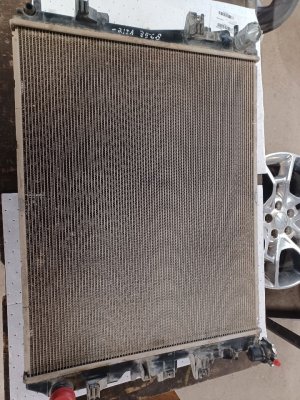
Est. part cost: $20-$300+ - Clogged or Restricted Radiator ⚪ Low Probability → Shop Radiator
How to confirm: Check for external debris like leaves, bugs, or dirt blocking the fins. An infrared thermometer can be used to check for cold spots across the radiator surface while the engine is hot, indicating an internal clog.
Typical fix: Clean the external fins. An internal clog may require a professional flush or radiator replacement.
Est. part cost: $200-$450
Rare But Worth Checking
- Air Pocket in Cooling System: If you've recently had cooling system work done (like a hose or thermostat replacement), an air pocket may be trapped. This prevents proper circulation. The system needs to be properly 'burped' by running the engine with the radiator cap off (or using a spill-free funnel) and the heater on high until all bubbles are purged.
- Blown Head Gasket: This is a worst-case scenario. A failed head gasket can allow hot combustion gases into the cooling system, causing rapid overheating and pressurization. A 'combustion leak test' (block tester) using blue fluid that turns yellow in the presence of CO is the definitive test.
Diagnosis Steps
- STOP DRIVING. Pull over safely and turn off the engine to prevent damage.
- Once the engine is completely cool, check the coolant level in the reservoir and the radiator itself. If low, top it off with the correct Mopar coolant (HOAT for 2011-2012, OAT for 2013-2018).
- Visually inspect for obvious coolant leaks. Look for puddles under the truck or pink/orange crusty residue on hoses, the radiator (especially end tank seams), the water pump weep hole, and the thermostat housing.
- If no leaks are apparent, start the engine and let it warm up. Turn the A/C on full blast, which should command the radiator fan to turn on. Verify the fan is spinning.
- Carefully feel the upper and lower radiator hoses. If the upper is hot and the lower is cool, the thermostat is likely stuck closed.
- If the fan works and the hoses are both hot (indicating flow), but the engine still overheats, the issue could be a failing water pump impeller (less common than a leak) or a clogged radiator.
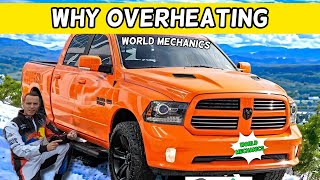
- If you suspect a slow leak, use a cooling system pressure tester 🎬 Watch: How to troubleshoot a Ram 1500 running hot to pressurize the system and find the source.
- If you suspect a head gasket, use a combustion leak tester to check for exhaust gases in the coolant.
Parts You'll Likely Need
- Engine Coolant Thermostat
(OEM #52028898AJ (supersedes 52028898AE, 52028898AI))— This is one of the most common failure points leading to a P0217 code on the 5.7L Hemi. It gets stuck closed, blocking coolant flow. The OEM part is a 203°F unit.
Trusted brands: Mopar, Stant, Motorad
OEM price range: $40-$65
Aftermarket price range: $25-$45 - Engine Water Pump
(OEM #68346912AC (for models after 01/28/2013, supersedes multiple previous numbers))— Water pump leaks from the weep hole and bearing/impeller failures are another very common cause of overheating on this platform.
Trusted brands: Mopar, Gates, GMB, Carquest
OEM price range: $180-$250
Aftermarket price range: $90-$150 - Radiator Fan Assembly — If overheating only occurs in traffic or at idle, the fan is a likely culprit. The motor or integrated controller fails, preventing it from activating.
Trusted brands: Mopar, Dorman, TYC
OEM price range: $400-$550
Aftermarket price range: $200-$350 - Radiator — Needed if a leak is found, most commonly at the plastic end tank seams which are not repairable.
Trusted brands: Mopar, Spectra Premium, Denso
OEM price range: $350-$500
Aftermarket price range: $150-$250
Related Codes That Often Appear With This One
- P0480 — This code indicates a fault in the cooling fan control circuit. Seeing it with P0217 is a strong clue that the cooling fan assembly or its wiring is the root cause of the overheating.
- P0128 — This code means 'Coolant Temperature Below Thermostat Regulating Temperature'. While it seems opposite, it can appear if the thermostat is failing erratically or is stuck open before it eventually sticks closed, causing the P0217 overheat code.
- U11E9 — On models equipped with Active Grille Shutters (AGS), this communication code for the AGS can appear. If the shutters are stuck closed, they can restrict airflow and contribute to overheating, especially at highway speeds.
Technical Service Bulletins (TSBs) & Recalls
- TSB 09-019-23 — Cold Engine Ticking Noise From Exhaust Manifold Area — Addresses a ticking noise from the exhaust manifold when cold on 2019-2022 DS Ram 1500s with the 5.7L Hemi. The fix involves replacing the exhaust manifolds with an updated kit. While this TSB is for a slightly later model, the issue of broken manifold bolts is common across the 4th generation.
- TSB 11-002-11 — Exhaust Manifold Bolt Breakage — A Rapid Response Transmittal for 2009-2011 Rams for broken exhaust manifold bolts on cylinders 7 and 8, causing a ticking noise. The fix involves replacing the bolts with higher strength stainless steel ones.
Mechanic-Grade Diagnostic Values
- Engine Coolant Temperature (ECT) Sensor 5V Supply — expected: Approximately 5.0 Volts. Failure: Voltage below 5.0V suggests an issue with the PCM or the wiring.
- ECT Sensor Reading vs. Actual Temperature — expected: The temperature reading on a scan tool should closely match the actual coolant temperature measured near the sensor with an infrared thermometer.. Failure: A significant discrepancy between the scan tool reading and the physical measurement points to a faulty ECT sensor.
- Cooling Fan PWM Control Signal — expected: The PCM sends a Pulse Width Modulated (PWM) signal to the fan controller. The duty cycle of this signal varies to control fan speed based on coolant temp, trans temp, and A/C pressure.. Failure: Absence of a PWM signal or a fan that doesn't respond to A/C activation points to a wiring, PCM, or fan controller issue. The fan motor itself draws high amperage (up to 72 amps) directly from the battery.
Scan Tool Commands That Help
- wiTECH: Flash ECU — Used to update the Powertrain Control Module (PCM) firmware. In some cases, an outdated calibration may have incorrect thresholds for setting a P0217 code, or a Technical Service Bulletin (TSB) may require a re-flash to correct a drivability issue related to cooling.
Wiring & Ground Locations
- ECT Sensor Connector — Located near the thermostat housing on the front of the engine.. This is the primary sensor for reporting engine temperature to the PCM. A damaged connector or wiring here can cause false overheat signals, though it's less common than a mechanical failure for P0217. The circuit consists of a 5V supply from the PCM and a signal return wire.
- Cooling Fan Connector — The main connector for the electric radiator fan assembly, located on the fan shroud.. This connector carries high amperage for the fan motor (typically two large gauge wires, red and black) and the PWM control signal from the PCM (a smaller gauge wire). Corrosion or damage here will prevent the fan from operating, leading to overheating in traffic.
- G206 Ground — Located on the right rear of the engine compartment.. A wiring diagram shows this as a ground point for various engine controls. While not directly tied to the high-current fan circuit, a poor ground here could potentially affect sensor readings or PCM operation.
Real Owner Repair Stories
- RamForum.com user (2017 Ram 5.7 Hemi (in a Charger)) — Noise from the front of the engine, but no visible leak.
✅ What actually fixed it The water pump bearing had failed. It was replaced under warranty with a new Mopar unit at only 20,000 miles, resolving the noise and preventing an overheat. - RamForum.com user (2013 Ram 1500 5.7 Hemi) — Bearing noise from the front of the engine.
✅ What actually fixed it The water pump was failing at just over 70,000 miles. It was replaced with an aftermarket pump from a local auto parts store, which fixed the noise.
OEM Part Supersession History
53022192AF, AG, AI, AJ, AK, 68346912AA, 68346912AB→68346912AC— Design update for the engine water pump.
Heads up: The part number 68346912AC is specified for models built after January 28, 2013. Using the wrong pump for your model year may result in fitment issues.
Model Year Variations Within This Range
- 2011-2012: These model years require Hybrid Organic Additive Technology (HOAT) coolant, which is typically orange or pink. It must not be mixed with the later OAT type.
- 2013-2018: These model years use Organic Additive Technology (OAT) coolant, which is typically purple from the factory but can turn pink/orange over time. Mixing with HOAT will cause sludging and severe cooling system problems.
- 2013-2018 (Higher Trims): Many higher-trim trucks from 2013 onward are equipped with Active Grille Shutters (AGS). A failure of the AGS system can cause or contribute to a P0217 overheat condition, which is not a factor on earlier models or base trims.
- Post-Jan 28, 2013: The water pump design was updated. The current Mopar part number is 68346912AC for trucks built after this date.
Diagnostic Flowchart
Other Known Issues on This Vehicle
Issues unrelated to this code that are worth knowing about as an owner of this generation:
- MDS Lifter Failure / 'Hemi Tick' 🔴 High — A very well-documented and common issue, especially on engines that see a lot of idle time or are not driven aggressively. Can occur at various mileages, but becomes more prevalent over 100,000 miles. (Ref: No universal recall, but various TSBs have been issued for specific conditions or model years. It's a known design weakness.)
- Broken Exhaust Manifold Bolts 🟠 Medium — Extremely common. The cast iron manifolds and steel bolts expand and contract at different rates than the aluminum cylinder heads, causing the rear-most bolts to snap. This results in a ticking noise, especially when cold, that is often misdiagnosed as the 'Hemi Tick'. (Ref: TSB 11-002-11 for early models; TSB 09-019-23 for later models.)
- Radiator Coolant Leaks 🟠 Medium → Shop Radiator — Common leak point is the seam where the plastic end tanks are crimped to the aluminum radiator core. The gasket in this seam can fail over time, causing slow leaks.
- Electrical Issues (TIPM) 🟠 Medium — While improving in later years of this generation, the Totally Integrated Power Module (TIPM) can cause a wide range of bizarre electrical problems, from fuel pump issues to random horn honking. (Ref: Various recalls and lawsuits have targeted the TIPM in other Chrysler vehicles of the era, but it remains a known potential issue for the Ram.)
Used vs. New Parts: Buying Guide for This Vehicle
When a used part is the smart pick: For this repair, used parts are generally not recommended for core components like the water pump or thermostat due to their nature as wear items. However, a used radiator or fan assembly from a low-mileage, accident-free donor vehicle can be a cost-effective option if inspected carefully.
Donor-vehicle mileage cap: roughly under 60000 miles for the part to have meaningful remaining life.
What to inspect on the donor part:
- For a radiator: Check fins for excessive damage or corrosion. Look at the plastic end tanks for any signs of cracking or chalky appearance, which indicates age and heat cycling.
- For a fan assembly: Spin the fan blades by hand to ensure the motor bearing is smooth and quiet. Inspect the wiring and connector for any signs of melting, corrosion, or damage.
- Check the donor vehicle's history if possible to ensure it wasn't in a front-end collision.
OEM-only on this vehicle (don't cheap out):
- While not strictly 'OEM-only', using a Mopar thermostat is often recommended by forum veterans to ensure the correct 203°F operating temperature and avoid compatibility issues.
Aftermarket brands forum-validated for this vehicle:
- Water Pumps: Gates is a frequently recommended and trusted aftermarket brand for water pumps.
- Radiators: Denso, Spectra Premium.
Brands owners have reported issues with on this vehicle:
- A-1 Cardone is mentioned by some forum users as a brand to avoid for water pumps due to quality concerns.
- Be cautious with unbranded, 'white-box' parts from online marketplaces for critical components like water pumps and thermostats.
Real Owner Stories
Aggregated from forums and TSBs cited above. Mileages and costs reflect what owners reported in those sources.
2009 Ram 1500 5.7L Hemi
Symptoms: Owner was seeking a specific TSB for a signature ticking sound that dealers are very familiar with.
What fixed it: Replacing broken exhaust manifold bolts with higher strength stainless steel ones as per TSB 11-002-11.
Source hint: ramforum.com - 'Searching for the Exhaust Bolt TSB...'
2015 Ram 1500 5.7L Hemi
Symptoms: Ticking noise that the owner feared was a bad lifter.
What fixed it: Diagnosed as cracked exhaust manifolds, which is a common point of confusion with lifter failure.
Source hint: reddit.com/r/ram_trucks - '1500 5.7 Hemi, are bad lifters a common problem?'
2019 Ram 1500 5.7L Hemi
Symptoms: Cracked manifold documented by a TSB but the vehicle was out-of-warranty.
What fixed it: The user discussed the frustration of the repair not being covered as a recall despite the TSB documentation.
Source hint: ramforum.com - 'TSB exhaust manifold leak'
Related OBD-II Codes
Frequently Asked Questions
What type of coolant should I use for my 2014 Ram 1500 5.7L Hemi to avoid overheating issues?
My 2011 Ram has a ticking noise and is running hot; could TSB 11-002-11 be related?
Can I replace the factory 203°F thermostat with a cooler one to prevent P0217?
How can I tell if my 5.7L Hemi water pump is failing before the engine overheats?
Is there a cooling fan relay I can swap on my 2015 Ram 1500?
Helpful Videos
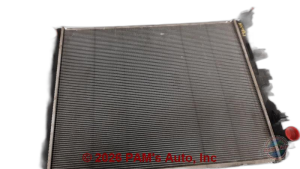
Used OEM Parts in Stock
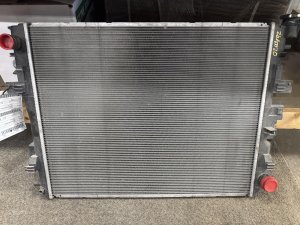
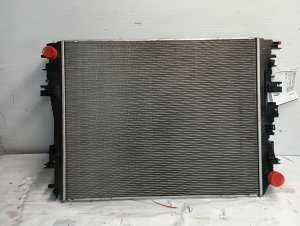
New Aftermarket Parts Available


The information in this article is provided for general reference and educational purposes only. Vehicle specifications, procedures, and part compatibility can vary by production date, trim level, and region. Always consult your vehicle's factory service manual and verify part numbers before purchasing or performing repairs. Safety-critical components such as airbags, seat belts, and braking systems should be installed by a qualified professional.
- Ram 1500:
- 🧭 Diagnostic Flowchart
- 🎬 Helpful Videos
- 🛍️ Shop This Part
- What's Unique About the 2011-2018 Ram 1500
- Symptoms You May Notice
- Most Likely Causes
- Rare But Worth Checking
- Diagnosis Steps
- Parts You'll Likely Need
- Related Codes That Often Appear With This One
- Technical Service Bulletins (TSBs) & Recalls
- Mechanic-Grade Diagnostic Values
- Scan Tool Commands That Help
- Wiring & Ground Locations
- Real Owner Repair Stories
- OEM Part Supersession History
- Model Year Variations Within This Range
- Other Known Issues on This Vehicle
- Used vs. New Parts: Buying Guide for This Vehicle
- Real Owner Stories
- 2009 Ram 1500 5.7L Hemi
- 2015 Ram 1500 5.7L Hemi
- 2019 Ram 1500 5.7L Hemi
- Related OBD-II Codes
- Frequently Asked Questions
- 🎟️ Get 5% Off