

P0217 on 2007-2009 Saturn Aura 3.5L V6: Engine Overheating Causes and Fixes
Code P0217 means your Saturn Aura's engine is overheating. This is a critical warning. The most common causes are low coolant due to leaking coolant crossover pipe gaskets (a known issue with a TSB), a stuck thermostat, or a failing water pump. Stop driving immediately to prevent severe engine damage.
- P0217 is a critical 'Engine Overheating' code. Stop driving immediately to prevent severe engine damage.
- For the 2007-2009 Saturn Aura 3.5L, the most likely cause is low coolant from leaking coolant crossover pipe gaskets, a known issue with a TSB.
- Always start diagnosis by checking the coolant level. If it's low, you have a leak that must be found and fixed.
- Other common causes are a stuck thermostat or a failing water pump.
- Do not assume the temperature sensor is bad; P0217 almost always indicates a real and dangerous overheating problem.
What's Unique About the 2007-2009 Saturn Aura
The Saturn Aura and its 3.5L LZ4 V6 engine share a platform and powertrain with the Chevrolet Malibu, Pontiac G6, and others. This engine family is known for a specific cooling system vulnerability. GM issued a Technical Service Bulletin (TSB #07-06-02-006E) for leaking coolant crossover pipe gaskets, a frequent cause of coolant loss that leads directly to overheating and the P0217 code on these vehicles. Unlike older GM V6 engines notorious for intake manifold gasket failures, the LZ4 design uses a separate coolant crossover pipe, making these specific gaskets the primary failure point for coolant leaks in this area.
Symptoms You May Notice
- Temperature gauge reading in the red or 'HOT'
- Illuminated Check Engine Light
- Engine temperature warning light on the dashboard
- Reduced engine power or vehicle entering 'limp mode'
- Steam or smoke coming from the engine bay
- Loud boiling or gurgling sounds from the engine
- Sweet smell of coolant from the engine area
- Coolant visibly leaking from the reservoir cap due to over-pressurization.
- Replacing the radiator cap first. While a faulty cap can cause issues, it's less likely to be the primary cause of a P0217 than a significant leak or component failure.
- Replacing the ECT sensor without confirming a real overheat. Always verify if the engine is physically overheating before assuming the sensor is bad.
Most Likely Causes
- Leaking Coolant Crossover Pipe Gaskets 🔴 High Probability This is a known failure point for the GM 3.5L V6 engine, addressed by TSB #07-06-02-006E. The original gaskets degrade and fail, causing a coolant leak, typically where the pipe meets the rear cylinder head.
How to confirm: Visually inspect the area where the coolant crossover pipes meet the cylinder heads (front of the rear cylinder head is a common spot) for signs of pink/orange Dex-Cool residue or active dripping. A cooling system pressure test will make the leak more obvious.
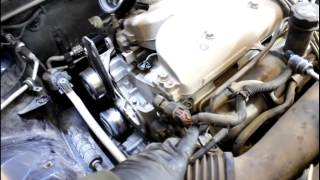
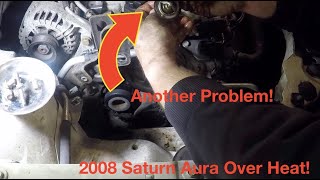
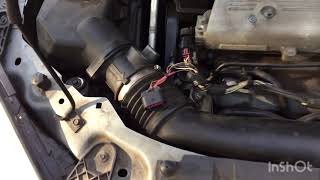
Typical fix: Replace the coolant crossover pipe gaskets with the updated part design. This is a labor-intensive job that involves removing the alternator and power steering pump to gain access. The updated OEM 🎬 Watch this step-by-step crossover gasket replacement video part numbers are specified in the TSB.
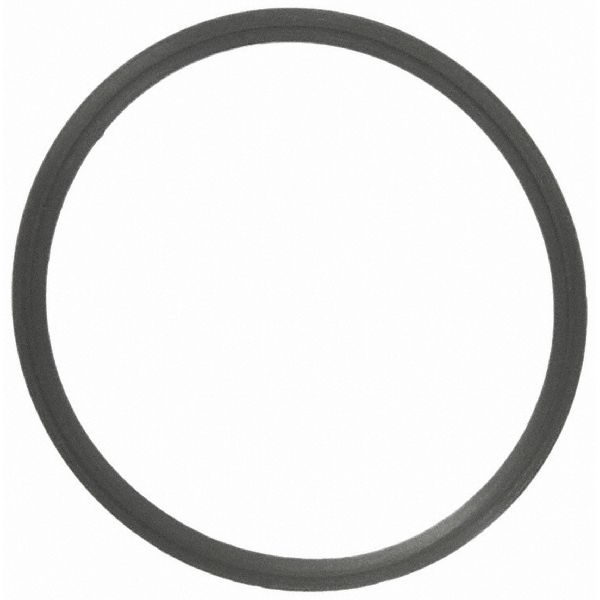
Est. part cost: $20-$50 - Stuck-Closed Thermostat 🔴 High Probability → Shop Integrated Thermostat Housing Assembly
How to confirm: With the engine overheating, feel the upper and lower radiator hoses (use caution, they will be hot). If the upper hose is hot and the lower hose is cool, it indicates coolant is not circulating because the thermostat is stuck closed.
Typical fix: Replace the thermostat and gasket. It's recommended to also drain and refill the coolant at this time. The thermostat is located under the throttle body.
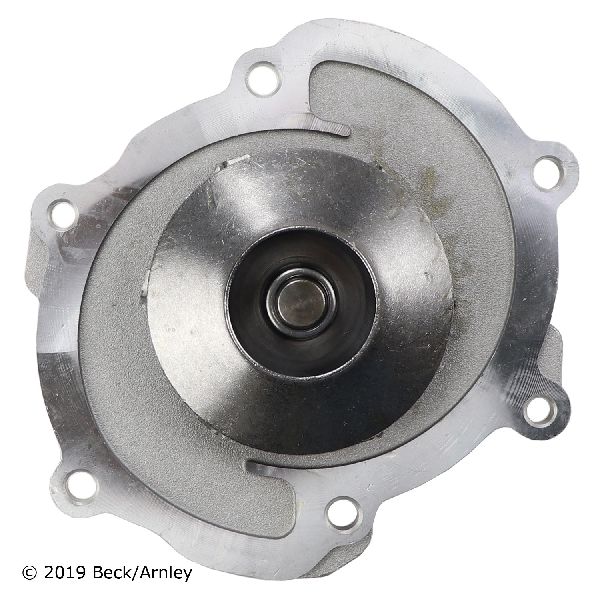
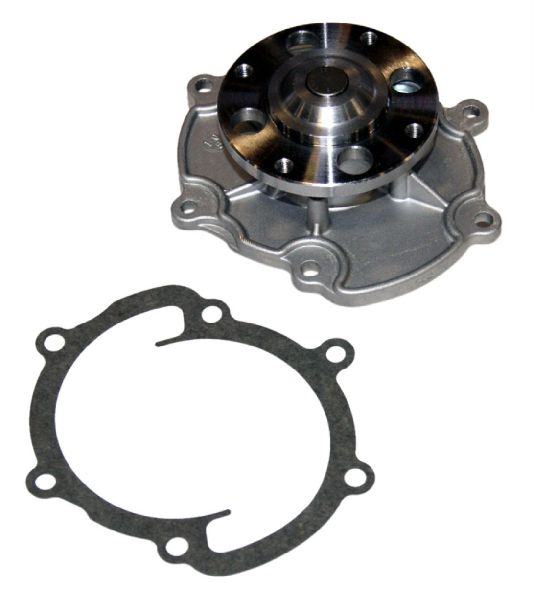
Est. part cost: $25-$60 - Failing Water Pump 🟡 Medium Probability → Shop Engine Water Pump
How to confirm: Look for coolant leaks from the water pump's 'weep hole'. Listen for a whining or grinding noise from the front of the engine that changes with RPM. With the engine off and belt removed, check the water pump pulley for any play or roughness when spun by hand.
Typical fix: Replace the water pump and its gasket. This is often done at the same time as the thermostat. 🎬 See how to replace the water pump and thermostat
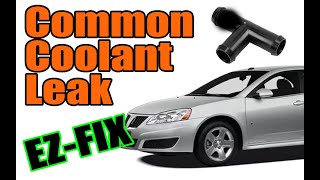
Est. part cost: $50-$150 - Low Engine Coolant Due to Other Leaks 🟡 Medium Probability On platform mates like the Pontiac G6, a small plastic 'T' fitting in the coolant reservoir hose system is known to become brittle and break, causing a significant leak.
How to confirm: Check the coolant reservoir level. If it's low, perform a cooling system pressure test to find the source of the leak, which could be a cracked radiator, a split hose, a loose clamp, or the aforementioned 'T' fitting under the reservoir.
Typical fix: Repair or replace the leaking component (radiator, hose, 'T' fitting, etc.) and refill and bleed the cooling system.
Est. part cost: $10-$300 depending on the part - Inoperative Cooling Fan(s) ⚪ Low Probability → Shop Engine Cooling Fan Blade A known issue on the Aura platform is a blown 30-amp fuse for the cooling fans, which can lead to overheating, particularly in stop-and-go traffic.
How to confirm: When the engine is at operating temperature or when the A/C is turned on, the cooling fans should activate. If they do not, check the fuses and relays first. If those are good, the fan motor itself may have failed.
Typical fix: Replace the blown fuse, relay, or the entire cooling fan assembly if the motor is bad.
Est. part cost: $5-$250
Rare But Worth Checking
- Blown Head Gasket: While less common, it's a severe issue. This can allow combustion gases into the cooling system, causing it to over-pressurize and overheat. A block tester kit can be used to check for combustion gases in the coolant.
- Faulty Engine Coolant Temperature (ECT) Sensor: → Shop Engine Coolant Temperature Sensor It's possible for the sensor to fail and send an incorrect high-temperature reading to the PCM, triggering a P0217 without an actual overheat. However, this is rare, and a true overheat condition should be ruled out first.
- Faulty Radiator Cap: → Shop Radiator A cap that can no longer hold pressure will lower the boiling point of the coolant, which can lead to overheating and coolant being pushed into the overflow tank. One owner on Saturn Forum reported coolant overflowing from the reservoir cap, and a new cap resolved the issue.
Diagnosis Steps
- Safety First: If the engine is hot, wait for it to cool completely before opening the radiator cap to avoid burns.
- Check Coolant Level: Inspect the coolant reservoir. If it is low or empty, you have a leak.
- Scan for Codes: Confirm P0217 and check for any other related codes.
- Inspect for Obvious Leaks: Look for puddles under the car. Visually inspect hoses, the radiator, and especially the coolant crossover pipe area for signs of pink/orange crusty residue (dried Dex-Cool).
- Perform a Pressure Test: Use a cooling system pressure tester to pressurize the system. This will reveal the location of any leaks by causing them to drip or spray.
- Check Cooling Fan Operation: Start the engine and turn on the A/C. Both cooling fans should turn on. If not, inspect fuses and relays.
- Test the Thermostat: Once the engine is warm, carefully feel the upper and lower radiator hoses. A hot upper hose and a cool lower hose suggest a stuck thermostat.
- Inspect Water Pump: With the engine off, check for leaks from the pump's weep hole and check for any play in the pump pulley.
- Test for Head Gasket Failure: If no external leaks are found and the car continues to overheat, use a block tester to check for combustion gases in the cooling system.
Parts You'll Likely Need
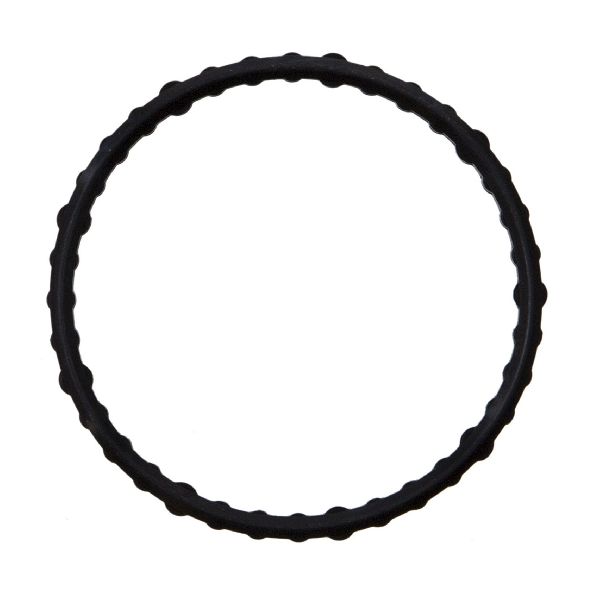
- Coolant Crossover Pipe Gaskets
(OEM #12623852, 12623853, 12577704 (Varies by design per TSB 07-06-02-006E))— This is the most common vehicle-specific failure point leading to coolant loss and overheating, as documented in GM TSB #07-06-02-006E.
Trusted brands: ACDelco, Fel-Pro (e.g., MS96621)
OEM price range: $30-$50
Aftermarket price range: $15-$30 - Thermostat and Housing Assembly
(OEM #12618836 (ACDelco #15-11057))— A stuck thermostat is a very common cause of engine overheating on most vehicles, including the Aura.
Trusted brands: ACDelco, Duralast, Motorad
OEM price range: $40-$70
Aftermarket price range: $25-$60 - Engine Water Pump — Failure of the water pump will stop coolant circulation, leading to a rapid overheat. It's a common wear-and-tear item.
Trusted brands: ACDelco, Gates, Duralast
OEM price range: $100-$180
Aftermarket price range: $50-$120
Related Codes That Often Appear With This One
- P0128 — If the thermostat is failing by sticking open, it can cause a P0128 (Coolant Temperature Below Thermostat Regulating Temperature) before it fails completely and sticks closed, causing a P0217.
Technical Service Bulletins (TSBs) & Recalls
- 07-06-02-006E: Coolant Leaking from Engine (Replace Coolant Crossover Pipe Gaskets). This is the primary TSB for the most common cause.
- 07-06-02-006A: An earlier version of the same TSB, also confirming the issue and part numbers.
Platform-Specific Known Issues
- Coolant Crossover Gasket Failure: The most significant issue for the LZ4 V6. The gaskets between the crossover pipe and cylinder heads fail, causing a slow coolant leak that eventually leads to a low coolant level and a P0217 overheat code. The leak is often found at the rear cylinder head and can be difficult to see.
- Cooling Fan Fuse: → Shop Engine Cooling Fan Blade A 30-amp fuse for the cooling fans is a known weak point. If the fans fail to turn on when the engine gets hot, checking this fuse should be one of the first steps.
Mechanic-Grade Diagnostic Values
- Engine Coolant Temperature (ECT) Sensor Resistance — expected: Approximate values: 2,200 - 3,000 Ω at 68°F (20°C) and 250 - 350 Ω at 176°F (80°C).. Failure: Readings that are infinite (open circuit), near zero (short circuit), or do not decrease smoothly as temperature increases indicate a faulty sensor.
- Engine Coolant Temperature (ECT) Sensor Voltage (Key On, Engine Off) — expected: Approximately 3.0 - 3.5V on a cold engine (~20°C/68°F). Voltage should decrease as the engine warms up.. Failure: A voltage reading near 5.0V suggests an open in the sensor or wiring. A reading near 0V suggests a short to ground in the circuit.
Scan Tool Commands That Help
- GM Tech2 / GDS2 or equivalent: Engine Output Controls > Fan Relays / Cooling Fan Test — Use this bidirectional command to test the entire cooling fan circuit (fuses, relays, wiring, and fan motors) without needing to bring the engine to full operating temperature. If the fans activate with the scan tool but not when the engine gets hot, it points towards a sensor or PCM issue rather than a fan circuit failure.
Wiring & Ground Locations
- ECT Sensor — On the 3.5L LZ4 V6, it is located on the rear cylinder head (firewall side), below the throttle body and near the coolant reservoir.. This is the primary sensor the ECM uses to determine engine temperature. A faulty reading can falsely trigger a P0217 or fail to activate the cooling fans.
- ECM (Engine Control Module) — Located in the engine compartment, on the driver's side, in front of the battery.. The ECM receives the signal from the ECT sensor and commands the cooling fans to turn on. All related wiring terminates here.
- G105 / G106 — G105 is under the left intake manifold, on the rear of the cylinder head. G106 is on the rear of the engine, above the oil filter for the 3.5L engine.. These are primary engine block grounds. The ECM and its sensors rely on clean ground connections for accurate readings. A corroded or loose ground at G106 can cause erratic sensor data, potentially affecting the ECT sensor reading.
- G103 — Located at the left rear of the engine compartment on the cowl, above the brake booster.. This is a major chassis ground point for several modules, including the Body Control Module (BCM) and Instrument Panel Cluster (IPC). While not a direct engine ground, a poor connection here can cause a wide range of bizarre electrical issues across the vehicle.
OEM Part Supersession History
Unknown, original factory fitment→P/Ns 12577704 and 12590668 (per TSB 07-06-02-006A)— The original coolant crossover pipe gaskets were prone to degradation and leaking.
Heads up: TSB 07-06-02-006E notes there are three different crossover pipe designs. Ensure the correct gasket shape (e.g., four mounting holes vs. other designs) is used for the specific crossover pipe on the vehicle.
Model Year Variations Within This Range
- 2007-2009: The 3.5L LZ4 V6 was the standard V6 in the XE trim. For 2009, the V6 option was largely replaced by the 3.6L LY7 engine in the uplevel XR trim, though the 3.5L remained available. The P0217 causes and fixes described here are specific to the 3.5L LZ4 and are consistent across all model years it was offered.
Diagnostic Flowchart
Other Known Issues on This Vehicle
Issues unrelated to this code that are worth knowing about as an owner of this generation:
- Loss of Electric Power Steering (EPS) 🔴 High — Very common. Can occur suddenly at any time while driving. (Ref: Multiple recalls and special coverage extensions, including NHTSA #14V153000 and GM recall #N140115.)
- Fractured Transmission Shift Cable 🔴 High — Common enough to warrant a recall. The gear shifter may not match the actual gear the transmission is in. (Ref: Recall NHTSA #12V460000, GM #12106 covers 2007-2008 models with the 4-speed automatic transmission.)
- 4T45-E Transmission Problems (4-Cyl Models) 🟠 Medium — While this article is for the V6, the 4-cylinder Aura used the 4T45-E which is prone to shift solenoid failures.
- Clunking Noise from Intermediate Steering Shaft 🟡 Low — A common annoyance where the steering shaft develops a clunking sound or feel. Aftermarket and OEM replacements are available. (Ref: While recalls exist for the electronic components, the mechanical shaft clunk is a separate common repair.)
- Brake Light Fluctuation / BCM Resistance 🟠 Medium — Widespread issue across the Epsilon platform causing brake lights to act erratically or stay on. (Ref: Recall NHTSA #14V252000, GM #13036.)
Used vs. New Parts: Buying Guide for This Vehicle
When a used part is the smart pick: For this repair, used parts are generally not recommended due to the high labor involved in accessing components. However, if needed, a complete cooling fan assembly from a low-mileage, rear-ended donor vehicle could be a viable option if tested before purchase.
Donor-vehicle mileage cap: roughly under 80000 miles for the part to have meaningful remaining life.
What to inspect on the donor part:
- For a cooling fan assembly, check for cracks in the shroud and ensure the fan blades are intact and spin freely.
- For a coolant reservoir, ensure the plastic is not yellowed or brittle and that all hose nipples are intact.
- Check the donor vehicle's VIN to ensure it matches the 3.5L engine, not the 3.6L or 2.4L.
OEM-only on this vehicle (don't cheap out):
- Coolant Crossover Gaskets: The cost of the part is minimal compared to the labor. Use the updated OEM gaskets or a top-tier aftermarket equivalent like Fel-Pro to ensure a long-lasting repair.
- Thermostat: A critical and inexpensive component. Failure can destroy the engine. Do not use a used thermostat.
- Water Pump: This is a high-labor wear item. A new pump with a warranty is the only sensible choice.
Aftermarket brands forum-validated for this vehicle:
- Fel-Pro (for gaskets)
- Gates (for water pumps and hoses)
- ACDelco (OEM supplier)
Real Owner Stories
Aggregated from forums and TSBs cited above. Mileages and costs reflect what owners reported in those sources.
2007-2009 Saturn Aura 3.5L LZ4 V6
Symptoms: Coolant was visibly coming out of the reservoir cap after a drive, leading to concerns about overheating.
What fixed it: Replacing the reservoir cap resolved the over-pressurization issue.
Source hint: Saturn Forum - 'Over heating????'
2005 Chevy Malibu LS 3.5L (Platform Mate)
Symptoms: Vehicle was overheating without any obvious external leaks visible to the owner.
What fixed it: The discussion suggested a stuck-closed thermostat or failing cooling fans as the likely culprits.
Source hint: Reddit r/Cartalk - '2005 Chevy Malibu LS 3.5L overheating.'
2007 Saturn Aura 3.5L LZ4 V6
Symptoms: Slow coolant leak leading to a low coolant level and eventually a P0217 overheat code; leak was difficult to see but located at the rear cylinder head.
What fixed it: Replace the coolant crossover pipe gaskets with the updated part design specified in TSB #07-06-02-006E.
Source hint: TSB #07-06-02-006E: Coolant Leaking from Engine
Related OBD-II Codes
Frequently Asked Questions
Is there a specific technical service bulletin for coolant leaks on the 2007-2009 Saturn Aura 3.5L?
Where is the most common leak point that causes the P0217 code on this vehicle?
My Aura is overheating in stop-and-go traffic but seems fine on the highway. What should I check first?
I see pink crusty residue near the back of my engine. What is this?
Are there any other common cooling system parts that fail on the Aura's platform mates?
Where is the thermostat located on the 3.5L LZ4 V6 if I need to replace it?
Helpful Videos
We Have This Part in Stock


The information in this article is provided for general reference and educational purposes only. Vehicle specifications, procedures, and part compatibility can vary by production date, trim level, and region. Always consult your vehicle's factory service manual and verify part numbers before purchasing or performing repairs. Safety-critical components such as airbags, seat belts, and braking systems should be installed by a qualified professional.
- Saturn Aura:
- 🧭 Diagnostic Flowchart
- 🎬 Helpful Videos
- 🛍️ Shop This Part
- What's Unique About the 2007-2009 Saturn Aura
- Symptoms You May Notice
- Most Likely Causes
- Rare But Worth Checking
- Diagnosis Steps
- Parts You'll Likely Need
- Related Codes That Often Appear With This One
- Technical Service Bulletins (TSBs) & Recalls
- Platform-Specific Known Issues
- Mechanic-Grade Diagnostic Values
- Scan Tool Commands That Help
- Wiring & Ground Locations
- OEM Part Supersession History
- Model Year Variations Within This Range
- Other Known Issues on This Vehicle
- Used vs. New Parts: Buying Guide for This Vehicle
- Real Owner Stories
- 2007-2009 Saturn Aura 3.5L LZ4 V6
- 2005 Chevy Malibu LS 3.5L (Platform Mate)
- 2007 Saturn Aura 3.5L LZ4 V6
- Related OBD-II Codes
- Frequently Asked Questions
- 🎟️ Get 5% Off