

P0222 on 2006-2013 Audi A3 2.0T: EPC Light, Causes, and Fixes
On a 2006-2013 Audi A3 2.0T, code P0222 is almost always caused by a faulty throttle body or a damaged wiring harness at the throttle body connector. This will trigger the EPC light and put the car in a low-power 'limp mode'. The most common fix is replacing the entire throttle body assembly, but a wiring repair should be ruled out first, as this is a known failure point on the platform.
- P0222 on your Audi A3 will almost certainly trigger the EPC light and put the car into a low-power limp mode.
- The cause is almost always an electrical failure, either the internal sensors in the throttle body or the wiring leading to it.
- Do not waste time or money on just cleaning the throttle body; it will not fix this specific code.
- Before buying a new throttle body, carefully inspect the wiring harness and connector for damage, as this is a common and cheaper fix.
- If you replace the throttle body, a 'throttle body adaptation' with a proper scan tool is not optional—it is required for the car to run correctly.
What's Unique About the 2006-2013 Audi A3
The Audi A3 from this era, sharing its PQ35 platform with the VW GTI, is known for throttle body issues that trigger the P0222 code and illuminate the EPC (Electronic Power Control) light. The problem isn't necessarily a design flaw but rather the reality of electronic components aging. The internal sensors, which use carbon tracks, wear out, and the wiring harness, subject to engine bay heat and vibration, can become brittle and fail. While a dirty throttle body can cause other issues, P0222 on this platform is almost always an electrical fault, not a mechanical one caused by carbon buildup. Volkswagen issued a Technical Service Bulletin (TSB 2018652) for the related GTI, specifically addressing wiring harness chafing near the throttle body connector, highlighting this as a critical area to inspect before replacing parts.
Symptoms You May Notice
- EPC (Electronic Power Control) light illuminated on the dashboard.
- Check Engine Light is on.
- Vehicle enters 'limp mode' with drastically reduced engine power and acceleration.
- Poor or hesitant throttle response.
- Rough or unstable idle.
- Engine may stall, especially when braking.
- Difficulty starting the engine.
- Replacing the accelerator pedal sensor. P0222 specifically points to the 'B' circuit at the throttle body (G188), not the pedal sensor assembly (G79/G185). While pedal sensor failure can cause similar symptoms, it will typically set different codes like P2122 or P2127.
- Cleaning a dirty throttle body. While carbon buildup can cause idling and sticking issues, it will not cause a 'circuit low' electrical fault code like P0222, which indicates a sensor or wiring failure.
Most Likely Causes
- Faulty Throttle Body Assembly 🔴 High Probability → Shop Fuel Injection Throttle Body The two internal throttle position sensors (G187 and G188) are integrated into the throttle body and cannot be replaced separately. The carbon tracks or electronic components inside wear out over time, leading to voltage reading failures. This is a common failure mode for electronic throttle bodies of this vintage.
How to confirm: Use an Audi-specific scan tool (like VCDS by Ross-Tech) to monitor Measuring Block Group 062 in the Engine controller. With the key on and engine off, observe the readings for Angle Sensor 1 and Angle Sensor 2. Sensor 1 (G187) should read a low percentage at rest (e.g., ~14%) and increase as the pedal is pressed. Sensor 2 (G188) should read a high percentage at rest (e.g., ~80%) and decrease as the pedal is pressed. If Sensor 2 shows a static low voltage or 0% and doesn't change, the throttle body is faulty.
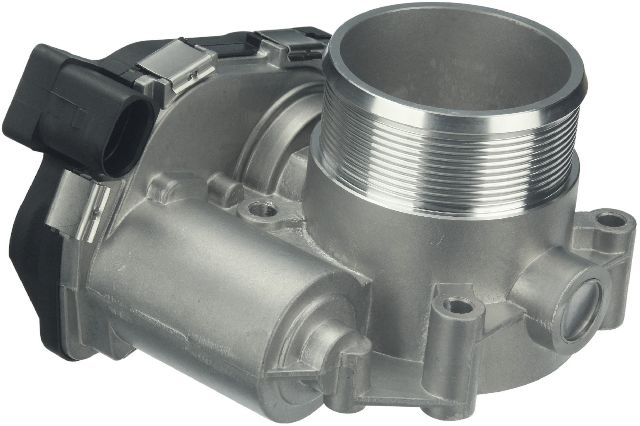
Typical fix: Replace the entire throttle body assembly. 🎬 Watch: MK5 GTI throttle body and pedal installation guide A throttle body adaptation (TBA) must be performed with a scan tool after installation for the ECU to learn the new part's position values.
Est. part cost: $150-$400 - Damaged Wiring or Connector at Throttle Body 🟡 Medium Probability → Shop Fuel Injection Throttle Body The engine harness is exposed to constant heat and vibration, which can cause wires to become brittle, chafe, or break internally near the 6-pin throttle body connector. This is a known issue noted in VW/Audi service bulletins (like TSB 2018260/8 and VW TSB 2018652) for this platform.
How to confirm: Visually inspect the wiring harness leading to the throttle body for any signs of cracking, melting, or damage. Unplug the connector and check for corrosion, moisture, or backed-out pins. With the key on, use a scan tool to watch live data from Measuring Block 062 while wiggling the harness and connector. If the voltage for Sensor 2 jumps or drops out, a wiring fault is confirmed.
Typical fix: Repair the damaged section of the wiring harness or replace the connector pigtail. This often involves cutting out the bad section and splicing in new wires using crimp connectors and heat shrink, as soldering is not recommended by Audi for harness repairs.
Est. part cost: $20-$50
Rare But Worth Checking
- Faulty Engine Control Module (ECM): → Shop Engine Control Module (ECM) This is very rare. Before suspecting the ECM, all other possibilities, especially the throttle body and its wiring, must be exhaustively ruled out. An ECM fault can cause it to misinterpret a normal sensor voltage as low.
Diagnosis Steps
- Retrieve all stored fault codes using an OBD-II scanner. Note any other codes that appear alongside P0222, such as P0121 or P0122.
- Using a capable scan tool (VCDS recommended), access the Engine controller and view live data in Measuring Block Group 062.
- Confirm that Sensor 2 (G188) is showing a very low, static voltage/percentage that does not respond to throttle input, while Sensor 1 (G187) may be responding normally.
- Turn the ignition off. Carefully inspect the wiring harness and the 6-pin electrical connector at the throttle body. Look for any signs of damage, chafing, or corrosion. Pay close attention to the area where the harness may rub against other components.
- While monitoring live data, gently wiggle the harness and connector to see if the sensor readings become erratic, which would indicate a wiring issue.
- If the wiring looks good and the wiggle test shows no change, the next logical step is to replace the throttle body assembly, as the internal sensors are the most likely point of failure.
- After replacing the throttle body, reconnect the battery. Use a scan tool to clear all fault codes.
- Perform a throttle body adaptation (TBA) using the scan tool. This step is mandatory for the new part to function correctly with the ECM. 🎬 See how to perform a throttle body adaptation
- Start the engine and verify that the EPC light does not return and that throttle response is normal.
Parts You'll Likely Need
- Throttle Body Assembly
(OEM #06F133062T (also 06F133062Q, verify by VIN))— This is the most common fix because the internal position sensors that cause the P0222 code are integrated into the assembly and cannot be purchased separately.
Trusted brands: Bosch, VDO, Pierburg
OEM price range: $350-$450
Aftermarket price range: $150-$250 - Throttle Body Gasket
(OEM #06F133073D (example, verify by VIN))— The gasket should always be replaced when the throttle body is removed to prevent vacuum leaks, which can cause separate performance issues.
Trusted brands: Victor Reinz, Elring
OEM price range: $10-$20
Aftermarket price range: $5-$10 - Throttle Body Connector Repair Kit
(OEM #Varies, e.g., 1J0973713)— If a wiring inspection reveals damage at the connector, a pigtail kit is the standard repair method to ensure a solid connection.
Trusted brands: Genuine VW/Audi, Dorman
OEM price range: $30-$50
Aftermarket price range: $15-$30
Related Codes That Often Appear With This One
- P0121 — This code for 'Throttle Position Sensor (G69): Implausible Signal' often appears with P0222. Seeing them together strongly suggests a problem affecting the entire throttle body or its connector, like a power, ground, or harness issue.
- P0122 — This is the 'Circuit Low' code for the primary sensor ('A' or G187). If both P0122 and P0222 are present, it's a very strong indicator of a wiring or connector problem common to both sensors, such as a loss of the 5V reference or ground.
- P2100 — This code indicates a fault in the Throttle Actuator Control Motor Circuit. If seen with P0222, it points towards a comprehensive failure within the throttle body unit or its electrical connection.
Technical Service Bulletins (TSBs) & Recalls
- Audi TSB 2018260/8: Addresses repair of the engine wiring harness for throttle valve faults, specifying the use of crimp connectors instead of solder.
- Volkswagen TSB 2018652: Specifically for the platform-mate VW GTI, this TSB details a wiring repair for the throttle body connector to fix intermittent throttle faults.
Platform-Specific Known Issues
- Audi/VW issued a Technical Service Bulletin (TSB 2018260/8) for some models addressing sporadic throttle valve fault codes caused by wiring harness issues, advising a wiring repair before replacing the throttle body. A similar VW TSB (2018652) for the GTI also points to this known wiring weakness.
- Owner experiences on forums like Ross-Tech and Audi Owners Club frequently document successful fixes by replacing the throttle body after confirming the fault with VCDS Measuring Block 062. In some cases, the issue returns after throttle body replacement, only to be permanently fixed by addressing a hidden wiring break near the connector.
Mechanic-Grade Diagnostic Values
- Throttle Body Connector Pin 1 - 5V Reference — expected: ~5.0V with key on, engine off.. Failure: Voltage is significantly below 5V or absent, indicating a wiring or ECM issue.
- Throttle Body Connector Pin 5 - Sensor Ground — expected: Near 0V, with very low resistance to a known good chassis ground.. Failure: High resistance to ground, indicating a bad ground connection in the harness or at the ECM.
- Throttle Body Connector Pin 2 - Signal G188 (Sensor 'B') — expected: High voltage at idle (~4.2V), decreasing smoothly to a low value (~0.6V) at wide-open throttle.. Failure: Voltage is stuck below the minimum threshold (e.g., <0.2V-0.5V), which directly causes the P0222 code.
- Throttle Body Connector Pin 6 - Signal G187 (Sensor 'A') — expected: Low voltage at idle (~0.8V), increasing smoothly to a high value (~4.4V) at wide-open throttle.. Failure: Signal is erratic, does not move, or does not correspond to throttle plate movement. This would typically set a P0122 or P0121 code.
- VCDS Measuring Block 062, Field 2 (G188 %) — expected: High percentage at rest (e.g., 80-95%), decreasing smoothly as the accelerator is pressed.. Failure: Value is stuck at or near 0% and does not change, confirming a 'low input' fault.
- VCDS Measuring Block 062, Field 1 (G187 %) — expected: Low percentage at rest (e.g., ~14%), increasing smoothly as the accelerator is pressed.. Failure: The two sensor percentages should have a complementary relationship. A failure here alongside a G188 fault points to a total throttle body or connector issue.
Hidden / Shadow Codes Worth Checking
- 16606: This is the VAG-specific fault code that corresponds to the generic OBD-II code P0222. It is explicitly defined as 'Angle Sensor 2 for Throttle (G188): Signal Too Low'. (see via VCDS (VAG-COM) or other VW/Audi specific diagnostic tools.)
Scan Tool Commands That Help
- VCDS (VAG-COM): Engine -> Basic Settings -> Group 060 — This is the Throttle Body Adaptation (TBA) procedure. It is mandatory after replacing the throttle body or disconnecting the battery. The ECU uses this function to learn the closed, partial, and full-open positions of the new throttle plate. Failure to perform this will result in incorrect idle and poor throttle response.
Wiring & Ground Locations
- Throttle Body Connector (T6as) — The 6-pin electrical connector located directly on the throttle body assembly.. This is the single most critical point for wiring failures. All signals for both sensors (G187, G188) and the throttle motor pass through it. TSBs point to high resistance and broken wires within a few inches of this connector.
- Ground Point 12 — On the left side of the engine compartment, often near the battery tray or on the longitudinal member.. This is a primary engine bay ground point. A corroded or loose connection here can cause floating grounds and introduce voltage anomalies in various engine sensors, including the throttle body.
- Ground Point under Scuttle Panel — Located in the plenum chamber (scuttle panel area) just in front of the ECU.. This ground point is critical for the ECU and its associated sensor circuits. Corrosion here due to water ingress is a known issue and can cause a wide range of difficult-to-diagnose electrical faults.
Real Owner Repair Stories
- VWVortex Forums user (MK5 VW GTI (platform mate with same 2.0T engine)) — Intermittent EPC light and limp mode, especially after hard acceleration or shifting. P0222 and related throttle codes were stored.
❌ Tried (didn't work) Replacing the entire throttle body assembly.
✅ What actually fixed it The owner discovered the wiring harness to the throttle body was too tight. Engine movement under load would pull on the connector, causing a momentary loss of signal. The final fix was to repair the wires at the connector, adding more slack to prevent tension. - GOLFMKV.com user (2009 VW (platform mate)) — P0222 and EPC light appeared for the first time during a wide-open throttle pull in very cold weather (-15°C). The issue was intermittent afterward.
✅ What actually fixed it The user noted the issue was exacerbated by cold, which often points to hairline cracks in wiring or failing electronic components falling out of spec. The implied fix, though not explicitly stated as a final repair, was to inspect the wiring and throttle body for temperature-sensitive faults.
OEM Part Supersession History
06F133062J, 06F133062Q, 06F133062T→06F133062AG— Incremental updates for improved durability, material composition, or internal sensor tolerances. The parts are physically and electrically interchangeable.
Heads up: While all versions are physically compatible, later revisions like 'AG' are generally preferred for improved reliability.
Model Year Variations Within This Range
- 2006-2008.5 (FSI) vs 2008.5-2013 (TSI): The early models use the EA113 engine family (e.g., BPY code), while later models use the EA888 (e.g., CCTA/CBFA codes). While they share the P0222 fault pattern and the throttle body is visually similar with the same connector, internal components and part numbers can differ slightly. The underlying diagnostic principles (checking MVB 062, wiring) remain identical.
Diagnostic Flowchart
Other Known Issues on This Vehicle
Issues unrelated to this code that are worth knowing about as an owner of this generation:
- HPFP Cam Follower Wear (FSI Engine) 🔴 High — Very common on FSI engines (2006-2008.5). Failure can occur as early as 20,000-30,000 miles. Recommended preventative check/replacement at every oil change or 10,000 miles. (Ref: VW TSB 15-10-02)
- Timing Chain Tensioner Failure (TSI Engine) 🔴 High — Common on early TSI engines (approx. 2008-2013). Failure of the original tensioner design can happen without warning, often between 60,000-100,000 miles, leading to catastrophic engine damage. (Ref: Subject of a class-action lawsuit (TimingChainLitigation.com).)
- PCV Valve Failure 🟠 Medium — Common across both FSI and TSI engines. Often fails around 50,000-80,000 miles. Symptoms include a whistling noise, rough idle, increased oil consumption, and potential oil leaks.
- DSG Mechatronic Unit Failure 🔴 High — Affects cars with the S-Tronic/DSG transmission, particularly the 6-speed DQ250 and 7-speed DQ200. Failures can occur anytime after 60,000 miles, presenting as harsh shifting, flashing PRNDS light, or loss of gears.
- Intake Carbon Buildup 🟠 Medium — An inherent issue with all direct-injection engines (FSI/TSI). Significant buildup on intake valves can occur by 60,000-80,000 miles, causing misfires, hesitation, and reduced performance. Requires manual cleaning.
- Excessive Oil Consumption (TSI Engine) 🟠 Medium — Particularly noted on 2009-2011.5 TSI engines due to piston ring design. Can lead to owners needing to add oil frequently between changes. (Ref: Subject of a class-action lawsuit for some model years.)
Used vs. New Parts: Buying Guide for This Vehicle
When a used part is the smart pick: A used throttle body can be a cost-effective option if it comes from a low-mileage, verified-running donor vehicle. Given that the failure is electronic wear, a used part is a gamble on its remaining lifespan. It makes most sense when the budget is tight and the part comes with a short warranty from the seller (e.g., 30-90 days).
Donor-vehicle mileage cap: roughly under 80000 miles for the part to have meaningful remaining life.
What to inspect on the donor part:
- Check the 6-pin connector for any signs of corrosion, bent pins, or cracks in the plastic.
- Look at the throttle plate; it should be relatively clean with minimal carbon buildup, which can indicate a well-maintained engine.
- Ask the seller for the VIN of the donor car to verify it's from a compatible engine code (BPY, CCTA, etc.).
- Avoid parts that are excessively dirty or show signs of having been stored outdoors.
OEM-only on this vehicle (don't cheap out):
- While aftermarket options exist, Genuine VW/Audi or OEM-supplier (Bosch, VDO) parts are strongly recommended for throttle bodies. Forum and mechanic experience suggests that cheaper, no-name aftermarket units have a higher rate of premature failure or can cause inconsistent performance even when new.
Aftermarket brands forum-validated for this vehicle:
- Bosch (often the original OEM supplier)
- VDO
Brands owners have reported issues with on this vehicle:
- Unbranded, low-cost units from online marketplaces are generally not recommended due to a high risk of DOA (Dead on Arrival) or early failure.
Real Owner Stories
Aggregated from forums and TSBs cited above. Mileages and costs reflect what owners reported in those sources.
2006-2013 Audi A3 2.0T
Symptoms: The issue returned after the throttle body was replaced; the car continued to have fault codes.
What fixed it: Addressing a hidden wiring break near the 6-pin connector.
Source hint: vehicle_specific_issues section referencing forum documentation (Ross-Tech and Audi Owners Club)
2006-2009 Volkswagen GTI (MK5) 2.0T
Symptoms: Intermittent throttle faults and P0222 codes on the PQ35 platform.
What fixed it: Wiring repair for the throttle body connector as detailed in TSB 2018652.
Source hint: Volkswagen TSB 2018652
Related OBD-II Codes
Frequently Asked Questions
Does Audi TSB 2018260/8 apply to my A3 if I have sporadic throttle valve fault codes?
Can I just replace the G187 or G188 sensors inside the throttle body?
Is a special tool required after I install a new throttle body on my 2.0T?
Why does Audi recommend crimp connectors instead of soldering for the P0222 wiring repair?
How can I use VCDS to confirm if my P0222 code is a hardware failure?
My A3 is in 'limp mode' with an EPC light; is this definitely the throttle body?
Helpful Videos


Used OEM Parts in Stock
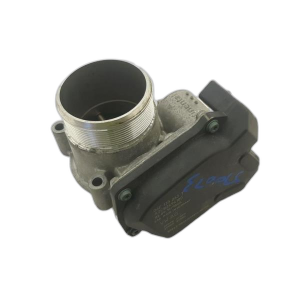
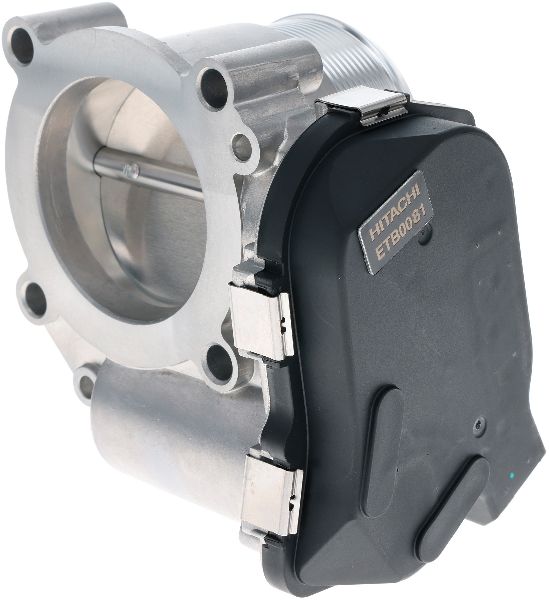
New Aftermarket Parts Available




The information in this article is provided for general reference and educational purposes only. Vehicle specifications, procedures, and part compatibility can vary by production date, trim level, and region. Always consult your vehicle's factory service manual and verify part numbers before purchasing or performing repairs. Safety-critical components such as airbags, seat belts, and braking systems should be installed by a qualified professional.
- Audi A3:
- 🧭 Diagnostic Flowchart
- 🎬 Helpful Videos
- 🛍️ Shop This Part
- What's Unique About the 2006-2013 Audi A3
- Symptoms You May Notice
- Most Likely Causes
- Rare But Worth Checking
- Diagnosis Steps
- Parts You'll Likely Need
- Related Codes That Often Appear With This One
- Technical Service Bulletins (TSBs) & Recalls
- Platform-Specific Known Issues
- Mechanic-Grade Diagnostic Values
- Hidden / Shadow Codes Worth Checking
- Scan Tool Commands That Help
- Wiring & Ground Locations
- Real Owner Repair Stories
- OEM Part Supersession History
- Model Year Variations Within This Range
- Other Known Issues on This Vehicle
- Used vs. New Parts: Buying Guide for This Vehicle
- Real Owner Stories
- 2006-2013 Audi A3 2.0T
- 2006-2009 Volkswagen GTI (MK5) 2.0T
- Related OBD-II Codes
- Frequently Asked Questions
- 🎟️ Get 5% Off