

P0222 on 2005-2010 Chevrolet Cobalt: Throttle Position Sensor 'B' Circuit Low Causes and Fixes
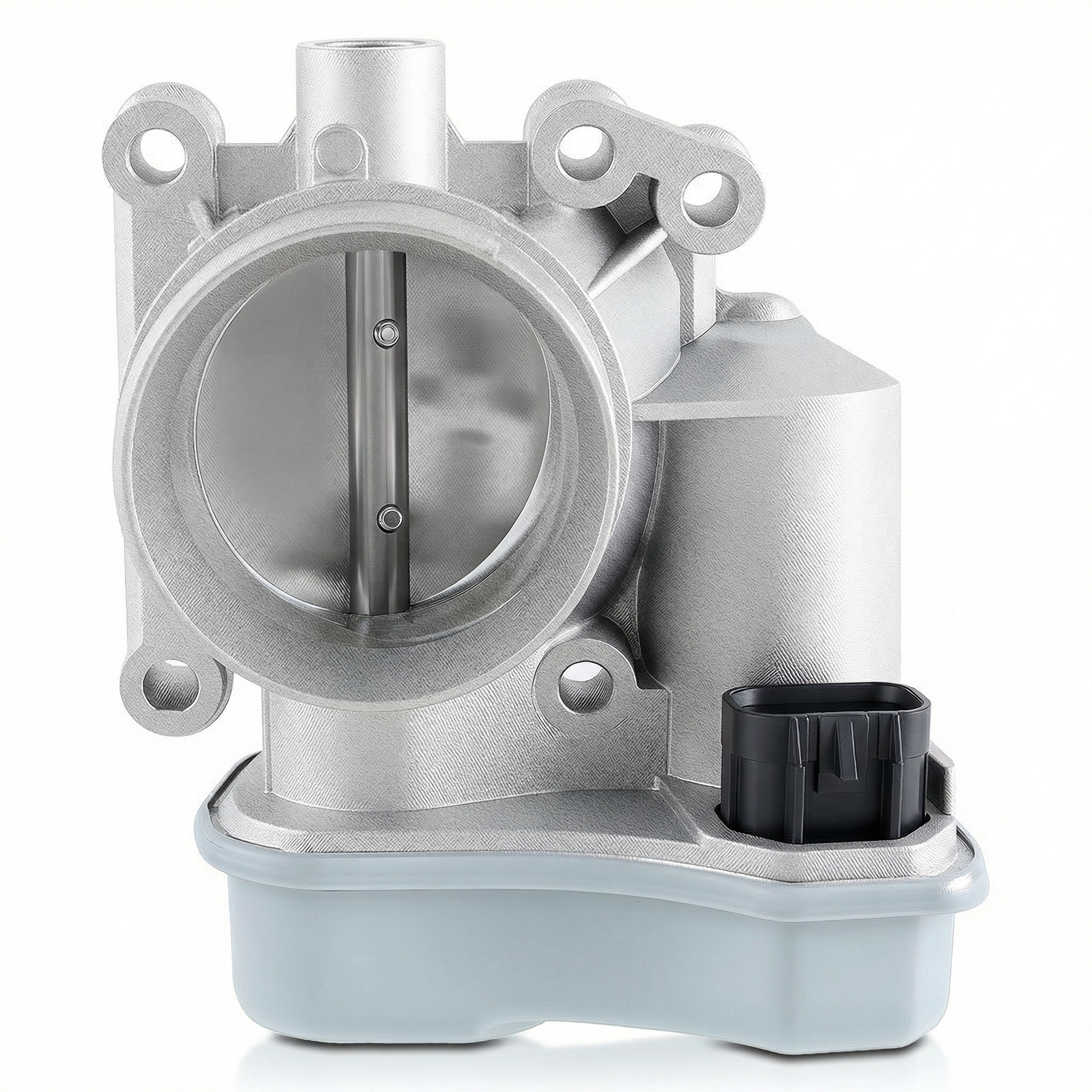
On a 2005-2010 Cobalt, code P0222 almost always means the entire throttle body assembly has failed and needs to be replaced. This is a very common issue that triggers the 'Reduced Engine Power' warning. An aftermarket throttle body costs about $100-$150 and is a DIY-friendly repair. This issue is also extremely common on its platform mates: the Pontiac G5, Saturn Ion, and Chevrolet HHR.
- P0222 on a Cobalt almost always means you need a new throttle body.
- The vehicle will enter a 'Reduced Engine Power' mode, making it unsafe for normal driving.
- This is a very DIY-friendly repair that can be done in under an hour with basic tools.
- After replacing the throttle body, a 'relearn' procedure is necessary to ensure proper idle, but this can usually be done without a scan tool by following a specific idle/key cycle sequence.
- Always check for related codes like P2135, which further confirms a bad throttle body.
What's Unique About the 2005-2010 Chevrolet Cobalt
The 2005-2010 Chevrolet Cobalt and its GM Delta platform siblings (Pontiac G5, Saturn Ion, Chevy HHR) are well-known for throttle body failures. While P0222 is a generic code, the practical cause on this specific platform is overwhelmingly an internal electronic failure of the throttle position sensor, often due to worn carbon tracks or failed solder joints inside the sealed unit. Unlike some vehicles, the sensor is not a separate, replaceable part; it is integrated into the throttle body assembly, meaning the entire unit must be replaced to fix the issue. This failure is so common that it's one of the first things experienced owners and mechanics check for when drivability issues and a 'Reduced Engine Power' message appear.
Symptoms You May Notice
- "Reduced Engine Power" message displayed on the instrument cluster
- Vehicle is in "limp mode" with very limited acceleration and speed
- Check Engine Light is on
- Hesitation or stumbling during acceleration
- Rough or unstable idle
- Engine may stall or shut off under certain conditions.
- High or surging idle speed
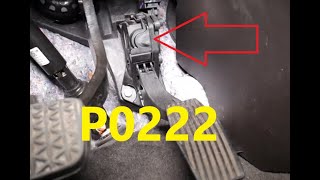
- Replacing only the Accelerator Pedal Position (APP) sensor. While the APP sensor is part of the same overall system, P0222 specifically points to the sensor circuit at the throttle body, not the pedal. A faulty pedal sensor would typically set code P2138.
- Ignoring a water leak. On some GM vehicles, water intrusion into the IP-to-body harness connector in the driver's kick panel can cause this code and others like P2138. While less commonly reported for P0222 specifically, it's a known GM issue from this era.
Most Likely Causes
- Failed Throttle Body Assembly 🔴 High Probability → Shop Fuel Injection Throttle Body The internal electronics of the integrated Throttle Position Sensor (TPS) are a common failure point on this platform, due to wear on the sensor's internal contacts. The failure is endemic to the GM Delta platform vehicles of this era.
How to confirm: With a scan tool, observe the live data for TP Sensor 2 Voltage. If the voltage is stuck at a very low value (e.g., under 0.3V) and does not change as the throttle is manually opened and closed (with assistance), the sensor inside the throttle body has failed. The voltage for TP Sensor 1 should read normally, between 0.27-4.67 volts.
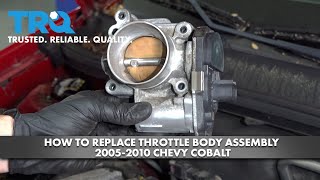
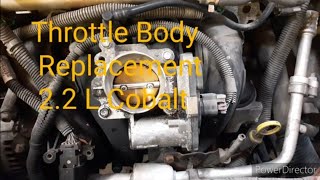
Typical fix: Replace the entire throttle body assembly. A throttle relearn procedure is required after installation, but this can be done without a scan tool.
Est. part cost: $100-$250 - Wiring Harness or Connector Issue 🟡 Medium Probability Engine vibration and heat can cause wires to fray or chafe over time. The connector at the throttle body is a potential point of failure due to corrosion or loose pins. On related platforms, GM has identified specific chafe points where the engine harness can rub against the ECM bracket or shock tower bolts, causing shorts.
How to confirm: Disconnect the throttle body and ECM connectors. Inspect the wiring for any visible damage, chafing, or breaks, paying close attention to where the harness passes near sharp metal edges. Check for continuity on the TP Sensor 2 signal wire, 5-volt reference wire, and ground wire between the throttle body connector and the ECM connector. Check for corrosion inside the connectors.
Typical fix: Repair the damaged section of wire or replace the pigtail connector for the throttle body. Apply protective conduit or re-route the harness away from sharp edges.
Est. part cost: $15-$50
Rare But Worth Checking
- Faulty Engine Control Module (ECM): → Shop Engine Control Module (ECM) This is very rare. Before condemning the ECM, all other possibilities, especially the throttle body and wiring, must be exhaustively ruled out. The ECM is the last component to suspect. Service information suggests replacing the ECM only if P0120 or P0220 are the *only* throttle codes present.
Diagnosis Steps
- Connect an OBD-II scanner and confirm P0222 is present. Check for other codes like P2135 or P0122.
- Using the scanner's live data function, monitor the voltage for 'TP Sensor 2'. It will likely be a very low, fixed value (under 0.31V). Compare it to 'TP Sensor 1', which should be reading normally.
- Visually inspect the wiring harness and connector at the throttle body for any obvious signs of damage, corrosion, or loose pins. Check for known harness chafe points near the ECM bracket and driver's side shock tower.
- If the wiring looks good, the next step is to test the circuit. Refer to a service manual for the specific pinout for your engine (2.2L vs 2.4L).
- With the key on, engine off, check for 5-volt reference and a good ground at the throttle body connector.
- If the reference voltage and ground are present, the fault is almost certainly within the throttle body assembly itself.
- If reference voltage or ground is missing, trace the corresponding wire back to the ECM to find the open or short.
- Given the high failure rate, if wiring tests okay, replacing the throttle body is the most logical next step.
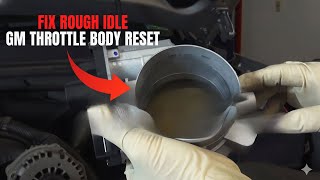
- After replacement, perform the Throttle Body Relearn Procedure. 🎬 See how to manually perform the GM relearn procedure This can be done without a scan tool by idling the engine for 3 minutes, turning the ignition off for 60 seconds, and then idling for another 3 minutes.
Parts You'll Likely Need
- Electronic Throttle Body Assembly
(OEM #12631187)— This is the most common cause of code P0222 on this vehicle, as the internal throttle position sensor fails. The sensor is not sold separately. This part number supersedes previous numbers 12616669, 12607205, 12603898, and 12591004.
Trusted brands: ACDelco (OEM), Dorman, Standard Motor Products (SMP), Hitachi
OEM price range: $135-$175
Aftermarket price range: $100-$150
Related Codes That Often Appear With This One
- P2135 — This code means 'Throttle/Pedal Position Sensor/Switch 'A'/'B' Voltage Correlation'. Since the ECM is comparing the two internal TPS signals, a failure in one (causing P0222) will create a mismatch with the other, triggering P2135. Seeing them together is extremely common and strongly points to a bad throttle body.
- P0122 — This is the low voltage code for the *other* throttle position sensor (Sensor 'A'). If both P0122 and P0222 appear together, it often indicates a catastrophic internal failure of the throttle body or a problem common to both sensors, like a lost ground or 5-volt reference at the connector.
Technical Service Bulletins (TSBs) & Recalls
- While no TSB is specific to P0222 on the Cobalt, TSB 07-06-04-019G addresses the related code P2138, often caused by water intrusion in the IP-to-body harness connector. This highlights a potential, though less common, cause for related electronic issues.
Platform-Specific Known Issues
- GM issued a Special Coverage Adjustment (SCA) for this issue which extended the warranty to 10 years or 120,000 miles. However, this has expired for nearly all 2005-2010 Cobalts. One such program for a similar issue on other GM vehicles was numbered 11273, but it did not cover the Cobalt.
- There are no active safety recalls for the throttle body on the Chevrolet Cobalt. Major recalls for this vehicle concerned the ignition switch (Recall 14V047000) and electric power steering (Recall 10V073000), which are unrelated to this code.
Mechanic-Grade Diagnostic Values
- TP Sensor 1 Voltage (Scan Tool) — expected: 0.27V - 4.67V, changes with accelerator pedal input. Failure: Voltage is fixed, does not change, or is outside the expected range.
- TP Sensor 2 Voltage (Scan Tool) — expected: 0.31V - 4.7V, changes with accelerator pedal input. Failure: Voltage is less than 0.31V for more than 0.4 seconds (sets P0222). 🎬 Watch: Understanding P0222 code causes and diagnostic steps
- 5-Volt Reference at Throttle Body Connector — expected: 4.8V - 5.2V. Failure: Voltage is significantly lower or higher, or absent.
- Low Reference (Ground) Circuit Resistance — expected: Less than 5.0 Ohms between the low reference terminal and a good chassis ground.. Failure: Resistance is greater than 5.0 Ohms, indicating a poor ground connection.
- Internal TPS 1 Resistance (between terminals C and G on TB) — expected: Approximately 3.5 kOhms. Failure: Open circuit (infinite resistance) or short (very low resistance).
Scan Tool Commands That Help
- Tech2 / GDS2 / Professional Scan Tool: Throttle/Idle Learn Reset — This function on a professional scan tool can be used to force the ECM to relearn the new throttle body's home and idle positions immediately after replacement. While a manual relearn is possible, the scan tool command is faster and provides confirmation that the process has started.
Wiring & Ground Locations
- Throttle Body Connector (X108 on L61) — Plugged directly into the driver's side of the throttle body.. This is the main connector for both throttle position sensors and the throttle actuator motor. Corrosion, backed-out pins, or harness damage here is a primary cause of P0222.
- 6-Pin Throttle Body Connector Pinout (2005-2006 2.2L L61) — At the throttle body connector.. Pin F is the signal wire for TP Sensor 2, which sets code P0222. Pin E is the 5V reference and Pin C is the low reference (ground) for the sensor. Correctly identifying these pins is crucial for electrical testing.
- G107 — On a stud on the front left corner of the transmission housing, near the oil filter housing.. This is a primary ground point for the Engine Control Module (ECM). A loose or corroded connection here can cause a wide range of sensor codes, including P0222, due to an unstable ground reference for the ECM.
- G105 — On the left front of the engine compartment, often on a stud near the transmission or behind the driver-side headlight.. This ground serves the ECM, TCM, and MAF/IAT sensor. A poor connection at G105 is a known issue that can cause multiple seemingly unrelated codes and drivability problems, including symptoms that mimic a failed throttle body.
- G103 — On the left rear of the engine compartment on the cowl, above the brake booster.. This is a major ground for the Body Control Module (BCM) and Data Link Connector (DLC). While less likely to directly cause P0222, a poor connection can cause communication issues and other electrical gremlins.
Real Owner Repair Stories
- YouTube video from user 'BSK Garage' (2010 Chevrolet Cobalt 2.2L) — Misfiring, hesitation on acceleration, multiple codes including P0122 and P0223. The car would misfire and shake badly when the harness near the driver's side of the engine was touched.
❌ Tried (didn't work) Wiggling the harness would temporarily fix the issue, leading to confusion.
✅ What actually fixed it The issue was a poor connection at ground G105, located under a coolant hose on the driver's side of the engine bay. Wiggling the ground wire would cause the engine to misfire and stall. The final fix was to replace the corroded ground connector and clean the stud.
Model Year Variations Within This Range
- 2005-2008: Primarily used the 2.2L L61 engine. The throttle body connector for 2005-2006 models is typically a 6-pin connector.
- 2009-2010: The base engine was updated to the 2.2L LAP, which included improvements like variable valve timing. While the throttle body function is the same, wiring and part numbers may differ slightly from the earlier L61. The 2.4L LE5 was also a common option with a different throttle body.
- 2007-2008: This was a transition period where both the 2.2L L61 and the newer 2.2L LAP / 2.4L LE5 could be found, making it important to verify the engine code before ordering parts.
Diagnostic Flowchart
Other Known Issues on This Vehicle
Issues unrelated to this code that are worth knowing about as an owner of this generation:
- Defective Ignition Switch 🔴 High — Extremely widespread, affecting millions of GM vehicles. The switch can move out of the 'Run' position if bumped or with a heavy keychain, disabling the engine, power steering, and airbags. (Ref: Recall 14V047000 / 14V171000)
- Electric Power Steering (EPS) Motor Failure 🔴 High — Very common. Results in a sudden loss of power steering assist, making the vehicle difficult to steer at low speeds. (Ref: Recall 10V073000)
- Corroded Fuel Lines 🟠 Medium — Common in 'salt belt' regions. The metal fuel lines under the car near the driver's side rear wheel can rust and leak fuel. An NHTSA investigation was opened but closed without a recall due to high mileage at failure. (Ref: NHTSA Investigation PE20-009 (Closed))
- Cracked Fuel Pump Module 🟠 Medium — More common in warm weather states. The plastic port on the fuel pump module can crack, causing a fuel leak and potential fire hazard. (Ref: Recall 09V419000 / 12V459000)
- Prematurely Worn Front Lower Control Arm Bushings 🟠 Medium — Very common. The rear bushings on the front lower control arms fail, causing clunking noises from the front suspension, poor handling, and uneven tire wear.
Used vs. New Parts: Buying Guide for This Vehicle
When a used part is the smart pick: A used throttle body from a junkyard is a risky choice for this repair. The internal electronic sensors are a known high-failure item due to wear over time and cycles. A used part may have significant wear and could fail shortly after installation, repeating the original problem.
Donor-vehicle mileage cap: roughly under 50000 miles for the part to have meaningful remaining life.
What to inspect on the donor part:
- Verify the part is from a low-mileage, rear-ended vehicle if possible.
- Inspect the connector pins for any signs of corrosion or damage.
- Look for a throttle bore that is relatively clean, as excessive carbon can indicate high mileage or poor engine health.
- Ask for a short warranty (e.g., 30-90 days) from the salvage yard.
Aftermarket brands forum-validated for this vehicle:
- ACDelco (OEM)
- Hitachi (Often an OEM supplier)
- Standard Motor Products (SMP)
Brands owners have reported issues with on this vehicle:
- Unbranded, 'white-box' parts from online marketplaces should be avoided. While Dorman is a major brand, some forum users report mixed results with their electronic components compared to OEM or Hitachi.
Real Owner Stories
Aggregated from forums and TSBs cited above. Mileages and costs reflect what owners reported in those sources.
2009 Chevrolet Cobalt 2.2L
Symptoms: The car went into 'reduced power mode' and triggered a cluster of codes: P0122, P0222, P0223, and P2135.
What fixed it: Replacement of the throttle body assembly due to internal failure or bad ground/reference voltage issues.
Source hint: go-parts.com - P0122 on 2005-2010 Chevrolet Cobalt
2007 Chevrolet Cobalt 2.2L
Symptoms: Reduced Engine Power light and code P0122.
What fixed it: Replacing the throttle body assembly and performing the idle relearn.
Source hint: CobaltSS.net forum user
Related OBD-II Codes
Frequently Asked Questions
Is there a recall for the throttle body on my 2005-2010 Chevrolet Cobalt?
Does the Special Coverage Adjustment (SCA) 11273 cover my Cobalt's P0222 code?
Can I fix the P0222 'Reduced Engine Power' message without a scan tool?
Why is my Cobalt prone to P0222 and throttle body failure?
Could the P0222 code be caused by wiring instead of the throttle body?
Does TSB 07-06-04-019G apply to my P0222 code?
Helpful Videos

We Have This Part in Stock

The information in this article is provided for general reference and educational purposes only. Vehicle specifications, procedures, and part compatibility can vary by production date, trim level, and region. Always consult your vehicle's factory service manual and verify part numbers before purchasing or performing repairs. Safety-critical components such as airbags, seat belts, and braking systems should be installed by a qualified professional.
- Chevrolet Cobalt:
- 🧭 Diagnostic Flowchart
- 🎬 Helpful Videos
- 🛍️ Shop This Part
- What's Unique About the 2005-2010 Chevrolet Cobalt
- Symptoms You May Notice
- Most Likely Causes
- Rare But Worth Checking
- Diagnosis Steps
- Parts You'll Likely Need
- Related Codes That Often Appear With This One
- Technical Service Bulletins (TSBs) & Recalls
- Platform-Specific Known Issues
- Mechanic-Grade Diagnostic Values
- Scan Tool Commands That Help
- Wiring & Ground Locations
- Real Owner Repair Stories
- Model Year Variations Within This Range
- Other Known Issues on This Vehicle
- Used vs. New Parts: Buying Guide for This Vehicle
- Real Owner Stories
- 2009 Chevrolet Cobalt 2.2L
- 2007 Chevrolet Cobalt 2.2L
- Related OBD-II Codes
- Frequently Asked Questions
- 🎟️ Get 5% Off