

P0222 on 2007-2014 Chevrolet Tahoe: Throttle Position Sensor 'B' Circuit Low Fixes
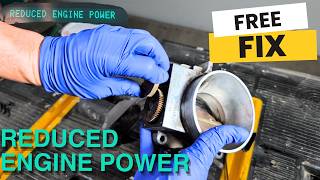
On a 2007-2014 Tahoe, code P0222 almost always means the entire throttle body assembly has failed internally. This triggers the 'Reduced Engine Power' message. The fix is to replace the throttle body assembly, which costs about $150-$300 for an OEM-quality part, and is a 2/5 difficulty DIY job. A throttle relearn procedure is mandatory after replacement.
- P0222 on a 2007-2014 Tahoe will almost certainly put the truck in 'Reduced Engine Power' mode.
- The most likely cause is a failed throttle body assembly, which requires complete replacement.
- Before replacing the throttle body, always inspect the wiring harness for chafing, as this is a known issue on GM trucks.
- If you replace the throttle body, an idle relearn procedure is mandatory to prevent high idle or other drivability issues.
- Check if your vehicle falls under GM's Special Coverage Adjustment #11273, which could cover the repair if within 10 years/120,000 miles of original service date.
What's Unique About the 2007-2014 Chevrolet Tahoe
The 2007-2014 (GMT900) Tahoe, like many GM trucks of this era, is highly prone to the internal electronic failure of the throttle position sensors. These sensors are integrated into the throttle body and are not sold as a separate part by GM for a complete fix. While the code points to a circuit issue, the practical cause on this platform is very frequently the throttle body assembly itself. GM issued a Special Coverage Adjustment (#11273 and its revisions like 11273A/B) for the throttle position sensor on 2008-2011 models, extending the warranty to 10 years/120,000 miles due to the high failure rate causing 'Reduced Engine Power' events.
Symptoms You May Notice
- "Reduced Engine Power" message displayed on the instrument cluster
- Check Engine Light is on
- "Service Stabilitrak" message may also appear
- Severely limited acceleration and power (limp mode)
- Hesitation or stumbling during acceleration
- Rough or unstable idle
- Vehicle may stall
- Unresponsive accelerator pedal
- Replacing the accelerator pedal position (APP) sensor. While the APP sensor is part of the same system, P0222 specifically points to the 'B' sensor circuit at the throttle body, not the pedal. A pedal issue would typically set codes like P0225-P0229.
- Cleaning the throttle body without performing a relearn. While a dirty throttle body can cause idle issues, it will not typically cause a circuit low code. Furthermore, cleaning it and not performing a relearn can lead to a new problem of a high or unstable idle.
Most Likely Causes
- Failed Throttle Body Assembly 🔴 High Probability → Shop Fuel Injection Throttle Body The internal throttle position sensors (TPS) are a known high-failure item on this platform. The sensors are not serviceable separately, requiring replacement of the entire assembly. Wear and tear on the internal contacts and motor lead to incorrect voltage readings.
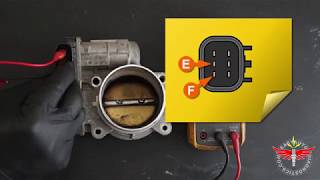
How to confirm: Using a scan tool, monitor the live data for TPS Sensor 1 and TPS Sensor 2. With the key on and engine off, TPS Sensor 2 voltage will be stuck at a very low value (e.g., <0.3V) and will not change as the throttle is commanded open. This is the most definitive confirmation. 🎬 See how to test a GM electronic throttle body
Typical fix: Replace the entire throttle body assembly. A throttle relearn procedure is required after installation.
Est. part cost: $150-$350 - Wiring Harness Damage 🟡 Medium Probability The engine wiring harness, particularly the section leading to the throttle body, is known to chafe against engine brackets, the A/C accumulator, or the passenger side valve cover, leading to a short to ground. The wires can also break internally within 1-4 inches of the connector with no visible damage to the insulation.
How to confirm: Visually inspect the entire wiring harness leading to the throttle body connector. Pay close attention to any areas where the harness makes contact with metal parts. Perform a 'wiggle test' on the harness while monitoring sensor voltage on a scan tool to see if the reading changes. If it does, a wiring fault is present.
Typical fix: Repair the damaged section of wire and protect the harness from future chafing using loom or by re-routing it. If the break is near the connector, a new pigtail may need to be spliced in.
Est. part cost: $10-$50 - Corroded or Loose Connector ⚪ Low Probability Vibration and exposure to the elements can lead to fretting corrosion or loose pins within the throttle body's electrical connector. This is a known issue on many GM vehicles of this era.
How to confirm: Disconnect the throttle body connector and inspect the pins on both the harness side and the throttle body side for any signs of green or white corrosion, backed-out pins, or moisture. Ensure the connector clicks securely into place.
Typical fix: Clean the connector pins with an electrical contact cleaner. If pins are damaged, a new connector pigtail may need to be spliced in. Apply dielectric grease before reconnecting to prevent future moisture intrusion.
Est. part cost: $10-$40
Rare But Worth Checking
- Faulty Powertrain Control Module (PCM): → Shop Engine Control Module (ECM) This is extremely rare. The PCM should only be suspected after all other possibilities, including the throttle body and all related wiring, have been thoroughly tested and ruled out. A faulty 5V reference circuit within the PCM could cause this code, but it would likely trigger other codes as well.
- Poor Ground Connections: On high-mileage GMT900 trucks, corroded or loose engine and body grounds can cause a host of electrical issues, including throttle body codes. Specifically, grounds G103 and G104 have been noted in service information as potential culprits. One owner on a forum solved persistent TAC module codes by adding multiple redundant ground wires.
Diagnosis Steps
- Connect an OBD-II scanner and confirm the presence of P0222. Check for other related codes like P0122, P2135, or P1516.
- With the scanner, view live data. Observe the voltage readings for 'TPS Sensor 1' and 'TPS Sensor 2'. For P0222, Sensor 2 voltage will likely be stuck below 0.5V.
- Perform a thorough visual inspection of the wiring harness leading to the throttle body. Look for any signs of chafing, melting, or corrosion, especially where the harness passes near the passenger side valve cover and A/C lines.
- Inspect the throttle body electrical connector for loose pins, corrosion, or moisture. Ensure it is securely plugged in.
- If wiring appears intact, perform a 'wiggle test' by gently moving the harness while watching the TPS 2 voltage on the scan tool. If the voltage jumps or changes, a hidden wire break is likely.
- If wiring and connector are good, test the circuit at the connector. With the key on, you should have a 5V reference wire, a ground wire, and signal wires. If the 5V reference or ground is missing, the problem is upstream toward the PCM.
- If the wiring and connector are confirmed to be good and the TPS 2 voltage remains low, the throttle body assembly itself is faulty.
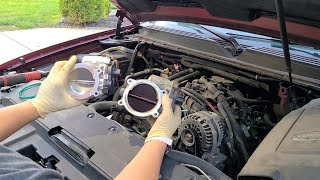
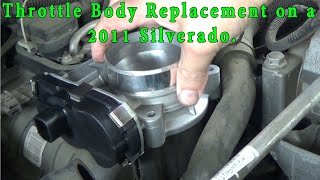
- Replace the throttle body assembly. This is a straightforward unbolt/re-bolt process. 🎬 Watch this step-by-step Tahoe throttle body replacement guide
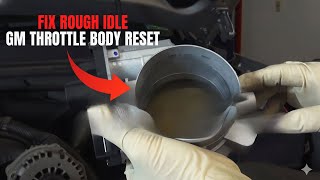
- Perform the throttle body relearn procedure. A manual method is: 1) With the key on, engine off, wait for all buzzing from the engine bay to stop. 2) Slowly press the accelerator pedal to the floor and then slowly release it. 3) Turn the key off for at least 60 seconds. 4) Start the engine and let it idle for 3 minutes. 5) Turn the A/C on and let it idle for another 3 minutes. The idle should now be stable. A scan tool provides the most reliable method. 🎬 Watch: How to manually reset and relearn your GM throttle body
Parts You'll Likely Need
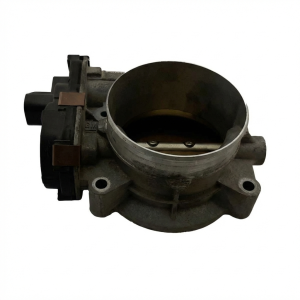
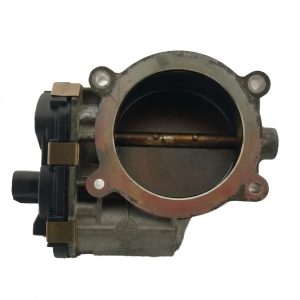
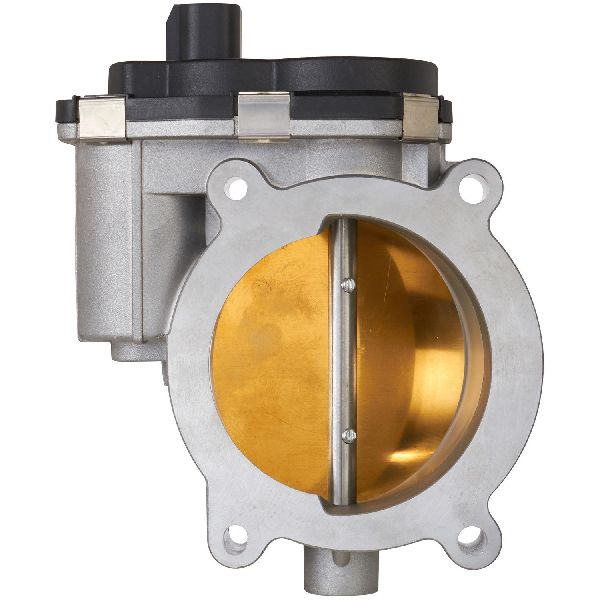
- Throttle Body Assembly
(OEM #12605109 (supersedes 217-3153))— This is the most common cause of P0222 on this vehicle. The internal throttle position sensors fail, and they are not serviceable separately from the assembly.
Trusted brands: ACDelco (OEM), Bosch, Hitachi, Dorman
OEM price range: $250-$350
Aftermarket price range: $150-$250
Related Codes That Often Appear With This One
- P2135 — This code for 'Throttle/Pedal Position Sensor/Switch 'A'/'B' Voltage Correlation' is very common with P0222. It means the ECM sees a disagreement between the two TPS sensors, which is exactly what happens when one sensor fails and reports low voltage while the other reports correctly.
- P0122 — This is the equivalent 'Circuit Low' code for the primary sensor (Sensor 'A'). If both P0122 and P0222 are present, it strongly suggests a problem common to both, like a loss of the 5V reference or ground wire at the connector or a major internal failure of the throttle body.
- P1516 — This is a GM-specific code for 'Throttle Actuator Control (TAC) Performance'. It indicates the throttle blade is not in the position the ECM has commanded, which is a direct consequence of a TPS failure giving the ECM bad information about the throttle's actual position.
Technical Service Bulletins (TSBs) & Recalls
- 11273A/B: Special Coverage Adjustment for Throttle Position Sensor causing rough running and reduced engine power.
- 11-06-04-007C: Addresses diagnostic trouble code P2135 and provides a repair kit for the throttle position sensor cover and terminals.
Platform-Specific Known Issues
- GM Special Coverage Adjustment #11273 (and later revisions like 11273A/B) was issued for the throttle position sensor on 2008-2011 V8 models, extending the warranty to 10 years or 120,000 miles for this specific failure.
- A related TSB (11-06-04-007C) provides a kit (p/n 19259452) to replace only the TPS cover, terminals, and gasket as an alternative to full throttle body replacement for code P2135. However, many owners report this is a temporary fix and replacing the entire throttle body is the more reliable long-term solution.
Mechanic-Grade Diagnostic Values
- TPS 5V Reference Voltage — expected: 4.8V - 5.2V. Failure: Voltage below 4.8V or above 5.2V indicates a problem with the PCM or wiring, not necessarily the sensor itself.
- TPS Sensor 'B' Signal Voltage (Key On, Engine Off) — expected: Approx. 0.5V at closed throttle, sweeping smoothly to approx. 4.5V at wide-open throttle.. Failure: Voltage is stuck below 0.5V regardless of throttle position. Any jumps, dropouts, or non-linear response during the sweep indicates a failing sensor.
- TPS Sensor 'B' Signal Wire Resistance to Ground — expected: Typically a very high resistance (Open Line/OL) when disconnected from the sensor.. Failure: Low resistance (continuity to ground) indicates a short in the signal wire.
Scan Tool Commands That Help
- Tech2 / GDS2 or equivalent professional scan tool: Live Data Monitoring for TPS1 and TPS2 — This is the primary diagnostic step. It allows you to see the voltage reported by both sensors in real-time. For P0222, you will observe the TPS2 voltage as being stuck low while TPS1 reads normally as you press the accelerator pedal (with key on, engine off).
- Tech2 / GDS2 or equivalent professional scan tool: Throttle Position Control / Actuator Test — This bidirectional function allows the technician to command the throttle blade to open to specific percentages (e.g., 10%, 25%, 50%). While commanding the throttle open, you can monitor the TPS1 and TPS2 voltage readings to see if they respond correctly, helping to isolate a sensor failure from a motor failure within the throttle body.
Wiring & Ground Locations
- G103 — On the driver's side cowl in the rear of the engine compartment, often located above the brake booster.. This is a major body and module ground. It provides the ground path for the Body Control Module (BCM), Instrument Panel Cluster (IPC), and Data Link Connector (DLC). A poor connection here can cause a wide range of bizarre electrical issues, including problems with modules that communicate with the ECM about throttle control.
- G104 — On the left rear of the engine block.. This is a primary engine ground. A poor connection here can create a floating ground for sensors that reference the engine block, potentially causing incorrect voltage readings for the TPS.
- Throttle Body Connector — 6-pin connector plugged directly into the throttle body assembly.. This is the single point of failure for all throttle body functions. You must verify a 5V reference, a good ground, and two separate signal wires (one for TPS 'A' and one for TPS 'B') at this connector to rule out a wiring issue before replacing the throttle body.
Real Owner Repair Stories
- YouTube channel 'Terence The DIY'er' (2011 Chevrolet Silverado (sister platform)) — Reduced Engine Power message with codes P0220, P0222, P1516, and P2135.
❌ Tried (didn't work) Replacing the entire throttle body assembly did not fix the problem.
✅ What actually fixed it The problem was resolved by addressing poor ground connections. The mechanic first loosened and re-tightened the main engine and body grounds, which temporarily fixed the issue. The permanent fix was replacing the entire negative battery cable, which included the corroded ground connection points to the engine block and frame.
When the Usual Fixes Don't Work
- While the vast majority of P0222 codes on this platform are fixed by replacing the throttle body, there are documented cases where this does not solve the problem. In one instance involving a 2011 Silverado with identical symptoms, a new throttle body failed to resolve the 'Reduced Engine Power' mode. The actual root cause was a corroded main ground cable assembly. After cleaning the grounds provided a temporary fix, replacing the entire negative battery cable assembly permanently resolved the issue. This highlights the importance of verifying main power and ground integrity before condemning a second expensive part if the first replacement fails.
OEM Part Supersession History
12605109 (also sold as ACDelco 217-3153)→19420707— Standard part number update and consolidation by GM.
Heads up: The new part number 19420707 is a direct, backward-compatible replacement for 12605109. They are functionally identical.
Model Year Variations Within This Range
- 2007-2014: The fundamental cause of P0222 (internal throttle body failure) and the primary fix (replacement of the assembly) are consistent across the entire 2007-2014 generation for V8 engines. The main variation was GM's Special Coverage Adjustment #11273, which was limited to 2008-2011 models, even though the issue affects the whole generation.
Diagnostic Flowchart
Other Known Issues on This Vehicle
Issues unrelated to this code that are worth knowing about as an owner of this generation:
- Active Fuel Management (AFM) Lifter Failure 🔴 High — Very common, especially on 2007-2011 5.3L engines. Can occur anytime from 50,000 miles onward, often leading to misfires (P0300), engine noise, and requiring camshaft replacement. (Ref: Multiple TSBs exist, but no recall. The fix often involves replacing lifters, camshaft, and sometimes the entire engine.)
- Cracked Dashboard 🟠 Medium — Extremely common across all 2007-2014 GMT900s. Cracks typically form around the passenger airbag and instrument cluster area, regardless of sun exposure. (Ref: No recall; GM has generally treated it as a cosmetic issue. Class action lawsuits have been filed but were unsuccessful.)
- Excessive Oil Consumption 🔴 High — Widespread on 2007-2014 models with the 5.3L V8, often attributed to the AFM system and a faulty PCV valve design. Can lead to fouled spark plugs and internal engine damage. (Ref: GM faced lawsuits regarding this issue. TSBs suggest updated valve covers and other fixes, but problems can persist.)
- Rear Air Suspension (Autoride) Failure 🟠 Medium — Common on higher-trim models (LTZ) equipped with the Z55 Autoride suspension. The air compressor or air shocks fail, causing the rear of the vehicle to sag. Many owners opt to replace it with a conventional coil spring conversion kit.
- Broken Interior Door Handles 🟡 Low — The plastic door handles are known to break at their mounting points over time due to material fatigue.
Used vs. New Parts: Buying Guide for This Vehicle
When a used part is the smart pick: For this specific repair, a used part is NOT recommended. The throttle position sensors integrated into the throttle body are a known high-failure component on this platform. A used part from a donor vehicle, regardless of mileage, carries a very high risk of failing in the same manner shortly after installation.
What to inspect on the donor part:
- Not applicable, as used parts are not advised for this component.
OEM-only on this vehicle (don't cheap out):
- Throttle Body Assembly
Aftermarket brands forum-validated for this vehicle:
- ACDelco (OEM part)
Brands owners have reported issues with on this vehicle:
- While brands like Dorman are widely available and may be cheaper, forum discussions frequently reveal a higher rate of premature failure or out-of-box issues compared to the OEM ACDelco part. For a critical component that can strand the vehicle, sticking with OEM is the most reliable choice.
Real Owner Stories
Aggregated from forums and TSBs cited above. Mileages and costs reflect what owners reported in those sources.
2008-2011 Chevrolet Tahoe V8 — ~110000 miles
Symptoms: Rough running and reduced engine power.
What fixed it: Repaired under GM Special Coverage Adjustment #11273, which covers the throttle position sensor failure.
Source hint: 11273A/B: Special Coverage Adjustment for Throttle Position Sensor
2007-2014 Chevrolet Tahoe
Symptoms: High idle after replacing the throttle body.
What fixed it: Successfully performing the manual relearn procedure (cycling the pedal and idling with A/C on) to stabilize the idle.
Source hint: TahoeYukonForum.com - 'Throttle body help (solved)'
2007-2014 Chevrolet Tahoe
Symptoms: Recurring 'Reduced Power Mode' issues related to TPS codes.
What fixed it: Replacing the entire throttle body assembly rather than just the sensor cover.
Source hint: TahoeYukonForum.com - 'Reduced Power Mode Again!'
Related OBD-II Codes
Frequently Asked Questions
Is there a warranty extension for the throttle position sensor on my 2010 Chevrolet Tahoe?
My Tahoe is displaying 'Reduced Engine Power' and 'Service Stabilitrak' at the same time. Are these related to P0222?
Can I just replace the sensor, or do I need the whole throttle body assembly (p/n 19259452)?
Do I need a special tool to perform the throttle relearn after replacing the throttle body?
Where is the wiring harness most likely to fail on a 2007-2014 Tahoe?
Will a P0222 code cause my Tahoe to stall or idle roughly?
Helpful Videos
Used OEM Parts in Stock
New Aftermarket Parts Available



The information in this article is provided for general reference and educational purposes only. Vehicle specifications, procedures, and part compatibility can vary by production date, trim level, and region. Always consult your vehicle's factory service manual and verify part numbers before purchasing or performing repairs. Safety-critical components such as airbags, seat belts, and braking systems should be installed by a qualified professional.
- Chevrolet Tahoe:
- 🧭 Diagnostic Flowchart
- 🎬 Helpful Videos
- 🛍️ Shop This Part
- What's Unique About the 2007-2014 Chevrolet Tahoe
- Symptoms You May Notice
- Most Likely Causes
- Rare But Worth Checking
- Diagnosis Steps
- Parts You'll Likely Need
- Related Codes That Often Appear With This One
- Technical Service Bulletins (TSBs) & Recalls
- Platform-Specific Known Issues
- Mechanic-Grade Diagnostic Values
- Scan Tool Commands That Help
- Wiring & Ground Locations
- Real Owner Repair Stories
- When the Usual Fixes Don't Work
- OEM Part Supersession History
- Model Year Variations Within This Range
- Other Known Issues on This Vehicle
- Used vs. New Parts: Buying Guide for This Vehicle
- Real Owner Stories
- 2008-2011 Chevrolet Tahoe V8 — ~110000 miles
- 2007-2014 Chevrolet Tahoe
- 2007-2014 Chevrolet Tahoe
- Related OBD-II Codes
- Frequently Asked Questions
- 🎟️ Get 5% Off