

P0222 on 2013-2015 Chrysler 300: Throttle Position Sensor 'B' Circuit Low Explained
This code usually means the throttle body assembly has failed. On the Chrysler 300, the throttle position sensor is integrated into the throttle body, so the entire unit must be replaced. Expect to pay between $150 and $400 for the part. In some cases, a PCM software update may resolve the issue.
- P0222 on a 2013-2015 Chrysler 300 indicates a low voltage signal from the secondary throttle position sensor.
- The most common cause is a failed electronic throttle body assembly, which must be replaced as a complete unit.
- Before replacing parts, inspect the wiring harness for damage, as this is a moderate probability cause.
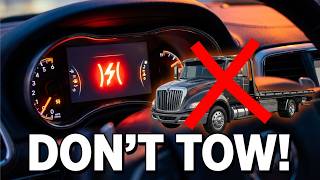
- Driving with this code is not recommended as the vehicle can unexpectedly enter a low-power 'limp mode'.
- Check if a PCM software update is available, as Chrysler TSBs suggest this can sometimes be the fix.
What's Unique About the 2013-2015 Chrysler 300
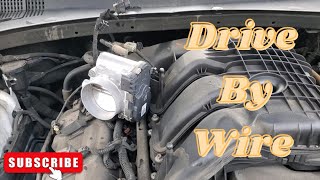
For the 2013-2015 Chrysler 300, the throttle position sensors are not sold separately; they are an integral part of the electronic throttle body assembly. This means a sensor failure requires replacing the entire throttle body. Additionally, Chrysler has issued several Technical Service Bulletins (TSBs) that include P0222, often suggesting a PCM software update may be required to correct overly sensitive fault logic, sometimes in conjunction with a hardware replacement. This is a known issue across the LX platform, which includes the Dodge Charger and Challenger.
Diagnostic Flowchart
Tap your situation to follow the diagnostic path that matches what you're seeing on this vehicle.
Symptoms You May Notice
- Electronic Throttle Control (ETC) or 'lightning bolt' warning light illuminated on the dashboard
- Check Engine Light is on
- Vehicle enters 'limp mode' with drastically reduced engine power.
- Hesitation or stumbling during acceleration.
- Rough or unstable idle
- Difficulty starting the engine.
- Vehicle may stall unexpectedly.
- Replacing the accelerator pedal position (APP) sensor. While the APP sensor is part of the throttle control system, P0222 specifically points to the sensor on the throttle body, not the pedal. Swapping the pedal assembly will not fix the issue.
Most Likely Causes
- Faulty Throttle Body Assembly 🔴 High Probability → Shop Fuel Injection Throttle Body The throttle position sensor is integrated into the throttle body and is a common failure point. Carbon buildup can also cause the throttle plate to stick, leading to sensor errors and incorrect voltage readings.
How to confirm: Using a scan tool with live data, monitor the voltage of TPS1 and TPS2. As the throttle is slowly opened, the voltage should increase smoothly. If TPS2 voltage is stuck low (typically below 0.5V) or doesn't change, the throttle body is likely faulty. Visually inspecting for heavy carbon buildup on the throttle plate can also be an indicator.
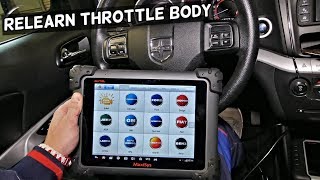
Typical fix: Replace the entire throttle body assembly. A throttle relearn procedure is required after installation. 🎬 Watch: How to perform a throttle body calibration and relearn.
Est. part cost: $150-$400 - Wiring Harness or Connector Issue 🟡 Medium Probability Engine vibrations and heat can cause wires to chafe, break, or corrode over time, especially at the connector to the throttle body. Owners on forums have reported finding frayed wires right at the throttle body connector as the cause.
How to confirm: Visually inspect the wiring harness leading to the throttle body for any signs of damage, chafing, or corrosion. Perform a 'wiggle test' on the harness and connector while monitoring the sensor voltage on a scan tool to see if the reading fluctuates. 🎬 See how to test and diagnose throttle body sensor voltages. Check for 5V reference and good ground at the connector pins.
Typical fix: Repair the damaged section of wire or replace the connector pigtail. Use a multimeter to verify continuity after the repair.
Est. part cost: $20-$50 - Outdated PCM Software ⚪ Low Probability Chrysler has released TSBs (#18-045-16 REV. A, #18-094-16, #18-074-15 REV A) that address this code, indicating that a software update can sometimes resolve the issue by adjusting the PCM's sensitivity to sensor voltage fluctuations. This is particularly noted for the 6.4L V8 engines in the 2015 model year.
How to confirm: A Chrysler dealership or a properly equipped independent shop using wiTECH software can check the current software calibration ID of your PCM and determine if an update is available per the TSBs.
Typical fix: Flash the PCM with the latest software version. A battery charger must be connected during the flash process to ensure voltage does not drop.
Est. part cost: $100-$250
Rare But Worth Checking
- Faulty Powertrain Control Module (PCM): → Shop Engine Control Module (ECM) This is a rare cause. The PCM should only be considered after all other possibilities, including the throttle body, wiring, and software updates, have been thoroughly ruled out.
Diagnosis Steps
- Scan the PCM for any other stored trouble codes. Note them and the freeze frame data.
- Using a scan tool, observe the live data for Throttle Position Sensor 1 and Throttle Position Sensor 2. Both should show a smooth, proportional voltage increase as the accelerator is pressed. TPS2 voltage should not be stuck below ~0.3-0.5V.
- Visually inspect the throttle body connector and its wiring harness for any signs of damage, corrosion, or loose pins. Pay close attention to the area where the harness bends to meet the connector.
- If wiring looks good, use a multimeter to test for the 5-volt reference and a good ground at the throttle body connector.
- Perform a throttle relearn procedure. This can sometimes be done without a scan tool by turning the ignition to 'ON' (not start) for 10 seconds, then slowly pressing the accelerator to the floor and releasing, then turning the key off. If this fails, a scan tool is needed.
- If the reference voltage and ground are present, and the signal from TPS 2 remains low after testing, the throttle body assembly is the most likely culprit and should be replaced.
- If the throttle body is replaced and the code returns, check for available PCM software updates with a dealership or qualified shop, as specified in Chrysler TSBs.
- If all else fails, the PCM itself may be faulty, but this is very uncommon.
Parts You'll Likely Need
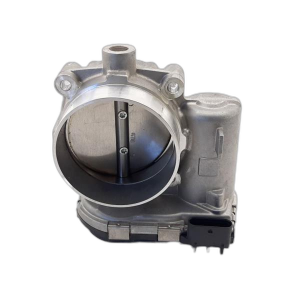
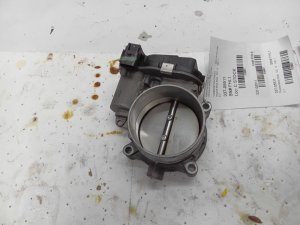
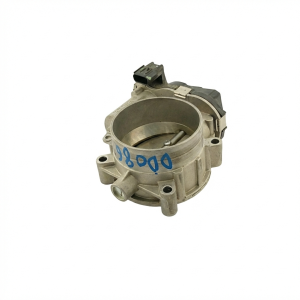
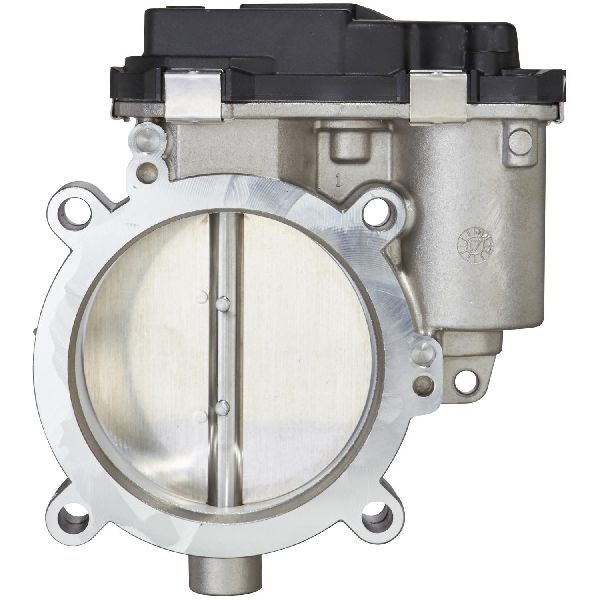
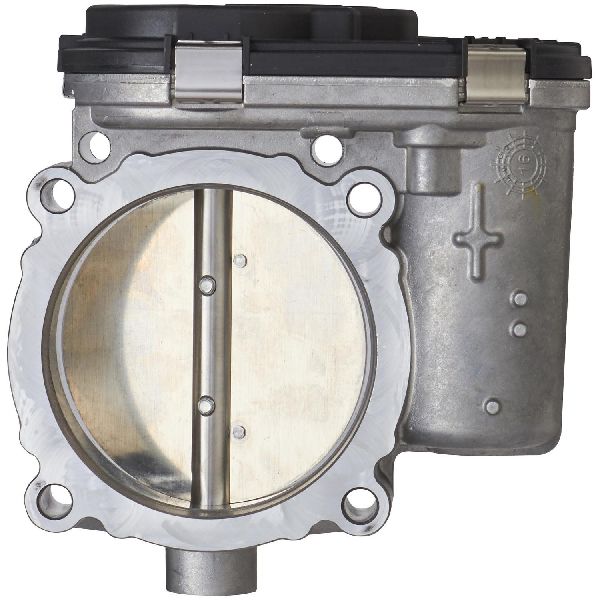
- Electronic Throttle Body Assembly
(OEM #For 3.6L V6: 5184349AE (superseded by 5184349AF). For 5.7L/6.4L V8: 53034251AD.)— This is the most common fix because the throttle position sensors are integrated into the assembly and cannot be replaced individually.
Trusted brands: Mopar, Bosch, Standard Motor Products, Hitachi
OEM price range: $250-$400
Aftermarket price range: $150-$250
Related Codes That Often Appear With This One
- P0122 — This is for 'Throttle Position Sensor 1 Circuit Low'. Seeing both P0122 and P0222 together strongly suggests a problem with the throttle body assembly or its connector, as both sensors are failing simultaneously. This is mentioned in TSBs #18-045-16 REV. A, #18-094-16, and #18-074-15 REV A.
- P0123 — This is for 'Throttle Position Sensor 1 Circuit High'. This code appearing with P0222 can indicate an erratic electrical failure within the throttle body or a complex wiring issue. It is also listed in TSBs #18-094-16 and #18-074-15 REV A.
- P0223 — This is for 'Throttle Position Sensor 2 Circuit High'. Having opposite codes for the same sensor (low and high) points towards an intermittent connection or a failing sensor providing erratic readings. It is mentioned in TSBs #18-045-16 REV. A, #18-094-16, and #18-074-15 REV A.
- P2111 — This code means 'Throttle Actuator Control System - Stuck Open'. When seen with P0222, it further points to a mechanical or electrical failure of the throttle body assembly.
Technical Service Bulletins (TSBs) & Recalls
- 18-045-16 REV. A: Addresses P0222 along with other throttle and crankshaft position sensor codes for 2015 models with 6.4L V8s, resolved by a PCM software update to improve diagnostics and system performance.
- 18-094-16: Lists P0222 among several other sensor codes that may be addressed by a software reflash.
- 18-074-15 REV A: Includes P0222 in a group of DTCs that can be set, pointing to a potential PCM software update.
Platform-Specific Known Issues
- Multiple Technical Service Bulletins (TSBs) have been issued by Chrysler for this and related throttle position codes, often recommending a PCM software update. This suggests a known pattern of either sensitive fault detection or component issues on this platform. (See TSBs #18-045-16 REV. A, #18-094-16, #18-074-15 REV A)
- Owner Experience: A user on 2CarPros.com reported having codes P0123, P0222, and P2111. After cleaning the throttle body didn't work, they replaced the throttle body assembly which resolved the issue after the car's computer relearned the new part's parameters over a few miles of driving.
Mechanic-Grade Diagnostic Values
- TPS 5V Reference Supply — expected: 4.5V to 5.2V with key on, engine off.. Failure: Voltage outside this range indicates a PCM or wiring issue.
- TPS 'B' (TPS2) Signal Voltage — expected: Should rise smoothly from ~0.5V at closed throttle to ~4.5V at wide-open throttle.. Failure: Voltage is stuck below 0.5V, does not change, or has dropouts/spikes when the throttle is opened slowly.
- TPS Ground Circuit — expected: Should have good continuity to chassis ground (near 0 ohms).. Failure: High resistance indicates a bad ground connection, which can cause incorrect sensor readings.
Scan Tool Commands That Help
- Chrysler wiTECH: Throttle Follower Test / ETC Throttle Follower Test — This is a bidirectional test used to command the throttle plate to specific angles and verify that the TPS1 and TPS2 sensor readings match the commanded position. It is crucial for confirming if the throttle body is responding correctly to PCM commands after checking wiring.
- Chrysler wiTECH: Throttle Relearn Procedure — This function must be performed after replacing the throttle body assembly to teach the PCM the new sensor's closed and wide-open throttle positions. Failure to do this can result in persistent codes, incorrect idle, or poor throttle response.
Wiring & Ground Locations
- Throttle Body Connector (6-Pin) — Directly on the electronic throttle body, located at the engine's air intake.. This is the primary connection point for the sensors and actuator motor. P0222 is caused by a low signal on Pin 4.
- Pin 2 (5 VOLT SUPPLY) — On the 6-pin throttle body connector.. This pin provides the 5-volt reference from the PCM. A loss of this voltage will cause both TPS sensors to fail and set codes.
- Pin 4 (TP SIGNAL 2) — On the 6-pin throttle body connector. Wire is typically Brown/Dark Green.. This is the specific signal wire for the TPS 'B' sensor. A short to ground on this wire or an internal throttle body failure will cause the P0222 code.
- Pin 6 (TP SENSOR GROUND) — On the 6-pin throttle body connector.. This is the sensor ground provided by the PCM. A poor connection here can cause both TPS signals to be skewed.
- G901A / G100 — Typically located on the left front of the engine compartment or on the shock tower.. These are major chassis ground points for the engine harness. A loose or corroded ground here can cause a variety of sensor and module communication issues, including erratic TPS readings.
Real Owner Repair Stories
- Reddit user tjenkins0819 (2016 Jeep Cherokee 2.4L (Shares platform architecture and similar electronics with Chrysler 300)) — Rough idle, vehicle dies when slowing to a stop, goes into limp mode, codes P2172, P0123, P0222.
❌ Tried (didn't work) Cleaning the throttle body and performing a relearn procedure.
✅ What actually fixed it The cleaning only provided a temporary fix for 10 minutes. The combination of TPS codes (P0123/P0222) pointed to an internal electronic failure of the throttle body. Replacing the entire throttle body assembly permanently resolved the issue. - Chevy HHR Network Forum Member (Chevrolet HHR (different platform, but illustrates a relevant edge case)) — Multiple sensor codes including P0222, P0122, P0335 (Crank Sensor), P0013 (Cam Solenoid).
❌ Tried (didn't work) Disconnecting battery overnight.
✅ What actually fixed it The root cause was a broken gasket on the X2 connector at the ECM, which prevented the connector from seating properly. This poor connection caused multiple, seemingly unrelated sensor circuit codes. Fixing the connector seal and ensuring it was fully seated resolved all codes.
OEM Part Supersession History
5184349AB, 5184349AC, 5184349AD, 5184349AE→5184349AF— Standard part revision and improvement over time. Later revisions may offer improved durability or electronic components.
Heads up: All previous versions are replaced by 5184349AF for the 3.6L V6 engine. Using an older version is not recommended.
Model Year Variations Within This Range
- 2015: The 2015 model year marked a significant mid-cycle refresh for the Chrysler 300, which included the widespread adoption of the 8-speed automatic transmission and updated electronics. TSB #18-045-16 REV. A specifically calls out the 2015 model year with the 6.4L engine for a PCM update to address P0222 among other codes, suggesting software logic was changed for this model year.
Helpful Videos

Used OEM Parts in Stock
New Aftermarket Parts Available



The information in this article is provided for general reference and educational purposes only. Vehicle specifications, procedures, and part compatibility can vary by production date, trim level, and region. Always consult your vehicle's factory service manual and verify part numbers before purchasing or performing repairs. Safety-critical components such as airbags, seat belts, and braking systems should be installed by a qualified professional.
- Chrysler 300:
- 🧭 Diagnostic Flowchart
- 🎬 Helpful Videos
- 🛍️ Shop This Part
- What's Unique About the 2013-2015 Chrysler 300
- Symptoms You May Notice
- Most Likely Causes
- Rare But Worth Checking
- Diagnosis Steps
- Parts You'll Likely Need
- Related Codes That Often Appear With This One
- Technical Service Bulletins (TSBs) & Recalls
- Platform-Specific Known Issues
- Mechanic-Grade Diagnostic Values
- Scan Tool Commands That Help
- Wiring & Ground Locations
- Real Owner Repair Stories
- OEM Part Supersession History
- Model Year Variations Within This Range
- 🎟️ Get 5% Off