

P0222 on 2017-2025 Chrysler Pacifica Hybrid: Throttle Position Sensor Causes and Fixes
P0222 on a Chrysler Pacifica Hybrid most often indicates a problem with the electronic throttle body. The vehicle will enter a low-power 'limp mode.' The most common fix is to replace the entire throttle body assembly, which costs between $150-$300 for the part. Before replacing, inspect the wiring and clean the throttle body.
- P0222 means the secondary throttle position sensor is sending a low voltage signal, which will put your Pacifica into a low-power limp mode.
- Do not drive the vehicle. The lack of acceleration is a safety hazard.
- The first and cheapest step is to inspect the wiring and clean the throttle body of any carbon buildup.
- The most likely fix is replacing the entire electronic throttle body assembly, as the sensors are built-in.
- After replacing the throttle body, a 'relearn' procedure is required to calibrate the new part, which can usually be done without special tools.
What's Unique About the 2017-2025 Chrysler Pacifica
The 3.6L Pentastar V6 engine in your Pacifica uses an electronic throttle body where the throttle position sensors (TPS) are integrated into the assembly and are not sold as separate, serviceable parts. This means that if a sensor fails, the entire throttle body unit must be replaced. While there are no widespread, documented issues of P0222 specific to the Pacifica Hybrid, the pattern on other Chrysler/Dodge/Jeep vehicles with the Pentastar engine points towards the throttle body assembly being the most common point of failure for this code.
Symptoms You May Notice
- Check Engine Light is on
- Electronic Throttle Control (ETC) or 'lightning bolt' warning light is illuminated
- Drastically reduced engine power (vehicle is in 'limp mode')
- Hesitation or jerky acceleration
- Unresponsive accelerator pedal
- Rough or unstable idle
- Difficulty starting the engine
- Stalling
- Replacing the accelerator pedal sensor when the fault is actually in the throttle body. The code P0222 specifically points to the throttle position sensor 'B' circuit, not the pedal sensor.
Most Likely Causes
- Faulty Electronic Throttle Body Assembly 🔴 High Probability → Shop Fuel Injection Throttle Body The throttle position sensors are integrated into the throttle body and are a common wear item. On many Chrysler products, internal failure of these non-serviceable sensors requires replacing the whole unit. This is a known pattern on vehicles with the 3.6L Pentastar engine.
How to confirm: After confirming the wiring is intact and the throttle body is clean, the diagnosis points to an internal failure of the unit. A scan tool can monitor the voltage from TPS 'A' and 'B'; if 'B' reads consistently low (e.g., <0.2V) or doesn't change with the throttle plate, the unit is bad.
Typical fix: Replace the entire electronic throttle body assembly. After replacement, a throttle relearn procedure must be performed.
Est. part cost: $150-$300 - Dirty or Obstructed Throttle Body 🟡 Medium Probability → Shop Fuel Injection Throttle Body Carbon and gunk can build up around the throttle plate, preventing it from closing or moving properly. This can cause the sensor to report a voltage that the PCM interprets as being out of range or incorrect for the given conditions.
How to confirm: Remove the air intake hose from the throttle body and visually inspect the throttle bore and plate for black carbon buildup.
Typical fix: Clean the throttle body bore and plate thoroughly with a dedicated throttle body cleaner and a soft cloth or brush. Do not force the plate open with your fingers; have a helper turn the ignition to 'ON' (engine off) and press the gas pedal to open the plate electronically.
Est. part cost: $5-$15 - Wiring or Connector Issue ⚪ Low Probability The wiring harness connector at the throttle body is exposed to engine heat and vibration, which can cause pins to back out, wires to chafe, or corrosion to form. A short to ground in the sensor circuit is a common wiring-related cause.
How to confirm: Visually inspect the throttle body electrical connector for damage, corrosion (green or white powder), or pushed-out pins. Use a multimeter to check for a steady 5-volt reference signal and a good ground at the connector. Check the wiring harness for any signs of chafing or melting.
Typical fix: Clean the connector pins, repair the damaged wire, or replace the connector pigtail if necessary.
Est. part cost: $10-$50
Rare But Worth Checking
- Faulty Accelerator Pedal Position (APP) Sensor: → Shop Accelerator Pedal Assembly The P0222 code specifically refers to the throttle body sensor circuit, but in some systems, a fault in the accelerator pedal sensor can cause related codes or be misdiagnosed. However, codes like P2122 or P2127 would more directly point to the pedal assembly.
- Faulty Powertrain Control Module (PCM): → Shop Engine Control Module (ECM) This is very rare. The PCM is the last thing to suspect after all other possibilities (sensor, wiring, cleaning) have been exhausted. A PCM can fail internally, causing it to misinterpret sensor signals or fail to process them correctly.
Diagnosis Steps
- Read all fault codes with an OBD-II scanner. Note any other codes that are present, such as P0123 or P2135.
- Use a scan tool with live data to observe the voltage readings from both Throttle Position Sensor 'A' and 'B'. With the key on and engine off, sensor 'B' will likely read below 0.5V.
- Turn the ignition off and disconnect the electrical connector from the throttle body.
- Inspect the connector and wiring harness for any signs of damage, corrosion, or loose pins. Repair as needed.
- If the wiring looks good, remove the air intake duct from the throttle body.
- Inspect the throttle plate and bore for heavy carbon buildup. If dirty, clean it thoroughly using throttle body cleaner and a soft brush. Do not spray cleaner directly on the electrical components.
- Reassemble and perform a throttle relearn procedure. This can often be done by turning the ignition on (engine off), slowly pressing the gas pedal to the floor, slowly releasing it, turning the ignition off, and then starting the engine.
- If the code returns, the electronic throttle body assembly is the most likely culprit and should be replaced.
- After replacing the throttle body, perform the throttle relearn procedure again to calibrate the new part.
Parts You'll Likely Need
- Electronic Throttle Body Assembly
(OEM #04892536AC)— This is the most common cause of P0222 on Chrysler vehicles with the 3.6L engine. The internal, non-serviceable throttle position sensors fail, requiring the replacement of the entire unit.
Trusted brands: Mopar, Hitachi, Bosch
OEM price range: $200-$300
Aftermarket price range: $150-$250
Related Codes That Often Appear With This One
- P0123 — This code is for 'Throttle Position Sensor 'A' Circuit High'. Seeing it with P0222 (Sensor 'B' Circuit Low) strongly indicates a catastrophic internal failure of the electronic throttle body, as both sensor circuits are faulting simultaneously with opposite readings.
- P2135 — This code means 'Throttle/Pedal Position Sensor/Switch A/B Voltage Correlation'. It sets when the PCM sees a disagreement between the two sensor signals, which is the direct result of the P0222 fault. 🎬 Watch: Diagnosing P0222 on a Chrysler-built engine
Technical Service Bulletins (TSBs) & Recalls
- TSB 08-042-22: Addresses DTC P0E15 (Hybrid/EV Battery Pack Coolant Heater) on 2022 models, which can cause EV mode to be inoperable.
- STAR Case S2208000203: Notes that software updates can make a pre-existing, undetected issue with the Electric Coolant Heater (related to P0E15) become active.
- NHTSA Recalls (e.g., 23V-010, 22V-077): While not for P0222, these address critical safety issues on the Pacifica Hybrid, including engine shutdown and battery fire risks, which owners should be aware of.
Mechanic-Grade Diagnostic Values
- PCM Fault Trigger Condition for P0222 — expected: PCM expects TPS 'B' voltage to be above 0.16V.. Failure: Code P0222 sets when the PCM sees less than 0.16V for more than 0.7 seconds.
- TPS 'B' (TPS2) Signal Voltage (Live Data) — expected: Should sweep smoothly from ~0.5V at closed throttle to ~4.5V at wide-open throttle.. Failure: Voltage is stuck low (typically <0.2V) and does not change when the accelerator pedal is pressed.
- 5-Volt Reference at Throttle Body Connector — expected: 4.5V to 5.2V with Key On, Engine Off (KOEO).. Failure: Voltage significantly below 4.5V or absent, indicating a wiring or PCM issue.
- Sensor Ground Circuit Resistance — expected: Near 0 ohms of resistance between the sensor return pin and a known good chassis ground.. Failure: High resistance (more than a few ohms) indicates a poor ground connection.
Scan Tool Commands That Help
- wiTECH (Chrysler Dealer Tool): ETC (Electronic Throttle Control) pedal follower test — This function, mentioned in TSB 18-027-17, is used to verify the relationship and response between the Accelerator Pedal Position (APP) sensor and the Throttle Position Sensor (TPS). A failure in this test can point to issues in the throttle body, pedal assembly, or the wiring between them.
- High-End Bidirectional Scanners (e.g., Launch, Autel): Throttle Actuator Control (TAC) Test or ETC Actuator Test — This command allows the technician to directly command the throttle plate to open and close, bypassing the accelerator pedal. It's used to confirm if the throttle motor and internal gears are functioning correctly. If the throttle plate moves as commanded, it suggests the throttle body motor is likely good, and the fault may lie in the position sensors or wiring.
Wiring & Ground Locations
- Throttle Body Connector (C1) — The 6-pin electrical connector plugged directly into the electronic throttle body assembly, located at the front of the engine where the air intake tube connects.. This is the primary connection for all power, ground, and signal wires for the integrated throttle position sensors. All voltage and resistance tests are performed at these pins.
- Throttle Body Connector Pinout (3.6L) — On the 6-pin connector at the throttle body.. Pin 2: TP Sensor 1 Signal ('A' Circuit), Pin 3: TP Sensor 2 Signal ('B' Circuit), Pin 4: Sensor Return (Ground), Pin 6: 5V Reference. A short to ground on the wire to Pin 3 is the direct cause of P0222. Note: Pinouts can vary slightly; some sources show TP2 Signal on Pin 2 and 5V Reference on Pin 3. Always verify with a vehicle-specific diagram if possible.
- Engine/Chassis Grounds (G100, G102, etc.) — Multiple key ground points are located in the engine compartment. One is on the left front of the engine compartment, another is on the lower left side of the engine block itself. A video for an older Pacifica shows main grounds near the fuse box and on the engine manifold.. A poor engine or chassis ground can create a floating reference voltage, causing the PCM to misread the TPS signal and trigger a P0222 code even if the sensor and its dedicated wiring are fine.
Real Owner Repair Stories
- JK-Forum.com user (Jeep JK Wrangler (with 3.6L Pentastar)) — Intermittent throttle-related codes.
❌ Tried (didn't work) Replaced the accelerator pedal assembly., Replaced the throttle body assembly.
✅ What actually fixed it A dealer technician suggested rewiring the harness between the throttle body and the PCM. The owner re-wired the circuit, and the problem never returned, indicating a hidden break or chafe in the factory wiring harness. - chargerforums.com user (2014 Dodge Charger (with 3.6L Pentastar)) — Check engine light, flashing ETC 'lightning bolt' light, car went into limp mode with no acceleration.
❌ Tried (didn't work) Cleaning the throttle body.
✅ What actually fixed it Replacing the entire electronic throttle body assembly with a new Mopar part resolved all symptoms and cleared the code.
Diagnostic Flowchart
Other Known Issues on This Vehicle
Issues unrelated to this code that are worth knowing about as an owner of this generation:
- Sudden Engine Shutdown / Transmission Malfunction 🔴 High — Affects 2017-2023 Hybrid models. A recall was issued, but issues persist for some owners. (Ref: NHTSA Recall 23V-010. An investigation was reopened because the software-update remedy did not prevent all power loss events.)
- High-Voltage Battery Fire Risk 🔴 High — Affects 2017-2021 Hybrid models. Multiple recalls have been issued. (Ref: NHTSA Recalls 22V-077, 20V-334. Owners were advised to park outside and not charge their vehicles until a fix was performed.)
- Battery Coolant Heater Failure (P0E15) 🟠 Medium — A common issue on hybrid models where the check engine light appears and EV mode may become inoperable. Some owners report repeat failures. (Ref: Chrysler TSB 08-042-22 and STAR Case S2208000203 address this DTC, often requiring a heater replacement.)
- Harsh Shifting or Transmission Failure (Gas and Hybrid) 🟠 Medium — Most common on 2017-2018 models, but reported across the generation. Symptoms include jerking, delayed engagement, and in some cases, total failure.
- Uconnect Infotainment System Malfunctions 🟡 Low — Common on earlier models (2017-2019), involving freezing, black screens, or random reboots. Often resolved with software updates.
- Power Inverter Module (PIM) Diode Failure 🔴 High — Affects 2017-2018 Hybrid models. A failure can cause the vehicle to lose all motive power. (Ref: A recall was issued to address overvoltage conditions that could cause diode failure.)
Used vs. New Parts: Buying Guide for This Vehicle
When a used part is the smart pick: A used OEM throttle body from a reputable salvage yard can be a cost-effective alternative to a new aftermarket part, especially if it's from a low-mileage, late-model donor vehicle. Given that this is a common failure item, a used part is a calculated risk but can save significant money.
Donor-vehicle mileage cap: roughly under 60000 miles for the part to have meaningful remaining life.
What to inspect on the donor part:
- Check for a clean throttle bore with minimal carbon buildup.
- Ensure the electrical connector pins are straight, clean, and free of corrosion.
- Verify the plastic housing is not cracked or damaged from the donor vehicle's removal.
- Ask for the VIN of the donor car to check its mileage and accident history if possible.
OEM-only on this vehicle (don't cheap out):
- While not strictly 'OEM-only', many professional technicians strongly recommend using an OEM Mopar throttle body over aftermarket options. Forum discussions and mechanic videos often warn that cheap, no-name aftermarket units have a high failure rate, sometimes failing within months, forcing you to do the job again.
Aftermarket brands forum-validated for this vehicle:
- Hitachi (often an OEM supplier)
- Bosch
- Dorman (specifically their 'OE FIX' line, which may have design improvements)
Brands owners have reported issues with on this vehicle:
- Unnamed, no-brand units from online marketplaces like Amazon or eBay. While tempting due to low cost, their quality control is inconsistent, and failure rates are reportedly high.
Real Owner Stories
Aggregated from forums and TSBs cited above. Mileages and costs reflect what owners reported in those sources.
2012 Jeep Wrangler (JK) 3.6L Pentastar V6
Symptoms: Getting codes P0123 and P0222 simultaneously.
What fixed it: Throttle body failure required replacement of the unit.
Source hint: JK-Forum.com - Thread 'Need help!!!'
2022 Chrysler Pacifica Hybrid
Symptoms: Check engine light appeared and EV mode became inoperable.
What fixed it: Battery coolant heater replacement (related to code P0E15).
Source hint: Reddit r/pacificahybrid - Thread 'Code P0E15 battery coolant heater failure'
Related OBD-II Codes
Frequently Asked Questions
I have a 2022 Pacifica Hybrid with code P0E15; is this related to my throttle body issue?
Can I just clean the throttle body on my 3.6L Pentastar to fix P0222?
Is there a recall for the engine shutting down on the Pacifica Hybrid?
What should I do if my 'lightning bolt' warning light and Check Engine Light are both on?
Do I need to do anything special after replacing the throttle body on my Pacifica?
Are there any fire risks I should know about for my 2018 Pacifica Hybrid?
Helpful Videos
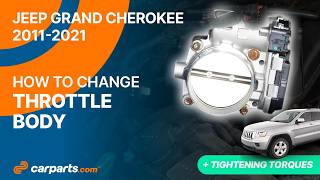
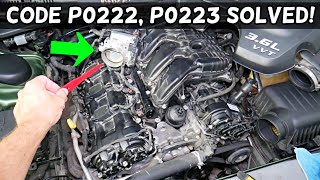
Used OEM Parts in Stock
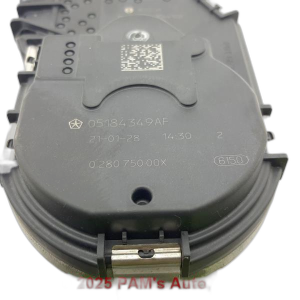
New Aftermarket Parts Available


The information in this article is provided for general reference and educational purposes only. Vehicle specifications, procedures, and part compatibility can vary by production date, trim level, and region. Always consult your vehicle's factory service manual and verify part numbers before purchasing or performing repairs. Safety-critical components such as airbags, seat belts, and braking systems should be installed by a qualified professional.
- Chrysler Pacifica:
- 🧭 Diagnostic Flowchart
- 🎬 Helpful Videos
- 🛍️ Shop This Part
- What's Unique About the 2017-2025 Chrysler Pacifica
- Symptoms You May Notice
- Most Likely Causes
- Rare But Worth Checking
- Diagnosis Steps
- Parts You'll Likely Need
- Related Codes That Often Appear With This One
- Technical Service Bulletins (TSBs) & Recalls
- Mechanic-Grade Diagnostic Values
- Scan Tool Commands That Help
- Wiring & Ground Locations
- Real Owner Repair Stories
- Other Known Issues on This Vehicle
- Used vs. New Parts: Buying Guide for This Vehicle
- Real Owner Stories
- 2012 Jeep Wrangler (JK) 3.6L Pentastar V6
- 2022 Chrysler Pacifica Hybrid
- Related OBD-II Codes
- Frequently Asked Questions
- 🎟️ Get 5% Off