

P0222 on 2009-2020 Dodge Journey: Throttle Position Sensor 'B' Circuit Low Fixes
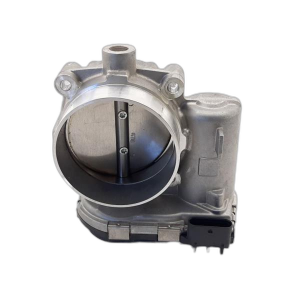
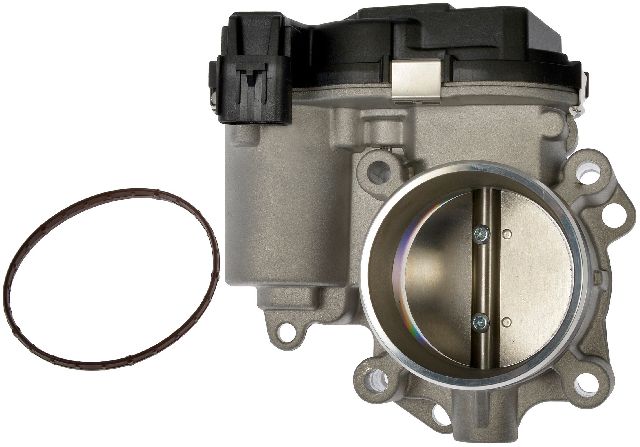
On a 2009-2020 Dodge Journey, code P0222 is most often caused by a faulty electronic throttle body assembly. Before replacing it, check the wiring connector at the throttle body for a secure fit. A new throttle body costs between $150 and $400.
- P0222 on a Dodge Journey almost always points to a problem with the electronic throttle system.
- The most likely fix is replacing the entire electronic throttle body assembly, as the sensors are built-in.
- Before buying parts, always check the throttle body's electrical connector for a loose fit or corrosion, as this is a simple and free potential fix.
- This code triggers a 'limp mode', making the vehicle unsafe to drive in normal traffic conditions.
- After replacement, a throttle relearn procedure may be needed to restore proper idle and performance.
What's Unique About the 2009-2020 Dodge Journey
The Dodge Journey, like many Chrysler products of this era, integrates the throttle position sensors directly into the electronic throttle body assembly. This means you cannot replace just the faulty sensor; the entire throttle body must be replaced as one unit. Owners have reported intermittent and recurring electronic throttle control (ETC) issues, sometimes even after a replacement, suggesting that wiring harness connectors can also be a weak point. The code often appears alongside P0123 ('A' Circuit High), pointing to a complete failure of the sensor unit within the throttle body.
Generation note: The Dodge Journey was produced in a single generation (JC) from 2009 to 2020. However, it used different engines, including the 2.4L I4 'World Engine' and the 3.6L 'Pentastar' V6. This issue is common across all engine types as they all use a non-serviceable electronic throttle body where the sensors are integrated.
Symptoms You May Notice
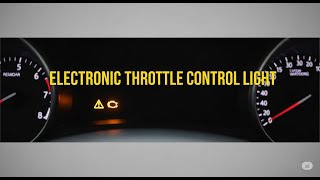
- Electronic Throttle Control (ETC) or 'lightning bolt' light illuminated on the dashboard.
- Check Engine Light is on.
- Vehicle enters 'limp mode' with drastically reduced engine power.
- Poor, hesitant, or no acceleration.
- Engine stalls or has a rough, unstable idle.
- Car fails to rev up when pressing the gas pedal.
- Difficulty starting the engine.
- Replacing the accelerator pedal assembly when the fault is actually in the throttle body, which is a more common failure point for this code on the Journey.
- Replacing spark plugs or fuel injectors to fix the rough idle and hesitation, without first addressing the throttle-related trouble code.
Most Likely Causes
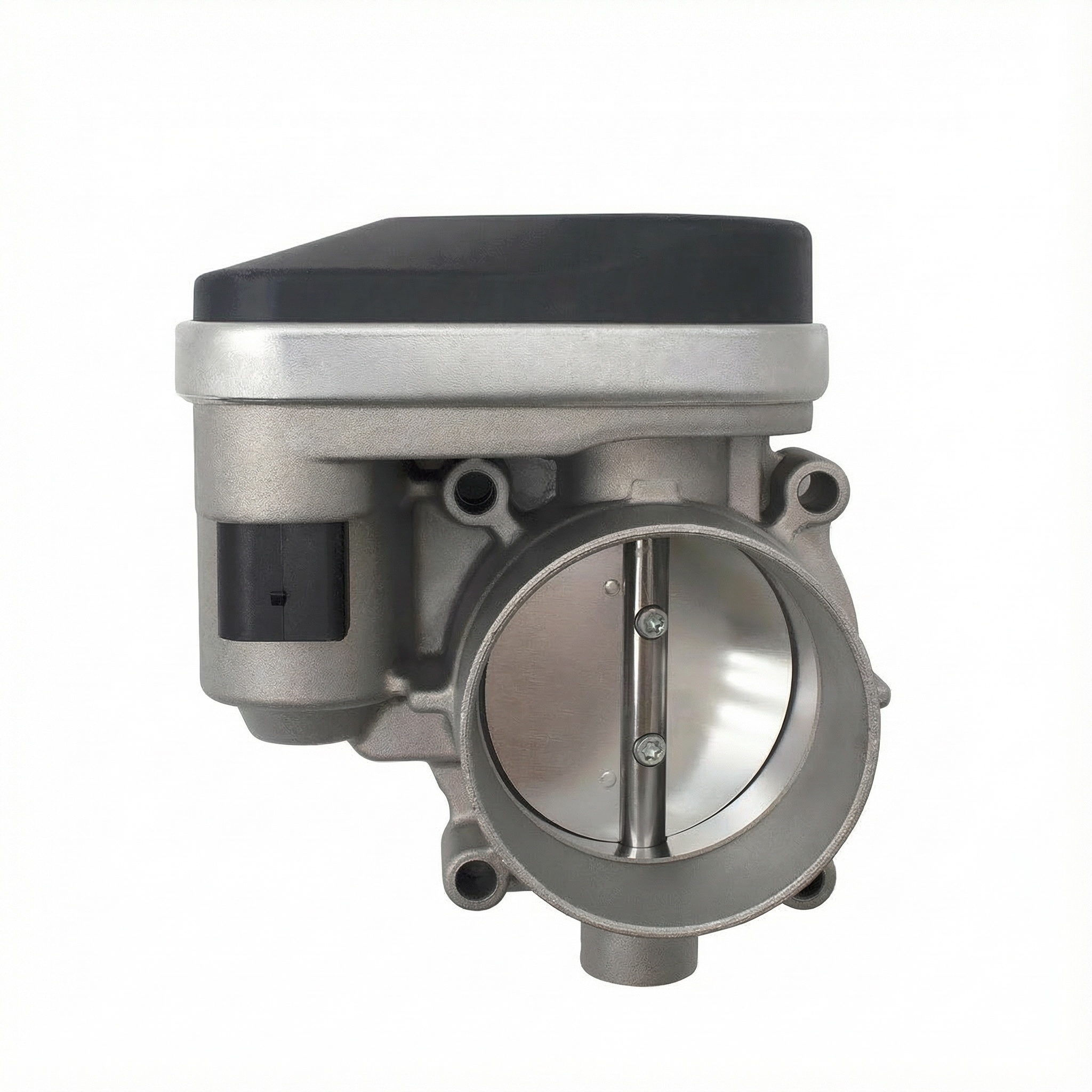
- Faulty Electronic Throttle Body Assembly 🔴 High Probability → Shop Fuel Injection Throttle Body The throttle position sensors are integrated into the throttle body and are a known failure point on this platform and its platform-mates.
How to confirm: After confirming the wiring is intact, this is the most likely component failure. A scan tool may show the voltage for TPS 'B' is stuck at a very low value (e.g., under 0.5V) and does not change as the accelerator is pressed. The presence of codes P0123 and P0222 together is a strong indicator of throttle body failure.
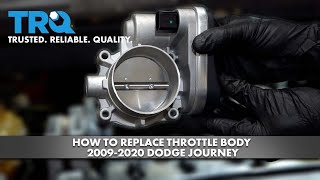
Typical fix: Replace the entire throttle body assembly. 🎬 Watch this step-by-step guide on replacing the Journey throttle body. After replacement, a throttle relearn procedure is required, which can sometimes be done without a scan tool.
Est. part cost: $150-$400 - Wiring Harness or Connector Issue 🟡 Medium Probability The 6-pin connector at the throttle body can become loose, or the pins can get corroded from moisture, causing a poor connection. Wires can also chafe or break in the engine bay.
How to confirm: Visually inspect the throttle body connector. Ensure it is fully seated and that the red locking tab is engaged. Check for any signs of corrosion (green or white powder) on the pins or damage to the wires leading to the connector. On related Chrysler vehicles, the signal wire for TPS 'B' is on Pin 2 and the 5V reference is on Pin 1.
Typical fix: Clean the connector pins and apply dielectric grease. If the connector or wiring is damaged, it will need to be repaired or replaced. A replacement pigtail connector is available if the original is damaged.
Est. part cost: $10-$60 - Dirty Throttle Body ⚪ Low Probability → Shop Fuel Injection Throttle Body Carbon and oil vapor from the PCV system can build up inside the throttle body, restricting the throttle plate's movement. While this can cause performance issues, it's less likely to cause a specific 'circuit low' code than an electrical failure.
How to confirm: Remove the air intake snorkel and visually inspect the throttle bore and plate for black carbon buildup.
Typical fix: Clean the throttle body thoroughly with a dedicated throttle body cleaner and a soft cloth. This is a good first step, but it may not solve an underlying electrical fault within the sensor.
Est. part cost: $10-$20
Rare But Worth Checking
- Faulty Accelerator Pedal Position (APP) Sensor: → Shop Accelerator Pedal Assembly The P0222 code can technically be caused by the pedal sensor, but it's much less common than the throttle body itself. The APP sensor also has redundant circuits. It's worth considering if a new throttle body doesn't fix the issue.
- Faulty Powertrain Control Module (PCM): → Shop Engine Control Module (ECM) In rare cases, the fault may lie within the vehicle's computer. This should only be considered after all other possibilities (sensor, wiring) have been definitively ruled out by a professional.
Diagnosis Steps
- Scan the vehicle for all OBD-II codes. Note if P0222 is present alone or with other codes like P0123 or P2135, which strongly suggests a throttle body failure.
- Visually inspect the electrical connector on the throttle body. Disconnect it, check for corrosion or bent pins, and reconnect it, ensuring the red locking tab clicks into place.
- Clear the codes and test drive the vehicle. If the code does not return, the issue was a loose connection.
- If the code returns, remove the air intake hose from the throttle body and inspect for heavy carbon buildup. Clean it if necessary, as a sticking plate can sometimes cause erratic sensor readings.
- If the problem persists, the most likely cause is a failed throttle body assembly. Use a scan tool with live data to monitor the voltage of 'Throttle Position Sensor B'. If it's stuck low (under 0.5V) and doesn't respond to pedal input, the throttle body needs to be replaced.
- After replacing the throttle body, perform a throttle relearn procedure. This can often be done without a scan tool by turning the key to 'ON' (not start), waiting 10-15 seconds, slowly pressing the gas pedal to the floor, slowly releasing it, turning the key 'OFF', and then starting the engine.
- If a new throttle body does not resolve the issue, inspect the wiring harness between the throttle body and the PCM for damage. Then, investigate the accelerator pedal position sensor as a secondary possibility.
Parts You'll Likely Need
- Electronic Throttle Body Assembly
(OEM #4891735AC (or 4891735AD) for 2.4L; 68366012AB for later 2.4L models)— This is the most common failure for code P0222 on the Dodge Journey, as the non-serviceable throttle position sensors are integrated within this assembly. Part numbers vary by engine and year.
Trusted brands: Mopar, Hitachi, Bosch, Dorman, SKP
OEM price range: $250-$400
Aftermarket price range: $150-$250
Related Codes That Often Appear With This One
- P0123 — This code is for 'Throttle/Pedal Position Sensor/Switch 'A' Circuit High'. Seeing P0123 and P0222 together strongly indicates a complete failure of the throttle position sensor unit within the throttle body.
- P2135 — This code indicates a 'Throttle/Pedal Position Sensor/Switch A/B Voltage Correlation' error. It means the PCM sees a disagreement between the two sensor signals that doesn't fit a specific high or low fault, further pointing to a failing throttle body or wiring issue.
Platform-Specific Known Issues
- Some owners report repeated failures of the electronic throttle body, indicating potential issues with aftermarket part quality or underlying, hard-to-diagnose wiring problems.
- After replacing the throttle body, a calibration or 'relearn' procedure is often necessary for the engine to idle and run correctly. This can sometimes be done manually without a scan tool. 🎬 Watch: How to perform the throttle relearn procedure yourself.
Mechanic-Grade Diagnostic Values
- TPS 'B' Signal Voltage — expected: Should rise smoothly from ~0.5V (closed throttle) to ~4.5V (wide open throttle) when measured with a multimeter.. Failure: Voltage is stuck below the minimum threshold (typically < 0.5V) and does not change when the accelerator is pressed.
- 5-Volt Reference Voltage at Connector — expected: Approximately 4.8V to 5.2V with the key on, engine off.. Failure: Voltage is significantly lower than 4.8V or is absent, indicating a wiring issue or a problem with the PCM.
- TPS 'B' Signal Wire Resistance to Ground — expected: Should be an open circuit (>10 kΩ) when the connector is disconnected.. Failure: Low resistance or continuity to ground indicates a short in the signal wire.
Scan Tool Commands That Help
- wiTECH (or compatible high-end scanner): ETC RELEARN function — This function must be performed after replacing the throttle body assembly to calibrate the new part with the Powertrain Control Module (PCM).
Wiring & Ground Locations
- Throttle Body Connector (2.4L Engine) — On the electronic throttle body, accessible after removing the main air intake duct.. This 6-pin connector is the primary interface for the throttle position sensors. A loose connection, corroded pins, or damaged wires here are a common cause of P0222. The red locking tab must be fully engaged.
- Throttle Body Connector Pinout (Typical Chrysler) — At the throttle body harness connector.. For testing: Pin 1 is the 5V Supply, Pin 2 is the TP Sensor 2 Signal (TPS 'B'), Pin 3 is the Sensor Ground, Pin 4 is the TP Sensor 1 Signal (TPS 'A'), Pin 5 is the ETC Motor (+), and Pin 6 is the ETC Motor (-). Knowing these pinouts allows for precise voltage and continuity checks.
Real Owner Repair Stories
- GMTNation Forum (2005 Trailblazer (similar GM drive-by-wire system)) — P0222 code present, no throttle response.
❌ Tried (didn't work) Swapping the throttle body with a known-good unit.
✅ What actually fixed it The signal wire (LT Blue/Blk) was not making proper contact inside the harness connector. After stripping a small amount of insulation and re-seating the wire securely into the connector pin, full function was restored. - Dodge Journey Forum (2011 Dodge Journey Crew, 150,000km) — Check engine light with codes P0123 and P0222.
❌ Tried (didn't work) Initial diagnosis
✅ What actually fixed it The user was advised that the combination of P0123 and P0222 almost always points to a failed throttle body assembly, which requires replacement as a single unit.
OEM Part Supersession History
4891735AC→4891735AD— Standard part revision and update by the manufacturer.
Heads up: 4891735AD is the direct replacement for 4891735AC. While the part is now discontinued by Mopar, aftermarket equivalents are based on this design.
Model Year Variations Within This Range
- 2009-2020: The 2.4L 'World Engine' and the 3.6L 'Pentastar' V6 use different, non-interchangeable throttle bodies. The 2.4L typically uses part number 4891735AC/AD, while the 3.6L uses a different design. It is critical to verify the engine type before ordering a replacement part.
Diagnostic Flowchart
Other Known Issues on This Vehicle
Issues unrelated to this code that are worth knowing about as an owner of this generation:
- Premature Brake and Rotor Wear 🔴 High — Very common, especially on 2009-2012 models. Owners report needing new pads and rotors as early as 12,000-30,000 miles. (Ref: Dodge issued TSBs extending the brake warranty to 3 years/36,000 miles for some early models, but no full recall was issued.)
- 3.6L Pentastar V6 'Ticking' Noise / Rocker Arm Failure 🔴 High — A widely known issue affecting 2011-2014 Pentastar engines, often leading to misfires (P0300) and requiring replacement of rocker arms and sometimes camshafts. (Ref: Subject of class-action lawsuits. No universal recall, but repairs may be covered case-by-case or under extended warranties.)
- 3.6L Pentastar V6 Left Cylinder Head Failure 🔴 High — Primarily affects 2011-2013 models. Caused by valve guide/seat wear, leading to misfires on cylinders 2, 4, and 6. (Ref: Chrysler issued TSB 09-002-14 and an extended warranty (X56) for 10 years/150,000 miles on the left cylinder head for affected vehicles.)
- Transmission Shifting Problems 🟠 Medium — Owners report harsh shifting, shuddering, or hesitation, particularly in 2014-2016 models. A recall (S44) was issued for some 2016 models for a faulty transmission pump that could cause a loss of power. (Ref: Recall S44 for 2016 models; various TSBs for software updates on other years.)
- Electrical and Wiring Problems 🟠 Medium — Common in earlier models (2009-2012), manifesting as starting issues, dead batteries, or malfunctioning accessories. Broken wires in the door and liftgate harnesses are a known cause. (Ref: Several recalls on early models for wiring harness issues that could pose a fire risk.)
- Heater Core Clogging 🟠 Medium — Common across many model years, resulting in poor or no heat from the vents. Often requires a difficult and expensive dashboard-out repair to replace the heater core.
Used vs. New Parts: Buying Guide for This Vehicle
When a used part is the smart pick: It is generally not recommended to buy a used throttle body for the Dodge Journey. This part is a very common failure point, and a salvaged part likely has significant wear and is at high risk of failing soon after installation.
What to inspect on the donor part:
- If buying used is unavoidable, look for a donor vehicle with the lowest possible mileage.
- Inspect the connector pins for any signs of corrosion or damage.
- Check the throttle plate for smooth movement without any binding or sticking.
Aftermarket brands forum-validated for this vehicle:
- Dorman: Often cited as a reliable option, with some products featuring design improvements over the OEM part, such as better seals or non-contact sensors.
- Hitachi
- SKP
- Standard Motor Products
Brands owners have reported issues with on this vehicle:
- Unbranded, low-cost units from online marketplaces have a higher reported failure rate. While some users report success with very cheap parts, it is a significant gamble.
Real Owner Stories
Aggregated from forums and TSBs cited above. Mileages and costs reflect what owners reported in those sources.
2011 Dodge Journey
Symptoms: Codes P0123 and P0222 appeared together.
What fixed it: The combination of codes pointed to a single component failure, the electronic throttle body.
Source hint: Dodge Journey Forum
2016 Chrysler 200 (2.4L)
Symptoms: P0123 and P0222 codes appeared together.
What fixed it: The cause was confirmed to be the throttle body, which was replaced.
Source hint: YouTube - FIXING My 2016 Chrysler 200 No Start
2014 Dodge Journey
Symptoms: Needed to perform a throttle relearn procedure after a repair.
What fixed it: A manual throttle relearn procedure was performed without a scan tool, involving a sequence of key turns and pedal presses.
Source hint: Reddit (r/AskMechanics)
Related OBD-II Codes
Frequently Asked Questions
My Dodge Journey has codes P0123 and P0222 at the same time. Does this mean I have two separate problems?
I replaced the throttle body on my Journey, but it's still idling rough. What did I miss?
Can I just clean the throttle body to fix the P0222 code?
Is the throttle body from a Jeep Patriot or Chrysler 200 compatible with my 2.4L Dodge Journey?
My mechanic says the wiring connector is the problem. What should I look for?
I've replaced the throttle body on my Journey before, and it failed again. Is this common?
Helpful Videos
![FIXING My 2016 Chrysler 200 No Start - [Changing My Electronic Throttle Body]](https://img.youtube.com/vi/q6t56-EmHlM/mqdefault.jpg)
Used OEM Parts in Stock
New Aftermarket Parts Available



The information in this article is provided for general reference and educational purposes only. Vehicle specifications, procedures, and part compatibility can vary by production date, trim level, and region. Always consult your vehicle's factory service manual and verify part numbers before purchasing or performing repairs. Safety-critical components such as airbags, seat belts, and braking systems should be installed by a qualified professional.
- Dodge Journey:
- 🧭 Diagnostic Flowchart
- 🎬 Helpful Videos
- 🛍️ Shop This Part
- What's Unique About the 2009-2020 Dodge Journey
- Symptoms You May Notice
- Most Likely Causes
- Rare But Worth Checking
- Diagnosis Steps
- Parts You'll Likely Need
- Related Codes That Often Appear With This One
- Platform-Specific Known Issues
- Mechanic-Grade Diagnostic Values
- Scan Tool Commands That Help
- Wiring & Ground Locations
- Real Owner Repair Stories
- OEM Part Supersession History
- Model Year Variations Within This Range
- Other Known Issues on This Vehicle
- Used vs. New Parts: Buying Guide for This Vehicle
- Real Owner Stories
- 2011 Dodge Journey
- 2016 Chrysler 200 (2.4L)
- 2014 Dodge Journey
- Related OBD-II Codes
- Frequently Asked Questions
- 🎟️ Get 5% Off