

P0222 on 2011-2014 Ford Edge 3.5L: Causes and Throttle Body Fixes
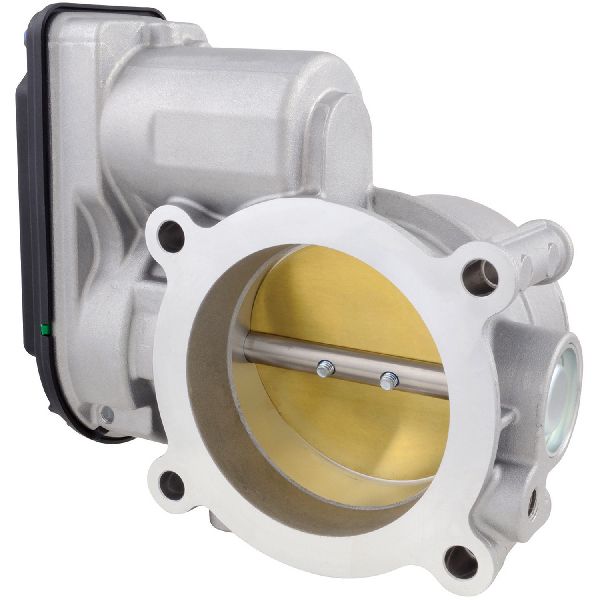
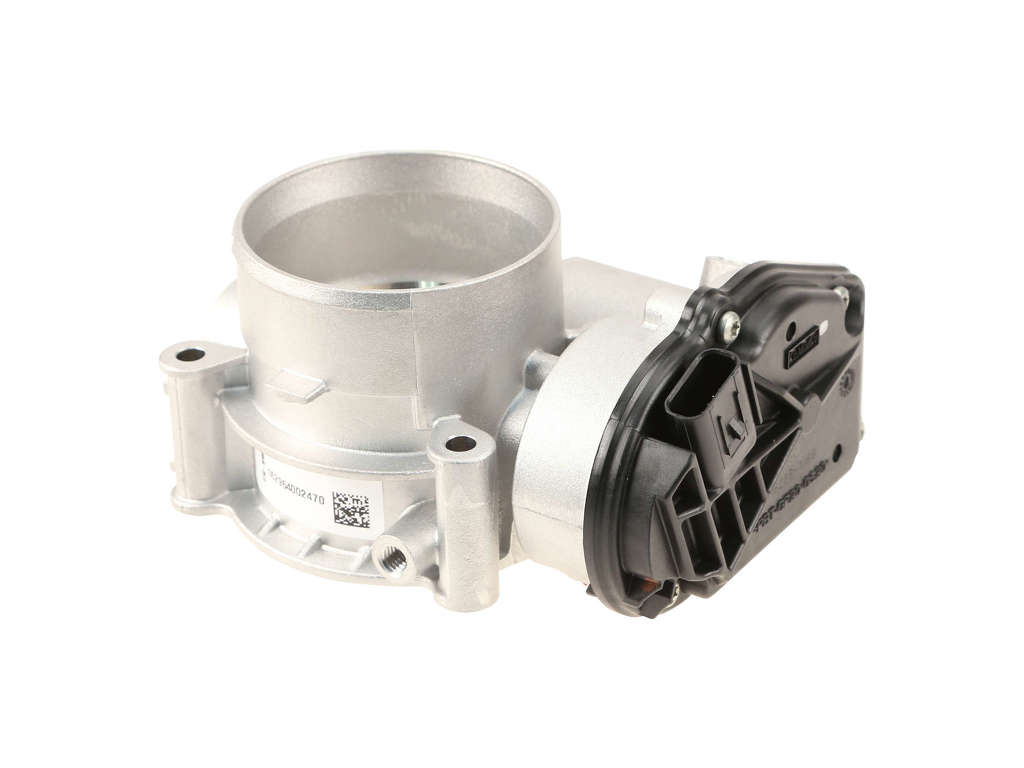
On a 2011-2014 Ford Edge with the 3.5L V6, code P0222 almost always means the electronic throttle body has failed. This triggers a 'limp mode' and a wrench light. The fix is to replace the entire throttle body assembly, which costs around $200-$300 for an OEM Motorcraft part and is a DIY-friendly repair. Cleaning the throttle body will not fix this specific electronic fault.
- P0222 on a 2011-2014 Edge almost certainly means the electronic throttle body has failed and needs replacement.
- Symptoms are severe and include a sudden loss of power ('limp mode') and the wrench light, making the vehicle unsafe to drive.
- Do not waste time or money just cleaning the throttle body; this is an internal electronic failure that cleaning cannot fix.
- The correct OEM replacement part is Motorcraft AT4Z-9E926-B.
- After replacing the part, a Keep Alive Memory (KAM) reset (disconnecting the battery) and an idle relearn procedure are mandatory for the repair to be successful.
What's Unique About the 2011-2014 Ford Edge
The electronic throttle body (ETB) on this generation of Ford Edge and its platform mates is a widely documented weak point. Unlike many vehicles where throttle-related codes can be caused by simple carbon buildup, P0222 on this platform almost always points to an internal electronic failure of the sensors within the ETB assembly. Ford acknowledged this issue by issuing Customer Satisfaction Program 16B23 for some 2011-2012 models, citing that internal motor contacts can become contaminated, leading to increased electrical resistance and failure. Because of this known design flaw, cleaning the throttle body is not an effective repair for this code.
Symptoms You May Notice
- Sudden loss of engine power (limp mode)
- Wrench light illuminated on the dashboard
- Check Engine Light illuminated
- Unresponsive or hesitant acceleration
- Erratic or low idle
- Difficulty starting the engine
- Vehicle speed is limited regardless of throttle input
- Cleaning the throttle body. On this specific vehicle, P0222 is almost always an internal electronic failure. While cleaning a dirty throttle body is good maintenance, it will not fix the low voltage circuit error from the internal sensor. Many owner forums have posts detailing how cleaning did not resolve the limp mode and a replacement was required.
Most Likely Causes
- Failed Electronic Throttle Body (ETB) Assembly 🔴 High Probability → Shop Fuel Injection Throttle Body This is a well-documented failure point on this platform, acknowledged by Ford's Customer Satisfaction Program 16B23. The internal sensors are not sold separately, and the failure is due to contamination of internal contacts, not just dirt on the throttle plate. Forum threads are filled with owners who confirm that cleaning did not work and only a full replacement solved the issue.
How to confirm: Use a scan tool to monitor live data for Throttle Position Sensor 1 (TP1) and Throttle Position Sensor 2 (TP2). With the key on and engine off, press the accelerator pedal. The voltage for TP1 should sweep smoothly (e.g., ~1.0V to ~4.5V) while TP2 sweeps in the opposite direction. For code P0222, the voltage for TP2 will likely be stuck at a very low value (under 0.5V) and will not change. This confirms the 'B' circuit has failed internally.
Typical fix: Replace the entire electronic throttle body assembly. After replacement, perform a Keep Alive Memory (KAM) reset by disconnecting the negative battery terminal for at least 15 minutes. Reconnect the battery and perform an idle relearn procedure. A common procedure is to start the engine, let it idle until it reaches normal operating temperature (about one minute), then turn the A/C on and let it idle for at least another minute. Then, drive the vehicle to allow the transmission to relearn shift points.
Est. part cost: $200-$300 for an OEM Motorcraft part.
Rare But Worth Checking
- Wiring Harness or Connector Issue: While less common than outright ETB failure, it's worth checking. A damaged wire or corroded pins at the throttle body connector can mimic a failed sensor. Visually inspect the harness for any chafing, breaks, or corrosion before replacing the throttle body. One owner on a forum reported finding a broken wire near the connector. Similarly, NHTSA ODI #11629480 describes a case where a vehicle stalled and triggered P0222 due to a "chaffed wire."
- Powertrain Control Module (PCM) Fault: → Shop Engine Control Module (ECM) This is extremely rare. A PCM failure can cause it to misinterpret the signal from a perfectly good sensor. This should only be considered after a new throttle body and verified wiring fail to resolve the code. One owner on a forum reported this as the ultimate, albeit very uncommon, solution after replacing the throttle body and tracing wires did not fix the issue.
Diagnosis Steps
- Connect an OBD-II scanner and confirm P0222 is present. Note any other codes like P2111, P2112, or P0122.
- Visually inspect the electrical connector and wiring harness at the electronic throttle body. Look for loose connections, corrosion, or damaged wires.
- Using a scan tool with live data, monitor the PIDs for Throttle Position Sensor 1 (TP1) and Throttle Position Sensor 2 (TP2).
- With the key on but the engine off, slowly press and release the accelerator pedal. The voltage for TP1 and TP2 should sweep smoothly in opposite directions.
- Confirm the failure: For code P0222, you will likely see the TP2 voltage is stuck at a very low value (e.g., <0.5V) and does not respond to pedal input.
- If the wiring is intact and the live data confirms a stuck TP2 signal, the electronic throttle body has failed and must be replaced.
- After replacing the throttle body, clear the codes and perform a Keep Alive Memory (KAM) reset by disconnecting the negative battery terminal for at least 15 minutes.
- Reconnect the battery, start the engine, and let it idle until it reaches normal operating temperature. Turn on the A/C and let it idle for at least one more minute to complete the idle relearn procedure. Then, take the vehicle for a test drive to allow the transmission to relearn shift points.
Parts You'll Likely Need
- Electronic Throttle Body Assembly
(OEM #AT4Z-9E926-B)— This is the direct cause of code P0222 in the vast majority of cases for this vehicle due to a known design flaw with the internal sensors. The sensors are not serviceable separately. This part number, AT4Z-9E926-B, is the updated Motorcraft part that supersedes the original, failure-prone part AT4Z-9E926-A.
Trusted brands: Motorcraft, Dorman, Hitachi
OEM price range: $200-$300
Aftermarket price range: $90-$180
Related Codes That Often Appear With This One
- P2111 — Indicates 'Throttle Actuator Control System - Stuck Open'. This and other ETB-related codes often appear with P0222 because they all point to a malfunction within the same electronic throttle body assembly.
- P2112 — Indicates 'Throttle Actuator Control System - Stuck Closed'. Like P2111, this points directly to a fault in the electronic throttle body's ability to control the throttle plate, a common companion code.
- P0122 — Indicates 'Throttle/Pedal Position Sensor/Switch 'A' Circuit Low'. This is the companion code for the 'A' sensor. Seeing both codes together strongly confirms a major failure within the throttle body assembly.
Technical Service Bulletins (TSBs) & Recalls
- SSM 46085: Notes a revision to the diagnostic manual for electronic throttle bodies (ETBs), indicating that certain data PIDs should not be used for diagnosis.
- Customer Satisfaction Program 16B23: Acknowledges that on some 2011-2012 Edge vehicles, the ETB internal contacts can become contaminated, causing resistance and triggering fail-safe mode. The fix is to replace the ETB.
- Bulletin #TSB 16-0163: Notes that P0222 can be among several DTCs present during various drivability issues.
- Bulletin #TSB18-2062: Documents concerns including engine running rough, crank no-start, loss of power, and loss of engine RPM associated with P0222 and related throttle codes.
Platform-Specific Known Issues
- Ford Customer Satisfaction Program 16B23 was issued for certain 2011-2012 Ford Edge models (and other vehicles with the 3.5L/3.7L engines) to replace the electronic throttle body free of charge due to a high failure rate. The program covered vehicles built at the Oakville plant from July 1, 2010, through October 29, 2010. While this program expired on September 30, 2017, it serves as official confirmation of the part's defect.
Mechanic-Grade Diagnostic Values
- Throttle Position Sensor 'B' (TP2) Voltage — expected: Sweeps smoothly from high to low, typically from ~4.5V at closed throttle to ~0.7V at wide-open throttle.. Failure: Voltage is stuck below 0.5V and does not change with pedal input.
- Throttle Position Sensor 'A' (TP1) Voltage — expected: Sweeps smoothly from low to high, typically from ~0.7V-1.0V at closed throttle to ~4.5V at wide-open throttle.. Failure: While not the direct cause of P0222, an erratic or non-responsive signal confirms a comprehensive ETB failure.
- 5-Volt Reference at ETB Connector — expected: Steady ~5.0 volts with key on, engine off.. Failure: Voltage is significantly below 5.0V or absent, indicating a wiring or PCM issue.
- Internal TPS Resistance (off-vehicle test) — expected: General specification is between 1-10 kΩ, sweeping smoothly as the throttle plate is moved.. Failure: An open circuit (infinite resistance) or a reading far outside the expected range indicates internal failure.
Scan Tool Commands That Help
- Ford IDS / FORScan: Datalogger - Live Data PIDs (TP1, TP2, TP_REL, etc.) — This is the primary diagnostic function. It is used to monitor the sensor voltages in real-time to confirm that the TP2 signal is stuck low and unresponsive, which validates the throttle body failure.
- Manual Procedure (Monitored with Scan Tool): Keep Alive Memory (KAM) Reset & Idle Relearn — This is a mandatory procedure after replacing the throttle body. While not a direct scan tool command, tools like FORScan can be used to monitor the relearn PIDs to confirm the process is completing successfully. The reset involves disconnecting the battery and shorting the cables to drain PCM capacitors, followed by a specific idle and drive cycle.
Wiring & Ground Locations
- ETB Connector — The 6-pin electrical connector plugged directly into the electronic throttle body assembly.. This is the primary point for testing voltage and inspecting for damage. Corrosion, pushed-out pins, or frayed wires at this connector can directly cause the P0222 code.
- PCM Connector C175E — One of the three main multi-pin connectors at the Powertrain Control Module (PCM), located on the firewall.. This connector contains the pins for the throttle position sensor signals. Specifically, Pin 4 is the signal return (ground) and Pin 16 is the signal for TPS 'A'. A bad connection here can interrupt the signal from the throttle body.
- Signal Return Wire — A dedicated wire running from a pin on the ETB connector directly back to a specific pin (e.g., Pin 4 on C175E) on the PCM.. The TPS circuit does not use a simple chassis ground; it uses this dedicated signal return. A break or high resistance anywhere along this specific wire is a key potential cause of the P0222 code if the throttle body itself is not at fault.
- G103 / G104 — Primary engine compartment ground points, typically located on the inner fender or frame rail.. While the TPS has a dedicated signal return, the PCM and other engine systems rely on these main grounds. A corroded or loose main ground can introduce electrical noise and voltage stability issues that could potentially affect sensor readings.
Real Owner Repair Stories
- Ford Edge Forum (fordedgeforum.com) - Multiple Owners (2011-2014 Ford Edge 3.5L V6) — Sudden wrench light and vehicle entering limp mode with no power, often happening on the highway. Check engine light on with codes P0222 and often P2111 or P2112.
❌ Tried (didn't work) Cleaning the throttle body with throttle body cleaner. This never resolves the issue as the fault is electronic, not due to carbon buildup., Resetting the code with a scanner. The code and limp mode return almost immediately upon driving.
✅ What actually fixed it Replacing the entire electronic throttle body assembly with a new unit (specifically the updated Motorcraft part AT4Z-9E926-B) and performing the KAM reset/idle relearn procedure. This is the universally agreed-upon fix across numerous owner accounts. - NHTSA ODI #10817084 — An owner reported that while driving in stop-and-go traffic, the check engine light came on and the vehicle had no power, forcing them to idle home. Diagnostic codes P0122, P0222, P2111, and P2135 were found, with the TPS reading stuck at 82%, confirming a defective throttle body.
- NHTSA ODI #10561056 — A report describes an incident where the car would not accelerate above 1,000 RPM, with P0222 appearing alongside a long list of other throttle and actuator codes including P2104 and P2110.
OEM Part Supersession History
AT4Z-9E926-A→AT4Z-9E926-B— The original 'A' revision part was prone to internal electronic failure due to contamination on the contacts, as acknowledged by Ford's Customer Satisfaction Program 16B23. The 'B' revision is the updated, more reliable part.
Model Year Variations Within This Range
- 2007-2010 vs 2011-2014: The electronic throttle body part number is different for the pre-facelift (2007-2010) and post-facelift (2011-2014) first-generation Ford Edge. The earlier models use a different part (e.g., 7T4Z-9E926-FA), while this guide's 2011-2014 models use AT4Z-9E926-B. The failure mode and symptoms are identical.
Diagnostic Flowchart
Other Known Issues on This Vehicle
Issues unrelated to this code that are worth knowing about as an owner of this generation:
- Internal Water Pump Failure 🔴 High — A notorious and well-documented failure. Can occur without warning, often cited between 80,000 and 150,000 miles. Failure leads to coolant mixing with engine oil, causing catastrophic engine damage if not caught immediately.
- Power Transfer Unit (PTU) Failure (AWD Models) 🔴 High — Common on All-Wheel Drive models. The unit's proximity to the exhaust cooks the gear oil, leading to fluid breakdown and gear failure. Symptoms include a burning oil/propane smell, grinding, and whining. Preventative fluid changes every 30k miles are recommended.
- Door Ajar Sensor Failure 🟡 Low — Extremely common across 2011-2013 models. A faulty switch inside the door latch assembly fails to register that the door is closed, leaving the interior lights on and draining the battery. Ford issued TSB 18-2013 for this issue. (Ref: TSB 18-2013)
- MyFord Touch Infotainment System Glitches 🟡 Low — Widespread complaints about the system being slow, freezing, and unresponsive to touch or voice commands. This is more of a user-experience issue than a mechanical failure but is a significant source of owner frustration.
- Brake Booster Failure 🟠 Medium — A known issue affecting multiple model years, where the brake booster diaphragm can tear, leading to a hissing noise and a hard brake pedal with reduced braking performance. Ford has issued extended warranty programs for this in some cases. (Ref: Potential extended warranty coverage)
Used vs. New Parts: Buying Guide for This Vehicle
When a used part is the smart pick: Almost never. Given that the original part (AT4Z-9E926-A) has a well-documented high failure rate, buying a used part from a junkyard is extremely risky. You are likely buying the same problem. A used part only makes sense if you can personally verify it is the updated 'B' revision and it comes from a very low-mileage donor vehicle.
Donor-vehicle mileage cap: roughly under 40000 miles for the part to have meaningful remaining life.
What to inspect on the donor part:
- Verify the part number sticker explicitly says AT4Z-9E926-B.
- Inspect the 6-pin connector for any signs of corrosion, bent pins, or heat damage.
- Look at the throttle plate; it should be relatively clean with minimal carbon. Heavy, oily buildup may suggest a hard life.
- Avoid any parts that show signs of being in a front-end collision.
OEM-only on this vehicle (don't cheap out):
- Electronic Throttle Body. While some aftermarket brands are viable, the OEM Motorcraft part is the most trusted and guaranteed fix. Given the critical safety nature of this part (preventing limp mode), sticking with the proven OEM revision is highly recommended.
Aftermarket brands forum-validated for this vehicle:
- Bosch
- Hitachi
- Standard Motor Products (SMP)
- Dorman (often a cost-effective option with wide availability)
Brands owners have reported issues with on this vehicle:
- No-name, unbranded parts from online marketplaces. The quality control on these is unknown, and failure can lead to a dangerous loss of power while driving.
Real Owner Stories
Aggregated from forums and TSBs cited above. Mileages and costs reflect what owners reported in those sources.
2011-2014 Ford Edge 3.5L V6
Symptoms: Sudden limp mode and a wrench light on the dashboard. Attempted to clean the electronic throttle body (ETB) to save money, but the issue persisted.
What fixed it: Replacement of the entire throttle body with a new Motorcraft unit.
Source hint: fordedgeforum.com
2011-2014 Ford Edge 3.5L V6
Symptoms: Experienced codes P0122, P0223, and P2110. The vehicle was stuck in a fail-safe mode.
What fixed it: Replacement of the faulty throttle body after confirming that cleaning the unit did not resolve the codes.
Source hint: YouTube - 'FORD EDGE CODE P0122 P0223 P2110 FIX' by World Mechanics
Related OBD-II Codes
Frequently Asked Questions
Does Ford Customer Satisfaction Program 16B23 still cover my 2011 Ford Edge throttle body replacement?
Can I just clean the throttle body on my 3.5L V6 to fix the P0222 code?
What is the recommended part for replacing the throttle body on a 2011-2014 Edge?
Is there a specific relearn procedure I need to follow after replacing the ETB?
Are there other major issues I should watch for on my 2011-2014 Ford Edge 3.5L?
Does the P0222 code on my Lincoln MKX mean the same thing as on the Ford Edge?
Helpful Videos
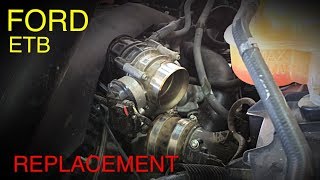


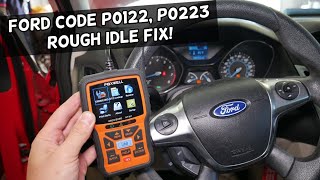
Used OEM Parts in Stock
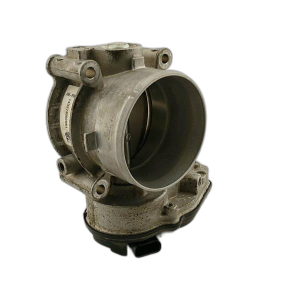
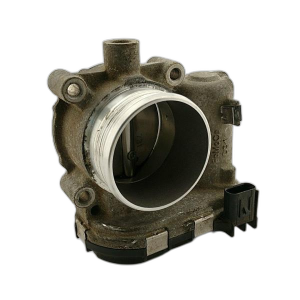
New Aftermarket Parts Available


The information in this article is provided for general reference and educational purposes only. Vehicle specifications, procedures, and part compatibility can vary by production date, trim level, and region. Always consult your vehicle's factory service manual and verify part numbers before purchasing or performing repairs. Safety-critical components such as airbags, seat belts, and braking systems should be installed by a qualified professional.
- Ford Edge:
- 🧭 Diagnostic Flowchart
- 🎬 Helpful Videos
- 🛍️ Shop This Part
- What's Unique About the 2011-2014 Ford Edge
- Symptoms You May Notice
- Most Likely Causes
- Rare But Worth Checking
- Diagnosis Steps
- Parts You'll Likely Need
- Related Codes That Often Appear With This One
- Technical Service Bulletins (TSBs) & Recalls
- Platform-Specific Known Issues
- Mechanic-Grade Diagnostic Values
- Scan Tool Commands That Help
- Wiring & Ground Locations
- Real Owner Repair Stories
- OEM Part Supersession History
- Model Year Variations Within This Range
- Other Known Issues on This Vehicle
- Used vs. New Parts: Buying Guide for This Vehicle
- Real Owner Stories
- 2011-2014 Ford Edge 3.5L V6
- 2011-2014 Ford Edge 3.5L V6
- Related OBD-II Codes
- Frequently Asked Questions
- 🎟️ Get 5% Off