

P0222 on 2008-2012 Ford Escape 3.0L: Throttle Body Failure Causes and Fixes
On a 2008-2012 Ford Escape, code P0222 almost always points to a failing electronic throttle body. This is a very common problem for this vehicle, causing sudden power loss. The fix is to replace the entire throttle body assembly, which costs around $70-$150 for the part and is a 1/5 difficulty DIY job.
- P0222 on a 2008-2012 Escape is almost certainly a failed electronic throttle body, a very common and well-documented issue.
- The primary symptom is the vehicle suddenly entering 'limp mode,' which is a major safety hazard.
- The correct fix is to replace the entire throttle body assembly and its gasket, not just clean it or replace other sensors.
- An updated OEM part is available (Motorcraft DS7Z-9E926-D), which should be used for the repair.
- After replacement, a throttle body relearn procedure is mandatory for proper idle and performance.
What's Unique About the 2008-2012 Ford Escape
The 2008-2012 Ford Escape is notorious for electronic throttle body (ETB) failures. The issue became so widespread that it prompted an NHTSA investigation and a Customer Satisfaction Program from Ford (13N03), which extended the warranty on the part to 10 years or 150,000 miles. Unlike in other vehicles where this code could point to various issues, on this specific Escape model, the cause is overwhelmingly an internal failure of the throttle body assembly itself due to electrical connectivity problems.
Symptoms You May Notice
- Sudden loss of engine power and inability to accelerate (Limp Mode).
- Wrench light illuminated on the dashboard.
- Check Engine Light is on.
- Vehicle stalls, sometimes intermittently.
- Rough or erratic idle.
- Hesitation or surging during acceleration.
- Replacing the Accelerator Pedal Position (APP) Sensor. While the APP sensor is part of the same system, the common failure point on this vehicle is almost always the throttle body at the engine.
- Cleaning the throttle body. While a dirty throttle body can cause idling issues, the P0222 code is an electrical fault caused by internal contact contamination. Cleaning will not fix the internal electronic failure that triggers this specific code.
Most Likely Causes
- Failing Electronic Throttle Body (ETB) 🔴 High Probability → Shop Fuel Injection Throttle Body This is a well-documented, widespread design or manufacturing flaw in the original part, leading to internal electrical failures from contamination on motor contacts. Ford issued Customer Satisfaction Program 13N03 to address the high failure rate.
How to confirm: Scan for P0222 and other related throttle codes (like P2111, P2112). The presence of these codes combined with symptoms like limp mode is a strong indicator. Diagnosis is often confirmed by the high failure rate of this specific part on this vehicle, as acknowledged by Ford's extended warranty program.
Typical fix: Replace the entire electronic throttle body assembly and the gasket. After replacement, perform a throttle body relearn procedure.
Est. part cost: $70-$150
Rare But Worth Checking
- Damaged Wiring Harness or Connector: While less common than a failed throttle body, the wiring leading to the ETB can become frayed, corroded, or damaged. A Reddit user reported that bad engine mounts allowed the engine to move excessively, cracking the wires to the throttle body and causing intermittent limp mode. Always perform a visual inspection of the harness and connector pins before replacing the part.
- Faulty Powertrain Control Module (PCM): → Shop Engine Control Module (ECM) A Ford Technical Service Bulletin for the 2009 model year specifically advises against replacing the PCM for code P0222 unless all other diagnostic steps have been exhausted. A PCM failure is extremely unlikely to be the cause.
Diagnosis Steps
- Use an OBD-II scanner to confirm the presence of P0222 and any other related codes.
- Inspect the wiring harness and connector going to the electronic throttle body. Look for any signs of damage, corrosion, or loose pins. Pay attention to engine mount condition, as excessive engine movement can damage the harness.
- Given the extremely high probability of throttle body failure on this specific vehicle, the most practical step is to replace the electronic throttle body assembly.
- After installing the new throttle body, perform a 'throttle body relearn' procedure. This is critical for the ECU to learn the new throttle plate's idle position. A common manual method involves disconnecting the battery for at least 15 minutes, reconnecting it, turning the key to the 'ON' position (without starting) for a minute, turning it off for a minute, and then starting the engine to let it idle for several minutes, first without accessories and then with the A/C on.
- Clear the codes and test drive the vehicle for at least 10 miles to ensure the issue is resolved and allow the PCM to complete its learning strategy.
Parts You'll Likely Need
- Electronic Throttle Body Assembly
(OEM #DS7Z-9E926-D)— This is the root cause of the P0222 code in the vast majority of cases for this vehicle due to a known design flaw. This part number (DS7Z-9E926-D) is the updated replacement for the original part (9L8Z-9E926-A).
Trusted brands: Motorcraft, Bosch, Hitachi, Standard Motor Products
OEM price range: $180-$220
Aftermarket price range: $70-$150 - Throttle Body Gasket
(OEM #9L8Z-9E936-A)— The gasket should always be replaced when the throttle body is removed to ensure a proper seal and prevent vacuum leaks. Some replacement throttle bodies include a new gasket, but it's often sold separately.
Trusted brands: Motorcraft, Fel-Pro, Mahle
OEM price range: $5-$15
Aftermarket price range: $3-$10
Related Codes That Often Appear With This One
- P2111 — Indicates 'Throttle Actuator Control System - Stuck Open'. This code often appears with P0222 as the internal failure of the throttle body affects the actuator's operation.
- P2112 — Indicates 'Throttle Actuator Control System - Stuck Closed'. Similar to P2111, this points directly to a mechanical or electrical failure within the throttle body assembly.
- P2135 — Indicates 'Throttle/Pedal Position Sensor/Switch A/B Voltage Correlation'. This code is set when the PCM sees a disagreement between the two redundant throttle position sensors, which is a direct result of the 'B' sensor failing.
Technical Service Bulletins (TSBs) & Recalls
- Ford Customer Satisfaction Program 13N03 - Extended warranty coverage for electronic throttle body failure.
- NHTSA Action Number: DP12006 - The 'Defect Petition' filed by the North Carolina Consumers Council that initiated the NHTSA investigation into throttle body failures on 2005-2012 Escapes.
- NHTSA Investigation: PE13003 - The Preliminary Evaluation opened by NHTSA in response to the defect petition, covering over 720,000 Ford and Mercury vehicles for electronic throttle body malfunctions.
Platform-Specific Known Issues
- Ford Customer Satisfaction Program 13N03: Ford acknowledged the high failure rate of the electronic throttle body by issuing this program, which extended the warranty to 10 years or 150,000 miles. The official reason cited was 'contamination on the internal motor contacts of the Throttle Body, resulting in intermittent electrical connectivity'. While this program has expired for most vehicles, it confirms the widespread nature of the problem. Some owners reported issues getting the repair covered even when under warranty.
Mechanic-Grade Diagnostic Values
- Throttle Position Sensor 'B' (TP2) PID Voltage — expected: Greater than 0.25 volts with key on, engine off or running.. Failure: A reading less than 0.25 volts indicates a fault is present.
- Throttle Position Sensor 'B' (TP2) Circuit Voltage — expected: Should rise smoothly from ~0.5V (closed throttle) to ~4.5V (wide open throttle).. Failure: Voltage does not rise, is stuck low, or never exceeds the PCM's low-circuit threshold of ~0.5V.
- VREF (Voltage Reference) at Throttle Body Connector — expected: Approximately 5.0V with key on, engine off.. Failure: Significantly lower or no voltage indicates a wiring or PCM issue.
Wiring & Ground Locations
- G104 — Left front of the engine compartment.. This is a primary ground point in the engine bay. A poor connection at G104 can cause various sensor and module issues, including incorrect voltage readings for the throttle position sensor circuit.
- Throttle Body Connector (6-pin) — Connected directly to the electronic throttle body on the engine's intake.. This is the main connection point for all power, ground, and signal wires for the throttle position sensors and throttle actuator motor. Corrosion or damage to these pins is a potential cause of the P0222 code.
- SIGRTN (Signal Return) Wire — Pin B41 on the PCM connector for the 3.0L Escape/Mariner.. This is the dedicated ground reference wire for many sensors, including the TPS. An open or high-resistance fault on this specific wire can cause low voltage readings and trigger the P0222 code.
Real Owner Repair Stories
- Commenter on HVAC Mechanic YouTube video (2016 Ford Explorer Sport (similar ETC system)) — P0222 and P2135 codes present.
❌ Tried (didn't work) Replaced the throttle body and performed the relearn procedure., Replaced the accelerator pedal assembly.
✅ What actually fixed it The owner concluded the issue must be in the wiring harness, as replacing both the throttle body and the pedal sensor did not resolve the codes.
OEM Part Supersession History
9L8Z-9E926-A→DS7Z-9E926-D— The original part was prone to internal electronic failure. The superseding part is the updated design intended to be more reliable.
Heads up: DS7Z-9E926-D is the correct and direct replacement for 9L8Z-9E926-A for this application. Some sources also list DS7Z-9E926-A as an intermediate part number.
Diagnostic Flowchart
Other Known Issues on This Vehicle
Issues unrelated to this code that are worth knowing about as an owner of this generation:
- 6F35 Transmission Failure 🔴 High — Widespread complaints of harsh shifting, shuddering, slipping, and complete failure, often before 100,000 miles. Problems were so common they led to class-action lawsuits. (Ref: Multiple TSBs exist, but no widespread recall for complete failure. Lawsuits have been filed.)
- Rear Shock Tower Rust 🔴 High — Extremely common in the Rust Belt. The upper mount for the rear shock absorber rusts through, causing the shock to detach from the body. The passenger side is noted to fail more frequently. (Ref: No recall, but the problem is so common that aftermarket repair kits (e.g., Dorman 924-358) are widely available.)
- Electric Power Steering (EPS) Failure 🔴 High — Common failure of the steering torque sensor, causing a sudden loss of power steering assist, making the vehicle very difficult to steer at low speeds. (Ref: Ford Recall 14S05 / NHTSA 14V284 was issued to update software and, if necessary, replace the steering column or torque sensor.)
- Cracked Front ABS Tone Ring 🟠 Medium — The metal ring on the CV axle can crack due to rust, leading to an illuminated ABS light and erratic traction control activation at low speeds.
- Ignition Coil Failure (V6) 🟠 Medium — Common cause of misfires (P030X codes). The three rear coils are located under the intake manifold, making replacement more labor-intensive.
Used vs. New Parts: Buying Guide for This Vehicle
When a used part is the smart pick: For this specific failure, a used part is NOT recommended. The original equipment part has a well-documented high failure rate due to a design flaw. Buying a used part from a junkyard carries a very high risk of getting a part that has either already failed or will fail soon.
What to inspect on the donor part:
- Not applicable, as used parts are not advised for this repair.
OEM-only on this vehicle (don't cheap out):
- While not strictly 'OEM-only', using a new OEM (Motorcraft) or a reputable aftermarket part with an updated design is strongly recommended over a used part or a low-quality, unbranded new part.
Aftermarket brands forum-validated for this vehicle:
- Motorcraft (OEM)
- Dorman (specifically their OE FIX line, which claims an improved non-contact sensor and better seals).
- Standard Motor Products
- Hitachi
- Bosch
Brands owners have reported issues with on this vehicle:
- Unbranded, low-cost parts from online marketplaces are often cited as being of poor quality and may fail prematurely.
Real Owner Stories
Aggregated from forums and TSBs cited above. Mileages and costs reflect what owners reported in those sources.
2010 Escape V6 Flexfuel
Symptoms: Lack of response from throttle body. It is an intermittent problem, but leaves her stranded more and more lately.
What fixed it: Throttle body replaced, mass airflow sensor cleaned, and powertrain control module recalibrated.
Source hint: Ford Truck Enthusiasts Forums - 2010 escape throttle body
2010 Ford Escape
Symptoms: Vehicle seemingly went into limp mode; sudden loss of engine power and inability to accelerate.
What fixed it: Replacement of the electronic throttle body; in some cases, repairing broken wires caused by a bad motor mount.
Source hint: Reddit r/fordescape thread 'my_escape_seemingly_went_into_limp_mode'
2009-2012 Ford Escape — ~150000 miles
Symptoms: Intermittent electrical connectivity issues due to contamination on the internal motor contacts of the Throttle Body.
What fixed it: Replacement of the electronic throttle body assembly under Customer Satisfaction Program 13N03.
Source hint: Ford Customer Satisfaction Program 13N03
Related OBD-II Codes
Frequently Asked Questions
Is there an extended warranty for the throttle body on my 2008-2012 Ford Escape?
My 2010 Escape just went into 'Limp Mode' with a wrench light. Is this related to P0222?
Can I just clean the throttle body to fix P0222 on the 3.0L Duratec?
Does the throttle body issue affect the Mercury Mariner or Mazda Tribute as well?
What is the 'throttle body relearn' procedure mentioned for the Ford Escape?
Could my engine mounts be causing the P0222 code?
Helpful Videos
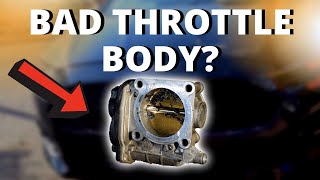
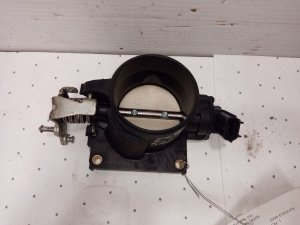
Used OEM Parts in Stock
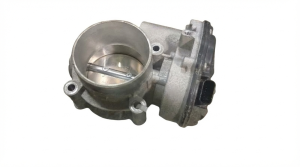
New Aftermarket Parts Available


The information in this article is provided for general reference and educational purposes only. Vehicle specifications, procedures, and part compatibility can vary by production date, trim level, and region. Always consult your vehicle's factory service manual and verify part numbers before purchasing or performing repairs. Safety-critical components such as airbags, seat belts, and braking systems should be installed by a qualified professional.
- Ford Escape:
- 🧭 Diagnostic Flowchart
- 🎬 Helpful Videos
- 🛍️ Shop This Part
- What's Unique About the 2008-2012 Ford Escape
- Symptoms You May Notice
- Most Likely Causes
- Rare But Worth Checking
- Diagnosis Steps
- Parts You'll Likely Need
- Related Codes That Often Appear With This One
- Technical Service Bulletins (TSBs) & Recalls
- Platform-Specific Known Issues
- Mechanic-Grade Diagnostic Values
- Wiring & Ground Locations
- Real Owner Repair Stories
- OEM Part Supersession History
- Other Known Issues on This Vehicle
- Used vs. New Parts: Buying Guide for This Vehicle
- Real Owner Stories
- 2010 Escape V6 Flexfuel
- 2010 Ford Escape
- 2009-2012 Ford Escape — ~150000 miles
- Related OBD-II Codes
- Frequently Asked Questions
- 🎟️ Get 5% Off