

P0222 on 2013-2019 Ford Escape: Throttle Position Sensor Circuit Low Causes and Fixes
P0222 on a 2013-2019 Ford Escape almost always means the electronic throttle body has failed. The vehicle will enter a reduced power 'limp mode'. The fix is to replace the entire throttle body assembly, which costs about $200-$350 for an OEM part and around $100 for aftermarket.
- P0222 on a 2013-2019 Escape indicates a 'low voltage' fault in one of the two throttle position sensors.
- The most probable cause is a failed electronic throttle body assembly, which must be replaced as a complete unit.
- Symptoms are serious and inc
What's Unique About the 2013-2019 Ford Escape
The 2013-2019 Ford Escape, like most modern Fords, uses an electronic throttle body where the throttle position sensors (TPS) are integrated into the assembly and cannot be replaced separately. While previous generations of the Escape had a known throttle body issue that led to an extended warranty program (13N03), this specific generation uses different parts. However, failure of the entire electronic throttle body remains the most common cause for throttle-related codes like P0222.
Generation note: This guide covers the third generation of the Ford Escape (2013-2019). While the code's meaning is the same across all engines, the specific throttle body part number varies depending on the engine (1.5L EcoBoost, 1.6L EcoBoost, 2.0L EcoBoost, or 2.5L Duratec). The 1.6L engine was replaced by the 1.5L for the 2017 model year facelift.
Symptoms You May Notice
- Check Engine Light and/or Wrench Light are on
- Vehicle enters 'limp mode' with drastically reduced engine power
- Hesitation or jerky acceleration
- Unresponsive accelerator pedal
- Rough or unstable idle
- Engine may stall
- Replacing the accelerator pedal assembly. While it also has position sensors, P0222 specifically points to the throttle body circuit.
- Replacing the Mass Airflow (MAF) sensor. A faulty MAF sensor will typically set different codes and has different symptoms.
Most Likely Causes
- Faulty Electronic Throttle Body Assembly 🔴 High Probability → Shop Fuel Injection Throttle Body The internal electronics of the integrated throttle position sensor fail over time. This is a common failure point on many modern electronic throttle bodies, often due to contamination of the internal contacts. A manufacturer service bulletin, TSB 18-2062, notes that this failure can lead to a loss of engine RPM, loss of power, or a crank no-start condition.
How to confirm: Using a scan tool with live data, monitor the throttle position sensor voltages (TP1 and TP2). When the pedal is pressed, one should sweep up and the other down. For P0222, the 'B' sensor (TP2) voltage will likely be stuck at a very low value (under 0.25-0.5V) 🎬 Watch: 2017 Escape P0222 code and sensor data explained or not respond correctly. With the key on and engine off, have a helper press the pedal and observe if the throttle plate moves smoothly.
Typical fix: Replace the entire electronic throttle body assembly. A throttle body relearn procedure must be performed after replacement.
Est. part cost: $80-$350 - Wiring Harness or Connector Issue 🟡 Medium Probability Engine vibration and heat can cause wires to chafe against brackets or other components. Moisture intrusion can also lead to corrosion in the connector pins at the throttle body (C139). NHTSA ODI #11629480 describes an instance where a vehicle stalled and dash lights illuminated due to a "chaffed wire" associated with code P0222.
How to confirm: Visually inspect the wiring harness leading to the throttle body for any signs of damage, chafing, or melting. Disconnect the connector and check for corrosion, moisture, or bent/backed-out pins. Use a multimeter to check for continuity and verify reference voltage (typically 5V) and ground at the connector.
Typical fix: Repair the damaged section of the wiring harness or clean/replace the electrical connector.
Est. part cost: $10-$100 - Dirty Throttle Body ⚪ Low Probability → Shop Fuel Injection Throttle Body Carbon and oil vapor from the PCV system can build up around the throttle plate, causing it to stick.
How to confirm: Remove the intake air tube from the throttle body and visually inspect the throttle bore and plate for significant carbon buildup. A sticking plate can cause a mismatch between the expected and actual sensor readings, potentially triggering the code. However, cleaning alone will not fix an internal electronic fault.
Typical fix: Clean the throttle body bore and plate thoroughly with a dedicated throttle body cleaner and a soft cloth. Do not spray cleaner directly into the electronic components.
Est. part cost: $5-$15
Rare But Worth Checking
- Faulty Powertrain Control Module (PCM): → Shop Engine Control Module (ECM) This is the least likely cause. The PCM is the computer that reads the sensor's signal. An internal failure can cause it to misinterpret the data. This should only be considered after all other possibilities (sensor, wiring) have been definitively ruled out.
Diagnosis Steps
- Read all fault codes with an OBD-II scanner. Note any other codes that are present. Manufacturer TSB 16-0163 indicates that P0222 may appear alongside a wide range of other DTCs during drivability issues.
- Use the scanner's live data function to monitor the Throttle Position Sensor 1 and 2 (TP1, TP2) PIDs. With the key on and engine off, slowly press and release the accelerator pedal. Both sensor voltages should change smoothly. For P0222, TP2 will likely be stuck low or respond erratically.
- Perform a thorough visual inspection of the throttle body electrical connector and its wiring harness. Look for any signs of damage, corrosion, or loose connections.
- If the wiring looks good, disconnect the connector. Use a multimeter to verify that you have a stable 5-volt reference and a good ground at the connector pins (refer to a wiring diagram for your specific engine).
- If the wiring, power, and ground are confirmed to be good, the failure is almost certainly internal to the electronic throttle body assembly.
- If you have access to a bi-directional scan tool, you can command the throttle actuator to open and close to test its function, but the sensor data from step 2 is usually sufficient for diagnosis.
- After replacing the throttle body or disconnecting the battery, perform the throttle body relearn procedure. This is critical for 🎬 Watch: How to perform the throttle body relearn process proper idle and performance. The generally accepted method is: a) Disconnect the negative battery terminal for at least 15 minutes to reset the Keep Alive Memory (KAM). b) Reconnect the battery. Turn off all accessories (A/C, radio, lights). c) Turn the key to the 'ON' position (without starting) and wait one minute. d) Start the engine and let it idle without touching the accelerator. Allow it to idle for 10-15 minutes to reach full operating temperature. e) Drive the vehicle for at least 10 miles, varying speeds to allow the PCM to relearn shift points and throttle response under load.
Parts You'll Likely Need
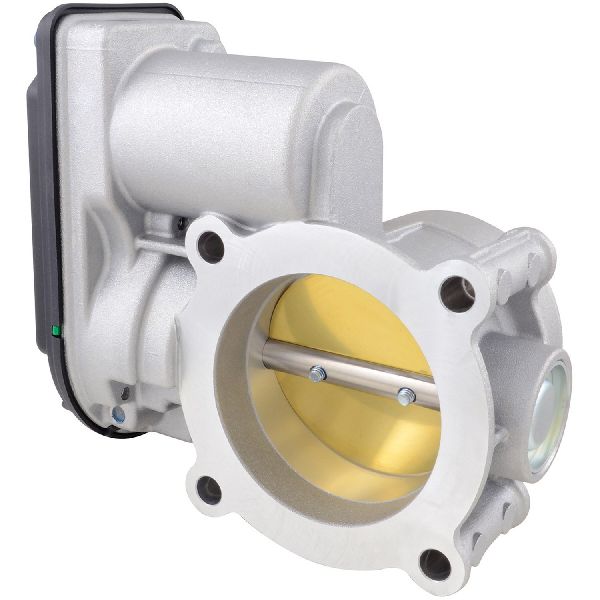
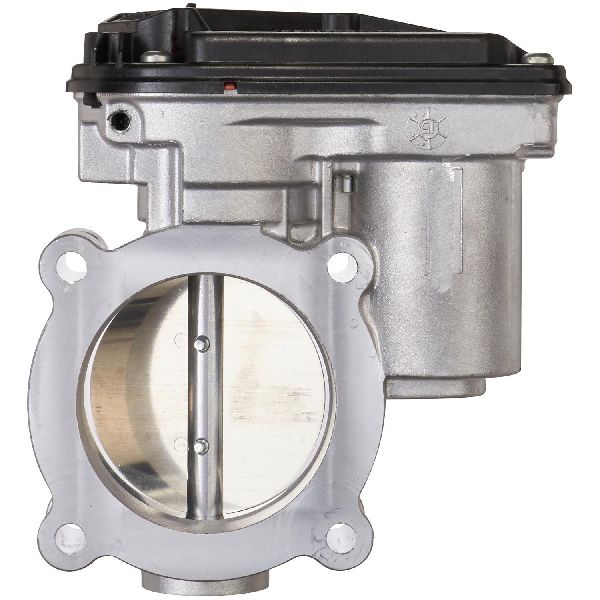
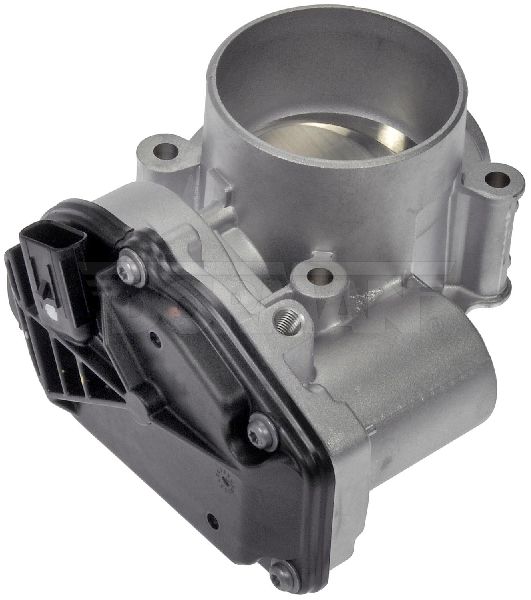
- Electronic Throttle Body Assembly
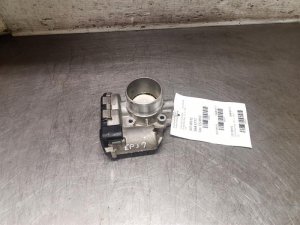
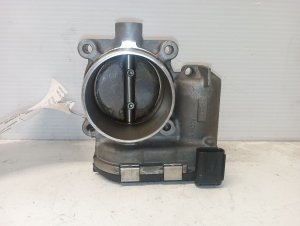
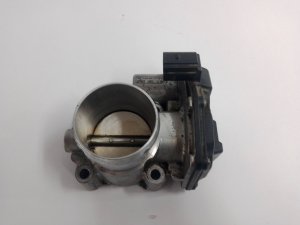
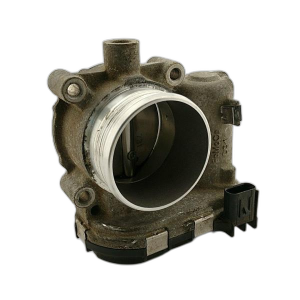
(OEM #DS7Z-9E926-D (2.5L), DS7Z-9E926-H (1.5L), Motorcraft W0133-2021819 (1.6L))— This is the most common failure for code P0222, as the internal throttle position sensors are integrated and cannot be replaced separately. It is highly recommended to use an OEM Motorcraft part, as aftermarket units have a higher rate of premature failure.
Trusted brands: Motorcraft, Bosch, Dorman, Standard Motor Products (SMP)
OEM price range: $200-$350
Aftermarket price range: $80-$150
Related Codes That Often Appear With This One
- P2112 — Stands for 'Throttle Actuator Control System - Stuck Closed'. This code often appears with TPS circuit codes because if the sensor data is invalid, the PCM may command the throttle closed as a fail-safe.
- P0122 — This is the equivalent 'Circuit Low' code for the 'A' sensor. If both appear, it could point to a common issue like a loss of the 5-volt reference power or ground to the throttle body.
- P2135 — Indicates 'Throttle/Pedal Position Sensor/Switch A/B Voltage Correlation'. This code is set when the PCM sees a disagreement between the two throttle position sensor signals, which is a direct consequence of one sensor failing and reporting a low voltage.
Technical Service Bulletins (TSBs) & Recalls
- TSB 22-2322: Details diagnosis and repair for coolant intrusion on 1.5L EcoBoost engines, often requiring short block replacement.
- TSB 20-2100: An earlier TSB, superseded by later versions, addressing coolant consumption, white smoke, and misfires on the 1.5L EcoBoost.
- SSM 48106: Special Service Message outlining the pressure test procedure to confirm coolant intrusion into cylinders on the 1.5L EcoBoost.
- TSB 16-0163: Addresses various drivability issues where P0222 may be present alongside other sensor and circuit codes.
- TSB 18-2062: Outlines a service procedure for engine rough running, loss of power, and illuminated MIL with codes including P0222 and P2135.
Platform-Specific Known Issues
- Ford has a history of throttle body issues. A customer satisfaction program (13N03) was issued for electronic throttle bodies on earlier Escapes (up to 2013 models), extending the warranty. While this specific program may not cover the entire 2013-2019 range, it highlights the component's tendency to fail. A similar program, 16B32, was issued for some 2016 models but has since expired.
Mechanic-Grade Diagnostic Values
- Throttle Position Sensor 'B' (TP2/TPSB) Voltage — expected: Should sweep smoothly from ~0.5V (closed throttle) to ~4.5V (wide open throttle).. Failure: Voltage is stuck below the PCM's threshold, typically <0.5V, or does not change when the accelerator pedal is pressed.
- 5V Reference Voltage (VREF) at Throttle Body Connector — expected: Approximately 5.0 volts with Key On, Engine Off (KOEO).. Failure: Voltage is significantly lower than 5.0V or is absent, indicating a wiring issue or a problem with the PCM.
- Ground Circuit at Throttle Body Connector — expected: Should show good continuity to chassis ground (less than 5 ohms).. Failure: High resistance or an open circuit (OL) indicates a bad ground connection, which can cause floating voltage readings.
Scan Tool Commands That Help
- Ford IDS (Integrated Diagnostic System) or FORScan: Datalogger - Live Data Graphing (PIDs: TP1, TP2, APP1, APP2) — This is the most critical diagnostic step. Graphing the two throttle position sensor voltages (TP1, TP2) while an assistant slowly presses the gas pedal will visually expose the 'B' sensor (TP2) signal dropping out or staying flat, confirming the fault is in the throttle body.
- Ford IDS (Integrated Diagnostic System) or FORScan: Service Functions -> PCM -> Reset All Adaptations / Clear KAM — This must be performed after installing a new throttle body. It erases the PCM's learned fuel trims and throttle strategies, forcing it to recalibrate to the new, clean throttle body's positions. Failing to do this can result in a persistent high idle or poor performance.
Wiring & Ground Locations
- C139 — The 6-pin electrical connector located directly on the electronic throttle body assembly at the front of the engine.. This is the single point of connection for all power, ground, and sensor signals for the throttle body. Corrosion, bent pins, or a loose connection here is a primary point of failure for code P0222.
- G104 / G105 — Located at the left front corner of the engine compartment, near the battery junction box (BJB).. These are major engine compartment ground points. While not exclusive to the throttle body, a loose or corroded connection at these grounds can cause intermittent and difficult-to-diagnose electronic faults, including incorrect sensor readings.
Real Owner Repair Stories
- YouTube video by 'Best Car Fixes' (2017 Ford Escape) — Check engine light on, hesitation issues.
❌ Tried (didn't work) The video suggests cleaning the throttle body as a first step, but implies replacement is the likely fix.
✅ What actually fixed it The presenter states that for a P0222 code, the proper fix is to replace the throttle body assembly. - NHTSA ODI #10817084 — An owner reported that while driving in stop-and-go traffic, the check engine light came on and the vehicle lost power, forcing them to idle home. Diagnostic codes included P0122, P0222, and P2135, with the TPS reading stuck at 82%, confirming a defective throttle body.
- NHTSA ODI #10561056 — A report describes an incident where the car would not accelerate above 1,000 RPM, with P0222 and P2135 among the numerous codes associated with the failure.
OEM Part Supersession History
9L8Z-9E926-A, DS7Z-9E926-A→DS7Z-9E926-D— Updated design to improve reliability and address common failure modes.
Heads up: DS7Z-9E926-D is for the 2.5L engine. Do not use on EcoBoost models.DS7Z-9E926-B→DS7Z-9E926-H— Updated design for the 1.5L EcoBoost engine.
Heads up: DS7Z-9E926-H is for the 1.5L EcoBoost engine only.DS7Z-9E926-A (for 2013 2.0L)→DS7Z-9E926-D (for 2014+ 2.0L)— Part number consolidation and design update.
Heads up: While the part numbers changed, the -D version is listed as the correct service replacement for the entire 2013-2019 range for the 2.0L engine, superseding the original part.
Model Year Variations Within This Range
- 2013-2016: These pre-facelift models offered the 1.6L EcoBoost, 2.0L EcoBoost, and 2.5L Duratec engines. The throttle body for the 1.6L is specific to that engine (Bosch W0133-2021819).
- 2017-2019: For the 2017 facelift, the problematic 1.6L EcoBoost was replaced by a new 1.5L EcoBoost engine, which uses a different throttle body (PN DS7Z-9E926-H). The 2.0L EcoBoost and 2.5L Duratec engines remained available.
Diagnostic Flowchart
Other Known Issues on This Vehicle
Issues unrelated to this code that are worth knowing about as an owner of this generation:
- EcoBoost Engine Coolant Intrusion 🔴 High — Common on 1.5L and 1.6L EcoBoost engines. Can occur at various mileages, often leading to misfires, white exhaust smoke, and eventual engine failure. (Ref: TSB 22-2322, TSB 20-2100, SSM 48106. The fix often requires a complete short block replacement.)
- 6F35 Transmission Failure 🔴 High — Widespread issue across multiple model years, with failures reported as early as 40,000 miles. Symptoms include shuddering, harsh shifting, slipping, and complete loss of motion. (Ref: Subject of a class-action lawsuit. No recall, but numerous owner complaints.)
- Faulty Door Latches 🔴 High — Extremely common on 2013-2015 models, leading to a massive recall. A component in the latch breaks, preventing the door from closing securely or causing it to open while driving. (Ref: Ford Safety Recall 16S30.)
Used vs. New Parts: Buying Guide for This Vehicle
When a used part is the smart pick: Given the high failure rate of this specific electronic component, buying a used throttle body is NOT recommended. The risk of getting a part that has already failed or is near the end of its service life is very high. The cost savings do not outweigh the potential for having to do the job twice.
Donor-vehicle mileage cap: roughly under 50000 miles for the part to have meaningful remaining life.
What to inspect on the donor part:
- If buying used is unavoidable, source from a vehicle with the lowest possible mileage.
- Check for any signs of heavy carbon buildup inside the throttle bore, which may indicate a poorly maintained engine.
- Ensure the electrical connector pins are clean, straight, and free of any corrosion.
OEM-only on this vehicle (don't cheap out):
- Electronic Throttle Body
Aftermarket brands forum-validated for this vehicle:
- Motorcraft (OEM)
- Bosch
Brands owners have reported issues with on this vehicle:
- While brands like Dorman offer OE FIX versions with features like non-contact Hall effect sensors, forum consensus and mechanic experience strongly favor using the OEM Motorcraft part for longevity and to avoid calibration or compatibility issues. Unbranded, low-cost parts from online marketplaces should be avoided entirely.
Real Owner Stories
Aggregated from forums and TSBs cited above. Mileages and costs reflect what owners reported in those sources.
2013 Ford Escape
Symptoms: Code P2135 occurs in reverse but only when backing up a hill. Code P0222 occurs upon gentle acceleration. If you stop the car and turn the key off both codes clear themselves and the car run fine.
What fixed it: The local Ford Dealer addressed P2135 by replacing the throttle body & motor assembly.
Source hint: owner_reports - Ford Forum
2013-2019 Ford Escape (6F35 Transmission) — ~40000 miles
Symptoms: The 6f35 has torque converter problems that when they start to fail they throw material inside the transmission causing contamination and damage.
What fixed it: Not specified, but noted as a widespread reliability issue involving the torque converter and internal contamination.
Source hint: Reddit (r/fordescape) thread titled 'Ford 6f35 Transmission, real problems or lack of maintenance?'
Related OBD-II Codes
Frequently Asked Questions
Is there a Ford program that covers the throttle body on my 2013 Escape?
My 2016 Escape is showing P0222; is there a specific TSB or program for this year?
Could the P0222 code on my 1.5L EcoBoost be related to the coolant intrusion issues mentioned in TSB 22-2322?
Do I need to do anything special after replacing the throttle body on my Ford Escape?
Can I just clean the throttle body to fix a P0222 code?
Helpful Videos

Used OEM Parts in Stock
New Aftermarket Parts Available


The information in this article is provided for general reference and educational purposes only. Vehicle specifications, procedures, and part compatibility can vary by production date, trim level, and region. Always consult your vehicle's factory service manual and verify part numbers before purchasing or performing repairs. Safety-critical components such as airbags, seat belts, and braking systems should be installed by a qualified professional.
- Ford Escape:
- 🧭 Diagnostic Flowchart
- 🎬 Helpful Videos
- 🛍️ Shop This Part
- What's Unique About the 2013-2019 Ford Escape
- Symptoms You May Notice
- Most Likely Causes
- Rare But Worth Checking
- Diagnosis Steps
- Parts You'll Likely Need
- Related Codes That Often Appear With This One
- Technical Service Bulletins (TSBs) & Recalls
- Platform-Specific Known Issues
- Mechanic-Grade Diagnostic Values
- Scan Tool Commands That Help
- Wiring & Ground Locations
- Real Owner Repair Stories
- OEM Part Supersession History
- Model Year Variations Within This Range
- Other Known Issues on This Vehicle
- Used vs. New Parts: Buying Guide for This Vehicle
- Real Owner Stories
- 2013 Ford Escape
- 2013-2019 Ford Escape (6F35 Transmission) — ~40000 miles
- Related OBD-II Codes
- Frequently Asked Questions
- 🎟️ Get 5% Off