

P0222 on 2011-2019 Ford Explorer: Throttle Position Sensor 'B' Circuit Low Causes and Fixes
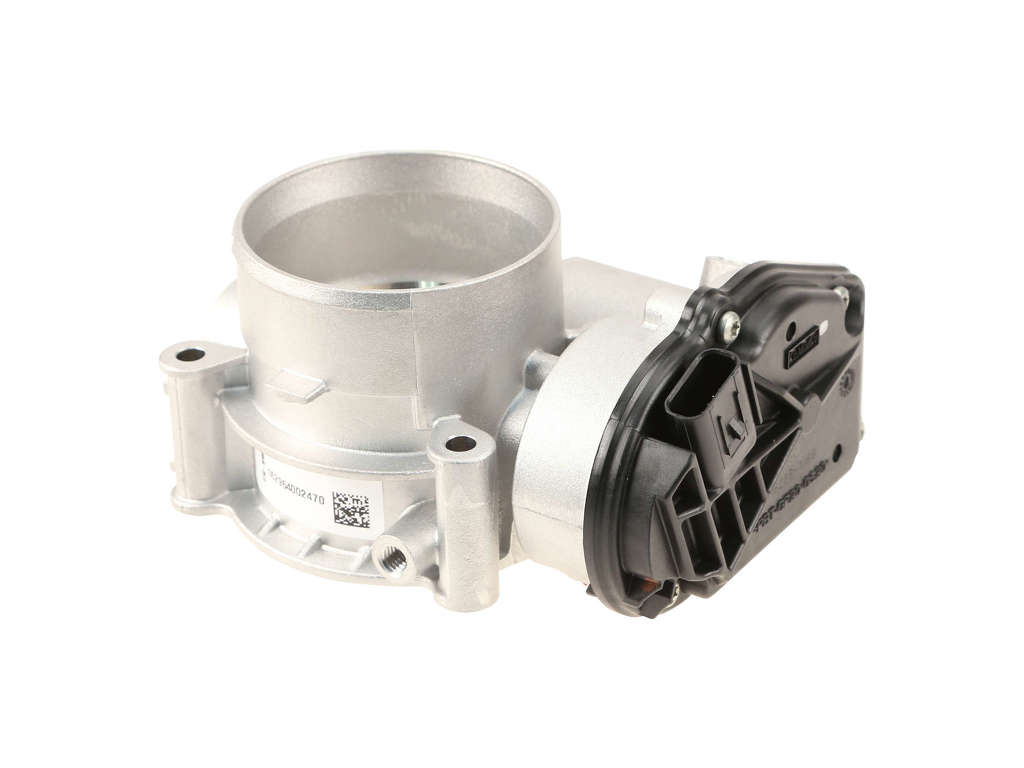
On a 2011-2019 Ford Explorer, code P0222 is most often caused by a failing electronic throttle body assembly. The throttle position sensors are integrated and not sold separately. The vehicle will enter a reduced power 'limp mode'. Replacing the entire throttle body is the standard fix, costing between $150 and $400 for the part.
- P0222 on a 2011-2019 Explorer means the engine computer has detected a low voltage fault from the secondary throttle position sensor.
- This code will immediately put the vehicle into a 'limp mode' with severely limited power, making it unsafe to drive.
- The most likely cause is a failed electronic throttle body assembly, a known issue on this platform.
- Diagnosis involves checking the sensor's voltage with a scan tool; a reading that is stuck low or doesn't move smoothly confirms a bad throttle body.
- The fix is to replace the entire throttle body assembly, as the sensor is not available separately.
What's Unique About the 2011-2019 Ford Explorer
The 2011-2019 Ford Explorer, like many other Ford models from this era, is known for issues with its electronic throttle body (ETB). The throttle position sensors (TPS) are integrated into the ETB and are not sold separately. Ford acknowledged this issue with Customer Satisfaction Program 16B32 for some 2016 Explorers (for codes P2111/P2112) and, more broadly, with Extended Warranty Program 13N03 for many 2009-2013 models, which extended ETB coverage to 10 years/150,000 miles due to contamination of internal contacts causing intermittent connectivity. Though P0222 isn't always explicitly named, owner forums and mechanic consensus confirm the ETB is the primary culprit for a range of throttle-related codes.
Symptoms You May Notice
- Check Engine Light is on
- Wrench light (powertrain fault) is on
- Vehicle enters 'limp mode' with drastically reduced engine power
- Poor, hesitant, or jerky acceleration
- Engine is slow to respond to the accelerator pedal
- Rough or unstable idle
- Difficulty starting the engine
- Stalling at low speeds or when coming to a stop
- Replacing the accelerator pedal position (APP) sensor. While the APP sensor can cause similar symptoms, code P0222 specifically points to the 'B' circuit at the throttle body, not the pedal.
Most Likely Causes
- Failing Electronic Throttle Body (ETB) 🔴 High Probability → Shop Fuel Injection Throttle Body This is a well-documented weak point on many Ford platforms from this era. The internal electronic contacts of the integrated throttle position sensor wear out or become contaminated over time, causing a loss of signal.
How to confirm: After confirming the wiring is intact, use a scan tool to monitor the TPS 'B' voltage (PID: TP2 or similar). With the key on, engine off, the voltage should be low but steady (e.g., ~0.8V). As you slowly press the accelerator, it should rise smoothly to ~4.5V. If the voltage is stuck low (under 0.5V), reads erratically, or has dropouts, the throttle body is faulty.
Typical fix: Replace the entire electronic throttle body assembly. A throttle body relearn procedure (often as simple as an ignition cycle and idling) should be performed after replacement. 🎬 Watch: Ford electronic throttle body calibration procedure
Est. part cost: $150-$400 - Wiring Harness or Connector Issue 🟡 Medium Probability The wiring harness to the throttle body is subject to engine vibration and heat, which can cause wires to break, insulation to chafe, or pins in the connector to become loose or corroded over time. In one instance, NHTSA ODI #11629480 noted a vehicle stalled out with code P0222 specifically due to a "chaffed wire."
How to confirm: Visually inspect the wiring and 6-pin connector (C139) at the throttle body for any signs of damage, corrosion, or loose pins. Perform a 'wiggle test' on the harness while monitoring the TPS voltage on a scan tool to see if the reading jumps or drops out.
Typical fix: Repair the damaged section of wiring or replace the connector pigtail (Motorcraft part WPT-1057 or equivalent).
Est. part cost: $15-$50 - Dirty Throttle Body ⚪ Low Probability → Shop Fuel Injection Throttle Body All engines with a PCV system can accumulate carbon and oil residue in the throttle body. While this more commonly causes sticking issues (P2111/P2112) or a rough idle, severe buildup could theoretically hinder plate movement enough to cause a sensor correlation fault, though it's less likely to cause a specific low-voltage electrical code.
How to confirm: Remove the air intake tube and visually inspect the throttle plate and bore for significant carbon buildup that could restrict movement.
Typical fix: Clean the throttle body bore and plate with a dedicated throttle body cleaner and a soft brush. Do not spray cleaner directly into the electronic components or force the plate open by hand.
Est. part cost: $10-$20
Rare But Worth Checking
- Faulty Powertrain Control Module (PCM): → Shop Engine Control Module (ECM) This is very rare. The PCM should only be considered after all other possibilities, including the throttle body and wiring, have been definitively ruled out. A PCM failure would likely present with multiple other codes and issues.
Diagnosis Steps
- Connect a scan tool and confirm that P0222 is the primary code. Note any other codes present and look at the freeze frame data to see the conditions when the code was set.
- Turn the key on with the engine off. Use the scan tool to monitor the live data for Throttle Position Sensor 2 (TP2) voltage. It should be a steady low voltage (typically ~0.5V - 1.0V).
- Slowly press the accelerator pedal to the floor. The TP2 voltage should increase smoothly and steadily to around 4.0V - 4.8V. If you see sudden drops, spikes, or the voltage is stuck low, the throttle body is the primary suspect.
- If the voltage is stuck at zero or very low, perform a thorough visual inspection of the throttle body connector (C139) and wiring harness. Look for any broken wires, corrosion, pushed-out pins, or chafing against other components.
- If the wiring looks good, disconnect the throttle body connector. Use a multimeter to check for the 5-volt reference and a good ground on the appropriate pins of the harness-side connector.
- If the 5V reference or ground is missing, you have a wiring issue or a potential PCM problem that needs to be traced. If both are present, the fault is almost certainly within the electronic throttle body assembly itself. 🎬 Watch: How to test and diagnose a faulty throttle body
- If the throttle body appears very dirty, cleaning it is a low-cost first step, but be aware that a 'Circuit Low' code usually indicates an electrical failure, not a mechanical restriction from carbon buildup.
Parts You'll Likely Need
- Electronic Throttle Body Assembly
(OEM #Varies by engine. Common p/n for 3.5L EcoBoost is BL3Z-9E926-B (superseded by TB-1). For 3.5L NA, BB5Z-9E926-C is common. Always verify with VIN.)— This is the most common failure point for code P0222 on this vehicle. The throttle position sensor is integrated into this assembly and cannot be replaced separately.
Trusted brands: Motorcraft, Bosch, Hitachi, Autopart Premium
OEM price range: $250-$400
Aftermarket price range: $150-$250 - Throttle Body Connector Pigtail
(OEM #WPT-1057 (Motorcraft))— If the diagnosis points to a damaged or corroded electrical connector at the throttle body, replacing the pigtail is the correct repair instead of replacing the entire throttle body.
Trusted brands: Motorcraft, Dorman
OEM price range: $30-$50
Aftermarket price range: $15-$30
Related Codes That Often Appear With This One
- P0122 — This code is for 'Throttle/Pedal Position Sensor/Switch 'A' Circuit Low Input'. If both sensors fail or a common reference voltage/ground is lost, you may see both codes.
- P2111 — This code means 'Throttle Actuator Control System - Stuck Open'. A failing throttle body that triggers P0222 may also have mechanical issues with the actuator motor, causing it to stick.
- P2112 — This code means 'Throttle Actuator Control System - Stuck Closed'. This is another common code related to a failing Ford ETB and is often seen alongside P0222 when the internal mechanism fails.
Technical Service Bulletins (TSBs) & Recalls
- SSM 46085: Notes a revision to the official diagnostic manual for electronic throttle bodies, advising technicians not to use certain PIDs (ETC_ACT, ETC_DSD) for diagnosis due to slow scan tool refresh rates, which can lead to misdiagnosis. This indicates the complexity and frequency of ETB issues.
- Bulletin #TSB 16-0163: Lists P0222 among several DTCs associated with various drivability issues on Ford vehicles, highlighting the code's presence in manufacturer-documented engine faults.
- Bulletin #TSB18-2062: Identifies P0222 as a code that may trigger concerns such as the engine running rough, crank no-start, loss of power, or loss of engine RPM.
Platform-Specific Known Issues
- Ford issued Customer Satisfaction Program 16B32 for certain 2016 Explorers to address failing electronic throttle bodies, which could cause limp mode and set various DTCs.
- Ford also issued an earlier, broader Customer Satisfaction Program 13N03, which extended the warranty on the ETB for many models to 10 years/150,000 miles due to internal contamination causing limp mode.
Mechanic-Grade Diagnostic Values
- TP Sensor 'B' (TP2) Signal Voltage — expected: Approx. 0.5V - 1.0V at closed throttle, sweeping smoothly to approx. 4.5V - 4.8V at wide-open throttle (WOT).. Failure: Voltage is stuck below 0.5V, does not change with pedal input, or has sudden drops/spikes during sweep test.
- VREF (5-Volt Reference) at Throttle Body Connector — expected: 4.8V - 5.2V with key on, engine off.. Failure: Voltage is near 0V or significantly below 4.8V, indicating a wiring or PCM issue.
- Signal Return (Ground) at Throttle Body Connector — expected: Near 0V, with less than 100mV of variance from battery negative.. Failure: Voltage is present on the ground wire, or resistance to chassis ground is high, indicating a bad ground connection.
Scan Tool Commands That Help
- Ford IDS (or equivalent high-end scanner): PCM Reset / Clear KAM (Keep Alive Memory) — After replacing the throttle body or disconnecting the battery, this command forces the PCM to erase all learned adaptive values, including old throttle trim data. This is a crucial first step before performing the idle/throttle relearn procedure.
- Ford IDS (or equivalent high-end scanner): TPS Calibration Module — This guided function within the dealer software can be used to verify and, in some cases, recalibrate the sensor endpoints. It's a more advanced step if the manual relearn procedure doesn't resolve an erratic idle post-replacement.
- Ford IDS (or equivalent high-end scanner): Live Data Graphing (TP1, TP2, APP1, APP2) — During diagnosis, graphing the two throttle position sensor voltages (TP1, TP2) simultaneously while pressing the pedal is the best way to spot dropouts or glitches in one sensor that might not be obvious with numerical data alone.
Wiring & Ground Locations
- C139 (Throttle Body Connector) — The 6-pin electrical connector plugged directly into the Electronic Throttle Body assembly.. This is the single point of failure for all wiring-related issues for this code. All voltage, ground, and signal tests are performed here. Based on common Ford wiring schemes, the pinout is typically: Pin 1: Throttle Motor Control (+), Pin 2: Throttle Motor Control (-), Pin 3: TP Sensor 1 Signal (TP1), Pin 4: TP Sensor 2 Signal (TP2 - This is the circuit for P0222), Pin 5: 5V Reference (VREF), Pin 6: Signal Return (Ground).
- G104 / G105 — Main engine compartment ground points, typically located on the left or right front corner of the engine compartment, often on the inner fender apron near the battery or fuse box.. These are primary grounding points for the engine harness and PCM. A loose or corroded connection at these locations can cause a floating ground, leading to incorrect sensor readings and codes like P0222.
Real Owner Repair Stories
- Reddit user on r/FordExplorer (2013 Ford Explorer, ~100,000 miles) — Sudden loss of power, wrench light illuminated, vehicle entered limp mode.
❌ Tried (didn't work) Not specified, user went straight to asking for advice.
✅ What actually fixed it Replacement of the entire throttle body assembly with an OEM (Motorcraft) part resolved the issue. - NHTSA ODI #10817084 — An owner reported driving in stop-and-go traffic when the check engine light came on and the vehicle lost power, forcing them to idle home; diagnostic codes included P0122, P0222, P2111, and P2135 with a TPS reading stuck at 82% due to a defective throttle body.
- NHTSA ODI #10561056 — A report describes an incident where a vehicle would not accelerate above 1,000 RPM, with P0222 recorded alongside a long list of other throttle and actuator codes including P2104, P2110, and P2135.
OEM Part Supersession History
BL3Z-9E926-A→BL3Z-9E926-B— Standard part revision and update by manufacturer.
Heads up: This part number is primarily for the 3.5L EcoBoost (turbo) engine. It will not fit the 3.5L Naturally Aspirated engine.BB5Z-9E926-A / BB5Z-9E926-B→BB5Z-9E926-C— Standard part revision and update by manufacturer.
Heads up: This part number is for the 3.5L Naturally Aspirated (NA) V6 engine. It will not fit the EcoBoost engines.
Model Year Variations Within This Range
- 2011-2019: The electronic throttle body is different depending on the engine. The 3.5L Naturally Aspirated V6, 3.5L EcoBoost V6, 2.0L EcoBoost I4, and 2.3L EcoBoost I4 all use physically different throttle bodies with unique part numbers. Always verify the correct part number with the vehicle's VIN before purchasing.
Diagnostic Flowchart
Other Known Issues on This Vehicle
Issues unrelated to this code that are worth knowing about as an owner of this generation:
- Internal Water Pump Failure (3.5L & 3.7L V6) 🔴 High — Common after 80,000-100,000 miles. A known design flaw where the pump is located inside the engine and driven by the timing chain. (Ref: No recall, but a subject of class-action lawsuits. Failure is identified by a coolant leak from a 'weep hole' near the A/C compressor. If not addressed, coolant will contaminate the engine oil, leading to catastrophic engine failure.)
- Power Transfer Unit (PTU) Overheating/Failure 🔴 High — Common on AWD models, especially those with over 60,000 miles where the fluid has not been changed. The unit is located near the hot exhaust with no factory drain plug, causing the gear oil to cook and break down. (Ref: No recall. Symptoms include a grinding/whining noise, shuddering on acceleration, and a burning gear oil or propane-like smell. Failure can lead to a loss of AWD and potential damage to the transmission.)
- Exhaust/Carbon Monoxide Smell in Cabin 🔴 High — Widespread on 2011-2017 models, particularly during hard acceleration or with the HVAC on recirculation. (Ref: NHTSA investigation 16V-524, Ford Customer Satisfaction Program 17N03. Ford issued TSBs (e.g., 16-0166) and a service program to seal body gaps, reprogram HVAC, and replace exhaust components to address the issue after thousands of complaints.)
- Rear Suspension Toe Link Fracture 🔴 High — Affected 2011-2017 models, leading to a major recall. (Ref: NHTSA Recalls 16V-245, 19V-435. The rear suspension toe links could fracture due to corrosion or stress, causing a sudden loss of steering control.)
- MyFord Touch / SYNC System Glitches 🟡 Low — Very common on earlier models (2011-2015). Symptoms include a frozen or black screen, unresponsiveness to touch, and Bluetooth connectivity issues. (Ref: Multiple software updates were released to address stability, but underlying hardware limitations persist for some owners.)
Used vs. New Parts: Buying Guide for This Vehicle
When a used part is the smart pick: Buying a used throttle body for this vehicle is NOT recommended. The failure is due to internal electronic wear and contamination, a known defect. A used part from a salvage yard carries a very high risk of failing in the same manner shortly after installation.
Donor-vehicle mileage cap: roughly under 40000 miles for the part to have meaningful remaining life.
What to inspect on the donor part:
- If buying used is unavoidable, source from the lowest-mileage, latest-model-year donor possible.
- Inspect the electrical connector pins for any signs of corrosion, moisture, or damage.
- Avoid parts that show signs of heavy carbon buildup, as it may indicate a poorly maintained engine.
OEM-only on this vehicle (don't cheap out):
- Electronic Throttle Body Assembly - While some aftermarket options exist, the OEM Motorcraft part is the most proven and reliable fix, despite the original design flaw. Many owners who try cheaper aftermarket units report premature failure.
Aftermarket brands forum-validated for this vehicle:
- Standard Motor Products (SMP)
- Bosch (if available)
- Hitachi (if available)
Brands owners have reported issues with on this vehicle:
- Unbranded, no-name parts from online marketplaces should be avoided. Their internal electronics are often of poor quality and fail quickly.
Real Owner Stories
Aggregated from forums and TSBs cited above. Mileages and costs reflect what owners reported in those sources.
2010 Ford Escape — ~150000 miles
Symptoms: The vehicle suddenly lost power in traffic due to ETB failure, creating a safety concern.
What fixed it: Replacement of the electronic throttle body, though the owner discussed the 13N03 warranty extension.
Source hint: Ford Truck Enthusiasts Forum - '2009-12: Extended Throttle Body warranty may be useless'
2017 Ford Explorer Sport
Symptoms: Owner expressed concern and awareness regarding ongoing Electronic Throttle Body issues on this specific platform.
What fixed it: Electronic Throttle Body replacement.
Source hint: Edmunds Car Forums - 'Has ford resolved the Explorer Electronic Throttle Body Issue for the 2017 Sport?'
Ford Expedition 3.5L EcoBoost
Symptoms: Sudden power loss while driving.
What fixed it: Throttle body replacement, sometimes covered under Ford service programs.
Source hint: Ford Expedition Forum - 'Throttle Body replacement under TSB/or Recal (EB 3.5L)'
Related OBD-II Codes
Frequently Asked Questions
Is there a warranty extension for the throttle body on my Ford Explorer?
My 2016 Explorer keeps going into limp mode; is there a specific program for this year?
Can I just clean the throttle body on my Explorer to fix the P0222 code?
What specific part do I need if the 6-pin connector at the throttle body is damaged?
Why does the diagnostic manual advise against using certain PIDs like ETC_ACT for my Explorer?
What are the symptoms of a failing ETB on a Ford Explorer?
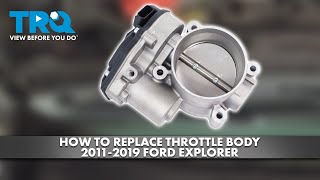
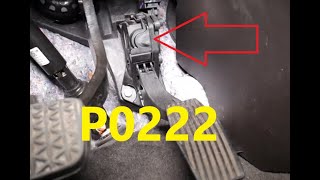
Helpful Videos


Used OEM Parts in Stock
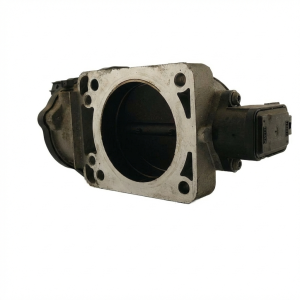
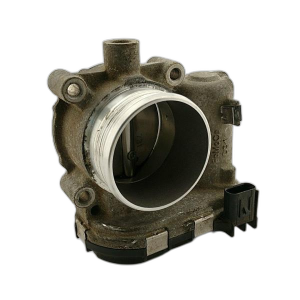
New Aftermarket Parts Available

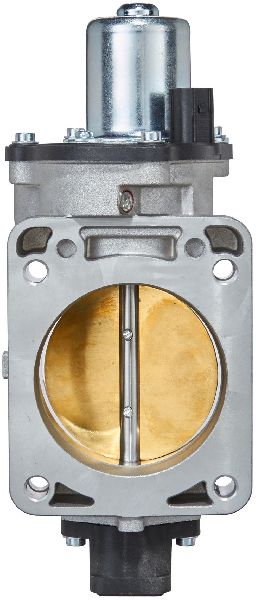
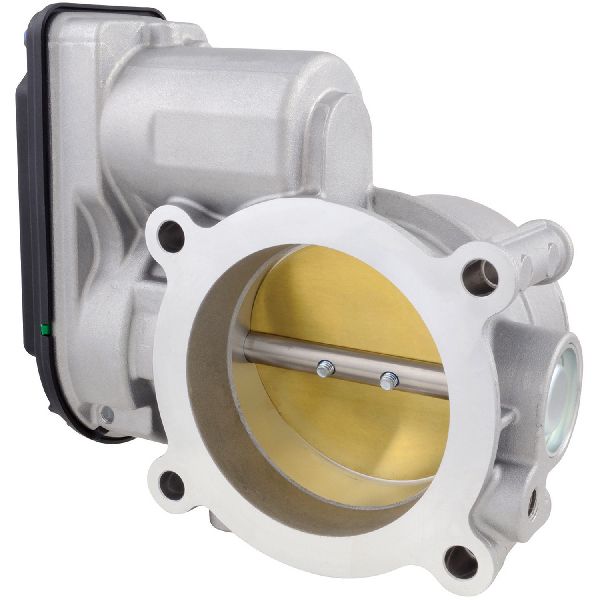

The information in this article is provided for general reference and educational purposes only. Vehicle specifications, procedures, and part compatibility can vary by production date, trim level, and region. Always consult your vehicle's factory service manual and verify part numbers before purchasing or performing repairs. Safety-critical components such as airbags, seat belts, and braking systems should be installed by a qualified professional.
- Ford Explorer:
- 🧭 Diagnostic Flowchart
- 🎬 Helpful Videos
- 🛍️ Shop This Part
- What's Unique About the 2011-2019 Ford Explorer
- Symptoms You May Notice
- Most Likely Causes
- Rare But Worth Checking
- Diagnosis Steps
- Parts You'll Likely Need
- Related Codes That Often Appear With This One
- Technical Service Bulletins (TSBs) & Recalls
- Platform-Specific Known Issues
- Mechanic-Grade Diagnostic Values
- Scan Tool Commands That Help
- Wiring & Ground Locations
- Real Owner Repair Stories
- OEM Part Supersession History
- Model Year Variations Within This Range
- Other Known Issues on This Vehicle
- Used vs. New Parts: Buying Guide for This Vehicle
- Real Owner Stories
- 2010 Ford Escape — ~150000 miles
- 2017 Ford Explorer Sport
- Ford Expedition 3.5L EcoBoost
- Related OBD-II Codes
- Frequently Asked Questions
- 🎟️ Get 5% Off