

P0222 on 2010-2012 Ford Fusion: Throttle Position Sensor 'B' Circuit Low Fixes
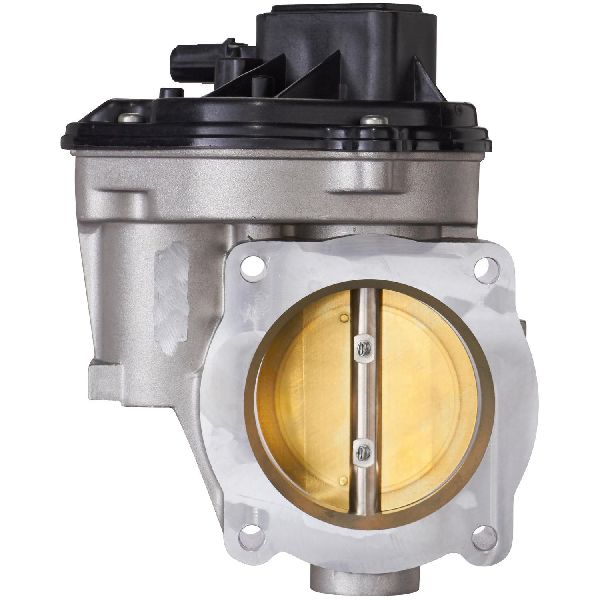
On a 2010-2012 Fusion, P0222 almost always means the electronic throttle body has failed. This is a very common issue that causes sudden power loss and a 'wrench' light. The fix is to replace the entire throttle body assembly, which costs about $100-$200 for an aftermarket part and is a straightforward DIY job. This was a known defect addressed by Ford's extended warranty program 13N03.
- P0222 on a 2010-2012 Fusion is almost certainly a failed electronic throttle body.
- Symptoms are severe and include a sudden loss of power ('limp mode') and a wrench warning light.
- Do not waste time or money simply cleaning the throttle body; the failure is internal and electronic, requiring full replacement.
- This is a common DIY repair that can be done in under an hour with basic tools, but a KAM reset/relearn procedure is necessary afterward.
- When buying a replacement, use the updated OEM part (Motorcraft DS7Z-9E926-D) or a quality aftermarket equivalent to ensure a permanent fix.
What's Unique About the 2010-2012 Ford Fusion
This is a notoriously common problem on this generation of Ford Fusion and its platform mates. The electronic throttle bodies (ETBs) used in these cars are known to fail due to what a NHTSA investigation identified as contamination on the internal motor contacts, leading to intermittent electrical connectivity. The issue was so widespread that Ford issued Customer Satisfaction Program 13N03, extending the warranty on the throttle body to 10 years or 150,000 miles. While this program has likely expired for most vehicles due to age, it confirms that the throttle body itself is the overwhelming cause of this code, not a random wiring fluke.
Symptoms You May Notice
- Sudden and significant loss of engine power
- Vehicle enters 'limp home' mode
- Illuminated 'Wrench' light on the dashboard
- Check Engine Light is on
- Poor, hesitant, or jerky acceleration
- Inability to accelerate, gas pedal seems unresponsive
- Engine stalls, but may restart and run normally for a short time
- Replacing the accelerator pedal assembly. While the pedal also has position sensors, code P0222 on this specific vehicle points almost exclusively to the throttle body on the engine.
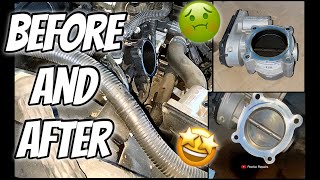
- Cleaning the throttle body plate. The failure is electronic and internal to the sealed unit; cleaning carbon buildup from the throttle plate will not fix the bad sensor signal. 🎬 Watch: How to clean or replace your throttle body
Most Likely Causes
- Faulty Electronic Throttle Body (ETB) Assembly 🔴 High Probability → Shop Fuel Injection Throttle Body A known design flaw causes contamination on the internal motor contacts, leading to intermittent electrical connectivity. This was acknowledged by Ford's Customer Satisfaction Program 13N03 and investigated by the NHTSA under PE13-003. An owner report in NHTSA ODI #10817084 noted that when P0222 occurred, the TPS reading became stuck at 82%, confirming a defective throttle body.
How to confirm: Use an OBD-II scanner with live data to monitor the Throttle Position Sensor (TPS) B voltage (PID: TP2). If it reads a fixed low value (e.g., <0.5V) and doesn't change as the accelerator is pressed, while TPS A (PID: TP1) responds normally, the throttle body is faulty.
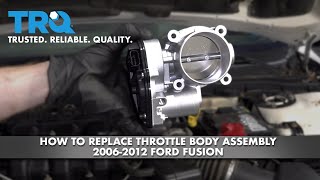
Typical fix: Replace the entire electronic throttle body assembly. The internal sensors are not serviced separately. 🎬 Watch: Step-by-step throttle body replacement guide After replacement, perform a throttle body relearn procedure.
Est. part cost: $150-$300 - Wiring Harness or Connector Damage ⚪ Low Probability
How to confirm: Visually inspect the wiring harness leading to the throttle body for any signs of chafing, melting, or corrosion. NHTSA ODI #11629480 describes a case where a vehicle stalled with code P0222 and technicians discovered a "chaffed wire" as the culprit. Unplug the connector and check for bent, loose, or corroded pins. A wiggle test on the harness while monitoring live data can sometimes reveal an intermittent connection.
Typical fix: Repair the damaged section of wire or clean/replace the connector pigtail.
Est. part cost: $10-$50
Rare But Worth Checking
- Faulty Powertrain Control Module (PCM): → Shop Engine Control Module (ECM) This is very rare. The PCM should only be considered after the throttle body and wiring have been definitively ruled out as the cause. Ford TSBs specifically advise against replacing the PCM for this code unless all other diagnostics have failed.
- Failing Battery or Charging System: While uncommon, low system voltage from a failing battery or alternator can sometimes cause erratic behavior in sensitive electronic modules, including the throttle body. This is more likely if other electrical issues are also present.
Diagnosis Steps
- Connect an OBD-II scanner and confirm P0222 is present. Check for any other related codes like P2111, P2112, or P0122.
- Observe the 'Wrench' light and 'Check Engine' light on the dash.
- Using the scanner's live data function, monitor the voltage readings for both Throttle Position Sensor 'A' (TP1) and 'B' (TP2).
- With the key on and engine off, have an assistant slowly press and release the accelerator pedal. The voltage for sensor 'A' should sweep smoothly (e.g., from ~1.0V up to ~4.5V).
- If the voltage for sensor 'B' remains stuck at a very low value (e.g., 0.2V) and does not change, the throttle body assembly has failed.
- If wiring appears intact and the symptoms point to a faulty sensor 'B', the most probable cause is the throttle body itself.
- Post-Repair: After replacing the throttle body, a KAM (Keep Alive Memory) reset and relearn procedure is required. Disconnect the negative battery terminal for at least 15 minutes to clear the memory. Reconnect the battery, turn the key to the 'ON' position (without starting) for a few seconds, then start the engine and let it idle for 10-15 minutes to allow the PCM to relearn idle trims. 🎬 See this 2012 Fusion throttle body replacement walkthrough A short drive with varied speeds will help the PCM relearn shift points.
Parts You'll Likely Need
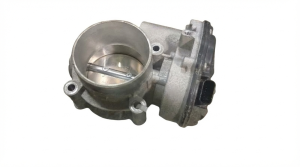
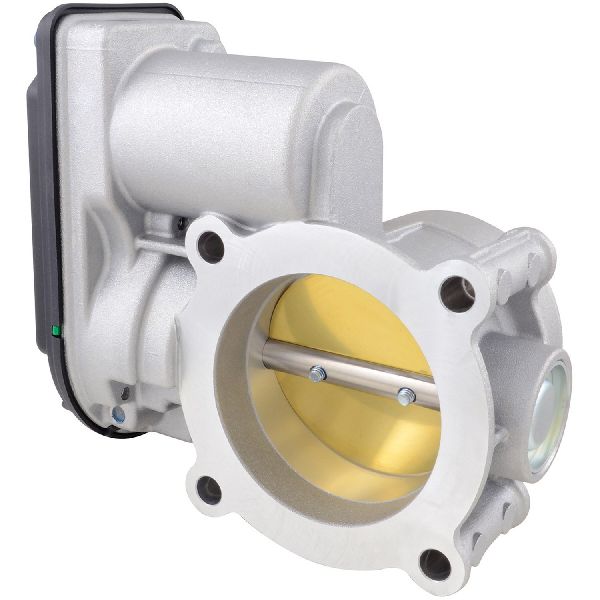
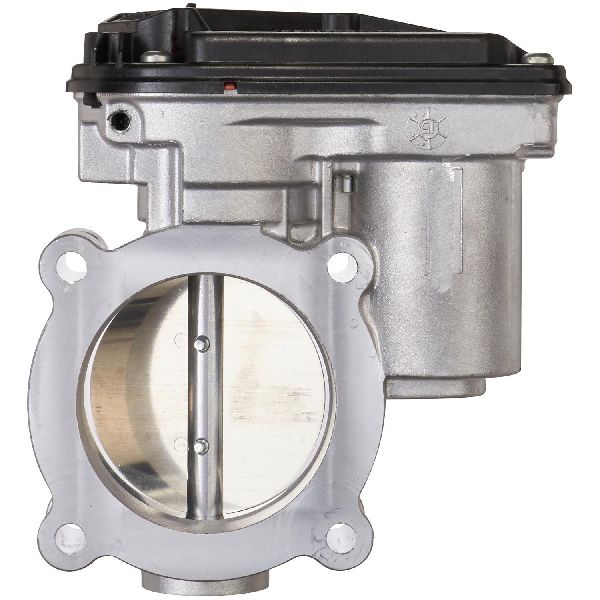
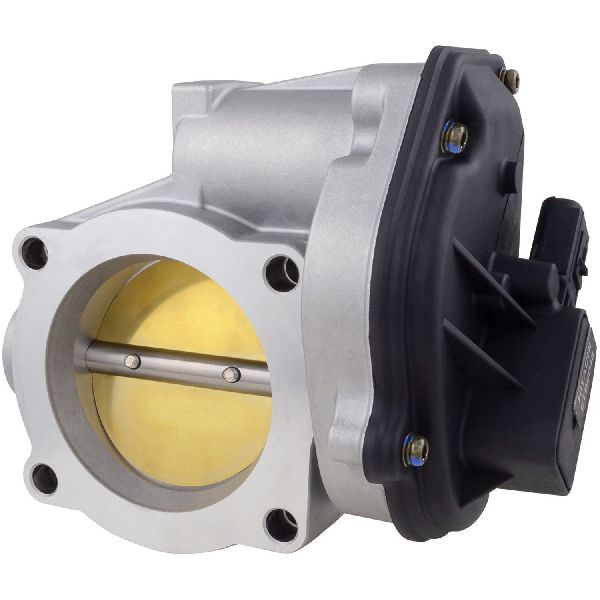
- Electronic Throttle Body Assembly
(OEM #DS7Z-9E926-D)— This is the root cause of code P0222 in the vast majority of cases for this vehicle due to a known manufacturing defect. The part contains the throttle plate, motor, and position sensors in one unit. The OEM part number DS7Z-9E926-D is an updated design that supersedes older, more failure-prone versions like 9L8Z-9E926-A and DS7Z-9E926-A.
Trusted brands: Motorcraft, Bosch, Hitachi, Dorman, PANGOLIN
OEM price range: $240-$310
Aftermarket price range: $100-$200
Related Codes That Often Appear With This One
- P2111 — This code for 'Throttle Actuator Control System - Stuck Open' can be triggered when the PCM detects an inconsistent sensor reading and puts the system into failure mode.
- P2112 — This code for 'Throttle Actuator Control System - Stuck Closed' is also a common companion code as the PCM attempts to manage the faulty throttle body.
- P0122 — This code for 'Throttle/Pedal Position Sensor/Switch 'A' Circuit Low' can sometimes appear alongside P0222, indicating a more severe internal failure of the throttle body assembly.
Technical Service Bulletins (TSBs) & Recalls
- Customer Satisfaction Program 13N03 - Extended warranty coverage for the electronic throttle body due to contamination of internal motor contacts causing intermittent electrical connectivity.
- TSB 09-23-5 - An earlier TSB that addressed DTC P2135, a related throttle position sensor code, on these vehicles, indicating Ford was aware of issues with the ETB early on.
- Bulletin #TSB 16-0163 - A manufacturer bulletin noting that P0222 can be associated with various drivability issues and other DTCs like P2111 and P2112.
- Bulletin #TSB18-2062 - This bulletin addresses concerns of the engine running rough, loss of power, or loss of engine RPM when P0222 and related throttle codes are present.
Platform-Specific Known Issues
- Ford's Customer Satisfaction Program 13N03 was created specifically to address this widespread throttle body failure, extending the warranty to 10 years/150,000 miles. This confirms the high failure rate of the original part.
- NHTSA Investigation PE13-003 was opened due to thousands of consumer complaints about sudden power loss related to this issue, further documenting the problem's severity and prevalence.
Mechanic-Grade Diagnostic Values
- Throttle Position Sensor 1 (TP1) Voltage - Pedal Released — expected: 0.3V to 1.9V. Failure: Voltage outside this range indicates a fault in the TP1 circuit or sensor.
- Throttle Position Sensor 1 (TP1) Voltage - Pedal Floored — expected: 4.1V to 4.7V. Failure: Voltage not sweeping to this range indicates a fault.
- Throttle Position Sensor 2 (TP2) Voltage - Pedal Released — expected: 3.7V to 4.7V. Failure: This is the inverse of TP1. A low reading here (under 0.5V) is what triggers P0222.
- Throttle Position Sensor 2 (TP2) Voltage - Pedal Floored — expected: 0.7V to 2.9V. Failure: Voltage should decrease as the pedal is pressed. If it stays high or is stuck low, the sensor is bad.
- Throttle Body Connector - Pin 2 (Reference Voltage) — expected: 4.5V to 5.0V. Failure: No or low voltage indicates a wiring or PCM issue, not a throttle body failure.
- Throttle Body Connector - Pin 3 & Pin 5 (Grounds) — expected: Good ground signal from PCM.. Failure: An open or high resistance on these ground circuits can cause erratic sensor readings.
Scan Tool Commands That Help
- Ford IDS (Integrated Diagnostic System): TPS Calibration / Throttle Body Relearn — After replacing the throttle body, the IDS can be used to perform the relearn procedure and confirm calibration, though it is not strictly required as a manual relearn is possible.
- Ford IDS (Integrated Diagnostic System): KAM (Keep Alive Memory) Reset — This function electronically clears the adaptive memory in the PCM, which is a required step after replacing the throttle body. It is an alternative to the manual battery disconnect method.
Wiring & Ground Locations
- Throttle Body Connector (C175B) — The 6-pin electrical connector located directly on the electronic throttle body assembly.. This is the primary point for testing power, ground, and signal wires for both throttle position sensors (TP1 and TP2). Corrosion or loose pins here are a potential, though less common, cause of the code.
- G104 — On the right front of the engine compartment, often near the strut tower.. This is a major engine compartment ground point. A poor connection here could potentially cause voltage irregularities in various engine sensors, although it is not a primary suspect for a single P0222 code.
- G102 / G105 — Located on the left/right side of the engine compartment, providing grounding for various engine components.. These are additional chassis grounds for the engine harness. While a failure is unlikely to isolate to just the P0222 code, verifying they are clean and tight is good practice when diagnosing any electrical fault.
Real Owner Repair Stories
- Reddit user, r/MechanicAdvice (2010 Ford Fusion, ~72,000 miles) — Orange wrench icon, check engine light, and vehicle went into 'limp mode'.
❌ Tried (didn't work) N/A - Took directly to dealership for diagnosis.
✅ What actually fixed it The dealership diagnosed a faulty throttle body and replaced it. The owner paid for the repair as the vehicle was one year outside of the 10-year extended warranty period (13N03), despite being under the mileage limit. - YouTube creator (2010 Ford Fusion) — Erratic behavior, maintenance light on the interstate, loss of power (underpowered), would sometimes run rough and die at stop signs. Mimicked transmission problems.
❌ Tried (didn't work) N/A - Owner researched common problems and identified the throttle body as the likely cause.
✅ What actually fixed it The owner replaced the electronic throttle body assembly themselves in about 15 minutes using basic tools, saving significantly compared to a shop quote of $600. This resolved all symptoms. - NHTSA ODI #10561056 — An owner reported that the car would not accelerate above 1,000 RPM while experiencing a cluster of codes including P0222, P0122, and P2135.
OEM Part Supersession History
9L8Z-9E926-A→DS7Z-9E926-A, then DS7Z-9E926-D— The original part numbers were prone to internal electronic failure due to contamination on the contacts. The 'D' revision is the latest, most reliable version from Ford.
Heads up: All parts are physically interchangeable, but installing an older part number (even new old stock) is not recommended as it will likely fail prematurely in the same manner as the original.
Diagnostic Flowchart
Other Known Issues on This Vehicle
Issues unrelated to this code that are worth knowing about as an owner of this generation:
- Electronic Power Steering (EPAS) Failure 🔴 High — Common enough to trigger a NHTSA investigation. Can occur suddenly, resulting in a complete loss of power assist. (Ref: TSB #SSM 51666 offers a remanufactured replacement steering gear. Some vehicles were recalled, but the investigation was closed without recalling all affected models.)
- Harsh/Slipping Automatic Transmission (6F35) 🟠 Medium — A well-documented issue, particularly on vehicles with neglected fluid changes. Owners report harsh 1-2 shifts, slipping, and occasional outright failure. (Ref: TSB #TSB-14-0056 addresses a fluid leak from the half-shaft seal. Frequent fluid changes (every 30k miles) are the community-recommended preventative measure.)
- Faulty Door Latches 🔴 High — Widespread problem where a broken pawl spring tab can prevent the door from latching or cause it to open while driving. (Ref: Safety Recall 15S16 / 20S15 / 20S30. Multiple recalls were issued to replace the latches on all four doors.)
- Swollen Lug Nuts 🟡 Low — Extremely common. The original two-piece lug nuts have a chrome cap that swells and deforms over time, making it impossible to remove the wheel with the factory-supplied wrench.
Used vs. New Parts: Buying Guide for This Vehicle
When a used part is the smart pick: It is STRONGLY recommended to AVOID used parts for this specific repair. The failure is due to a well-documented design and manufacturing defect, not simple wear and tear. A used part from a donor vehicle is highly likely to either be already faulty or fail in the exact same manner shortly after installation.
What to inspect on the donor part:
- If forced to consider a used part, only select one that can be verified by its part number as the updated OEM design (DS7Z-9E926-D).
- Do not purchase any part with the older, failure-prone part numbers (e.g., 9L8Z-9E926-A).
- There is no reliable way to visually inspect a used unit for the internal electronic fault.
OEM-only on this vehicle (don't cheap out):
- While not strictly 'OEM-only', it is critical to purchase either a new OEM Motorcraft part (DS7Z-9E926-D) or a new, quality aftermarket equivalent. A used part is a significant gamble.
Aftermarket brands forum-validated for this vehicle:
- Dorman (e.g., 977-588) is a widely available aftermarket alternative that explicitly states it is a direct replacement and is 100% new, not remanufactured.
Brands owners have reported issues with on this vehicle:
- Avoid unbranded, generic parts from online marketplaces without a clear warranty or return policy, as quality control can be highly variable.
Real Owner Stories
Aggregated from forums and TSBs cited above. Mileages and costs reflect what owners reported in those sources.
2012 Ford Fusion
Symptoms: After a spark plug change, the check engine light and wrench light came on. The scanner showed P0222. The mechanic incorrectly suggested replacing the throttle pedal.
What fixed it: The context indicates the throttle body assembly is the actual failed component, despite the pedal misdiagnosis.
Source hint: Reddit r/MechanicAdvice: 'Ford Fusion 2012 - P0222 - New Throttle Pedal recommendations'
2010 Ford Fusion — 224000 miles
Symptoms: Experienced the known throttle body failure issues common to the 2010 model year.
What fixed it: Replacement of the factory original electronic throttle body.
Source hint: BobIsTheOilGuy Forum: '2010 Ford Fusion common issues?'
2010 Mercury Milan
Symptoms: Sudden and dangerous loss of power while driving on the highway, described as an electronic throttle malfunction.
What fixed it: Replacement of the electronic throttle body assembly.
Source hint: CarComplaints.com: '2010 Mercury Milan Electronic Throttle Malfunction'
2009-2012 Ford Fusion
Symptoms: Intermittent fault where the vehicle loses power, but the issue is difficult to diagnose if the wrench light is not actively illuminated at the time of the service visit.
What fixed it: Replacement of the throttle body under the 13N03 extended warranty program.
Source hint: Ford Truck Enthusiasts Forum: '2009-12: Extended Throttle Body warranty may be useless'
Related OBD-II Codes
Frequently Asked Questions
Is there an extended warranty for the throttle body on my 2010-2012 Ford Fusion?
My mechanic says I need a new accelerator pedal for code P0222. Is this correct?
What is the 'Wrench' light on my dashboard indicating alongside the P0222 code?
Do I need to do anything special after replacing the throttle body on my Fusion?
Are there any other major issues I should watch for on a 2010-2012 Fusion?
Does this P0222 issue affect the Mercury Milan as well?
Helpful Videos

Used OEM Parts in Stock
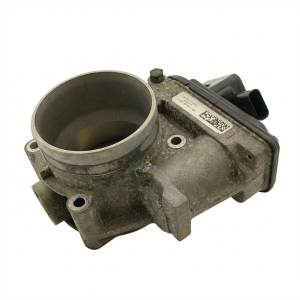
New Aftermarket Parts Available


The information in this article is provided for general reference and educational purposes only. Vehicle specifications, procedures, and part compatibility can vary by production date, trim level, and region. Always consult your vehicle's factory service manual and verify part numbers before purchasing or performing repairs. Safety-critical components such as airbags, seat belts, and braking systems should be installed by a qualified professional.
- Ford Fusion:
- 🧭 Diagnostic Flowchart
- 🎬 Helpful Videos
- 🛍️ Shop This Part
- What's Unique About the 2010-2012 Ford Fusion
- Symptoms You May Notice
- Most Likely Causes
- Rare But Worth Checking
- Diagnosis Steps
- Parts You'll Likely Need
- Related Codes That Often Appear With This One
- Technical Service Bulletins (TSBs) & Recalls
- Platform-Specific Known Issues
- Mechanic-Grade Diagnostic Values
- Scan Tool Commands That Help
- Wiring & Ground Locations
- Real Owner Repair Stories
- OEM Part Supersession History
- Other Known Issues on This Vehicle
- Used vs. New Parts: Buying Guide for This Vehicle
- Real Owner Stories
- 2012 Ford Fusion
- 2010 Ford Fusion — 224000 miles
- 2010 Mercury Milan
- 2009-2012 Ford Fusion
- Related OBD-II Codes
- Frequently Asked Questions
- 🎟️ Get 5% Off