

P0222 on 2012-2016 Honda CR-V: Throttle Position Sensor 'B' Circuit Low Causes and Fixes
On a 2012-2016 Honda CR-V, code P0222 usually points to a faulty electronic throttle body assembly, as the sensor is integrated. It can also be caused by a failing accelerator pedal position (APP) sensor or rodent-damaged wiring. Expect to pay $250-$500 for a new throttle body or $100-$200 for an APP sensor.
- P0222 indicates a low voltage signal from the 'B' throttle position sensor.
- The most likely causes on a 2012-2016 CR-V are a failed electronic throttle body or a failed accelerator pedal sensor.
- Diagnosis with a scan tool that can read live data is crucial to differentiate between the two main causes and avoid replacing the wrong part.
- Driving is not advised as the vehicle will have severely limited power and unpredictable throttle response.
- After replacing the throttle body, an idle relearn procedure is necessary.
What's Unique About the 2012-2016 Honda CR-V
For the 2012-2016 Honda CR-V (fourth generation) with the K24 engine, the Throttle Position (TP) sensor is integrated into the electronic throttle body assembly and is not sold as a separate component. While some Hondas of this era are prone to Accelerator Pedal Position (APP) sensor failures causing this code, diagnosis is key to avoid replacing the wrong part. A notable issue for this platform is the use of soy-based wire insulation, which can attract rodents, leading to chewed wires and causing a P0222 code. The issue is almost always electronic rather than a simple mechanical problem like a dirty throttle body, although cleaning is a valid first step.
Symptoms You May Notice
- Check Engine Light is on
- Vehicle enters 'limp mode' with drastically reduced engine power
- Hesitation or jerky acceleration
- Unresponsive or delayed throttle response
- Engine may stall, especially at idle or low speeds
- Difficulty starting the engine
- VSA (Vehicle Stability Assist) light may also illuminate
- Replacing the Accelerator Pedal Position (APP) sensor when the throttle body's integrated TP sensor is the actual fault.
- Replacing the throttle body when the Accelerator Pedal Position (APP) sensor is the actual fault. 🎬 See this video for a breakdown of common causes and fixes.
- Overlooking rodent damage to the wiring harness as the root cause.
Most Likely Causes
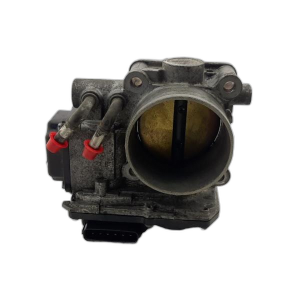
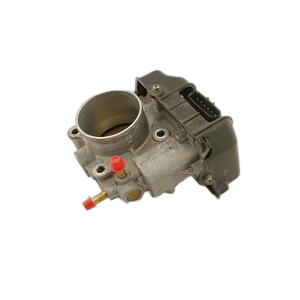
- Faulty Electronic Throttle Body Assembly 🔴 High Probability → Shop Fuel Injection Throttle Body The Throttle Position (TP) sensor is integrated into the throttle body and cannot be replaced separately. Internal wear or failure of the sensor's electronics necessitates replacing the entire assembly.
How to confirm: Using a scan tool with live data, monitor the voltage for TP Sensor B. It will likely read a static low voltage (e.g., under 0.5V) and will not change as the throttle plate is manually opened and closed (with the engine off, key on). Compare it to TP Sensor A, which should show a smooth voltage sweep.
Typical fix: Replace the entire electronic throttle body assembly. 🎬 Watch: Diagnostic walkthrough for P0222 on this specific CR-V model. An idle relearn procedure is required after replacement.
Est. part cost: $250-$500 - Faulty Accelerator Pedal Position (APP) Sensor 🟡 Medium Probability → Shop Accelerator Pedal Assembly On many Hondas from this period, the APP sensor is a known failure point that can set throttle-related codes. It also uses redundant sensors (A and B), and a failure in one can trigger this fault.
How to confirm: With a scan tool, observe the live data for APP Sensor B voltage while pressing and releasing the gas pedal. If the voltage is stuck low or doesn't change smoothly, the APP sensor is likely the cause.
Typical fix: Replace the accelerator pedal position sensor assembly.
Est. part cost: $100-$200 - Wiring Issue (Short or Open Circuit) ⚪ Low Probability Hondas of this era use soy-based wiring insulation that can attract rodents, leading to chewed wires and short circuits, especially in the engine bay harness leading to the throttle body. Vibration and heat can also cause wires to chafe or break over time.
How to confirm: Visually inspect the wiring harness going to the throttle body and accelerator pedal for signs of rodent damage (chew marks, nests) or chafing. Perform a continuity test on the signal, power, and ground wires between the sensor connector and the PCM connector.
Typical fix: Repair or replace the damaged section of the wiring harness. Honda sells special rodent-deterrent tape (Part No. 4019-2317) that can be used to wrap repairs.
Est. part cost: $10-$100
Rare But Worth Checking
- Powertrain Control Module (PCM) Failure: → Shop Engine Control Module (ECM) This is very rare. Before condemning the PCM, all other possibilities (sensor, wiring, connectors) must be exhaustively ruled out. A PCM failure can cause it to misinterpret a valid sensor signal.
- Dirty Throttle Body: → Shop Fuel Injection Throttle Body While less common for causing a specific low voltage circuit code, heavy carbon buildup can sometimes restrict the throttle plate's movement enough to cause an implausible reading. Cleaning is a cheap and easy first step.
Diagnosis Steps
- Connect an OBD-II scanner and verify that P0222 is the primary code. Note any other codes present.
- Use the scanner's live data feature to monitor the voltage of both Throttle Position Sensor B (TP Sensor B) and Accelerator Pedal Position Sensor B (APP Sensor B).
- With the ignition on but the engine off, slowly press the gas pedal to the floor and release it. Watch the APP Sensor B voltage. It should sweep smoothly from a low voltage to a high voltage.
- If the APP Sensor B voltage is stuck low or erratic, the accelerator pedal assembly is the likely problem.
- If the APP sensor works correctly, inspect the TP Sensor B voltage. It should also show a corresponding change as the throttle plate moves. If it's stuck low (e.g., <0.5V), the throttle body assembly is the likely culprit.
- If sensor data is inconclusive, perform a visual inspection of the wiring and connectors at both the throttle body and the accelerator pedal. Look for any signs of rodent damage, corrosion, or loose pins.
- If wiring appears intact, use a multimeter to check for the correct reference voltage (usually 5V) and a good ground at the sensor connector.
- If a new throttle body is installed, perform the Idle Relearn Procedure: Turn off all electrical accessories (A/C, radio, lights). Start the engine and let it idle until the radiator fan turns on, then let it continue to idle for at least 5-10 more minutes.
- If all sensors and wiring check out, the issue may be an extremely rare PCM fault.
Parts You'll Likely Need
- Electronic Throttle Body Assembly
(OEM #16400-R5A-A21)— This is the most common fix because the faulty Throttle Position (TP) sensor is integrated into this assembly and is not sold separately for this vehicle.
Trusted brands: Honda (OEM), Hitachi (OEM supplier)
OEM price range: $350-$500
Aftermarket price range: $250-$400 - Accelerator Pedal Position (APP) Sensor
(OEM #37971-R40-A01)— This is the second most likely cause. It is a separate assembly from the throttle body and is a known failure point on some Hondas.
Trusted brands: Honda (OEM), Standard Motor Products (SMP), WVE
OEM price range: $150-$200
Aftermarket price range: $80-$150
Related Codes That Often Appear With This One
- P0122 — This code refers to 'Throttle/Pedal Position Sensor 'A' Circuit Low'. If both A and B circuits have issues, you may see them together.
- P2127 — This code is for 'Accelerator Pedal Position Sensor 'B' Circuit Low'. It often appears if the fault is in the pedal sensor assembly rather than the throttle body.
- P0507 — Stands for 'Idle Control System RPM Higher Than Expected'. This can occur after a throttle body cleaning or replacement if the idle relearn procedure is not performed correctly.
Platform-Specific Known Issues
- Rodent Damage to Wiring: A significant number of Honda vehicles from this era, including the CR-V, use soy-based insulation for their wiring harnesses. This material can attract rodents (mice, squirrels, rats) who chew through the wires, causing shorts or open circuits. The harness leading to the throttle body is a common target. If you experience a sudden P0222 code, especially if the vehicle is parked outdoors, a thorough inspection for chewed wires is highly recommended before replacing any parts. Honda sells a specific rodent-deterrent electrical tape (part #4019-2317) for repairs.
Mechanic-Grade Diagnostic Values
- TP Sensor B Voltage (Key On, Engine Off) — expected: Should sweep smoothly from ~0.5V (closed) to ~4.5V (wide open).. Failure: Voltage is stuck below 0.42V even when the throttle is fully opened.
- 5V Reference Voltage at Throttle Body Connector — expected: Approximately 5V between pin 1 (VCC3 - YEL/BLU) and pin 2 (SG5 - GRN/BLK).. Failure: Voltage is significantly lower than 5V, indicating an open/short in the wiring or a PCM issue.
- TP Sensor B Signal Wire to Ground Resistance — expected: Should be greater than 1 MΩ (Mega-ohm) when tested to ground to check for shorts.. Failure: Low resistance or continuity to ground indicates a short circuit in the wire.
Scan Tool Commands That Help
- Honda HDS (Honda Diagnostic System): DATA LIST -> TP SENSOR-B — To monitor the live voltage or percentage output of the 'B' sensor while manually opening the throttle plate to check for a correct sweep.
- Honda HDS (Honda Diagnostic System): CLEAR MENU -> DTC CLEAR — Used to clear the fault codes from the PCM's memory after a repair.
- Honda HDS (Honda Diagnostic System): CLEAR MENU -> ECM RESET — Performs a reset of the PCM's learned values. This is required after replacing the throttle body.
- Honda HDS (Honda Diagnostic System): ETCS (Electronic Throttle Control System) Learn Procedure — This function forces the PCM to relearn the throttle plate's home and end positions. It is mandatory after replacing the throttle body or resetting the PCM.
Wiring & Ground Locations
- Throttle Body 6P Connector — Connected directly to the electronic throttle body on the intake manifold.. This is the primary connection point for the integrated TP sensors. All voltage and resistance tests are performed at this connector's pins.
- Pin 1 (YEL/BLU) — On the 6-pin throttle body connector.. This is the VCC3 5-volt reference power supply from the PCM.
- Pin 2 (GRN/BLK) — On the 6-pin throttle body connector.. This is the SG5 sensor ground wire from the PCM.
- Pin 5 (YEL) — On the 6-pin throttle body connector.. This is the TPSB signal wire that sends the TP Sensor 'B' voltage back to the PCM. A short or open on this wire will cause P0222.
Model Year Variations Within This Range
- 2012-2014 vs 2015-2016: The 2012-2014 CR-V uses the K24Z7 engine. The 2015-2016 models received a facelift and the 'Earth Dreams' K24W9 engine with direct injection and a CVT. While the P0222 code applies to both, the throttle body part numbers and some engine management software may differ. The K24W9 was noted to have a different intake manifold and throttle body size. Always verify the part number with the vehicle's VIN.
Diagnostic Flowchart
Used vs. New Parts: Buying Guide for This Vehicle
When a used part is the smart pick: A used throttle body or accelerator pedal sensor from a low-mileage, accident-damaged donor vehicle can be a cost-effective option. Since these are electronic components, the primary risk is wear, so mileage is the most critical factor.
Donor-vehicle mileage cap: roughly under 75000 miles for the part to have meaningful remaining life.
What to inspect on the donor part:
- Verify the donor vehicle's mileage.
- Inspect the throttle body for any physical damage, cracks in the housing, or bent connector pins.
- Ensure the throttle plate moves smoothly by hand without binding or excessive carbon buildup.
- Check that the connector is clean and free of corrosion.
- If possible, get a warranty from the salvage yard.
OEM-only on this vehicle (don't cheap out):
- Powertrain Control Module (PCM) - Due to the need for VIN-specific programming and security system integration, a used PCM is not a plug-and-play solution and OEM or specialist-programmed units are required.
Aftermarket brands forum-validated for this vehicle:
- Hitachi (Often the OEM supplier for Honda electronic parts)
- Standard Motor Products (SMP)
- Denso
Brands owners have reported issues with on this vehicle:
- Unbranded, no-name parts from online marketplaces should be avoided due to a high likelihood of premature failure, incorrect calibration, and causing further diagnostic issues.
Related OBD-II Codes
Frequently Asked Questions
I heard rodents chewing wires is a common problem on the 2012-2016 CR-V. Could that cause a P0222 code?
Can I just replace the Throttle Position (TP) Sensor B, or do I have to buy the whole throttle body assembly?
After installing a new throttle body on my CR-V, is there a special procedure I need to follow?
My Check Engine Light is on for P0222, but my VSA (Vehicle Stability Assist) light also came on. Is that normal?
Are other Honda or Acura models from this era also prone to P0222 for the same reasons?
How can I tell if the problem is the throttle body or the gas pedal (APP sensor)?
Helpful Videos
Used OEM Parts in Stock
New Aftermarket Parts Available




The information in this article is provided for general reference and educational purposes only. Vehicle specifications, procedures, and part compatibility can vary by production date, trim level, and region. Always consult your vehicle's factory service manual and verify part numbers before purchasing or performing repairs. Safety-critical components such as airbags, seat belts, and braking systems should be installed by a qualified professional.
- Honda CR-V:
- 🧭 Diagnostic Flowchart
- 🎬 Helpful Videos
- 🛍️ Shop This Part
- What's Unique About the 2012-2016 Honda CR-V
- Symptoms You May Notice
- Most Likely Causes
- Rare But Worth Checking
- Diagnosis Steps
- Parts You'll Likely Need
- Related Codes That Often Appear With This One
- Platform-Specific Known Issues
- Mechanic-Grade Diagnostic Values
- Scan Tool Commands That Help
- Wiring & Ground Locations
- Model Year Variations Within This Range
- Used vs. New Parts: Buying Guide for This Vehicle
- Related OBD-II Codes
- Frequently Asked Questions
- 🎟️ Get 5% Off