

P0222 on 2016-2022 Honda Pilot: Throttle Position Sensor Circuit Low Causes and Fixes
On a 2016-2022 Honda Pilot, code P0222 is most often caused by a failed throttle body assembly. Since the sensor is integrated, the entire unit must be replaced. A DIY replacement is moderately difficult and requires an idle relearn procedure. Expect a shop cost of $620-$676.
- P0222 on a 2016-2022 Pilot points directly to a problem in the electronic throttle control system, usually the throttle body itself.
- The most probable cause is a failed Throttle Body Assembly, as the internal sensors are not sold separately.
- Before replacing the expensive throttle body, verify the 5-volt reference and ground at the connector to rule out a simpler wiring issue.
- Driving with this code is unsafe; the vehicle can enter 'limp mode' at any time, causing a sudden loss of power.
- After replacing the throttle body, a specific 'idle relearn procedure' is required for the engine to run correctly.
What's Unique About the 2016-2022 Honda Pilot
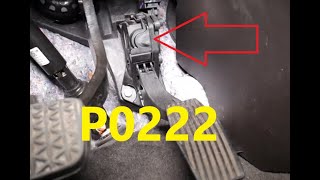
🎬 Watch: Diagnostic guide for P0222 on this specific Honda Pilot.For the third-generation Honda Pilot (2016-2022) and its platform mates with the J35Y6 engine, the dual throttle position sensors are integrated directly into the electronic throttle body assembly and are not available as separate parts. This design choice means that if one of the internal sensors fails, the entire throttle body unit must be replaced. While the Accelerator Pedal Position (APP) sensor is part of the same system, P0222 on this vehicle almost always points to an issue at the throttle body itself, not the pedal.
Symptoms You May Notice
- Check Engine Light is on
- Reduced engine power (Limp Mode)
- Hesitation or jerky acceleration
- Poor or unresponsive throttle
- Engine may stall or be difficult to start
- Rough idle
- Increased fuel consumption
- Replacing the Accelerator Pedal Position (APP) Sensor. While part of the same system, the APP sensor has its own set of diagnostic codes (like P2122 or P2138) and is not the typical cause for a P0222 code on this vehicle.
Most Likely Causes
- Faulty Throttle Body Assembly 🔴 High Probability → Shop Fuel Injection Throttle Body The throttle position sensors are integrated into the throttle body and are a common failure point due to heat and wear. They cannot be replaced separately on the J35Y6 engine.
How to confirm: Using a scan tool (like the Honda HDS), observe the live data for TP Sensor B voltage. If it's stuck below ~0.3V or doesn't change smoothly as the throttle is manually opened (with engine off), the sensor is likely bad. Before condemning the part, confirm the 5V reference (VCC) and ground (SG) at the 6-pin connector are good.
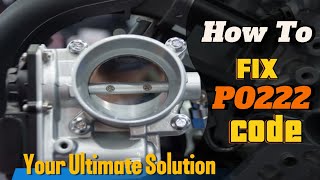
Typical fix: Replace the entire throttle body assembly. 🎬 See this walkthrough for testing and replacing the throttle body. An idle relearn procedure must be performed after replacement for the engine to idle correctly.
Est. part cost: $200-$500 - Wiring Harness or Connector Issue 🟡 Medium Probability The engine bay environment can lead to wire insulation becoming brittle or connectors corroding over time. A short to ground on the signal wire (often labeled THL2) is a specific possibility.
How to confirm: Visually inspect the wiring harness leading to the throttle body for any signs of damage, chafing, or corrosion. Disconnect the connector and check for bent or corroded pins. Use a multimeter to check for continuity on the signal wire and for a short to ground between the PCM connector and the throttle body connector.
Typical fix: Repair the damaged section of the wire or replace the connector pigtail. Clean any corrosion from the connector pins.
Est. part cost: $10-$50 - Dirty Throttle Body ⚪ Low Probability → Shop Fuel Injection Throttle Body As a direct injection engine, the J35Y6 is prone to carbon and oil vapor from the PCV system building up behind the throttle plate, as fuel no longer washes the back of the intake valves. This can cause the plate to stick or not close properly.
How to confirm: Remove the air intake hose from the throttle body and visually inspect for significant carbon buildup around the throttle plate and bore. A sticky or slow-moving plate can cause the sensor to report an incorrect value, though it's less likely to cause a persistent 'circuit low' code than an electrical fault.
Typical fix: Clean the throttle body bore and plate with a dedicated throttle body cleaner and a soft brush. Be careful not to spray solvent directly into the electronic components. An idle relearn is required after cleaning.
Est. part cost: $10-$20
Rare But Worth Checking
- Faulty Powertrain Control Module (PCM): → Shop Engine Control Module (ECM) This is extremely rare. The PCM should only be suspected after all other possibilities, including wiring and the throttle body itself, have been exhaustively tested and ruled out. A diagnostic procedure would involve substituting a known-good ECM as a final step.
Diagnosis Steps
- Connect an OBD-II scanner and confirm the P0222 code is present. Check for any other related codes, especially P0122.
- View the live data stream on the scanner. Monitor the voltage readings for TP Sensor 'A' and TP Sensor 'B'. Note the reading for Sensor B at idle (key on, engine off).
- Slowly press the accelerator pedal (or manually move the throttle plate if accessible) and watch the voltage readings. Both should rise smoothly. If Sensor B voltage is stuck low (e.g., under 0.3V) or doesn't respond, the issue is confirmed.
- Turn the ignition off. Disconnect the 6-pin electrical connector at the throttle body.
- Inspect the connector and pins for corrosion, moisture, or damage.
- Turn the ignition to 'ON' (engine off). Use a multimeter to check for a 5-volt reference signal at the correct pin on the harness-side connector.
- Check for a good ground connection at the appropriate pin on the harness-side connector.
- If the 5V reference or ground is missing, the problem is in the wiring or the PCM. If both are present, the fault is almost certainly inside the throttle body assembly.
- If desired, inspect the throttle body for heavy carbon buildup. Cleaning is a low-cost step but is less likely to fix a specific circuit low code compared to an electrical fault.
- If all tests point to the throttle body, replace it with a new assembly.
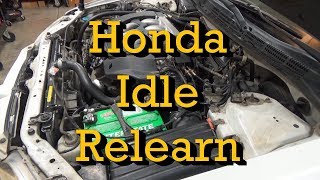
- After replacement, perform the throttle body idle relearn procedure as specified by Honda. This typically involves letting the engine warm up completely (until the radiator fan cycles) and then idling for 5-10 minutes with no electrical load. 🎬 Watch: How to perform the idle relearn on any Honda.
Parts You'll Likely Need
- Throttle Body Assembly
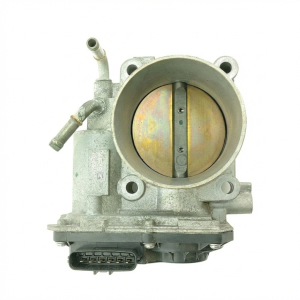
(OEM #16400-5J6-A01 (may be superseded by 16400-RN0-A01))— This is the most common fix because the faulty Throttle Position (TP) sensor is integrated into this assembly and cannot be purchased separately.
Trusted brands: Honda (Genuine OEM), Bosch, Hitachi, Standard Motor Products
OEM price range: $350-$500
Aftermarket price range: $150-$300
Related Codes That Often Appear With This One
- P0122 — This code is for 'Throttle/Pedal Position Sensor/Switch 'A' Circuit Low Input'. Seeing both P0122 and P0222 together strongly suggests a common problem affecting both sensors, such as a loss of the 5V reference power, a bad ground, or a complete internal failure of the throttle body assembly. Honda diagnostic procedures specifically check if multiple TP sensor codes are present at once to guide troubleshooting.
Technical Service Bulletins (TSBs) & Recalls
- No specific TSBs directly addressing P0222 on this platform were found in public databases. However, TSBs for other issues on related platforms, like TSB 19-053 for Acura RDX brake squeal, show how Honda addresses component issues.
Platform-Specific Known Issues
- The J35Y6 engine features direct injection, which can lead to carbon buildup on intake valves and the throttle body over time, as there is no fuel spray to clean them. While less likely to cause a specific circuit code, severe buildup can cause sticking and erratic throttle behavior.
Mechanic-Grade Diagnostic Values
- TP Sensor 'B' (THL2) Signal Voltage — expected: Smoothly rises from ~0.5V (closed) to ~4.5V (wide open).. Failure: Voltage is stuck below 0.3V or 0.42V, or does not change with throttle movement.
- TP Sensor 'B' Failure Threshold (DTC Trigger) — expected: Above 0.3V. Failure: A reading of 0.3V or less will trigger DTC P0222.
- VCC3 (5V Reference) Voltage at Throttle Body Connector — expected: Approximately 5.0V. Failure: Significantly lower than 5.0V indicates an open or short in the VCC3 line or a PCM fault.
- THL2 Wire Short to Ground Check — expected: No continuity to body ground.. Failure: Continuity indicates a short circuit in the THL2 wire between the PCM (Connector E, Pin 51) and the throttle body.
Scan Tool Commands That Help
- Honda Diagnostic System (HDS): ETCS TEST > TP POSITION CHECK — Used to clear the throttle position learned value from the PCM before performing an idle relearn procedure after cleaning or replacing the throttle body.
- Honda Diagnostic System (HDS): DATA LIST > TP SENSOR-B — To monitor the live voltage of the TP Sensor B circuit during diagnosis to see if it is stuck low or responding incorrectly to throttle input.
- Honda Diagnostic System (HDS): DTCs MENU > CLEAR — To clear the P0222 code after repairs are complete, before starting the idle relearn procedure.
Wiring & Ground Locations
- Throttle Body 6-Pin Connector — On the electronic throttle body, located between the air intake hose and the intake manifold.. This is the primary connection point for all power, ground, and signal wires for the integrated throttle position sensors. A poor connection here is a common cause of circuit codes.
- Pin 4 (THL2 Wire) — On the throttle body 6-pin connector.. This is the signal wire for TP Sensor B. A short to ground on this wire will cause a P0222 code. It connects to pin E51 at the PCM.
- Pin 5 (VCC3 Wire) — On the throttle body 6-pin connector.. This wire supplies the 5-volt reference power to the TP sensors. Loss of this voltage will cause both P0122 and P0222 codes.
- PCM Connector E (80-Pin) — Located in the engine compartment, this is one of the main connectors for the Powertrain Control Module.. This connector contains the termination points for the throttle body wiring, including the THL2 signal wire at pin E51. It's the other end of the circuit to test for continuity or shorts.
OEM Part Supersession History
16400-RYE-A01→16400-RN0-A01— Part consolidation and update for multiple J-series engine applications.
Heads up: The part number 16400-RN0-A01 is listed for many older (pre-2016) Pilots, Odysseys, and Accords, while 16400-5J6-A01 is specific to the 2016+ Pilot/Ridgeline with the 6-speed transmission. While they may be physically similar, using the wrong part could lead to calibration issues. Always verify the correct part number for the specific vehicle's VIN and transmission type.16400-5J6-A01→
Heads up: This part number is specific to 2016-2020 Pilots and Ridgelines equipped with the 6-speed automatic transmission. Pilots with the 9-speed transmission (Touring/Elite trims) may use a different part. It is critical to match the part to the vehicle's transmission.
Model Year Variations Within This Range
- 2019-2022: The 2019 model year refresh included powertrain refinements. For models with the 9-speed automatic transmission (Touring and Elite), the transmission was re-tuned for smoother shifts, including starting in 2nd gear in most situations. The Idle Stop system was also upgraded for quicker, less noticeable restarts. While not directly causing P0222, these software changes mean the PCM's behavior related to idle and throttle control differs from the 2016-2018 models.
Diagnostic Flowchart
Used vs. New Parts: Buying Guide for This Vehicle
When a used part is the smart pick: A used OEM throttle body from a low-mileage donor vehicle can be a cost-effective option, as the failure is electronic and not always tied to high mileage. Given the high cost of a new OEM part, a used unit from a reputable dismantler with a warranty is a reasonable choice if the budget is tight.
Donor-vehicle mileage cap: roughly under 75000 miles for the part to have meaningful remaining life.
What to inspect on the donor part:
- Verify the part number (16400-5J6-A01 for 6-speed models) matches exactly.
- Inspect the electrical connector for any signs of corrosion, bent pins, or damage to the plastic housing.
- Look at the throttle plate and bore; minimal carbon buildup is a good sign, while heavy, caked-on carbon suggests higher wear or a potential PCV system issue on the donor car.
- Ensure the throttle plate moves smoothly by hand (with the unit off the car) and doesn't stick or bind.
- Ask for a short warranty (30-90 days) to protect against a DOA part.
OEM-only on this vehicle (don't cheap out):
- Throttle Body Assembly: While some aftermarket options exist, forum consensus and mechanic experience heavily favor using a Genuine Honda (OEM) or a known OEM supplier like Bosch or Hitachi for this critical electronic component to avoid calibration and longevity issues.
Aftermarket brands forum-validated for this vehicle:
- Bosch (Often an OEM supplier)
- Hitachi (Often an OEM supplier)
Brands owners have reported issues with on this vehicle:
- Unbranded, low-cost units from online marketplaces are a significant gamble. They may fail prematurely or have calibration issues that prevent the idle relearn procedure from completing successfully.
Real Owner Stories
Aggregated from forums and TSBs cited above. Mileages and costs reflect what owners reported in those sources.
2007 Acura MDX
Symptoms: erratic idle
What fixed it: Replacing the throttle body assembly after an initial cleaning attempt did not resolve the issue.
Source hint: acurazine.com: In a thread titled 'Throttle Body / Erratic Idle' for a 2007 MDX (a platform mate)
Related OBD-II Codes
Frequently Asked Questions
Can I just replace the throttle position sensor on my 2016-2022 Pilot, or do I have to buy the whole throttle body?
I replaced the throttle body for the P0222 code, but now my Pilot has a rough or high idle. What did I miss?
Is it worth trying to clean the throttle body first to fix a P0222 code?
Are there any official Honda service bulletins (TSBs) for the P0222 code on this generation of Pilot?
I'm buying a used throttle body to save money. What part number should I look for and how can I check its quality?
Can I use a cheap aftermarket throttle body from an online marketplace?
My 2018 Honda Odyssey has a P0222 code. Is the diagnosis the same as for the Pilot?
Helpful Videos

Used OEM Parts in Stock
New Aftermarket Parts Available


The information in this article is provided for general reference and educational purposes only. Vehicle specifications, procedures, and part compatibility can vary by production date, trim level, and region. Always consult your vehicle's factory service manual and verify part numbers before purchasing or performing repairs. Safety-critical components such as airbags, seat belts, and braking systems should be installed by a qualified professional.
- Honda Pilot:
- 🧭 Diagnostic Flowchart
- 🎬 Helpful Videos
- 🛍️ Shop This Part
- What's Unique About the 2016-2022 Honda Pilot
- Symptoms You May Notice
- Most Likely Causes
- Rare But Worth Checking
- Diagnosis Steps
- Parts You'll Likely Need
- Related Codes That Often Appear With This One
- Technical Service Bulletins (TSBs) & Recalls
- Platform-Specific Known Issues
- Mechanic-Grade Diagnostic Values
- Scan Tool Commands That Help
- Wiring & Ground Locations
- OEM Part Supersession History
- Model Year Variations Within This Range
- Used vs. New Parts: Buying Guide for This Vehicle
- Real Owner Stories
- 2007 Acura MDX
- Related OBD-II Codes
- Frequently Asked Questions
- 🎟️ Get 5% Off