

P0222 on 2006-2010 Hummer H3: Throttle Position Sensor Causes and Fixes
On a 2006-2010 Hummer H3, code P0222 is most often caused by a failing electronic throttle body assembly, which contains the non-serviceable throttle position sensor. This was common enough that GM issued a special warranty extension (#14582A). Replacing the throttle body is the most likely fix, costing $150-$350 for the part. Before replacement, inspect the wiring harness for chafing and clean the throttle body connector.
- Code P0222 on an H3 will almost always trigger the 'Reduced Engine Power' message, making the vehicle very slow.
- The most likely cause is a failed electronic throttle body assembly, a known weak point for this vehicle.
- Before replacing any parts, always inspect the wiring and electrical connector at the throttle body for damage or corrosion.
- After replacing the throttle body, a 'throttle relearn' procedure (disconnecting the battery and idling) is necessary.
- Do not replace the accelerator pedal unless the throttle body and wiring have been ruled out as the cause.
What's Unique About the 2006-2010 Hummer H3
The Hummer H3, and its GMT355 platform mates the Chevy Colorado and GMC Canyon, has a well-documented history of throttle body failures. General Motors acknowledged this by issuing Special Coverage Adjustment #14582A for 2008-2010 models, extending the warranty on the throttle body to 10 years or 120,000 miles due to this exact issue. While the warranty has expired, it confirms that a faulty throttle body is the most probable cause for throttle-related codes like P0222 on this specific platform, often more so than wiring or the gas pedal sensor.
Symptoms You May Notice
- "Reduced Engine Power" message displayed on the instrument cluster.
- "Service StabiliTrak System" or "Traction Failed" message appears.
- Check Engine Light is illuminated.
- Extremely poor acceleration and inability to gain speed.
- Hesitation or stumbling when pressing the gas pedal.
- Unstable, rough, or high idle speed.
- Fault may appear intermittently, sometimes triggered by hitting a bump in the road.
- Engine may stall or be difficult to start.
- Replacing the accelerator pedal assembly when the throttle body is the actual cause.
- Replacing the throttle body without first checking for a simple wiring or connector problem.
- Cleaning the throttle body bore. While good for maintenance and may solve some idle issues, a simple cleaning will not fix a failed internal electronic sensor.
Most Likely Causes
- Failing Electronic Throttle Body Assembly 🔴 High Probability → Shop Fuel Injection Throttle Body This is a documented weak point acknowledged by GM through a special coverage program (#14582A) for the H3 and its platform mates. The internal throttle position sensors (TPS) wear out or fail and are not sold separately from the throttle body assembly.
How to confirm: After confirming wiring and connectors are intact, this becomes the most likely cause. A scan tool may show erratic voltage from TPS2 or a P2135 correlation code. A weak or failing battery can also cause low voltage errors that mimic throttle body failure, so ensure the battery is in good health first.
Typical fix: Replace the entire throttle body assembly. A throttle relearn procedure is required afterward. Some owners have had success with aftermarket brands like Dorman, while others stick to ACDelco for reliability.
Est. part cost: $150-$400 - Wiring Harness or Connector Issue 🟡 Medium Probability The engine bay wiring harness, particularly the section going to the throttle body, can chafe against other components, causing a short or open circuit. The connector pins can also corrode or become loose, a common issue in areas with high humidity or road salt.
How to confirm: Visually inspect the entire harness between the PCM and throttle body. Pay close attention to the throttle body connector for green corrosion or backed-out pins. Wiggle the harness with the engine running (use caution) to see if it triggers the fault.
Typical fix: Clean the connector terminals with electrical contact cleaner and apply dielectric grease. If the connector is damaged, replace the pigtail (e.g., Standard Motor Products S2031). Repair any chafed or broken wires with solder and heat shrink.
Est. part cost: $15-$50 for a connector pigtail - Faulty Accelerator Pedal Position (APP) Sensor ⚪ Low Probability → Shop Accelerator Pedal Assembly While less common than the throttle body, the sensor in the gas pedal assembly can also fail. It contains its own set of redundant sensors.
How to confirm: A professional scan tool can monitor live data from the APP sensor circuits (APP1 and APP2). If APP2 shows a consistently low or erratic voltage while APP1 reads correctly, the pedal assembly is likely faulty. This often sets code P2138 instead of or in addition to P0222.
Typical fix: Replace the entire accelerator pedal assembly. It is a simple bolt-on part.
Est. part cost: $50-$180
Rare But Worth Checking
- Powertrain Control Module (PCM) Failure: → Shop Engine Control Module (ECM) This is very rare. The PCM should only be suspected after the throttle body, accelerator pedal, and all related wiring have been thoroughly tested and confirmed to be good.
Diagnosis Steps
- Read all diagnostic trouble codes (DTCs) with an OBD-II scanner. Note any other codes present, especially P2135, P1516, or P2101.
- Check battery voltage. A weak battery can cause various electronic issues, including throttle-related codes. Ensure it's above 12.4V at rest.
- Visually inspect the wiring harness leading to the throttle body. Look for any signs of chafing, melting, or damage, particularly where it might rub against the engine or other components.
- Disconnect the throttle body electrical connector. Inspect for green corrosion, moisture, or bent/backed-out pins. Clean with electronic contact cleaner and apply dielectric grease before reconnecting.
- Inspect the accelerator pedal connector for similar issues.
- If a scan tool with live data is available, monitor the voltage of both Throttle Position Sensor 1 and 2 (TPS1, TPS2). With the key on, engine off, both voltages should rise smoothly as you slowly press the accelerator. TPS2 reading low (e.g., stuck at <0.5V) or erratically points to a bad throttle body.
- If wiring and connectors are good, the most probable cause is the throttle body assembly. Replace it.
- After replacement, perform a throttle relearn. A common method is to disconnect the negative battery terminal for at least 30 minutes. Reconnect, start the engine and let it idle in Park for 3 minutes. Turn the engine off for at least 60 seconds. Restart the engine and let it idle for another 3 minutes without touching the throttle. The PCM uses this time to learn the new throttle's position.
- If the problem persists after replacing the throttle body, investigate the accelerator pedal assembly.
Parts You'll Likely Need
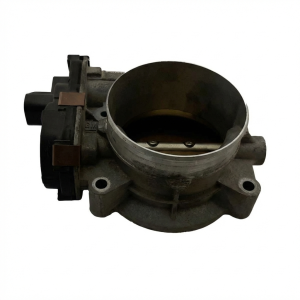
- Electronic Throttle Body Assembly
(OEM #12568580 (for 3.5L/3.7L I5) or 12601387 (for 5.3L V8))— This is the most common failure point for code P0222 on the H3. The internal position sensor fails and is not serviceable separately. GM acknowledged the high failure rate with a special coverage program.
Trusted brands: ACDelco (GM Genuine), Bosch, Dorman, Hitachi
OEM price range: $250-$400
Aftermarket price range: $120-$250 - Accelerator Pedal Position Sensor Assembly
(OEM #10376526)— A less common but possible cause. If the throttle body and wiring are confirmed good, this is the next logical part to replace.
Trusted brands: ACDelco, GM Genuine, Dorman
OEM price range: $150-$200
Aftermarket price range: $50-$100 - Throttle Body Connector Pigtail
(OEM #PT2628 (ACDelco))— Needed if the original connector is corroded or damaged, which is a common secondary cause. A bad connection here can mimic a failed throttle body.
Trusted brands: ACDelco, Standard Motor Products, Dorman
OEM price range: $30-$50
Aftermarket price range: $15-$40
Related Codes That Often Appear With This One
- P2135 — This code indicates a 'Throttle/Pedal Position Sensor/Switch A/B Voltage Correlation' error. It is extremely common on the H3 and almost always points directly to a failing throttle body assembly. 🎬 Watch: Diagnose and fix the StabiliTrak and Reduced Power messages.
- P1516 — This GM-specific code means 'Throttle Actuator Control (TAC) Module Throttle Actuator Position Performance'. It indicates the throttle blade is not where the computer commanded it to be, often due to a failing throttle body or low system voltage.
- P2101 — Indicates a fault in the Throttle Actuator Control Motor circuit. This is often triggered alongside P0222 and P2135, reinforcing the diagnosis of a failed throttle body assembly.
Technical Service Bulletins (TSBs) & Recalls
- Special Coverage #14582A: Addresses throttle position sensor failure causing rough running and reduced power mode, advising throttle body replacement for 2008-2010 Hummer H3, 2009 H3T, and various other GM models including the Colorado and Canyon.
- Recall #15042 / NHTSA #15V-117: Safety recall for 2006-2010 H3 models regarding the hood louver detaching. While unrelated to P0222, it's a significant platform issue.
Platform-Specific Known Issues
- GM Special Coverage Adjustment #14582A was issued for 2008-2010 Hummer H3 models, extending the warranty on the throttle body assembly to 10 years/120,000 miles due to a high rate of failure causing 'Reduced Power' mode. This also covered the H3's platform mates.
Mechanic-Grade Diagnostic Values
- Throttle Position Sensor 'B' (TPS2) Circuit Voltage — expected: Should range from approximately 0.5V at closed throttle to 4.5V at wide-open throttle.. Failure: A voltage reading that is consistently below 0.5V, or is stuck at a low value (e.g., 0.2V) regardless of throttle plate movement, indicates a fault.
- Accelerator Pedal Position (APP) Sensor 2 Voltage — expected: On the H3, one APP sensor circuit should read about 1.5V at idle and rise to 2.0V at full press. The other circuit should read about 0.9V at idle and rise to 3.3V at full press.. Failure: A voltage reading that is flat, erratic, or does not change smoothly as the pedal is depressed.
- Throttle Body Internal Resistance (Bench Test) — expected: Resistance should change smoothly and consistently as the throttle plate is manually moved. For example, on a known good unit, the resistance between two specific pins might change from ~8 ohms closed to a higher value when opened.. Failure: No change in resistance, an open circuit (infinite resistance), or erratic jumps in the reading as the throttle plate is moved indicates an internal failure of the sensor.
Scan Tool Commands That Help
- Tech2 / GDS2 (GM Dealer Tool): Idle Learn Reset / Throttle Position Learn — This function should be used after replacing the throttle body or cleaning it. It forces the ECM to immediately learn the new closed-throttle position and airflow characteristics, which is more precise than the manual idle relearn procedure.
Wiring & Ground Locations
- G100 — In the engine compartment, mounted to the left front inner fender, behind the battery.. This is a primary engine bay ground point. A loose or corroded connection here can cause a variety of sensor and module communication issues, including low voltage faults for the throttle system.
- G102 / G103 / G104 / G110 — These are all located on the left side of the engine block. G103 is forward of G102, G104 is in front of the starter, and G110 is forward of G103.. These are critical engine block grounds. The ECM and its associated sensors rely on a solid ground connection through the engine block. A compromised ground at these locations can introduce noise or voltage offsets, potentially triggering a P0222 code.
- G105 — On the left inner front wheel well, behind the battery.. Another key body ground point near the battery and underhood fuse block. Poor contact here can affect various electrical systems.
- Throttle Body Connector — Plugged into the electronic throttle body assembly, located between the air intake and the intake manifold.. This is the direct connection for the TPS sensors. It has a gray locking tab that must be slid to unlock the connector before it can be removed. Corrosion or backed-out pins in this specific connector are a common cause of P0222 and P2135.
- ECM (Engine Control Module) — Located in the right rear corner of the engine compartment.. All signals from the APP and TPS sensors are sent to the ECM. The wiring harness runs from the sensors to this module, and chafing can occur anywhere along this path.
Real Owner Repair Stories
- YouTube user comment on a P2135 diagnostic video (2006 Hummer H3 with 340,614 miles) — "Service Stab Sys Traction Failed - Reduced Power" message on the display, with DTC P2135 stored.
❌ Tried (didn't work) The video mentions that cleaning the connector and checking the accelerator pedal sensor are alternative steps, but the primary diagnosis pointed to the throttle body.
✅ What actually fixed it The owner replaced the entire throttle body assembly, which resolved the P2135 code and the associated 'Reduced Power' mode.
OEM Part Supersession History
12568580→ACDelco 217-2296, GM 12679524— Standard part evolution and consolidation across multiple GM platforms (Colorado, Canyon, Trailblazer, etc.).
Heads up: While multiple part numbers exist and are listed as compatible, it is crucial to verify fitment by VIN as there can be subtle differences. The part requires a throttle relearn procedure after installation.
Model Year Variations Within This Range
- 2008-2010: These model years were specifically covered by GM's Special Coverage Adjustment #14582A for throttle body failures. While the part itself is largely the same as earlier years, this official acknowledgment from GM confirms a higher-than-normal failure rate for these specific years, making a faulty throttle body an even more likely culprit.
Diagnostic Flowchart
Other Known Issues on This Vehicle
Issues unrelated to this code that are worth knowing about as an owner of this generation:
- Cracked Radiator 🔴 High — Very common, especially on 2006-2008 models. The plastic end tanks develop cracks, leading to coolant leaks. Often occurs between 70,000 and 120,000 miles. (Ref: PIE0354A)
- GM Passlock Anti-Theft System Failure 🟠 Medium — Common across all years. The sensor in the ignition lock cylinder fails, preventing the vehicle from starting and requiring a 10-minute wait period. Can be intermittent and frustrating.
- Clogged Sunroof Drains 🟠 Medium — Extremely common. The four drain tubes get clogged with debris, causing water to leak into the cabin, typically from the A-pillar handles or OnStar microphone, potentially damaging electronics.
- Front Differential Crossmember Bushing Failure 🟠 Medium — A frequent wear item. The main rubber bushing supporting the front differential deteriorates, causing a clunking noise when shifting into gear or during acceleration/deceleration.
- HVAC Blower Motor Resistor/Harness Failure 🟡 Low — Common on 2008+ models. The blower motor resistor and its wiring harness connector are prone to overheating and melting, causing the fan to only work on the highest setting or not at all.
- Cylinder Head Valve Seat Issues (2006 3.5L I5) 🔴 High — Specific to the 2006 model year with the 3.5L L52 engine. Prematurely worn valve seats could lead to misfires, low compression, and require cylinder head replacement. Less common on 2007+ 3.7L engines.
Used vs. New Parts: Buying Guide for This Vehicle
When a used part is the smart pick: For the throttle body, a used part from a low-mileage donor vehicle can be a cost-effective option, as the replacement procedure is simple. However, given the high failure rate of the original part, it carries some risk. A used accelerator pedal assembly is generally a safe bet as they fail less frequently.
Donor-vehicle mileage cap: roughly under 80000 miles for the part to have meaningful remaining life.
What to inspect on the donor part:
- For a throttle body, inspect the connector for any signs of corrosion or damage.
- Check the throttle plate for excessive carbon buildup; a relatively clean bore may indicate better maintenance.
- Ask for the donor vehicle's VIN to check for any open recalls or TSBs related to the part.
- Ensure the part comes with a short warranty (e.g., 30-90 days) from the salvage yard.
OEM-only on this vehicle (don't cheap out):
- While not strictly 'OEM-only', many forum users and mechanics express a strong preference for ACDelco (GM's OEM brand) throttle bodies, citing that some aftermarket units have a shorter lifespan.
Aftermarket brands forum-validated for this vehicle:
- ACDelco (OEM)
- Bosch
- Hitachi
- Dorman (often includes design improvements over OEM)
Brands owners have reported issues with on this vehicle:
- Unbranded, no-name parts from online marketplaces are frequently reported to fail prematurely or be dead-on-arrival.
Real Owner Stories
Aggregated from forums and TSBs cited above. Mileages and costs reflect what owners reported in those sources.
2009 Hummer H3 — ~95000 miles
Symptoms: The vehicle was running rough and suddenly went into 'reduced power mode', making it difficult to accelerate.
What fixed it: The throttle body assembly was replaced under the extended warranty program.
Source hint: TSB Special Coverage #14582A
2007 Hummer H3
Symptoms: The truck went into reduced power mode and the check engine light came on. It had extremely poor acceleration.
What fixed it: After confirming the connector was clean and tight, replacing the entire throttle body assembly fixed the problem.
Source hint: hummerforums.com: Multiple threads corroborate that replacing the throttle body and checking its connector are the primary fixes for reduced power mode and related codes.
2006 Hummer H3
Symptoms: The engine was hesitating and stumbling when pressing the gas pedal, and the idle was unstable.
What fixed it: As a first step before replacement, the throttle body was removed and thoroughly cleaned, which can sometimes resolve issues caused by carbon buildup.
Source hint: hummer4x4offroad.com: A thread titled 'H3 - Throttle body and MAF sensor cleaning' provides a step-by-step guide for removing and cleaning the throttle body, a useful first step before deciding on replacement.
Related OBD-II Codes
Frequently Asked Questions
Is the 'Reduced Engine Power' mode on my 2009 H3 covered by a recall for code P0222?
My truck is showing a 'Service StabiliTrak System' message along with the check engine light. Is this related to P0222?
Could a weak battery cause code P0222 on my Hummer H3?
After I replace the throttle body, is there any special procedure I need to follow?
My mechanic wants to check the wiring harness first. Is that a common failure point for this code on the H3?
Is it better to use an ACDelco throttle body or is an aftermarket one okay?
Helpful Videos
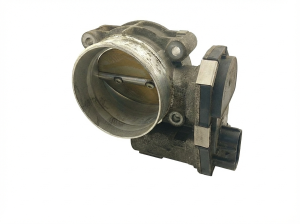
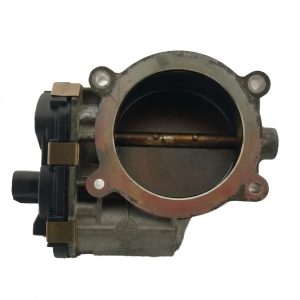
Used OEM Parts in Stock
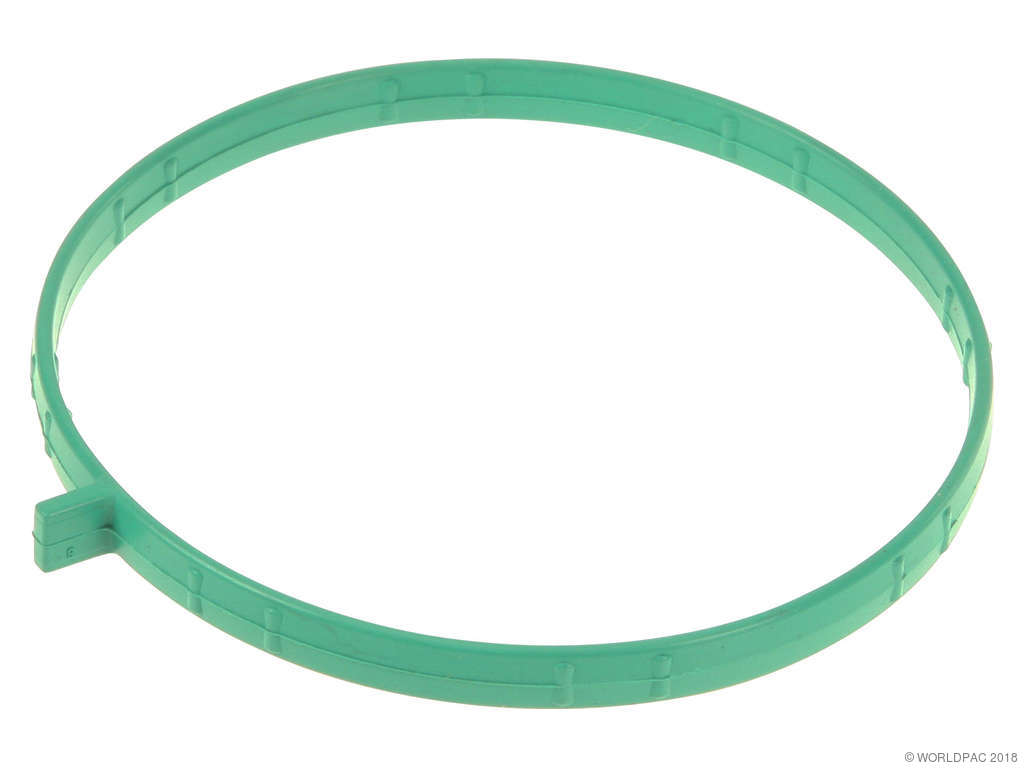
New Aftermarket Parts Available





The information in this article is provided for general reference and educational purposes only. Vehicle specifications, procedures, and part compatibility can vary by production date, trim level, and region. Always consult your vehicle's factory service manual and verify part numbers before purchasing or performing repairs. Safety-critical components such as airbags, seat belts, and braking systems should be installed by a qualified professional.
- Hummer H3:
- 🧭 Diagnostic Flowchart
- 🎬 Helpful Videos
- 🛍️ Shop This Part
- What's Unique About the 2006-2010 Hummer H3
- Symptoms You May Notice
- Most Likely Causes
- Rare But Worth Checking
- Diagnosis Steps
- Parts You'll Likely Need
- Related Codes That Often Appear With This One
- Technical Service Bulletins (TSBs) & Recalls
- Platform-Specific Known Issues
- Mechanic-Grade Diagnostic Values
- Scan Tool Commands That Help
- Wiring & Ground Locations
- Real Owner Repair Stories
- OEM Part Supersession History
- Model Year Variations Within This Range
- Other Known Issues on This Vehicle
- Used vs. New Parts: Buying Guide for This Vehicle
- Real Owner Stories
- 2009 Hummer H3 — ~95000 miles
- 2007 Hummer H3
- 2006 Hummer H3
- Related OBD-II Codes
- Frequently Asked Questions
- 🎟️ Get 5% Off