

P0222 on 2007-2012 Hyundai Santa Fe 3.3L V6: Throttle Sensor Causes and Fixes
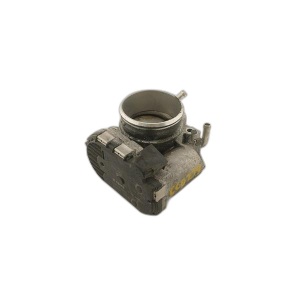
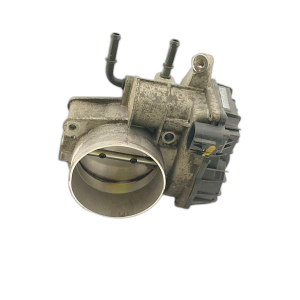
On a 2007-2012 Santa Fe, P0222 almost always means the entire electronic throttle body assembly has failed. The throttle position sensor ('B' circuit) that triggers the code is integrated into the assembly and not sold separately. The fix is to replace the entire throttle body. Before replacement, check the wiring connector for damage.
- P0222 on this Santa Fe almost always requires replacing the entire throttle body assembly.
- The sensor is not sold separately, unlike on some other Hyundai models with the same engine.
- The 2007-2009 (3.3L) and 2010-2012 (3.5L) engines use different, non-interchangeable throttle bodies.
- Driving is unsafe as the vehicle will enter a severely power-limited 'limp mode'.
- A throttle 'relearn' procedure is necessary after replacement.
What's Unique About the 2007-2012 Hyundai Santa Fe
For this specific generation of Hyundai Santa Fe (CM), the individual throttle position sensors (TPS) are integrated directly into the electronic throttle body assembly and are not available as separate replacement parts. While a P0222 code on some other Hyundai vehicles with the 3.3L engine (like the Sonata) might allow for a simple, cheap sensor swap, on the Santa Fe the failure of the internal sensor requires replacing the entire throttle body assembly. This makes the repair more expensive but also simplifies diagnosis, as the complete assembly is the most common point of failure.
Generation note: The 2007-2012 year range covers the second generation (CM) of the Hyundai Santa Fe. However, there was an engine update. 2007-2009 models used a 3.3L V6 (G6DB), while 2010-2012 models used a 3.5L V6 (G6DC). These engines use different, non-interchangeable throttle body assemblies, so it is critical to order the correct part for your specific year and engine.
Symptoms You May Notice
- Check Engine Light is on
- ESC (Electronic Stability Control) OFF light may be illuminated
- Vehicle enters 'limp mode' with severely reduced engine power.
- Very slow, hesitant, or jerky acceleration.
- Engine may be hard to start or may stall.
- Unresponsive accelerator pedal
- Flashing Check Engine light during acceleration.
- Replacing the Accelerator Pedal Position (APP) sensor. The P0222 code specifically refers to the 'B' circuit sensor located on the throttle body at the engine, not the sensor at the pedal.
Most Likely Causes
- Faulty Electronic Throttle Body Assembly 🔴 High Probability → Shop Fuel Injection Throttle Body The Throttle Position Sensor (TPS) that triggers code P0222 is integrated into the throttle body assembly and is not sold as a separate part for this vehicle, making the entire unit the single point of failure for the sensor itself.
How to confirm: With a scan tool, observe the live data for TPS Sensor 2 (or 'B'). The voltage will be stuck below 0.25V regardless of throttle pedal input. A healthy sensor 'B' should read high voltage (~4.5V) at closed throttle and sweep down smoothly to ~0.5V as the pedal is pressed. Sensor 'A' does the opposite. The sum of their voltages should remain constant around 5.0V. Also check for a 5V reference and good ground at the 6-pin connector.
Typical fix: Replace the entire electronic throttle body assembly and the corresponding gasket. A throttle relearn procedure must be performed after installation.
Est. part cost: $80-$700 - Wiring Harness or Connector Issue 🟡 Medium Probability Rodents can chew wires, or oil from other common leaks (like the valve cover gasket) can contaminate the connector, causing a poor connection. In a related Hyundai case, NHTSA ODI #11292479 noted that electrical issues and poor grounding led to a cascade of codes including P0222, P2106, and P0122.
How to confirm: Visually inspect the wiring harness leading to the throttle body for any signs of damage, fraying, melting, or corrosion. Check the 6-pin connector for bent or corroded pins and oil contamination. Use a multimeter to check for continuity and for a stable 5V reference and ground at the connector.
Typical fix: Repair the damaged section of wiring or clean/replace the connector.
Est. part cost: $5-$50 - Dirty or Obstructed Throttle Body ⚪ Low Probability → Shop Fuel Injection Throttle Body Carbon buildup around the throttle plate is common and can cause it to stick or not close properly, which can sometimes lead to sensor correlation issues.
How to confirm: Remove the air intake tube and inspect the throttle body bore and plate for heavy black carbon buildup that could restrict movement.
Typical fix: Clean the throttle body bore and plate with a dedicated throttle body cleaner and a soft cloth. This is a good first step before replacing parts, though it is less likely to fix a specific 'circuit low' code.
Est. part cost: $5-$15
Rare But Worth Checking
- Faulty Powertrain Control Module (PCM): → Shop Engine Control Module (ECM) This is extremely rare. The PCM should only be considered after all other possibilities, including the throttle body and wiring, have been exhaustively tested and ruled out.
Diagnosis Steps
- Read all fault codes with an OBD-II scanner. Note any other codes present, especially P0122, P2106, P2110, or P2135.
- Using the scanner's live data function, monitor the voltage readings for TPS Sensor 1 ('A') and TPS Sensor 2 ('B'). With the key on and engine off, TPS 'B' voltage should be high (~4.5V) at closed throttle and decrease smoothly as you slowly press the accelerator. For a P0222 code, you will see the 'B' sensor voltage stuck below 0.25V.
- Turn the ignition off and disconnect the 6-pin throttle body electrical connector. Visually inspect the connector pins and harness for corrosion, damage, oil contamination, or a loose fit.
- If the connector looks clean, use a multimeter to verify a 5-volt reference and a good ground are present at the correct pins on the harness side of the connector with the key on.
- If wiring and power/ground are confirmed good, the fault is almost certainly internal to the throttle body assembly.
- Replace the throttle body and the gasket.
- After replacement, perform a throttle relearn procedure. A common manual method is to warm the engine, turn the ignition 'ON' (engine off) for 15 seconds, then 'OFF' for 10 seconds. Repeat this cycle 4-5 times to allow the ECM to calibrate. Disconnecting the battery for 30 minutes can also force a reset.
Parts You'll Likely Need
- Electronic Throttle Body Assembly
(OEM #35100-3C200)— This is the most common fix because the faulty sensor (TPS 'B') is integrated into this assembly and is not sold separately for the 3.3L V6. Note: This part number is for the 2007-2009 3.3L V6. The 2010-2012 3.5L V6 uses a different part (35100-3C700).
Trusted brands: Hyundai (OEM), Bosch, Standard Motor Products, Spectra Premium
OEM price range: $450-$700
Aftermarket price range: $80-$250 - Throttle Body Gasket
(OEM #35101-3C100)— It is critical to replace the gasket whenever the throttle body is removed to prevent vacuum leaks, which can cause other performance issues like a rough idle.
Trusted brands: Hyundai (OEM), Fel-Pro, Mahle
OEM price range: $10-$20
Aftermarket price range: $5-$15
Related Codes That Often Appear With This One
- P0122 — This code is for 'Throttle Position Sensor 'A' Circuit Low'. If both appear together, it strongly suggests a problem common to both sensors, like a loss of power/ground at the connector or a complete internal failure of the throttle body assembly.
- P2106 — This means 'Throttle Actuator Control System - Forced Limited Power'. It is a secondary, informational code set by the ECM when it detects a critical fault like P0222 and puts the vehicle into 'limp mode' as a safety measure.
- P2110 — This means 'Throttle Actuator Control System - Forced Limited RPM'. Like P2106, this is a fail-safe code indicating the ECM is actively limiting engine speed due to the P0222 fault.
- P2135 — This code for 'Throttle/Pedal Position Sensor/Switch 'A' / 'B' Voltage Correlation' indicates the signals from the two sensors do not match their expected opposite patterns. It is very common when one sensor fails and sets a code like P0222.
Technical Service Bulletins (TSBs) & Recalls
- Service Campaign 936 / TSB 15-01-031: Addresses the front valve cover gasket leaking oil onto the alternator on 2007-2009 3.3L models.
- Service Campaign 976: Supersedes campaign 936, providing an updated repair procedure including an oil protector install to prevent alternator damage from the valve cover leak.
Platform-Specific Known Issues
- Owner Experience: Misdiagnosed Rear Main Seal: A common issue on the 3.3L V6 is a leaking oil pressure switch located in the engine valley. Oil weeps from the switch and runs down a drain channel to the back of the engine, perfectly mimicking a costly rear main seal leak. One owner on Reddit noted, 'My wife's 2017 Santa Fe...puked oil out...near the engine/transmission mating point...the culprit is the oil pressure sending switch located in the valley leaking oil at a pretty good rate, which then ran down the drain hole...which exits right near the rear main seal.' Before approving a rear main seal job, always inspect the oil pressure switch first.
Mechanic-Grade Diagnostic Values
- TPS1 ('A') vs. TPS2 ('B') Voltage Correlation — expected: The sum of the two sensor voltages should be constant at approximately 5.0V at any throttle position. TPS1 sweeps from ~0.5V (closed) to ~4.5V (wide open), while TPS2 sweeps inversely from ~4.5V (closed) to ~0.5V (wide open).. Failure: For P0222, the TPS2 voltage will be stuck below 0.25V and will not respond to pedal input. The sum of the voltages will not be constant.
- Throttle Body Connector Pinout (Harness Side, Key On) — expected: Pin 3: 5V Reference. Pin 1: Sensor Ground (~0V). Pin 4: TPS1 Signal (~0.5V at closed throttle). Pin 2: TPS2 Signal (~4.5V at closed throttle). Pins 5 & 6 are for the throttle motor.. Failure: Absence of 5V at Pin 3 or a bad ground at Pin 1 points to a wiring or PCM issue. A signal voltage on Pin 2 that is stuck low (near 0V) with good power and ground confirms an internal throttle body fault.
- P0222 DTC Trigger Condition — expected: TPS2 signal voltage should remain above 0.25V during normal operation.. Failure: The PCM will set code P0222 if it detects the TPS2 signal voltage is below 0.25V for more than 0.1 seconds.
Scan Tool Commands That Help
- Hyundai GDS (Global Diagnostic System): ETS Learning Value Reset — This is the dealership-level command to force the ECM to relearn the throttle plate's closed, open, and idle positions after replacing the throttle body assembly. It is the most reliable way to perform the relearn procedure.
- Advanced OBD-II Scanner: Throttle Relearn / Reset Adaptive Values — Many professional aftermarket scan tools have a similar function in the service or special functions menu. It should be used after throttle body replacement to ensure proper idle and throttle response.
Wiring & Ground Locations
- C38-2 Connector — The 6-pin electrical connector on the electronic throttle body itself.. This is the primary connection point for all power, ground, and signal wires for both TPS sensors. All multimeter tests for the sensor circuit are performed here.
- G52 — A primary engine ground point located on the left rear of the engine compartment.. A poor connection at this ground point can introduce electrical noise or voltage offsets, potentially causing incorrect readings from engine sensors, including the TPS. While not a common cause, it should be checked if wiring tests are inconclusive.
Real Owner Repair Stories
- hyundai-forums.com user (2007 Hyundai Santa Fe 3.3L V6) — Check Engine Light on with codes P0222 and P2135. Vehicle was in limp mode with poor acceleration.
❌ Tried (didn't work) Cleaning the throttle body.
✅ What actually fixed it The user replaced the entire electronic throttle body assembly (OEM Part Number 35100-3C200) and performed a throttle relearn procedure. This completely resolved the codes and driving symptoms. - NHTSA ODI #11445835 — An owner reported that even after a mechanic replaced the throttle body, the vehicle continued to show codes P0222 and P0123, noting that these parts are often not regularly carried and may require specific sourcing.
OEM Part Supersession History
35100-3C200→35100-3C200 remains the current part number.— N/A
Heads up: This part is for the 2007-2009 3.3L V6 only. It is not compatible with the 2010-2012 3.5L V6, which uses part number 35100-3C700. The parts are physically different and will not interchange.
Model Year Variations Within This Range
- 2007-2009: Uses the 3.3L Lambda V6 (G6DB) engine with throttle body P/N 35100-3C200.
- 2010-2012: Uses the updated 3.5L Lambda II V6 (G6DC) engine with throttle body P/N 35100-3C700. The diagnostic principles for P0222 are the same, but the primary replacement part is different and not interchangeable.
Diagnostic Flowchart
Other Known Issues on This Vehicle
Issues unrelated to this code that are worth knowing about as an owner of this generation:
- Valve Cover Gasket Oil Leak onto Alternator 🔴 High — Very common on 2007-2009 3.3L models. The leaking oil from the front valve cover gasket drips directly onto the alternator, causing it to fail and leading to a no-charge condition and eventual stall. (Ref: Service Campaign 936 (TSB 15-01-031) and its successor, Service Campaign 976, were issued to inspect and replace the gasket and/or alternator.)
- Leaking Oil Pressure Switch 🟠 Medium — Common across V6 models. The switch, located in the engine valley, leaks oil that runs down the back of the engine, frequently being misdiagnosed as a more expensive rear main seal leak. (Ref: Kia issued TSB ENG237 for a similar issue on related engines, providing diagnostic guidance.)
- Transmission Hesitation and Hard Shifting 🟠 Medium — Reported by numerous owners of 2007-2009 models, involving jerky or delayed shifting.
- Faulty Fuel Level Sensor 🟡 Low — A widely reported issue for the 2007-2009 models where the fuel gauge becomes erratic or inaccurate, often triggering code P0463.
- AWD Coupler Failure 🟠 Medium — On AWD models, the electronic coupler can fail, causing a binding or jerking sensation during sharp, low-speed turns (e.g., in parking lots).
Used vs. New Parts: Buying Guide for This Vehicle
When a used part is the smart pick: A used throttle body from a reputable salvage yard can be a cost-effective solution, as this is an expensive part new from the dealer. The failure is electronic, not typically wear-related, so a part from a low-mileage, accident-damaged vehicle is a good candidate.
Donor-vehicle mileage cap: roughly under 100000 miles for the part to have meaningful remaining life.
What to inspect on the donor part:
- Verify the part number on the donor part matches your original (35100-3C200 for 3.3L).
- Inspect the electrical connector for any bent, corroded, or broken pins.
- Look at the throttle plate; it should be relatively clean with minimal carbon buildup.
- Ensure the seller offers a warranty or return period to protect against a DOA (Dead On Arrival) part.
Aftermarket brands forum-validated for this vehicle:
- Bosch (often the original equipment manufacturer)
- Standard Motor Products (SMP)
- Spectra Premium
- Cardone (Remanufactured)
Brands owners have reported issues with on this vehicle:
- Unbranded, no-name parts from online marketplaces (e.g., Amazon, eBay) without a clear brand reputation or warranty should be avoided, as they have a higher risk of premature failure or incorrect calibration.
Real Owner Stories
Aggregated from forums and TSBs cited above. Mileages and costs reflect what owners reported in those sources.
2017 Hyundai Santa Fe
Symptoms: Vehicle puked oil out near the engine/transmission mating point, mimicking a rear main seal leak.
What fixed it: Replaced the oil pressure sending switch located in the engine valley.
Source hint: vehicle_specific_issues - Owner Experience: Misdiagnosed Rear Main Seal (Reddit r/HyundaiSantaFe)
2007-2009 Hyundai Santa Fe 3.3L
Symptoms: Oil dripping onto the alternator causing it to stop charging the battery, leading to a stall while driving.
What fixed it: Service Campaign 936/976: replaced the front valve cover gasket and installed an oil protector.
Source hint: forum_citations - r/HyundaiSantaFe '2007-2009 Service Campaign for Cylinder Head Cover Oil Leak'
Related OBD-II Codes
Frequently Asked Questions
Can I just replace the Throttle Position Sensor (TPS) on my 2007-2012 Santa Fe to fix P0222?
Does Service Campaign 936 or 976 relate to my P0222 code?
Is there a manual way to perform the throttle relearn after I replace the part?
My Santa Fe has a P0222 and the ESC OFF light is on. Are these related?
I see oil leaking near the rear of my engine; could this be related to the throttle issues?
Helpful Videos

We Have This Part in Stock

The information in this article is provided for general reference and educational purposes only. Vehicle specifications, procedures, and part compatibility can vary by production date, trim level, and region. Always consult your vehicle's factory service manual and verify part numbers before purchasing or performing repairs. Safety-critical components such as airbags, seat belts, and braking systems should be installed by a qualified professional.
- Hyundai Santa Fe:
- 🧭 Diagnostic Flowchart
- 🎬 Helpful Videos
- 🛍️ Shop This Part
- What's Unique About the 2007-2012 Hyundai Santa Fe
- Symptoms You May Notice
- Most Likely Causes
- Rare But Worth Checking
- Diagnosis Steps
- Parts You'll Likely Need
- Related Codes That Often Appear With This One
- Technical Service Bulletins (TSBs) & Recalls
- Platform-Specific Known Issues
- Mechanic-Grade Diagnostic Values
- Scan Tool Commands That Help
- Wiring & Ground Locations
- Real Owner Repair Stories
- OEM Part Supersession History
- Model Year Variations Within This Range
- Other Known Issues on This Vehicle
- Used vs. New Parts: Buying Guide for This Vehicle
- Real Owner Stories
- 2017 Hyundai Santa Fe
- 2007-2009 Hyundai Santa Fe 3.3L
- Related OBD-II Codes
- Frequently Asked Questions
- 🎟️ Get 5% Off