

P0222 on 2016-2021 Hyundai Tucson: Throttle Position Sensor 'B' Circuit Low Causes and Fixes
P0222 on a 2016-2021 Tucson indicates a problem with the throttle position sensor, usually causing the vehicle to enter a low-power 'limp mode'. The most common fix is replacing the entire electronic throttle body assembly, as the sensor is integrated. Before replacement, cleaning the throttle body is a worthwhile first step.
- P0222 will cause your Tucson to enter a low-power 'limp mode', making it unsafe for normal driving.
- The first and cheapest step is to thoroughly clean the throttle body, as carbon buildup can cause this code.
- If cleaning doesn't work, the most likely cause is a failed electronic throttle body assembly, which must be replaced as a unit.
- Always verify the part number with your VIN, as the 2.0L and 1.6L Turbo engines use different throttle bodies.
What's Unique About the 2016-2021 Hyundai Tucson
For the third-generation Hyundai Tucson (2016-2021), like many modern vehicles, the throttle position sensors are not sold as separate parts. They are integrated directly into the electronic throttle body assembly. This design means that if a single sensor fails, the entire throttle body unit must be replaced. While this increases the cost of the part, it simplifies the diagnosis, as an internal sensor failure points directly to the complete assembly as the required fix.
Generation note: The 2016-2021 Hyundai Tucson belongs to the third generation (TL). The diagnostic principles for this code are consistent across this generation.
Symptoms You May Notice
- Check Engine Light is on
- Vehicle enters 'limp mode' with drastically reduced engine power
- Poor, delayed, or hesitant acceleration
- Engine may stall or have a rough idle
- Difficulty starting the engine
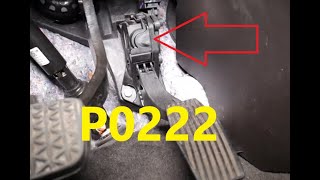
- Replacing the accelerator pedal position (APP) sensor. This code specifically points to the sensor at the throttle body on the engine ('B' circuit), not the sensor at the gas pedal.
Most Likely Causes
- Faulty Electronic Throttle Body Assembly 🔴 High Probability → Shop Fuel Injection Throttle Body The throttle position sensor (TPS) is integrated into the assembly and is a common point of electronic failure over time. The issue often starts intermittently before becoming a permanent fault.
How to confirm: Using an OBD-II scanner with live data, monitor the voltage for 'TPS B' or 'TPS2'. The voltage should be very low (typically under 0.5V) and not change smoothly as the accelerator is pressed (with the key on, engine off). This confirms the sensor is not responding.
Typical fix: Replace the entire electronic throttle body assembly. After replacement, a throttle body relearn procedure may be necessary, which can often be done by cycling the ignition without special tools, but a professional scan tool is more reliable.
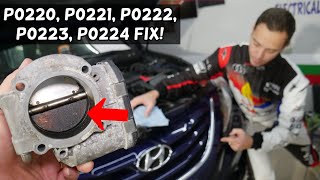
Est. part cost: $150-$400 - Dirty or Carbon-Clogged Throttle Body 🟡 Medium Probability → Shop Fuel Injection Throttle Body Carbon and grime can build up in the throttle body, preventing the throttle plate from moving freely. This can cause the sensor readings to be out of sync with the expected position, triggering the code.
How to confirm: Visually inspect the throttle body bore and plate by removing the air intake hose. Look for significant black carbon buildup.
Typical fix: Clean the throttle body thoroughly with a dedicated throttle body cleaner and a soft brush or cloth. Hyundai has issued a TSB (23-EM-007H) detailing official cleaning procedures for carbon deposits, highlighting this as a known issue.
Est. part cost: $10-$20 - Wiring or Connector Issue ⚪ Low Probability Vibrations and heat in the engine bay can cause wires to chafe or connectors to become loose or corroded over time.
How to confirm: Inspect the wiring harness and electrical connector at the throttle body for any signs of damage, corrosion, or loose pins. A 'wiggle test' on the harness while monitoring live data can help identify intermittent connection problems.
Typical fix: Repair the damaged section of wiring or clean/replace the connector.
Est. part cost: $5-$50
Rare But Worth Checking
- Faulty Powertrain Control Module (PCM): → Shop Engine Control Module (ECM) This is very rare. Before condemning the PCM, all other possibilities, especially the throttle body and wiring, must be exhaustively ruled out. A PCM failure can mimic a sensor failure.
Diagnosis Steps
- Connect an OBD-II scanner and confirm the presence of the P0222 code. Note any other codes that are present.
- Using the scanner's live data stream, observe the voltage readings for both Throttle Position Sensor 'A' and 'B'.
- With the key on and engine off, have an assistant slowly press and release the accelerator pedal. Sensor 'A' voltage should rise smoothly from a low value (~0.5V) to a high value (~4.5V), while Sensor 'B' voltage should decrease smoothly from a high value (~4.5V) to a low value (~0.5V). Their signals are inverse.
- If Sensor 'B' voltage is stuck low (e.g., below 0.5V) and does not respond, proceed to inspect the throttle body.
- Turn the ignition off. Visually inspect the throttle body's electrical connector and wiring harness for any damage, corrosion, or loose connections.
- Remove the air intake duct from the throttle body and inspect the throttle plate and bore for carbon buildup.
- If significant buildup is found, clean the throttle body thoroughly with a dedicated cleaner. Clear the codes and test drive the vehicle to see if the code returns.
- If the code returns and the wiring appears intact, the electronic throttle body assembly is the most likely failed component and should be replaced.
Parts You'll Likely Need
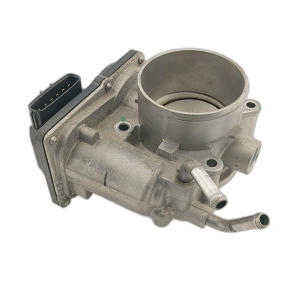
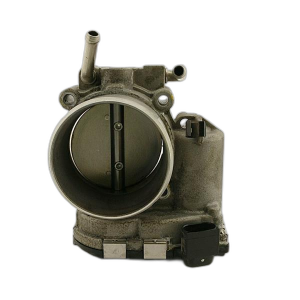
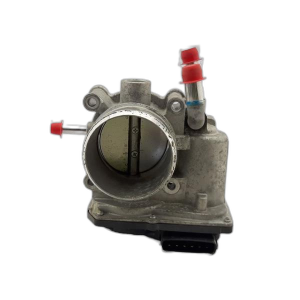
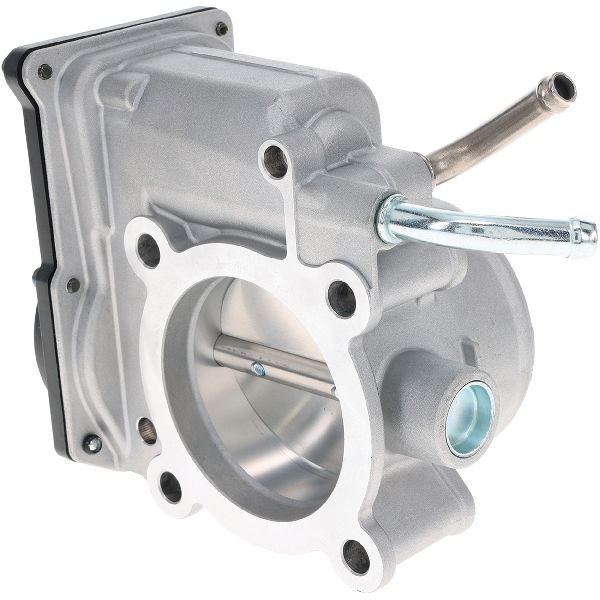
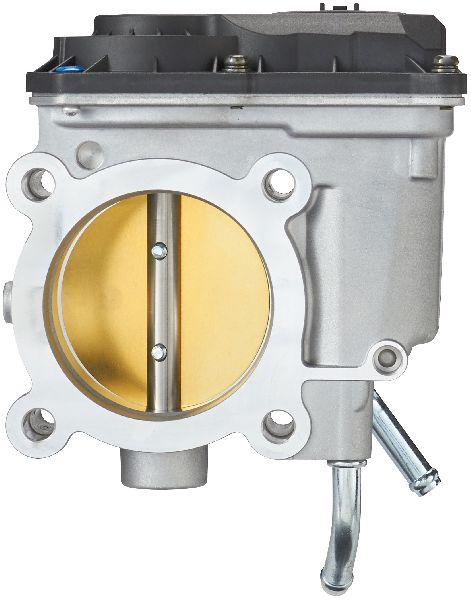
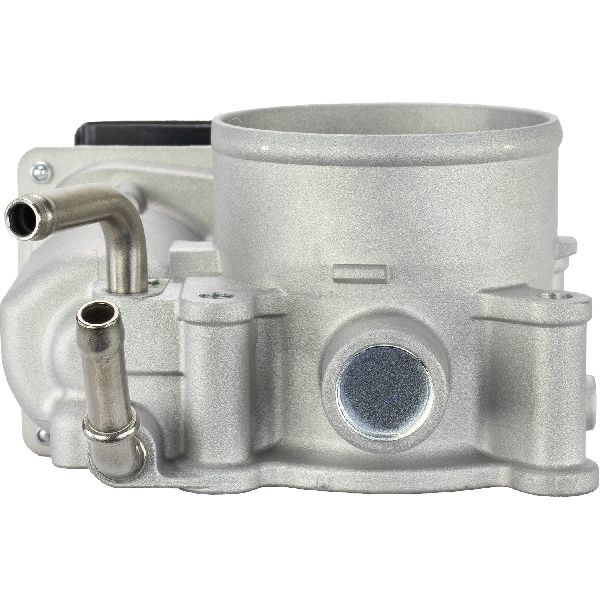
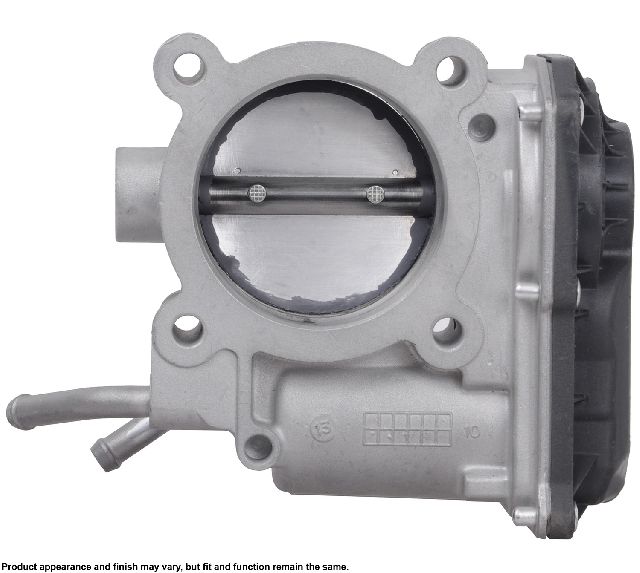
- Electronic Throttle Body Assembly
(OEM #35100-2E000 (For 2.0L engine, confirm with VIN))— This is the most common fix because the throttle position sensor (TPS) that triggers the P0222 code is integrated into this assembly and cannot be replaced separately.
Trusted brands: Hyundai (OEM), Bosch, DriveBolt
OEM price range: $250-$400
Aftermarket price range: $150-$300
Related Codes That Often Appear With This One
- P0122 — This code is for 'Throttle Position Sensor 'A' Circuit Low'. If both appear together, it strongly suggests a problem common to both sensors, like a failed throttle body assembly or a shared power/ground issue.
- P2110 — This code means 'Throttle Actuator Control System - Forced Limited RPM'. The PCM sets this code as a direct result of detecting the P0222 fault, forcing the engine into limp mode as a safety measure.
- P2135 — This code indicates 'Throttle/Pedal Position Sensor/Switch 'A'/'B' Voltage Correlation'. It means the PCM sees an illogical difference between the signals from TPS1 and TPS2, which points directly to a failing sensor assembly.
Technical Service Bulletins (TSBs) & Recalls
- TSB 23-EM-007H: While not for P0222 directly, this TSB details an official 'Combustion Chamber Cleaning' procedure. This is relevant as heavy carbon buildup, which this TSB addresses, is a known cause for a sticking throttle plate that can lead to TPS correlation codes.
Platform-Specific Known Issues
- Owner Experience: Intermittent to Hard Failure: On forums such as hyundai-forums.com, owners often report that the P0222 code and associated limp mode start as an intermittent problem. It may only happen once a week and can often be temporarily corrected by restarting the car. Over time, the frequency increases until the fault becomes permanent, requiring replacement of the throttle body.
- DIY Repair Story: Replacement After Cleaning Fails: A user on a popular forum detailed their fix for P0222 and P0122 on a Tucson. After thoroughly cleaning the throttle body provided no relief, they replaced the entire assembly with an aftermarket part for approximately $200. The repair was successful and resolved the codes.
Mechanic-Grade Diagnostic Values
- TPS 'B' (TPS2) Signal Voltage (Key On, Engine Off, Throttle Closed) — expected: ~4.5V - 4.75V. Failure: Voltage is stuck low, below 0.156V, triggering the P0222 code.
- TPS 'B' (TPS2) Signal Voltage (Key On, Engine Off, Wide Open Throttle) — expected: ~0.5V. Failure: Voltage does not sweep smoothly from high to low as the pedal is pressed.
- Sensor Reference Voltage at Throttle Body Connector Pin — expected: 5.0V. Failure: Voltage is significantly lower than 5.0V, indicating a PCM or wiring issue.
- Sensor Ground Circuit at Throttle Body Connector Pin — expected: < 0.1V (Good continuity to chassis ground). Failure: Voltage is present or resistance to ground is high, indicating a poor ground connection.
Scan Tool Commands That Help
- Hyundai GDS (or equivalent professional scanner): ETS (Electronic Throttle System) Adaptation Reset / Throttle Body Relearn — This function should be used after cleaning or replacing the throttle body assembly. It resets the PCM's learned values for the throttle plate's minimum and maximum positions, ensuring accurate idle and throttle response.
Wiring & Ground Locations
- Throttle Body Connector (C126-1 or similar) — Directly on the electronic throttle body assembly where the main engine harness connects.. This 6-pin connector is the single point for all power, ground, and signal lines for both TPS sensors and the throttle motor. Corrosion, moisture, or backed-out pins here are a direct cause of P0222. Pin 2 is typically the TPS2 signal, Pin 6 is the 5V reference, and Pin 4 is the sensor ground.
- Main Engine Ground (e.g., G13) — Typically bolted to the chassis on the driver's side inner fender or near the battery tray.. The TPS sensors require a stable ground reference, which is provided by the PCM. The PCM itself relies on this main chassis ground. A loose or corroded main ground can create a floating reference voltage, causing the PCM to misread the TPS signal and set false codes.
Real Owner Repair Stories
- hyundai-forums.com user report (2017 Hyundai Tucson 2.0L) — Intermittent limp mode with codes P0222, P0122, and P2135, especially in hot weather. Restarting the car would temporarily resolve the issue.
❌ Tried (didn't work) Thoroughly cleaning the throttle body.
✅ What actually fixed it The entire electronic throttle body assembly was replaced, which permanently resolved all codes and symptoms. - Forum user report (paraphrased from multiple similar accounts) (Hyundai Tucson (3rd Gen)) — P0222 and other TPS-related codes, persistent limp mode.
❌ Tried (didn't work) Replacing the throttle body assembly did not fix the problem.
✅ What actually fixed it A high-resistance ground connection was found in the wiring harness near the throttle body connector. Repairing the ground wire by cleaning the contact point and ensuring a tight connection resolved the voltage issue and cleared the codes without needing a new throttle body. - NHTSA ODI #11292479 — An owner of a related Hyundai model reported that after encountering P0222 and P0122, a shop identified that grounding points were painted, which interfered with the electrical circuit.
- NHTSA ODI #11445835 — A report involving a Hyundai vehicle noted that even after a mechanic replaced the throttle body, the P0222 code persisted because the issue was related to the throttle position pedal, which was not a regularly carried part.
Model Year Variations Within This Range
- 2016-2021: The engine option is the most critical variation. The 2.0L MPI engine uses a different throttle body (P/N: 35100-2E000) than the 1.6L Turbo GDI engine (P/N: 35100-2B300 or similar). The parts are not interchangeable. The 2019 facelift did not significantly alter the throttle body for the 2.0L engine.
Diagnostic Flowchart
Other Known Issues on This Vehicle
Issues unrelated to this code that are worth knowing about as an owner of this generation:
- Theta II Engine Premature Bearing Wear and Failure 🔴 High — Widespread across multiple model years, subject of class-action lawsuits and recalls. Can occur at various mileages, often starting with knocking noises or high oil consumption. (Ref: Recall 209 (NHTSA 21V727000) for 2017 models; extended warranties and a Knock Sensor Detection System (KSDS) software update were also implemented for a wider range of vehicles.)
- 7-Speed Dual-Clutch Transmission (DCT) Hesitation/Shudder 🟠 Medium — Very common on models equipped with the 1.6L Turbo engine and 7-speed DCT. Owners report hesitation from a stop, jerking, and shuddering in low-speed traffic. (Ref: Multiple TSBs exist, including 19-AT-002H and 21-AT-014H, which involve a TCU software update to improve clutch logic. In some cases, clutch replacement is required.)
- ABS Module Electrical Short / Fire Risk 🔴 High — Affects a large number of 2016-2021 Tucsons. The ABS Hydraulic Electronic Control Unit (HECU) can corrode internally, causing an electrical short and potential fire, even when the vehicle is parked and off. (Ref: Recall 195 (NHTSA 20V543000) was issued, advising owners to park outside and away from structures until the repair (replacing the HECU fuse) is completed.)
Used vs. New Parts: Buying Guide for This Vehicle
When a used part is the smart pick: A used OEM throttle body from a low-mileage donor vehicle can be a cost-effective alternative to a new aftermarket part, as the OEM electronics are often more reliable than the cheapest new options. Given the high cost of a new OEM part, used is a viable option for budget-conscious repairs.
Donor-vehicle mileage cap: roughly under 80000 miles for the part to have meaningful remaining life.
What to inspect on the donor part:
- Check the 6-pin electrical connector for any signs of corrosion, bent pins, or heat damage.
- Look inside the throttle bore; minimal carbon is acceptable, but heavy, oily buildup may suggest the donor engine had other issues.
- If possible, verify the donor vehicle's VIN to ensure it matches the engine type (2.0L vs 1.6T) of your Tucson.
- Avoid parts from vehicles with known flood or fire damage.
Aftermarket brands forum-validated for this vehicle:
- Bosch (often the original equipment manufacturer)
- Standard Motor Products (SMP)
- Dorman (specifically their OE FIX line, which claims improvements over the original design)
Brands owners have reported issues with on this vehicle:
- Unbranded, no-name parts from online marketplaces are a significant gamble and frequently reported as being dead-on-arrival or failing within a few months.
Real Owner Stories
Aggregated from forums and TSBs cited above. Mileages and costs reflect what owners reported in those sources.
2016-2021 Hyundai Tucson
Symptoms: The P0222 code and associated limp mode started as an intermittent problem, happening perhaps once a week. It could be temporarily corrected by restarting the car, but the frequency increased over time.
What fixed it: Replacement of the entire electronic throttle body assembly after the fault became permanent.
Source hint: hyundai-forums.com: Multiple threads discuss the P0222 code on Tucsons.
2016-2021 Hyundai Tucson
Symptoms: Vehicle threw codes P0222 and P0122. The owner attempted to thoroughly clean the throttle body first, but it provided no relief from the symptoms.
What fixed it: Replaced the entire throttle body assembly with an aftermarket part.
Cost: $200-$200
Source hint: DIY Repair Story: Replacement After Cleaning Fails
Hyundai Owner Report
Symptoms: An owner reported that their vehicle showed no codes until a mechanic replaced the throttle body, but the problem persisted with codes P0222 and P0123.
What fixed it: The owner noted difficulty in obtaining the throttle position pedal part, which was identified as the remaining fault.
Source hint: NHTSA ODI #11445835
Related OBD-II Codes
Frequently Asked Questions
Does Hyundai TSB 23-EM-007H apply to my Tucson's P0222 code?
Can I just clean the throttle body on my 2016-2021 Tucson instead of replacing it?
Is there a specific part number I should look for if I need a new throttle body?
Why does my Tucson keep going into 'limp mode' with this code?
Is the P0222 code related to the major Hyundai ABS or Engine recalls?
Do I need a professional scan tool to fix this?
Helpful Videos
Used OEM Parts in Stock
New Aftermarket Parts Available

The information in this article is provided for general reference and educational purposes only. Vehicle specifications, procedures, and part compatibility can vary by production date, trim level, and region. Always consult your vehicle's factory service manual and verify part numbers before purchasing or performing repairs. Safety-critical components such as airbags, seat belts, and braking systems should be installed by a qualified professional.
- Hyundai Tucson:
- 🧭 Diagnostic Flowchart
- 🎬 Helpful Videos
- 🛍️ Shop This Part
- What's Unique About the 2016-2021 Hyundai Tucson
- Symptoms You May Notice
- Most Likely Causes
- Rare But Worth Checking
- Diagnosis Steps
- Parts You'll Likely Need
- Related Codes That Often Appear With This One
- Technical Service Bulletins (TSBs) & Recalls
- Platform-Specific Known Issues
- Mechanic-Grade Diagnostic Values
- Scan Tool Commands That Help
- Wiring & Ground Locations
- Real Owner Repair Stories
- Model Year Variations Within This Range
- Other Known Issues on This Vehicle
- Used vs. New Parts: Buying Guide for This Vehicle
- Real Owner Stories
- 2016-2021 Hyundai Tucson
- 2016-2021 Hyundai Tucson
- Hyundai Owner Report
- Related OBD-II Codes
- Frequently Asked Questions
- 🎟️ Get 5% Off