

P0222 on 2007-2018 Jeep Wrangler: Throttle Position Sensor 'B' Circuit Low Causes and Fixes
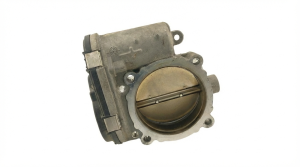
On a 2007-2018 Jeep Wrangler, code P0222 is almost always caused by a failed electronic throttle body assembly. This will put the Jeep in a low-power 'limp mode' with the 'red lightning bolt' light on. Expect to pay $150-$400 for a new throttle body, which is a DIY-friendly replacement (2/5 difficulty).
- P0222 on a JK Wrangler almost always points to a failed electronic throttle body.
- The vehicle will go into a low-power 'limp mode' as a safety precaution, indicated by a red lightning bolt on the dash.
- The throttle position sensors cannot be replaced individually; you must replace the entire throttle body assembly.
- After replacing the part, a 'throttle relearn' procedure is necessary for the computer to recognize the new component.
- Before replacing parts, it's worth checking for any open recalls or software updates for your vehicle's VIN, especially on 2017-2018 models.
What's Unique About the 2007-2018 Jeep Wrangler
The Jeep Wrangler JK, across both the 3.8L (2007-2011) and 3.6L Pentastar (2012-2018) engines, has a well-documented history of electronic throttle body failures. The throttle position sensors are not sold separately, so a failure of one internal sensor requires replacing the entire assembly. This issue is so common that many owners will experience the dreaded 'red lightning bolt' on the dash, which signals the vehicle is entering a protective limp mode due to this fault. While wiring can be a cause, a faulty throttle body is the overwhelming culprit on this platform, a fact corroborated in numerous owner forums.
Generation note: This guide covers the entire Jeep Wrangler JK generation (2007-2018). This includes models with the 3.8L V6 (2007-2011) and the 3.6L Pentastar V6 (2012-2018). The root cause, a failed throttle body, is common to both engine types, though the specific part numbers will differ.
Symptoms You May Notice
- Vehicle enters 'limp mode' (severely reduced engine power)
- Electronic Throttle Control (ETC) warning light illuminated (red lightning bolt on the dashboard)
- Check Engine Light is on
- Hesitation or stumbling during acceleration
- Rough or unstable idle
- Engine may stall
- Intermittent or no throttle response
- Replacing the accelerator pedal position sensor. This code specifically points to the sensor on the throttle body, not the pedal.
Most Likely Causes
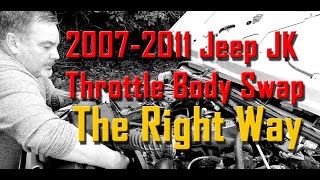
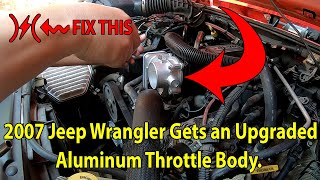
- Failed Electronic Throttle Body Assembly 🔴 High Probability → Shop Fuel Injection Throttle Body The internal throttle position sensors (TPS) are a known weak point on both the 3.8L and 3.6L engines and are not serviceable separately. The 3.8L's original throttle body was often made of plastic, which could be less durable. 🎬 Watch how to upgrade to a durable aluminum throttle body. This is the most frequently reported fix on owner forums.
How to confirm: Using a scan tool, monitor the live data for TPS Sensor 2 voltage with the key on, engine off. If the voltage is stuck below ~0.2V and does not change when the accelerator pedal is pressed, the throttle body has failed internally. Many owners report that simply replacing the throttle body resolves the issue after other diagnostics fail.
Typical fix: Replace the entire throttle body assembly. After installation, a throttle relearn procedure is required.
Est. part cost: $150-$400 - Wiring Harness or Connector Issue 🟡 Medium Probability The wiring harness to the throttle body can be susceptible to damage from engine heat, vibration, or chafing against other components, especially after off-road use.
How to confirm: Visually inspect the wiring harness and 6-pin connector at the throttle body for any signs of damage, melting, corrosion, or loose pins. Perform a 'wiggle test' on the harness while monitoring TPS voltage to see if the reading fluctuates.
Typical fix: Repair the damaged section of the wiring harness. Clean or replace the electrical connector if it is corroded or damaged.
Est. part cost: $10-$50 - Sticking PCV Valve ⚪ Low Probability A sticking PCV (Positive Crankcase Ventilation) valve can alter crankcase pressure and sometimes trigger the computer to enter a fail-safe mode, illuminating the ETC light.
How to confirm: This is difficult to confirm without replacement. However, some owners on forums have reported that after replacing the throttle body and checking wiring without success, a new PCV valve resolved the limp mode issue. Given the low cost of the part, it can be considered a preventative maintenance item.
Typical fix: Replace the PCV valve.
Est. part cost: $5-$20 - Outdated PCM Software ⚪ Low Probability While not as widely documented for the Wrangler as for other Jeep/Chrysler models with the same engines, the PCM logic can sometimes be too sensitive and falsely trigger throttle body codes.
How to confirm: Contact a Jeep dealership or a qualified shop with your VIN to check for any available Technical Service Bulletins (TSBs) related to PCM updates for throttle codes.
Typical fix: Reprogram the Powertrain Control Module (PCM) with the latest software calibration.
Est. part cost: $0-$200
Rare But Worth Checking
- Faulty Powertrain Control Module (PCM): → Shop Engine Control Module (ECM) A failure of the PCM's internal circuitry is rare but possible, especially on the 3.8L engine where PCM failures are a known issue causing various electrical problems. Recall U87 (NHTSA 18V-524) was issued for a faulty voltage regulator chip in the PCM on some 2017-2018 Wranglers that could cause stalling. This should be considered only after the throttle body and wiring have been ruled out.
Diagnosis Steps
- Scan for Codes: Use an OBD-II scanner to confirm P0222 and check for any other related codes like P0122, P0123, or P2135.
- Inspect the Wiring: Turn the ignition off. Carefully inspect the throttle body's electrical connector and wiring harness for any visible damage, corrosion, or loose connections. Ensure the connector's locking tab is secure.
- Test the 5V Reference Circuit: Disconnect the throttle body connector. Turn the ignition on (engine off). Use a multimeter to check for a 5-volt reference signal at the specified pin on the harness connector (Pin 3, (F855) 5-volt Supply circuit for the 3.8L). If 5V is not present, there is a wiring or PCM issue.
- Check the Signal Circuit: If the 5V reference is good, check the signal wire (Pin 6, (K122) TP Signal 2 circuit for the 3.8L) for a short to ground. With the connector still disconnected, measure the resistance between the signal wire pin and a good chassis ground. High resistance is expected; low resistance indicates a short.
- Verify with Live Data: If wiring appears okay, reconnect the connector. Use a scan tool to monitor the live voltage from 'TP Sensor 2'. If the voltage is stuck low (near 0V) and doesn't respond to accelerator pedal input, the throttle body assembly has failed.
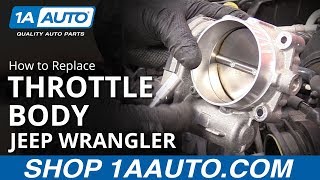
- Replace Throttle Body: If the throttle body is 🎬 See this step-by-step throttle body replacement walkthrough. confirmed as the fault, replace the entire assembly. Many owners on forums report this as the ultimate solution.
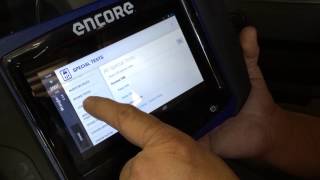
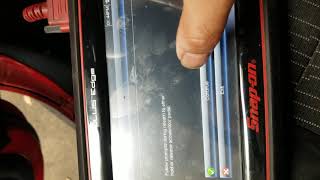
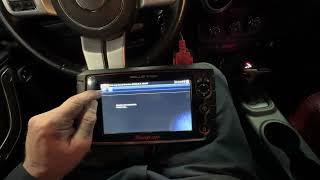
- Perform Throttle Relearn: After replacement, a throttle relearn procedure is mandatory. A common owner-reported method is: disconnect the battery during the repair. After reconnecting, turn the key to the 'On' position (do not start), slowly press the accelerator pedal all the way to the floor, then slowly release it. Turn the key off, then start the engine. If this fails, 🎬 Watch this quick video on how to recalibrate your throttle sensor. a scan tool is needed to initiate the ETC RELEARN function.
Parts You'll Likely Need
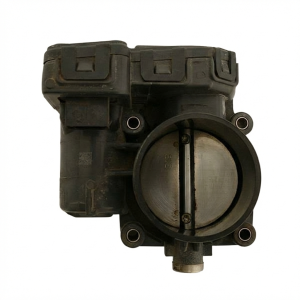
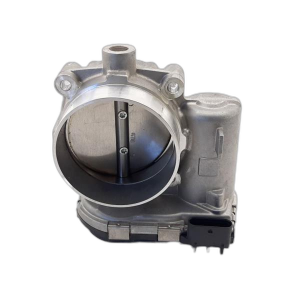
- Electronic Throttle Body Assembly
(OEM #3.8L V6 (2007-2011): Mopar 4861661AB | 3.6L V6 (2012-2018): Mopar 5184349AE)— This is the most common failure for code P0222, as the internal, non-serviceable throttle position sensors fail.
Trusted brands: Mopar, Bosch, Hitachi, Standard Motor Products (SMP), Dorman
OEM price range: $250-$400
Aftermarket price range: $150-$250
Related Codes That Often Appear With This One
- P0122 — This is the 'Circuit Low' code for the other throttle position sensor ('A'). Seeing P0122 and P0222 together almost always confirms a complete internal failure of the throttle body assembly.
- P0123 / P0223 — These are the 'Circuit High' counterparts. Seeing a mix of high and low codes (e.g., P0123 and P0222) points to an erratic electrical failure within the throttle body.
- P2135 — This code means 'Throttle/Pedal Position Sensor/Switch 'A'/'B' Voltage Correlation'. It sets when the PCM sees that the signals from the two sensors don't match, which is a direct result of one sensor failing.
Technical Service Bulletins (TSBs) & Recalls
- TSB Bulletin #18-090-16 identifies P0222 (Throttle Position Sensor 2 Circuit Low) as a potential fault code alongside other throttle position sensor and crankshaft position sensor issues.
- While no TSBs were found specifically for the Wrangler JK and P0222, related TSBs exist for other Jeep models with the same engines (e.g., TSB 18-113-15 for Grand Cherokee, TSB 21-005-15 for Cherokee), indicating a known issue with the throttle control system logic that may require a PCM update.
- Safety Recall U87 / NHTSA 18V-524: Affects some 2017-2018 Wranglers for a faulty PCM which could cause stalling.
Platform-Specific Known Issues
- The 3.8L V6 (2007-2011) was originally equipped with a plastic throttle body that is prone to failure; many aftermarket replacements are made of more durable aluminum.
- The 3.6L Pentastar V6 (2012-2018) has a notorious reputation for throttle body failure across multiple vehicle platforms, not just the Wrangler.
- Owner Experience: On JK-Forum.com, a user with a 2008 JK described going into limp mode with the red lightning bolt, but no check engine light. After cleaning the throttle body made the problem worse, replacing the entire unit solved the issue completely. The user noted that finding the part was difficult, with dealerships on backorder, highlighting the high failure rate.
Mechanic-Grade Diagnostic Values
- P0222 Set Condition (3.8L V6) — expected: Voltage at PCM is >= 0.16 volts.. Failure: Voltage at the PCM is less than 0.16 of a volt for 0.7 of a second.
- TP Sensor 2 Voltage (Live Scan Data, 3.8L V6) — expected: Voltage should be above 0.35V with key on, engine off.. Failure: Voltage is below 0.35V and does not change when accelerator is pressed.
- (F855) 5-Volt Supply Circuit at Throttle Body Connector (3.8L V6) — expected: Between 4.5 and 5.2 volts with key on, engine off.. Failure: Voltage is below 4.5V or above 5.2V, indicating a wiring or PCM issue.
- Continuity of (K122) TP Signal 2 Circuit (3.8L V6) — expected: Less than 5.0 ohms between the throttle body connector and the PCM connector.. Failure: Resistance is above 5.0 ohms, indicating an open or high resistance in the signal wire.
- (K122) TP Signal 2 Circuit Short to Ground Test (3.8L V6) — expected: Resistance is greater than 100 ohms between the signal circuit and chassis ground.. Failure: Resistance is below 100 ohms, indicating a short to ground.
Scan Tool Commands That Help
- wiTECH, Snap-On, JScan, or other professional scanner: ETC RELEARN / Learn Values / Throttle Body (ETC) Re-Learn — This function is mandatory after replacing the throttle body assembly. It allows the PCM to learn the new closed, open, and partial throttle positions to ensure accurate idle and throttle response. On a Snap-On scanner, the path may be 'System Tests' -> 'ETC throttle follower test' -> 'learn values'.
- wiTECH (Dealer Tool): Module Reprogramming (Reflash) — Used to apply software updates from the manufacturer. If a Technical Service Bulletin (TSB) exists that addresses false P0222 codes with a software update, this function is used to load the new calibration into the PCM.
Wiring & Ground Locations
- (F855) 5-volt Supply — Pin 3 on the 3.8L V6 throttle body harness connector.. This circuit provides the reference voltage for the throttle position sensors. A loss of this voltage will cause both TPS sensors to fail and set codes.
- (K122) TP Signal 2 — Pin 6 on the 3.8L V6 throttle body harness connector.. This is the specific signal wire for the 'B' sensor that sets code P0222. A short to ground on this wire will cause the voltage to be low, directly triggering the fault.
- G300 / G301 — On some Jeep platforms, G300 is located below the driver's seat and G301 is below the passenger's seat.. These are major body ground points. While not the primary ground for the engine sensors, a poor body ground can cause a multitude of strange electrical issues, including erratic sensor readings. This should be checked if multiple, seemingly unrelated electrical faults are present.
Real Owner Repair Stories
- JK-Forum.com user (2008 Jeep Wrangler JK X (3.8L V6)) — ETC and Traction Control lights came on, vehicle entered limp mode (would not exceed 2,000 RPM). Would run normally after restart until it idled for a minute, then would fail again.
❌ Tried (didn't work) Thoroughly cleaning the throttle body., Applying dielectric grease to the connector.
✅ What actually fixed it Replacing the throttle body with a new Cardone unit from NAPA resolved all issues. The owner noted it also fixed a pre-existing stalling problem and pre-ignition detonation. - YouTube video creator (2007 Jeep Wrangler (3.8L V6) with 188,000 miles) — Code P0221 (related TPS code) and the 'lightning bolt' warning light, which would appear on the freeway and put the vehicle into limp mode.
❌ Tried (didn't work) Cleaning the front of the throttle body plate provided only a temporary fix.
✅ What actually fixed it Replacing the entire throttle body assembly. The old unit was shown to have a thick layer of gunk on the backside of the butterfly valve that was inaccessible for cleaning.
When the Usual Fixes Don't Work
- While replacing the throttle body is the most common fix, it is not the only one. In one documented case, a vehicle throwing P0123 and P0222 was fixed after discovering the two internal TPS potentiometers were 'out of sync' following a separate repair that left an intake boot loose. The fix involved a reset/rebalancing of the sensors, not a replacement of the part, highlighting that sometimes the root cause can be a software or calibration issue triggered by a mechanical problem.
OEM Part Supersession History
4861661AA→4861661AB— Standard part revision, likely for improved durability or manufacturing process.
Heads up: Parts are interchangeable. 4861661AB is the correct service replacement for 2007-2011 3.8L models.5184349AE (and earlier AB, AC, AD versions)→5184349AF— Multiple revisions suggest ongoing efforts to improve the reliability of the part for the 3.6L Pentastar engine.
Heads up: Parts are interchangeable. 5184349AF is the latest service replacement for 2012-2018 3.6L models.
Model Year Variations Within This Range
- 2007-2011 vs 2012-2018: The engine and throttle body are completely different. 2007-2011 models use the 3.8L V6 with throttle body P/N 4861661AB. 2012-2018 models use the 3.6L Pentastar V6 with throttle body P/N 5184349AF. Diagnostics and parts are not interchangeable.
- 2007-2011 (3.8L V6): A 'Viper' throttle body (Mopar P/N 53032837AB) is reported to be a bolt-on performance upgrade. It requires a 4-inch to 3-inch silicone intake tube adapter for installation.
Diagnostic Flowchart
Other Known Issues on This Vehicle
Issues unrelated to this code that are worth knowing about as an owner of this generation:
- Death Wobble 🔴 High — Common on both stock and lifted JKs, often triggered by hitting a bump at speed (45-65 mph). Caused by worn or loose front-end components. (Ref: No specific recall, but it is a widely acknowledged issue. The most common culprits are the front track bar, ball joints, and tie rod ends.)
- TIPM (Totally Integrated Power Module) Failure 🔴 High — Very common on 2007-2014 models. Causes a wide range of bizarre electrical issues like the fuel pump not engaging (crank-no-start), horn honking randomly, wipers activating, or battery drain.
- 3.8L V6 Excessive Oil Consumption 🟠 Medium — Affects 2007-2011 models, particularly those over 75,000 miles. Many engines consume over 1 quart of oil every 1,500-2,000 miles due to issues with piston rings or valve seals. (Ref: Chrysler considered consumption up to 1 quart per 750-1000 miles to be within spec, making warranty claims difficult.)
- 3.6L Pentastar Cylinder Head Failure (Left Bank) 🔴 High — Primarily affects early 2012-2013 models. A design flaw led to excessive wear on the valve seats of the left-side cylinder head, causing misfires (P0300, P0302, P0304, P0306) and requiring cylinder head replacement. (Ref: Chrysler extended the warranty on the left cylinder head for 10 years/150,000 miles for affected vehicles.)
- 3.6L Pentastar Oil Filter Housing / Cooler Assembly Leaks 🟠 Medium — Common on 2014-2018 models. The plastic housing, located in the engine valley, is prone to cracking from heat cycles, causing significant oil leaks.
- Cracked Exhaust Manifolds (3.8L V6) 🟡 Low — Common on the 2007-2011 3.8L engine. The factory cast iron manifolds are prone to cracking, causing an exhaust leak and a ticking noise, especially when cold.
Used vs. New Parts: Buying Guide for This Vehicle
When a used part is the smart pick: A used OEM throttle body from a low-mileage, reputable salvage yard can be a budget-friendly option for a DIY repair. However, given the high failure rate of this part, it is a gamble; you may receive a part that is already near the end of its service life.
Donor-vehicle mileage cap: roughly under 60000 miles for the part to have meaningful remaining life.
What to inspect on the donor part:
- Check the electrical connector pins for any signs of corrosion, moisture, or damage.
- Inspect the throttle plate for excessive carbon buildup, which might indicate a high-mileage or poorly maintained engine.
- Ask for the VIN of the donor vehicle to verify its mileage and check for a history of electrical problems or flood damage.
- Ensure there is a return policy in case the part is dead on arrival.
OEM-only on this vehicle (don't cheap out):
- Powertrain Control Module (PCM) — Always use a new OEM unit or a professionally remanufactured unit from a specialist that is programmed to your vehicle's VIN.
Aftermarket brands forum-validated for this vehicle:
- Mopar (OEM)
- Cardone (A NAPA-distributed brand reported to work well by owners)
- Bosch
- Standard Motor Products (SMP)
- Dorman (Offers OE FIX solutions for some platforms)
Brands owners have reported issues with on this vehicle:
- Unbranded, no-name parts from online marketplaces can have inconsistent quality and may fail prematurely. While they may be cheaper, they are a higher risk.
Real Owner Stories
Aggregated from forums and TSBs cited above. Mileages and costs reflect what owners reported in those sources.
2008 Jeep Wrangler JK 3.8L V6
Symptoms: Vehicle entered limp mode with the red lightning bolt (ETC) light on the dashboard, but no check engine light was present. Attempting to clean the throttle body made the problem worse.
What fixed it: Replacing the entire throttle body assembly. The owner noted that the part was difficult to find due to dealership backorders.
Source hint: JK-Forum.com thread titled 'throttle-body-red-lightning-bolt-limp-mode-322998'
Related OBD-II Codes
Frequently Asked Questions
My 2008 Jeep Wrangler 3.8L has a red lightning bolt on the dash but no Check Engine Light. Is this related to P0222?
Can I just clean the throttle body on my 3.8L V6 to fix the P0222 code?
Is there a recall for the PCM on my 2017-2018 Wrangler that could cause stalling?
Do I need a special tool to perform the throttle relearn on my Jeep after replacing the part?
Why is the throttle body failing so often on the 3.8L Wrangler engines?
Are there any TSBs for the 3.6L Pentastar engine regarding throttle logic?
Helpful Videos
We Have This Part in Stock

The information in this article is provided for general reference and educational purposes only. Vehicle specifications, procedures, and part compatibility can vary by production date, trim level, and region. Always consult your vehicle's factory service manual and verify part numbers before purchasing or performing repairs. Safety-critical components such as airbags, seat belts, and braking systems should be installed by a qualified professional.
- Jeep Wrangler:
- 🧭 Diagnostic Flowchart
- 🎬 Helpful Videos
- 🛍️ Shop This Part
- What's Unique About the 2007-2018 Jeep Wrangler
- Symptoms You May Notice
- Most Likely Causes
- Rare But Worth Checking
- Diagnosis Steps
- Parts You'll Likely Need
- Related Codes That Often Appear With This One
- Technical Service Bulletins (TSBs) & Recalls
- Platform-Specific Known Issues
- Mechanic-Grade Diagnostic Values
- Scan Tool Commands That Help
- Wiring & Ground Locations
- Real Owner Repair Stories
- When the Usual Fixes Don't Work
- OEM Part Supersession History
- Model Year Variations Within This Range
- Other Known Issues on This Vehicle
- Used vs. New Parts: Buying Guide for This Vehicle
- Real Owner Stories
- 2008 Jeep Wrangler JK 3.8L V6
- Related OBD-II Codes
- Frequently Asked Questions
- 🎟️ Get 5% Off