

P0222 on 2011-2013 Mazda CX-9: Throttle Position Sensor Causes and Fixes
On a 2011-2013 Mazda CX-9, code P0222 almost always points to a failed throttle body assembly or a known wiring harness issue addressed by a TSB. The throttle position sensor is integrated. Expect to pay between $450 and $770 for a replacement part and labor, or less for a specific wiring harness fix.
- P0222 on a 2011-2013 CX-9 is a specific and common problem addressed by at least two Mazda TSBs.
- There are two highly likely causes: electrical noise fixed by a diode harness (TSB #01-008-13-2771), or a failed electronic throttle body assembly.
- Look for code P0123 to appear alongside P0222, as this is a strong indicator of the common failure patterns described in the TSBs.
- The repair involves either installing a specific sub-harness or replacing the entire throttle body, both of which are manageable DIY tasks.
- Driving with this code is not recommended as the vehicle will have severely limited power.
What's Unique About the 2011-2013 Mazda CX-9
The 2011-2013 Mazda CX-9, equipped with the 3.7L V6 engine, is known for this specific issue, to the point that Mazda released multiple Technical Service Bulletins (TSBs). One TSB points to a specific problem with electrical noise in the engine harness that can be fixed with a special diode sub-harness. The other common failure, often triggering code P0123 simultaneously, is an internal fault within the electronic throttle body assembly. [Bulletin #01-012-15-3052]
Diagnostic Flowchart
Tap your situation to follow the diagnostic path that matches what you're seeing on this vehicle.
Symptoms You May Notice
- Wrench light and/or Check Engine Light is on. [Bulletin #01-012-15-3052, Bulletin #01-008-13-2771]
- Check Engine Light may flash during acceleration.
- Significant lack of engine power or reduced power warning. [Bulletin #01-012-15-3052]
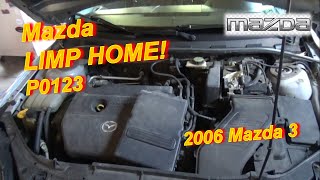
- Vehicle enters "limp mode". 🎬 See how a faulty TPS circuit triggers limp mode.
- Hesitation, jerking, or poor acceleration.
- Unresponsive accelerator pedal.
- Rough or erratic idle.
- Replacing the accelerator pedal position (APP) sensor. While the APP sensor is part of the same system, P0222 specifically points to the sensor circuit at the throttle body ('B' circuit), not the pedal.
Most Likely Causes
- Failed Electronic Throttle Body Assembly 🔴 High Probability → Shop Fuel Injection Throttle Body This is a well-documented failure on this platform, as confirmed by manufacturer TSBs that address the resulting codes. The internal electronic sensors wear out or fail, causing incorrect voltage signals, often on both sensor circuits at once (triggering P0123 and P0222).
How to confirm: Using a scan tool, monitor the live data for Throttle Position Sensor 2 (or B). The voltage will be abnormally low (below 0.2V) and may not change when the accelerator is pressed. Confirming 5V reference and good ground at the connector points to an internal throttle body failure. If the wiring harness fix (see next cause) has been performed or ruled out, the throttle body is the next logical step.
Typical fix: Replace the entire throttle body assembly. 🎬 Watch: Step-by-step guide to replacing the CX-9 throttle body. The sensors are integrated and not sold separately.
Est. part cost: $250-$500 - Electrical Noise in Engine Harness 🔴 High Probability Mazda TSB #01-008-13-2771 specifically identifies 'abnormal electrical noise within the engine harness' as a cause for P0222 and/or P0123 on the CX-9 and Mazda 6. This is a known issue, not a random wiring fault.
How to confirm: Visually inspect the wiring harness leading to the throttle body for any signs of damage. The definitive diagnosis is to follow the TSB procedure. If the codes appear immediately at startup, this cause is highly likely.
Typical fix: Install a specific throttle body sub-harness with a built-in diode (Mazda Part No. AJT1-13-ZS8) as per the instructions in TSB #01-008-13-2771. This harness conditions the signal to prevent the electrical noise from causing a fault.
Est. part cost: $50-$150 - Wiring Harness or Connector Issue ⚪ Low Probability Outside of the specific TSB-related issue, vibrations and heat in the engine bay can cause wires to break or chafe. The connector pins can also become corroded or loose, leading to a poor connection.
How to confirm: Visually inspect the wiring harness for any signs of damage. Disconnect the connector and check for corrosion or backed-out pins. Perform a "wiggle test" on the harness while monitoring sensor voltage on a scan tool; if the voltage fluctuates, a wiring fault is likely. Some forum users have had success simply cleaning the connector pins.
Typical fix: Repair the damaged section of the wire or replace the connector pigtail.
Est. part cost: $20-$100
Rare But Worth Checking
- Faulty Powertrain Control Module (PCM): → Shop Engine Control Module (ECM) This is very rare. Before condemning the PCM, all other possibilities, especially the throttle body and the TSB-specified harness fix, must be exhaustively ruled out. A PCM replacement is expensive and requires programming.
Diagnosis Steps
- Connect an OBD-II scanner and confirm P0222 is present. Check for other codes, especially P0123, as this is a very common pairing. [Bulletin #01-012-15-3052]
- Using the scanner's live data function, observe the voltage for Throttle Position Sensor 2 (TP2 or TPS-B). With the key on and engine off, the voltage will likely be below the 0.2V threshold, confirming the 'Circuit Low' condition.
- Review Mazda TSB #01-008-13-2771. This TSB suggests the primary fix may be installing a diode sub-harness (Part No. AJT1-13-ZS8) to filter electrical noise. This should be considered a primary diagnostic step.
- If the harness fix does not resolve the issue or if TSB #01-012-15-3052 symptoms (lack of power with both codes) are present, the next step is to inspect the throttle body itself.
- Turn the vehicle off and disconnect the negative battery terminal. Visually inspect the wiring harness and electrical connector at the throttle body for any obvious damage, corrosion, or loose pins.
- If wiring appears intact and the TSB harness fix is ineffective, the most probable cause is a faulty throttle body assembly.
- Replace the throttle body assembly.
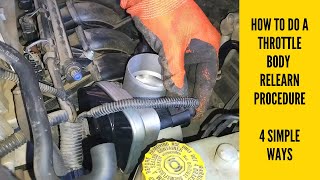
- After installation, reconnect the battery. A throttle body relearn procedure is required. This can sometimes be done by turning the ignition on for one minute, off for one minute, and then letting the engine idle for several minutes until it warms up and the radiator fans cycle. For best results, use a professional scan tool to perform the relearn procedure. 🎬 Watch: Four ways to perform a throttle body relearn.
Parts You'll Likely Need
- Electronic Throttle Body Assembly
(OEM #TK21-13-640)— This is a primary failure point for code P0222 on this vehicle, especially when paired with P0123. The throttle position sensors are integrated and cannot be replaced individually. This part number supersedes older versions like CY01-13-640A, CA01-13-640, and others.
Trusted brands: Mazda (OEM), Hitachi, A1 Cardone (Remanufactured)
OEM price range: $400-$500
Aftermarket price range: $250-$350 - Throttle Body Diode Harness
(OEM #AJT1-13-ZS8)— This specific sub-harness is the prescribed fix in TSB #01-008-13-2771 to correct 'abnormal electrical noise' that causes codes P0222 and P0123.
Trusted brands: Mazda (OEM)
OEM price range: $50-$150
Related Codes That Often Appear With This One
- P0123 — P0123 is for 'Throttle Position Sensor No.1 Circuit High Input'. Both TSBs for the CX-9 mention that P0123 and P0222 often appear together, indicating a simultaneous failure of both redundant sensor circuits within the throttle body assembly or the electrical noise issue described in TSB #01-008-13-2771. [Bulletin #01-012-15-3052, 25]
Technical Service Bulletins (TSBs) & Recalls
- 01-012-15-3052: Addresses lack of power, wrench light, and DTCs P0123 / P0222. The common repair for this combination of symptoms is throttle body replacement. [Bulletin #01-012-15-3052]
- 01-008-13-2771: Addresses MIL illumination with DTCs P0123 and/or P0222 due to 'abnormal electrical noise'. The specified repair is the installation of a diode harness (part AJT1-13-ZS8).
Platform-Specific Known Issues
- TSB for Electrical Noise: Mazda TSB #01-008-13-2771 directly addresses P0222 (and P0123) by name, stating the cause can be 'abnormal electrical noise within the engine harness'. The official repair is to install a special sub-harness containing a diode.
- TSB for Lack of Power: Mazda TSB #01-012-15-3052 notes that some vehicles may experience a lack of power and the wrench light with DTCs P0123 and P0222 stored together, pointing to a throttle position sensor fault, which typically implies throttle body replacement. [Bulletin #01-012-15-3052]
- Forum Discussion on Connector Pins: A thread on Pelican Parts Forums for a different vehicle with the same codes suggests that the fault is often in the plug/socket assembly on the throttle body. The user notes that replacing either the harness or the throttle body works because it provides new pins, and suggests that cleaning the connector or using a corrosion inhibitor spray can be a temporary fix. URL: https://forums.pelicanparts.com/porsche-cayenne-macan-forum/872087-fault-code-p0123-p0222.html
Mechanic-Grade Diagnostic Values
- Throttle Position Sensor No. 2 (TP2) Voltage — expected: Should rise smoothly from ~0.5V (closed) to ~4.5V (wide open).. Failure: Voltage is less than 0.2V or 0.22V for more than 0.5 seconds.
- PCM Reference Voltage to Throttle Body — expected: Steady 5V.. Failure: Voltage is significantly lower or absent, indicating a PCM or wiring issue.
Scan Tool Commands That Help
- Mazda IDS (Integrated Diagnostic System): Throttle Body Relearn / ETC Relearn — Required after replacing the throttle body assembly to calibrate the new part to the PCM. Failure to do so can result in erratic idle or persistent codes.
Wiring & Ground Locations
- Throttle Body Connector Pin C — At the electronic throttle body electrical connector.. This is the signal wire for TP Sensor No. 2. A short to ground on this wire between the throttle body and PCM terminal 2AL will cause a P0222 code.
- Throttle Body Connector Pin E — At the electronic throttle body electrical connector.. This is the sensor ground wire. An open circuit on this wire between the throttle body and PCM terminal 2Z can cause a P0222 code.
- PCM Connector Terminal 2AL — At the Powertrain Control Module connector.. This is the PCM input pin for the TP Sensor No. 2 signal. Testing here can confirm if the low voltage signal is reaching the PCM.
- PCM Connector Terminal 2AN — At the Powertrain Control Module connector.. This is the PCM input pin for TP Sensor No. 1. A short between the signal circuits for TP1 (Pin F at TB) and TP2 (Pin C at TB) can cause both P0123 and P0222.
Real Owner Repair Stories
- Reddit user on r/MazdaCX9 (2015 Mazda CX-9) — Wrench light came on, car stopped accelerating after coming to a stoplight, had to 'idle' home.
❌ Tried (didn't work) Not specified, but the user was seeking diagnosis.
✅ What actually fixed it A responding technician noted that the most common fix for these symptoms and the associated code is replacing the entire throttle body assembly due to internal motor failure or binding of the throttle plate.
OEM Part Supersession History
CA01-13-640, CA01-13-640A, CA01-13-640B, CA02-13-640A, CY01-13-640A, ZZJ1-13-650, ZZJ1-13-650A→TK21-13-640— Part has been updated by the manufacturer over several revisions.
Heads up: The latest part number, TK21-13-640, is the correct replacement for all previous versions for the specified 2011-2013 CX-9 models.
Helpful Videos

We Have This Part in Stock


The information in this article is provided for general reference and educational purposes only. Vehicle specifications, procedures, and part compatibility can vary by production date, trim level, and region. Always consult your vehicle's factory service manual and verify part numbers before purchasing or performing repairs. Safety-critical components such as airbags, seat belts, and braking systems should be installed by a qualified professional.
- Mazda CX-9:
- 🧭 Diagnostic Flowchart
- 🎬 Helpful Videos
- 🛍️ Shop This Part
- What's Unique About the 2011-2013 Mazda CX-9
- Symptoms You May Notice
- Most Likely Causes
- Rare But Worth Checking
- Diagnosis Steps
- Parts You'll Likely Need
- Related Codes That Often Appear With This One
- Technical Service Bulletins (TSBs) & Recalls
- Platform-Specific Known Issues
- Mechanic-Grade Diagnostic Values
- Scan Tool Commands That Help
- Wiring & Ground Locations
- Real Owner Repair Stories
- OEM Part Supersession History
- 🎟️ Get 5% Off