

P0222 on 2005-2010 Pontiac G6: Causes and Fixes for Reduced Engine Power
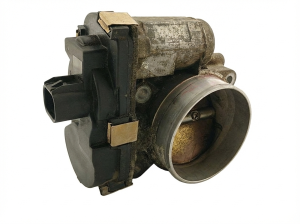
P0222 on a Pontiac G6 almost always means the electronic throttle body is failing or its wiring is damaged. This triggers the 'Reduced Engine Power' warning. The most common fix is to replace the entire throttle body assembly, which costs about $100-$250 for the part. GM issued a Special Coverage Adjustment (14582) for this issue, extending the warranty to 10 years/120,000 miles, though it has now expired for all affected vehicles.
- P0222 on a Pontiac G6 will almost always trigger the 'Reduced Engine Power' warning, making the car unsafe to drive in traffic.
- The most likely cause is a failed electronic throttle body assembly. Don't just clean it; the problem is usually internal electronics.
- Before buying a new throttle body, always inspect the wiring harness leading to it for visible damage, as this is the second most likely cause.
- After replacing the throttle body, you must perform an idle relearn procedure for the car to run correctly.
- This code is often accompanied by P2135, P1516, or P0120, all of which point to the same throttle system fault.
What's Unique About the 2005-2010 Pontiac G6
The Pontiac G6, sharing the GM Epsilon platform with the Chevrolet Malibu and Saturn Aura, is notorious for issues with its electronic throttle control system. The primary symptom for G6 owners is the 'Reduced Engine Power' message, which is most frequently caused by an electronic failure inside the throttle body assembly itself. This issue was so common that GM issued Special Coverage Adjustment #14582, which extended the warranty on the throttle body to 10 years or 120,000 miles for 2008-2010 G6 models, among others. While P0222 points to a low voltage fault, it's often seen with or is a symptom of the same root cause as the more common P2135 (Throttle Position Sensor Correlation) code on this platform.
Symptoms You May Notice
- "Reduced Engine Power" message displayed on the dashboard.
- "Service Traction Control" or "Service Stabilitrak" message may also appear.
- Check Engine Light is on.
- Severely limited acceleration (limp mode).
- Unresponsive or dead accelerator pedal.
- Unstable, rough, or high idle, sometimes revving on its own.
- Hesitation or stalling when accelerating or coming to a stop.
- Replacing the accelerator pedal sensor when the problem is actually a faulty throttle body or wiring.
- Cleaning the throttle body. While not harmful, the issue on the G6 is almost always an electronic failure of the internal sensors, so cleaning carbon buildup will not solve the P0222 code or the related P2135 code.
Most Likely Causes
- Faulty Electronic Throttle Body Assembly 🔴 High Probability → Shop Fuel Injection Throttle Body This is a very common failure point on the G6 and related GM vehicles. The internal throttle position sensors (TPS) wear out or fail electronically, causing incorrect voltage signals. The failure is so prevalent that GM issued Special Coverage Adjustment #14582 for 2008-2010 models.
How to confirm: With a scan tool, monitor the live data for TPS Sensor 1 and TPS Sensor 2. As you slowly press the accelerator (with the key on, engine off), the voltage readings should be smooth and correspond to each other (one typically sweeps up while the other sweeps down). If Sensor 2's voltage is stuck low (e.g., at 0V), drops out, or is erratic, the throttle body is faulty. The code is set when the PCM sees a voltage below approximately 0.3-0.5V from sensor 'B'.
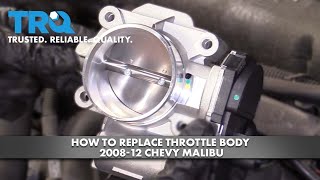
Typical fix: Replace the entire throttle body assembly. 🎬 Watch: Step-by-step throttle body replacement on a G6 2.4L After replacement, a throttle idle relearn procedure must be performed. This can often be done without a scan tool by letting the engine idle for 3 minutes, turning the ignition off for 60 seconds, and then idling for another 3 minutes.
Est. part cost: $100-$260 - Damaged Wiring Harness or Connector 🟡 Medium Probability The wiring harness leading to the throttle body connector is susceptible to chafing, corrosion, and breaking from engine vibration and heat over time. The wires can break internally near the connector, even if they look fine from the outside.
How to confirm: Visually inspect the wires going into the throttle body connector for any signs of damage, exposed copper, or corrosion. With the engine running or key on, gently wiggle the connector and harness; if this causes the engine to stumble, the code to appear/disappear, or the live data on a scan tool to jump, you have found the problem. 🎬 See how to diagnose and fix intermittent wiring harness issues Using a multimeter, backprobe the connector to verify the 5V reference, ground, and signal wires.
Typical fix: Repair the broken or shorted wire(s). If the damage is at the connector itself, a new connector pigtail (e.g., ACDelco PT2628, Dorman 645-163) may need to be spliced in.
Est. part cost: $15-$50 - Faulty Accelerator Pedal Position (APP) Sensor ⚪ Low Probability → Shop Accelerator Pedal Assembly While less common than the throttle body, the APP sensor can also fail. A related issue is water intrusion into the IP-to-body harness connector in the driver's side kick panel, which can cause APP sensor codes like P2138, as noted in TSB 07-06-04-019E.
How to confirm: Using a scan tool, monitor the live data for APP Sensor 1 and APP Sensor 2. As you press the gas pedal, the voltage readings should be smooth and consistent. If a sensor shows a dropout or erratic signal, the pedal assembly is the likely cause.
Typical fix: Replace the entire accelerator pedal assembly, as the sensor is integrated into it. Before replacing, inspect the C206 connector in the driver's kick panel for water damage or corrosion.
Est. part cost: $50-$120
Rare But Worth Checking
- Faulty Powertrain Control Module (PCM): → Shop Engine Control Module (ECM) This should only be considered after the throttle body, pedal sensor, and all related wiring have been thoroughly tested and confirmed to be good. A PCM failure is uncommon.
- Poor Ground Connection (G105): A corroded or broken ground connection can cause a host of electrical issues, including throttle body codes. On some GM platforms, ground G105, which serves the ECM and TCM, is a known weak point where wires break inside the crimped terminal.
Diagnosis Steps
- Connect an OBD-II scanner to read the trouble codes and check for any other related codes like P2135, P1516, or P0120.
- Perform a thorough visual inspection of the wiring harness and connector at the throttle body. Look for any chafed wires, loose connections, or corrosion. Pay close attention to the area where the harness may rub against other components.
- Using the live data function on your scan tool, monitor the voltage readings for TPS Sensor 1 and TPS Sensor 2. Both should show a smooth, linear change as the pedal is pressed. Any jumps, dropouts, or a fixed low reading on Sensor 2 points to a fault.
- Perform a 'wiggle test': With the engine idling (if possible) or key-on-engine-off, gently move the wiring harness connected to the throttle body while watching the live data. If this causes a significant voltage fluctuation or triggers the 'Reduced Engine Power' light, the wiring is faulty.
- If the throttle body and its wiring seem okay, repeat the live data test for the Accelerator Pedal Position (APP) sensors to rule out a faulty pedal assembly.
- Inspect the IP-to-body harness connector (C206 on some models) in the driver's side kick panel for any signs of water intrusion or corrosion, as outlined in TSB 07-06-04-019E.
- If all sensors and wiring test good, the final, though rare, possibility is a fault within the Powertrain Control Module (PCM).
Parts You'll Likely Need
- Electronic Throttle Body Assembly
(OEM #12609500 (For 3.5L V6), 12615503 (For 2.4L L4 & 3.6L V6))— This is the most frequent cause of P0222 on the Pontiac G6. The internal sensors fail, and the entire unit must be replaced.
Trusted brands: ACDelco, Bosch, Hitachi, Dorman
OEM price range: $200-$300
Aftermarket price range: $100-$180 - Throttle Body Connector Pigtail
(OEM #ACDelco PT2628 / GM 19256341 (8-wire))— Needed if the wiring is damaged right at the connector, which is a common point of failure from vibration and heat.
Trusted brands: ACDelco, Dorman (e.g., 645-163)
OEM price range: $30-$50
Aftermarket price range: $15-$30
Related Codes That Often Appear With This One
- P2135 — This code indicates a 'Throttle/Pedal Position Sensor/Switch A/B Voltage Correlation' error. It is extremely common to see this with throttle body issues on the G6, as it means the two internal sensors are disagreeing with each other. P0222 is often a specific fault that contributes to the P2135 correlation error. 🎬 Watch: Understanding the P2135 code and reduced engine power
- P1516 — This GM-specific code relates to 'Throttle Actuator Control (TAC) Module Throttle Actuator Position Performance'. It indicates a problem between what the computer is commanding the throttle to do and what it's actually doing, often pointing back to a faulty throttle body.
- P0120 — This is a generic code for 'Throttle/Pedal Position Sensor/Switch 'A' Circuit'. Seeing it with P0222 strongly suggests a problem with the throttle body assembly, as both sensor circuits are showing faults.
Technical Service Bulletins (TSBs) & Recalls
- TSB #14582: Special Coverage Adjustment for the throttle body.
- TSB #07-06-04-019E: Details water intrusion at the C206 connector causing APP sensor codes.
Platform-Specific Known Issues
- GM Special Coverage Adjustment #14582: GM acknowledged the high failure rate of the throttle body by issuing this special coverage for 2008-2010 G6 models (and others), extending the warranty to 10 years or 120,000 miles. This program has since expired but confirms the widespread nature of the problem.
- Wiring Harness Chafing: The wiring harness leading to the throttle body is known to rub and chafe against other engine components, leading to short circuits or broken wires that cause P0222 and P2135. A video by a mechanic on a 2007 G6 specifically showed a short in this harness as the root cause.
- Water Intrusion at Kick Panel Connector: TSB 07-06-04-019E details a problem where water leaks into the driver's side kick panel and corrodes the IP-to-body harness connector (C206). This can cause APP sensor codes like P2138, which can present with similar symptoms to P0222.
Mechanic-Grade Diagnostic Values
- TPS Sensor 'B' (TPS2) Signal Voltage — expected: Smoothly sweeps from ~0.2-1.0V at closed throttle to ~4.0-4.8V at wide-open throttle (Key On, Engine Off).. Failure: Voltage is stuck below the PCM's minimum threshold, typically <0.5V or <0.3125V.
- 5-Volt Reference at Throttle Body Connector — expected: 4.8V to 5.2V between the 5V reference wire and the low reference (ground) wire.. Failure: Voltage is near 0V or significantly lower than 4.8V, indicating a wiring issue or a problem with the PCM.
- Throttle Body Connector Pin Voltages (Example GM Pinout) — expected: Pin B (5V Ref): ~5V. Pin H (Low Ref): ~0V. Pin D (TPS2 Signal): Varies with throttle position.. Failure: Incorrect voltages on any pin point to a wiring or PCM issue rather than the throttle body itself.
Scan Tool Commands That Help
- Manual Procedure (No Scan Tool): Idle Learn / Throttle Relearn Procedure — Required after replacing the throttle body or disconnecting the vehicle's battery to reset the learned idle position. Start the engine and idle in Park for 3 minutes, turn the engine off for at least 60 seconds, then restart and idle for another 3 minutes.
- GM Tech2 / GDS2 or equivalent professional scanner: Throttle/Idle Learn Function — To command the PCM to perform an automated idle learn procedure. This is a more direct method than the manual procedure and is used in a professional shop setting after throttle body replacement.
Wiring & Ground Locations
- C206 — Above the left front (driver's side) kick panel, connecting the Instrument Panel (IP) harness to the main body harness.. This connector is a known point for water intrusion from A-pillar or sunroof drain leaks. Corrosion here can cause APP sensor codes (like P2138) which have identical symptoms to P0222, leading to misdiagnosis. This is detailed in TSB 07-06-04-019E.
- Throttle Body Connector — Directly on the electronic throttle body assembly.. This is the primary connection for both throttle position sensors and the throttle actuator motor. Wires are known to chafe or break near the connector due to engine vibration and heat, causing intermittent or constant low voltage signals.
- G105 — Typically located on or near the engine block or transmission bellhousing, serving as a primary ground for the engine and transmission control modules.. A poor ground at this location can cause a floating ground reference for the PCM, leading to erratic and incorrect voltage readings from various sensors, including the TPS, even if the sensor and its direct wiring are perfectly fine.
Real Owner Repair Stories
- GMTNation forum user '808_LS_EXT' (2004 Buick Rainier 4.2L I6 (Similar GM drive-by-wire system)) — P0222 code and 'Reduced Engine Power' message after cleaning the throttle body.
❌ Tried (didn't work) Swapping the entire throttle body with a known-good one from another vehicle did not fix the problem.
✅ What actually fixed it The problem was diagnosed as a wiring or connector pin issue. Another user provided the specific pinout for testing: checking for 5V reference between pins B and H, and then checking the signal voltage on pin D. The implication is that a fault was found in the wiring harness, not the part itself.
OEM Part Supersession History
12577029→12609500— Standard part revision and improvement by the manufacturer.
Heads up: These parts are interchangeable for the specified 3.5L V6 engine.12595829, 12618735→12615503— Standard part revision and improvement by the manufacturer.
Heads up: These parts are interchangeable for the specified 2.4L I4 and 3.6L V6 engines.
Model Year Variations Within This Range
- 2008-2010: These model years were covered by GM's Special Coverage Adjustment #14582 for throttle body replacement, extending the warranty to 10 years/120,000 miles. This suggests the failure was either more prevalent or officially acknowledged for these later years.
Diagnostic Flowchart
Other Known Issues on This Vehicle
Issues unrelated to this code that are worth knowing about as an owner of this generation:
- Electric Power Steering (EPS) Failure / Clunking 🔴 High — Very common, often occurs around 70,000-100,000 miles. Can manifest as a clunking noise from the intermediate shaft or a sudden loss of power assist. (Ref: GM Recall #14113 (for loss of steering assist) covered many 2005-2009 G6 models.)
- Transmission Control Module (TCM) Failure / Shifting Problems 🟠 Medium — Common in models with the 4-speed automatic (4T45-E). Symptoms include harsh shifting, getting stuck in gear, or failure to shift. Often caused by failed solenoids inside the transmission or a faulty TCM.
- BCM Connector / Electrical Gremlins 🟠 Medium — A poor connection at the Body Control Module (BCM) connector can cause various strange electrical issues, such as tail lights not working. Reseating the connector and applying low-voltage dielectric grease is a common fix.
- Sunroof Drain Clogs and Water Leaks 🟡 Low — The sunroof drain tubes are prone to clogging, which can cause water to leak into the cabin, often into the A-pillar and kick panel areas, potentially causing electrical issues like those mentioned in TSB 07-06-04-019E.
- Faulty Underhood Fuse Block 🟠 Medium — The underhood fuse block can develop internal connection problems, leading to intermittent no-start conditions or codes like P1682 (Ignition Circuit). The entire block may require replacement.
Used vs. New Parts: Buying Guide for This Vehicle
When a used part is the smart pick: A used part is generally NOT recommended for the electronic throttle body due to its extremely high failure rate on this platform. A used accelerator pedal assembly is a much safer choice as it fails less often. A used throttle body should only be considered if it's from a very low-mileage donor and can be tested or has a good return policy.
Donor-vehicle mileage cap: roughly under 50000 miles for the part to have meaningful remaining life.
What to inspect on the donor part:
- For a throttle body, inspect for a clean throttle plate and bore, which suggests a well-maintained engine.
- Check for any physical damage to the plastic connector housing or pins.
- Ensure the butterfly valve moves smoothly without binding (if it can be moved manually).
- Ask for the donor vehicle's VIN to verify it wasn't part of a flood or major accident.
OEM-only on this vehicle (don't cheap out):
- Electronic Throttle Body Assembly
Aftermarket brands forum-validated for this vehicle:
- Bosch
- Hitachi
- ACDelco (OEM)
Brands owners have reported issues with on this vehicle:
- Unnamed or 'white-box' brands from online marketplaces are a significant gamble and often fail prematurely. It is better to pay more for a reputable brand or genuine OEM part to avoid repeating the repair.
Real Owner Stories
Aggregated from forums and TSBs cited above. Mileages and costs reflect what owners reported in those sources.
2007 G6
Symptoms: Vehicle was setting codes P0222 and P2135.
What fixed it: The root cause was found to be a short in the wiring harness leading to the throttle body where it had been chafing against other components. Repairing the wiring resolved the issue.
Source hint: vehicle_specific_issues: Wiring Harness Chafing
2006 G6
Symptoms: Classic symptoms of 'Reduced Engine Power' message, an unresponsive accelerator pedal, and a high idle.
What fixed it: The issue was linked to throttle body codes P0220 and P0120. The standard fix for this common failure is replacing the throttle body assembly.
Source hint: Reddit (r/cars)
Pontiac G6
Symptoms: The 'Reduced Engine Power' message appeared on the dashboard, accompanied by severely limited acceleration (limp mode).
What fixed it: Throttle body replacement is the standard fix for this extremely common issue on the G6.
Source hint: g6ownersclub.com
Pontiac G6
Symptoms: Owner was troubleshooting a P0220 code that appeared after they had already replaced the Accelerator Pedal Position (APP) sensor to fix a P2135 code.
What fixed it: A mechanic advised that since the APP sensor was new and P0220 was the only code present, the problem was likely a wiring issue between the throttle body and the PCM, or a faulty PCM itself.
Source hint: 2CarPros.com Forum Thread
Related OBD-II Codes
Frequently Asked Questions
My 2009 Pontiac G6 is showing 'Reduced Engine Power'. Was this common enough for GM to issue a recall or warranty extension?
After replacing the throttle body on my G6, does the computer need to be reprogrammed with a special tool?
I'm getting P0222 and also have a water leak near the driver's side kick panel. Could these be related?
The mechanic says the wiring connector to the throttle body is bad. What is the part number for a replacement pigtail?
Is the P0222 code and 'Reduced Engine Power' issue also common on the Chevy Malibu?
How can I test if the throttle body is actually bad on my G6 before buying a new one?
Helpful Videos

We Have This Part in Stock

The information in this article is provided for general reference and educational purposes only. Vehicle specifications, procedures, and part compatibility can vary by production date, trim level, and region. Always consult your vehicle's factory service manual and verify part numbers before purchasing or performing repairs. Safety-critical components such as airbags, seat belts, and braking systems should be installed by a qualified professional.
- Pontiac G6:
- 🧭 Diagnostic Flowchart
- 🎬 Helpful Videos
- 🛍️ Shop This Part
- What's Unique About the 2005-2010 Pontiac G6
- Symptoms You May Notice
- Most Likely Causes
- Rare But Worth Checking
- Diagnosis Steps
- Parts You'll Likely Need
- Related Codes That Often Appear With This One
- Technical Service Bulletins (TSBs) & Recalls
- Platform-Specific Known Issues
- Mechanic-Grade Diagnostic Values
- Scan Tool Commands That Help
- Wiring & Ground Locations
- Real Owner Repair Stories
- OEM Part Supersession History
- Model Year Variations Within This Range
- Other Known Issues on This Vehicle
- Used vs. New Parts: Buying Guide for This Vehicle
- Real Owner Stories
- 2007 G6
- 2006 G6
- Pontiac G6
- Pontiac G6
- Related OBD-II Codes
- Frequently Asked Questions
- 🎟️ Get 5% Off