

P0222 on 2005-2012 Porsche 911: Throttle Position Sensor Circuit Low Causes and Fixes
On a 2005-2012 Porsche 911, code P0222 is most often caused by a failing throttle body, as the sensor is integrated. Before replacing it, check for low battery voltage and clean the throttle body. A new throttle body costs $250-$500 for the part.
- P0222 on a 997 Porsche 911 indicates a low voltage signal from the secondary throttle position sensor circuit.
- Before buying parts, fully charge your battery and check its voltage; Porsches are sensitive to low voltage.
- The most likely part to fail is the complete throttle body assembly, as the sensor is built-in.
- If a new throttle body doesn't fix it, the accelerator pedal assembly is the next most likely culprit.
- Always use a scan tool to check live data from both the throttle and pedal sensors to pinpoint the fault before replacing parts.
What's Unique About the 2005-2012 Porsche 911
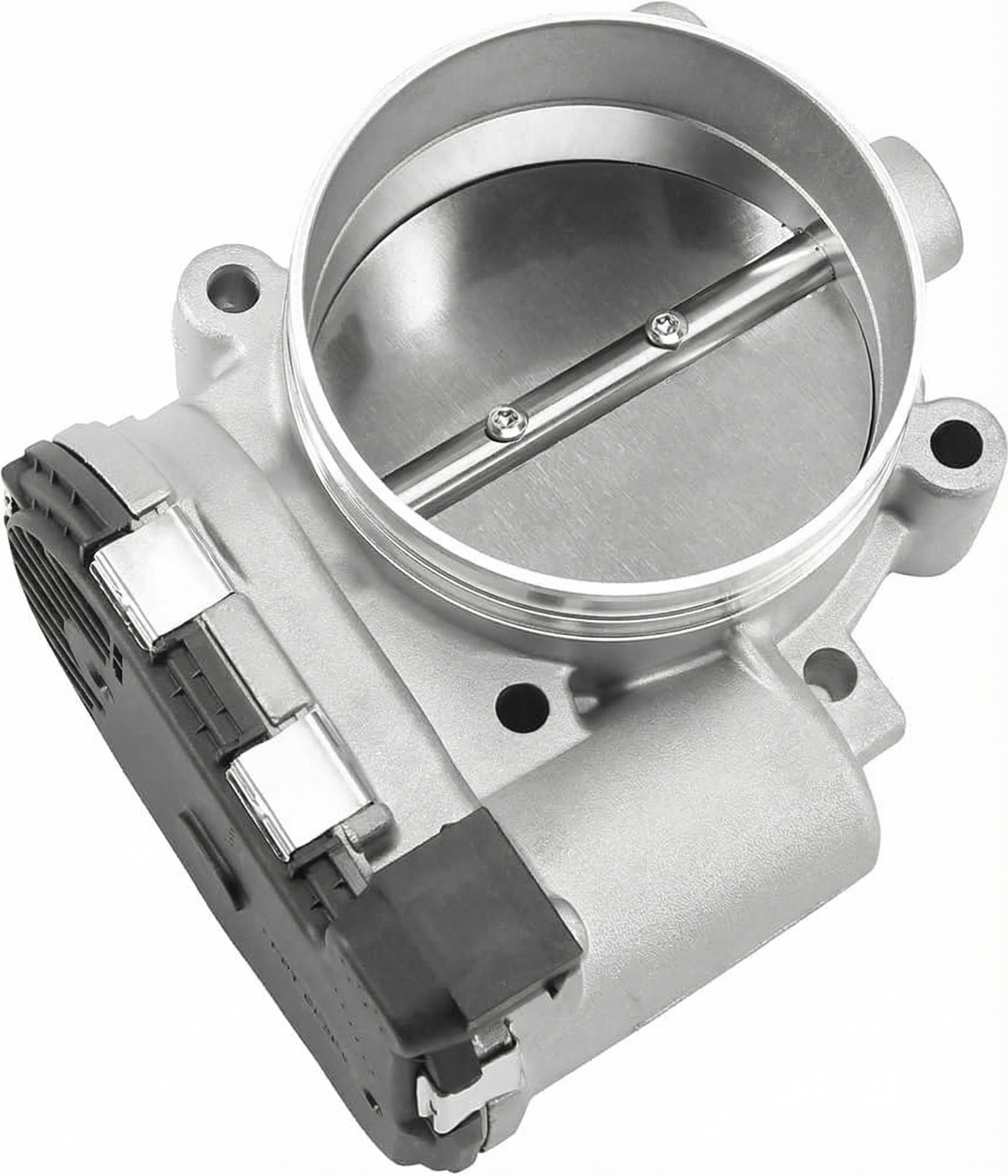
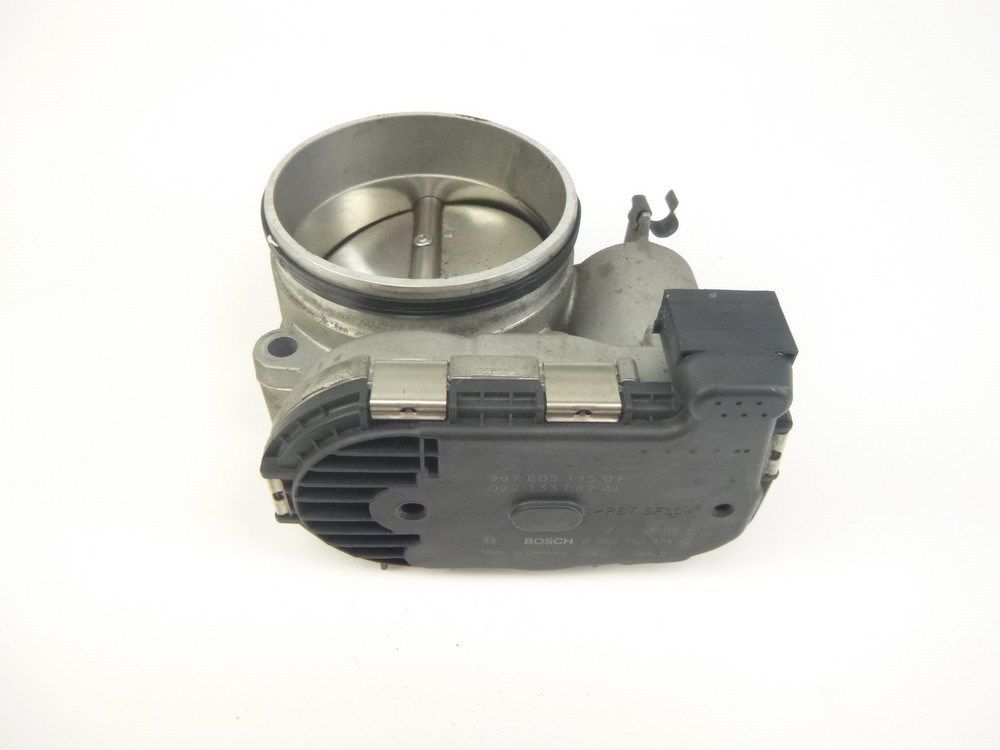
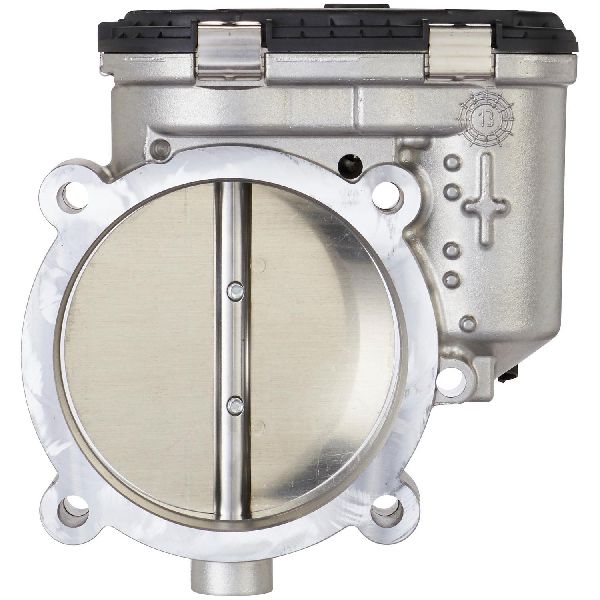
On the 997 generation Porsche 911, the throttle position sensor (TPS) is not a separate, replaceable part. It is integrated into the electronic throttle body assembly, which is typically a Bosch unit. Therefore, if the sensor itself is diagnosed as faulty, the entire throttle body must be replaced. Owner forums show a common diagnostic path of replacing the throttle body, and if that fails, the accelerator pedal assembly, as both contain dual-position sensors that can trigger this fault.
Generation note: The 2005-2012 model years cover the entire Porsche 911 997 generation. This is broken into two sub-generations: the 997.1 (2005-2008) with M96/M97 engines and the 997.2 (2009-2012) with the newer 9A1 direct-injection engines. While the electronic throttle concept is the same, the throttle bodies and part numbers differ between these generations. The diagnostic principles, however, remain identical for both.
Symptoms You May Notice
- Check Engine Light is on
- Vehicle enters a reduced power 'limp mode'
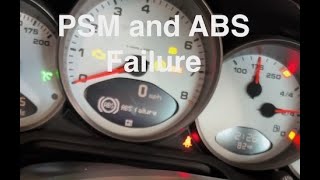
- PSM Failure Warning Light on the dashboard 🎬 See how a failing sensor triggers this warning
- Significantly delayed or poor throttle response
- Hesitation or stumbling during acceleration
- Unstable or high idle
- Engine may be hard to start or stalls
- A Porsche owner on Rennlist reported their P0222 code was misdiagnosed as a faulty Mass Airflow (MAF) sensor by a dealer. Replacing the MAF sensor did not fix the issue. This code points specifically to the throttle control system.
Most Likely Causes
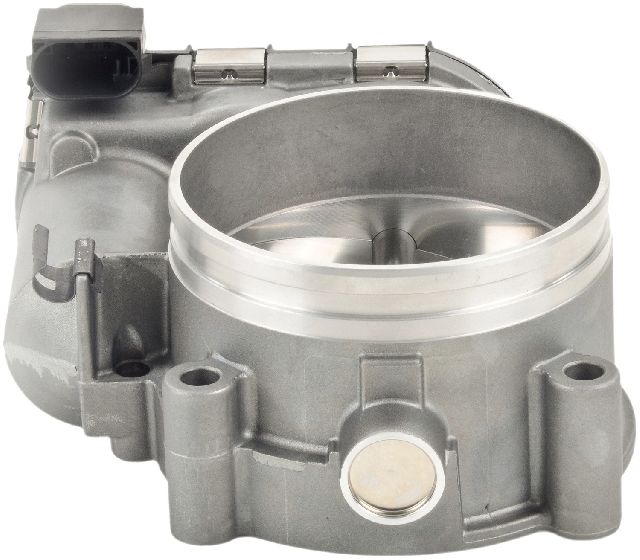
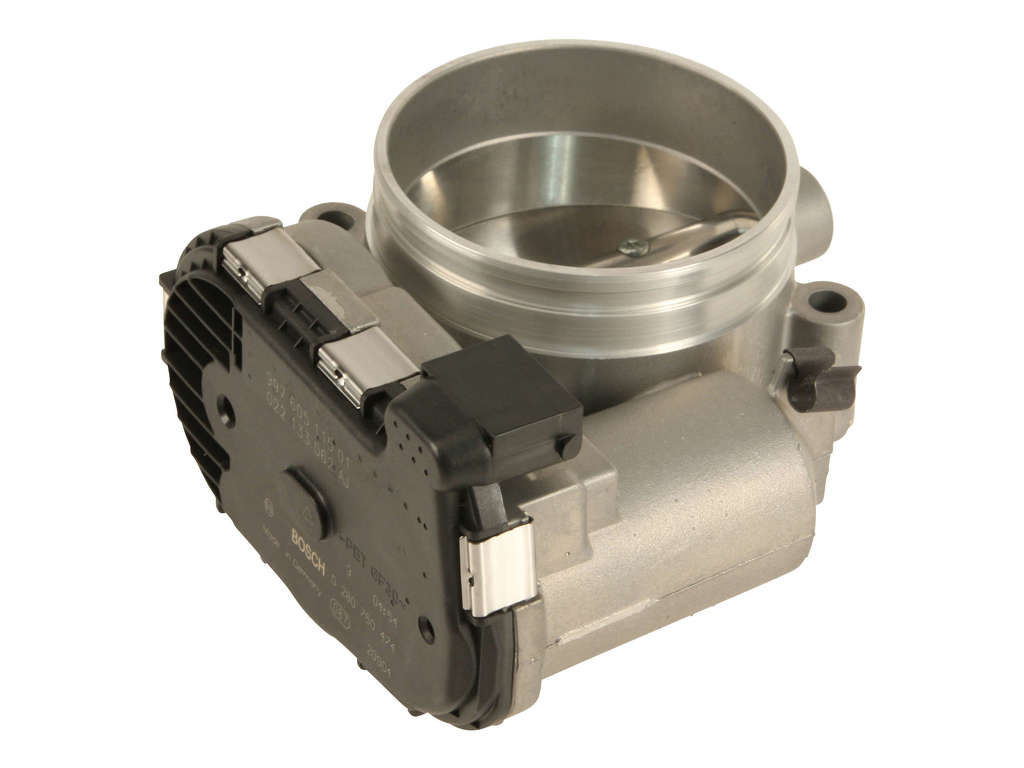
- Faulty Throttle Body Assembly 🔴 High Probability → Shop Fuel Injection Throttle Body The throttle position sensor (TPS) is integrated into the Bosch throttle body and is a common failure point over time due to heat and wear. The internal electronic components, including the motor that controls the butterfly valve and the position sensors, can degrade. It cannot be replaced separately.
How to confirm: After confirming wiring is intact, use a professional scan tool (like Durametric or PIWIS) to monitor the live voltage readings from TPS circuit 'A' and 'B' while manually (engine off) or electronically opening the throttle. A 'B' circuit that is flat, erratic, or reads near zero volts points to a bad sensor within the throttle body.
Typical fix: Replace the entire throttle body assembly. A throttle body adaptation/relearn procedure is required using a compatible scan tool or a specific key-on/key-off procedure.
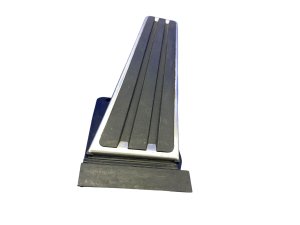
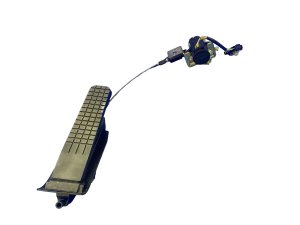
Est. part cost: $250-$500 - Faulty Accelerator Pedal Sensor Assembly 🟡 Medium Probability → Shop Accelerator Pedal Assembly The pedal assembly also contains dual position sensors that can wear out from repeated use. This is a common secondary cause if a new throttle body does not resolve the issue.
How to confirm: Use a scan tool to monitor the live data for 'Pedal Encoder Potentiometer 1 and 2'. If one of the circuits shows 0 volts or does not change smoothly and proportionally as the pedal is pressed, the pedal assembly is faulty.
Typical fix: Replace the complete accelerator pedal assembly. It is typically a straightforward bolt-in replacement inside the cabin.
Est. part cost: $150-$300 - Low Battery Voltage ⚪ Low Probability Porsches are notoriously sensitive to battery voltage. A weak or dying battery, or a faulty alternator cable on early 997s, can cause numerous, seemingly unrelated electronic faults and codes, including throttle body errors.
How to confirm: With the car off for several hours, measure the battery voltage directly at the terminals. A healthy battery should read 12.6V or higher. A reading below 12.4V indicates a discharged or failing battery that can cause this code. Check for a history of battery-related issues.
Typical fix: Fully charge the battery with a proper charger. If the battery cannot hold a charge or is more than 4-5 years old, replace it. On early 997s, inspect the alternator cable for known issues.
Est. part cost: $200-$350 - Wiring or Connector Issue ⚪ Low Probability Engine bay heat can make wiring insulation brittle over time, and connectors can become corroded or loose. The main connector at the throttle body is the most likely point of failure.
How to confirm: Visually inspect the wiring harness and connector at the throttle body. Check for any signs of damage, chafing, or corrosion on the pins. Perform a 'wiggle test' on the harness while monitoring sensor voltage on a scan tool to see if the reading fluctuates.
Typical fix: Repair the damaged section of the wiring harness or clean/replace the faulty connector.
Est. part cost: $10-$100
Rare But Worth Checking
- DME (ECU) Software Glitch: A Rennlist user with a different Porsche model reported that after extensive parts replacement, a DME software update from the dealer was the ultimate fix for a P0222 code. While rare, it's a possibility if all hardware has been ruled out.
- Dirty Throttle Body: → Shop Fuel Injection Throttle Body Heavy carbon buildup can cause the throttle plate to stick or move improperly, which might lead to the sensors reporting an error. Cleaning the throttle body is an easy and inexpensive first step before replacing parts. An adaptation may be needed after cleaning.
Diagnosis Steps
- Check Battery Voltage: Before any other step, ensure the battery is fully charged and reading at least 12.6V when the car is off. Charge or replace the battery if necessary. A weak battery is a known cause of spurious electronic faults on these cars.
- Scan for Codes: Use a Porsche-specific scanner (Durametric, PIWIS, etc.) to read all codes from the DME and note them. Pay attention to any other throttle-related codes.
- Inspect and Clean Throttle Body: Remove the intake boot and inspect the throttle body for carbon buildup. Clean it thoroughly with a throttle body cleaner and a soft cloth, being careful not to force the throttle plate.
- Inspect Wiring: Visually inspect the wiring harness and connector at the throttle body and the accelerator pedal for any obvious damage, corrosion, or loose connections. Perform a 'wiggle test' on the connectors while the engine is running to see if it affects idle.
- Analyze Live Data: Use a Porsche-capable scan tool to view live data for both the throttle position sensors (at the throttle body) and the accelerator pedal position sensors. Actuate the pedal and watch for smooth, corresponding voltage changes. A sensor that reads 0V, a fixed value, or is erratic is faulty.
- Isolate the Fault: Based on the live data, determine if the fault lies with the throttle body assembly or the accelerator pedal assembly.
- Replace the Faulty Component: Replace either the throttle body or the accelerator pedal as diagnosed in the previous step.
- Perform Relearn/Adaptation: After replacement or cleaning, perform a throttle body adaptation. For 997.1, this can often be done by turning the ignition to the 'on' position for 60 seconds, then off for 10 seconds. For 997.2, a scan tool like Durametric or PIWIS is typically required. Clear all codes.
- Test Drive: Perform a test drive to confirm the fix and ensure the code does not return.
Parts You'll Likely Need
- Throttle Body Assembly
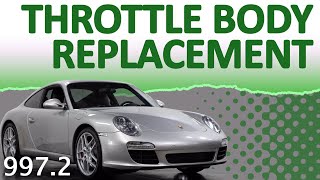
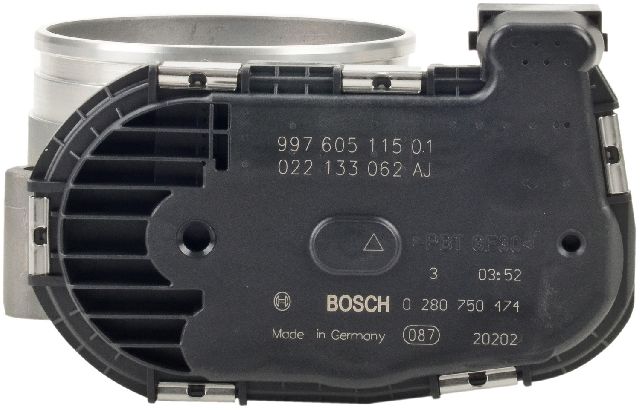
(OEM #997.1 (2005-08): 997-605-115-01 (74mm) | 997.2 (2009-12): 9A1-110-060-03 (or similar, check VIN))🎬 Watch this step-by-step 997.2 throttle body replacement guide — This is the most common failure. The throttle position sensor (TPS) is integrated into this part and cannot be purchased separately for the 997.
Trusted brands: Bosch, Porsche (OEM)
OEM price range: $400-$600
Aftermarket price range: $250-$450 - Accelerator Pedal Assembly
(OEM #Varies by year and transmission (e.g., 997-423-023-06), confirm with VIN.)— This is the second most likely cause if the throttle body replacement does not solve the issue. It contains the pedal position sensors.
Trusted brands: Bosch, Porsche (OEM)
OEM price range: $250-$350
Aftermarket price range: $150-$250
Related Codes That Often Appear With This One
- P0121 — This code relates to 'Throttle/Pedal Position Sensor 'A' Circuit Performance'. It often appears with P0222 because if the DME sees a problem with one throttle sensor circuit, it may flag a performance issue with the corresponding circuit.
- P0122 — This is the 'Circuit Low Input' code for the 'A' sensor. Seeing both P0122 and P0222 could indicate a more widespread wiring problem, a connector issue affecting both circuits, or a complete throttle body failure.
Platform-Specific Known Issues
- Owner Experience: Throttle Body Replacement Fix: → Shop Fuel Injection Throttle Body A user on Rennlist with a 997.1 experienced limp mode and PSM failure lights with code P0222. After cleaning the throttle body did not work, they replaced it with a new Bosch unit (P/N 997-605-115-01). The repair, combined with a battery disconnect/reconnect to reset adaptations, completely solved the problem.
- Throttle Body Adaptation Differences: → Shop Fuel Injection Throttle Body Forum discussions on 6SpeedOnline and Rennlist highlight a key difference in the throttle body relearn procedure. For 997.1 models, a manual procedure of leaving the key in the 'on' position for 60 seconds is often successful. However, for 997.2 models, owners report that a scan tool like Durametric or PIWIS is required to perform the adaptation.
Mechanic-Grade Diagnostic Values
- Throttle Position Sensor (TPS) Signal Voltage — expected: The two sensors should have opposing voltages. Sensor 'A' should read approx. 0.5V at idle and sweep smoothly to ~4.5V at wide-open throttle. Sensor 'B' should read ~4.5V at idle and sweep to ~0.5V at wide-open throttle.. Failure: A P0222 code indicates the signal from sensor 'B' is lower than expected. A multimeter test showing voltage near zero, a non-smooth sweep, or voltage that drops out or spikes indicates a failed sensor.
- TPS Reference Voltage at Connector — expected: Approximately 5.0V DC on the reference wire from the DME with the key on, engine off.. Failure: Significantly lower or no voltage on the reference pin points to a wiring issue or a problem with the DME's 5V reference circuit, not the sensor itself.
Scan Tool Commands That Help
- PIWIS (Porsche Dealer Tool): Throttle valve adaptation — Required after replacing or thoroughly cleaning the throttle body on a 997.2 model to ensure correct idle and throttle response. The path is: DME control unit -> Maintenance/repairs -> Adaptations -> Throttle valve adaptation.
- Durametric or Foxwell NT5xx: Throttle Body Adaptation / Alignment (TBA) — A capable aftermarket tool can perform the same adaptation as PIWIS on 997.2 models, which is necessary after replacement. For 997.1 models, this is an alternative to the manual key-on procedure.
- Any Porsche-capable Scan Tool: Live Data Monitoring (Throttle/Pedal Position) — This is the primary diagnostic step to confirm the fault. Monitor the voltage or percentage values from both throttle position sensors and both accelerator pedal sensors while operating the pedal. This will show if the sensor reading is erratic, dropping out, or not responding, isolating the fault to either the throttle body or the pedal assembly.
Wiring & Ground Locations
- DME Connector IV (997.1) — At the DME (Engine Control Unit), which is located in the rear of the passenger compartment.. This connector contains the pins for the accelerator pedal sensor. Specifically, Pin 27 is 'Ground, pedal sensor 1' and Pin 28 is 'Signal, pedal sensor 1'. A fault here could mimic a failed pedal assembly.
- DME Connector I (997.1) — At the DME (Engine Control Unit).. This connector contains the pins that drive the throttle body motor itself. Pin 7 and Pin 9 are for the 'Throttle motor actuator'. A problem in this part of the harness could cause throttle control issues.
- Engine Ground Points (e.g., GP11) — There are several key ground points in the engine compartment bolted to the chassis and engine block. For example, on a 996 (similar architecture), GP11 is at the left rear of the engine compartment and grounds ignition coils.. While not specific to the throttle body, a loose or corroded main engine or sensor ground can introduce electrical noise and voltage drops, causing a variety of sensor codes, including P0222. Checking major ground straps is a valid diagnostic step for persistent, hard-to-trace electronic faults.
Real Owner Repair Stories
- Rennlist user post (Porsche Panamera Turbo S 4.8L V8 (Note: Not a 911, but a relevant Porsche case)) — Intermittent P0121 and P0222 codes, car runs fine then suddenly enters limp mode.
❌ Tried (didn't work) Replaced accelerator pedal assembly at Porsche dealership., Replaced throttle body at Porsche dealership.
✅ What actually fixed it A DME software update. The dealer reprogrammed the DME with the latest software version, and the problem did not return. - Rennlist user post (2006 Porsche 911 Carrera S (997.1)) — Lost all torque and acceleration, went into limp mode, PSM failure light.
❌ Tried (didn't work) Initial diagnosis pointed to throttle body.
✅ What actually fixed it Replacing the throttle body assembly and performing a throttle body alignment (TBA) with a Foxwell NT520 scanner resolved the codes and symptoms. The user also noted a separate issue of bouncing idle was completely fixed by the new throttle body.
When the Usual Fixes Don't Work
- In one documented case for a Porsche with P0222, replacing both the throttle body and the accelerator pedal assembly—the two most common hardware fixes—failed to resolve the issue. The ultimate solution was a DME software update performed by a Porsche dealer, highlighting a rare but possible software-based root cause that mechanics might miss.
OEM Part Supersession History
997-605-115-00 (and older 996 PNs)→997-605-115-01— Standard part revision and consolidation. This part number also replaces earlier 996 and Cayenne parts.
Heads up: This part is for the 997.1 generation (M96/M97 engines). It is not compatible with 997.2 (9A1 engines), which use a different throttle body (e.g., 9A1-110-060-03).
Model Year Variations Within This Range
- 2009-2012 (997.2 models): Throttle body adaptation (relearn) MUST be performed with a Porsche-specific scan tool like PIWIS, Durametric, or Foxwell. The manual key-on/key-off procedure that works for 997.1 models is not effective for the 997.2 DFI cars.
- 2005-2008 (997.1 models): Throttle body adaptation can often be successfully performed without a scan tool by turning the ignition to the 'on' position for 60 seconds, off for 10 seconds, and then starting the car.
Diagnostic Flowchart
Other Known Issues on This Vehicle
Issues unrelated to this code that are worth knowing about as an owner of this generation:
- IMS Bearing Failure (997.1) 🔴 High — Affects 2005-2008 models with M96/M97 engines. The failure rate is debated but is a catastrophic, engine-destroying event. Early 2005 models have a smaller, more failure-prone bearing. Later 2006-2008 models have a larger, more robust but non-serviceable bearing with a much lower failure rate.
- Cylinder Bore Scoring (997.1) 🔴 High — Primarily affects 3.6L and 3.8L M96/M97 engines in 997.1 models, especially in colder climates. Symptoms include a rhythmic ticking noise when cold, increased oil consumption, and a sooty exhaust tip on one side. Can lead to a full engine rebuild, costing $15,000-$30,000+.
- Coolant Pipe Failure (997.1 Turbo/GT3) 🔴 High — Affects the Mezger engines in 997.1 Turbo and GT models. The factory-glued coolant pipe fittings can fail without warning, dumping coolant and potentially causing a loss of control if it coats the rear tires. The fix is to have the fittings pinned or welded, which requires engine removal.
- Air-Oil Separator (AOS) Failure 🟠 Medium — Common across all 997 models, but particularly the M96/M97 engines. A failed AOS causes a large cloud of blue/white smoke from the exhaust on startup, high oil consumption, and a rough idle. If it fails completely, it can hydro-lock the engine with oil.
- High-Pressure Fuel Pump (HPFP) Failure (997.2) 🟠 Medium — A well-known issue on the 2009-2012 9A1 direct-injection engines. Failure results in a sudden loss of power, 'Reduced Engine Power' warnings, and difficulty starting. There was a recall or service campaign for some vehicles. (Ref: Possible recall/service campaign (check with dealer))
- Cracked Ignition Coils 🟡 Low — A common maintenance item. Over time, the plastic bodies of the coil packs crack due to heat cycles, leading to misfires, rough idle, and a check engine light. It's recommended to inspect them during spark plug changes.
Used vs. New Parts: Buying Guide for This Vehicle
When a used part is the smart pick: For this specific fault, buying a used throttle body or accelerator pedal is generally not recommended. Both are electronic components subject to wear and heat cycles, and the failure is often due to internal degradation that is not visible. A used part may have the same issue or fail shortly after installation.
Donor-vehicle mileage cap: roughly under 40000 miles for the part to have meaningful remaining life.
What to inspect on the donor part:
- For Throttle Body: Manually check the throttle plate for any 'slop' or excessive play in the shaft, which indicates mechanical wear.
- For Throttle Body: Ensure the electrical connector pins are clean, straight, and free of any corrosion.
- For Accelerator Pedal: Check for smooth, consistent mechanical travel without any binding or clicking.
- Obtain the VIN of the donor car to verify it had low mileage and is the correct part number for your transmission type (Manual/Tiptronic/PDK).
OEM-only on this vehicle (don't cheap out):
- While not strictly 'OEM-only', using a known quality brand is critical. Avoid unbranded, no-name electronic parts for this system.
Aftermarket brands forum-validated for this vehicle:
- Bosch: For the throttle body, forum consensus is that the Bosch aftermarket part is identical to the Genuine Porsche part, as Bosch is the original equipment manufacturer.
- Soler Engineering: Mentioned on forums as a performance-oriented alternative for the throttle body.
Brands owners have reported issues with on this vehicle:
- Any unbranded or generic 'white-box' electronic parts from online marketplaces should be avoided due to high failure rates and inconsistent quality.
Real Owner Stories
Aggregated from forums and TSBs cited above. Mileages and costs reflect what owners reported in those sources.
2005-2008 Porsche 911 (997.1)
Symptoms: Experienced limp mode and PSM failure lights with code P0222. Attempted cleaning the throttle body but the issue persisted.
What fixed it: Replaced the throttle body with a new Bosch unit (P/N 997-605-115-01) and performed a battery disconnect/reconnect to reset adaptations.
Source hint: Rennlist.com thread cited in 'Owner Experience: Throttle Body Replacement Fix'
Related OBD-II Codes
Frequently Asked Questions
Can I perform the throttle body adaptation on my 997.2 without a scan tool?
Is there a specific part number I should look for when replacing the throttle body on my 997.1?
Could my 911's PSM Failure light be related to code P0222?
I have an early 997; could a simple cable issue cause this throttle code?
Can I just replace the Throttle Position Sensor (TPS) on my Bosch throttle body?
Does this P0222 issue also affect the Porsche Cayman or Boxster?
Helpful Videos
Used OEM Parts in Stock
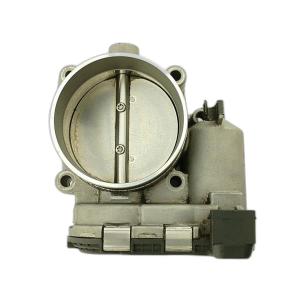
New Aftermarket Parts Available


The information in this article is provided for general reference and educational purposes only. Vehicle specifications, procedures, and part compatibility can vary by production date, trim level, and region. Always consult your vehicle's factory service manual and verify part numbers before purchasing or performing repairs. Safety-critical components such as airbags, seat belts, and braking systems should be installed by a qualified professional.
- Porsche 911:
- 🧭 Diagnostic Flowchart
- 🎬 Helpful Videos
- 🛍️ Shop This Part
- What's Unique About the 2005-2012 Porsche 911
- Symptoms You May Notice
- Most Likely Causes
- Rare But Worth Checking
- Diagnosis Steps
- Parts You'll Likely Need
- Related Codes That Often Appear With This One
- Platform-Specific Known Issues
- Mechanic-Grade Diagnostic Values
- Scan Tool Commands That Help
- Wiring & Ground Locations
- Real Owner Repair Stories
- When the Usual Fixes Don't Work
- OEM Part Supersession History
- Model Year Variations Within This Range
- Other Known Issues on This Vehicle
- Used vs. New Parts: Buying Guide for This Vehicle
- Real Owner Stories
- 2005-2008 Porsche 911 (997.1)
- Related OBD-II Codes
- Frequently Asked Questions
- 🎟️ Get 5% Off