

P0222 on 2015-2022 Ram ProMaster City: Throttle Position Sensor Causes and Fixes
On a 2015-2022 Ram ProMaster City, code P0222 is most often caused by a faulty electronic throttle body. The vehicle may enter a reduced power 'limp mode.' Cleaning the throttle body and checking its electrical connector is a good first step before replacing the entire unit, which is the most common permanent fix.
- P0222 on a Ram ProMaster City indicates a low voltage signal from a throttle position sensor, which will cause the vehicle to enter a 'limp mode'.
- The most common cause is a failure of the entire electronic throttle body assembly, which contains the non-serviceable sensor.
- Checking wiring and cleaning the throttle body are valid first steps, but be prepared to replace the throttle body for a permanent fix.
- This is a shared problem across many FCA vehicles using the 2.4L Tigershark engine.
What's Unique About the 2015-2022 Ram ProMaster City
The Ram ProMaster City uses the 2.4L Tigershark engine, which has an electronic throttle body where the throttle position sensors are integrated into the assembly. This means you cannot replace just the sensor; the entire throttle body must be replaced if the sensor fails. This issue is common across many FCA vehicles that use this engine, including the Jeep Cherokee, Jeep Renegade, Chrysler 200, and Dodge Dart. While the code could also point to the accelerator pedal sensor, experience with this powertrain suggests the throttle body assembly or its connection is the more frequent point of failure.
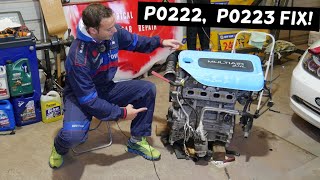
🎬 Watch: How to fix P0222 and P0223 codes on your Ram.Symptoms You May Notice
- Check Engine Light is on
- Flashing Electronic Throttle Control (ETC) or 'red lightning bolt' light
- Vehicle enters 'limp mode' (drastically reduced engine power)
- Poor or no throttle response
- Hesitation or stumbling during acceleration
- Engine is hard to start or stalls, especially when slowing to a stop
- Rough idle
- Replacing the accelerator pedal when the fault is a dirty or bad throttle body.
- Replacing the PCM before thoroughly checking all wiring and connectors between the throttle body, accelerator pedal, and PCM.
- Assuming the throttle body is good after cleaning it, when cleaning only provides a temporary fix for a failing internal sensor.
Most Likely Causes
- Faulty Electronic Throttle Body 🔴 High Probability → Shop Fuel Injection Throttle Body The throttle position sensors (TPS) are integrated into the throttle body assembly. Failure of the internal 'B' circuit sensor requires replacement of the entire unit. This is the most cited cause for this code on this specific powertrain and its platform mates.
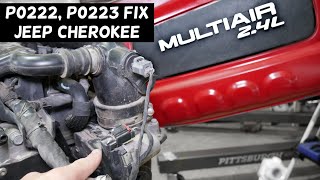
How to confirm: With a scan tool, observe the live data for Throttle Position Sensor B (TPS2). If the voltage is stuck low (typically under 0.5V) and does not change as the throttle plate is manually opened (with the engine off, key on), the sensor is likely bad. Owners of platform-mate vehicles like the Jeep Cherokee have confirmed that cleaning provides only a temporary fix 🎬 Watch: Diagnosing P0222 and P0223 on a Jeep Cherokee platform-mate. before replacement is necessary.
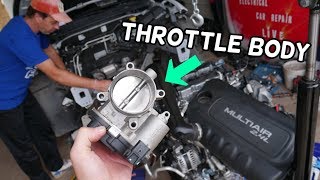
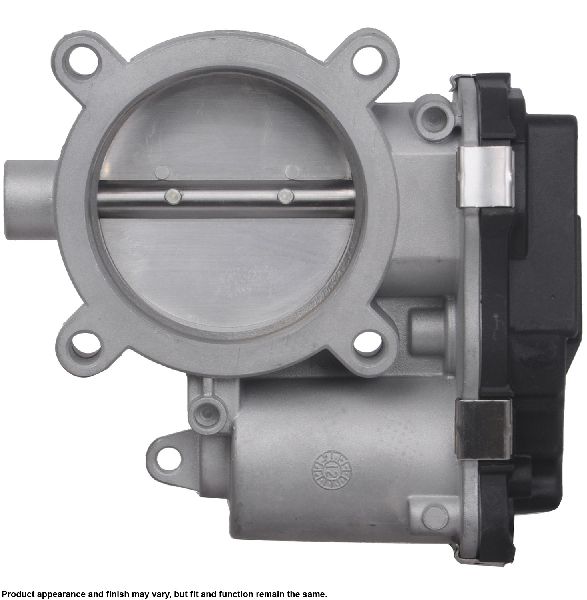
Typical fix: Replace the entire electronic throttle body assembly. The Mopar part number is 04891970AD. 🎬 See this walkthrough for removing and replacing the throttle body. After replacement, a throttle relearn procedure is required, though many systems will relearn automatically or with a non-scan tool procedure.
Est. part cost: $150-$350 - Poor Connection or Damaged Wiring at Throttle Body or Pedal 🟡 Medium Probability → Shop Fuel Injection Throttle Body The connector at the throttle body is subject to engine vibration and heat, which can lead to loose connections or damaged wires over time. Additionally, wiring for the accelerator pedal can become damaged.
How to confirm: Visually inspect the throttle body electrical connector for loose pins, corrosion, or damaged wires. With the engine running, gently wiggle the connector and wiring harness to see if it causes a change in engine behavior. Inspect the wiring coming from the gas pedal assembly for any signs of chafing or rubbing against sharp metal parts under the dashboard.
Typical fix: Clean the connector pins and apply dielectric grease. If wires are damaged, repair or replace the connector pigtail. In one documented case, a user found the accelerator pedal wires were rubbing on sharp metal under the steering wheel, causing a short.
Est. part cost: $10-$50 - Dirty or Carbon-Clogged Throttle Body 🟡 Medium Probability → Shop Fuel Injection Throttle Body Carbon and oil vapor from the PCV system can build up inside the throttle body, restricting the movement of the throttle plate. This can prevent it from closing properly, causing the sensor to report a value the PCM doesn't expect.
How to confirm: Remove the air intake hose from the throttle body and visually inspect the throttle plate and bore for black carbon buildup.
Typical fix: Clean the throttle body bore and plate thoroughly with a dedicated throttle body cleaner and a soft cloth or brush. Do not spray cleaner directly into the electronic components. Note that this is often a temporary fix if the internal sensor is already failing.
Est. part cost: $5-$15 - Faulty Accelerator Pedal Position (APP) Sensor ⚪ Low Probability → Shop Accelerator Pedal Assembly The APP sensor, located on the gas pedal assembly, also uses redundant sensors. While less common than throttle body failure for this code, it can also fail and cause a low voltage signal.
How to confirm: Use a scan tool to monitor live data for both APP sensor circuits. If one circuit shows a smooth sweep from low to high voltage as the pedal is pressed and the other is stuck low, the pedal assembly is likely faulty.
Typical fix: Replace the entire accelerator pedal assembly, as the sensor is integrated into it.
Est. part cost: $70-$150
Rare But Worth Checking
- Faulty Powertrain Control Module (PCM): → Shop Engine Control Module (ECM) This is a last resort. The PCM itself can fail, but this is rare. All other possibilities, especially wiring, should be exhaustively checked before condemning the PCM.
Diagnosis Steps
- Scan for Codes: Read the DTCs and check for any other related codes (e.g., P0122, P0123, P2135). Note the freeze frame data to see the conditions when the code was set.
- Visual Inspection: Inspect the wiring harness and electrical connector at the electronic throttle body. Look for any signs of damage, corrosion, or loose pins. Ensure the connector is seated firmly. Also inspect the accelerator pedal wiring for chafing under the dash.
- Inspect Throttle Body: Remove the intake boot from the throttle body. Check for heavy carbon buildup that could restrict the throttle plate's movement.
- Clean Throttle Body: If dirty, clean the throttle body thoroughly with appropriate cleaner. Clear the codes and test drive. Be aware this may only be a temporary fix.
- Analyze Live Data: Use a scan tool to monitor the voltage from 'TPS B' (TPS2). It should read a low voltage at closed throttle (e.g., ~0.5V - 0.8V) and sweep smoothly upward toward ~4.5V as the throttle opens. If it's stuck low (below ~0.3V), the problem is likely the sensor or wiring.
- Test Accelerator Pedal Sensor: In the same way, check the live data for the accelerator pedal position sensors to ensure they are reading correctly as you press and release the pedal.
- Isolate the Fault: If the wiring and connector appear fine and the sensor voltage is stuck low, the throttle body assembly has likely failed and needs replacement. This is the most common resolution for this code on the 2.4L Tigershark engine.
Parts You'll Likely Need
- Electronic Throttle Body Assembly
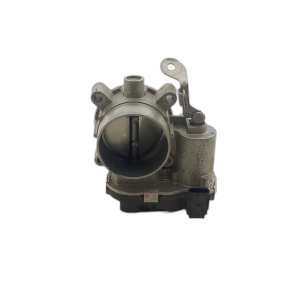
(OEM #04891970AD (supersedes 4891970AC, 4891970AB))— This is the most common cause of P0222 on the 2.4L Tigershark engine. The throttle position sensor is integrated into this part and cannot be replaced separately.
Trusted brands: Mopar, Bosch, Standard Motor Products, Dorman
OEM price range: $250-$385
Aftermarket price range: $95-$250
Related Codes That Often Appear With This One
- P0122 — This code indicates 'Throttle/Pedal Position Sensor/Switch 'A' Circuit Low.' If both sensor circuits fail, you may see both codes together, pointing strongly to a common failure point like the connector or the entire throttle body.
- P0123 — This code is for 'Throttle/Pedal Position Sensor/Switch 'A' Circuit High.' Seeing this with P0222 indicates a serious conflict between the two sensor readings and almost certainly points to a faulty throttle body assembly or its connector.
- P0223 — This code is for 'Throttle/Pedal Position Sensor/Switch 'B' Circuit High.' Seeing it with P0222 could indicate an intermittent wiring short or a very erratic sensor failure.
- P2135 — This code means 'Throttle/Pedal Position Sensor/Switch A/B Voltage Correlation.' It is often set alongside P0123 and P0222, as it directly flags that the two sensor signals do not agree with each other, confirming a fault within the throttle body or its wiring.
Technical Service Bulletins (TSBs) & Recalls
- TSB 09-006-20 REV B / 09-003-23: While not directly for P0222, these bulletins address the widespread excessive oil consumption issue with the 2.4L Tigershark engine. Drivability issues from low oil can sometimes be confused with sensor problems.
- Customer Satisfaction Notification (CSN) W80: An FCA program to inspect for and address excessive oil consumption on affected vehicles, which includes the ProMaster City.
- Warranty Extension XB1: Extends the warranty for issues related to oil consumption on the 2.4L engine to 7 years or 100,000 miles for qualifying vehicles.
Mechanic-Grade Diagnostic Values
- Throttle Position Sensor 'B' (TPS2) Signal Voltage — expected: Approx. 0.5V - 0.8V at closed throttle, sweeping smoothly up to ~4.5V at wide-open throttle (WOT).. Failure: Voltage is stuck below the PCM's threshold, typically < 0.31V, and does not change when the throttle plate is moved.
- 5-Volt Reference Circuit at Throttle Body Connector — expected: 4.5V to 5.2V with key on, engine off.. Failure: Voltage is below 4.5V or absent, indicating a wiring or PCM issue.
- TPS2 Signal Circuit Resistance to Ground — expected: High resistance (OL or MΩ range).. Failure: Low resistance (e.g., < 100 Ohms) indicates a short to ground in the wiring harness.
- Electronic Throttle Body Motor Resistance — expected: 2 - 15 Ohms between the two motor terminals.. Failure: A reading of OL (Open circuit) or near 0 Ohms (short circuit) indicates the internal motor has failed.
Scan Tool Commands That Help
- wiTECH (or equivalent high-end scan tool): ETC Learn (Electronic Throttle Control Learn) — This function is required after replacing the throttle body assembly to calibrate the new part's closed, open, and intermediate position voltages with the Powertrain Control Module (PCM).
- wiTECH (or equivalent high-end scan tool): Throttle Follower Test — This is a diagnostic test to monitor the TPS voltage while the scan tool commands the throttle plate to move. It helps verify if the sensor signals respond smoothly to plate movement, isolating sensor issues from motor issues.
Wiring & Ground Locations
- Throttle Body Connector — On the electronic throttle body, mounted to the intake manifold.. This 6-pin connector is the single point of failure for all signals to and from the throttle body, including the 5V reference, ground, and the two TPS signals. Corrosion or a loose pin here is a common cause of circuit codes. For TPS2, the relevant wires are the 5V supply, the signal wire (K122), and the sensor return/ground (K922).
- Primary Engine/Transmission Ground Strap — A braided strap that connects from the transmission case to a bolt on the driver's side chassis frame rail, often near the transmission mount.. A poor primary engine ground can cause inconsistent sensor readings across the entire engine, including the throttle position sensors. While it would likely cause multiple other codes, it's a foundational check for any electronic issue. Symptoms can include slow cranking and corrupted data signals.
Real Owner Repair Stories
- Reddit user on r/MechanicAdvice (2016 Jeep Cherokee 2.4L (platform mate)) — Rough idle, vehicle dies when slowing to a stop, check engine light, limp mode.
❌ Tried (didn't work) Cleaning the throttle body and performing a relearn procedure (fixed the issue for only 10 minutes).
✅ What actually fixed it Replacement of the entire electronic throttle body assembly. The user reported codes P2172, P0123, and P0222, a combination strongly pointing to internal throttle body failure.
OEM Part Supersession History
4891970AB, 4891970AC→04891970AD— Standard part revision and improvement by the manufacturer.
Heads up: The newer part (AD) is a direct replacement for the older versions (AB, AC) and should be used for all repairs.
Diagnostic Flowchart
Other Known Issues on This Vehicle
Issues unrelated to this code that are worth knowing about as an owner of this generation:
- Excessive Engine Oil Consumption 🔴 High — Very common across all platforms using the 2.4L Tigershark engine. Can manifest at various mileages. Consumption of 1 quart per 1,000-2,000 miles is reported. (Ref: TSB 09-006-20 REV B; CSN W80; Warranty Extension XB1.)
- Transmission Shifts to Neutral Unexpectedly 🔴 High — Affects 2015-2016 models. Caused by water intrusion and corrosion in a CAN bus connector near the driver's seat. (Ref: Recall reported in April 2016 affecting ~27,000 vans.)
- Oil Leaks into Spark Plug Tubes 🟠 Medium — Common failure where the valve cover gasket, which has integrated spark plug tube seals, becomes brittle and allows oil to flood the spark plug wells, causing misfires.
- UConnect Infotainment System Glitches 🟡 Low — Reported primarily on earlier models (e.g., 2015), where the system may freeze, go blank, or reboot randomly.
Used vs. New Parts: Buying Guide for This Vehicle
When a used part is the smart pick: Given the high failure rate of the electronics within this specific throttle body, purchasing a used part from a junkyard is generally NOT recommended. The risk of receiving a part that has already failed or is near failure is high. A used part should only be considered as a temporary, emergency measure if a new part is unavailable.
Donor-vehicle mileage cap: roughly under 40000 miles for the part to have meaningful remaining life.
What to inspect on the donor part:
- Verify the part number is a match (04891970AD or its predecessors).
- Inspect the electrical connector pins for any signs of corrosion, bending, or damage.
- Check the throttle plate for excessive carbon buildup, which might indicate a hard life.
- If possible, get a part from a vehicle with a known, low-mileage history and that was taken out of service for reasons other than engine failure (e.g., collision).
OEM-only on this vehicle (don't cheap out):
- Electronic Throttle Body Assembly
Aftermarket brands forum-validated for this vehicle:
- Bosch (often the OEM manufacturer)
- Standard Motor Products (SMP)
- NTK
Brands owners have reported issues with on this vehicle:
- Unbranded, no-name parts from online marketplaces should be avoided due to a high likelihood of premature failure or being defective out of the box.
Real Owner Stories
Aggregated from forums and TSBs cited above. Mileages and costs reflect what owners reported in those sources.
2016 Jeep Cherokee 2.4L
Symptoms: Check Engine Light with codes P2172, P0123, and P0222.
What fixed it: Cleaning the throttle body provided only a 10-minute temporary fix; the issue was resolved by replacing the entire throttle body assembly.
Source hint: r/MechanicAdvice - '2016 Jeep Cherokee 2.4L Throttle body issue'
2016 Chrysler 200 2.4L
Symptoms: Vehicle was a no-start and had codes P0123 and P0222.
What fixed it: The problem was fixed by changing the electronic throttle body.
Source hint: YouTube - 'FIXING My 2016 Chrysler 200 No Start - [Changing My Electronic Throttle Body]'
Ram truck
Symptoms: Check Engine Light with code P0222.
What fixed it: The cause was found to be the accelerator pedal wiring harness rubbing against a sharp metal edge under the dashboard, which created a short. Repairing the damaged wiring resolved the code.
Source hint: DodgeForum.com - 'P0222 how to fix'
Related OBD-II Codes
Frequently Asked Questions
Is cleaning the throttle body a permanent fix for P0222 on my ProMaster City?
What is the most common reason for a P0222 code on the 2.4L Tigershark engine?
What is the Mopar part number for the throttle body on a 2015-2022 Ram ProMaster City?
Do I need to perform a special procedure after replacing the throttle body?
Could the excessive oil consumption issue on my ProMaster City be related to this code?
I checked the throttle body and it seems fine. Could the gas pedal cause this code?
Are other vehicles with the same 2.4L engine known to have this throttle body problem?
Helpful Videos
Used OEM Parts in Stock
New Aftermarket Parts Available




The information in this article is provided for general reference and educational purposes only. Vehicle specifications, procedures, and part compatibility can vary by production date, trim level, and region. Always consult your vehicle's factory service manual and verify part numbers before purchasing or performing repairs. Safety-critical components such as airbags, seat belts, and braking systems should be installed by a qualified professional.
- Ram ProMaster City:
- 🧭 Diagnostic Flowchart
- 🎬 Helpful Videos
- 🛍️ Shop This Part
- What's Unique About the 2015-2022 Ram ProMaster City
- Symptoms You May Notice
- Most Likely Causes
- Rare But Worth Checking
- Diagnosis Steps
- Parts You'll Likely Need
- Related Codes That Often Appear With This One
- Technical Service Bulletins (TSBs) & Recalls
- Mechanic-Grade Diagnostic Values
- Scan Tool Commands That Help
- Wiring & Ground Locations
- Real Owner Repair Stories
- OEM Part Supersession History
- Other Known Issues on This Vehicle
- Used vs. New Parts: Buying Guide for This Vehicle
- Real Owner Stories
- 2016 Jeep Cherokee 2.4L
- 2016 Chrysler 200 2.4L
- Ram truck
- Related OBD-II Codes
- Frequently Asked Questions
- 🎟️ Get 5% Off