

P0223 on 2010-2015 Chevrolet Camaro 3.6L: Throttle Position Sensor Fixes
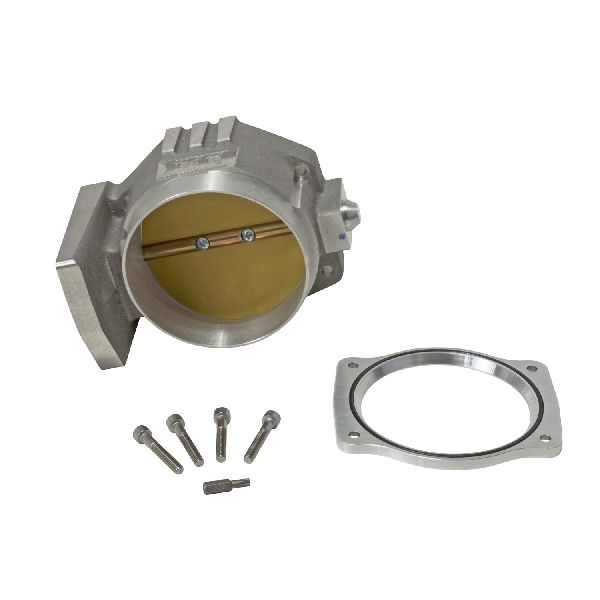
On a 2010-2015 Camaro with the 3.6L V6, code P0223 is almost always caused by a failed throttle body assembly. The throttle position sensor is integrated and cannot be replaced separately. Expect to pay $150-$250 for an OEM ACDelco part, with DIY replacement being straightforward and taking less than an hour. A throttle relearn procedure is mandatory after replacement.
- P0223 on your Camaro almost certainly means you need a new throttle body assembly.
- Do not drive the vehicle, as it will enter a 'limp mode' with severely reduced power, creating a safety risk.
- Don't waste money replacing the accelerator pedal sensor; the fault is at the engine's throttle body.
- This is a DIY-friendly repair that can be completed in under an hour with basic hand tools.
- After replacing the part, you must perform a throttle relearn procedure to ensure proper idle and performance.
What's Unique About the 2010-2015 Chevrolet Camaro
The 3.6L LLT V6 engine in the fifth-generation Camaro uses an electronic throttle control system that is sensitive to electronic failure. While direct-injection engines are known for carbon buildup issues that can cause performance-related throttle codes, P0223 specifically points to an electrical circuit fault. Owner experiences on forums like Camaro5.com confirm that this code, often appearing with P0122 (TPS 'A' Circuit Low), frequently appears due to an internal failure of the sensor within the throttle body assembly, often leading to an immediate 'Reduced Engine Power' mode. One owner experienced this exact code after physically meddling with the plastic sensor housing on the side of the throttle body, confirming the sensitive nature of the internal electronics.
Symptoms You May Notice
- "Reduced Engine Power" message on the dashboard
- Check Engine Light is on
- Vehicle has very limited acceleration (limp mode)
- Unstable or high idle speed
- Hesitation or stalling during acceleration
- "Service StabiliTrak" message may appear (often triggered concurrently with engine faults)
- Replacing the Accelerator Pedal Position (APP) sensor. P0223 specifically refers to the sensor located on the throttle body at the engine, not the sensor at the gas pedal. While a faulty pedal can cause limp mode, it typically sets different codes.
- Cleaning a dirty throttle body. While cleaning carbon buildup is good maintenance 🎬 See this step-by-step guide to cleaning your throttle body for performance issues, it will not fix a 'Circuit High' electrical fault code like P0223.
Most Likely Causes
- Failed Throttle Body Assembly 🔴 High Probability → Shop Fuel Injection Throttle Body The integrated Throttle Position Sensor (TPS) is a common failure point on this platform. The internal electronic resistive traces fail, sending an out-of-range high voltage signal to the ECM. This is an electronic failure, not a mechanical one caused by dirt or carbon.
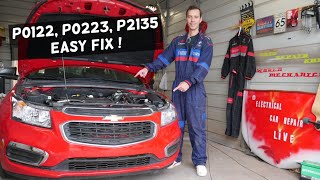
How to confirm: This is the most likely cause, especially when P0223 appears with its companion codes P0122 (TPS 'A' Circuit Low) and/or P2135 (TPS Voltage Correlation). 🎬 Watch: How to diagnose and fix these correlation codes A scan tool can monitor live voltage from TPS 1 and TPS 2; a sensor stuck at >4.5V confirms the failure. After verifying the wiring is intact, replacement is the definitive test.
Typical fix: Replace the entire throttle body assembly. A throttle relearn procedure must be performed after installation.
Est. part cost: $150-$250 for an OEM ACDelco part, $80-$150 for aftermarket. - Wiring Harness or Connector Issue ⚪ Low Probability The wiring harness to the throttle body is exposed to engine heat and vibration, which can lead to chafed wires, broken conductors, or corroded pins in the connector over time. One owner on Camaro5.com found their issue was a chewed wire. Another noted the original wire loom had rotted away, requiring new protection.
How to confirm: Visually inspect the wiring harness leading to the throttle body for any signs of damage. Disconnect the connector (with the battery disconnected) and check for corrosion, moisture, or bent/loose pins. Use a multimeter to check for continuity and for shorts between the signal, reference, and ground wires from the ECM connector to the throttle body connector.
Typical fix: Repair the damaged section of wiring or replace the connector pigtail.
Est. part cost: $15-$40 for a new pigtail connector.
Rare But Worth Checking
- Faulty Engine Control Module (ECM): → Shop Engine Control Module (ECM) This is extremely rare. The ECM should only be considered after definitively ruling out the throttle body and all related wiring. In a documented case on Camaro5.com, a dealership incorrectly suggested replacing the ECM for $750 when the actual problem was a throttle body the owner had damaged during cleaning. Replacing the throttle body fixed the issue.
Diagnosis Steps
- Read the codes with an OBD-II scanner and confirm P0223 is present. Note any other codes, especially P0122 and P2135, as they strongly point to a failed throttle body.
- Visually inspect the throttle body connector for a secure connection. Check the wiring harness leading to it for any obvious signs of damage, chafing, or melting.
- With the ignition off and battery disconnected, unplug the throttle body connector. Inspect the pins for corrosion, moisture, or damage.
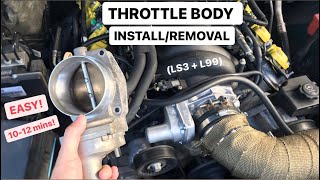
- If wiring appears okay, the most probable cause is a failed throttle body. Replacement is the most common and effective repair. The job requires only basic hand tools and takes less than an hour.
- If replacing the throttle body does not resolve the issue, perform a detailed circuit diagnosis with a multimeter to check the 5V reference, ground, and signal wires between the ECM and the throttle body connector.
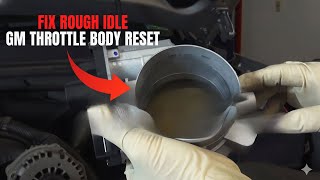
- After replacing the throttle body, a throttle relearn procedure is REQUIRED. Failure to do so can result in an unstable idle or other DTCs. The most common manual procedure is: 🎬 Watch: How to manually perform the GM throttle relearn 1. Start the engine and let it idle in Park for 3 minutes. 2. Turn the engine OFF for 60 seconds. 3. Start the engine again and let it idle in Park for another 3 minutes. The ECM should now have learned the new idle values.
Parts You'll Likely Need
- Fuel Injection Throttle Body Assembly
(OEM #12616668 (superseded by 12631186))— This is the most common failure point for code P0223, as the internal Throttle Position Sensor (TPS) fails and is not serviceable separately.
Trusted brands: ACDelco (GM Original Equipment), Standard Motor Products, Dorman, Hitachi
OEM price range: $150-$250
Aftermarket price range: $80-$150
Related Codes That Often Appear With This One
- P0122 — This code means 'TPS 'A' Circuit Low Input'. When P0122 and P0223 appear together, it indicates a catastrophic failure of both internal sensors and almost certainly condemns the throttle body assembly.
- P2135 — This code means 'Throttle/Pedal Position Sensor/Switch A/B Voltage Correlation'. It sets when the signals from the two throttle position sensors disagree, which is a direct result of one or both failing inside the throttle body.
- P2176 — This code means 'Throttle Actuator Control System - Idle Position Not Learned'. It can appear after tampering with or replacing the throttle body if a relearn procedure is not completed successfully.
Mechanic-Grade Diagnostic Values
- Throttle Actuator Motor Resistance — expected: 2 to 15 Ohms between terminals A and B on the throttle body connector.. Failure: A reading over the limit (Open Loop) or less than 1 Ohm (short circuit) indicates a failed motor.
- TPS 1 Resistance Sweep — expected: With a multimeter on terminals D and E, the resistance should be around 2.7 kOhms with the throttle closed and smoothly increase as the throttle plate is opened.. Failure: Readings that are stuck, have gaps, or jump erratically during the sweep indicate a failed sensor trace.
- TPS 2 Resistance Sweep — expected: With a multimeter on terminals E and F, the resistance should be around 2.2 kOhms with the throttle closed and smoothly decrease as the throttle plate is opened.. Failure: Readings that are stuck, have gaps, or jump erratically during the sweep indicate a failed sensor trace.
- 5-Volt Reference Circuit — expected: A steady 5.0V (+/- 0.5V) should be present at the 5V reference pin on the throttle body connector with the key on, engine off.. Failure: Voltage that is significantly lower, higher, or absent points to a wiring issue or a fault in the ECM, not the throttle body itself.
Scan Tool Commands That Help
- GDS2/Tech2 or equivalent professional scan tool: Idle Learn Reset / Throttle Learn — This command is mandatory after replacing the throttle body. It forces the ECM to erase old learned values and recalibrate to the new sensor's home position. While a manual procedure exists, using a scan tool is the most reliable method to ensure the process completes correctly and to clear any resulting temporary codes like P2176.
Wiring & Ground Locations
- G107 — Located on the left rear of the 3.6L engine block.. This is a primary engine ground. A loose or corroded connection here can create an unstable ground reference for the ECM and its sensors, potentially causing incorrect voltage readings and false sensor codes like P0223.
- G108 — Located on the left side of the 3.6L engine block.. This is another critical engine ground. Like G107, a poor connection can lead to various difficult-to-diagnose electrical and sensor-related issues.
- ECM Connector X1 (LLT Engine) — The Engine Control Module (ECM) is on the passenger side of the engine bay. X1 is the black 73-pin connector.. This is the termination point for the throttle body harness. Before condemning an ECM, technicians will test for continuity and correct voltage at these specific pins: Pin 46 (TP Sensor 2 Signal), Pin 47 (5-Volt Reference 2), Pin 48 (TP Sensor 1 Signal), and Pin 61 (Low Reference).
Real Owner Repair Stories
- Camaro5.com forum user 'FistfulofSam' (2010 Chevrolet Camaro 3.6L RS with 86k miles) — P0223 code and 'Reduced Engine Power' mode appeared immediately after physically tampering with the plastic sensor housing on the side of the throttle body during cleaning.
❌ Tried (didn't work) Took the car to a Chevrolet dealership., Dealer reprogrammed the ECM, which did not fix the P0223 code., Dealer recommended replacing the ECM for $750 'to start' diagnosing further.
✅ What actually fixed it The owner correctly suspected the throttle body was damaged from being pried on. He declined the ECM replacement, installed a new throttle body himself, and the code was resolved. - Camaro5.com forum user (2011 Chevrolet Camaro V6) — P0122 and P0223 codes appeared, triggering limp mode.
❌ Tried (didn't work) Initial diagnosis pointed towards the common throttle body failure.
✅ What actually fixed it Upon closer inspection of the wiring harness, the root cause was found to be a wire that had been chewed by a rodent. Repairing the damaged wire resolved the codes without needing to replace the throttle body.
OEM Part Supersession History
12616668→12631186, and subsequently 12694871— Standard part revision and improvement by the manufacturer.
Heads up: These part numbers are generally for the LLT engine and other similar GM applications. Always verify the correct part for your specific engine (LLT vs. LFX) based on VIN.
Model Year Variations Within This Range
- 2010-2011: These model years are equipped with the 3.6L LLT V6 engine, which uses a Bosch ECM. The throttle body specific to this engine must be used.
- 2012-2015: These model years use the updated 3.6L LFX V6 engine. The LFX uses a different Delphi ECM and, critically, the throttle body has a different electrical harness connector plug. An LLT throttle body will physically bolt to an LFX manifold, but the wiring is not directly compatible, making them non-interchangeable without modification. It is essential to order the correct throttle body for the specific model year.
Diagnostic Flowchart
Other Known Issues on This Vehicle
Issues unrelated to this code that are worth knowing about as an owner of this generation:
- Premature Timing Chain Stretch 🔴 High — Very common on the 2010-2011 LLT V6, often appearing between 70,000 and 120,000 miles. Can cause catastrophic engine damage if ignored. (Ref: TSB #12-06-01-009F)
- Intake Valve Carbon Buildup 🟠 Medium — Common to all direct-injection engines like the LLT. Can cause misfires, rough idle, and performance loss over time. (Ref: TSB #PIP5029E (later 16-NA-383))
- Torque Converter Shudder (Automatic) 🟠 Medium — Some owners of automatic models report a shudder or vibration at low speeds (around 40-50 mph), often indicating a failing torque converter.
- Ignition Key Can Be Bumped Off 🔴 High — A recall was issued for 2010-2014 models with a folding key fob, as the driver's knee could bump the key and turn the engine off while driving. (Ref: GM Recall #14294)
- Key Stuck in Ignition (Automatic) 🟡 Low — Some owners of automatic transmission models report being unable to remove the key after parking due to a faulty shifter interlock.
Used vs. New Parts: Buying Guide for This Vehicle
When a used part is the smart pick: Not recommended for the throttle body assembly. The primary failure is the non-serviceable electronic sensor integrated into the housing. A used part has unknown remaining life and carries a high risk of premature failure, leading to the same P0223 code and limp mode.
What to inspect on the donor part:
- If buying used is unavoidable, inspect the connector pins for any corrosion or damage.
- Check the throttle plate for excessive carbon buildup or scoring, which might indicate a hard life.
OEM-only on this vehicle (don't cheap out):
- Throttle Body Assembly - ACDelco (GM Original Equipment) is highly recommended for fitment and reliability to avoid compatibility issues that can plague cheaper aftermarket electronics.
Aftermarket brands forum-validated for this vehicle:
- Soler Performance (Often recommended on forums for ported/performance versions)
- VMAX (Also known for ported stock throttle bodies)
Brands owners have reported issues with on this vehicle:
- BBK - Some owners on forums have reported issues with their electronic throttle bodies, leading to drivability problems or codes.
Real Owner Stories
Aggregated from forums and TSBs cited above. Mileages and costs reflect what owners reported in those sources.
2010 Camaro 3.6L RS — 86000 miles
Symptoms: P0223 code, Reduced engine performance mode. Also had codes P2176 and P0121 which went away after ECM reprogramming.
What fixed it: Replaced the throttle body assembly after the dealer incorrectly suggested a $750 ECM replacement.
Source hint: Camaro5.com: Thread 'I may have broken my throttle body'
2011 Camaro V6
Symptoms: P0122 and P0223 appearing together; original wiring loom found to be rotted away.
What fixed it: Identified that the TPS is integrated into the throttle body and replaced the faulty unit.
Source hint: Camaro5.com: Thread 'P0122 and P0223'
2010-2015 Chevrolet Camaro 3.6L V6
Symptoms: Reduced Engine Power mode and codes P0122 and P0223 immediately after installing a modified part.
What fixed it: The issue was traced directly to the throttle body assembly.
Source hint: Camaro5.com: Thread 'reduced engine power after ported throttle body'
2010 Chevrolet Camaro
Symptoms: P0223 and P0122 codes present; issue persisted even after the throttle body was replaced.
What fixed it: In this specific case, the failure was not the throttle body, pointing toward wiring or ECM issues.
Source hint: Camaro5.com: Thread 'Help; Engine power is reduced'
Related OBD-II Codes
Frequently Asked Questions
Is there a recall for the 2010-2015 Camaro that causes the engine to shut off while driving?
My 2010 Camaro 3.6L has P0223 and the dealer wants $750 to replace the ECM. Is this the right first step?
Does the 3.6L LLT engine have a known issue with the timing chain?
Can I just clean the throttle body to fix the P0223 code on my Camaro?
Is there a specific procedure I need to follow after replacing the throttle body on my 3.6L V6?
Why does my dashboard say 'Service StabiliTrak' when I have an engine code P0223?
Helpful Videos
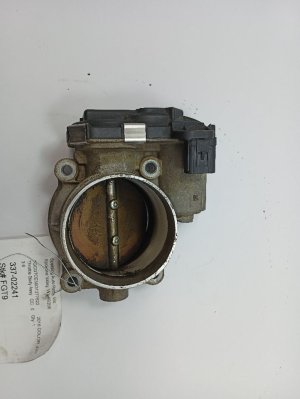
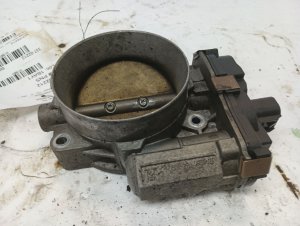
Used OEM Parts in Stock
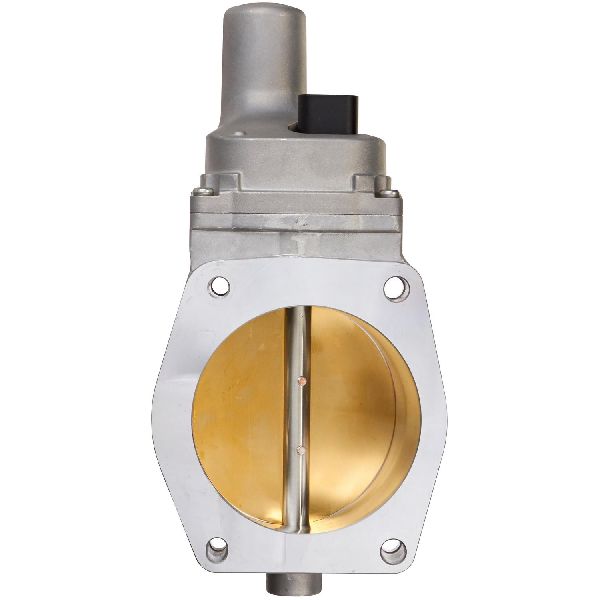
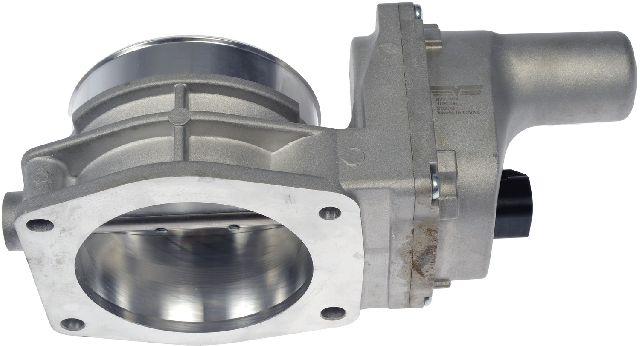
New Aftermarket Parts Available




The information in this article is provided for general reference and educational purposes only. Vehicle specifications, procedures, and part compatibility can vary by production date, trim level, and region. Always consult your vehicle's factory service manual and verify part numbers before purchasing or performing repairs. Safety-critical components such as airbags, seat belts, and braking systems should be installed by a qualified professional.
- Chevrolet Camaro:
- 🧭 Diagnostic Flowchart
- 🎬 Helpful Videos
- 🛍️ Shop This Part
- What's Unique About the 2010-2015 Chevrolet Camaro
- Symptoms You May Notice
- Most Likely Causes
- Rare But Worth Checking
- Diagnosis Steps
- Parts You'll Likely Need
- Related Codes That Often Appear With This One
- Mechanic-Grade Diagnostic Values
- Scan Tool Commands That Help
- Wiring & Ground Locations
- Real Owner Repair Stories
- OEM Part Supersession History
- Model Year Variations Within This Range
- Other Known Issues on This Vehicle
- Used vs. New Parts: Buying Guide for This Vehicle
- Real Owner Stories
- 2010 Camaro 3.6L RS — 86000 miles
- 2011 Camaro V6
- 2010-2015 Chevrolet Camaro 3.6L V6
- 2010 Chevrolet Camaro
- Related OBD-II Codes
- Frequently Asked Questions
- 🎟️ Get 5% Off