

P0223 on 2005-2010 Chevrolet Cobalt: Throttle Position Sensor Causes and Fixes
On a 2005-2010 Cobalt, code P0223 almost always means the entire electronic throttle body assembly has failed. The throttle position sensor (TPS) is integrated and cannot be replaced separately. The fix is to replace the complete throttle body assembly, which costs around $120-$250 for the part. This is a common failure on the GM Delta platform.
- P0223 on a Cobalt almost always requires replacing the entire throttle body assembly.
- The throttle position sensor (TPS) is built into the throttle body and cannot be purchased separately.
- Look for accompanying codes like P0122 or P2135, which make the diagnosis of a failed throttle body even more certain.
- Before ordering a new part, verify the correct OEM part number for your specific engine (2.0L, 2.2L, or 2.4L) and model year.
- This is a DIY-friendly repair that can be completed with basic hand tools in about an hour. No special 'relearn' tool is required.
What's Unique About the 2005-2010 Chevrolet Cobalt
On the 2005-2010 Cobalt, like many GM vehicles from this era built on the Delta platform, the throttle position sensors are not sold as separate parts. They are permanently integrated into the electronic throttle body assembly. This means a failure of one of the internal sensors, which is a common issue, requires the replacement of the entire throttle body. GM previously issued a Special Coverage Adjustment (14582) for this known issue, effectively extending the warranty to 10 years or 120,000 miles, but this program has expired for all vehicles in this generation due to age.
Symptoms You May Notice
- "Reduced Engine Power" message on the dashboard
- Check Engine Light is on
- Poor or very slow acceleration
- Unstable or rough idle
- Engine may hesitate or surge
- Engine may stall, especially when stopping or at low speeds
- Unresponsive accelerator pedal
- Replacing the accelerator pedal position (APP) sensor. While the APP sensor is part of the drive-by-wire system, code P0223 specifically points to the sensor at the throttle body, not the pedal.
- Replacing the PCM without first ruling out the much more common throttle body and wiring faults.
Most Likely Causes
- Faulty Electronic Throttle Body Assembly 🔴 High Probability → Shop Fuel Injection Throttle Body The internal throttle position sensors (TPS) are a known high-failure part on this platform. The sensors are not serviceable separately, requiring replacement of the whole unit. This issue is widely discussed in owner forums.
How to confirm: After ruling out wiring issues, this is the most likely cause. Often, codes P0122 ('TPS 'A' Circuit Low') and P0223 will appear together, which strongly indicates an internal correlation fault within the throttle body assembly.
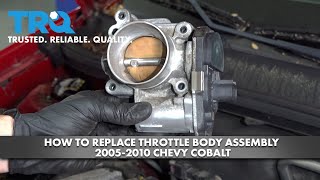
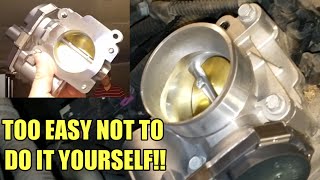
Typical fix: Replace the entire throttle body assembly. 🎬 Watch: Step-by-step guide to replacing the throttle body assembly. After replacement, clear the codes and perform an idle relearn procedure, which for this vehicle is typically automatic within the first few miles of driving or by following a specific idle cycle.
Est. part cost: $120-$250 - Wiring Harness or Connector Issue 🟡 Medium Probability Engine vibration and heat can cause wires to fray or the connector pins to become loose or corroded over time, especially in the harness leading to the throttle body.
How to confirm: Visually inspect the wiring harness going to the throttle body for any signs of damage, chafing, or melting. Unplug the connector and check for corrosion or bent/backed-out pins. Use a multimeter to check for a stable 5-volt reference (Pin C) and good ground (Pin E) at the connector with the key on, engine off. A short to power on the signal wire (Pin G for TPS 2) will cause a P0223.
Typical fix: Repair the damaged section of the wiring harness or replace the connector pigtail. In some cases, owners have had to trace the wiring back to the PCM.
Est. part cost: $20-$50 - Dirty Throttle Body ⚪ Low Probability → Shop Fuel Injection Throttle Body While carbon buildup can cause idling and sticking issues, it is less likely to cause a 'Circuit High' electrical fault. However, severe buildup could potentially restrict the sensor's range of motion, causing erratic readings.
How to confirm: Remove the intake boot and visually inspect the throttle plate and bore for heavy carbon deposits.
Typical fix: Clean the throttle body with a dedicated throttle body cleaner and a soft cloth. This is often attempted first but may not resolve an electrical code like P0223. Be aware that cleaning can sometimes lead to a temporary high idle code (P0507) until the PCM relearns.
Est. part cost: $10-$15
Rare But Worth Checking
- Faulty Powertrain Control Module (PCM): → Shop Engine Control Module (ECM) This is very rare. The PCM should only be considered after all other possibilities, including the throttle body and wiring, have been exhaustively tested and ruled out. A dealership misdiagnosis of a bad PCM has been reported by owners who later found the issue to be the throttle body or wiring.
Diagnosis Steps
- Scan the ECM for any other stored trouble codes. Note if P0122 or P2135 are present, as this strongly suggests a faulty throttle body.
- Visually inspect the throttle body electrical connector for damage, corrosion, or loose pins. Ensure it is fully seated.
- Inspect the wiring harness leading to the throttle body for any signs of chafing, melting, or breaks, paying close attention to where the harness may rub against other components.
- With the key on and engine off, use a multimeter to test the throttle body connector. Verify a 5-volt reference signal on Pin C and a good ground on Pin E.
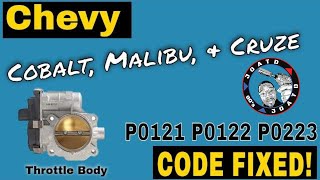
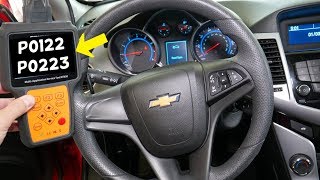
- Check the signal wire for TPS 'B' (Pin G) for voltage. With the connector unplugged, it should be near 0V. If it shows 5V or 12V, there is a short to power in the harness. 🎬 See how to diagnose throttle position sensor circuit high codes.
- If wiring and power/ground are good, the fault is almost certainly within the throttle body assembly itself.
- Attempting to clean the throttle body is a low-cost step but is unlikely to fix a circuit-high fault.
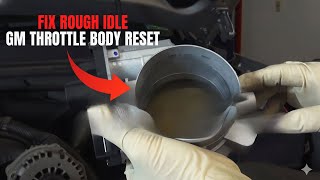
- Replace the throttle body assembly. A relearn procedure is not always required as the PCM can adapt automatically, but a manual idle relearn may be necessary if idle is high or unstable. 🎬 Watch: How to manually reset and relearn your GM throttle body.
Parts You'll Likely Need
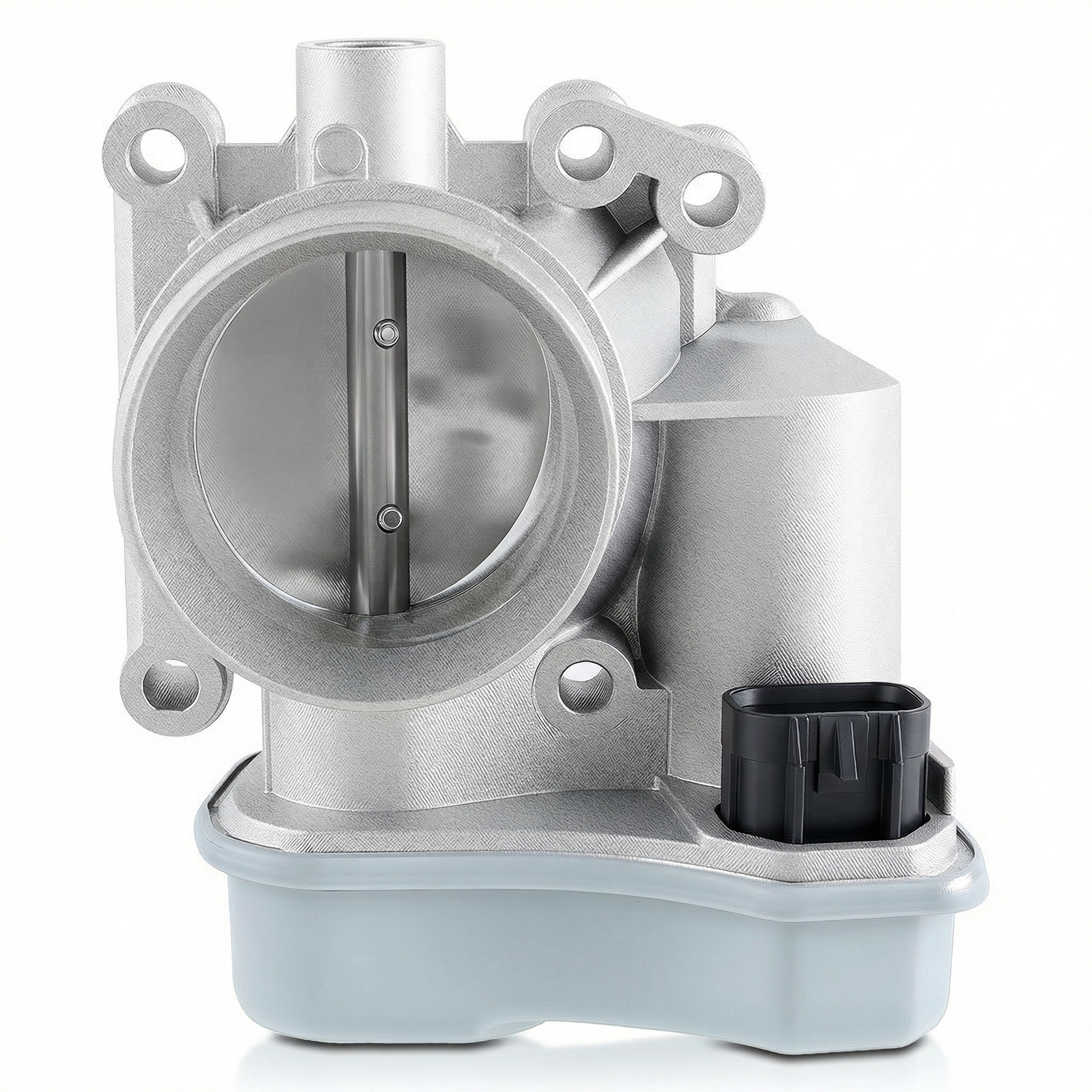
- Electronic Throttle Body Assembly
(OEM #12568796 (2.2L, 2005-06), 12633774 (2.2L, 2007-10), 12607204 (2.4L), 12565553 (2.0L SC, 2005-07), 12631187 (2.0L Turbo, 2008-10))— This is the most common failure for code P0223 on this vehicle, as the internal throttle position sensors are a known weak point and are not sold separately.
Trusted brands: ACDelco (OEM), Bosch, Hitachi, Standard Motor Products (SMP), Dorman
OEM price range: $170-$350
Aftermarket price range: $120-$220
Related Codes That Often Appear With This One
- P0122 — P0122 is 'TPS 'A' Circuit Low'. When seen with P0223 ('TPS 'B' Circuit High'), it indicates a voltage correlation error between the two redundant sensors, strongly pointing to an internal failure of the throttle body assembly.
- P2135 — This code is 'Throttle/Pedal Position Sensor/Switch A/B Voltage Correlation'. It is a direct confirmation that the two sensors are disagreeing and is very common to see with P0223.
- P1682 — This code for 'Ignition 1 Switch Circuit 2' can sometimes appear alongside throttle body codes, potentially indicating a broader electrical issue, though the throttle body remains the primary suspect for P0223.
Platform-Specific Known Issues
- GM issued a Special Coverage Adjustment (program #14582) for faulty throttle bodies on many vehicles, including the Cobalt, which extended the warranty to 10 years or 120,000 miles. However, this has expired for most vehicles by now.
- A user on CobaltSS.net with codes P0122 and P0223 confirmed that wiggling wires would sometimes temporarily fix the 'Reduced Engine Power' mode, pointing towards an intermittent wiring fault, though they ultimately suspected the computer.
Mechanic-Grade Diagnostic Values
- TPS 'B' (TPS2) Signal Voltage — expected: Approx. 0.5V at idle, increasing smoothly to ~4.0V-4.5V at wide-open throttle.. Failure: A sustained reading above 4.7 volts for more than 0.4 seconds will trigger the P0223 code.
- TPS 'A' (TPS1) Signal Voltage — expected: Functions inversely to TPS2. Approx. 4.5V at idle, decreasing smoothly as the throttle opens.. Failure: The PCM expects the sum of TPS1 and TPS2 voltages to be constant. A deviation triggers a correlation code like P2135.
- 5-Volt Reference at Throttle Body Connector — expected: Approx. 5 volts with key on, engine off.. Failure: A reading significantly lower or higher than 5 volts indicates a wiring or PCM issue.
Scan Tool Commands That Help
- GM Tech2 / GDS2 or equivalent professional scanner: Throttle/Idle Learn — This function can be used to force the PCM to relearn the throttle's closed position and idle airflow values immediately after replacing the throttle body. While the system often self-learns, this ensures a stable idle right away and can resolve a high idle condition (P0507) that sometimes occurs after replacement.
- Professional scanner with live data graphing: Graphing TPS1 vs. TPS2 Voltage — Simultaneously graphing both sensor voltages while slowly pressing the accelerator pedal is the fastest way to spot a glitch. The two lines should move smoothly in opposite directions. Any spike, drop, or flat line on one sensor's graph while the other moves correctly confirms an internal throttle body fault.
Wiring & Ground Locations
- Main Engine-to-Chassis Ground — A ground strap typically located on the transmission case, connecting to the chassis. On some Cobalts, this is on the lower left front of the transmission.. Corrosion at this main ground point is a known issue and can cause a host of seemingly unrelated electrical problems, including erratic sensor readings and communication codes. A poor ground can cause floating voltage references, potentially tricking the PCM into seeing a high voltage signal.
- G103 — Located on the cowl in the left rear of the engine compartment, often near the brake booster.. This is a critical ground point for the Body Control Module (BCM) and the Data Link Connector (DLC). While not directly for the TPS, a fault here can cause bizarre electrical behavior and diagnostic communication issues.
- G105 / G107 — Located in the front of the engine compartment, often behind the driver's side headlamp assembly or near the fuse panel.. These grounds serve various engine bay components. While less likely to be the primary cause for a specific TPS code, cleaning all accessible engine bay grounds is a common preventative and diagnostic step recommended by forum veterans for any electrical issue on this platform.
- Throttle Body Connector (X108) — The 6-pin or 8-pin electrical connector plugged directly into the electronic throttle body.. This is the direct connection point for the sensors. Pass 2 correctly identifies the pins for testing (Pin G for TPS2 Signal, Pin C for 5V Ref, Pin E for Low Ref on the common 8-pin connector).
Real Owner Repair Stories
- Reddit user in r/carquestions (2006 Chevrolet Cobalt LS 2.2L Manual) — Installed a new throttle body and experienced a very high idle (1500-1900 RPM).
❌ Tried (didn't work) Installing the new throttle body initially caused a high idle that wouldn't resolve.
✅ What actually fixed it The new (aftermarket) throttle body was faulty out of the box. Replacing it with another new unit and disconnecting the battery during the swap resolved the high idle and the underlying issue. - YouTube video by 3DAUTO (2010 Chevrolet Cobalt 2.2L) — Multiple codes including a MAF sensor code (P0102) and coolant temp sensor reading -40. Engine running rough.
❌ Tried (didn't work) Initial diagnosis pointed towards individual sensor failures or wiring breaks.
✅ What actually fixed it The root cause was a heavily corroded main ground connection on the transmission case. Wiggling the harness near the ground caused sensor readings to glitch. Cleaning and repairing the ground fixed all electrical issues.
Model Year Variations Within This Range
- 2005-2006 vs 2007-2010 (2.2L Engine): The wiring diagrams for the Throttle Actuator Control (TAC) system are different between these year groups. While the function is the same, wire colors and pin locations at the PCM may vary, which is critical for advanced electrical diagnosis. The throttle body connector itself also changed, with early models often using an 8-pin connector and later models sometimes using a 6-pin.
Diagnostic Flowchart
Other Known Issues on This Vehicle
Issues unrelated to this code that are worth knowing about as an owner of this generation:
- Defective Ignition Switch 🔴 High — Extremely widespread, affecting all 2005-2010 models. Led to a massive recall. (Ref: NHTSA Campaign 14V047000. The switch can move out of the 'Run' position if bumped or with a heavy keychain, causing the engine to shut off and disabling airbags.)
- Sudden Loss of Electric Power Steering (EPS) 🔴 High — Very common across the entire model run, affecting millions of GM vehicles. (Ref: NHTSA Campaign 10V073000 / GM Recall 10023. The electric power steering motor can fail suddenly, making the vehicle very difficult to steer at low speeds.)
- Cracked Fuel Pump Module / Fuel Leak 🔴 High — Common enough to trigger recalls, particularly for vehicles in warm-weather states. (Ref: NHTSA Campaign 09V419000 / GM Recall 090226. The plastic supply or return port on the fuel pump module can crack, causing a fuel leak and significant fire hazard.)
- Front Control Arm Bushing Failure 🟠 Medium — A very common wear item, often failing prematurely around 60,000-80,000 miles, causing clunking noises from the front suspension.
- Faulty Power Steering Control Module (PSCM) or Connections 🟠 Medium — Related to the EPS failure, but can also be caused by bad wiring connections or internal module faults, sometimes without total motor failure. (Ref: GM TSB 07-02-32-007B provides diagnostic tips for various power steering DTCs and advises against replacing the entire column for communication codes.)
Used vs. New Parts: Buying Guide for This Vehicle
When a used part is the smart pick: Given that the throttle position sensor is a known high-failure electronic component, buying a used throttle body is generally not recommended. The risk of getting a part that has already failed or is near the end of its service life is very high. A new aftermarket part is often only slightly more expensive than a used one from a junkyard.
Donor-vehicle mileage cap: roughly under 60000 miles for the part to have meaningful remaining life.
What to inspect on the donor part:
- Verify the part number matches your vehicle's specific engine and year.
- Inspect the electrical connector pins for any signs of corrosion, bending, or damage.
- Check the throttle plate for smooth movement by hand (if possible); it should not stick or bind.
- Ask for a short warranty period (e.g., 30-90 days) from the salvage yard.
Aftermarket brands forum-validated for this vehicle:
- ACDelco (Professional line is preferred)
- Bosch
- Hitachi
Brands owners have reported issues with on this vehicle:
- While Dorman is a major supplier and offers innovative solutions, some technicians and forum users report inconsistent quality control on electronic parts like throttle bodies. Unbranded, 'white box' parts from online marketplaces should be treated with extreme caution, as they are more likely to be defective out of the box.
Real Owner Stories
Aggregated from forums and TSBs cited above. Mileages and costs reflect what owners reported in those sources.
2007 Chevrolet Cobalt
Symptoms: After replacing the throttle body, the car had a P0223 code and was experiencing erratic revving.
What fixed it: The issue was resolved by replacing the throttle body assembly.
Source hint: Chevrolet Message Forum (chevroletforum.com): A 2013 thread where a user replaced the throttle body, then got a P0223 code and erratic revving
2006 Chevrolet Cobalt
Symptoms: The dashboard showed a 'REDUCED ENGINE POWER' message along with a long list of random codes, which included P0122 and P0223.
What fixed it: The source thread highlights this as a symptom of a failing throttle body, which can cause confusing electrical issues.
Source hint: CobaltSS.net (cobaltss.net): A 2020 thread titled '2006 cobalt REDUCED ENGINE POWER'
Related OBD-II Codes
Frequently Asked Questions
Did GM issue a recall for the P0223 throttle body problem on the 2005-2010 Cobalt?
If I replace the throttle body on my Cobalt, do I need a special scan tool for an idle relearn procedure?
My Cobalt is showing codes P0122 and P0223 at the same time. What does this mean?
Can I just replace the throttle position sensor (TPS) instead of the whole expensive throttle body assembly?
I'm testing the throttle body connector. What voltage should I see on which pins?
Are other GM cars known to have this same throttle body issue?
Helpful Videos
We Have This Part in Stock

The information in this article is provided for general reference and educational purposes only. Vehicle specifications, procedures, and part compatibility can vary by production date, trim level, and region. Always consult your vehicle's factory service manual and verify part numbers before purchasing or performing repairs. Safety-critical components such as airbags, seat belts, and braking systems should be installed by a qualified professional.
- Chevrolet Cobalt:
- 🧭 Diagnostic Flowchart
- 🎬 Helpful Videos
- 🛍️ Shop This Part
- What's Unique About the 2005-2010 Chevrolet Cobalt
- Symptoms You May Notice
- Most Likely Causes
- Rare But Worth Checking
- Diagnosis Steps
- Parts You'll Likely Need
- Related Codes That Often Appear With This One
- Platform-Specific Known Issues
- Mechanic-Grade Diagnostic Values
- Scan Tool Commands That Help
- Wiring & Ground Locations
- Real Owner Repair Stories
- Model Year Variations Within This Range
- Other Known Issues on This Vehicle
- Used vs. New Parts: Buying Guide for This Vehicle
- Real Owner Stories
- 2007 Chevrolet Cobalt
- 2006 Chevrolet Cobalt
- Related OBD-II Codes
- Frequently Asked Questions
- 🎟️ Get 5% Off