

P0223 on 2005-2013 Chevrolet Corvette: Throttle Position Sensor Causes and Fixes
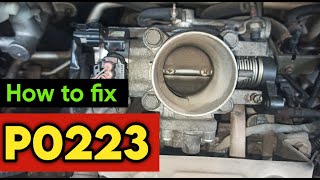
On a 2005-2013 Corvette, code P0223 almost always points to a failed electronic throttle body assembly. This triggers a 'Reduced Engine Power' warning and significant loss of acceleration. Expect to pay $450-$800 for an OEM throttle body, with DIY replacement being straightforward for many owners.
- P0223 on a C6 Corvette almost always means you need a new electronic throttle body.
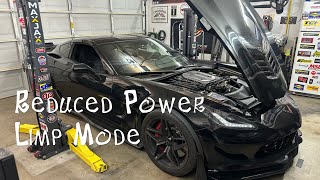
- The most prominent symptom will be a 'Reduced Engine Power' message and a car that barely accelerates.
- It is critical to identify whether your car needs the 'silver blade' (LS2/early '08 LS3) or 'gold blade' (late '08+ LS3/LS7) throttle body, as they are not interchangeable.
- Before buying a new throttle body, always perform a quick visual inspection of the wiring and connector at the throttle body for any obvious damage.
- DIY replacement of the throttle body is a relatively simple job that can save you hundreds of dollars in labor costs.
What's Unique About the 2005-2013 Chevrolet Corvette
The C6 Corvette generation uses a 'drive-by-wire' system with no physical cable connecting the gas pedal to the throttle. A key issue for this platform is the use of two different, non-interchangeable throttle bodies during its production run. LS2 and early 2008 LS3 engines use a 'silver blade' throttle body (GM P/N 12570790), while later 2008+ LS3 and all LS7 engines use a 'gold blade' version (GM P/N 12605109, superseded by 19420707). These units are not interchangeable because the throttle blade opens in the opposite direction and they require different ECM programming. Installing the wrong type will prevent the car from running correctly and may cause persistent trouble codes.
Generation note: The 2005-2013 year range covers the entire C6 generation of the Chevrolet Corvette. However, there are important differences in the throttle body used depending on the engine and model year, as noted in the 'why_this_platform_is_different' section.
Symptoms You May Notice
- "Reduced Engine Power" message on the driver information center
- Check Engine Light is on
- Significant loss of acceleration and throttle response
- Vehicle will not accelerate quickly (limp mode)
- Erratic or high idle
- Engine may hesitate or stall
- Vehicle may not start
- Replacing only the accelerator pedal when the code points specifically to the throttle position sensor 'B' circuit.
- Replacing the throttle body without first thoroughly checking the wiring harness and connector for damage, which is a cheaper fix.
- Condemning the ECM before ruling out all wiring and component faults. Several forum users have documented replacing the ECM only to find the issue was a wiring problem.
Most Likely Causes
- Faulty Electronic Throttle Body Assembly 🔴 High Probability → Shop Fuel Injection Throttle Body The throttle position sensors (TPS) are integrated into the throttle body assembly and are not serviced separately. Internal failure of these sensors, due to wear and tear or electronic faults, is the most common cause of P0223 on the C6 Corvette.
How to confirm: Log throttle position sensor voltage PIDs with a capable OBD-II scanner. Look for TPS2 voltage that is stuck high (near 5V) regardless of throttle input. A visual inspection of the connector and wiring for damage should be performed first. A technician might use a lab scope to get a more detailed view of the sensor's voltage output, as a standard multimeter's refresh rate can be too slow to catch rapid fluctuations.
Typical fix: Replace the entire throttle body assembly. It is a bolt-on part that requires removal of the air intake ducting. After replacement, a throttle relearn procedure is necessary. This can often be accomplished without a scan tool by turning the ignition on (engine off) for a few seconds, then off, and then starting the engine and letting it idle for several minutes to allow the ECM to learn the new throttle parameters.
Est. part cost: $450-$800 - Wiring Harness or Connector Issue 🟡 Medium Probability The wiring harness to the throttle body is located in the engine bay and can be subject to heat and vibration, potentially causing chafed, broken, or shorted wires, or loose connections over time.
How to confirm: Visually inspect the wiring harness leading to the throttle body for any signs of damage, chafing, or melting. Unplug the connector and check for corrosion or bent/pushed-out pins. Perform a 'wiggle test' on the harness while monitoring sensor voltage with a scan tool to see if the reading fluctuates. A multimeter can be used to check for continuity, shorts to power, or shorts to ground on the signal wire between the ECM and the throttle body connector.
Typical fix: Repair the damaged section of the wiring harness or replace the throttle body connector pigtail.
Est. part cost: $20-$50 - Faulty Accelerator Pedal Position (APP) Sensor ⚪ Low Probability → Shop Accelerator Pedal Assembly While less common for P0223 (which points to the throttle body sensor), a failing accelerator pedal assembly can sometimes cause erratic signals that the ECM misinterprets. The pedal assembly also contains redundant sensors that can fail over time.
How to confirm: Use a scan tool to monitor the APP sensor voltage readings (usually APP1 and APP2). There are typically two or more sensors in the pedal assembly, and their values should change smoothly as the pedal is depressed. Any erratic jumps or dropouts could indicate a problem.
Typical fix: Replace the entire accelerator pedal assembly. It is typically held in place by two bolts and has a single electrical connector.
Est. part cost: $70-$150
Rare But Worth Checking
- Faulty Engine Control Module (ECM): → Shop Engine Control Module (ECM) This is a rare cause. Before condemning the ECM, all other possibilities, especially the throttle body and its wiring, must be exhaustively ruled out. ECM replacement is expensive and requires special programming for the specific vehicle's VIN and options.
Diagnosis Steps
- Connect an OBD-II scanner and confirm the presence of the P0223 code. Check for any other related codes like P0122 or P2135.
- Using the scanner's live data function, monitor the voltage of both Throttle Position Sensor 1 (TPS1) and Throttle Position Sensor 2 (TPS2).
- With the key on and engine off, slowly press and release the accelerator pedal. TPS1 voltage should sweep smoothly up from a low value to a high value (e.g., ~0.5V to ~4.5V), while TPS2 should do the opposite (e.g., ~4.5V down to ~0.5V).
- For code P0223, you will likely see TPS2 voltage stuck at a high value (e.g., 4.7V or higher) regardless of the throttle blade's actual position.
- Turn the ignition off. Visually inspect the throttle body electrical connector for loose connections, corrosion, or pushed-out pins.
- Inspect the wiring harness leading to the throttle body for any signs of chafing, melting, or physical damage. Pay close attention to areas where the harness may rub against other components.
- If the wiring and connector appear to be in good condition, the throttle body assembly is the most likely culprit.
- As a final check, you can use a multimeter to test the 5V reference and ground circuits at the throttle body connector to rule out a wiring issue further up the harness. With the sensor unplugged and key on, the signal wire should have very low voltage; if it reads near 5V, there is likely a short to the reference wire.
Parts You'll Likely Need
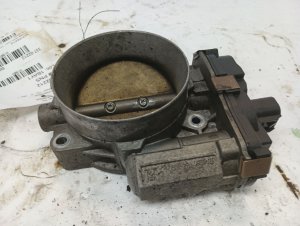
- Electronic Throttle Body Assembly (LS2 / Early '08 LS3)
(OEM #12570790)— This is the 'silver blade' throttle body used on earlier C6 models. Internal failure of the integrated TPS sensors is the most common cause of P0223.
Trusted brands: ACDelco, GM Genuine Parts
OEM price range: $450-$800
Aftermarket price range: $150-$400 - Electronic Throttle Body Assembly (Late '08+ LS3 / LS7)
(OEM #19420707)— This is the 'gold blade' throttle body (supersedes 12605109) for later C6 models. It is not interchangeable with the silver blade version. Failure of its internal sensors is the primary cause of P0223.
Trusted brands: ACDelco, GM Genuine Parts
OEM price range: $450-$700
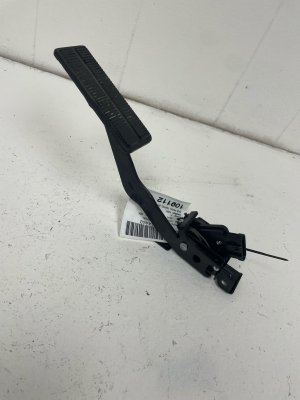
Aftermarket price range: $150-$400 - Accelerator Pedal Position (APP) Sensor Assembly
(OEM #19417903)— While less common for this specific code, a faulty accelerator pedal can cause throttle-related issues. This part (supersedes 25835421) is the complete pedal assembly.
Trusted brands: ACDelco, GM Genuine Parts
OEM price range: $100-$150
Aftermarket price range: $50-$90
Related Codes That Often Appear With This One
- P0122 — This code is for 'Throttle/Pedal Position Sensor/Switch 'A' Circuit Low'. Since sensors A and B work in opposition, a failure within the throttle body assembly can cause one to read high (P0223) and the other to read low (P0122) simultaneously.
- P2135 — This code indicates a 'Throttle/Pedal Position Sensor/Switch 'A'/'B' Voltage Correlation' error. The ECM sets this code when the signals from the two throttle position sensors do not agree with each other, which is a common result of a failing throttle body.
Platform-Specific Known Issues
- A CorvetteForum user, ZincGT, reported a P0223 code that a dealership struggled to diagnose, initially suspecting the ECU. The final cause was discovered to be a broken wire in the throttle body wiring harness, highlighting the importance of thorough wiring checks. (Source: CorvetteForum, "Reduced Engine Power and P0223", https://www.corvetteforum.com/forums/c6-scan-tune/3834375-reduced-engine-power-and-p0223.html)
- Another detailed thread on CorvetteForum by user Tylercox60 documented an exhaustive, multi-shop diagnostic battle with a persistent P0223 on a 2005 C6. After replacing the throttle body, pigtail, and multiple ECMs, the discussion pointed towards a potential short between the 5V reference and signal wires in the harness as the root cause. (Source: CorvetteForum, "Throttle body P0223 please help!!!", https://www.corvetteforum.com/forums/c6-scan-tune/4694939-throttle-body-p0223-please-help.html)
Mechanic-Grade Diagnostic Values
- TPS Sensor 1 (TPS1) Signal Voltage — expected: At closed throttle (idle), voltage should be high (above 4.0V). At wide-open throttle (WOT), voltage should be low (below 1.0V).. Failure: Voltage is stuck, does not sweep smoothly, or is outside the expected range. For P0223, this sensor may show a corresponding low voltage fault (P0122).
- TPS Sensor 2 (TPS2) Signal Voltage — expected: At closed throttle (idle), voltage should be low (below 1.0V). At wide-open throttle (WOT), voltage should be high (above 4.0V).. Failure: Voltage is stuck high, at or near the 5V reference. The ECM will set P0223 if it sees a voltage of 4.725V or more for approximately 1 second.
- 5-Volt Reference at Throttle Body Connector — expected: Approximately 5.0 volts with the key on, engine off. This should be present on the light blue/black wire.. Failure: Significantly lower or higher voltage indicates a problem with the ECM or a short in the harness.
- Low Reference (Ground) at Throttle Body Connector — expected: Less than 100mV (0.1V) with the key on, engine off. This should be present on the tan/white wire.. Failure: Higher voltage indicates a poor ground connection, which can cause erratic sensor readings.
Scan Tool Commands That Help
- Tech2 / GDS2: Throttle Position Sensor Voltage Display — This is the primary live data PID to monitor during diagnosis. It allows the technician to see the exact voltage the ECM is receiving from TPS1 and TPS2 in real-time while operating the accelerator pedal to check for dropouts or stuck signals.
- Tech2 / GDS2: Module Setup / Idle Learn Reset — After replacing the throttle body, a relearn procedure is required. While a manual procedure often works, using the factory scan tool to perform an 'Idle Learn Reset' is the most reliable method to ensure the ECM correctly calibrates the new throttle body's idle and off-idle positions.
Wiring & Ground Locations
- G107 — On the left-hand (driver's side) rear of the engine block, sometimes near the bell housing.. This is a primary engine ground. A loose or corroded G107 can cause a floating ground reference for various sensors, including the throttle body, leading to incorrect voltage readings and seemingly random sensor codes.
- G105 — On the driver's side of the engine block, between cylinders 5 and 7.. Another critical engine block ground point. Ensuring this ground is clean and tight is essential for stable sensor operation.
- Throttle Body Connector (C1) — Directly on the electronic throttle body assembly.. This is the main connection point. Pins can become loose, corroded, or pushed out. A 'pin drag test' is recommended to ensure female terminals have proper tension. A known issue is loose pins within the ECM's C2 (Blue) connector, which can mimic a throttle body or harness failure.
Real Owner Repair Stories
- CorvetteForum user 'ZincGT' (2006 Corvette Z51 LS2) — Reduced Engine Power message and instant P0223 code.
❌ Tried (didn't work) Dealership initially condemned the ECM., Owner performed multiple 'write entire' tunes with HP Tuners with no change.
✅ What actually fixed it A second technician at the dealership found a broken wire within the throttle body wiring harness. - CorvetteForum user 'Tylercox60' (2005 Corvette LS2 Automatic, 17k miles) — Instant P0223 code and Reduced Engine Power after a dealership recall reprogramming.
❌ Tried (didn't work) Dealership replaced battery and throttle body (with a Dorman unit)., A Corvette specialist shop condemned the ECM; two replacement ECMs failed to resolve the issue., Owner replaced the throttle body pigtail., Owner replaced the throttle body with a used eBay unit and a new accelerator pedal., Owner confirmed wiring continuity from throttle body to ECM.
✅ What actually fixed it The individual female pin connectors inside the C2 (blue) ECM connector were very loose on the male ECM pins. The owner removed the wires from the connector housing, carefully pinched the female terminals to tighten them, reassembled the connector, and the problem was solved. - CorvetteForum user 'jacksone' (C6 Corvette with LS3 engine) — P0122, P0223, and 0 oil pressure reading. Car would start but had no throttle response and would drain the battery quickly.
❌ Tried (didn't work) Replaced throttle body., Dealership replaced the ECM.
✅ What actually fixed it Replaced the 'gold blade' throttle body again and replaced three wires in the harness all the way back to the ECM pins. This suggests a wiring issue (short or break) that was not easily visible.
OEM Part Supersession History
12570790→19420034— Standard part lifecycle update by GM. This is the 'silver blade' throttle body.
Heads up: This part is for LS2 and early 2008 LS3 engines. It is not interchangeable with the later 'gold blade' throttle bodies.12605109→19420707— Standard part lifecycle update by GM. This is the 'gold blade' throttle body.
Heads up: This part is for late 2008+ LS3 and all LS7 engines. It is not interchangeable with the earlier 'silver blade' throttle bodies due to opposite blade rotation and different electronics.
Model Year Variations Within This Range
- 2005-Early 2008: These models (LS2 and early LS3) use the 'silver blade' throttle body, GM P/N 12570790. The internal electronics and blade rotation are specific to these years.
- Late 2008-2013: These models (most LS3 and all LS7) use the 'gold blade' throttle body, GM P/N 12605109 (now 19420707). This unit is not backward-compatible with earlier models without significant tuning and potential wiring changes.
Diagnostic Flowchart
Other Known Issues on This Vehicle
Issues unrelated to this code that are worth knowing about as an owner of this generation:
- Harmonic Balancer Wobble/Failure 🔴 High — Common across all C6 years, but especially noted on early LS2 engines. The rubber elastomer bonding the inner and outer rings of the balancer can fail, causing a wobble that can throw the serpentine belt and, if left unchecked, damage the crankshaft. (Ref: TSB 05-06-01-001A (for loose bolt on early 2005 models))
- Fuel Level Sending Unit Failure 🟠 Medium — A very common issue where the fuel gauge becomes erratic or reads empty, often after a fill-up. This is caused by wear on the contacts of the sending units inside the saddle-style fuel tanks. Repair is labor-intensive as it requires dropping the fuel tanks. (Ref: TSB 08-06-04-001)
- Removable Roof Panel Delamination ('Flying Roof') 🔴 High — Primarily affects 2005-2007 models. The adhesive bonding the outer roof skin to the frame fails, causing noises, leaks, and in some cases, the entire roof panel to detach at speed. (Ref: NHTSA Campaign 09V432000 (Recall 090230))
- LS7 Valve Guide Wear (Z06 Models) 🔴 High — Affects 2006-2013 Z06 models with the 7.0L LS7 engine. Excessive wear in the valve guides, potentially due to a machining error at a supplier, can lead to valve failure and catastrophic engine damage. It is a widely discussed issue and a preventative 'head fix' is a common recommendation for owners. (Ref: GM acknowledged the issue but no formal recall was issued.)
- Service Active Handling System Message 🟠 Medium — Common on 2005-2008 models. Movement of the telescoping steering column can chafe wires leading to the steering wheel position sensor, causing an error message and potentially unwanted brake application. (Ref: TSB 06-02-35-002B)
Used vs. New Parts: Buying Guide for This Vehicle
When a used part is the smart pick: A used OEM throttle body can be a cost-effective option if sourced from a reputable seller with a warranty and return policy. However, it's a gamble, as the internal sensors are a known failure point due to age and wear. It makes most sense when on a tight budget and the donor vehicle's history is known.
Donor-vehicle mileage cap: roughly under 75000 miles for the part to have meaningful remaining life.
What to inspect on the donor part:
- Check for a clean throttle blade and bore, free of heavy carbon buildup.
- Ensure the electrical connector pins are straight, clean, and free of corrosion.
- Verify the throttle blade moves smoothly by hand and springs back to its default position without sticking.
- Confirm the exact part number matches your vehicle's original (silver blade vs. gold blade).
OEM-only on this vehicle (don't cheap out):
- Electronic Throttle Body Assembly
Aftermarket brands forum-validated for this vehicle:
- Soler Performance (Offers ported new OEM units and repair services)
- Nick Williams (Performance-oriented billet units)
Brands owners have reported issues with on this vehicle:
- Generic/unbranded parts from online marketplaces can be risky due to inconsistent quality control.
- One forum user documented a persistent P0223 after a dealership installed a Dorman throttle body, though the ultimate cause was found to be wiring-related.
Real Owner Stories
Aggregated from forums and TSBs cited above. Mileages and costs reflect what owners reported in those sources.
2005 Chevrolet Corvette LS2
Symptoms: Exhaustive, multi-shop diagnostic battle with a persistent P0223 code.
What fixed it: The discussion pointed towards a potential short between the 5V reference and signal wires in the harness as the root cause after replacing the throttle body, pigtail, and multiple ECMs.
Source hint: CorvetteForum thread titled "Throttle body P0223 please help!!!" by user Tylercox60
Chevrolet Corvette C6
Symptoms: Reduced Engine Power message and P0223 code that a dealership struggled to diagnose, initially suspecting the ECU.
What fixed it: A broken wire in the throttle body wiring harness.
Source hint: CorvetteForum thread titled "Reduced Engine Power and P0223" by user ZincGT
Related OBD-II Codes
Frequently Asked Questions
My 2005 Corvette is displaying 'Reduced Engine Power' and P0223; can I just replace the sensor?
Is there a specific TSB for the 'Flying Roof' issue on my 2006 Corvette?
Do I need a professional scan tool to perform a throttle relearn after replacing the assembly?
Could my erratic fuel gauge be related to the P0223 throttle code?
I have a 2011 Camaro SS with the same engine; is the P0223 fix the same as the Corvette?
Helpful Videos
Used OEM Parts in Stock
New Aftermarket Parts Available




The information in this article is provided for general reference and educational purposes only. Vehicle specifications, procedures, and part compatibility can vary by production date, trim level, and region. Always consult your vehicle's factory service manual and verify part numbers before purchasing or performing repairs. Safety-critical components such as airbags, seat belts, and braking systems should be installed by a qualified professional.
- Chevrolet Corvette:
- 🧭 Diagnostic Flowchart
- 🎬 Helpful Videos
- 🛍️ Shop This Part
- What's Unique About the 2005-2013 Chevrolet Corvette
- Symptoms You May Notice
- Most Likely Causes
- Rare But Worth Checking
- Diagnosis Steps
- Parts You'll Likely Need
- Related Codes That Often Appear With This One
- Platform-Specific Known Issues
- Mechanic-Grade Diagnostic Values
- Scan Tool Commands That Help
- Wiring & Ground Locations
- Real Owner Repair Stories
- OEM Part Supersession History
- Model Year Variations Within This Range
- Other Known Issues on This Vehicle
- Used vs. New Parts: Buying Guide for This Vehicle
- Real Owner Stories
- 2005 Chevrolet Corvette LS2
- Chevrolet Corvette C6
- Related OBD-II Codes
- Frequently Asked Questions
- 🎟️ Get 5% Off