

P0223 on 2011-2014 Chrysler 200 3.6L: Throttle Position Sensor 'B' Circuit High Causes and Fixes
On a 2011-2014 Chrysler 200 with the 3.6L V6, code P0223 almost always means the entire electronic throttle body assembly has failed. The throttle position sensor is built-in and not sold separately. Expect to pay $100-$250 for a new throttle body and plan for about an hour of labor. Driving is extremely dangerous as the vehicle will enter a low-power 'limp mode'.
- P0223 on your 3.6L Chrysler 200 will put the car into a dangerous, low-power 'limp mode' and should be addressed immediately.
- The most likely cause by a wide margin is a failed electronic throttle body assembly.
- The throttle position sensors are built into the throttle body; you cannot buy and replace just the sensor.
- Do not misdiagnose this as a bad gas pedal; P0223 points specifically to the throttle body circuit.
- After replacing the throttle body, a throttle relearn procedure is required to ensure proper idle and performance.
What's Unique About the 2011-2014 Chrysler 200
On the 3.6L Pentastar V6 engine used in the Chrysler 200, the throttle position sensors are integrated directly into the electronic throttle body assembly. They cannot be replaced individually. This design means that a failure of one of the internal sensors, which is a very common issue on this platform, requires the replacement of the entire throttle body unit. This is a well-documented failure point across many Chrysler, Dodge, and Jeep vehicles that share this engine.
Symptoms You May Notice
- Check Engine Light is on
- Flashing red 'lightning bolt' Electronic Throttle Control (ETC) warning light on the dashboard 🎬 Watch: How to diagnose and fix the blinking lightning bolt light
- Vehicle enters 'limp mode,' with drastically reduced engine power and acceleration
- Unresponsive or delayed accelerator pedal
- Hesitation or stumbling when trying to accelerate
- Rough or unstable idle
- Engine may stall or be difficult to start
- Replacing the accelerator pedal position sensor. The pedal sensor has its own distinct set of trouble codes (e.g., P2122, P2127). P0223 specifically points to the sensor circuit located on the throttle body at the engine.
Most Likely Causes
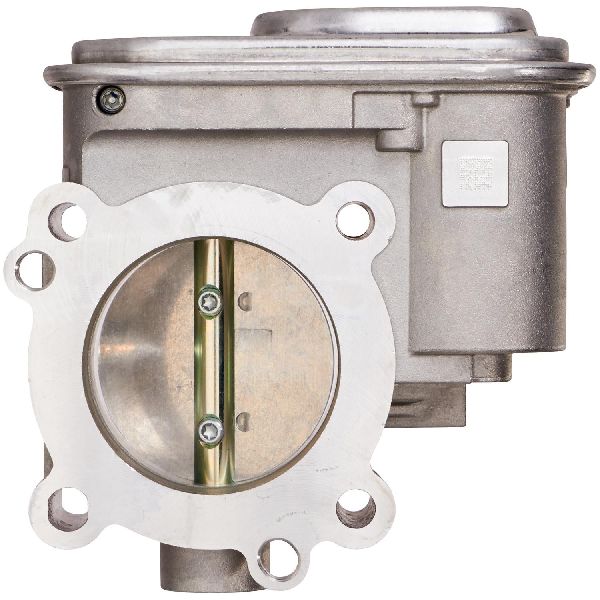
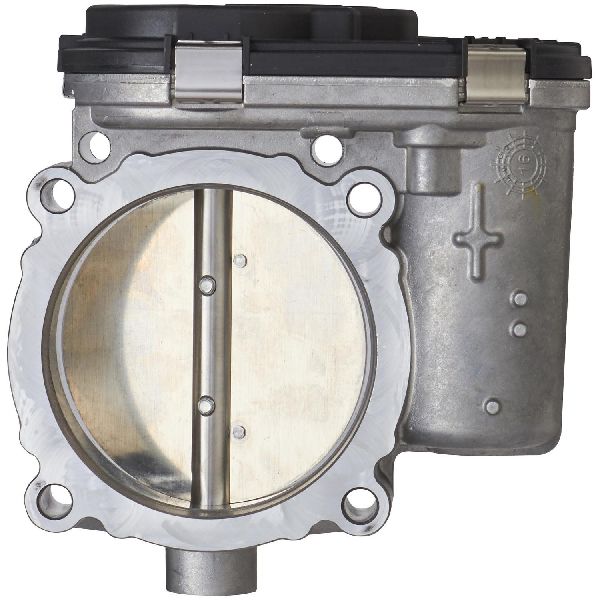
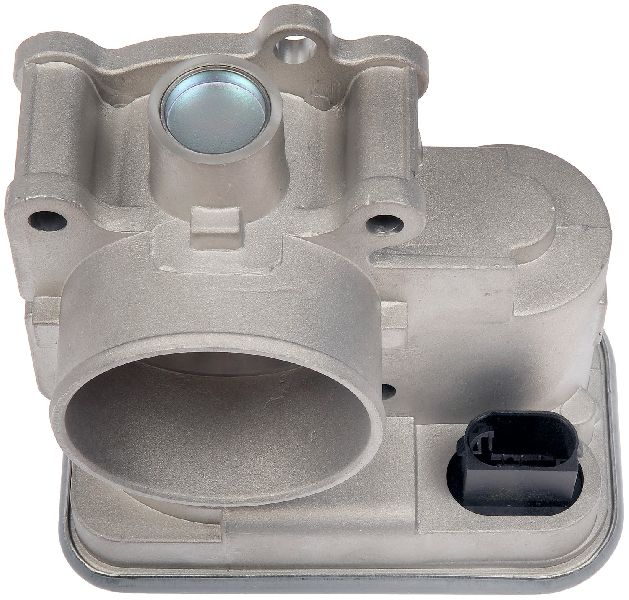
- Failed Electronic Throttle Body Assembly 🔴 High Probability → Shop Fuel Injection Throttle Body The internal throttle position sensors are a known common failure point on the 3.6L Pentastar engine's electronic throttle body. Wear and tear on the internal electronic components or plastic gears leads to erratic or high voltage signals. This is a widely documented issue across the entire Pentastar engine family.
How to confirm: Using a scan tool, monitor the live data for Throttle Position Sensor 2 voltage with the key on, engine off. If the voltage is stuck high (e.g., above 4.9V) and does not respond correctly as the accelerator pedal is pressed, the throttle body has failed internally. The voltage should sweep smoothly from low to high without glitches or dropouts.
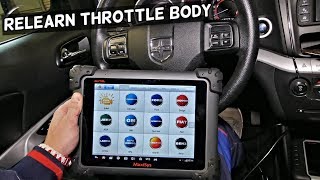
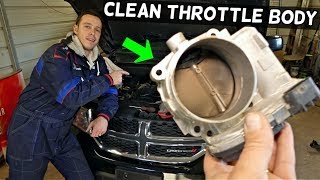
Typical fix: Replace the entire electronic throttle body assembly. 🎬 Watch: How to clean and service your Pentastar throttle body After replacement, an 'ETC Relearn' procedure must be performed. This can often be done without a scan tool by turning the key to the 'ON' position for 10-15 seconds without starting the engine, then turning it off, and then starting normally. However, some cases may require a scan tool to initiate the relearn function. 🎬 Watch: Step-by-step throttle body relearn and calibration procedure
Est. part cost: $100-$250 - Wiring Harness or Connector Issue ⚪ Low Probability While not as common as throttle body failure, the wiring harness can be susceptible to damage. On the 3.6L Pentastar, a known issue is the oil filter/cooler housing, located in the engine valley, developing leaks. Leaking oil can saturate the wiring harnesses that run nearby, including the throttle body harness, leading to corrosion and short circuits over time.
How to confirm: Visually inspect the wiring and 6-pin connector at the throttle body for any signs of chafing, melting, corrosion, or pushed-out pins. Pay close attention to the area below the intake manifold for signs of oil saturation from a leaking oil cooler housing. With the key on, use a multimeter to check for a stable 5-volt reference and a good ground at the connector. A short between the signal circuit and the 5-volt supply circuit can also cause this code.
Typical fix: Repair the damaged section of the wiring harness or replace the connector pigtail. If the harness is oil-saturated, it must be thoroughly cleaned with an electrical contact cleaner and inspected for damage.
Est. part cost: $20-$50
Rare But Worth Checking
- Powertrain Control Module (PCM) Failure: → Shop Engine Control Module (ECM) This is very rare. All other possibilities, especially the throttle body and wiring, should be exhaustively ruled out before considering PCM replacement. A faulty PCM can send incorrect voltage readings or fail to interpret sensor data correctly.
- Faulty Totally Integrated Power Module (TIPM): On 2011-2014 Chrysler models, a failing TIPM (the main fuse and relay center) is known to cause a wide range of bizarre electrical issues, including symptoms that mimic throttle body failure. If you are experiencing other random electrical problems (horn, wipers, fuel pump issues), the TIPM could be the root cause.
Diagnosis Steps
- Connect a scan tool and confirm that P0223 is the active code. Note any other codes present, especially P0123 or P2135.
- Using the scan tool's live data function, monitor the voltage for 'Throttle Position Sensor 2'. With the ignition on and engine off, the reading should not be stuck high (above 4.9V).
- If the voltage is high, turn the ignition off and disconnect the throttle body electrical connector.
- Turn the ignition back on. With the scan tool, check the TPS 2 voltage again. If the voltage drops to below 0.5V, the throttle body is faulty and needs to be replaced.
- If the voltage remains high with the connector unplugged, there is likely a short in the wiring harness between the signal wire and the 5-volt supply wire.
- Inspect the wiring harness and connector between the throttle body and the PCM for any visible damage, corrosion, or loose pins. Pay special attention to the area under the intake manifold for oil contamination from the oil cooler housing.
- If no wiring issues are found, the final, though rare, possibility is a faulty PCM.
Parts You'll Likely Need
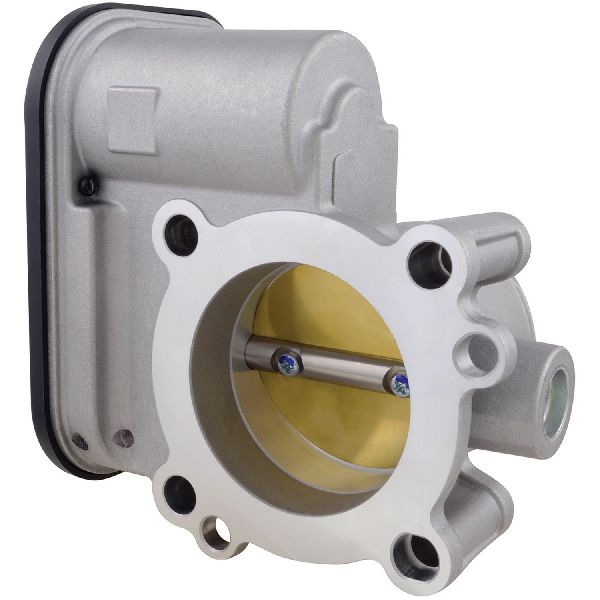
- Electronic Throttle Body Assembly
(OEM #5184349AF)— This is the most common cause of P0223 on the 3.6L V6, as the internal, non-serviceable throttle position sensor fails.
Trusted brands: Mopar, Bosch, Hitachi, Standard Motor Products
OEM price range: $180-$250
Aftermarket price range: $100-$180
Related Codes That Often Appear With This One
- P0123 — This is the code for 'Throttle Position Sensor 'A' Circuit High'. Seeing both P0123 and P0223 together strongly indicates an internal electronic failure of the entire throttle body assembly, as both sensor circuits are faulting.
- P2135 — This code means 'Throttle/Pedal Position Sensor/Switch A/B Voltage Correlation'. It sets when the PCM sees a significant disagreement between the signals from the two throttle position sensors, which is a direct result of the fault causing P0223.
Technical Service Bulletins (TSBs) & Recalls
- While no TSB is specifically for P0223 on the Chrysler 200, Chrysler has issued TSBs for other models with the 3.6L engine related to throttle body issues, acknowledging manufacturing defects and other problems like throttle body icing in cold weather. For example, TSB 09-003-20 REV. B addressed throttle body replacements on some 2019-2020 vehicles. This history lends credibility to the high failure rate of this component.
Platform-Specific Known Issues
- Owner Experiences: Owners on forums for various Chrysler/Dodge/Jeep vehicles with the 3.6L engine frequently report the sudden onset of the 'lightning bolt' ETC light and limp mode, with P0223 and related codes present. The overwhelming consensus from these real-world experiences is that replacing the entire throttle body assembly provides a permanent fix.
Mechanic-Grade Diagnostic Values
- TPS Sensor 2 (B) Signal Voltage (KOEO) — expected: Approximately 4.4 volts at closed throttle, decreasing to approximately 1.7 volts at wide-open throttle.. Failure: Voltage is stuck high (above 4.8V) and does not change when the accelerator pedal is pressed.
- 5-Volt Reference at Throttle Body Connector (KOEO) — expected: 4.5 to 5.2 Volts.. Failure: Voltage significantly below 4.5V indicates a wiring issue or a problem with the PCM.
- Sensor Ground Circuit Resistance — expected: Less than 5.0 ohms between the ground pin at the connector and a known good chassis ground.. Failure: High resistance indicates a bad ground connection, which can cause erratic sensor readings.
Scan Tool Commands That Help
- Chrysler wiTECH or equivalent professional scan tool: Throttle Follower Test — This bidirectional test commands the throttle plate to move while displaying the live voltage readings from both TPS Sensor 1 and TPS Sensor 2. It is the definitive way to confirm if the sensor signals are responding correctly to physical throttle movement, isolating a faulty sensor within the throttle body.
- Chrysler wiTECH or equivalent professional scan tool: ETC Relearn — This function should be performed after replacing the throttle body. It forces the PCM to learn the new sensor's closed, open, and part-throttle positions. While a manual relearn often works, using the scan tool function is the factory-prescribed method and may be required if the idle is unstable after replacement.
Wiring & Ground Locations
- Throttle Body 6-Pin Connector — Directly on the electronic throttle body at the front of the intake manifold.. This is where all electrical testing for the TPS circuits occurs. For P0223, the key wires are Pin 5 (5V Supply), Pin 6 (Sensor Ground), and Pin 4 (TP Sensor 2 Signal). A short between Pin 4 and Pin 5 will cause a constant high voltage reading.
- G905A — Typically located on the driver's side frame rail in the engine compartment, near the battery tray or engine mount.. This is a primary engine-to-chassis ground point. High resistance or corrosion at this location can cause a floating ground for various engine sensors, including the throttle body, leading to incorrect voltage readings and seemingly random electrical faults.
Real Owner Repair Stories
- 200forums.com user report (2012 Chrysler 200 3.6L V6) — Check engine light, flashing red 'lightning bolt' (ETC) light, and vehicle went into limp mode with no acceleration.
❌ Tried (didn't work) Cleaning the original throttle body.
✅ What actually fixed it The owner replaced the entire electronic throttle body assembly with a new unit and performed the manual relearn procedure. This completely resolved the P0223 code and all associated symptoms.
OEM Part Supersession History
5184349AB, 5184349AC, 5184349AD, 5184349AE→5184349AF— Revisions were likely made to improve the durability and reliability of the internal electronic sensors that were prone to failure in earlier versions.
Heads up: While older versions may physically fit, it is highly recommended to use the latest revision (5184349AF) to benefit from the engineering improvements and avoid a repeat failure.
Diagnostic Flowchart
Other Known Issues on This Vehicle
Issues unrelated to this code that are worth knowing about as an owner of this generation:
- Oil Filter/Cooler Housing Leak 🔴 High — Extremely common, especially on 2011-2013 models. The original plastic housing cracks from heat cycles, causing significant oil and/or coolant leaks in the engine valley.
- Rocker Arm / Lifter Failure ('Pentastar Tick') 🔴 High — Common on earlier (2011-2014) Pentastar engines, leading to a distinct ticking noise. Failed rocker arm bearings can cause misfires and, if ignored, catastrophic engine damage.
- Totally Integrated Power Module (TIPM) Failure 🔴 High — A widespread issue across 2007-2014 Chrysler/Dodge/Jeep vehicles. A faulty TIPM can cause a vast array of random electrical problems, including no-starts, stalling, and erratic behavior of lights, horn, and wipers. (Ref: Multiple recalls and a class-action lawsuit were issued, but problems persist.)
- 62TE Transmission Problems 🟠 Medium — The 62TE automatic transmission can suffer from issues like harsh shifting, shuddering when coming to a stop (often due to a faulty TCC solenoid), and solenoid pack failure.
- Left Cylinder Head Failure 🔴 High — Primarily affected 2011-2013 models. An issue with overheating valve seats on cylinder #2 could lead to misfires, ticking noises, and require cylinder head replacement. Chrysler extended the warranty for this specific issue on some vehicles. (Ref: Extended Warranty (X56) was issued for some models.)
Used vs. New Parts: Buying Guide for This Vehicle
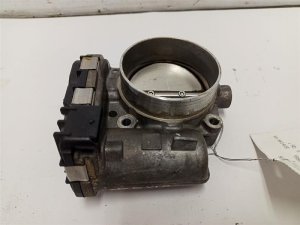
When a used part is the smart pick: A used throttle body is a significant gamble for this specific repair due to the high failure rate of the internal electronics. It should only be considered as a last resort or for a temporary fix if a new part is unavailable. The risk of the used part failing soon after installation is very high.
Donor-vehicle mileage cap: roughly under 40000 miles for the part to have meaningful remaining life.
What to inspect on the donor part:
- Verify the part number is the latest revision (5184349AF).
- Inspect the electrical connector pins for any signs of corrosion or damage.
- Check the throttle plate for smooth, unrestricted movement by hand (with the unit off the vehicle).
- Ask for the VIN of the donor vehicle to verify it came from a low-mileage car that was not wrecked due to an electrical or engine issue.
Aftermarket brands forum-validated for this vehicle:
- Bosch
- Hitachi
- Standard Motor Products (SMP)
- Dorman (often a remanufactured OEM unit)
Brands owners have reported issues with on this vehicle:
- Unbranded, no-name parts from online marketplaces should be avoided, as their internal electronics are often of poor quality and may fail prematurely or not perform the relearn procedure correctly.
Real Owner Stories
Aggregated from forums and TSBs cited above. Mileages and costs reflect what owners reported in those sources.
2011-2014 Chrysler 200 3.6L V6
Symptoms: Sudden onset of the 'lightning bolt' ETC light and limp mode with P0223 present.
What fixed it: Replacing the entire throttle body assembly.
Source hint: 200forums.com
2012-2018 Jeep Wrangler (JK) 3.6L V6
Symptoms: ETC light triggered on trails or during normal driving with identical symptoms to the Chrysler 200.
What fixed it: Throttle body replacement.
Source hint: Jeep forums
2011-2016 Chrysler Town & Country 3.6L V6
Symptoms: Electronic throttle body failure leading to limp mode; very common failure on these minivans.
What fixed it: Replacement of the electronic throttle body assembly.
Source hint: chryslerminivan.net
Related OBD-II Codes
Frequently Asked Questions
Does TSB 09-003-20 REV. B apply to my 2011-2014 Chrysler 200?
Can I perform the ETC relearn on my Chrysler 200 without a professional scan tool?
Is it possible that an oil leak is causing my P0223 code?
Should I buy a used throttle body for my 3.6L Chrysler 200 to save money?
Is the 'lightning bolt' light on my dashboard related to P0223?
Are there any other major engine issues I should look out for while fixing the throttle body?
Helpful Videos


Used OEM Parts in Stock
New Aftermarket Parts Available



The information in this article is provided for general reference and educational purposes only. Vehicle specifications, procedures, and part compatibility can vary by production date, trim level, and region. Always consult your vehicle's factory service manual and verify part numbers before purchasing or performing repairs. Safety-critical components such as airbags, seat belts, and braking systems should be installed by a qualified professional.
- Chrysler 200:
- 🧭 Diagnostic Flowchart
- 🎬 Helpful Videos
- 🛍️ Shop This Part
- What's Unique About the 2011-2014 Chrysler 200
- Symptoms You May Notice
- Most Likely Causes
- Rare But Worth Checking
- Diagnosis Steps
- Parts You'll Likely Need
- Related Codes That Often Appear With This One
- Technical Service Bulletins (TSBs) & Recalls
- Platform-Specific Known Issues
- Mechanic-Grade Diagnostic Values
- Scan Tool Commands That Help
- Wiring & Ground Locations
- Real Owner Repair Stories
- OEM Part Supersession History
- Other Known Issues on This Vehicle
- Used vs. New Parts: Buying Guide for This Vehicle
- Real Owner Stories
- 2011-2014 Chrysler 200 3.6L V6
- 2012-2018 Jeep Wrangler (JK) 3.6L V6
- 2011-2016 Chrysler Town & Country 3.6L V6
- Related OBD-II Codes
- Frequently Asked Questions
- 🎟️ Get 5% Off