

P0223 on 2010-2019 Ford Taurus: Throttle Position Sensor and Limp Mode Fixes
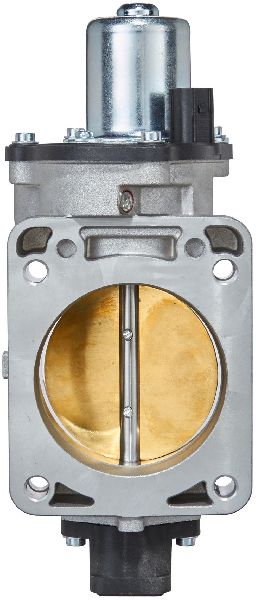
On a 2010-2019 Ford Taurus, code P0223 is almost always caused by a failing electronic throttle body assembly. This triggers a 'limp mode' with sudden power loss. The only reliable fix is to replace the entire throttle body. Expect to pay $80-$250 for an aftermarket part or $280-$450 for an OEM Motorcraft unit. DIY replacement is straightforward and takes about an hour.
- Code P0223 on a 2010-2019 Taurus almost always points to a failed electronic throttle body.
- Symptoms are serious and include a sudden, dangerous loss of power ('limp mode'). Do not ignore this code.
- Do not waste money on cleaning the throttle body; the issue is electronic and requires a full replacement of the assembly.
- DIY replacement is very achievable for those with basic tools, typically taking about an hour.
- Ensure you purchase the correct part number, as the throttle body for the standard 3.5L V6 is different from the 3.5L EcoBoost SHO engine.
What's Unique About the 2010-2019 Ford Taurus
The sixth-generation Ford Taurus, along with many other Ford vehicles from this era using the 3.5L and 3.7L engines, is known for premature electronic throttle body (ETB) failures. The internal electronic components are susceptible to contamination and wear, leading to erratic signals. Ford acknowledged this widespread issue with Customer Satisfaction Program 13N03, which extended the warranty on the throttle body to 10 years or 150,000 miles. While this program has expired for most vehicles, it highlights the prevalence of the problem. The failure is so common that simply cleaning the throttle body is not considered an effective repair; replacement is the standard solution.
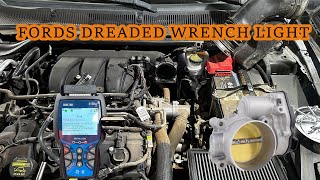
🎬 Watch: Ford Taurus throttle body diagnosis and replacement walkthroughSymptoms You May Notice
- Sudden and severe loss of engine power (entering 'limp mode' or 'fail-safe mode')
- Wrench light or Check Engine Light illuminated on the dashboard
- Unstable, rough, or high idle
- Hesitation or stumbling during acceleration
- Engine stalling, especially when coming to a stop
- Little to no response from the accelerator pedal
- Warning messages such as 'Service AdvanceTrac' or 'Hill Start Assist Not Available' may appear, as the throttle control system is tied into traction and stability control.
- Replacing only the accelerator pedal position sensor (APPS). While the code definition can include the pedal sensor, the overwhelming cause on this platform is the throttle body itself.
- Attempting to clean the throttle body to fix the electronic fault. While cleaning can solve idle issues from carbon buildup, it will not fix the internal electronic failure that triggers P0223.
- Replacing the throttle body when the actual issue is a poor connection or chafed wire in the harness.
Most Likely Causes
- Defective Electronic Throttle Body (ETB) Assembly 🔴 High Probability → Shop Fuel Injection Throttle Body The internal electronic contacts of the OEM throttle body are known to develop contamination, leading to increased electrical resistance and faulty signals. This was the subject of Ford's Customer Satisfaction Program 13N03. The failure mode is consistent across many Ford platforms from this era.
How to confirm: After verifying the wiring and connectors are secure and free of damage, the throttle body is the most likely culprit. A scan tool can monitor the throttle position sensor voltage; erratic or out-of-range readings (stuck high, typically above 4.5V) when the pedal is pressed confirm the failure.
Typical fix: Replace the entire electronic throttle body assembly. Cleaning the unit is not an effective long-term repair for this internal electronic failure.
Est. part cost: $80-$450 - Wiring Harness or Connector Issue ⚪ Low Probability While less common than ETB failure, wiring can be damaged from engine heat, vibration, or previous repairs. The connector pins can also corrode.
How to confirm: Visually inspect the wiring harness and electrical connector leading to the throttle body for any signs of damage, corrosion, or loose connections. Use a multimeter to check for the proper 5-volt reference and a good ground at the connector. Wiggle the harness while monitoring live data on a scan tool to see if the voltage reading fluctuates, indicating an intermittent connection.
Typical fix: Repair or replace the damaged section of the wiring harness or the connector itself.
Est. part cost: $20-$100
Rare But Worth Checking
- Powertrain Control Module (PCM) Failure: → Shop Engine Control Module (ECM) This is extremely rare. The PCM should only be considered after the throttle body and wiring have been thoroughly tested and ruled out.
Diagnosis Steps
- Read the diagnostic trouble codes (DTCs) with an OBD-II scanner to confirm P0223 and any other related codes like P2111, P2112, or P2135.
- Visually inspect the electrical connector and wiring harness going to the electronic throttle body. Look for any frayed wires, loose pins, or signs of corrosion at the connector.
- With the ignition on and engine off, use a scan tool to monitor the live data for Throttle Position Sensor 'B' voltage (TP2 or TPS B). The voltage should be low (around 1V or less) with the pedal released.
- Slowly press the accelerator pedal to the floor. The voltage should increase smoothly and linearly to around 4.5V. If the voltage reading is erratic, jumps, or is consistently high (stuck above 4.5V), it strongly indicates a faulty throttle position sensor, which is integral to the throttle body.
- If the wiring appears intact and the sensor data points to a problem, the most effective repair is to replace the entire electronic throttle body assembly.
- After replacement, perform a throttle relearn procedure. This can often be done by disconnecting the battery for 15 minutes to reset the Keep Alive Memory (KAM). Alternatively, a more formal procedure involves turning the ignition on (engine off) for a few minutes, then off, then starting the engine and letting it idle for several minutes to allow the PCM to learn the new throttle body's parameters.
Parts You'll Likely Need
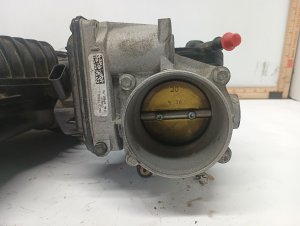
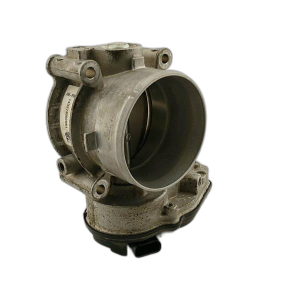
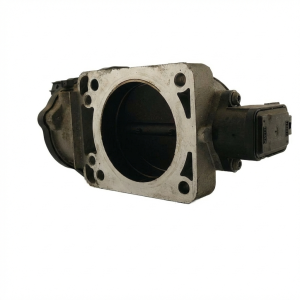
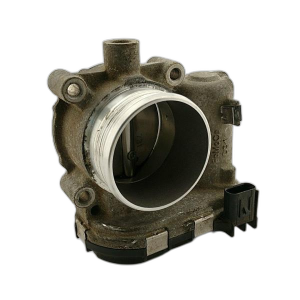
- Electronic Throttle Body Assembly
(OEM #AT4Z-9E926-B (for 3.5L/3.7L Naturally Aspirated), 8S4Z-9E926-B (for 3.5L EcoBoost SHO))— This is the most common failure point for code P0223 on this vehicle due to a known design flaw with the internal electronics. The throttle position sensor is integrated into this assembly.
Trusted brands: Motorcraft, Standard Motor Products, Hitachi, Dorman (OE FIX)
OEM price range: $280-$450
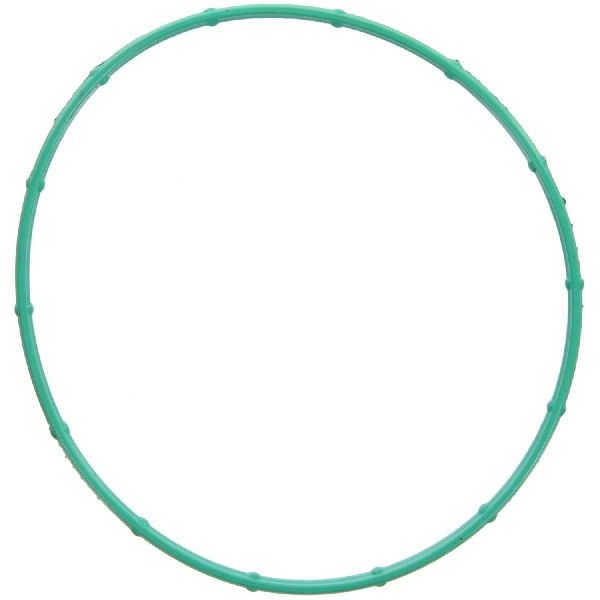
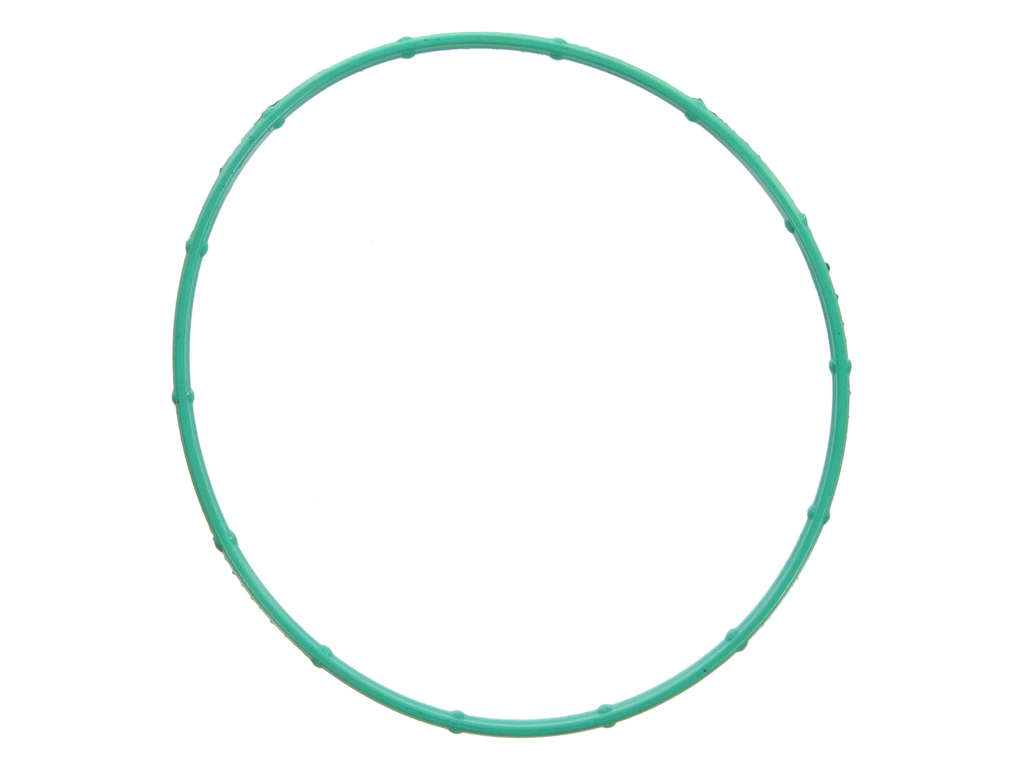
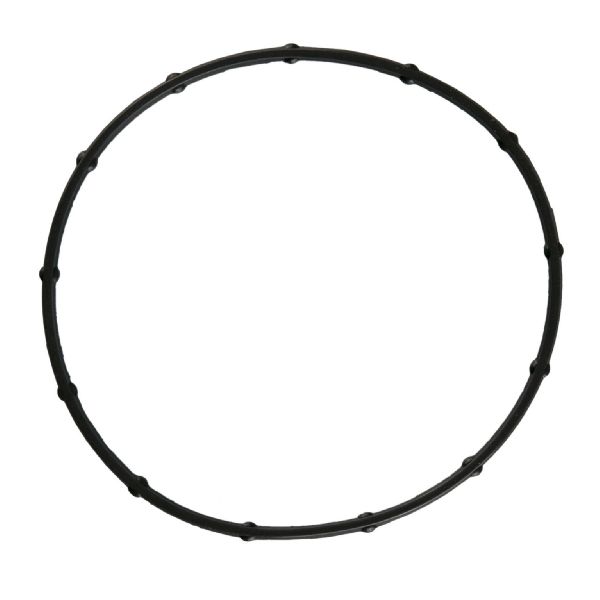
Aftermarket price range: $80-$250 - Throttle Body Gasket
(OEM #AT4Z-9E936-A)— It is best practice to replace the gasket whenever the throttle body is removed to prevent vacuum leaks. Many new throttle bodies include a new gasket.
Trusted brands: Motorcraft, Fel-Pro, Mahle
OEM price range: $20-$30
Aftermarket price range: $5-$15
Related Codes That Often Appear With This One
- P2111 — This code for 'Throttle Actuator Control System - Stuck Open' often appears alongside P0223, as the internal failure can cause the throttle plate to not respond correctly to commands.
- P2112 — This code for 'Throttle Actuator Control System - Stuck Closed' is also commonly seen with P0223 for the same reason as P2111, indicating a malfunctioning throttle plate.
- P2135 — This code for 'Throttle/Pedal Position Sensor 'A'/'B' Voltage Correlation' is very common with P0223. The PCM compares the signals from two separate internal TPS sensors for safety. When P0223 occurs, the 'B' signal is stuck high, causing a mismatch with the 'A' signal and triggering P2135.
Technical Service Bulletins (TSBs) & Recalls
- Customer Satisfaction Program 13N03: Extended coverage for the electronic throttle body due to contamination of internal motor contacts causing intermittent electrical connectivity. This could cause the Malfunction Indicator Lamp or Wrench Lamp to illuminate and the vehicle to enter a failure mode with reduced engine power.
- TSB Bulletin #TSB 16-0163: A manufacturer service bulletin notes that various drivability issues may occur alongside DTC P0223, as well as related codes like P2111 and P2112.
Platform-Specific Known Issues
- Ford issued Customer Satisfaction Program 13N03, extending the warranty on the electronic throttle body to 10 years/150,000 miles due to a high failure rate. This program has since expired for most vehicles but confirms the widespread nature of the problem.
- Owner experiences frequently describe the sudden onset of limp mode while driving in traffic, creating a significant safety concern. 🎬 Watch: Understanding limp mode causes and how to fix it One owner noted that while accelerating into busy traffic, the engine suddenly cut out completely.
Mechanic-Grade Diagnostic Values
- TPS 'A' (TP1) Signal Voltage, Key On Engine Off — expected: Approx. 0.5V - 1.0V at closed throttle, sweeping smoothly to ~4.5V at wide-open throttle.. Failure: Voltage is stuck, erratic, or does not sweep smoothly through the range.
- TPS 'B' (TP2) Signal Voltage, Key On Engine Off — expected: Approx. 4.1V - 4.8V at closed throttle, sweeping smoothly down to ~0.3V - 1.9V at wide-open throttle (inverse of TP1).. Failure: For P0223, the voltage is stuck high (typically > 4.7V) and does not respond to pedal input.
- 5V Reference Voltage at Connector — expected: 4.8V to 5.2V with key on, engine off.. Failure: Voltage is missing or significantly low, indicating a wiring or PCM issue upstream of the throttle body.
- Sensor Ground Wire to Chassis Ground Resistance — expected: Less than 0.5 Ohms.. Failure: High resistance (O.L.) indicates a poor ground connection for the sensor circuit, which can cause erratic or high voltage readings.
Scan Tool Commands That Help
- Ford IDS (Integrated Diagnostic System): PCM Reset / Clear KAM (Keep Alive Memory) — This function should be used after replacing the electronic throttle body to clear the old learned values from the PCM's memory, forcing it to relearn the new sensor's parameters.
- Ford IDS (Integrated Diagnostic System): Throttle Body Relearn Procedure — After clearing the KAM, the IDS provides on-screen prompts to perform the relearn. This typically involves turning the key on (engine off) to allow the PCM to sweep the throttle plate and learn the new closed and wide-open positions.
Wiring & Ground Locations
- Main Engine/Transmission Ground Strap — Located on the transmission case, typically below the brake booster.. This is the primary ground path for the engine and its sensors back to the chassis/battery. A corroded or loose main ground can introduce electrical noise and voltage offsets, potentially causing incorrect sensor readings and triggering high voltage codes like P0223.
- Throttle Body Connector (C175b/C1381b) — The 6-pin electrical connector plugged directly into the electronic throttle body assembly.. This is the single point of connection for all power, ground, and signal wires for the throttle body. All voltage and resistance tests are performed at these pins. Corrosion, moisture, or backed-out pins in this connector are a common cause of circuit faults.
Real Owner Repair Stories
- TaurusClub.com Forum Member (2013 Ford Taurus Limited 3.5L) — Car went into limp mode with wrench light and check engine light on. Codes pulled were P2111 and P0223.
❌ Tried (didn't work) The user did not report trying other fixes first, as the symptoms and codes pointed directly to the common throttle body failure.
✅ What actually fixed it The owner replaced the entire electronic throttle body assembly with a new unit from a local auto parts store. After installation and reconnecting the battery, the car started and ran perfectly with no more codes or limp mode issues.
OEM Part Supersession History
AT4Z-9E926-A→AT4Z-9E926-B— Standard part revision by the manufacturer, likely to improve reliability or address known failure modes.
Model Year Variations Within This Range
- 2010-2012 vs 2013-2019: The Ford Taurus received a significant facelift for the 2013 model year, which included changes to the front and rear fascias, interior, and some mechanical components like brakes. However, the 3.5L V6 engine and the associated electronic throttle body (and its common failure) remained consistent across the entire 2010-2019 generation.
Diagnostic Flowchart
Other Known Issues on This Vehicle
Issues unrelated to this code that are worth knowing about as an owner of this generation:
- Internal Water Pump Failure 🔴 High — Common after 80,000-120,000 miles. The pump is driven by the timing chain, and failure can cause coolant to mix with engine oil, leading to catastrophic engine damage. Repair is extremely labor-intensive, often costing over $2,000.
- Power Transfer Unit (PTU) Failure (AWD Models) 🔴 High — Widespread issue due to the 'lifetime' fluid being cooked by the adjacent exhaust, leading to lubrication breakdown. Symptoms start with a burning oil/propane smell, followed by grinding noises. Failure often occurs between 60,000-100,000 miles if the fluid is not proactively changed every 30,000 miles.
- Cracked Interior Door Handles 🟠 Medium — The internal return spring mechanism can crack, causing the handle to feel loose and potentially allowing the door to unlatch in a side-impact crash. (Ref: Safety Recall 15S02 (NHTSA 15V040000))
Used vs. New Parts: Buying Guide for This Vehicle
When a used part is the smart pick: Due to the extremely high failure rate of the original electronic throttle body, purchasing a used part from a junkyard is NOT recommended. The risk of the used part failing soon after installation is very high, as the failure is due to an inherent design flaw rather than simple wear and tear.
What to inspect on the donor part:
- Not applicable, as used parts are not advised for this specific failure.
OEM-only on this vehicle (don't cheap out):
- While not strictly 'OEM-only', it is critical to purchase a NEW throttle body. The OEM Motorcraft part is a direct replacement, but several reputable aftermarket brands have also produced reliable units, some of which claim to have improved internal components to prevent the original failure mode.
Aftermarket brands forum-validated for this vehicle:
- Motorcraft (OEM)
- Standard Motor Products (SMP)
- Hitachi
- Dorman (specifically their 'OE FIX' line which often re-engineers failure-prone parts)
Brands owners have reported issues with on this vehicle:
- Unnamed, generic, or 'white-box' brands sold on online marketplaces should be avoided due to questionable quality control and longevity.
Real Owner Stories
Aggregated from forums and TSBs cited above. Mileages and costs reflect what owners reported in those sources.
Ford Taurus
Symptoms: Sudden onset of limp mode while driving in traffic; while accelerating into busy traffic, the engine suddenly cut out completely.
What fixed it: Immediate replacement of the electronic throttle body.
Source hint: vehicle_specific_issues
Ford Taurus
Symptoms: P0223 code and throttle body failure; idle issues after installation.
What fixed it: Replacing the entire throttle body assembly and performing a post-replacement relearn procedure via battery disconnect.
Source hint: FordForums.com
Ford Taurus
Symptoms: Sudden limp mode events tied to P0223.
What fixed it: Replacement of the throttle body (described as a simple, sub-one-hour job with basic tools).
Source hint: Reddit r/MechanicAdvice & r/FordTaurus
Ford Fusion (Cross-Manufacturer Reference)
Symptoms: An owner reported in NHTSA ODI #11467242 that the car would start and idle briefly, but would die while driving. Diagnostics revealed a faulty TAC system with codes P0122, P0223, and P0110.
What fixed it: Diagnostic confirmed faulty TAC system.
Source hint: NHTSA ODI #11467242
Related OBD-II Codes
Frequently Asked Questions
Is there an extended warranty for the throttle body on my Ford Taurus?
Can I just clean the throttle body to fix the P0223 code?
Why did my Taurus display 'Service AdvanceTrac' and 'Hill Start Assist Not Available' along with the wrench light?
Is it safe to buy a used throttle body from a salvage yard for my Taurus?
What is the 'throttle relearn procedure' I need to do after replacing the part?
Which part number should I look for if I have a 3.5L or 3.7L engine?
Helpful Videos


Used OEM Parts in Stock
New Aftermarket Parts Available


The information in this article is provided for general reference and educational purposes only. Vehicle specifications, procedures, and part compatibility can vary by production date, trim level, and region. Always consult your vehicle's factory service manual and verify part numbers before purchasing or performing repairs. Safety-critical components such as airbags, seat belts, and braking systems should be installed by a qualified professional.
- Ford Taurus:
- 🧭 Diagnostic Flowchart
- 🎬 Helpful Videos
- 🛍️ Shop This Part
- What's Unique About the 2010-2019 Ford Taurus
- Symptoms You May Notice
- Most Likely Causes
- Rare But Worth Checking
- Diagnosis Steps
- Parts You'll Likely Need
- Related Codes That Often Appear With This One
- Technical Service Bulletins (TSBs) & Recalls
- Platform-Specific Known Issues
- Mechanic-Grade Diagnostic Values
- Scan Tool Commands That Help
- Wiring & Ground Locations
- Real Owner Repair Stories
- OEM Part Supersession History
- Model Year Variations Within This Range
- Other Known Issues on This Vehicle
- Used vs. New Parts: Buying Guide for This Vehicle
- Real Owner Stories
- Ford Taurus
- Ford Taurus
- Ford Taurus
- Ford Fusion (Cross-Manufacturer Reference)
- Related OBD-II Codes
- Frequently Asked Questions
- 🎟️ Get 5% Off