

P0223 on 2010-2019 Ford Taurus 3.5L: Throttle Position Sensor 'B' Circuit High Input Causes and Fixes
On a 2010-2019 Ford Taurus with the 3.5L V6, code P0223 is almost always caused by a failed electronic throttle body (ETB) assembly. The throttle position sensor is integrated and cannot be replaced separately. This is a well-known defect acknowledged by Ford's Customer Satisfaction Program 13N03. Expect to pay $150-$300 for a new Motorcraft throttle body (Part # AT4Z-9E926-B for 2011-2019 models), with a DIY difficulty of 2/5.
- P0223 on a 2010-2019 Taurus 3.5L almost always means the entire electronic throttle body needs to be replaced.
- Do not attempt to buy or replace just the throttle position sensor; it is integrated into the throttle body assembly.
- This is a very common and well-documented failure for this engine, confirmed by Ford's own warranty extension program (13N03).
- Driving with this code is unsafe due to the risk of the vehicle suddenly entering limp mode.
What's Unique About the 2010-2019 Ford Taurus
The 3.5L Cyclone V6 used in the sixth-generation Taurus has a well-documented history of premature electronic throttle body (ETB) failures. The issue was so widespread that Ford issued a Customer Satisfaction Program (13N03) extending the warranty on the ETB to 10 years or 150,000 miles. The program notice states the failure is due to 'contamination on the internal motor contacts of the Throttle Body, resulting in intermittent electrical connectivity'. While this program has likely expired for most vehicles, it confirms that the entire throttle body assembly, not just a single sensor, is the common failure point for codes like P0223.
Generation note: The 2010-2019 model years cover the entire sixth generation of the Ford Taurus. The electronic throttle body issue is common across this entire generation for vehicles equipped with the 3.5L V6 engine.
Symptoms You May Notice
- Check Engine Light and/or Wrench Light illuminated
- Sudden and significant loss of engine power (Limp Mode)
- Poor or no acceleration
- Unresponsive accelerator pedal
- Rough or fluctuating idle
- Engine stalling
- Service AdvanceTrac warning message may appear simultaneously
- Attempting to replace only the throttle position sensor. On this vehicle, the sensor is integrated into the throttle body and cannot be purchased or replaced separately.
- Replacing the accelerator pedal position (APP) sensor. While it can cause similar symptoms, it will typically set different codes (e.g., P0221, P0222).
- Cleaning the throttle body. While cleaning can resolve high idle issues (P0507), it will not fix the internal electronic fault that causes P0223.
Most Likely Causes
- Failed Electronic Throttle Body (ETB) Assembly 🔴 High Probability → Shop Fuel Injection Throttle Body This is a well-documented, widespread failure on Ford's 3.5L V6 engine, acknowledged by Ford's Customer Satisfaction Program 13N03. The failure is typically due to contamination of the internal electronic motor contacts, leading to incorrect voltage signals. This issue was also part of a larger NHTSA investigation (PE13-003) into Ford throttle bodies.
How to confirm: Scan for codes P0223 and P0123 together. If both are present, it strongly indicates a fault within the dual-sensor ETB assembly. Visually inspect the wiring and connector to the throttle body; if they are intact, the ETB is the confirmed point of failure. With a scan tool, monitor TPS1 and TPS2 live data; P0223 sets when the voltage for TPS 'B' is persistently above the expected maximum, often over 4.5V.
Typical fix: Replace the entire electronic throttle body assembly. The throttle position sensor is integrated and not sold separately. After replacement, a Keep Alive Memory (KAM) reset and throttle body relearn procedure is required.
Est. part cost: $150-$300 - Wiring Harness or Connector Issue ⚪ Low Probability
How to confirm: Visually inspect the wiring harness leading to the throttle body for any signs of chafing, breaks, or corrosion. Check the connector for bent or corroded pins. Use a multimeter to check for a short to voltage on the signal wire.
Typical fix: Repair the damaged section of the wiring harness or replace the connector pigtail.
Est. part cost: $15-$50
Rare But Worth Checking
- Powertrain Control Module (PCM) Fault: → Shop Engine Control Module (ECM) This is extremely rare. The PCM should only be considered after the throttle body and wiring have been definitively ruled out as the cause.
Diagnosis Steps
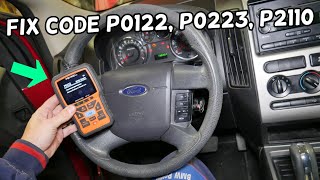
- Use an OBD-II scanner to confirm the presence of P0223 and check for any other related codes like P0123, P2111, or P2112.
- Visually inspect the electrical connector and wiring harness going to the electronic throttle body. Look for any signs of damage, corrosion, or loose connections.
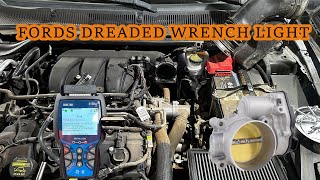
- If the wiring appears to be in good condition, the most likely cause is a failed electronic throttle body assembly. 🎬 Watch this diagnostic and replacement walkthrough
- With a scan tool capable of viewing live data, monitor the throttle position sensor voltage (TPS1 and TPS2) with the key on and engine off. The voltages should be smooth and correlate with each other as the pedal is slowly pressed. A spike or erratic reading on one sensor, or a reading stuck above 4.5V, indicates a failure.
- If the throttle body is replaced, clear the codes and perform a throttle body relearn procedure. A common method is to disconnect the negative battery terminal for at least 15 minutes to reset the Keep Alive Memory (KAM). After reconnecting, start the engine and let it idle until it reaches normal operating temperature, then let it idle for one more minute with the A/C off, followed by one minute with the A/C on. Finally, drive the vehicle for 10-15 miles to allow the PCM to fully adapt. 🎬 Watch the electronic throttle body calibration procedure
Parts You'll Likely Need
- Electronic Throttle Body Assembly
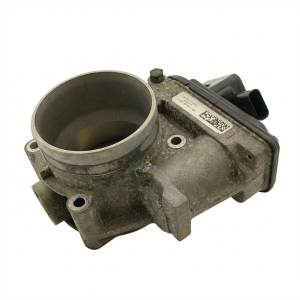
(OEM #AT4Z-9E926-B (2011-2019), 7T4Z-9E926-FA (2010))— This is the most common failure point for code P0223 on the 3.5L V6 Taurus. The integrated throttle position sensors fail internally, requiring the replacement of the entire unit. The part number for 2011-2019 models is AT4Z-9E926-B. The 2010 model may use 7T4Z-9E926-FA. 🎬 See how to remove the throttle body Always verify with VIN.
Trusted brands: Motorcraft
OEM price range: $190-$300
Aftermarket price range: $150-$250
Related Codes That Often Appear With This One
- P0123 — This code indicates 'Throttle/Pedal Position Sensor/Switch 'A' Circuit High'. Since the throttle body contains two separate sensors ('A' and 'B'), seeing both high circuit codes together is a very strong indicator that the entire assembly has failed internally.
- P2111 — This code means 'Throttle Actuator Control System - Stuck Open'. It often appears with TPS codes when the throttle body is failing mechanically or electronically. TSB 10-21-6 was issued for this code on the Taurus, recommending throttle body replacement.
- P2112 — This code means 'Throttle Actuator Control System - Stuck Closed'. Like P2111, it points to a comprehensive failure of the electronic throttle body assembly and is also covered by TSB 10-21-6.
- P2104 — This code for 'Throttle Actuator Control System - Forced Idle' is a companion code that often appears when the PCM detects a critical throttle fault and puts the vehicle into limp mode.
Technical Service Bulletins (TSBs) & Recalls
- 13N03 - Customer Satisfaction Program extending the warranty on the Electronic Throttle Body to 10 years/150,000 miles due to internal contamination causing intermittent electrical connectivity.
- 10-21-6 - Addresses DTCs P2111, P2112, and idle fluctuation issues on 2010-2011 Taurus 3.5L models, recommending throttle body replacement.
Platform-Specific Known Issues
- Ford's Customer Satisfaction Program 13N03 was issued to extend the warranty on the electronic throttle body for many vehicles with the 3.5L engine due to a high rate of failure. This confirms a known defect with the original part.
- TSB 10-21-6 was also released for 2010-2011 models, including the Taurus with the 3.5L engine, for related throttle body codes (P2111, P2112) and idle issues, recommending replacement of the throttle body.
Mechanic-Grade Diagnostic Values
- TPS Reference Voltage (VREF) — expected: 4.75V - 5.25V DC with key on, engine off, measured at the sensor connector.. Failure: A reading below 4.7V or above 5.3V indicates a problem with the PCM or wiring, not necessarily the throttle body itself.
- TPS 'B' Signal Voltage — expected: Should decrease smoothly from ~5.0V at closed throttle to ~0.5V at wide-open throttle. (This is inverse to TPS 'A' which goes from low to high voltage).. Failure: A voltage signal that is stuck high (typically above 4.75V) regardless of throttle position will trigger P0223. Any jumps or dead spots while slowly opening the throttle indicate a failed sensor.
- Signal Return / Ground Circuit — expected: Should have less than 0.1V (100mV) when measured between the ground pin at the connector and a known good chassis ground.. Failure: High resistance or voltage on the ground circuit can cause floating or incorrect signal voltages, leading to the P0223 code.
Scan Tool Commands That Help
- Ford IDS (Integrated Diagnostic System): KAM (Keep Alive Memory) Reset — This function should be performed after replacing the electronic throttle body. It clears the learned adaptive values, including old idle and throttle trims, forcing the PCM to relearn the parameters of the new component. This is more thorough than simply disconnecting the battery.
- High-End Bidirectional Scanner (e.g., ANCEL DS300): Throttle Relearn / Reset — Used after throttle body replacement or cleaning to command the PCM to perform a self-calibration of the new throttle plate's closed, open, and part-throttle positions. This ensures accurate idle speed and throttle response.
Wiring & Ground Locations
- Electronic Throttle Body Connector — Directly on the electronic throttle body assembly, where the main engine harness connects.. This 6-pin connector is the primary point for all electrical testing. Technicians will back-probe the pins here to measure reference voltage, signal voltage, and ground integrity to determine if the fault is in the wiring or the throttle body itself.
- G104 (Ground Point) — On the right side of the engine block/cylinder head for the 3.5L engine family.. This is a primary engine and PCM ground point. A loose or corroded connection at G104 can introduce electrical noise or a poor ground reference for sensors like the TPS, potentially causing erratic voltage readings and triggering codes like P0223.
Real Owner Repair Stories
- SHO Forum (Ford Taurus SHO (3.5L EcoBoost, platform mate)) — Car drove normally most of the time but would intermittently act like it was ignoring the accelerator pedal, limiting speed to around 5 mph. Sometimes turning the car off and on would fix it temporarily. The last time it happened, it was a near-dangerous situation on the highway.
❌ Tried (didn't work) Initial diagnosis did not produce a specific trouble code.
✅ What actually fixed it A Ford mechanic suggested replacing the throttle body based on the symptoms alone, stating it was a very common failure. The owner replaced the electronic throttle body, which resolved the intermittent and dangerous loss of power.
OEM Part Supersession History
7T4Z-9E926-EA→7T4Z-9E926-FA— Standard part revision and update by Ford.
Heads up: 7T4Z-9E926-FA is the correct part for the 2010 Taurus and some other 2008-2012 Ford models with the 3.5L engine.AT4Z-9E926-A→AT4Z-9E926-B— Standard part revision by Ford to improve reliability and address known failure modes.
Heads up: AT4Z-9E926-B is the correct part for 2011-2019 Ford Taurus models with the 3.5L V6. It should not be used on 2010 models which require the 7T4Z-9E926-FA part.
Model Year Variations Within This Range
- 2010 vs 2011-2019: The OEM part number for the electronic throttle body is different. The 2010 model year uses part number 7T4Z-9E926-FA, while the 2011-2019 models use the updated part AT4Z-9E926-B. While they may appear physically similar, internal electronics or calibration could differ, making it critical to use the correct part for the specific model year.
Diagnostic Flowchart
Other Known Issues on This Vehicle
Issues unrelated to this code that are worth knowing about as an owner of this generation:
- Internal Water Pump Failure 🔴 High — Commonly occurs between 80,000 and 150,000 miles. Failure is often catastrophic as the timing-chain driven pump can leak coolant directly into the engine oil, causing severe engine damage with little warning.
- Power Transfer Unit (PTU) Failure (AWD Models) 🔴 High — The PTU fluid can overheat and break down, leading to failure often between 60,000 and 100,000 miles. The unit lacks a drain plug, making service difficult and often neglected.
- Electronic Power Assisted Steering (EPAS) Failure 🔴 High — Can cause a sudden loss of power steering assist, making the vehicle difficult to control. This was subject to recall 15S18 for 2011-2013 models, but failures are reported across other years as well. (Ref: 15S18)
- Stuck Open EVAP Purge Valve 🟠 Medium — A very common failure on many Ford platforms. The valve sticks open, allowing unmetered fuel vapor into the intake, causing rough idle, poor fuel economy, and rich condition codes like P0172 and P0175.
Used vs. New Parts: Buying Guide for This Vehicle
When a used part is the smart pick: Given the extremely high and well-documented failure rate of the original electronic throttle body on this platform, buying a used part from a junkyard is NOT recommended. The risk of purchasing a part that has already failed or is near failure is very high. This is a classic case where a new part is the only sensible investment to ensure a lasting repair.
What to inspect on the donor part:
- Not applicable, as used parts are strongly discouraged for this specific component.
OEM-only on this vehicle (don't cheap out):
- Electronic Throttle Body Assembly
Aftermarket brands forum-validated for this vehicle:
- Motorcraft (OEM)
Brands owners have reported issues with on this vehicle:
- Unnamed or 'white box' remanufactured units have been reported by mechanics to have a higher rate of out-of-box failure or premature failure compared to new OEM Motorcraft parts.
Real Owner Stories
Aggregated from forums and TSBs cited above. Mileages and costs reflect what owners reported in those sources.
2010-2011 Ford Taurus 3.5L
Symptoms: Idle fluctuation and throttle-related issues leading to the illumination of the wrench light.
What fixed it: Replacement of the electronic throttle body assembly as per TSB 10-21-6.
Source hint: TSB 10-21-6
2011-2019 Ford Explorer 3.5L V6
Symptoms: Sudden limp mode while driving, wrench light, and unresponsive throttle.
What fixed it: Replacing the throttle body.
Source hint: explorerforum.com: In multiple threads, owners of the platform-mate Ford Explorer with the same 3.5L engine describe the classic P2111/P2112 failure
2011-2013 Ford Taurus 3.5L
Symptoms: Sudden loss of power steering assist, making the vehicle difficult to control.
What fixed it: Service performed under recall 15S18.
Source hint: Recall 15S18 cited in known_issues
Related OBD-II Codes
Frequently Asked Questions
Is there a warranty extension for the throttle body on my 3.5L Ford Taurus?
My Taurus is showing a 'Service AdvanceTrac' message along with the wrench light; is this related to P0223?
Does TSB 10-21-6 apply to my 2011 Taurus 3.5L?
Can I just replace the sensor on the throttle body to fix P0223?
What is the 'Limp Mode' I'm experiencing with my 3.5L Cyclone V6?
Is it okay to use a used throttle body from a salvage yard for my Taurus?
Helpful Videos

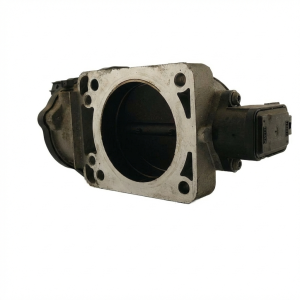
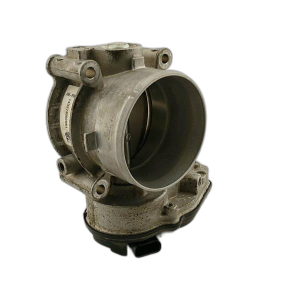
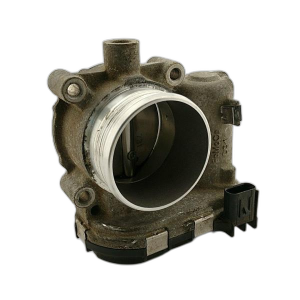
Used OEM Parts in Stock
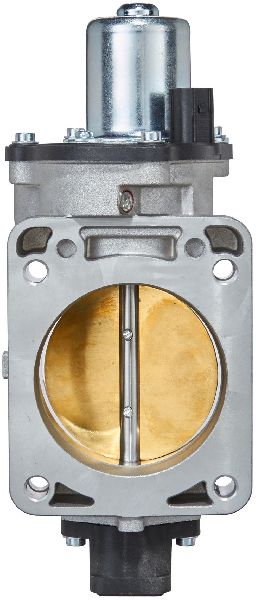
New Aftermarket Parts Available


The information in this article is provided for general reference and educational purposes only. Vehicle specifications, procedures, and part compatibility can vary by production date, trim level, and region. Always consult your vehicle's factory service manual and verify part numbers before purchasing or performing repairs. Safety-critical components such as airbags, seat belts, and braking systems should be installed by a qualified professional.
- Ford Taurus:
- 🧭 Diagnostic Flowchart
- 🎬 Helpful Videos
- 🛍️ Shop This Part
- What's Unique About the 2010-2019 Ford Taurus
- Symptoms You May Notice
- Most Likely Causes
- Rare But Worth Checking
- Diagnosis Steps
- Parts You'll Likely Need
- Related Codes That Often Appear With This One
- Technical Service Bulletins (TSBs) & Recalls
- Platform-Specific Known Issues
- Mechanic-Grade Diagnostic Values
- Scan Tool Commands That Help
- Wiring & Ground Locations
- Real Owner Repair Stories
- OEM Part Supersession History
- Model Year Variations Within This Range
- Other Known Issues on This Vehicle
- Used vs. New Parts: Buying Guide for This Vehicle
- Real Owner Stories
- 2010-2011 Ford Taurus 3.5L
- 2011-2019 Ford Explorer 3.5L V6
- 2011-2013 Ford Taurus 3.5L
- Related OBD-II Codes
- Frequently Asked Questions
- 🎟️ Get 5% Off